AP Micro: Lesson 1.5 and 1.6 - Cost-Benefit Analysis, Marginal Analysis, and Consumer Choice
 Studied by 0 people
 Call Kai
 Learn
Learn Practice Test
 Spaced Repetition
 Match
Match Flashcards
 Knowt Play
1/34

There's no tags or description
Looks like no tags are added yet.
Name | Mastery | Learn | Test | Matching | Spaced | Call with Kai |
|---|
No analytics yet
Send a link to your students to track their progress
35 Terms
What is opportunity cost?
The next best alternative foregone
The amount of the trade-off
What is the difference between explicit and implicit costs?
Explicit: Out of pocket cost, cost in terms of dollars. Physical
Implicit: Non-monetary cost (trade-offs). Can have monetary value (money you earned)
What do we mean by "rational" economics?
Rational - using cost-benefit analysis to make a decision
What is cost-benefit analysis
Identifying the benefits and costs of a decision in order to select the optimal choice/option
What is the optimal choice?
The option where the difference between total benefits and total costs in maximized (highest net benefit)
(Picture - 3 is optimal choice)
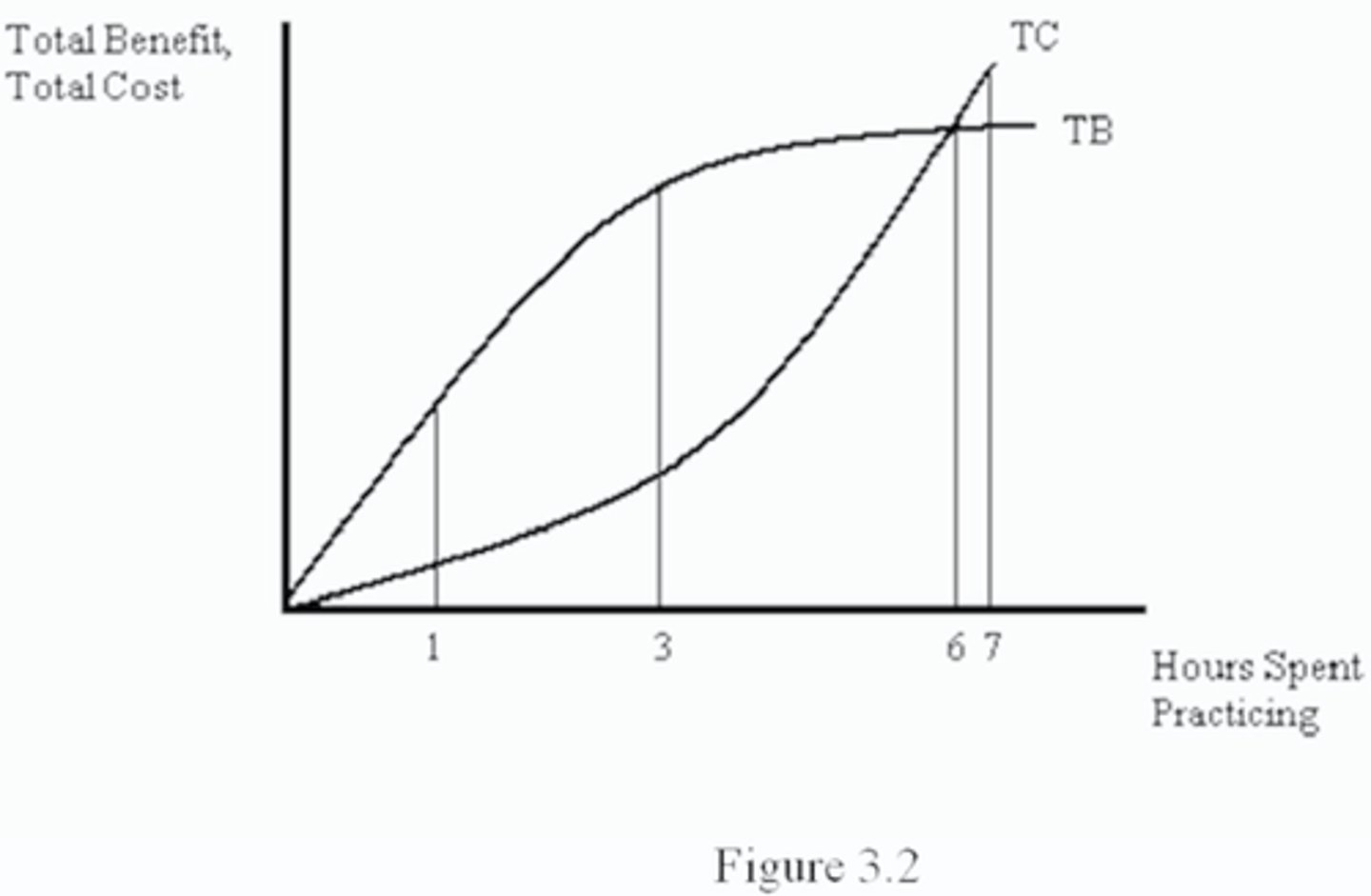
What are total net benefits?
Maximizing when operating at optimal choice
Difference between total benefits and total costs
What is the relationship between total net benefits and the optimal choice/option/quantity?
Maximum net benefit only happens when you operate at optimal choice
What are economic costs?
Implicit and explicit costs when making economic decisions
What do we mean by "total cost"?
Total economic cost (implicit and explicit costs in a decision combined)
What is the difference between the way consumers and producers define "total benefit"?
Producers: Revenue coming into their business/firm (TR = P • Q) Note: TR is not the same as profit (must subtract TC)
Consumers: See total utility as their benefit. TU: Total satisfaction from consuming quantities of a good
What is total revenue (TR)?
The total amount of money coming into a business/firm
What is the formula to determine TR?
TR = P • Q
Is revenue the same thing as profit?
No - revenue is all of the money coming in, profit is the money that's left after bills, taxes, etc.
What is total utility?
Total satisfaction from consuming quantities of a good/service
What do you do if you can't compare the total benefit to the total cost of a decision?
Use marginal analysis
What is marginal analysis?
Examining marginal (additional) benefit vs. marginal (additional) cost of an action.
Identifying the optimal choice where MB = MC
What is marginal benefit?
The additional benefit received when another unit of a good is consumed
What is marginal cost?
The additional cost paid when another unit of a good is produced
How do you find the optimal quantity using marginal analysis?
Find where MB = MC
If MB > MC, do it
If MB < MC, don't do it
How is marginal cost defined differently between producers and consumers?
Consumers weigh marginal satisfaction (utility) against marginal cost (product price)
Producers weigh marginal revenue (product price) against marginal cost (cost of production)
What is the relationship between opportunity cost and marginal analysis?
Calculating opportunity cost is doing marginal analysis
Opportunity cost = give ÷ gain = MC ÷ MB
What is utility?
Want-satisfying power (satisfaction of wants)
What is a util?
A made-up way to measure utility. Imagined unit of satisfaction/measurement of satisfaction
What is total utility (TU)?
How much utility (satisfaction) we derive from all items we have consumers (utility from each unit added together)
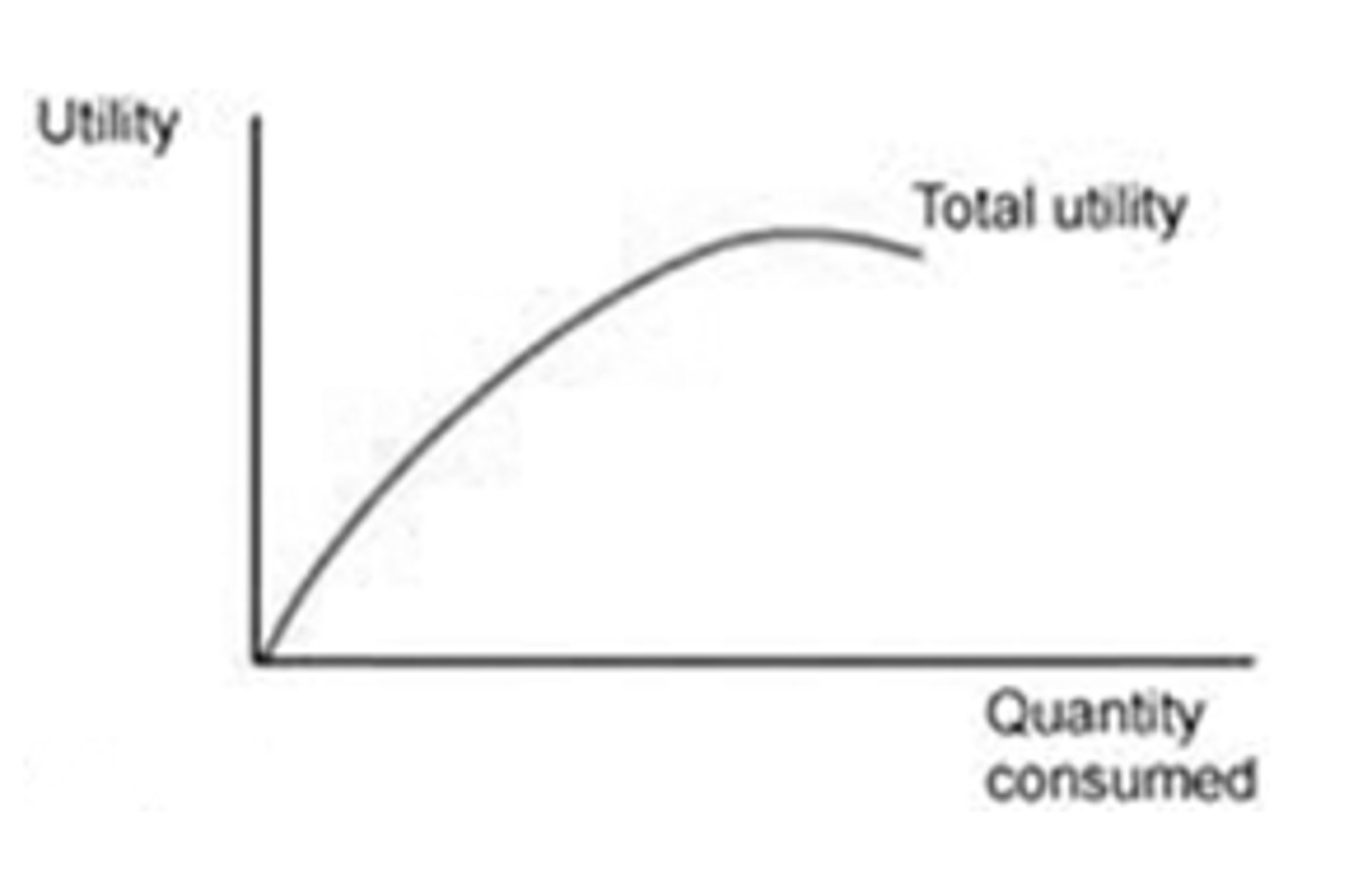
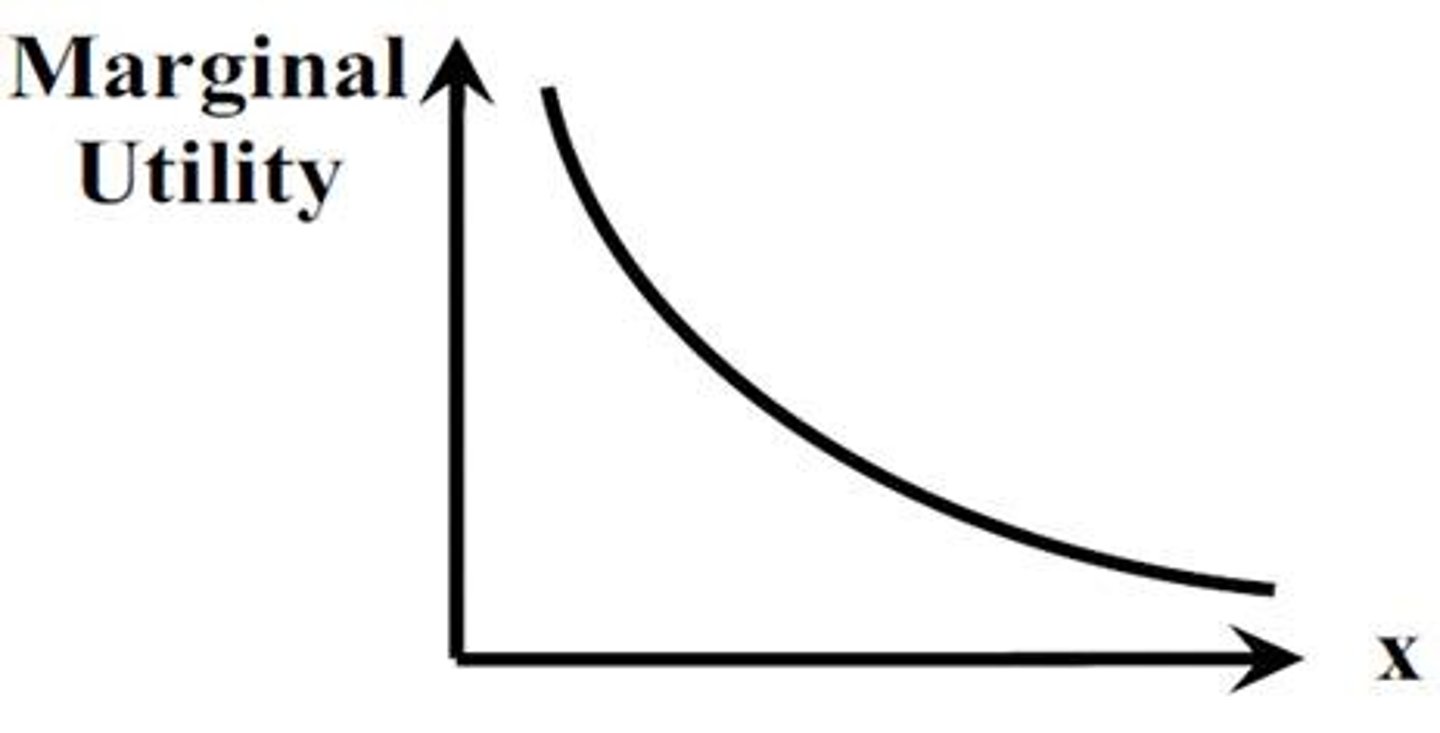
What is marginal utility (MU)?
How much additional utility we get from consuming an additional unit of a good (difference in total utility from 1 unit to the next)
Graph with marginal utility and total utility:
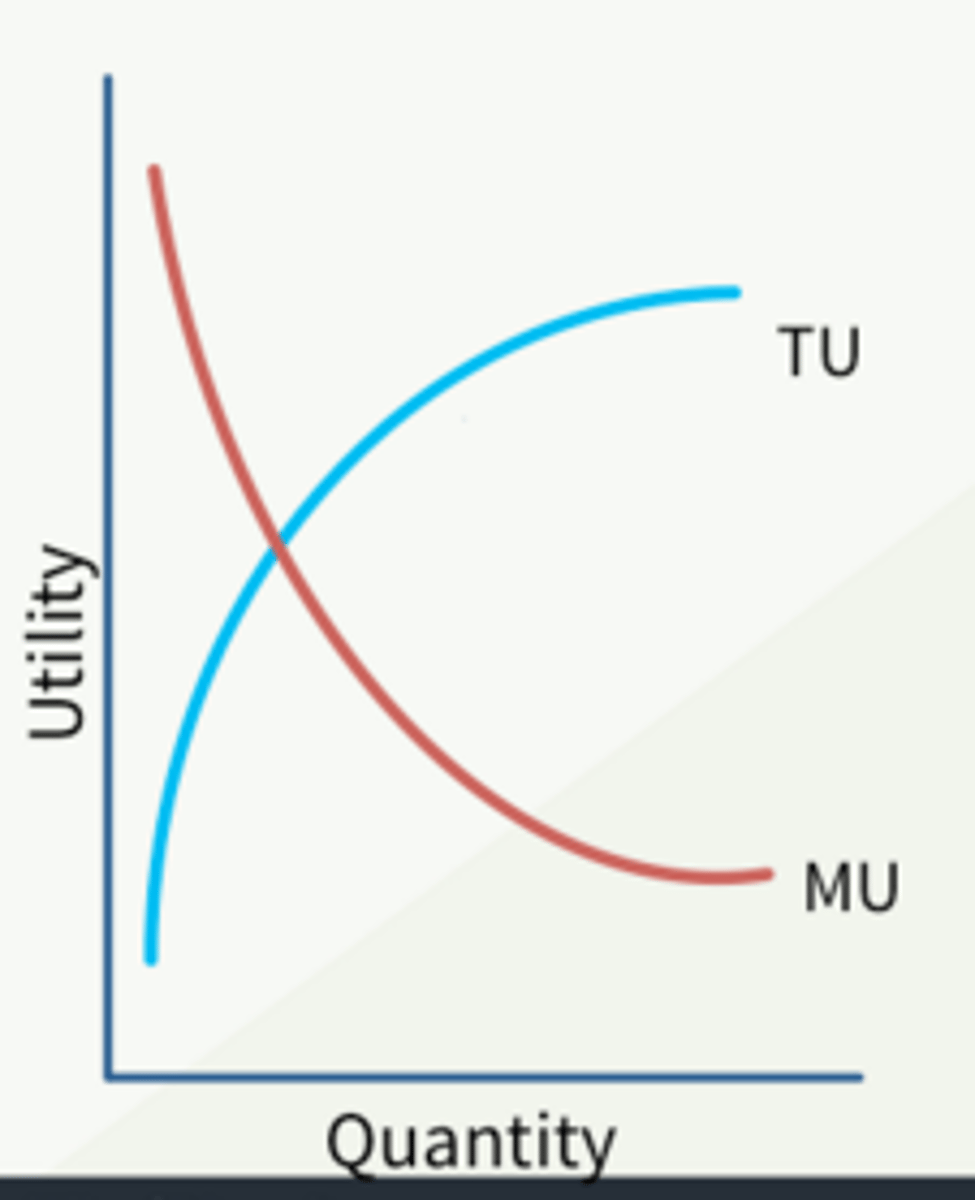
What is MU when TU is at its maximum?
MU is 0
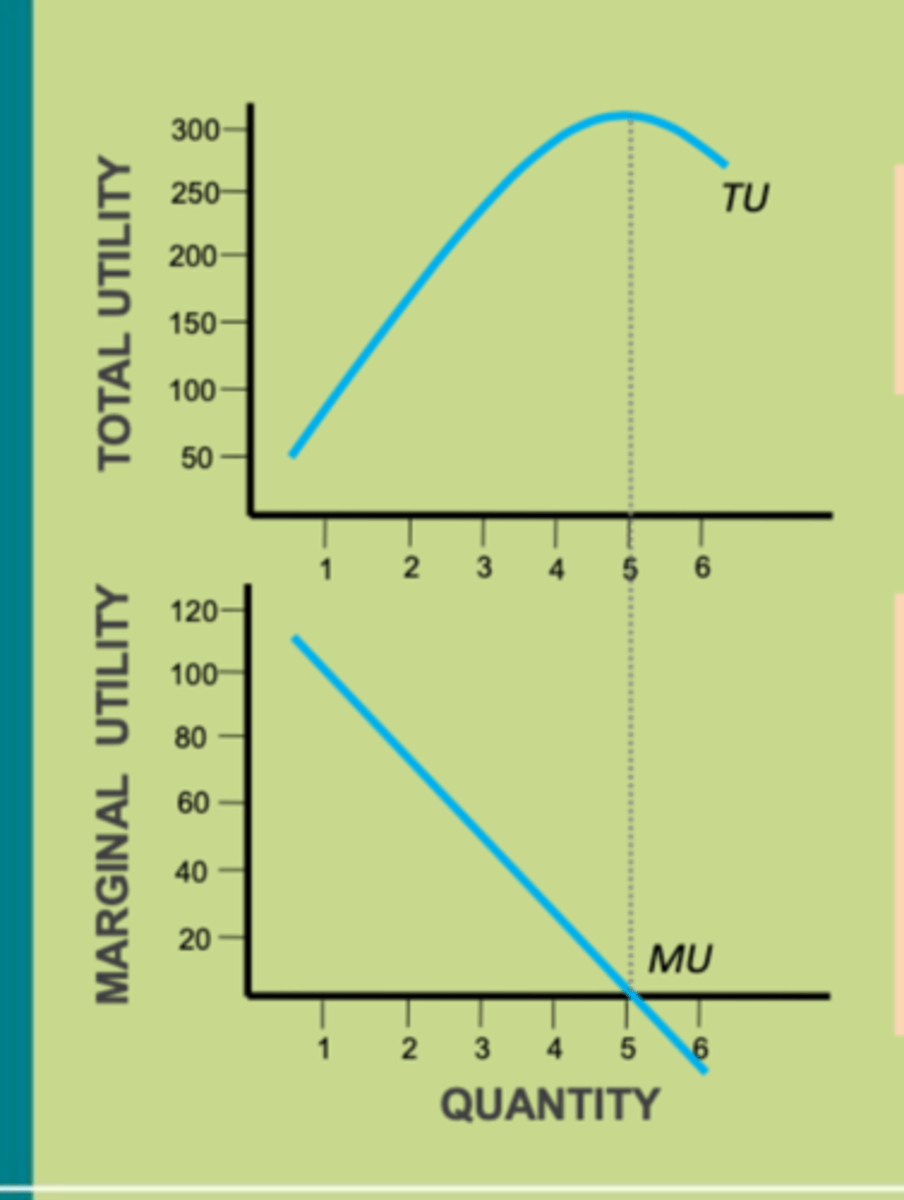
What is consumer choice theory? How does it relate to marginal analysis?
Consumer choice theory is consumers deciding what goods to purchase
Consumers compare MB (MU for consumers) to MC
If MU > MC, they will do it
If MU = MC, it is the optimal choice
What assumptions do we make when using a model of consumer choice?
1. Consumers are rational an try to get the greatest amount of utility from their income
2. Consumers have preferences for goods/services available
3. Consumers are limited in spending at any point in time and have a budget constraint while purchasing
4. The rice of each good is not changing when the good is being purchased
What is a budget constraint?
Consumers have a limit on their income when purchasing a good at any given moment
What is the law of diminishing marginal utility?
Marginal utility is always decreasing
What is the marginal utility maximizing rule? (utility maximization)
A higher marginal utility per dollar (MU p/$) indicates a better purchase
Consumers should spend their budget so that the last dollar spent on each product they buy yields the same amount of MU per dollar (consumer equilibrium)
What is consumer equilibrium?
When consumers maximize their utility (MU p/$ of last two goods is the same)
If the marginal utility per dollar for both goods isn't equal, what must a consumer do? (budget stays the same)
Change your purchases (change quantities you are buying of the good)
What is a sunk cost?
A cost that has already been incurred (paid) and cannot be recovered, regardless of what is decided next (ex. waiting in line - loss of time)
 Note
Note  Flashcards (71)