Decoding Life Test Cram
 View linked note
 Call Kai
 Learn
Learn Practice Test
 Spaced Repetition
 Match
Match Flashcards
 Knowt Play
1/54

There's no tags or description
Looks like no tags are added yet.
Name | Mastery | Learn | Test | Matching | Spaced | Call with Kai |
|---|
No analytics yet
Send a link to your students to track their progress
55 Terms
What is innate behavior?
behavior that is developmentally fixed such that all individuals in the population exhibit the same response to a stimulus
instinctive
What is a stimulus to innate behavior called?
releaser
Definition of Learned Behavior
behavior that is acquired, altered, or eliminated due to an animal’s experience
Types of Innate Behaviors
Fixed Action Patterns
Biological Clocks/Rhythms
Communication btwn animals
Movement
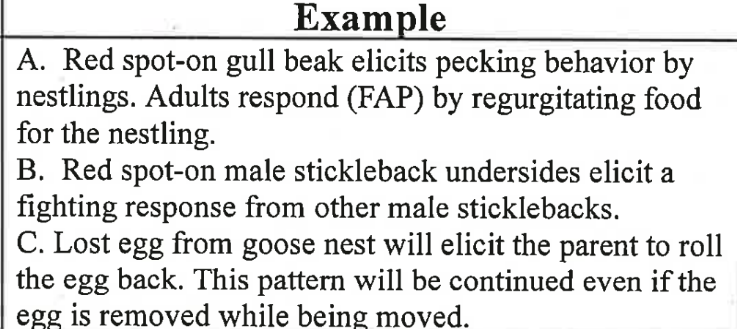
What are Fixed Action Patterns?
A sequence of behaviors that doesn’t change and once initiated by a sign stimulus or releaser, is always completed the same way.
The more prominent the stimulus, the greater the response.
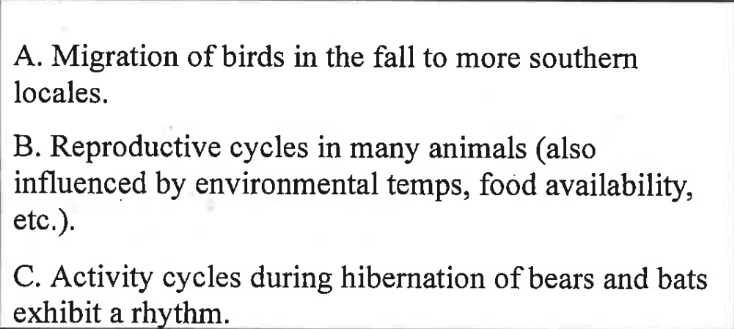
What are Biological Clocks or Rhythms?
Environmental stimuli or internal (endogenous) stimuli trigger behaviors in animals
Circadian rhythms: daily (24 hr) cycles or biological clocks that influence behavior
Circannual rhythms influence yearly cycles of behavior like migration
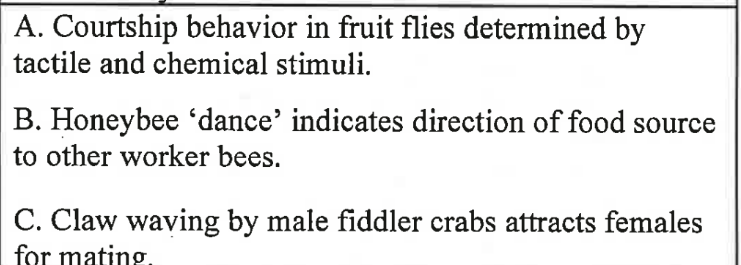
Communication btwn animals
A stimulus (signal) transmitted from one animal to another will elicit a specific response. Typically, in the form of a chemical, tactile and visual stimuli
(can also be learned)
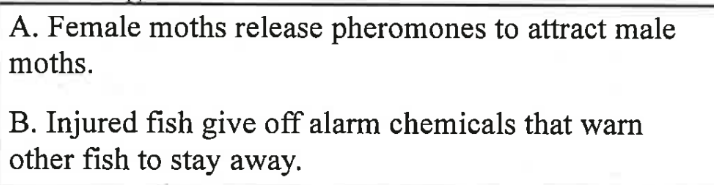
pheromones are a special case of communication
What are pheromones?
Chemical stimuli that are produced by one organism and, when released, have an effect on the behavior of other organisms of the same species
What are the two types of movement-based innate behaviors?
Kinesis and Taxis
What is kinesis?
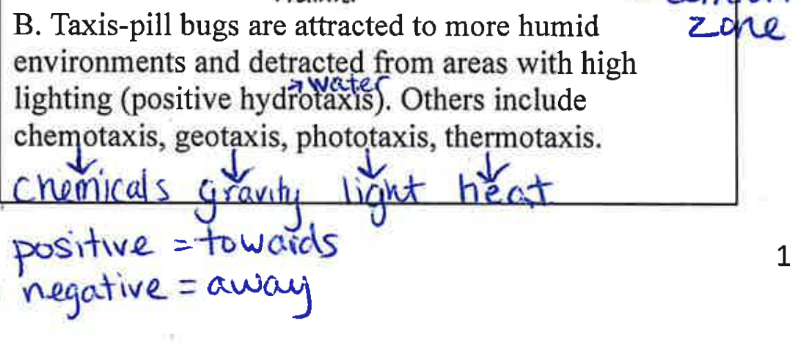
a general change in activity or non-directional behavior by an animal in response to a stimulus. Fast movement usually indicates a search for a comfort zone, slow movement indicates it has found it.

What is taxis?
a directed movement by animals either towards or away from stimulus
positive → towards stimulus
negative → away from stimulus
What are the types of learned behaviors
Imprinting
Spatial learning
Associative Learning
Cognition
Social Learning
(some types of learning overlap with other behaviors)
What is imprinting?
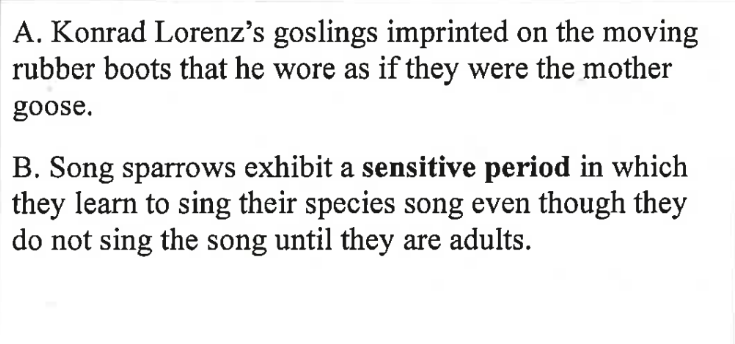
innate behavior that will develop when an organism is exposed to a stimulus within a critical or sensitive period of time.
requires some level of genetic input/innate ability to imprint or be programmed to the stimulus
stimulus/response may be chemical OR visual. depends on the developmental stage of the animal
What is Spatial Learning
The establishment of a memory that reflects the organism’s environment by forming a cognitive map
i.e. ELEPHANTS
What is associative learning?
The learned ability to associate one environmental feature to another. A search image is often involved
search image → learned mental representation/focus
Special cases include:
Habituation
Classical Conditioning
Operant Conditioning
What is habituation?
loss of a response to unimportant stimuli
i.e. a carriage horse in NYC no longer responds with fear to noisy streets
What is classical conditioning?
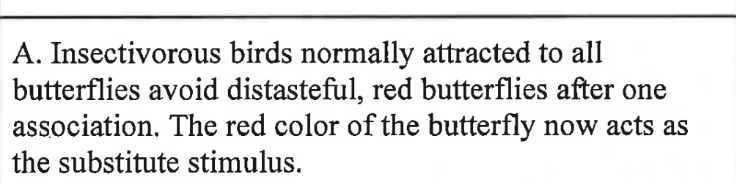
responding to a new, substitute stimulus as if it were the original stimulus
i.e. Pavlov’s dogs salivate to the sound of a bell in anticipation of food to follow
What is operant conditioning?
Learning by trial and error
i.e. rats learn to run a maze after several tries
What is cognition?
Process of knowing that involves awareness, reasoning, recollection, and judgement
NOT LIMITED TO PRIMATES
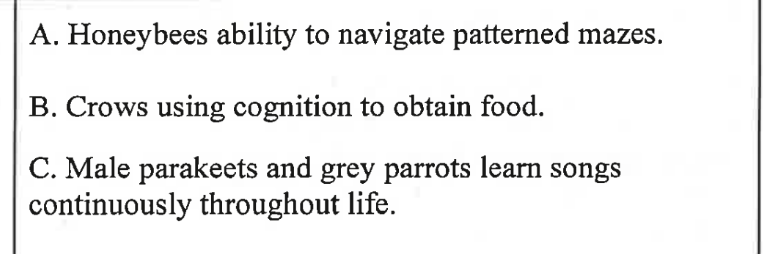
Social learning
learning by observing other animals
Can natural selection act on behavior actions to increase the fitness of a species
TRUE
What are the types of social organization
Altruism/Kin Selection
Agonistic Behavior
Dominance Hierarchy
Territoriality
What is altruism/kin selection
behavior that reduces an animal’s individual fitness but increases the fitness of individuals in the immediate family or population
kin selection is the idea that altruistic behavior increases the survival of genes similar to those of the individual even if it doesn’t benefit/is detrimental to the individual

What is agonistic behavior?
type of behavior that involves a contest determining for example, which individual gets access to food or mates
usually more psychological than physical
ex. male giraffes use their broad necks to battle each other over mates
What is dominance hierarchy?
an organization of social animals
more dominant animals control less dominant individuals
reduces the amount/intensity of fighting
usually maintained by agonistic behaviors
i.e. lions fighting over a kill, female hyenas dominating reproduction in a pack
What is territoriality?
individuals establish choice living space, giving them access to critical resources, especially food and water
usually maintained by agonistic behaviors
What is optimal foraging?
maintaining high energy intake to expenditure ratio
(minimizes the energy costs of obtaining the food while maximizing the benefits of gaining the food energy
What is the purpose of a chi squared test?
determines whether data obtained experimentally provides a “good fit” to the expected data
is used to determine if any deviations from the expected results are due to random chance alone or to other circumstances
How to calculate chi squared?
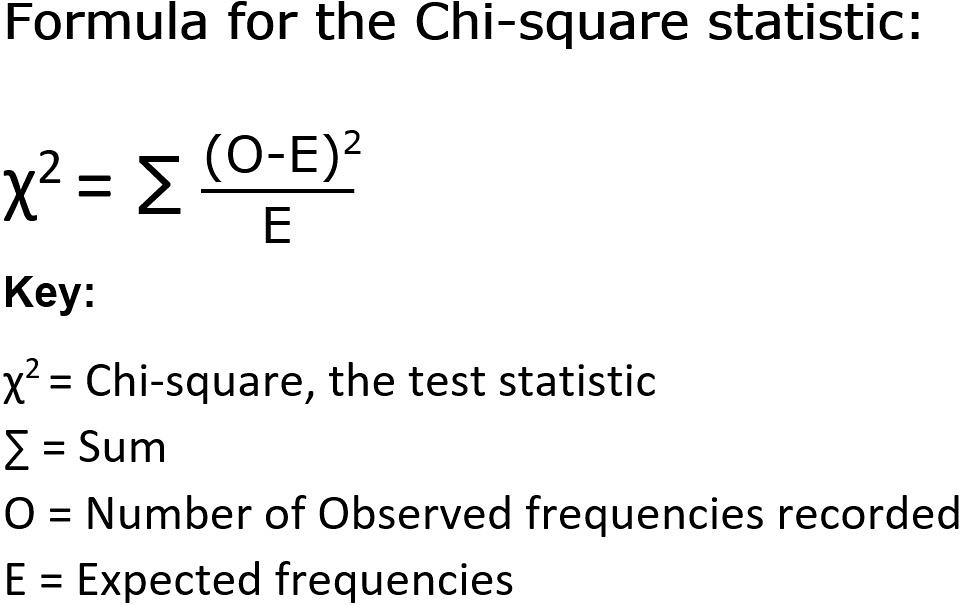
How to understand/interpret chi-squared value (what does it mean with respect to the null hypothesis)
If the chi-squared value is larger than the table value → statistically significant → reject the null hypothesis
if the chi-squared value is smaller than the table value → not statistically significant → fail to reject the null hypothesis
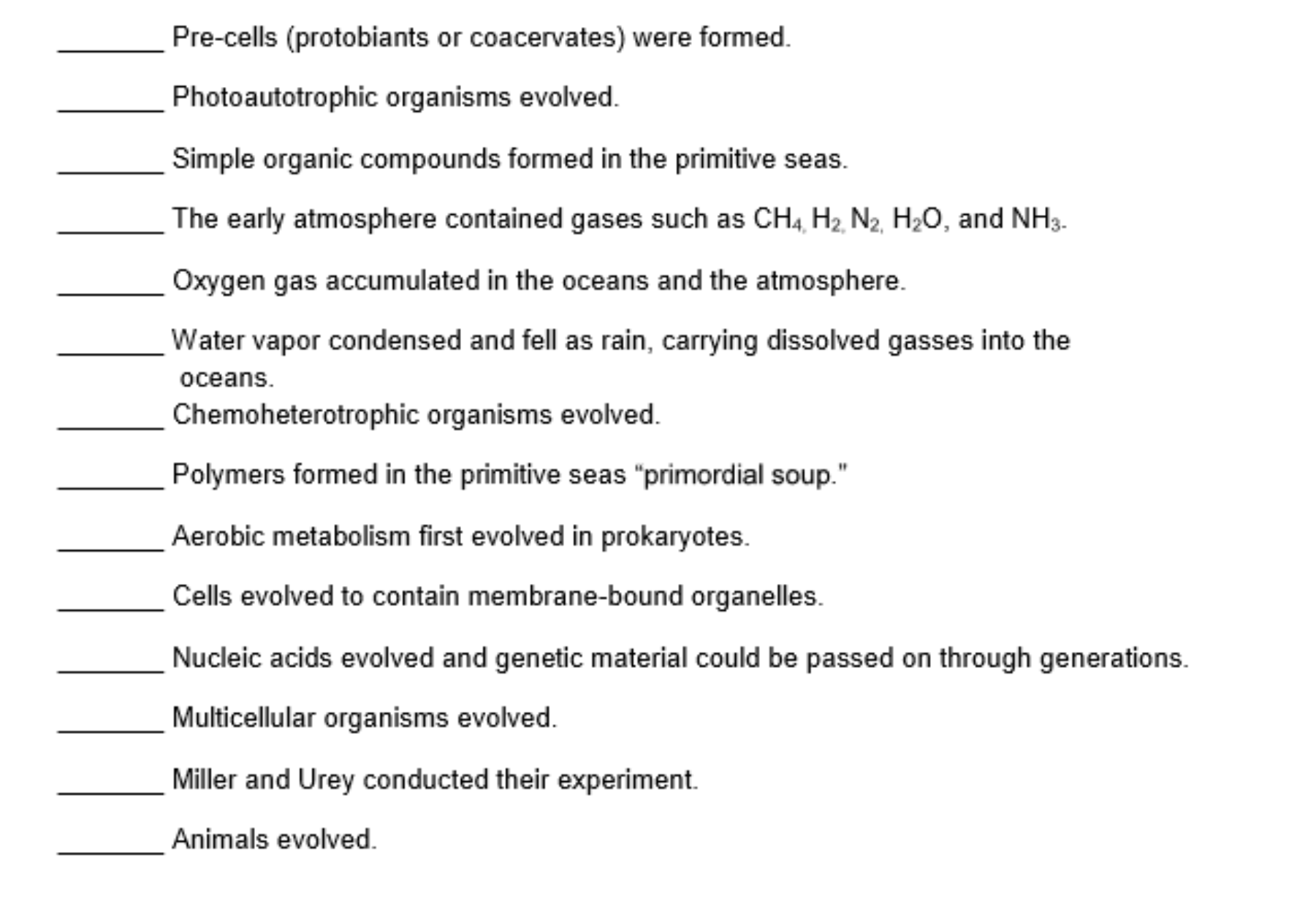
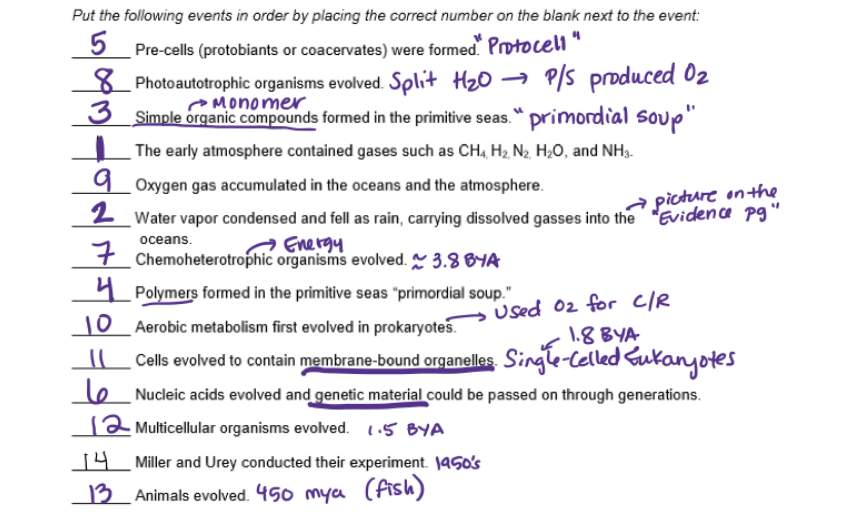
Evolution of Life Worksheet Sequencing:
Order the following statements correctly
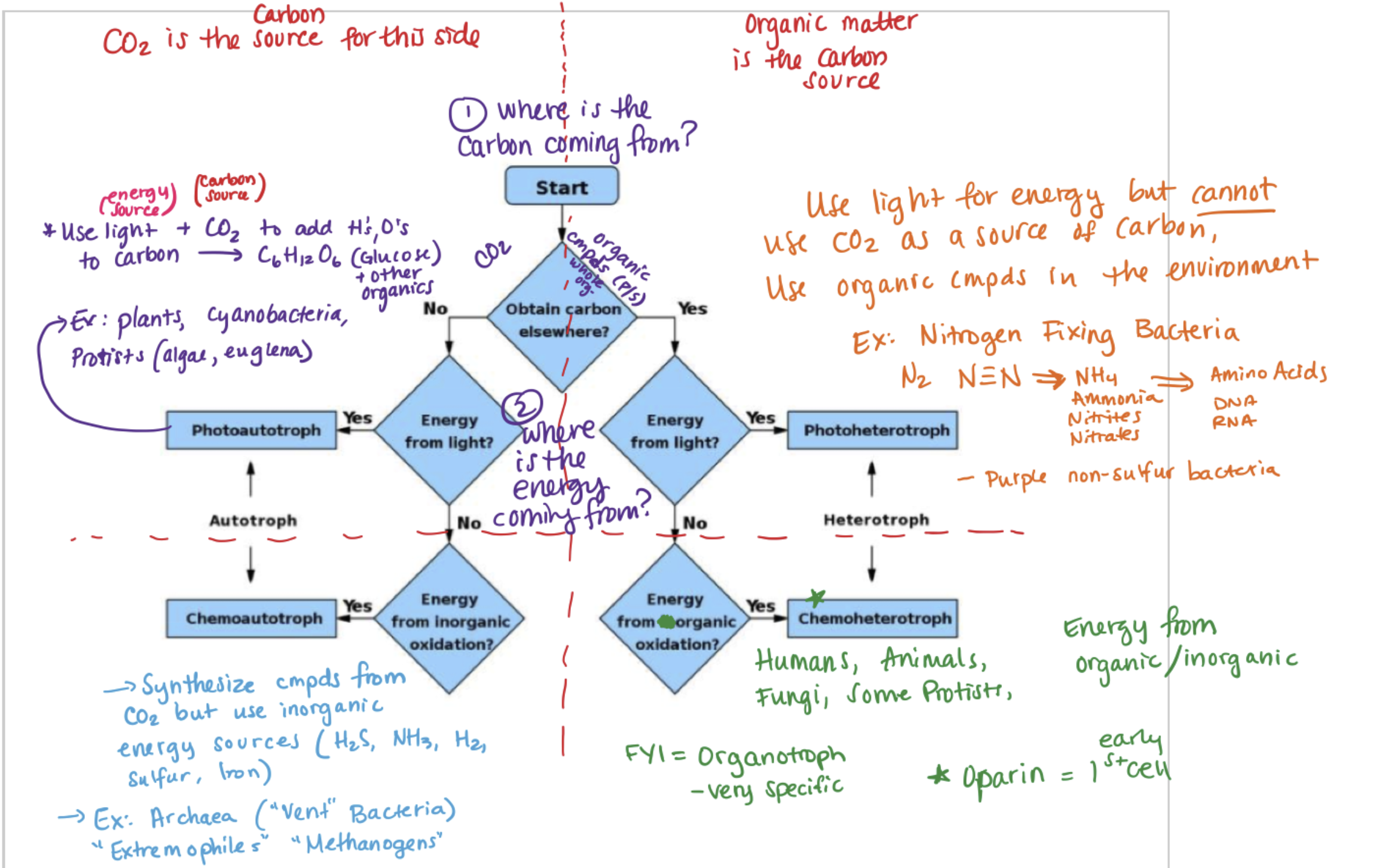
Flowchart of Metabolic Diversity
What are the four major types of organisms?
Photoautotrophs: plants, cyanobacteria, protists (algae, euglena)
Chemoautotrophs: Archaea (vent bacteria), extremophiles
Photoheterotrophs: nitrogen-fixing bacteria (use light for energy but CO2 is not source of carbon for them)
Chemoheterotrophs: humans, animals, fungi, some protists
What are ribozymes and what was significant about their discovery?
RNA that can catalyze its own reactions, such as replication. An RNA polymer could have self-polymerized, and then acted as its own enzyme and a template for replication of a complementary RNA.
Ribozymes provide evidence that RNA was the first genetic material
Test? — self catalyzes the formation of peptide bonds btwn amino acids
ex. ribonucleic proteins, ribosomes, telomerase
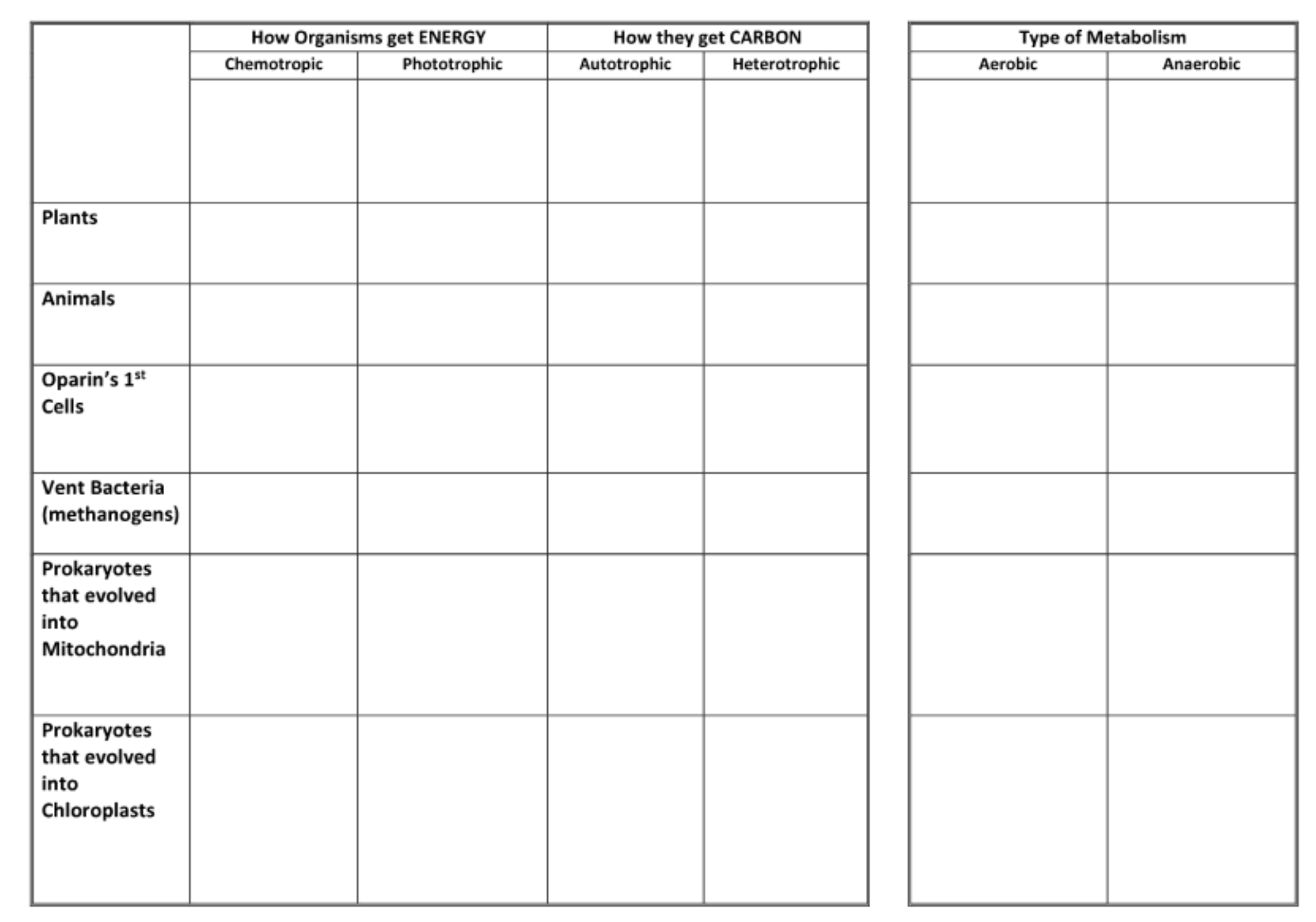
Fill out the chart correctly
What was the Griffith Experiment? (Describe procedure and why was it significant?)
Procedure:
Experiment was performed on pneumococcus bacteria (supposed test question)
There were rough and smooth forms of the bacteria (rough = no virus, smooth = virus)
remember “feet up feet down” assay (quantitative way to measure the lethality of the bacterium)
Griffith injected the mice with different variations of the bacteria
rough strain (nv) → mouse lives
smooth strain(v) → mouse dies
heat-killed smooth strain → mouse lives
rough strain + head-kill smooth strain → mouse dies???
Transformation must have occurred somehow
Significance:
IDENTIFIED A TRANSFORMING FACTOR
still didn’t know what it was (many thought proteins, didn’t know it was DNA yet)
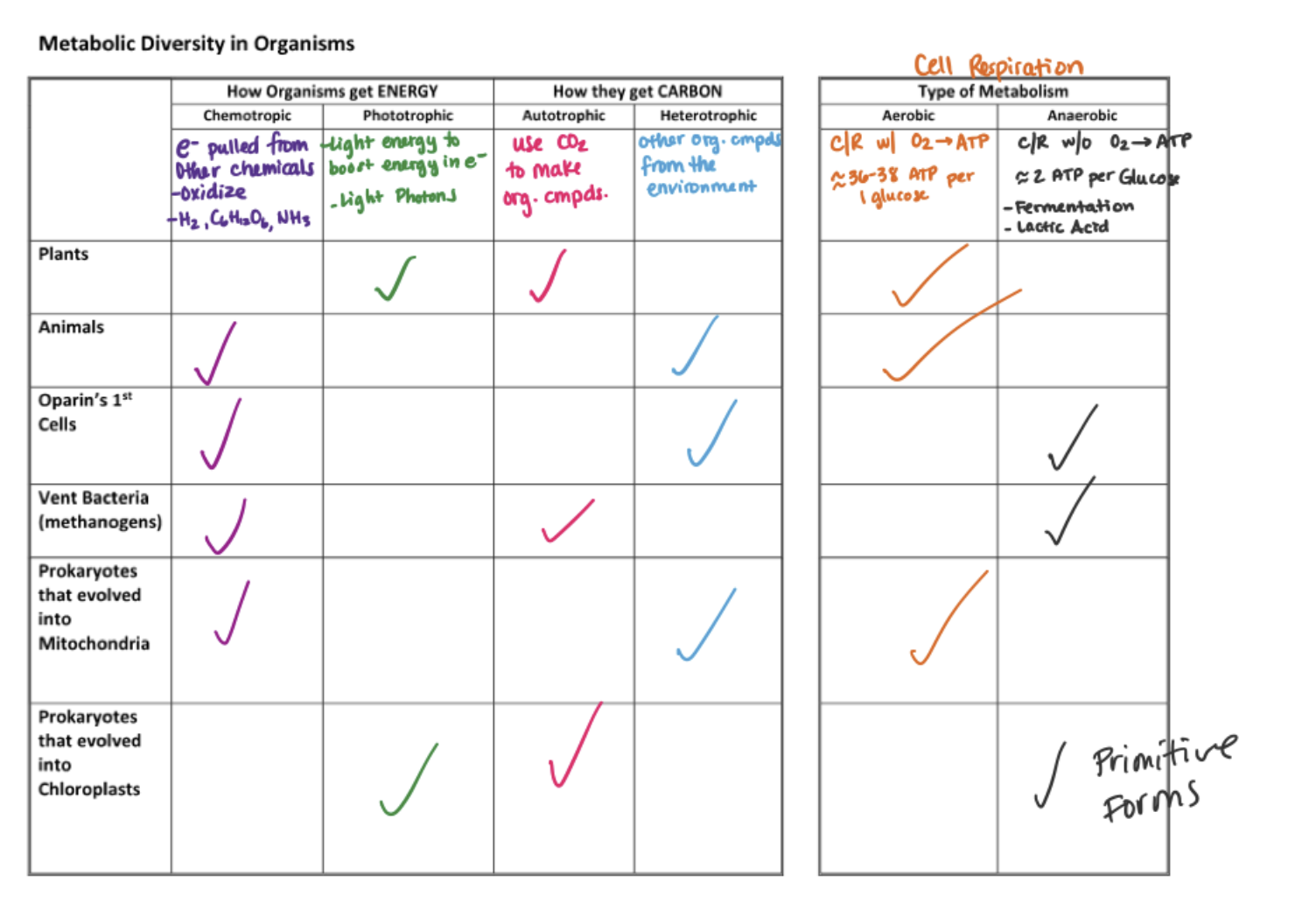
What was the Avery, Macleod, McCarty Experiment? (Describe procedure and why was it significant?)
Procedure:
used proteases, RNAses, DNAses (enzymes that destroy, proteins, RNA, DNA)
added to bacteria to inactivate the respective component
checked what happened when inactivated strains were mixed with live (unmodified strains) to see if some sort of modification happened
Significance:
Built on Griffith’s methodology
DNA IS THE TRANSFORMING FACTOR!!!
What was the Hershey Chase Experiment? (Describe procedure and significance)
Procedure:
Remember that protein (amino acids) contain sulfur but not phosphorus. DNA contains phosphorus but not sulfur
Radioactively labeled samples of phages were prepared
1. DNA is labeled with 32P
2. Protein is labeled with 35S
Bacterial cells were precipitated from solution in centrifuge (blender)
35S was found in the supernatant (liquid) → phage protein could not have entered cells
32P was found within the bacteria cell → phage DNA DID enter cells
new viruses isolated from the bacterial cell centrifugation contained the radioactive 32P (marker for DNA)
Significance:
Answered the question of what component of chromosomes contains hereditary info—DNA or proteins
established DNA as genetic material
Viral hereditary material must enter the cell in order to code for production of new viral particles → DNA entered cell → DNA must be hereditary material
What is Chargaff’s Rule?
his experiments showed that %C = %G and %A = %T
this info was shared with Watson and Crick which helped them create their double helix model
Why were Rosalind Franklin and Maurice Wilkins significant?
They performed x-ray crystallography on DNA molecule
DNA was crystallized
crystallized structure hit with X-rays, which diffracted in a regular pattern
pattern was visualized on a photographic plate
PHOTO 51 was the photo that proved double helix
Wilkins was the guy that snitched about Franklin’s data to Watson and Crick which she wanted to confirm before sharing
Who were James Watson and Francis Crick?
double helix model
explained how genetic material could be replicated and passed onto daughter cells
also explained how DNA could be used as a template for transcription of RNA
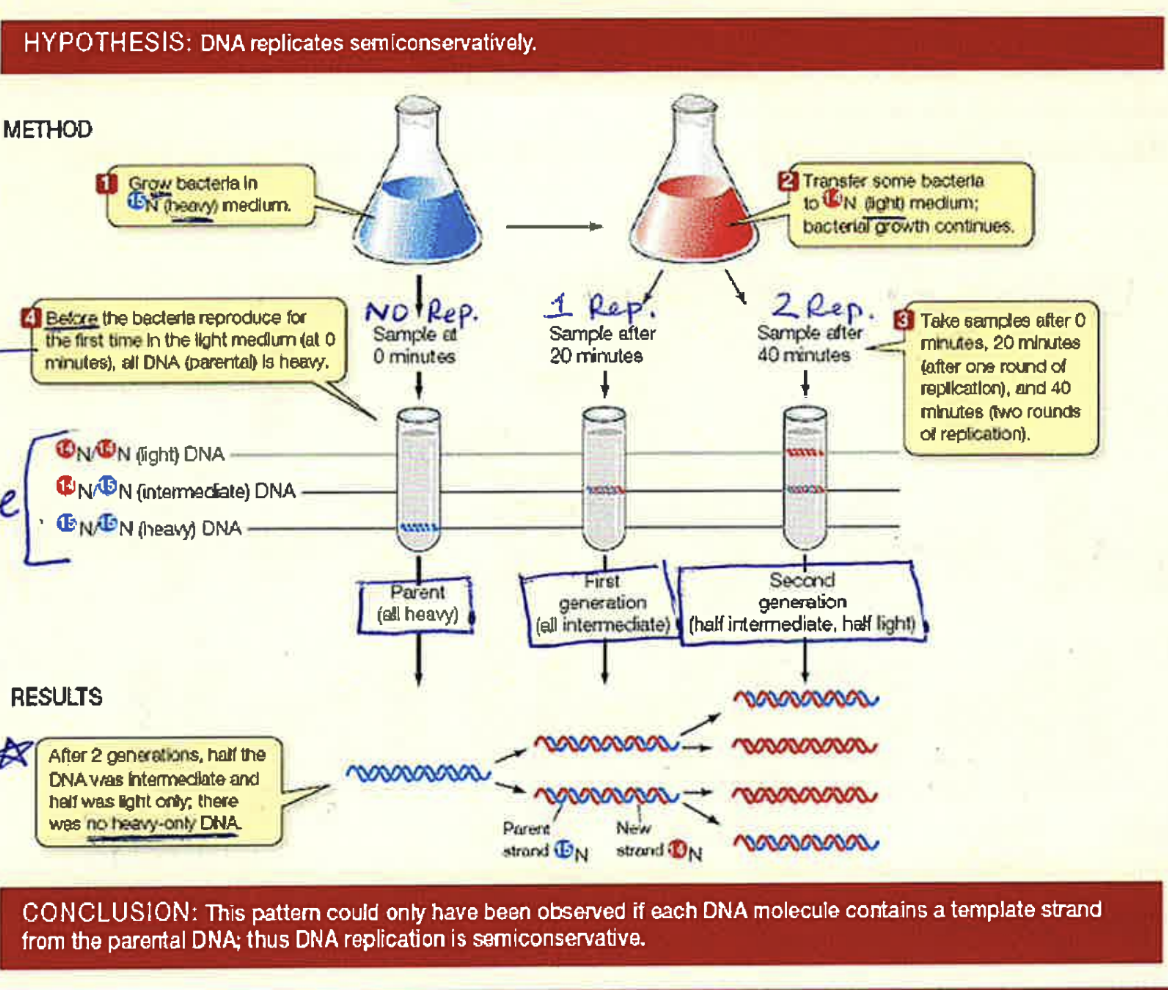
What was the Messelson-Stahl Experiment? (Describe procedure and significance)
Procedure:
E coli is grown in 15N (heavy isotope)
Switched to 14N (lighter) after one/two replication cycles
take samples of DNA
mix with cesium chloride and separate the heavy and light DNA with centrifugation
Significance:
parent DNA is all heavy
1st gen: all DNA is intermediate → only disproves conservative model
2nd gen: half intermediate, half light → disproves dispersive model (otherwise there shouldn’t be any 14-14 DNA)
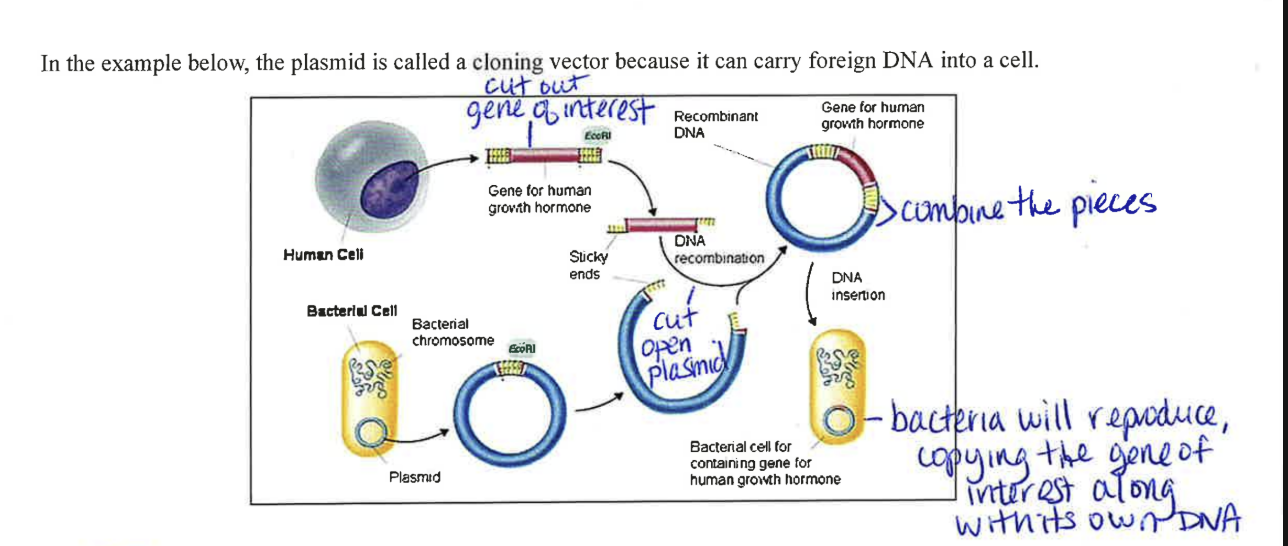
What is Recombinant DNA technology?
combining DNA from 2 different sources such as bacteria + humans
possible due to the universality of the genetic code
ex. gene cloning
Explain how cloning a gene works
Insert non-bacterial gene into bacteria
when bacterial chromosome replicates, inserted gene is also replicated and passed to daughter cells
huge numbers of bacteria can be easily + quickly grown, producing millions of copies of the desired gene to be studied
What are vectors?
vehicles for transferring DNA from one location to another
plasmids: small, circular pieces of double-stranded DNA that can replicate independently of a cell’s main chromosomal DNA (primarily in bacteria)
virus/phage
Why can’t bacteria express human gene?
No promoter for human gene (can be solved by adding a promoter)
Bacteria have no introns + no spliceosome (solved by making cDNA from mature mRNA of human gene & inserting that into the plasmid)
What are restriction enzymes?
called endonucleases because they cut somewhere within the DNA molecule
originally isolated from bacteria - in nature bacteria use them as a protective mechanism to degrade invading foreign DNA such as viral DNA
enzymes recognize short stretches of bases called recognition sequences (4-6 bases in length) which are scattered throughout the genome
DNA cuts at a specific place called a restriction site
cuts sometimes produce staggered (overlapping ends) known as sticky ends
different restriction enzymes recognize and cut different DNA sequences
cuts generate restriction fragments
bacteria protect their own DNA (chromosomal and plasmid) at restriction sites that are reorganized by their own enzymes.
addition of methyl groups helps to inhibit the enzyme from digesting bacterial DNA
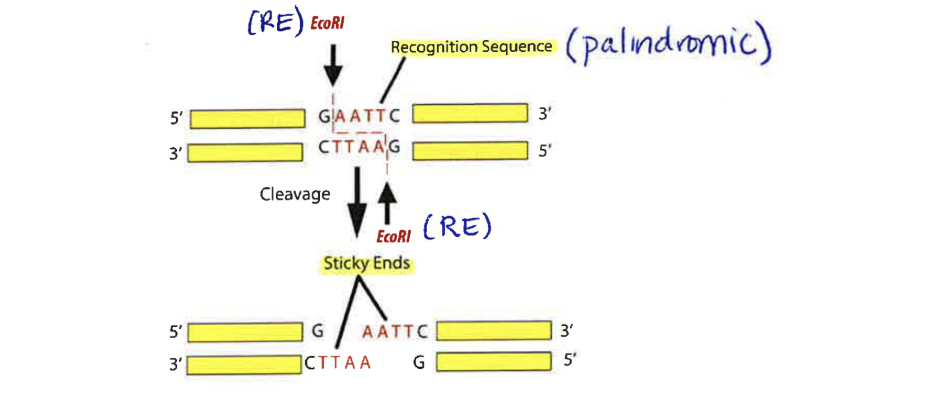
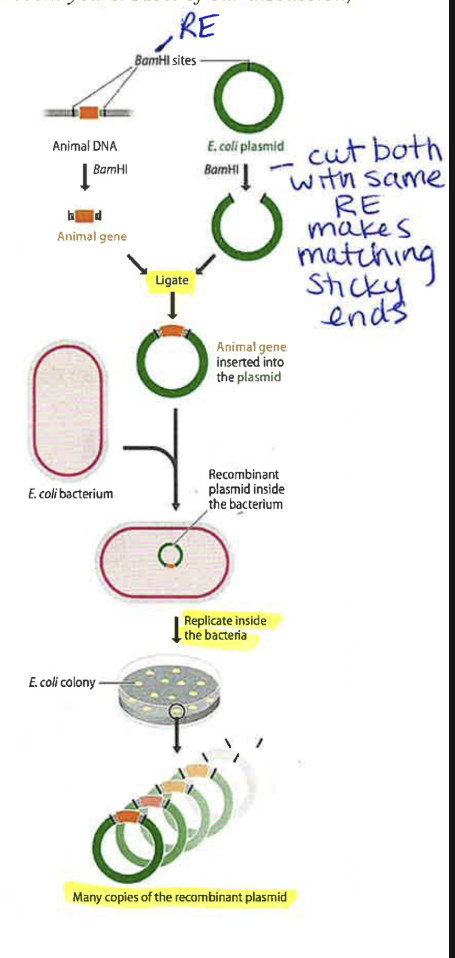
Explain how restriction enzymes can be used to generate a recombinant molecule (“gene splicing”)
Making the recombinant plasmid:
same restriction enzyme to cut both the human gene and plasmid and generate sticky ends
mix fragments from both sources together to allow cDNA regions (sticky ends) to combine
By chance, some plasmid DNA will combine with human gene DNA to produce a recombinant molecule → not every plasmid will contain gene of interest
sticky ends are joined together by ligase
Transformation
allow plasmids to enter bacterial cells. the uptake of DNA (transformation) usually requires treating the cell with chemical/heat to make membrane more permeable
Reporter genes
Identify the bacteria that took up a plasmid
identify the bacteria carrying plasmids containing gene of interest
How do we identify the bacteria that took up a plasmid that has the gene of interest?
Plasmids are engineered to contain antibiotic resistance genes → serve as reporter genes (to select bacteria that have taken up a plasmid containing gene of interest)
think pGLO
What are the applications of recombinant DNA technology?
Production of pharmaceutical products (ex. insulin, GH, etc.)
Agriculture (producing better crops and animals)
transgenic organism (genetically engineered plants + animals)
disease resistance gene from one plant to another
splice GH genes into livestock to increase muscle mass
Environmental
engineering bacteria to clean up oil spills or metabolize toxic waste
Vaccines
Explain how Electrophoresis and DNA fingerprinting works
DNA fingerprinting identifies individuals by analyzing unique patterns within their DNA (tandem repeats)
Electrophoresis is what separates fragments of DNA by size
When comparing different people’s DNA, each person will produce different restriction fragment banding pattern because of polymorphic nature (differing like content) of DNA regions)
these small differences are sometimes called SNPs
most polymorphisms are found in non-coding regions
This is RFLP
Describe the steps of RFLP (Restriction Fragment Length Polymorphism)
Digest (cut) large DNA molecules w/ restriction enzyme into fragments
samples containing fragments are loaded into wells cut into a gel
Electric current in the gel draws DNA fragments (negative chage) to the positive pole
As fragments migrate they are primarily separated by size due to pores int the gel
shorter fragments move further b/c they can travel more easily through pores
bands of DNA are not visible until they are stained with a dye or identified by a radioactive probe/enzyme-linked tag (Southern blotting??)
Note: PCR is used with RFLP today
Describe PCR-RFLP
PCR Amplification
specific region of DNA is copied using PCR (millions of copies
Restriction Enzyme Digestion
amplified DNA fragments are treated w/ specific restriction enzyme that cuts the DNA at a specific sequence
the SNP being studied within the sequence is located within or alters the restriction site
Gel Electrophoresis
digested RNA fragments are run on an agarose gel (separated by size + stained/visualized)
Analysis:
compare banding pattern w/ known reference patterns
if the polymorphism is present, restriction enzyme will cut the DNA differently to produce a new fragment pattern compared to DNA without the polymorphism
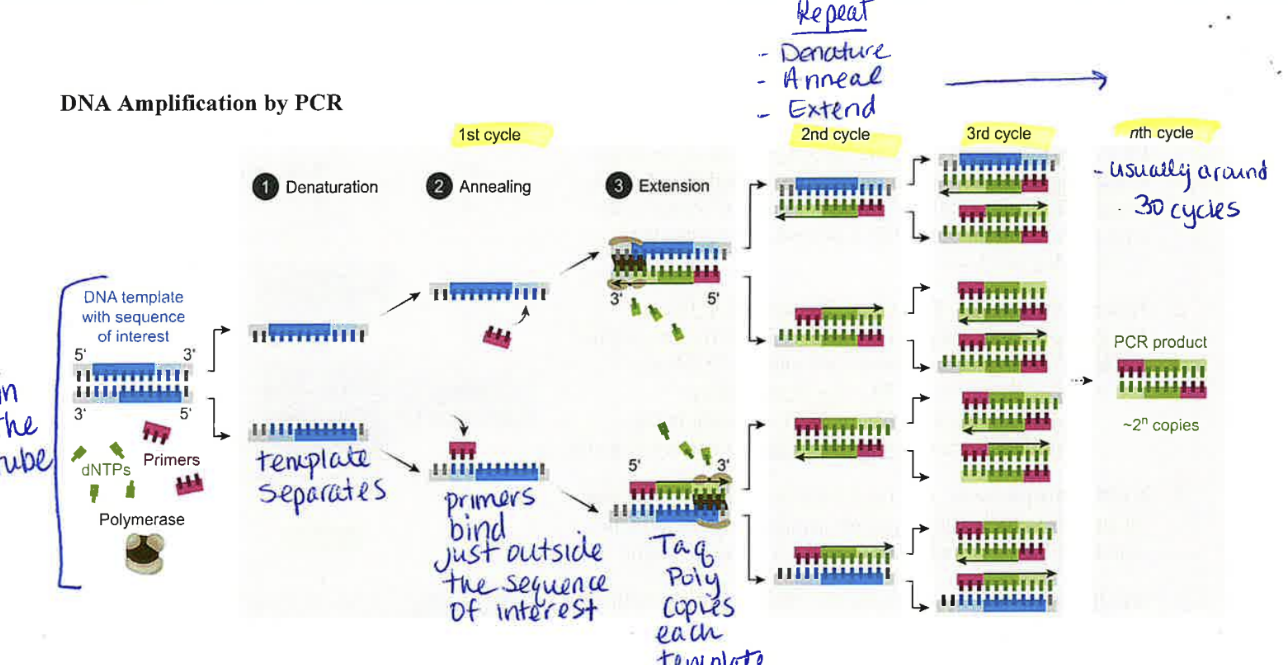
What is PCR and how does it work?
PCR is used to make millions of copies of a specific piece of DNA so it can be studied
What you need
DNA sample - contains target sequence you want to copy
deoxynucleotide triphosphates (dNTPs) - building blocks of DNA
taq polymerase - the heat resistant enzyme that builds DNA
two primers - they attach to the end of the target sequence
Procedure
mix everything in a tube
heat → dna strands separate (denature)
cool → primers bind to target sequence (anneal)
extend → taq poly adds nucleotides to build new DNA (extend)
repeat
Note: done in a thermocycler to automatically control temp
What are variable number tandem repeats
regions in the genome (introns or intergenic regions) where a short DNA sequence is repeated back to back
the # of these repeated units varies greatly among individuals → good genetic markers for identification and research
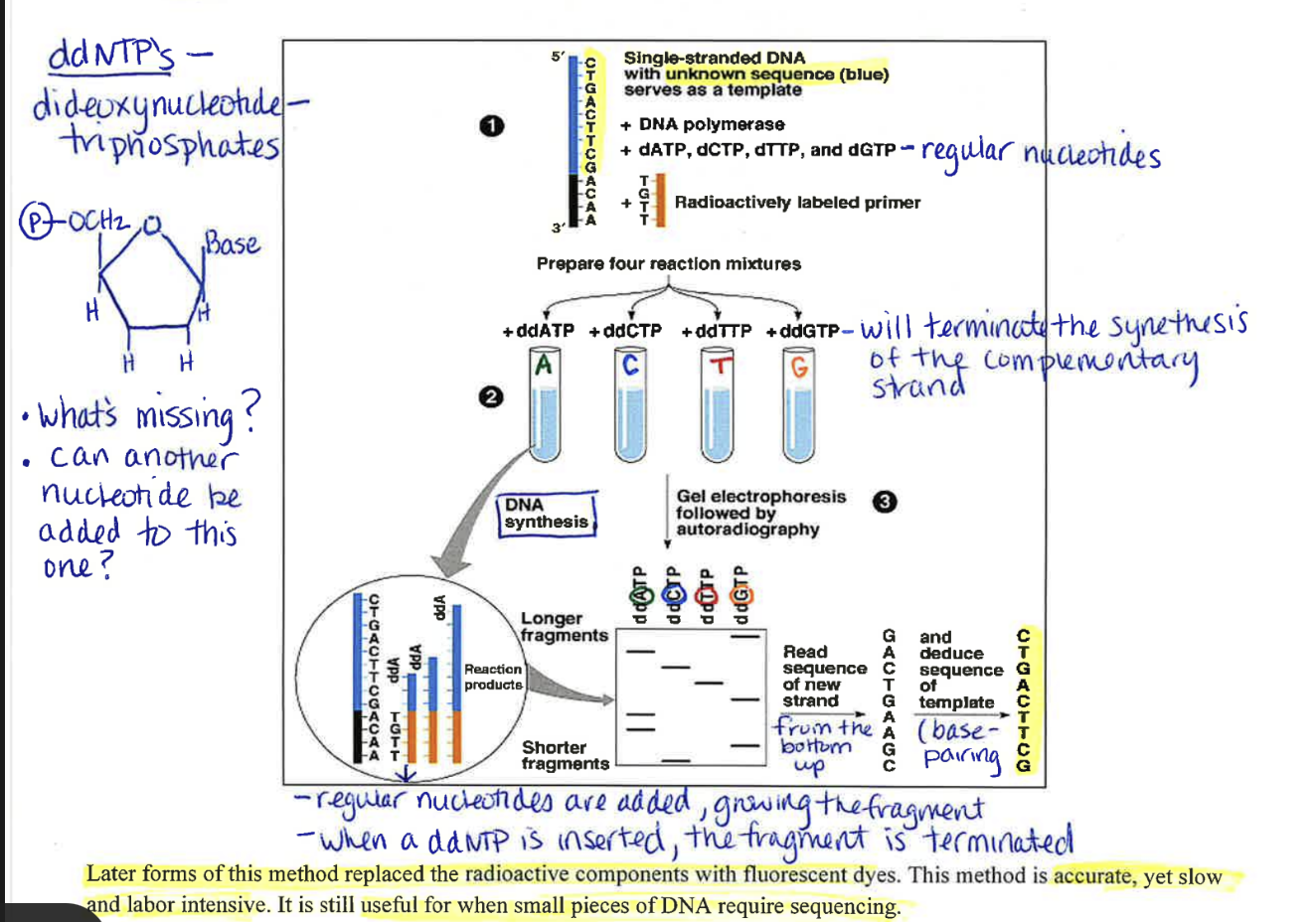
DNA sequencing
I don’t even know if we needa know this but here’s the diagram