Muscular System
 Studied by 0 people
 Call Kai
 Learn
Learn Practice Test
 Spaced Repetition
 Match
Match Flashcards
 Knowt Play
1/15

There's no tags or description
Looks like no tags are added yet.
Name | Mastery | Learn | Test | Matching | Spaced |
|---|
No study sessions yet.
16 Terms
Movement
Maintain posture
Produce heat
Role in organ function, blood circulation
Muscular system functions

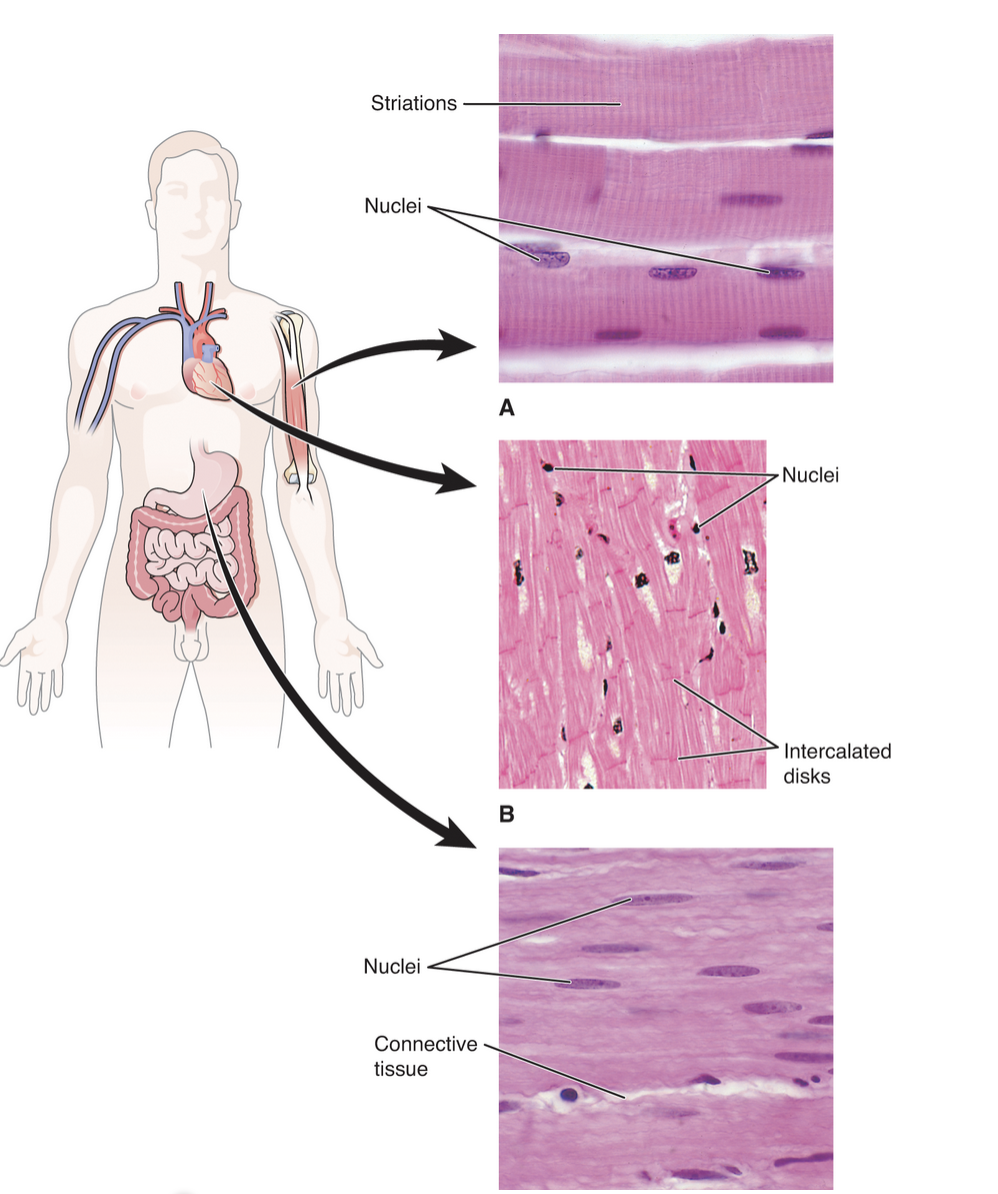
Where: attached to bones
Characteristics: multinucleated, striated, long/cylindrical shape
Control: Voluntary
Action: movement at jts, stimulated by nervous system
Skeletal muscle
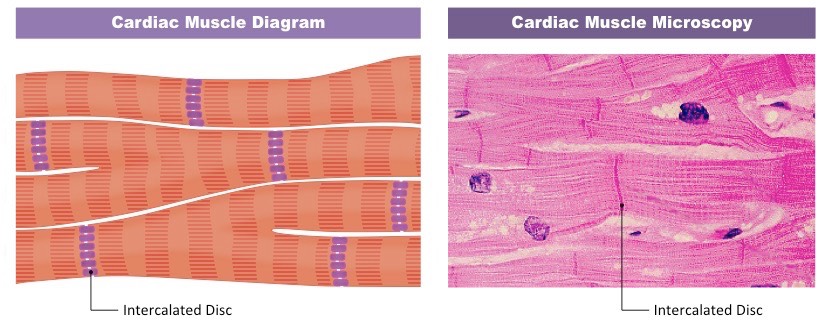
Where: walls of heart
Characteristics: branching, intercalated discs, 1 nucleus, lightly striated
Control: involuntary
Action: pumps blood out of the heart, self-excitatory (influenced by nervous system and hormones)
Cardiac muscle
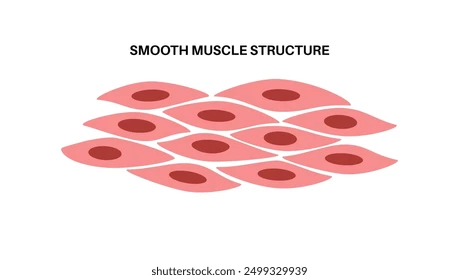
Where: walls of hollow organs, vessels, resp passages
Characteristics: tapered at each end (spindle), branching, nonstriated
Control: involuntary
Action: peristalsis
Smooth (visceral) muscle
atrophy
Decrease in size (wasting) of muscle
muscular dystrophy (MD)
Genetic disease where muscles waste away or atrophy
myalgia
painful muscle
Antinuclear antibody (ANA)
Autoimmune profile
Cold agglutinin titer
Creatine
Creatine kinase (CK)
Electromyography
Lactate dehydrogenase (LD/LDH)
Lactic acid
Myoglobin
Tissue biopsy or culture
Tests for muscular system disorders
Autoimmune connective tissue disease - antibodies accidentally target normal proteins —> inflammation that leads to jt/tissue damage
Antinuclear antibody (ANA)
Immune system attacks RBCs when cold, associated with rheumatoid arthritis
Cold agglutinin titer
Waste produce from muscle breakdown - rhabdomyolysis
Creatine test
Enzyme in muscle tissue (elevated levels indicate muscle damage)
Creatine kinase (CK)
Measures electrical activity of the muscles/nerves
Electromyography
Enzyme in muscles - damaged tissue w/ LDH, cells release the enzyme into the bloodstream (high levels = sign of damage)
Used to track muscular dystrophy
Lactate dehydrogenase (LD/LDH)
Byproduct of muscle metabolism - accumulates when O2 is low
Lactic acid test
Protein in muscle tissue that stores oxygen, elevated levels - muscle damage
Myoglobin test
 Note
Note  Flashcards (23)