Unit 3 - AP Art History
 Studied by 0 people
 Call Kai
 Learn
Learn Practice Test
 Spaced Repetition
 Match
Match Flashcards
 Knowt Play
1/31

There's no tags or description
Looks like no tags are added yet.
Name | Mastery | Learn | Test | Matching | Spaced | Call with Kai |
|---|
No analytics yet
Send a link to your students to track their progress
32 Terms
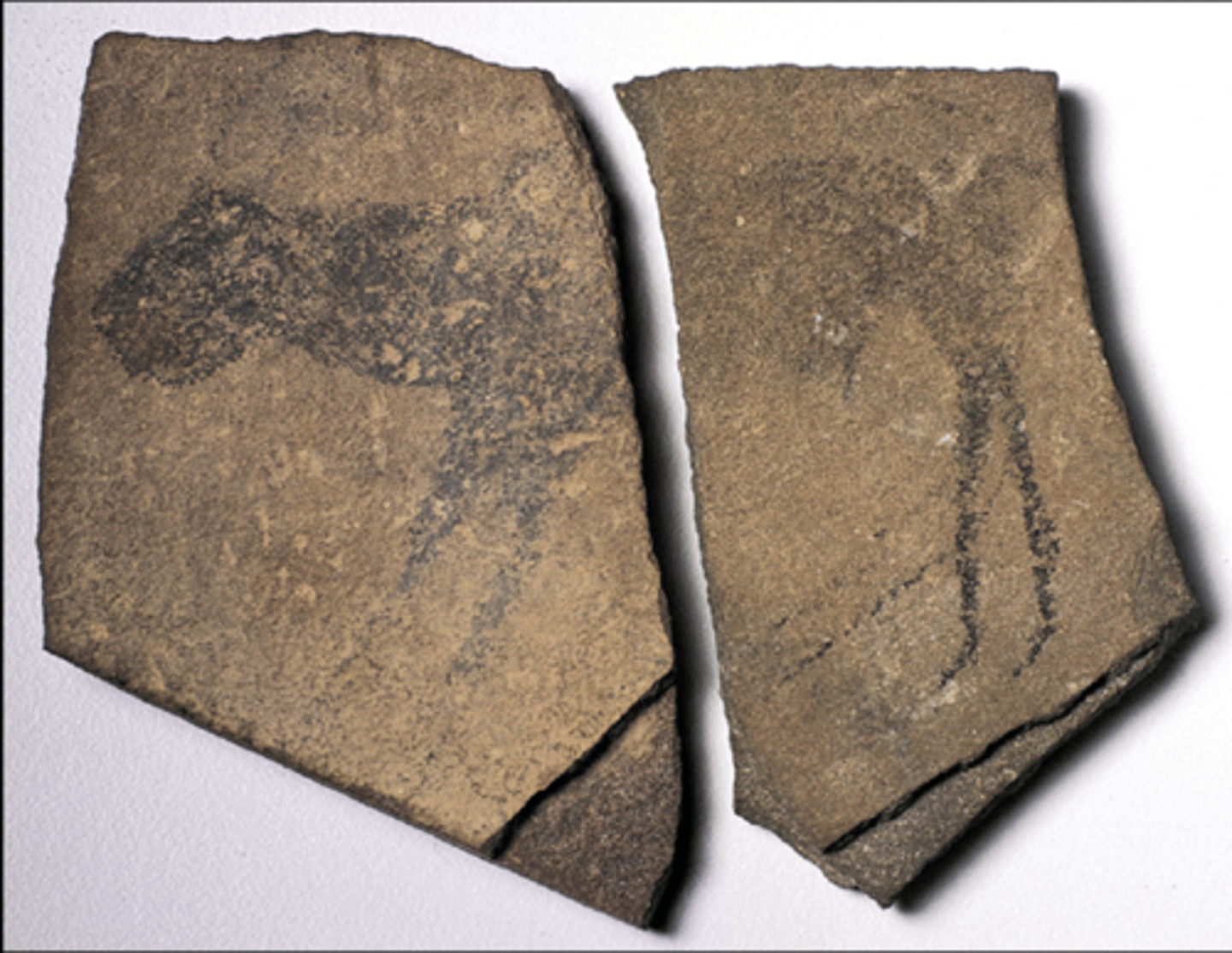
Apollo 11 cave stones - Namibia, Africa
25,000 BCE; charcoal on quartzite, a zoomorphic animal shape, product of human creativity + imagination, may be evidence of shamanistic beliefs, animals were part of the environment, considered mobility art (small scale prehistoric art that can be moved)
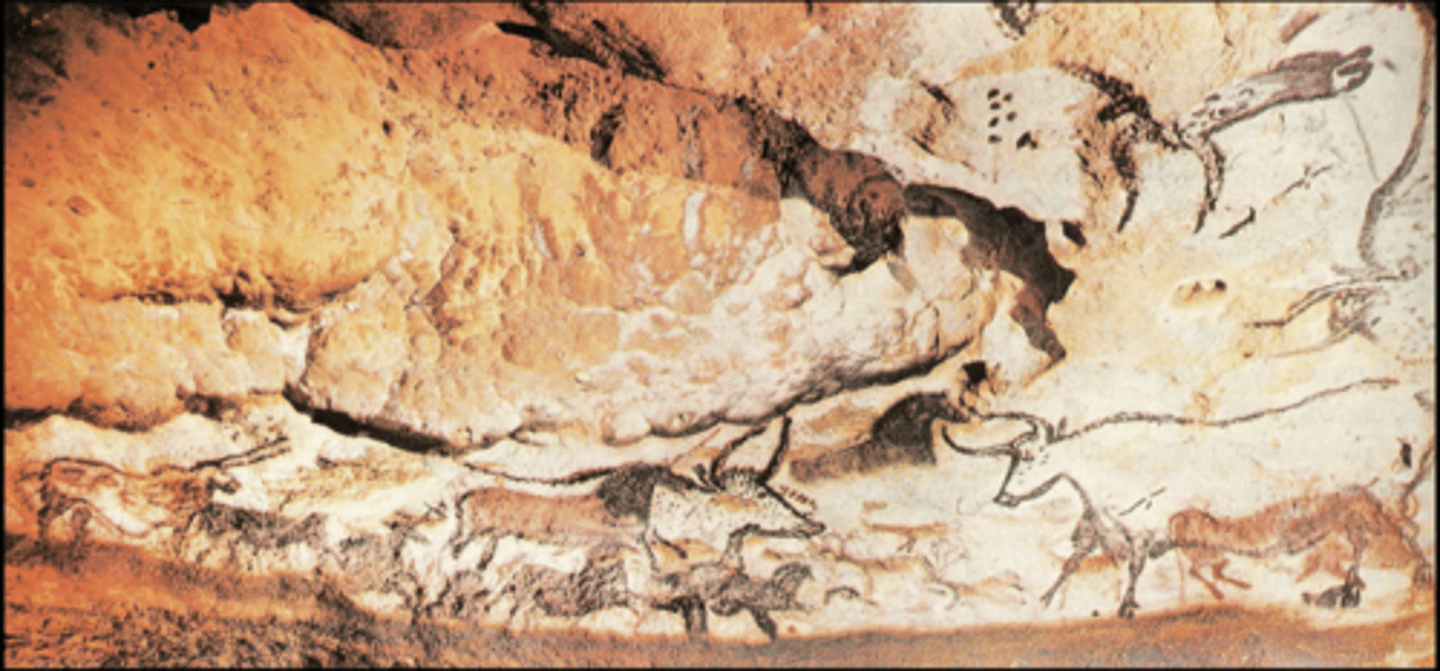
Great Hall of the Bulls - Lascaux, France
15,000-13,000 BCE, paleolithic period, a rock painting, twisted perspective and composite pose, animals are painted in order, the dead ascending bird head man in the bottom, unknown, images are painted on, paleolithic cave art is found in places remote from daily life vs. neolithic art can be found closer to where ppl lived
Camelid Sacrum in Shape of a Canine - Tequixquiac, Mexico
14,000-7,000 BCE, carved sacrum bone of camel-related animal, nostrils have holes drilled/carved into them indicating it was made by humans, a sacred object, visual evidence: the care and craftmenship of the drilling/carving, contextual evidence: the sacrum was a sacred bone, resurrection bone, found in 1870 when someone dug a ditch in mexico

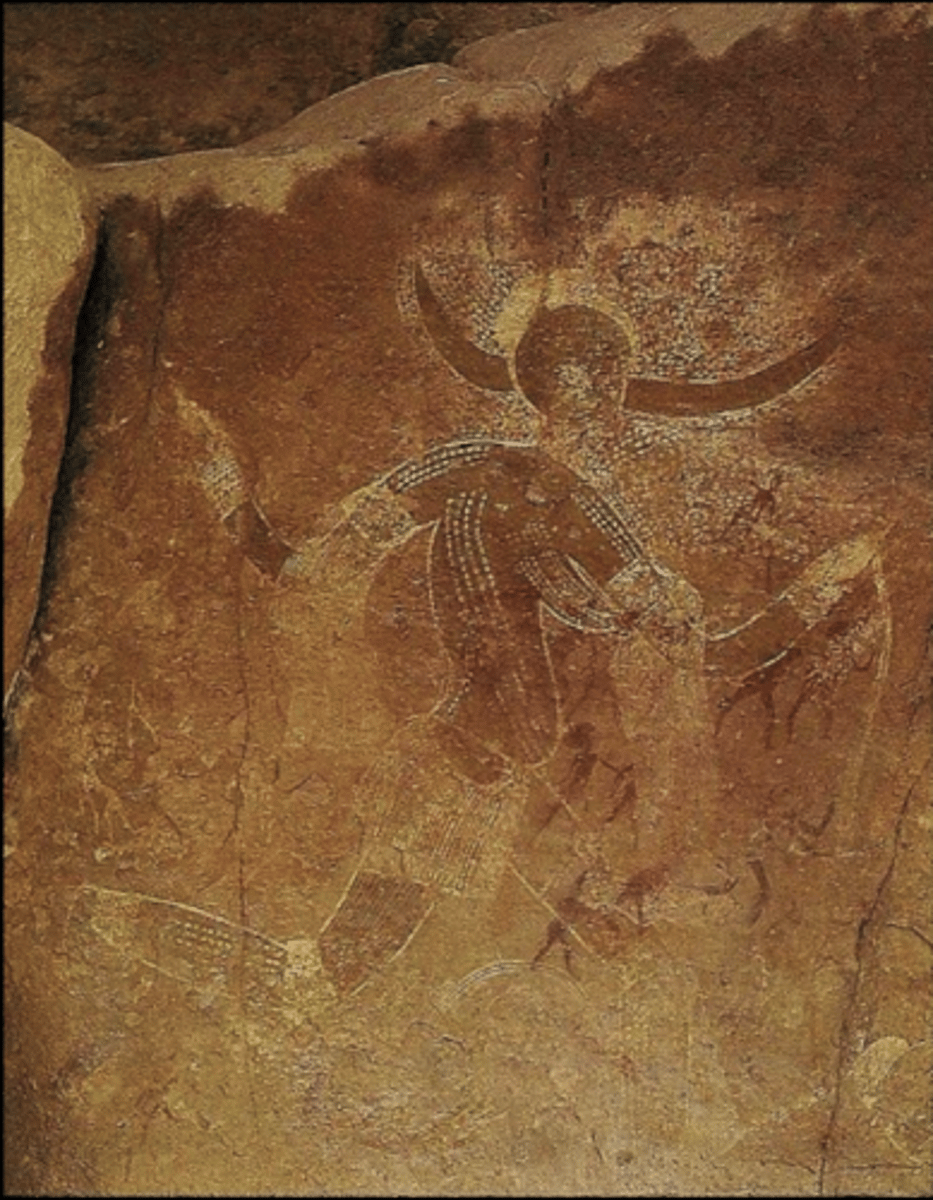
Running Horned Woman - Tassili n''Ajjer, Algeria
6000-4000 BCE, pigment on sandstone/pictograph, running female figure in twisted/composite perspective, human form is naturalistic + there's movement, ritual or ceremonial use and used to emphasize the importance of survival, it was found in a secluded and remote area high in the mountains, maybe indicating a more religious use
Bushel with Ibex Motifs - Susa, Iran
4,200-3,500 BCE, neolithic/agricultural revolution, painted terracotta, cylindrical hand thrown pot, animal figure is standing on a ground line, registers divide the space using geometric lines, the clay vessels played a role in burial sites and the bushel causes us to wonder and ask questions about ancient civilization

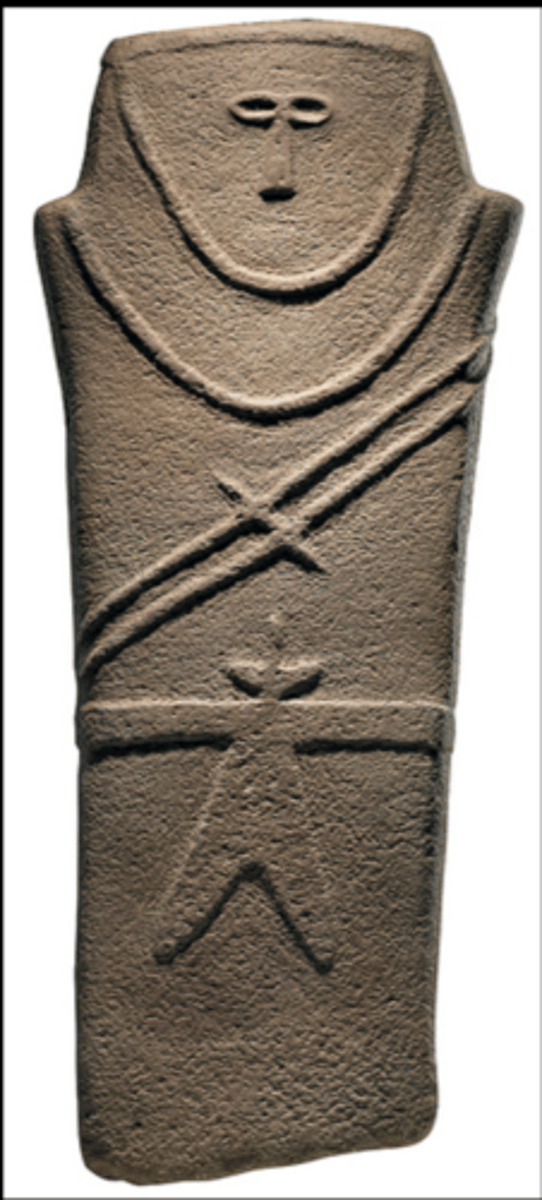
Anthropomorphic stele - Saudi Arabia
4,000-3,000 BCE, sandstone, from neolithic period and its face is outlines and abstracted, associated with religious or burial practices, pre-islamic Arabia, more objects were found far apart which show use of exogenous material, silk road is beginning (trade routes)
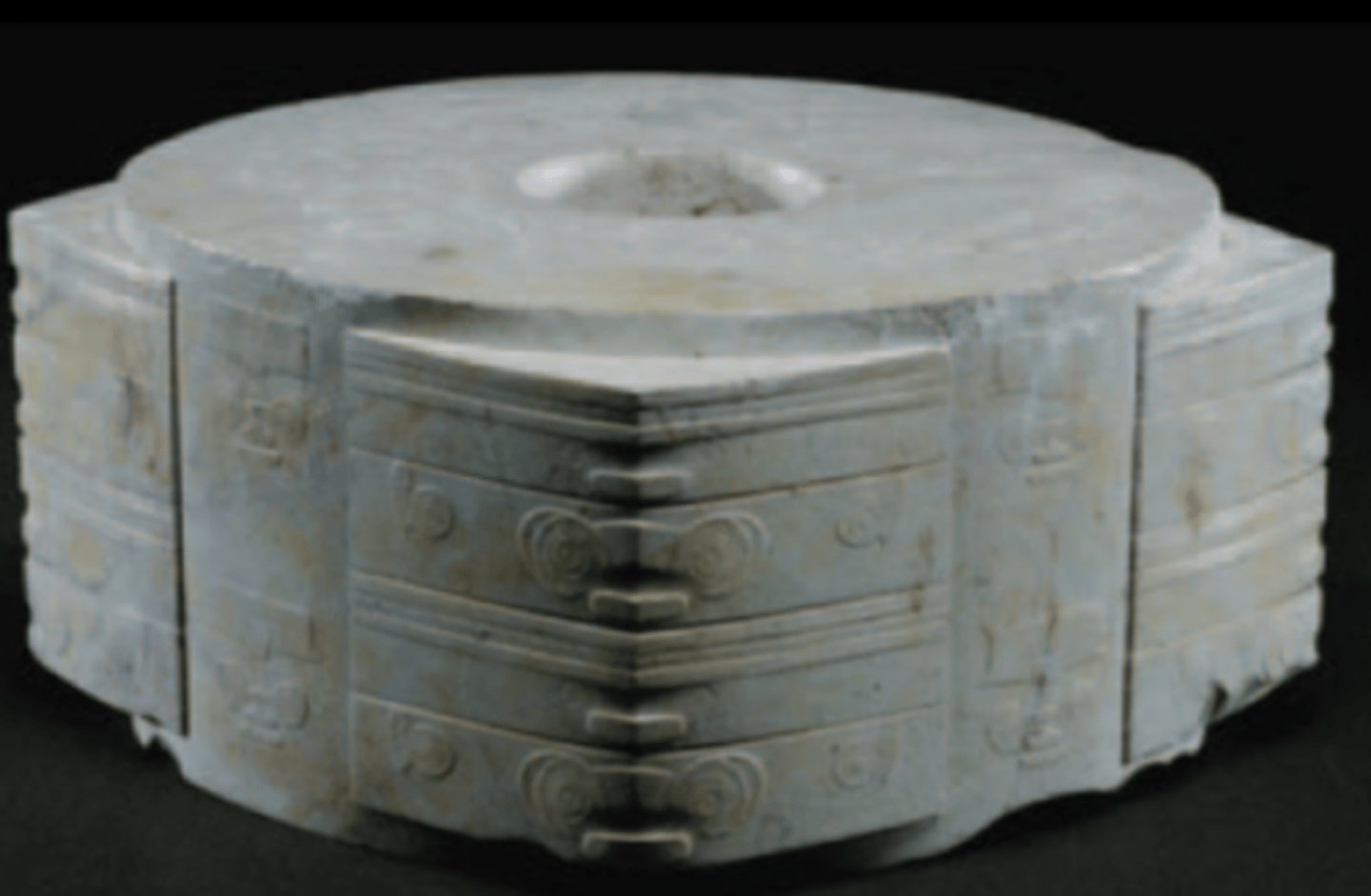
Jade Cong - Liangzhu, China
2500 BCE, Liangzhu culture, made of jade or nephrite, round interior could mean sky, regular and linear patterns, neolithic period could be the origin of subsequent Chinese symbolism, the quality of materials and difficult process may indicate a connection between the height, rank, and power of the individual, found in gravesites
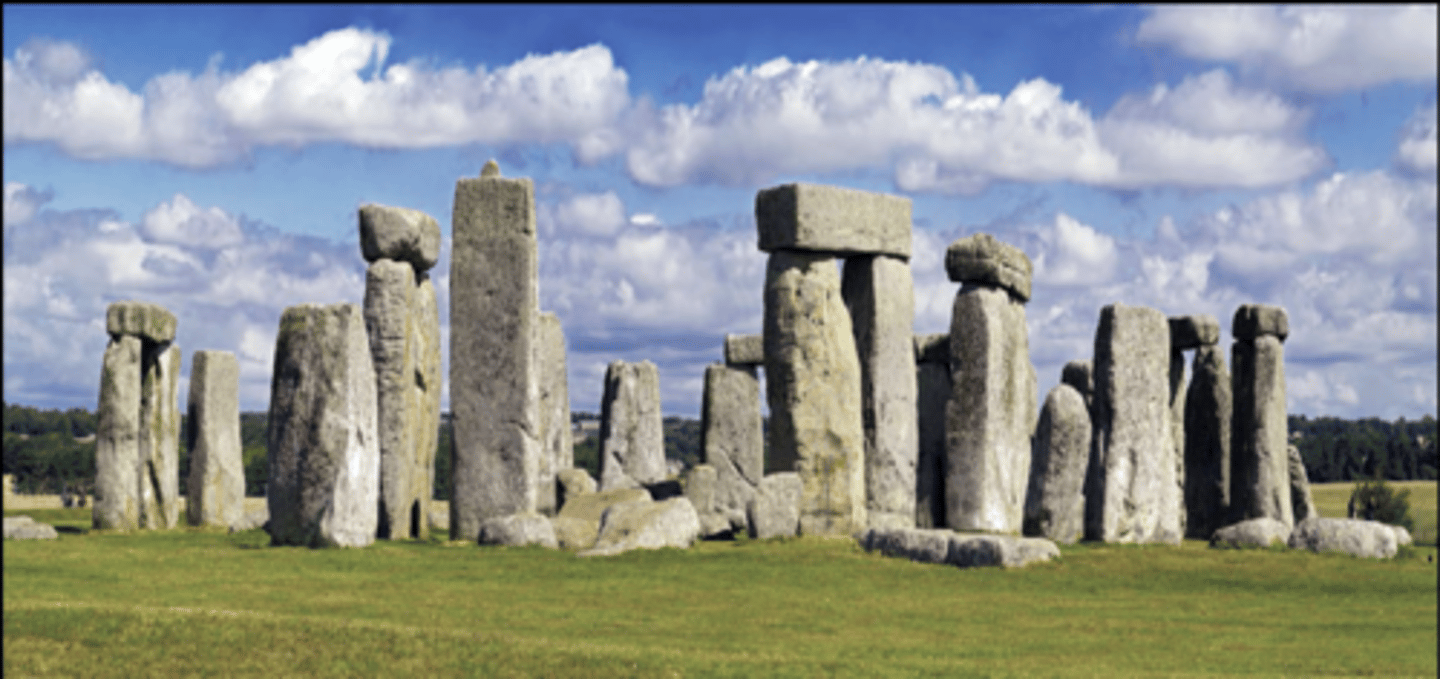
Stonehenge - Salisbury Plain, England
sandstone/circle of megalithic stones, the larger stones are sarsen and the innerstones are bluestones, trilithon is the 2 posts and a lintel, they are joined vertically with mortise and tenon joint and across by tounge and groove, uknown, 3 phases of construction
1. the stones - concentric circles of sarsens and bluestones
2. the henge - a circular monument with a bank on the outside
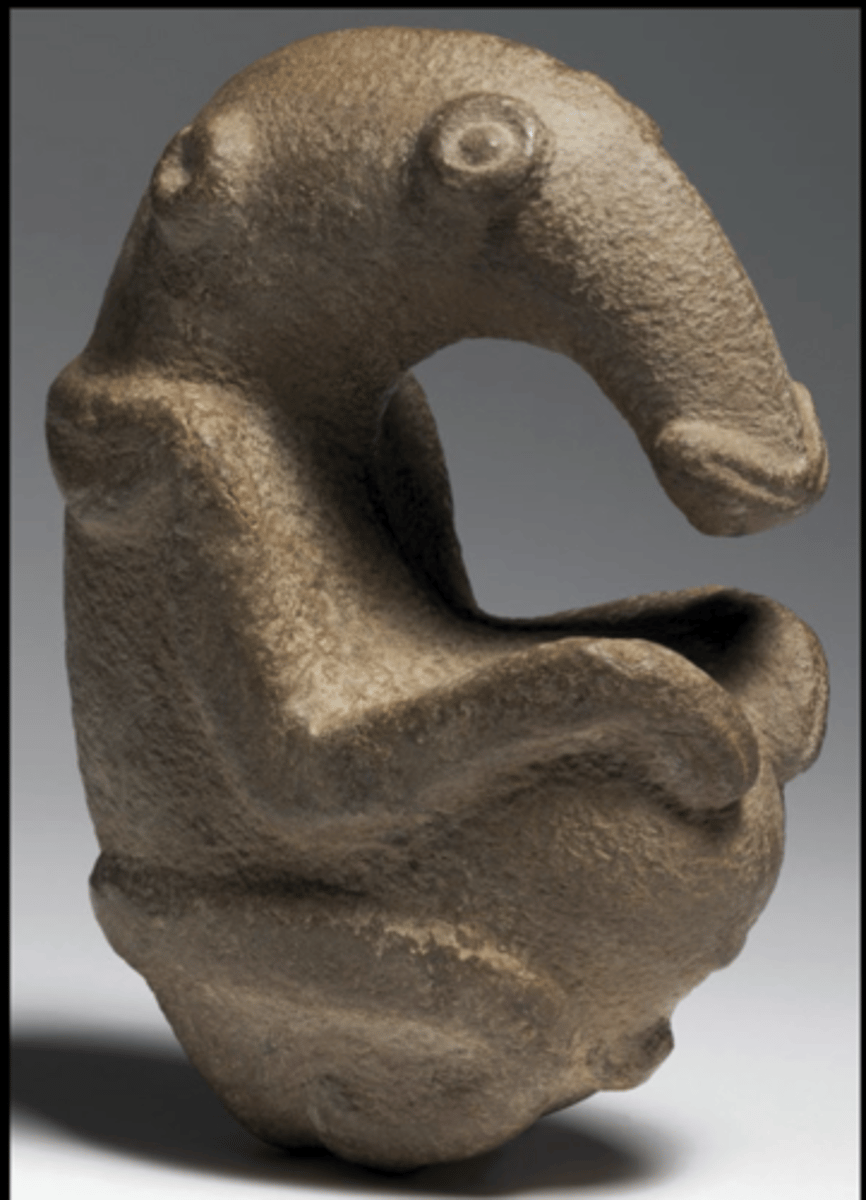
Ambum Stone - Ambum Valley, Papua New Guinea
carved greywacke, highly detailed and smooth, zoomorphic (animal form) unknown, used by the Egna people as a ritual object "bones of the ancestors"m used to maintain fertility, when white ppl arrived it became primitive art which diminished their supernatural powers, contains pestles
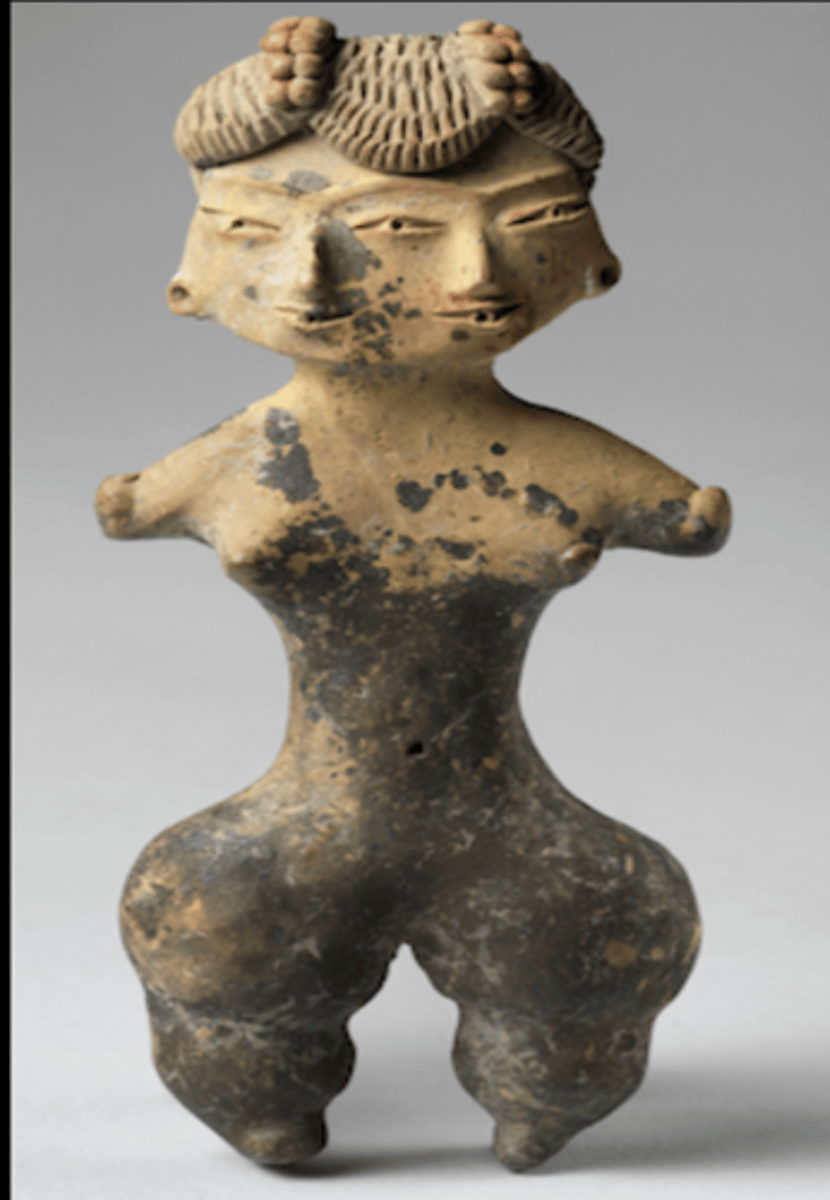
Tlatilco Female Figurine - Neolithic Mesoamerica
ceramic traces w/ pigment, a female figure bifurcated (divided down the middle), duality, unknown but may be linked to rituals involving birth/death/regeneration, titalico means "place of hidden things", many of the figurines represent aspects of daily life
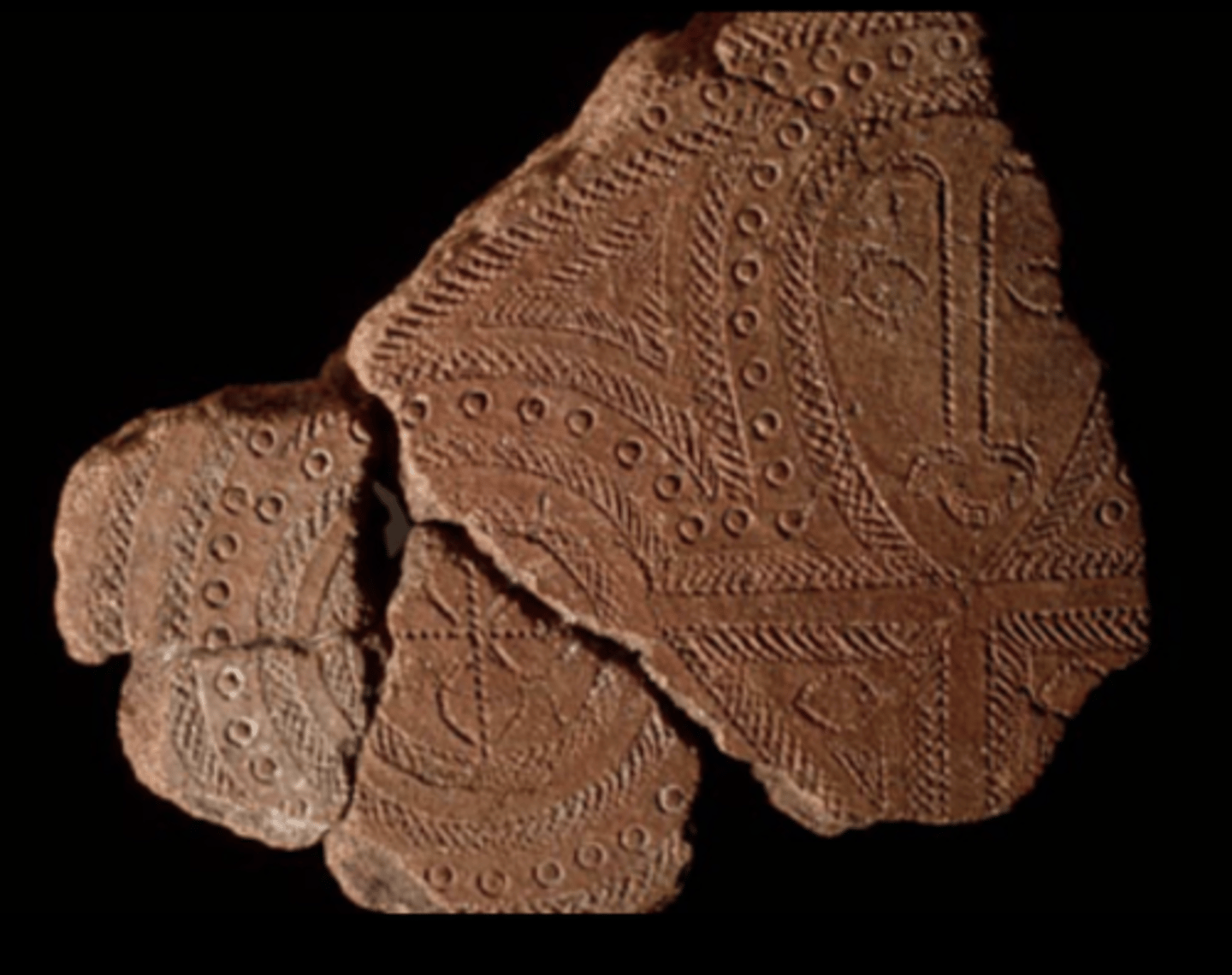
Terra cotta Fragment - Lapita People
low-fire earthenware, hand-built, decorated with linear and curved patterns, designs are stamped and inscised in a consistent way, the pottery was found in gravesites, the presence of the pottery on many islands show trade and long distance travel, the pottery tells the story of the migration of the Lapita people, pottery became less detailed as they traveled farther
Both the Great Hall of the Bulls and Running Horned Woman share this stylistic depiction of the figure.
twisted perspective/composite pose
jade
a material that requires lots of time to shape using sand as an abrasive.
shamanistic
contacting the forces of nature and spirits through an intermediary
paleolithic art
humans were not the center of the universe, but part of the landscape and nature.
mobility art
Early homo sapiens created this type of small transportable art as a result of nomadic hunter/gatherer life.
pestle
a ceremonial object used for grinding medicine, example is the ambum stone
lapita terra cotta fragments
works that display evidence of paddle techniques
the jade cong is
Found in burial tombs, it's believed that the number and size of these objects reflected the status of the individual
neolithic art period
when humans began to make depictions of themselves during the ice age
this object is found in burial sites and is an object that expresses a concept relating to the duality of life/death
the tlaticlco female figurine
a ground liine
a visual innovation depicting space which can be found on bushel with ibex motifs
stele
a vertical stone marker
agricultural revolution
began around 10,000 BCE, a global mvmt that allowed for more down-time and proliferation of human expression through art
sacrum
known as the ressurection bone and was revered in Mesoamerica for its spiritual association with birth/death/rebirth
the mortise and tenon
was a joining technique that was used to connect the posts and lintels at stonehenge
post and lintel
a building system that emerges during the neolithic period with the construction of megalithic structures
jade cong is found along this river valley
yangtze river, china
This work displays early evidence of equating a spiritual journey with a physical journey due to its remote location in the mountains.
Running Horned Woman
tongue and groove
a joining technique used to connect the lintels of the outer circle at stonehenge
This is a circular ground plan used for rituals and astronomical events
a henge
Displaying evidence of long distance trade and evolving visual traditions, the art of the Lapita People spans these locations.
Taiwan
 Note
Note  Flashcards (21)