3- Chromosomal disorders diseases and embryonic development

0.0(0)
studied byStudied by 0 people
0.0(0)
full-widthCall with Kai
learnLearn
examPractice Test
spaced repetitionSpaced Repetition
heart puzzleMatch
flashcardsFlashcards
GameKnowt Play
Card Sorting

1/20

encourage image

There's no tags or description

Looks like no tags are added yet.

Study Analytics
Name
Mastery
Learn
Test
Matching
Spaced
Call with Kai

No study sessions yet.

21 Terms

1
New cards

What are the types of chromosome mutations? 

  • Translocation 

  • Inversion 

  • Deletion 

  • Duplication 

2
New cards

What is translocation? 

When segments of different chromosomes are exchanged 
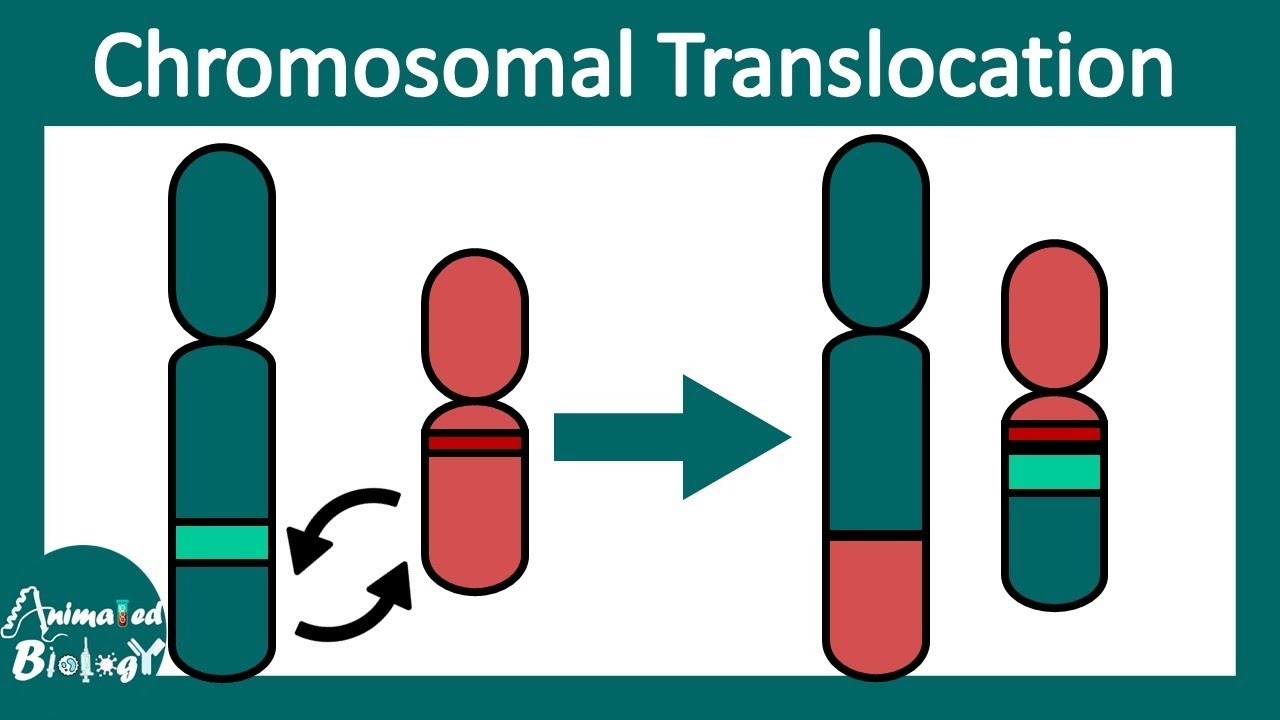
<p><span style="background-color: inherit; line-height: 23px;"><span>When segments of different chromosomes are exchanged</span></span><span style="line-height: 23px;"><span>&nbsp;</span></span></p>
3
New cards

What is inversion? 

A segment of chromosome is inverted 
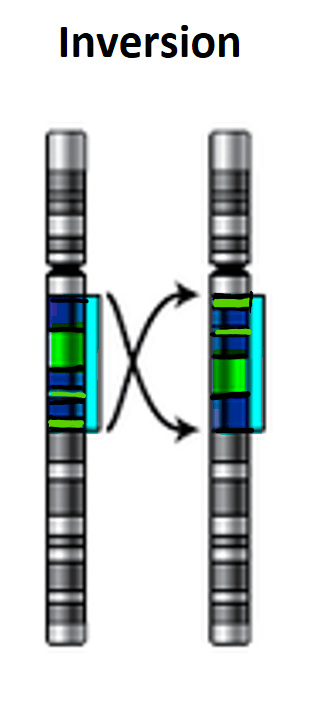
<p><span style="background-color: inherit; line-height: 23px;"><span>A segment of chromosome is inverted</span></span><span style="line-height: 23px;"><span>&nbsp;</span></span></p>
4
New cards

What is deletion? 

A segment of chromosome is deleted  

5
New cards

What is duplication? 

Segment of one chromosome moves to the same location on a homologous chromosome 

6
New cards

Why is trisomy 21 relatively common and the other autosomal trisomy's not? 

  • It's the smallest autosomal chromosome- causes down syndrome. 

  • Mainly due to chromosome size vs gene content 

7
New cards

What is a nondisjunction? 

  • When the chromosome fails to separate during meiosis 

  • This produces gametes with either a missing chromosome or extra chromosome 

8
New cards

What is aneuploidy? 

When gametes contain an abnormal amount of chromosomes, it is referred to as having ''aneuploidy'' 

9
New cards

Describe the lengthy Meiosis process in Oocytogenisis 

  • The development of mature egg, is a prolonged process 

  • Immature eggs form in the female embryo but do not complete their development until years of decades later 

  • One egg is prepared in a follicle and released ~every 28 days between start of puberty  and menopause (not during pregnancy or hormonal induced menstral suppresion) 

10
New cards

What is fertilization? 

Formation of a diploid zygote from a haploid egg and sperm 

11
New cards

What occurs during fertilization? (detailed pls)

  • Cleavage-a period of rapid mitotic devision without growth 

  • Morula is formed- a compact mass of cells (solid ball of cells) 

  • After 5 days, a blastocyst is formed (hollow ball of cells) 

12
New cards

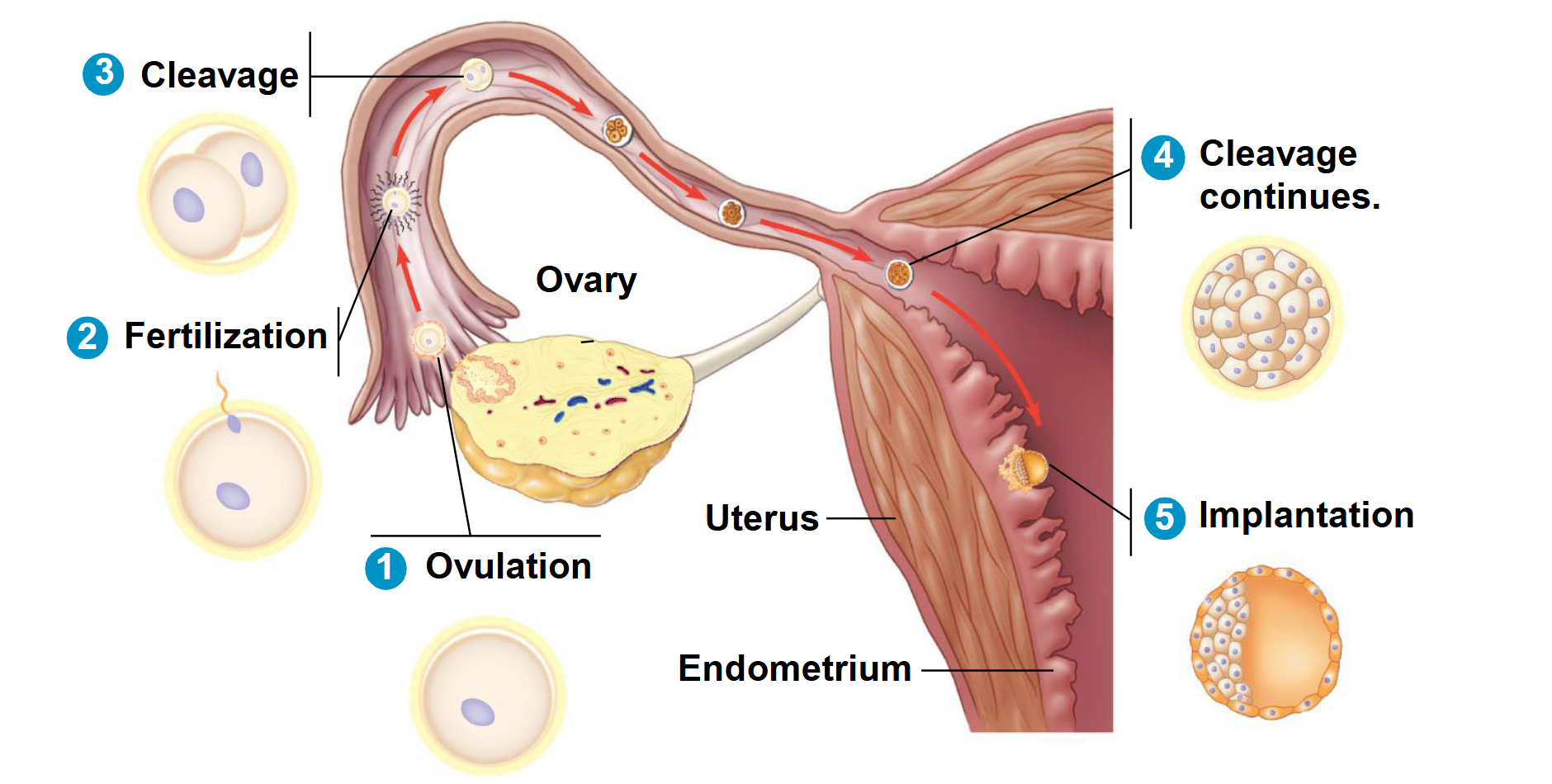
Give a summary of the formation of the human zygote and early post fertilization events. 

  1. Ovulation 

  2. Fertilization 

  3. Cleavage 

  4. Cleavage continues 

  5. Implantation 

<ol><li><p class="Paragraph SCXO236423422 BCX0" style="text-align: left;"><span style="background-color: inherit; line-height: 23px;"><span>Ovulation</span></span><span style="line-height: 23px;"><span>&nbsp;</span></span></p></li><li><p class="Paragraph SCXO236423422 BCX0" style="text-align: left;"><span style="background-color: inherit; line-height: 23px;"><span>Fertilization</span></span><span style="line-height: 23px;"><span>&nbsp;</span></span></p></li><li><p class="Paragraph SCXO236423422 BCX0" style="text-align: left;"><span style="background-color: inherit; line-height: 23px;"><span>Cleavage</span></span><span style="line-height: 23px;"><span>&nbsp;</span></span></p></li><li><p class="Paragraph SCXO236423422 BCX0" style="text-align: left;"><span style="background-color: inherit; line-height: 23px;"><span>Cleavage continues</span></span><span style="line-height: 23px;"><span>&nbsp;</span></span></p></li><li><p class="Paragraph SCXO236423422 BCX0" style="text-align: left;"><span style="background-color: inherit; line-height: 23px;"><span>Implantation</span></span><span style="line-height: 23px;"><span>&nbsp;</span></span></p></li></ol><p></p>
13
New cards

Describe how an embryo develops and leads to the formation of a human 

  1. Fertilisation 

  • Sperm fuses with egg in falopian tube 

  • Forms a zygote 

  1. Cleavage and blastocyst formation 

  • Zygote undegoes rapid mitotic divisions (cleavage) 

  • Becomes a morula (solid mass of balls) 

  • Fluid enters, forming the blastocyst with: Inner cell mass (forming the embryo) and Trophoblast (becoming the placenta). 

  1. Implantation 

  • Blastocyst embeds itself into the uterus lining 

  • Trophoblast cells form the placenta, supporting nutrient and gas exchange 

  1. Gastrulation 

  • ICM (Inner cell mass) reorganizes into: Ectoderm (skin, nervous system), Endoderm (organ linings, guts, lungs, liver), Mesoderm (muscles, bones, blood, kidneys) 

  1. Neurulation 

  • Ectoderm folds to form the neural tube which becomes the brain and spinal chord 

  • Neural crest cells migrate to form peripheral nerves, facial structures, and more.  

  1. Organogenesis 

  • Major organs begin forming.  

  • Heart starts beating around week 4. 

  • Limb buds, eyes, and early facial features appear. 

    1. Fetal Development 

    • Embryo is now called a fetus.  

    • Growth accelerates; organs mature. 

    • Nervous system becomes more complex. 

    • By birth, systems are developed enough to function independently. 

14
New cards

What occurs during clavage and blastocyst formation?

  • Zygote undegoes rapid mitotic divisions (cleavage) 

  • Becomes a morula (solid mass of balls) 

  • Fluid enters, forming the blastocyst with: Inner cell mass (forming the embryo) and Trophoblast (becoming the placenta). 

15
New cards

What occurs during implantation?

  • Blastocyst embeds itself into the uterus lining 

  • Trophoblast cells form the placenta, supporting nutrient and gas exchange 

16
New cards

What occurs during gastrolation?

ICM (Inner cell mass) reorganizes into: Ectoderm (skin, nervous system), Endoderm (organ linings, guts, lungs, liver), Mesoderm (muscles, bones, blood, kidneys) 

17
New cards

What occurs during neurulation?

  • Ectoderm folds to form the neural tube which becomes the brain and spinal chord 

  • Neural crest cells migrate to form peripheral nerves, facial structures, and more.  

18
New cards

What occurs during organogenesis?

  • Major organs begin forming.  

  • Heart starts beating around week 4. 

  • Limb buds, eyes, and early facial features appear. 

19
New cards

What occurs during fetal development?

  • Embryo is now called a fetus.  

  • Growth accelerates; organs mature. 

  • Nervous system becomes more complex. 

  • By birth, systems are developed enough to function independently. 

20
New cards

What are the different layers of  an embryo and what tissues do they for? 

  • Three layers are called created by a process called gastrula 

  • The three layers are called germ layers- ectoderm, mesoderm and endoderm 

Ectoderms- epidermis of skin, the nervous system (including brain), sensory organs 

Mesoderm- The skeleton, muscles, blood vessels, heart, blood, kidneys 

Endoderm- lining of internal organs, including those of the digestive system, respiratory system, liver and pancreas 
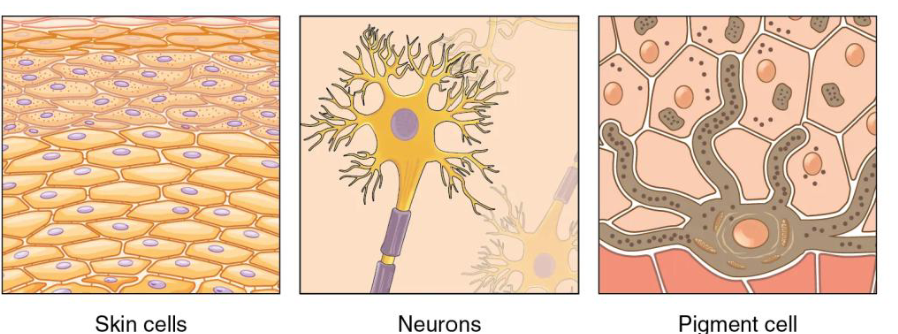
<ul><li><p class="Paragraph SCXO190013679 BCX0" style="text-align: left;"><span style="background-color: inherit; line-height: 23px;"><span>Three layers are called created by a process called gastrula</span></span><span style="line-height: 23px;"><span>&nbsp;</span></span></p></li><li><p class="Paragraph SCXO190013679 BCX0" style="text-align: left;"><span style="background-color: inherit; line-height: 23px;"><span>The three layers are called germ layers- ectoderm, mesoderm and endoderm</span></span><span style="line-height: 23px;"><span>&nbsp;</span></span></p></li></ul><p class="Paragraph SCXO190013679 BCX0" style="text-align: left;"><span style="background-color: inherit; line-height: 23px;"><strong><span>Ectoderms- </span></strong><span>epidermis of skin, the nervous system (including brain), sensory organs</span></span><span style="line-height: 23px;"><span>&nbsp;</span></span></p><p class="Paragraph SCXO190013679 BCX0" style="text-align: left;"><span style="background-color: inherit; line-height: 23px;"><strong><span>Mesoderm- </span></strong><span>The skeleton, muscles, blood vessels, heart, blood, kidneys</span></span><span style="line-height: 23px;"><span>&nbsp;</span></span></p><p class="Paragraph SCXO190013679 BCX0" style="text-align: left;"><span style="background-color: inherit; line-height: 23px;"><strong><span>Endoderm- </span></strong><span>lining of internal organs, including those of the digestive system, respiratory system, liver and pancreas</span></span><span style="line-height: 23px;"><span>&nbsp;</span></span></p>
21
New cards

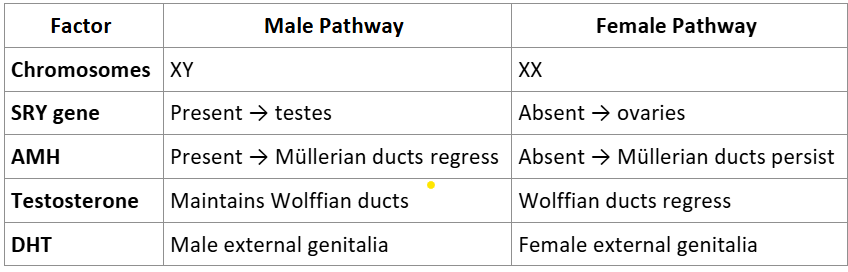
Describe the development of male and female specific parts of the anatomy, how is this regulated? 

  1. Bipotential Stage (Weeks 4–6) 

  • Embryos start with indifferent gonads (can become testes or ovaries). 

  • Both sexes initially have Müllerian ducts and Wolffian ducts. 

  • Development depends on genetic signals and hormones. 

  1.  Male Development (XY) 

Key Regulator: SRY gene (on Y chromosome) 

  • SRY → triggers testis formation. 

  • Testes produce:  

    • Testosterone → maintains Wolffian ducts → epididymis, vas deferens, seminal vesicles. 

    • Anti‑Müllerian Hormone (AMH) → causes Müllerian duct regression. 

  • DHT (dihydrotestosterone) (from testosterone) → forms external genitalia: penis, scrotum, prostate.  

  1. Female Development (XX) 

Key Concept: Default pathway 

  • No SRY → gonads become ovaries. 

  • No AMHMüllerian ducts persist → uterus, fallopian tubes, upper vagina. 

  • No testosteroneWolffian ducts regress. 

  • External genitalia develop into clitoris, labia, lower vagina. 
<ol><li><p class="Paragraph SCXO43793050 BCX0" style="text-align: left;"><span style="background-color: inherit; line-height: 20.7px; color: windowtext;"><strong><span>Bipotential Stage (Weeks 4–6)</span></strong></span><span style="line-height: 20.7px; color: windowtext;"><span>&nbsp;</span></span></p></li></ol><ul><li><p class="Paragraph SCXO43793050 BCX0" style="text-align: left;"><span style="background-color: inherit; line-height: 20.7px; color: windowtext;"><span>Embryos start with </span><strong><span>indifferent gonads</span></strong><span> (can become testes or ovaries).</span></span><span style="line-height: 20.7px; color: windowtext;"><span>&nbsp;</span></span></p></li><li><p class="Paragraph SCXO43793050 BCX0" style="text-align: left;"><span style="background-color: inherit; line-height: 20.7px; color: windowtext;"><span>Both sexes initially have </span><strong><span>Müllerian ducts</span></strong><span> and </span><strong><span>Wolffian ducts</span></strong><span>.</span></span><span style="line-height: 20.7px; color: windowtext;"><span>&nbsp;</span></span></p></li><li><p class="Paragraph SCXO43793050 BCX0" style="text-align: left;"><span style="background-color: inherit; line-height: 20.7px; color: windowtext;"><span>Development depends on </span><strong><span>genetic signals</span></strong><span> and </span><strong><span>hormones</span></strong><span>.</span></span><span style="line-height: 20.7px; color: windowtext;"><span>&nbsp;</span></span></p></li></ul><ol start="2"><li><p class="Paragraph SCXO43793050 BCX0" style="text-align: left;"><span style="background-color: inherit; line-height: 20.7px; color: windowtext;"><strong><span>&nbsp;Male Development (XY)</span></strong></span><span style="line-height: 20.7px; color: windowtext;"><span>&nbsp;</span></span></p></li></ol><p class="Paragraph SCXO43793050 BCX0" style="text-align: left;"><span style="background-color: inherit; line-height: 23px;"><strong><span>Key Regulator: SRY gene (on Y chromosome)</span></strong></span><span style="line-height: 23px;"><span>&nbsp;</span></span></p><ul><li><p class="Paragraph SCXO43793050 BCX0" style="text-align: left;"><span style="background-color: inherit; line-height: 20.7px; color: windowtext;"><span>SRY → triggers </span><strong><span>testis formation</span></strong><span>.</span></span><span style="line-height: 20.7px; color: windowtext;"><span>&nbsp;</span></span></p></li><li><p class="Paragraph SCXO43793050 BCX0" style="text-align: left;"><span style="background-color: inherit; line-height: 20.7px; color: windowtext;"><span>Testes produce: </span></span><span style="line-height: 20.7px; color: windowtext;"><span>&nbsp;</span></span></p><ul><li><p class="Paragraph SCXO43793050 BCX0" style="text-align: left;"><span style="background-color: inherit; line-height: 20.7px; color: windowtext;"><strong><span>Testosterone</span></strong><span> → maintains </span><strong><span>Wolffian ducts</span></strong><span> → epididymis, vas deferens, seminal vesicles.</span></span><span style="line-height: 20.7px; color: windowtext;"><span>&nbsp;</span></span></p></li><li><p class="Paragraph SCXO43793050 BCX0" style="text-align: left;"><span style="background-color: inherit; line-height: 20.7px; color: windowtext;"><strong><span>Anti‑Müllerian Hormone (AMH)</span></strong><span> → causes </span><strong><span>Müllerian duct regression</span></strong><span>.</span></span><span style="line-height: 20.7px; color: windowtext;"><span>&nbsp;</span></span></p></li></ul></li><li><p class="Paragraph SCXO43793050 BCX0" style="text-align: left;"><span style="background-color: inherit; line-height: 20.7px; color: windowtext;"><strong><span>DHT (dihydrotestosterone)</span></strong><span> (from testosterone) → forms </span><strong><span>external genitalia</span></strong><span>: penis, scrotum, prostate.&nbsp;</span></span><span style="line-height: 20.7px; color: windowtext;"><span>&nbsp;</span></span></p></li></ul><ol start="3"><li><p class="Paragraph SCXO43793050 BCX0" style="text-align: left;"><span style="background-color: inherit; line-height: 20.7px; color: windowtext;"><strong><span>Female Development (XX)</span></strong></span><span style="line-height: 20.7px; color: windowtext;"><span>&nbsp;</span></span></p></li></ol><p class="Paragraph SCXO43793050 BCX0" style="text-align: left;"><span style="background-color: inherit; line-height: 23px;"><strong><span>Key Concept: Default pathway</span></strong></span><span style="line-height: 23px;"><span>&nbsp;</span></span></p><ul><li><p class="Paragraph SCXO43793050 BCX0" style="text-align: left;"><span style="background-color: inherit; line-height: 20.7px; color: windowtext;"><strong><span>No SRY</span></strong><span> → gonads become </span><strong><span>ovaries</span></strong><span>.</span></span><span style="line-height: 20.7px; color: windowtext;"><span>&nbsp;</span></span></p></li><li><p class="Paragraph SCXO43793050 BCX0" style="text-align: left;"><span style="background-color: inherit; line-height: 20.7px; color: windowtext;"><strong><span>No AMH</span></strong><span> → </span><strong><span>Müllerian ducts persist</span></strong><span> → uterus, fallopian tubes, upper vagina.</span></span><span style="line-height: 20.7px; color: windowtext;"><span>&nbsp;</span></span></p></li><li><p class="Paragraph SCXO43793050 BCX0" style="text-align: left;"><span style="background-color: inherit; line-height: 20.7px; color: windowtext;"><strong><span>No testosterone</span></strong><span> → </span><strong><span>Wolffian ducts regress</span></strong><span>.</span></span><span style="line-height: 20.7px; color: windowtext;"><span>&nbsp;</span></span></p></li><li><p class="Paragraph SCXO43793050 BCX0" style="text-align: left;"><span style="background-color: inherit; line-height: 20.7px; color: windowtext;"><span>External genitalia develop into </span><strong><span>clitoris, labia, lower vagina</span></strong><span>.</span></span><span style="line-height: 20.7px; color: windowtext;"><span>&nbsp;</span></span></p></li></ul><p></p>