AP Art History Content Area 3 (Italian Renaissance)
 Studied by 0 people
 Call with Kai
 Learn
Learn Practice Test
 Spaced Repetition
 Match
Match Flashcards
 Knowt Play
1/17

There's no tags or description
Looks like no tags are added yet.
Name | Mastery | Learn | Test | Matching | Spaced | Call with Kai |
|---|
No analytics yet
Send a link to your students to track their progress
18 Terms
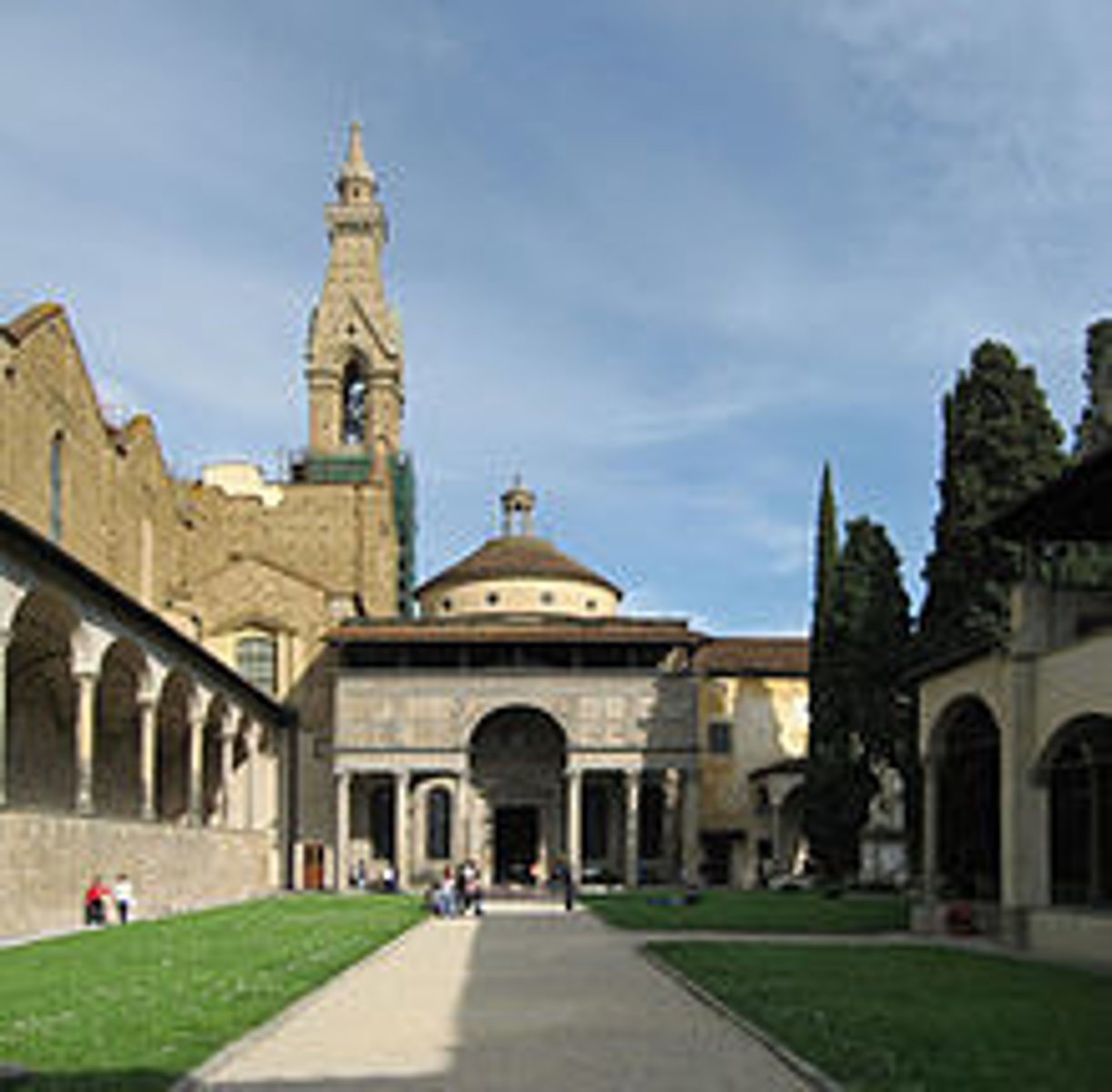
Pazzi Chapel (exterior)
Florence, Italy. Basilica di Santa Croce. Brunelleschi (architect). C. 1429-1461 CE. Masonry.
Intended to bring piety to Pazzi family name. Small-domed chapel contrasted the High Gothic style. Symmetrical and eclectic with classical and early Christian arches.
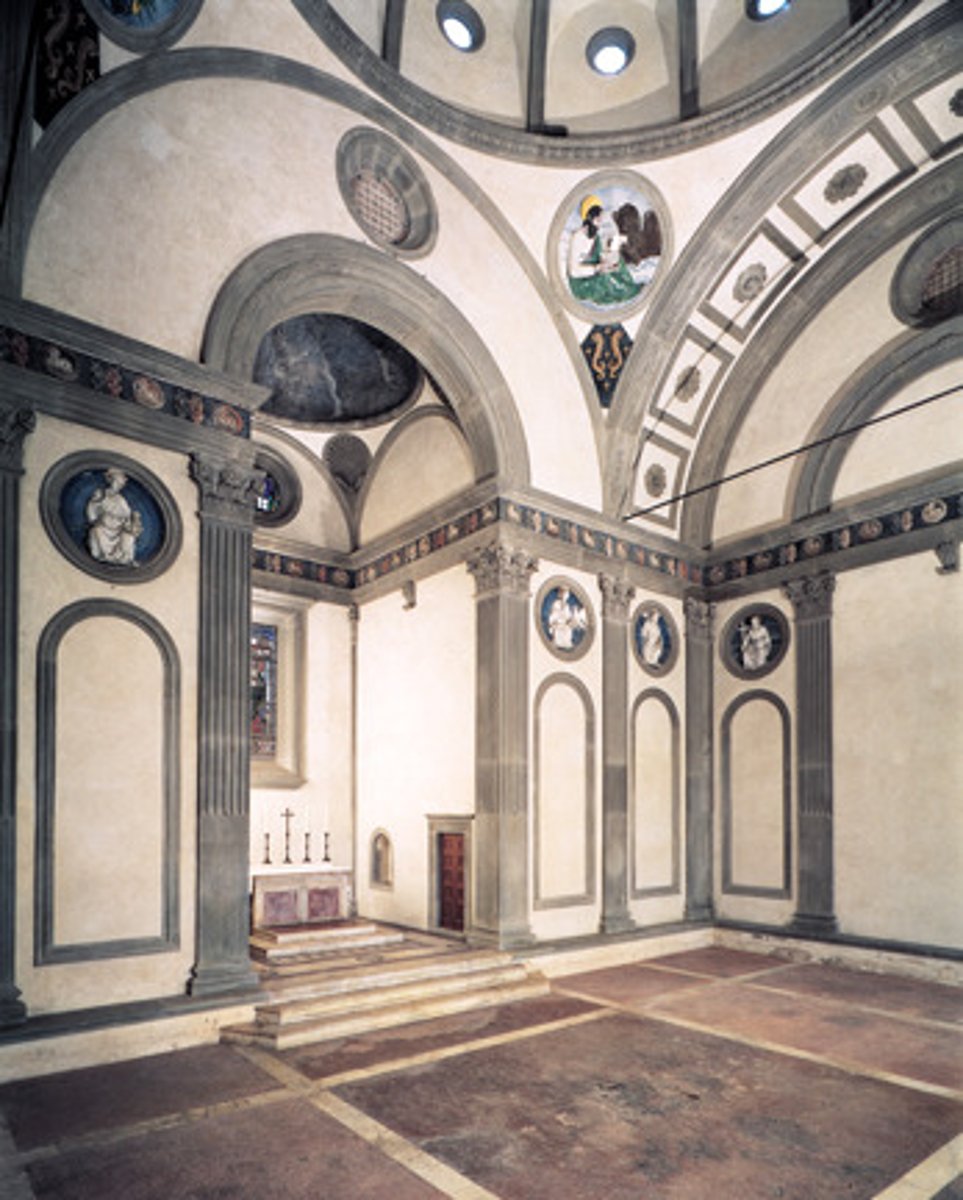
Pazzi Chapel (interior)
Terra cotta tiles. Restrained color scheme.
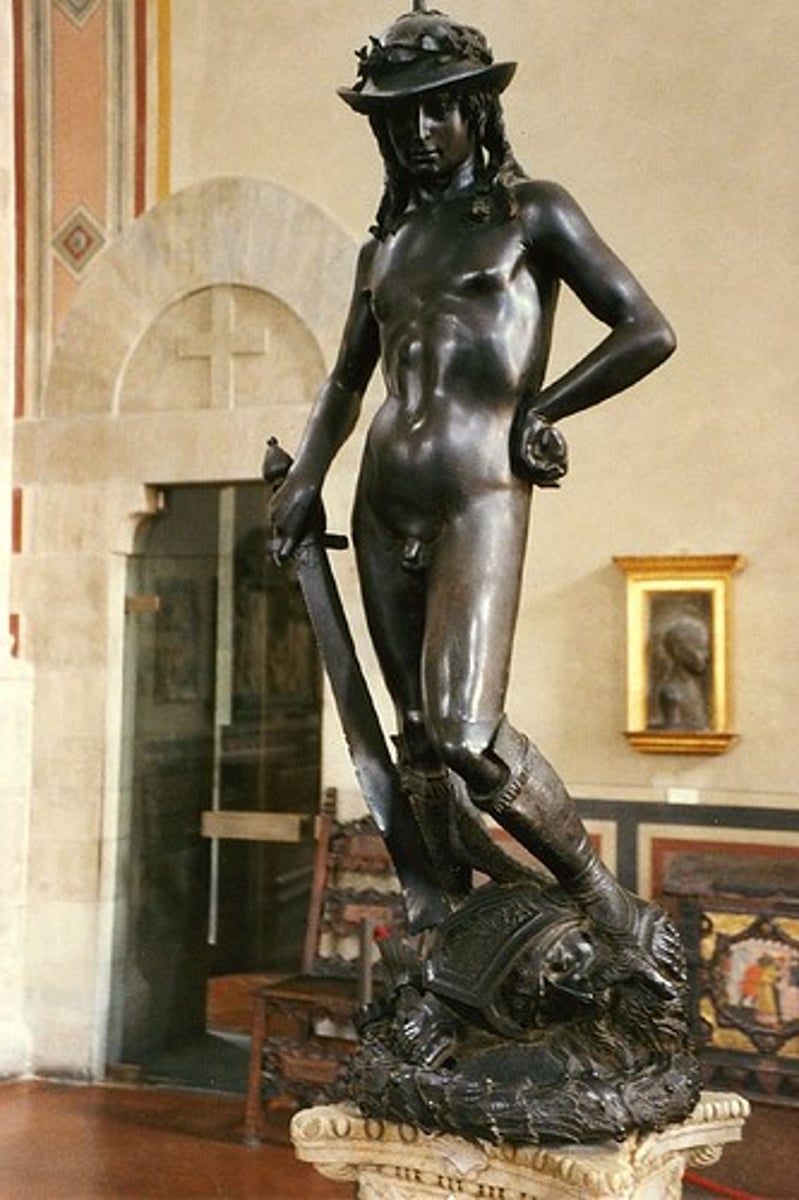
David (Donatello)
Florence, Italy. Donatello. 1440-1460 CE. Bronze.
Androgynous. Lorenzo d'Medici (patron). Contrapposto. First free-standing male nude since antiquity (and biblical hero in such portrayal). Youthful, almost feminine.
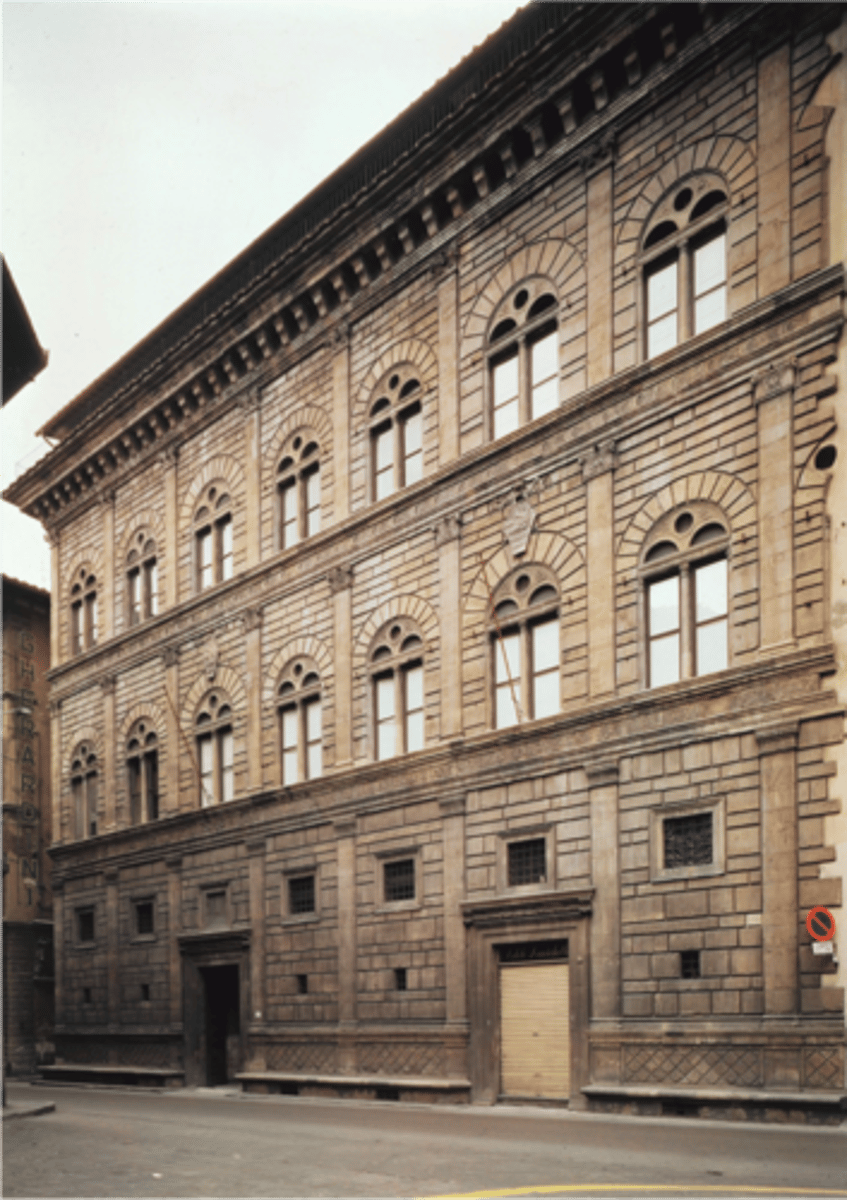
Palazzo Rucellai
Florence, Italy. Leon Battista Alberti. c. 1452-1470 C.E. Stone, masonry.
Three floors display variety of column orders: 1) Tuscan and Doric 2) Alberti's Ionic 3) Corinthian. Palace of wealthy merchant. Cornice caps. Commissioned by Giovanni Rucellai.
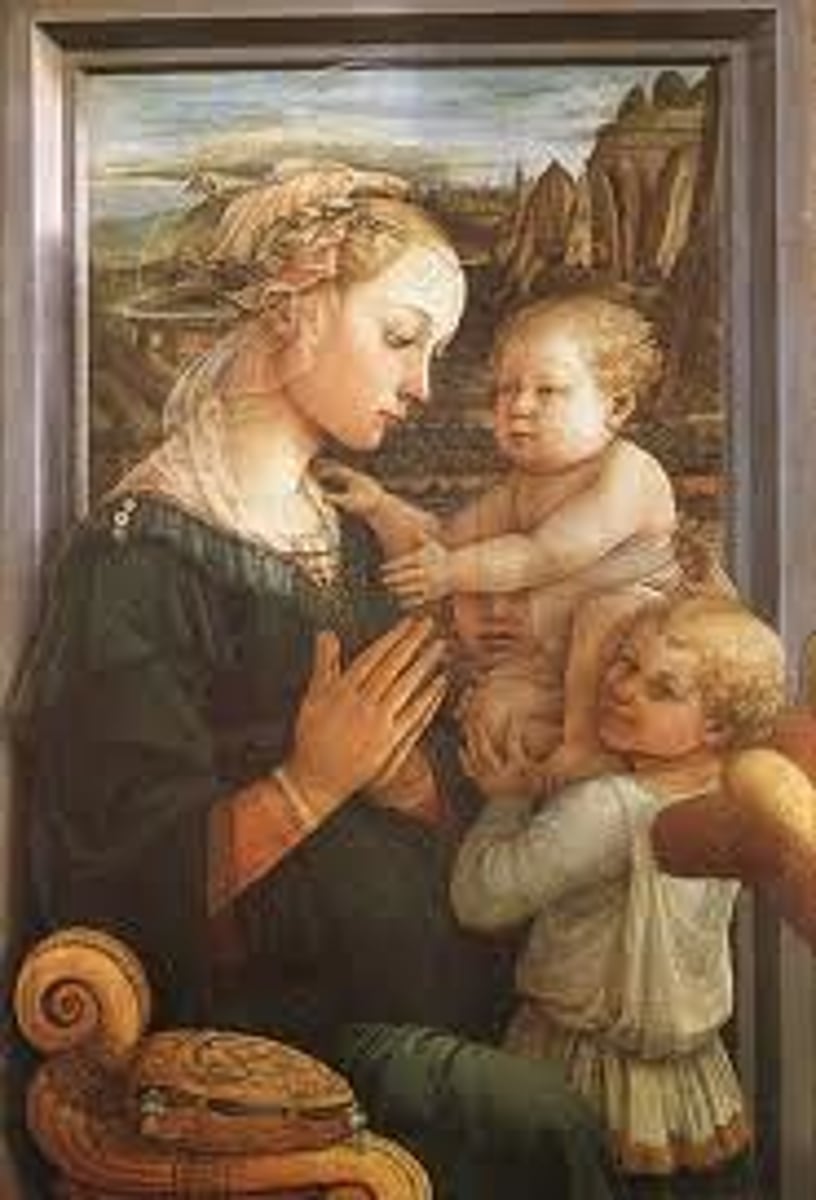
Madonna and Child with Two Angels
Florence, Italy. Fra Filippo Lippi. c. 1455 CE. Tempera on wood.
Linear perspective. Humanized depiction of Virgin Mary. Flemish influence. Rock formations represent church and pearl motif symbolizes Immaculate Conception and Incarceration.
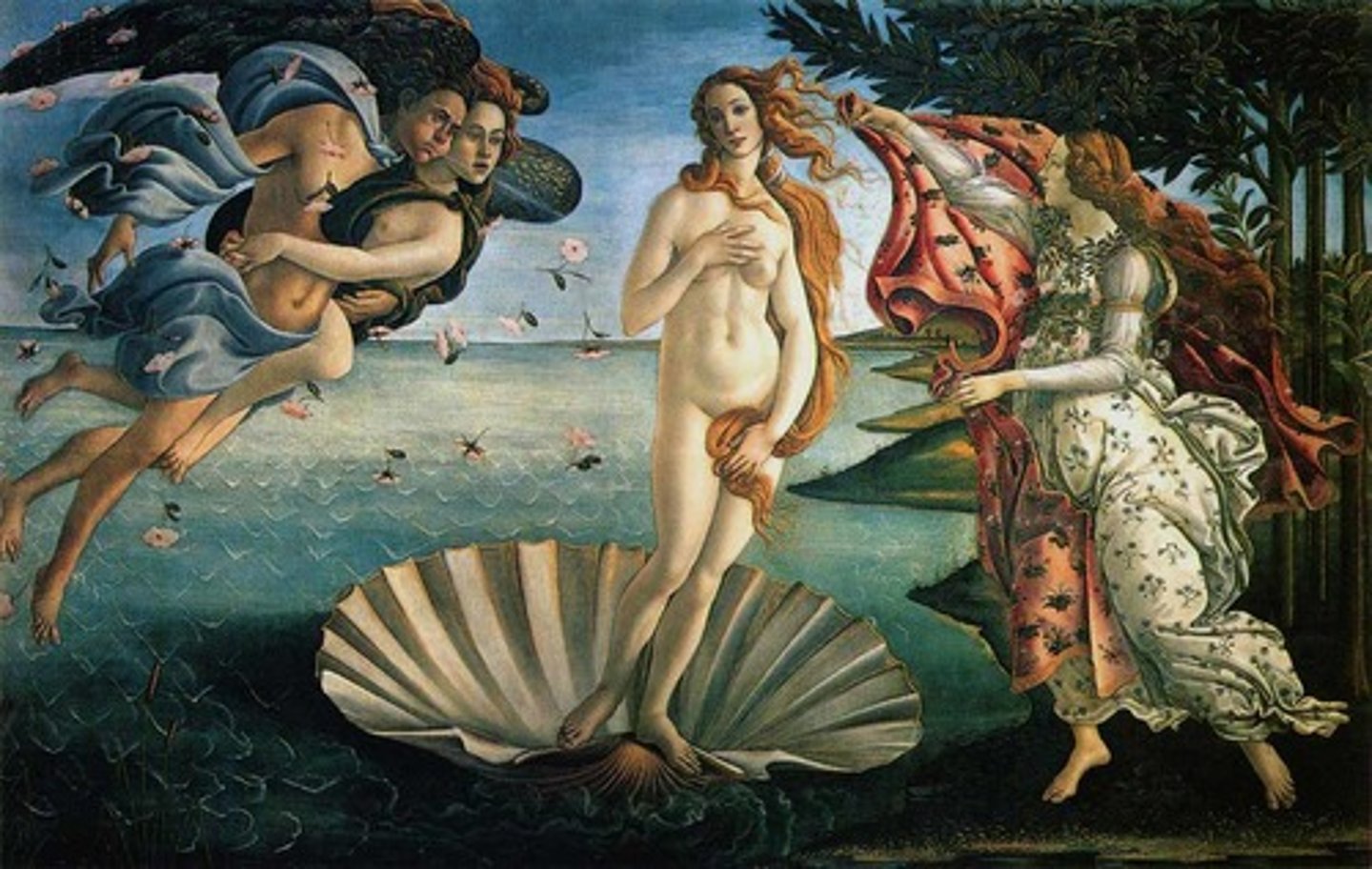
Birth of Venus
Botticelli. c. 1484-1486 CE. Tempera on canvas. Commissioned by Medici to reflect Neo-platonic ideal.
One of the first paintings on canvas. Uses alabaster powder to brighten colors. Modest Venus depiction. First female nude depiction of the Renaissance. Classical motifs and non-Christian ideas. Theme of love unique to Medici family.
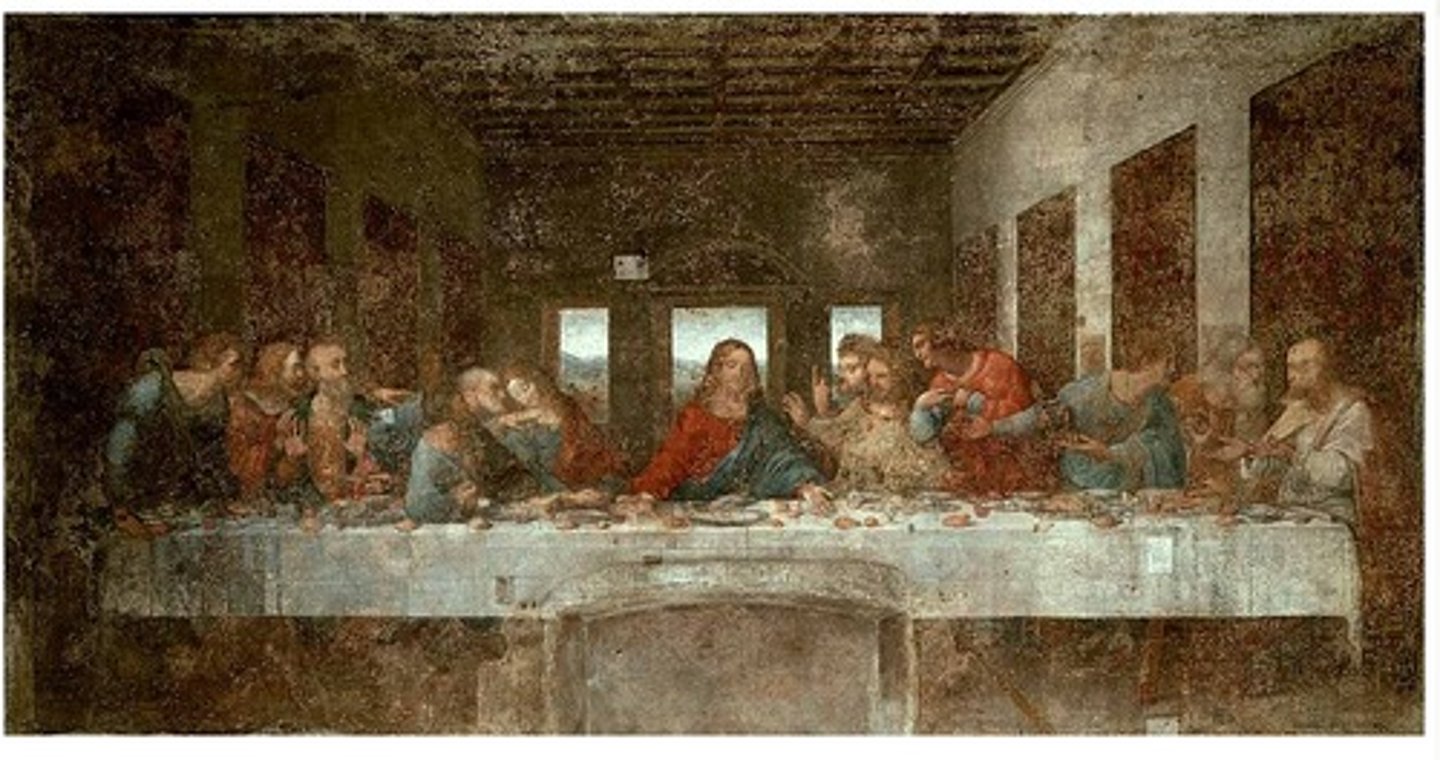
The Last Supper
da Vinci. 1494-1498 CE. Oil and tempera. Commissioned by Santa Maria Delle Grazie.
Linear perspective. Controversially places Judas on the same side of the table as Jesus. Painting exposed heavily to weathering due to experimental oils and tempera. Favors realism over obvious symbolism, such as a subtle halo created by the pediment above Jesus's head (compared to Byzantine halos). Sunset symbolizes the end of earthly life of Jesus.
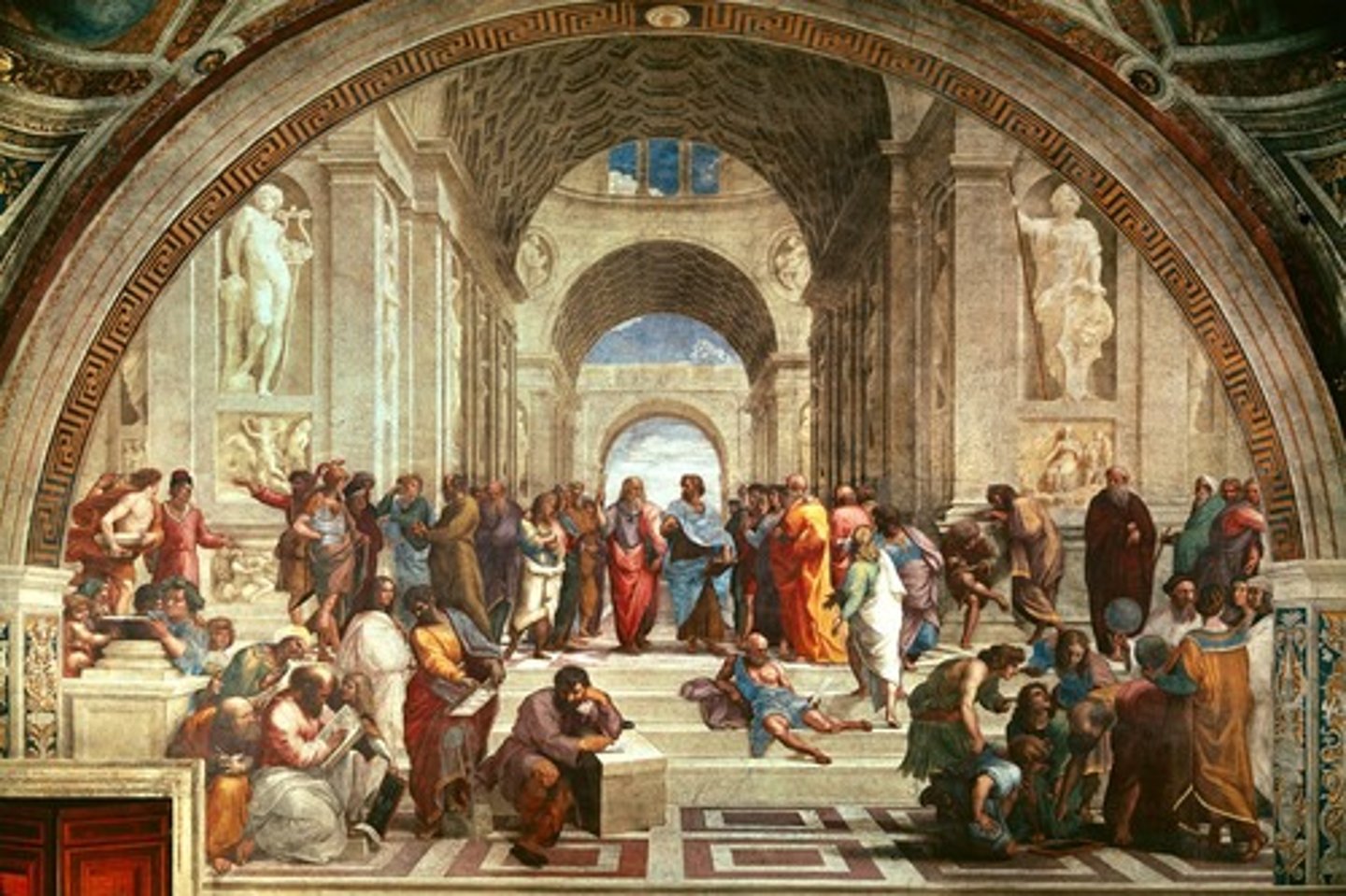
School of Athens (Philosophy)
Raphael. Stanza della Segnatura, Vatican Palace, Rome, Italy. 1509-1511 CE. Fresco. Commissioned by Pope Julius II.
Linear perspective. Raphael's painting represents one of the four learnings of the pope displayed in the papal apartments: philosophy, theology, poetry, and law. Setting of the painting resembles Saint Peter's interior. Plato is a portrait of da Vinci, Heraclitus is Michelangelo, and Raphael placed two self-portraits. Alludes to classical antiquity with Apollo and Athena statues adorning each side.
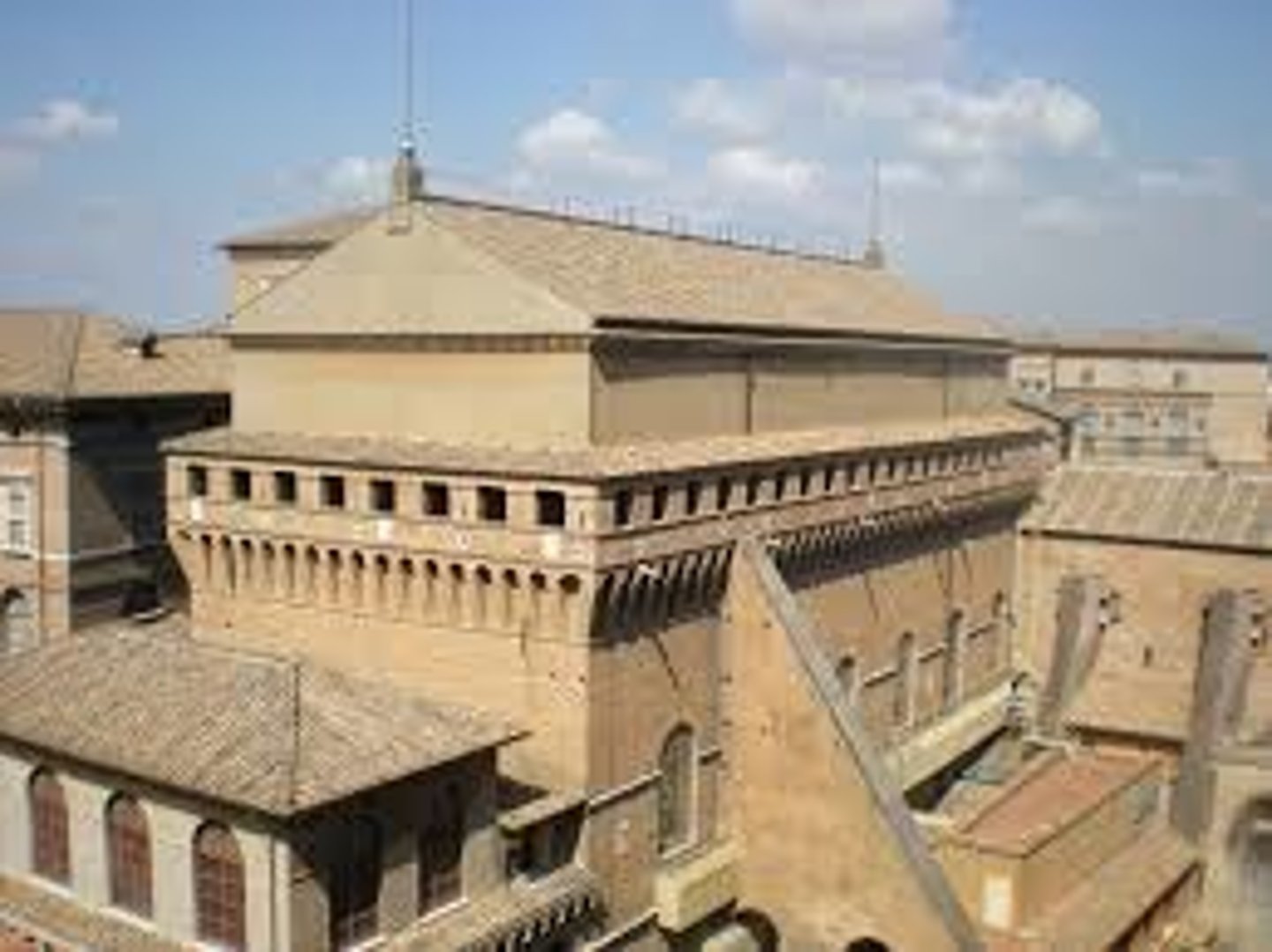
Sistine Chapel (exterior)
The Sistine Chapel "Cappella Magna" (Greater Chapel) Vatican City, Rome, Italy.
Built in 1472 CE.
High rectangular fortress with large buttresses to brace exterior walls. Used to elect new popes. Name from Pope Sixtus IV, who restored it between 1477 and 1480 CE. Includes works from Michelangelo, Botticelli, Perugino, and Ghirlando.
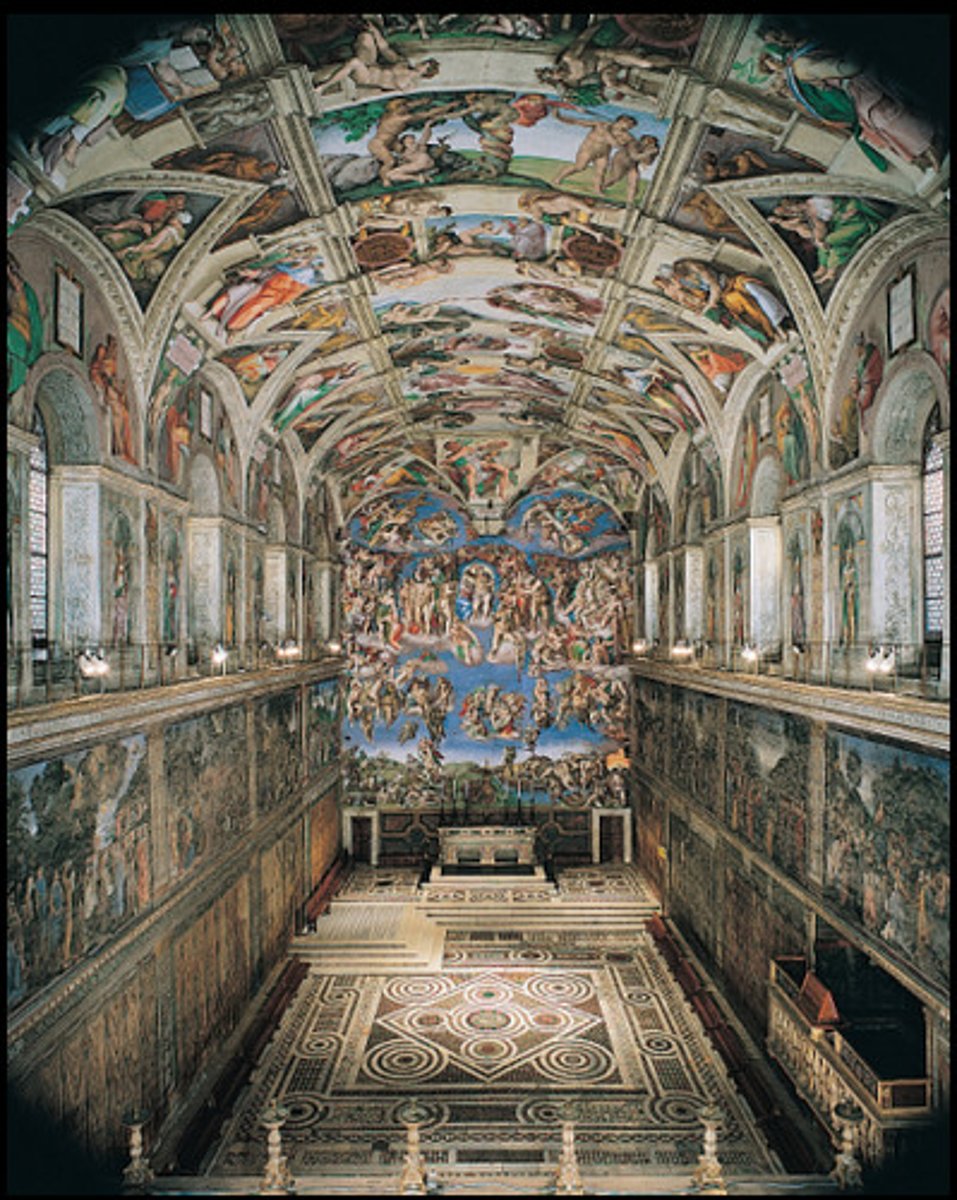
Sistine Chapel ceiling
Michelangelo. 1508-1512 CE. Sistine Chapel, Vatican City, Rome, Italy. Fresco. Commissioned by Pope Julius II.
Depicts narrative scenes from nine stories of Genesis. Body composition resembled sculptures (which Michelangelo preferred to create.) Features use of grisaille painting (to which color was added) and troupe l'oeil.
Creation of Adam
Michelangelo. 1511-1512 CE. Fresco.
Humanist portrayal of Adam reflects the philosophy which placed man and God on equal planes.

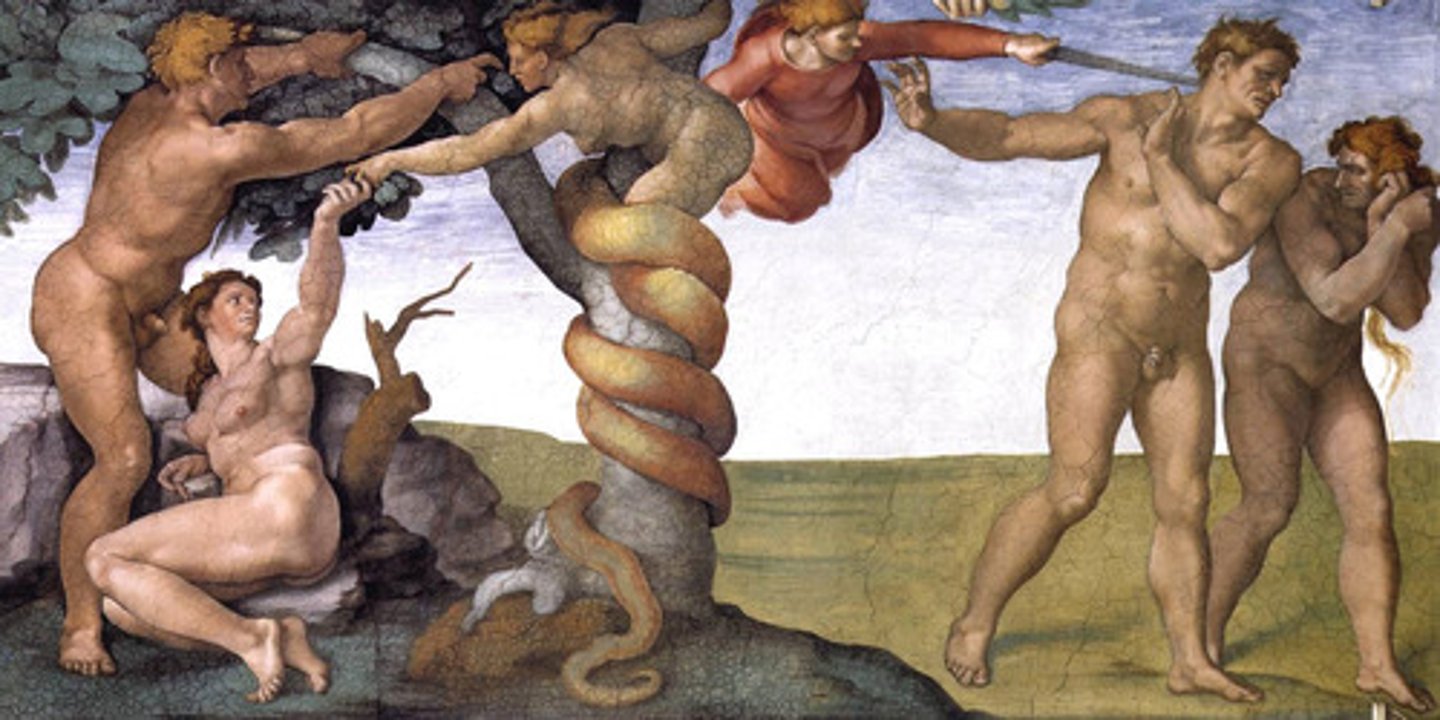
Temptation of Eve
Michelangelo. 1512 CE. Fresco.
Depicts two narrative scenes of Adam and Eve: left side they are in Garden of Eden, and then right side depicts them cast out of Eden.
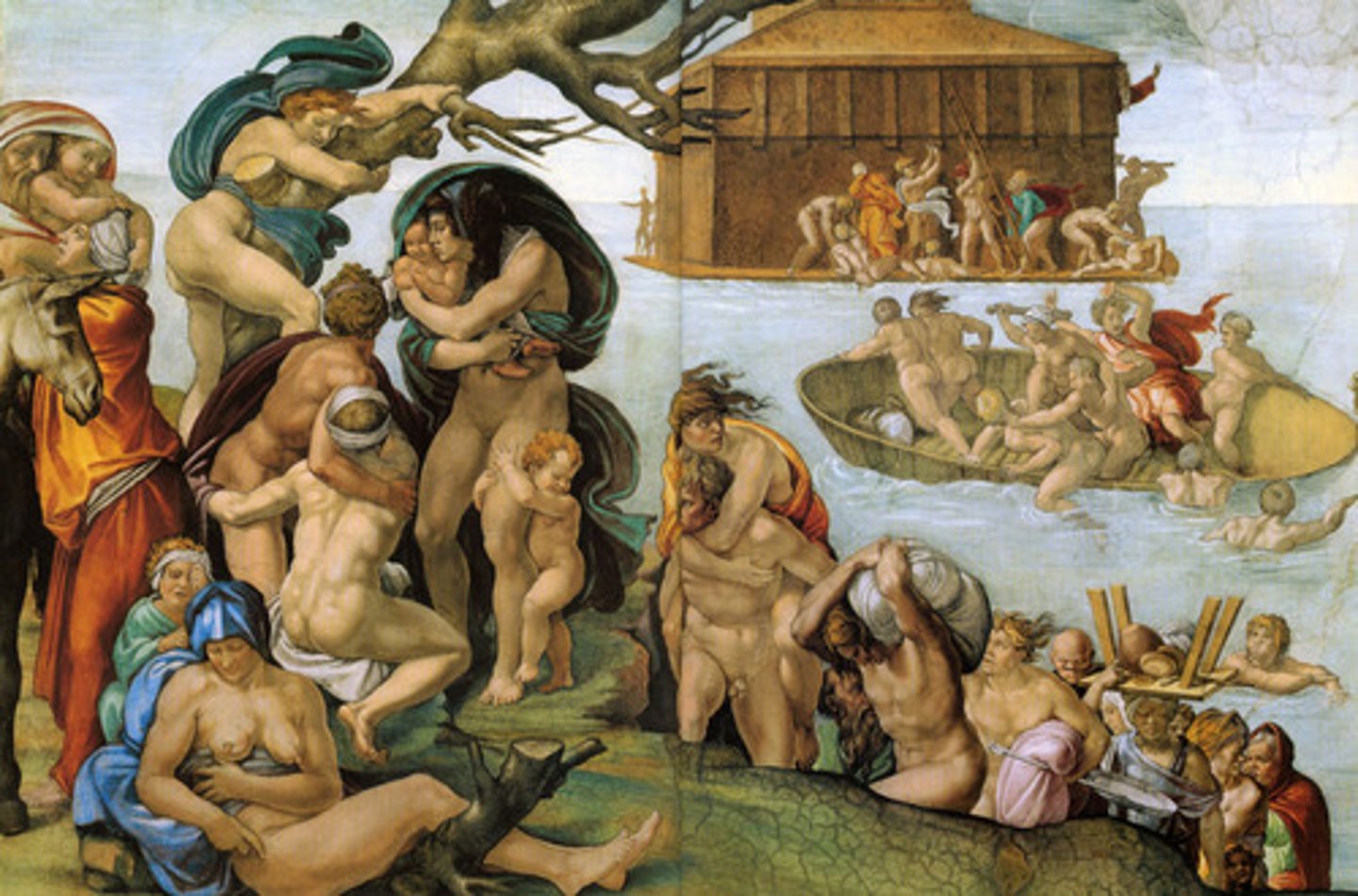
The Deluge (Flood)
Michelangelo. 1512 CE. Fresco. Depicts biblical scene leading to Noah's ark.
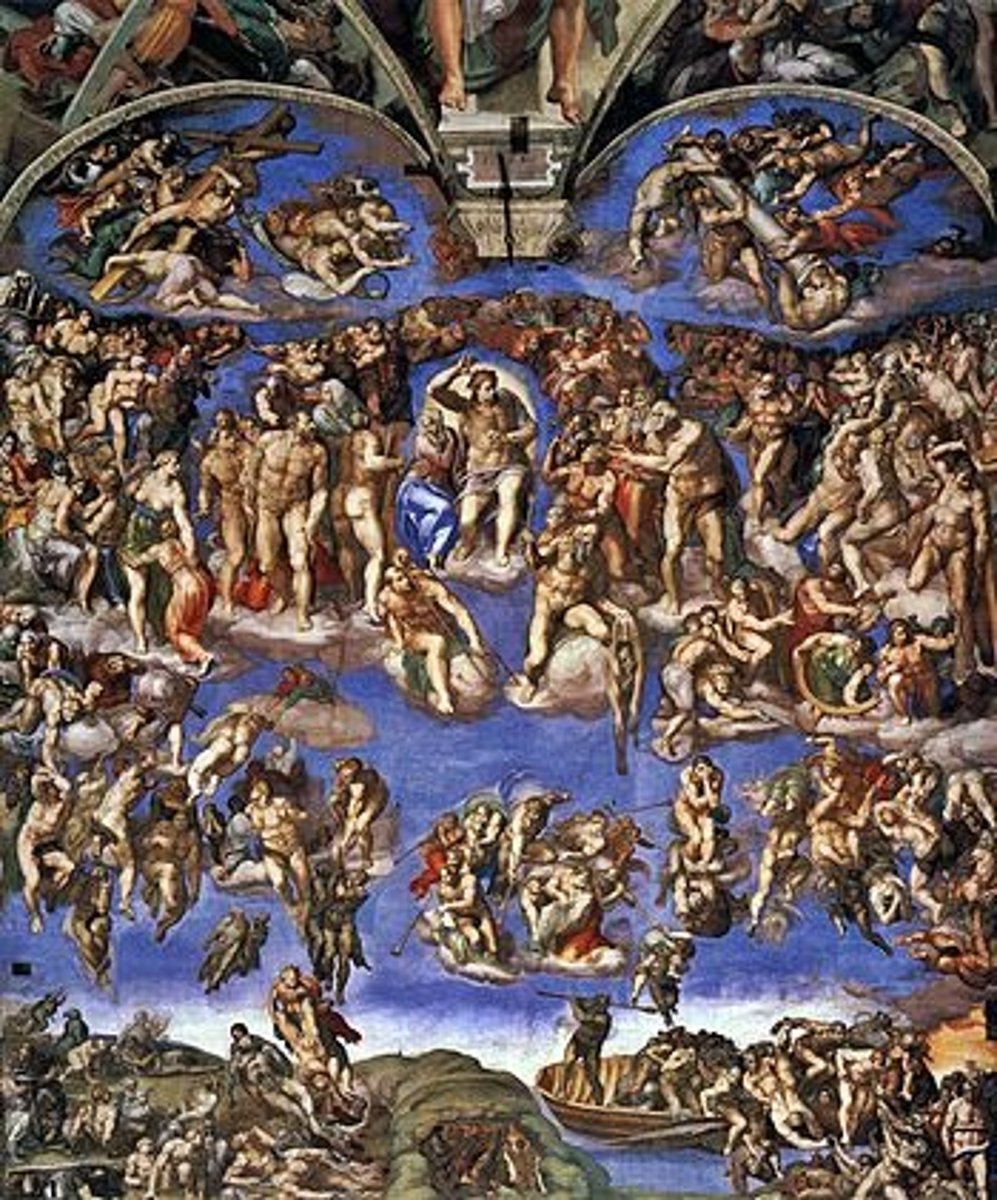
The Last Judgment
Michelangelo. 1534-1541 CE. Fresco.
Altar wall of the Sistine Chapel. Depicts Christ as judge. Martyrs surround Jesus. Left view depicts the dead awake and assume flesh. Right view depicts demons tormenting the damned. Self-portrait of Michelangelo contained by skinned alive St. Bartholomew holding his flesh.
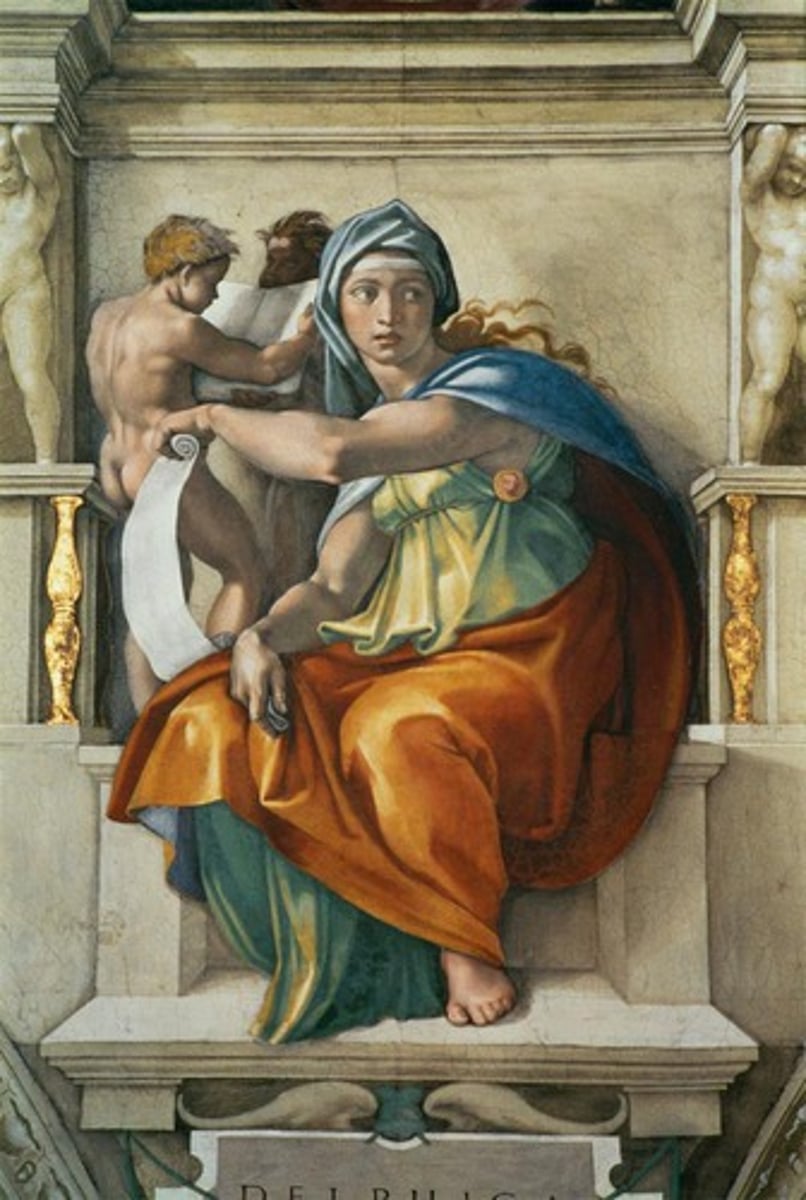
Delphic Sibyl
Michelangelo. 1509 CE. Sistine Chapel, Vatican City, Rome, Italy. Fresco.
Contrapposto. Pagan symbolism. Sorrowful expression.
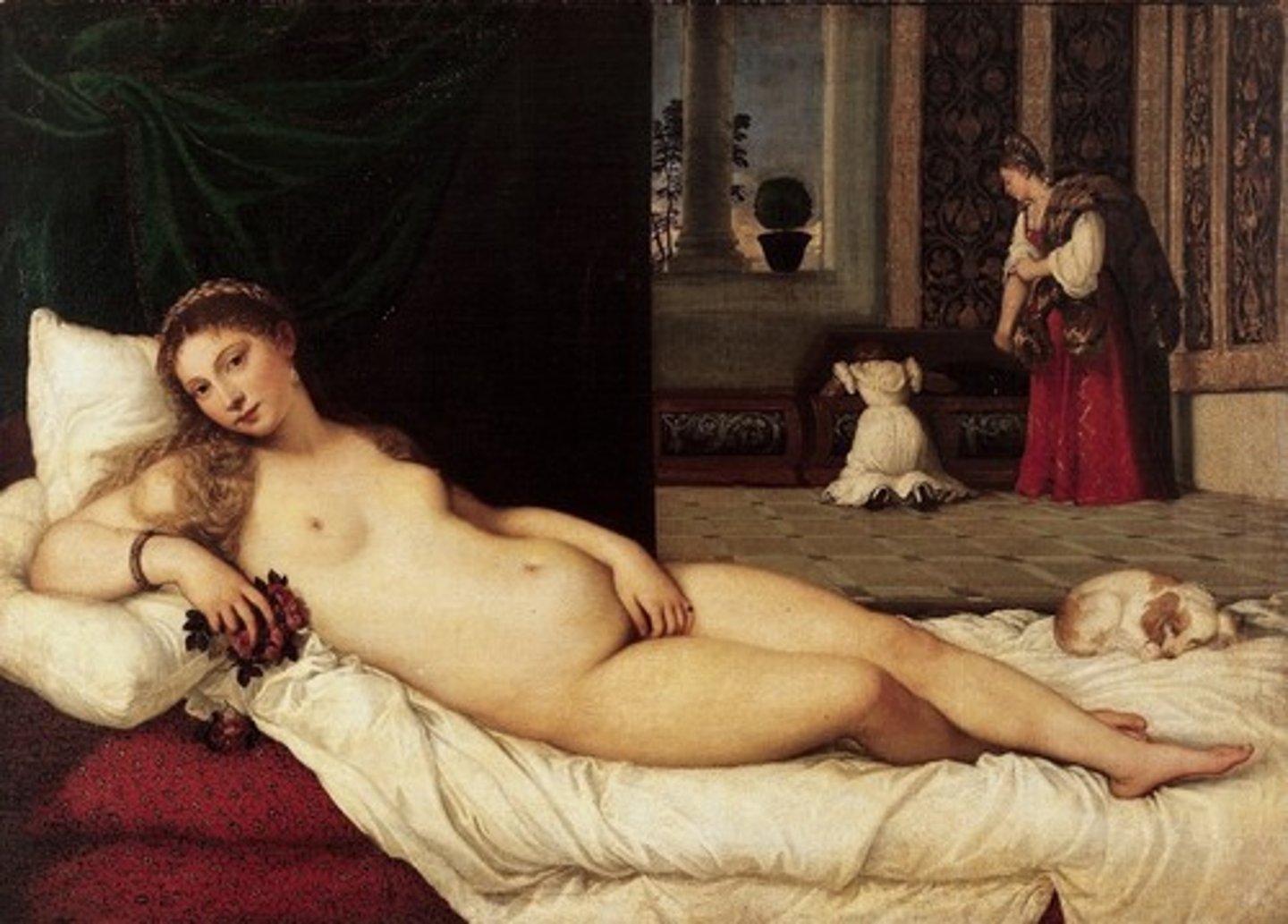
Venus of Urbino
Titian. 1538 CE. Oil on canvas. Commissioned for Guidobaldo II, Duke of Urbino.
Not actually a depiction of Venus, but most likely intended for private use. Set the standard for reclining female nude in art. The lapdog at the foot of the bed represents fidelity. Servants in the background searching for clothes symbolize motherhood. Roses in Venus's hand indicate love and romance.
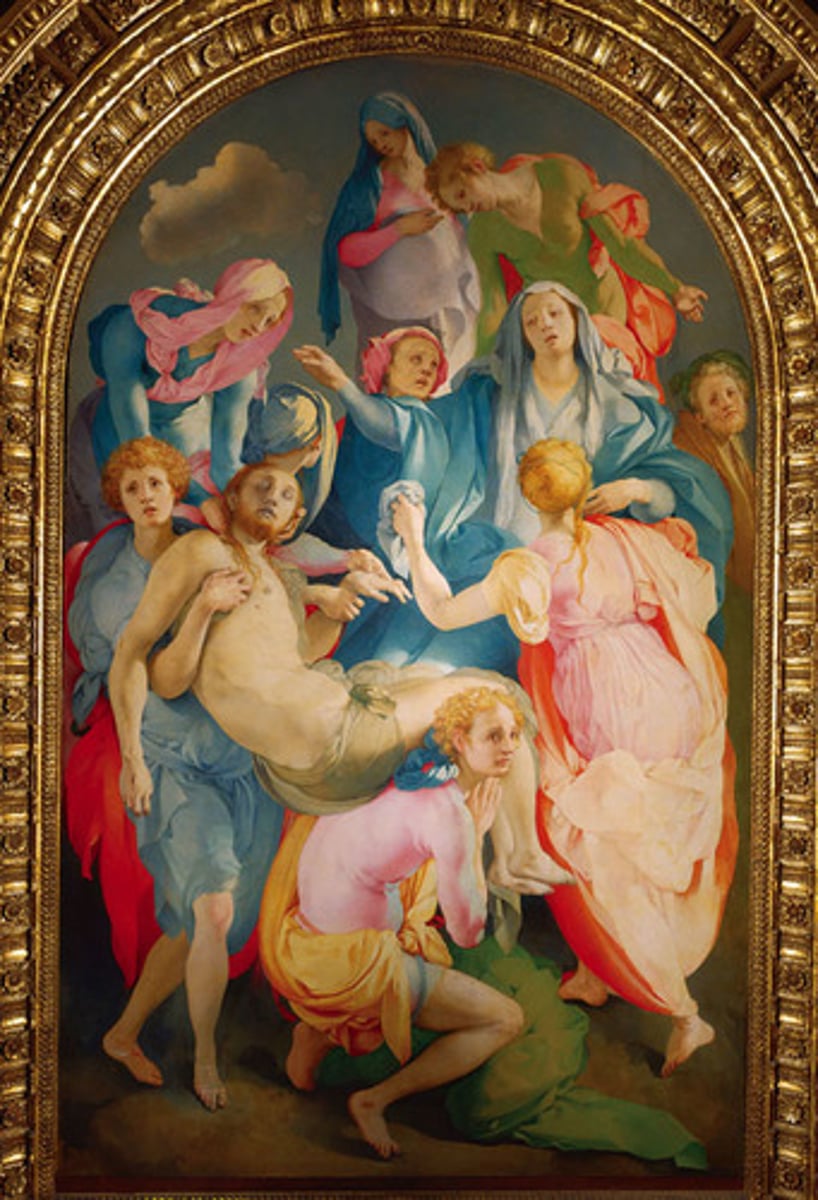
Entombment of Christ
Jacopo da Pontormo. 1525-1528 C.E. Oil on wood.
Mannerism. Depicts a sorrowful Pietà scene. Pyramidal composition. Emotive expressions and elongated, unnatural human figures. Bright color scheme. An off-center placement of Jesus with a center void represents grief and sorrow.
Mannerism
An artistic movement against the Renaissance ideals of symmetry, balance, and simplicity; went against the perfection the High Renaissance created in art. Used elongated proportions, twisted poses, swirling compositions, and compression of space.
 Note
Note  Flashcards (76)