AP Art History Content Area 3 (Northern Europe and Colonial Americas 1300-1750)
 Studied by 2 people
 Call with Kai
 Learn
Learn Practice Test
 Spaced Repetition
 Match
Match Flashcards
 Knowt Play
1/33

There's no tags or description
Looks like no tags are added yet.
Name | Mastery | Learn | Test | Matching | Spaced | Call with Kai |
|---|
No analytics yet
Send a link to your students to track their progress
34 Terms
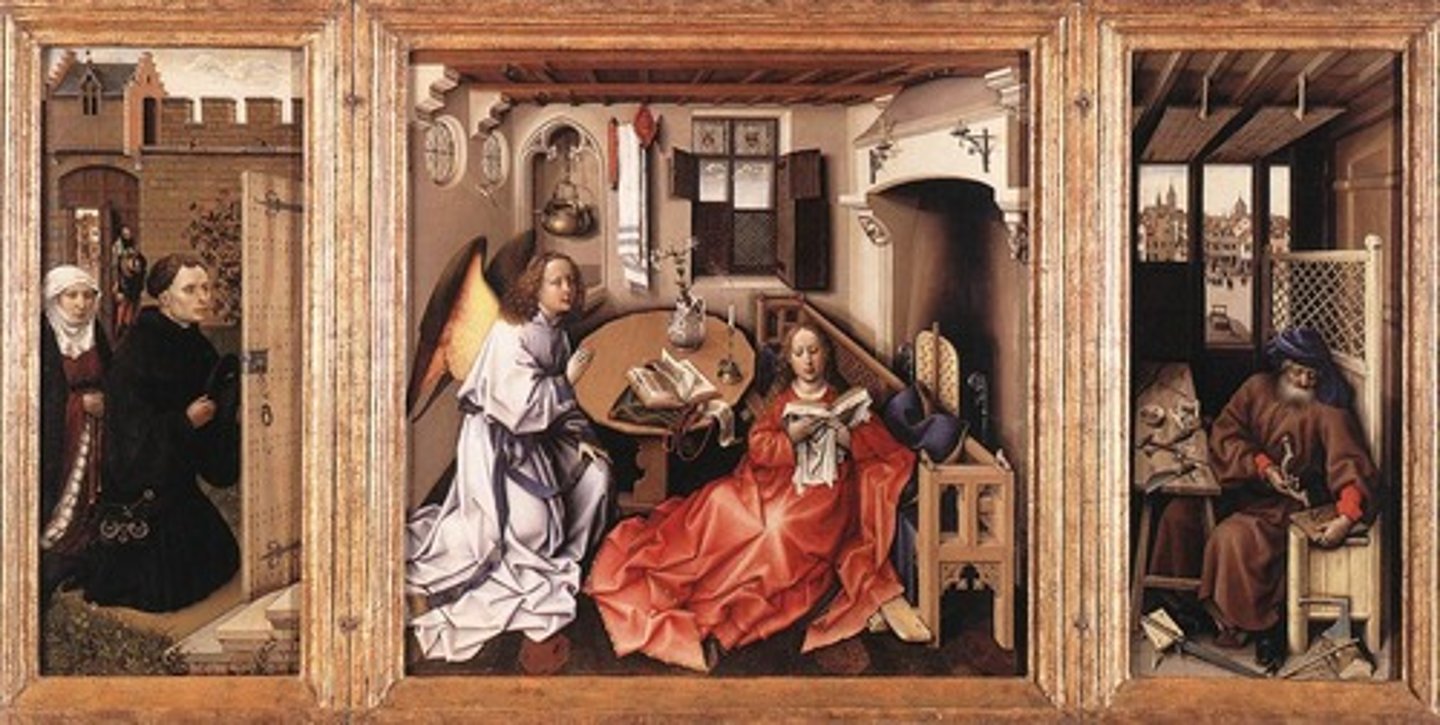
Annunciation Triptych (Merode Altarpiece)
Workshop of Robert Campin. 1427-1432 C.E. Northern Renaissance. Oil on wood. Commissioned by Peter Inghelbrecht.
Donor portrait. Triptych. Annunciation scene of Gabriel and Virgin Mary in Flemish home setting. Objects symbolize Mary's purity and candle indicates incarnation. Describes past, present, and future in the three-paneled altarpiece. Contains many Jewish symbols as well. Joseph displayed in a carpentry shop along with traps symbolizing the devil and Jesus. Triptychs eventually fell out of style due to the Reformation.
The Arnolfini Portrait
Jan van Eyck. Oil on wood. 1434 CE. Northern Renaissance.
Revival of portraits since antiquity. (Traditional interpretation) Arnolfini and bride exchange vows. Dog symbolizes loyalty/fidelity. Saint Margaret finial represents childbirth. Broom finial symbolizes domesticity. Oranges refer to fertility. Burning candle symbolizes seeing eye of God. Arnolfini stands near window while wife stands toward the home. Elaborate attire indicates new wealth. Possible commission for Duke of Burgundy.
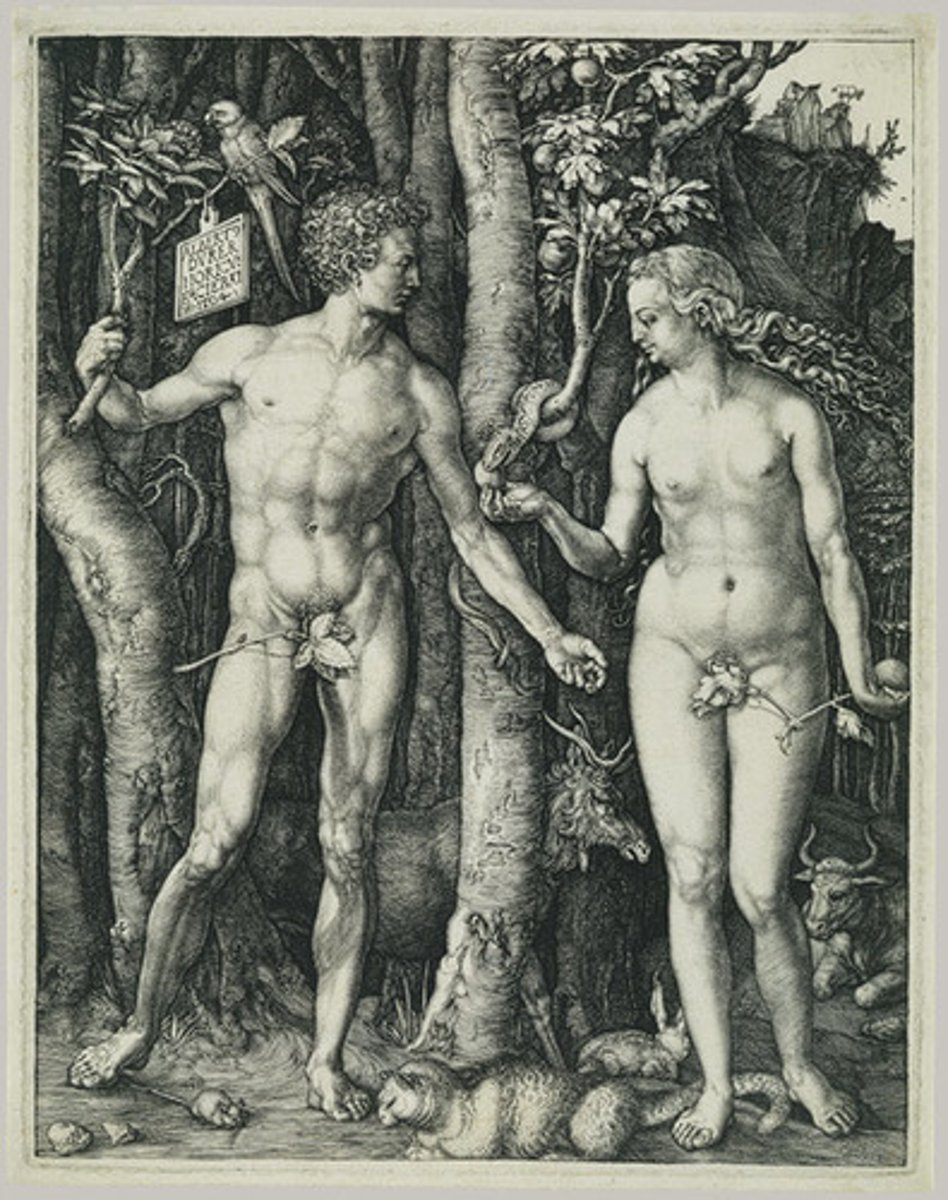
Adam and Eve
Albrecht Durer. 1504 CE. Northern Renaissance. Engraving.
Durer studied classical art proportions in Italy. Contrapposto. Reflects Northern forest setting. Moralistic animal symbols. Namesake on a sign inside painting.
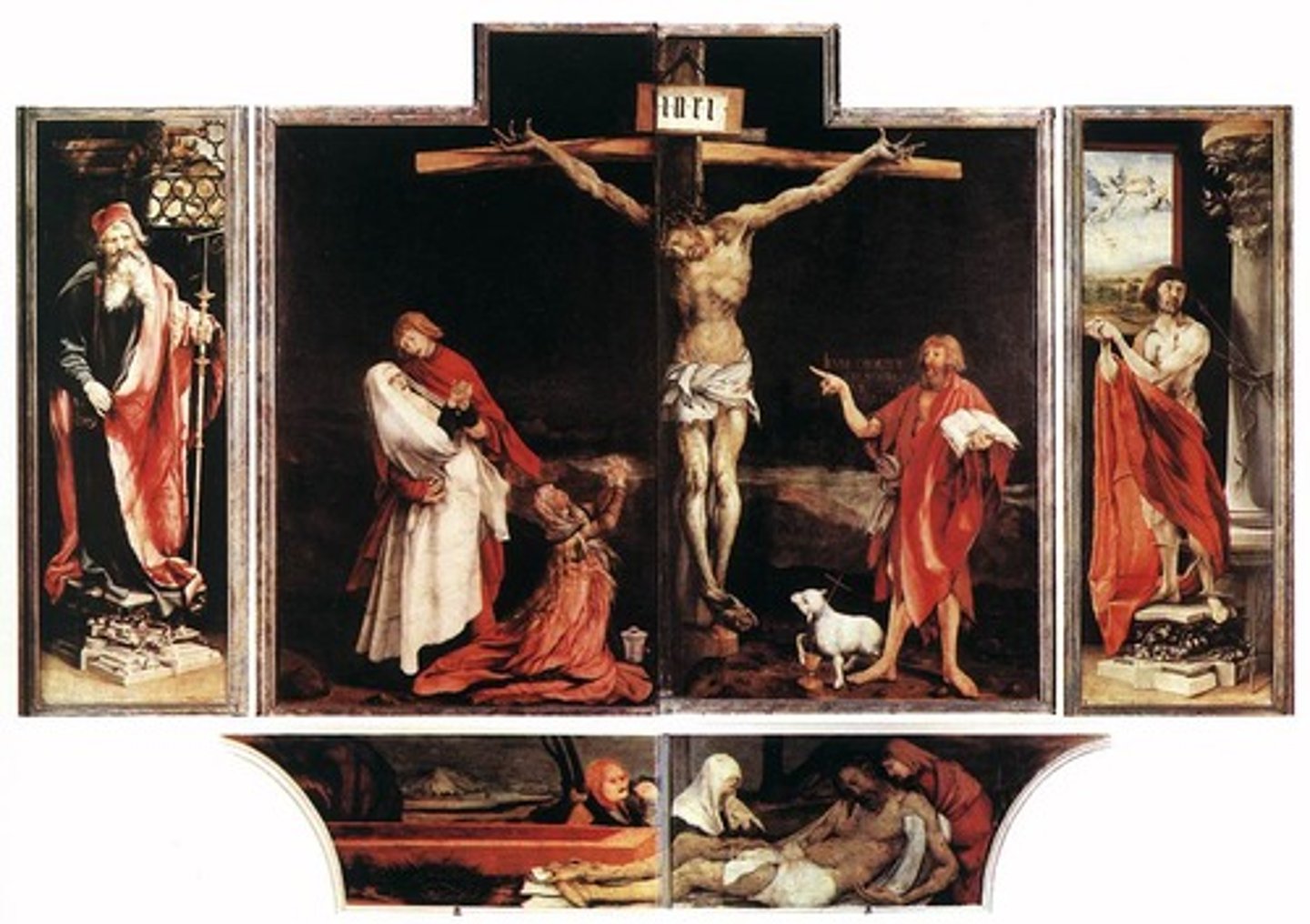
Isenheim Altarpiece
Matthias Grunewald. Isenheim, Germany. 1512-1516 CE. Oil on wood. Triptych.
Commissioned for a hospital (which explains the illusion of Jesus being "amputated" in the predella of the triptych). St. Anthony's monastery. Closed view: crucifixion. Open view: Annunciation and Resurrection. Inner wings open: St. Paul and St. Anthony. Predella depicts Lamentation of Christ. Last altarpiece of the period due to rise in Protestantism.
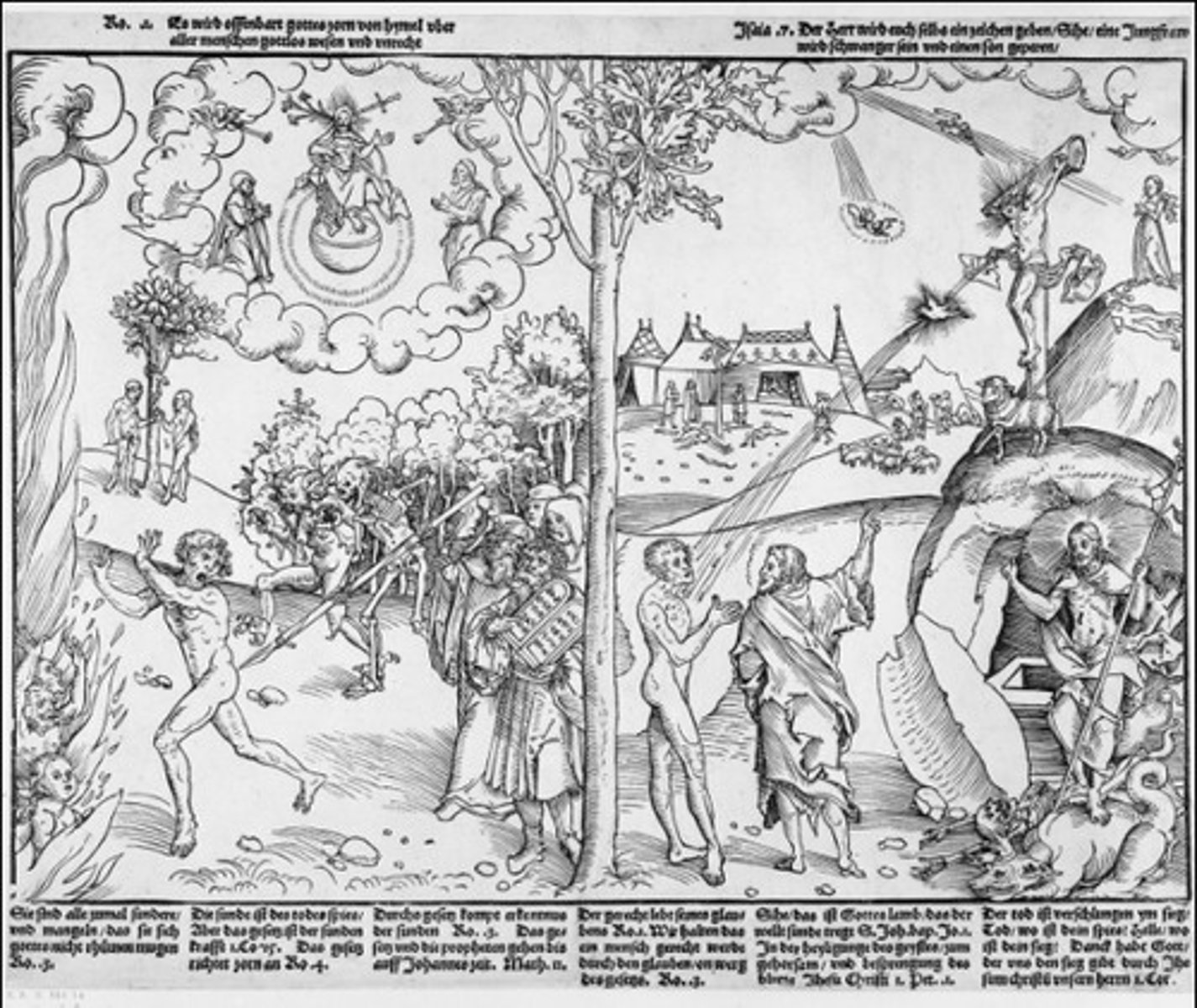
Allegory of Law and Grace
Lucas Cranach the Elder. 1530 C.E. Woodcut and letterpress.
Used for educational purposes. Lutheran doctrine propaganda. The left side depicts Catholic beliefs from the Old Testament, illustrated by judgment, torture, and suffering. The right side depicts Protestantism more optimistically with Jesus as the savior of man.
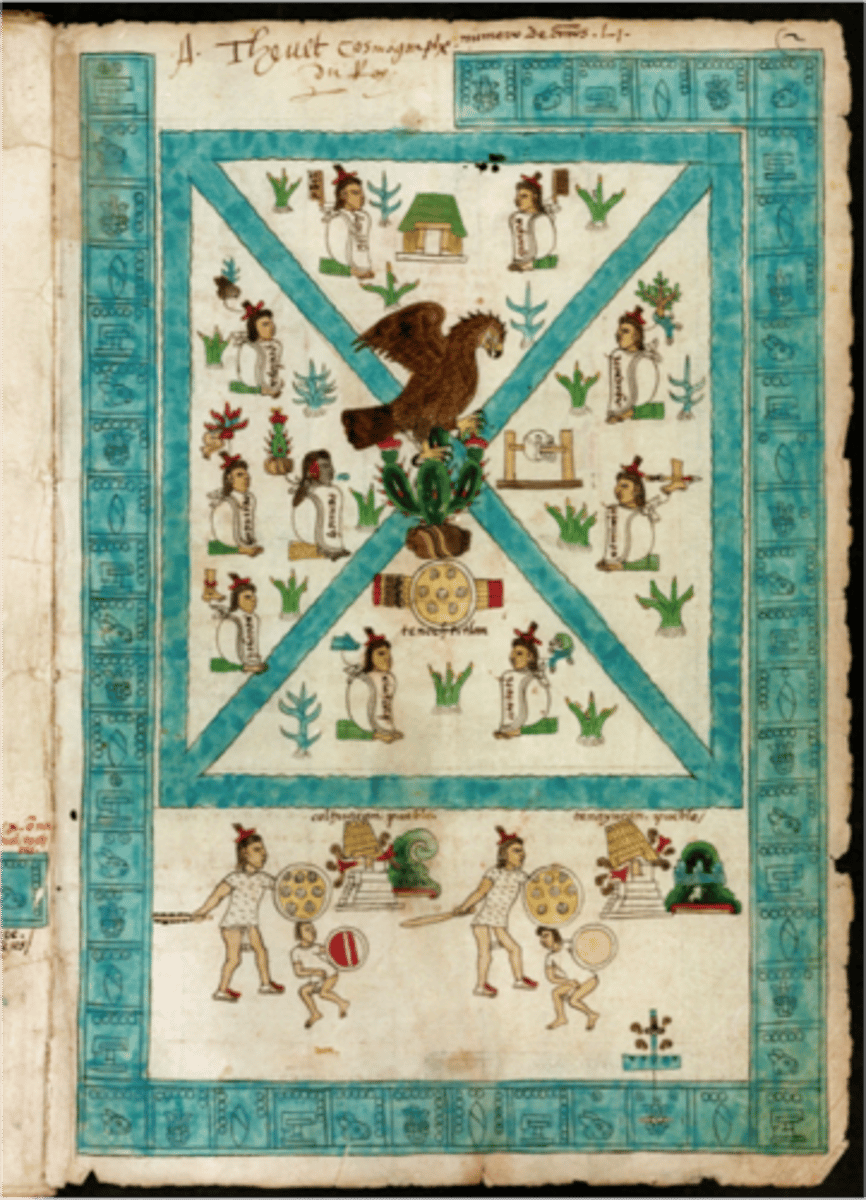
Frontispiece of the Codex Mendoza
Viceroyalty of New Spain. c. 1541-1542 C.E. Ink and color on paper.
Created by native scribes using pictograms, and eventually added Spanish annotations. Intended for Charles IV, but never made it to Spain. Includes a detailed history of Tenochtitlàn, commemorating the division into four quarters based on cardinal directions. Eagle on a cactus symbol. Skulls symbolize sacrificial victims. Features daily life of Aztecs from birth to death. Utilizes a hierarchical scale.
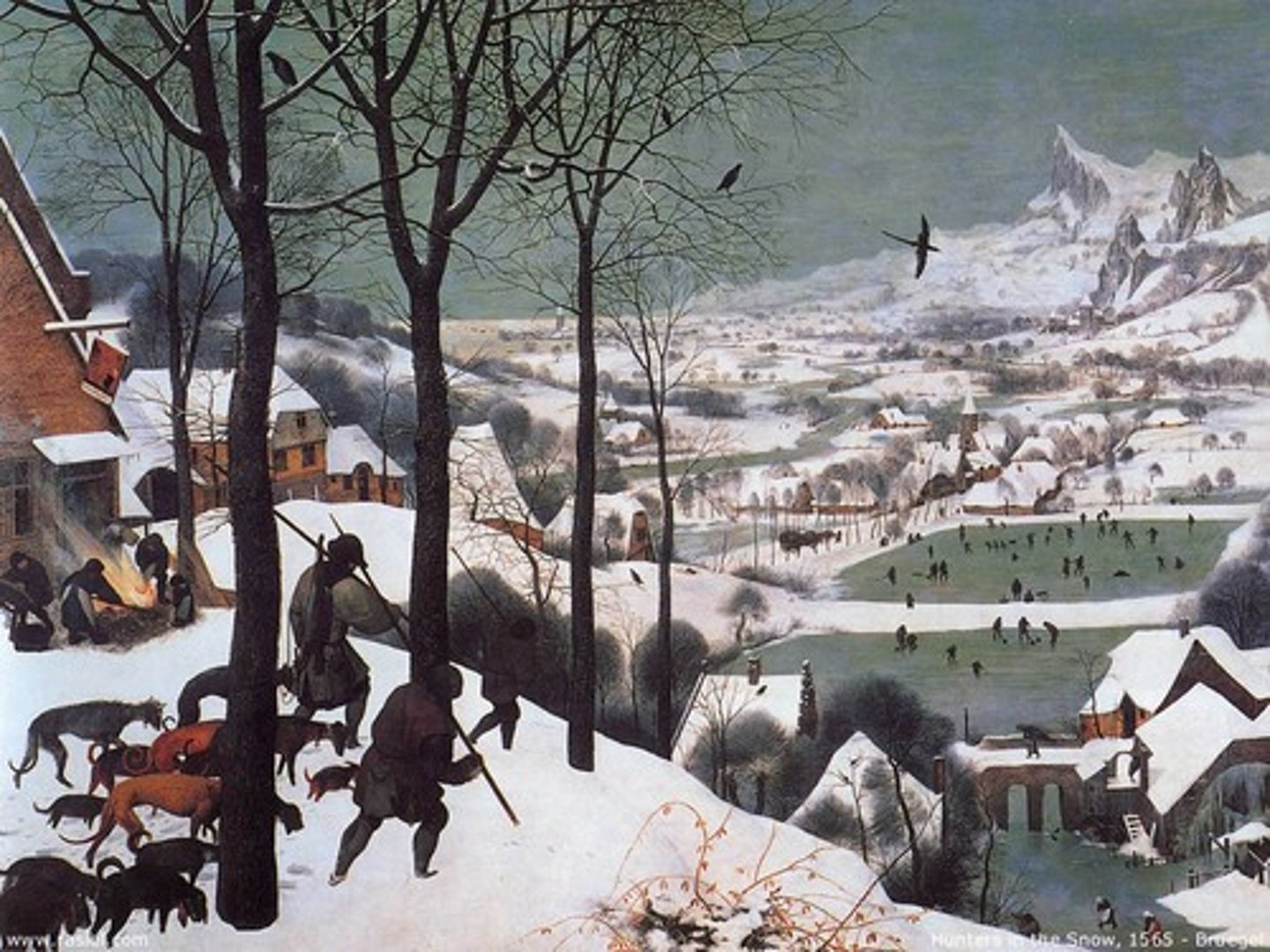
Hunters in the Snow
Pieter Bruegel the Elder. 1565 C.E. Oil on wood. Commissioned by wealth Antwerp banker.
Reflects Netherlandish simplicity. Genre/narrative scenes of daily life. Elevated viewpoint. Atmospheric perspective. Composite landscape painting.
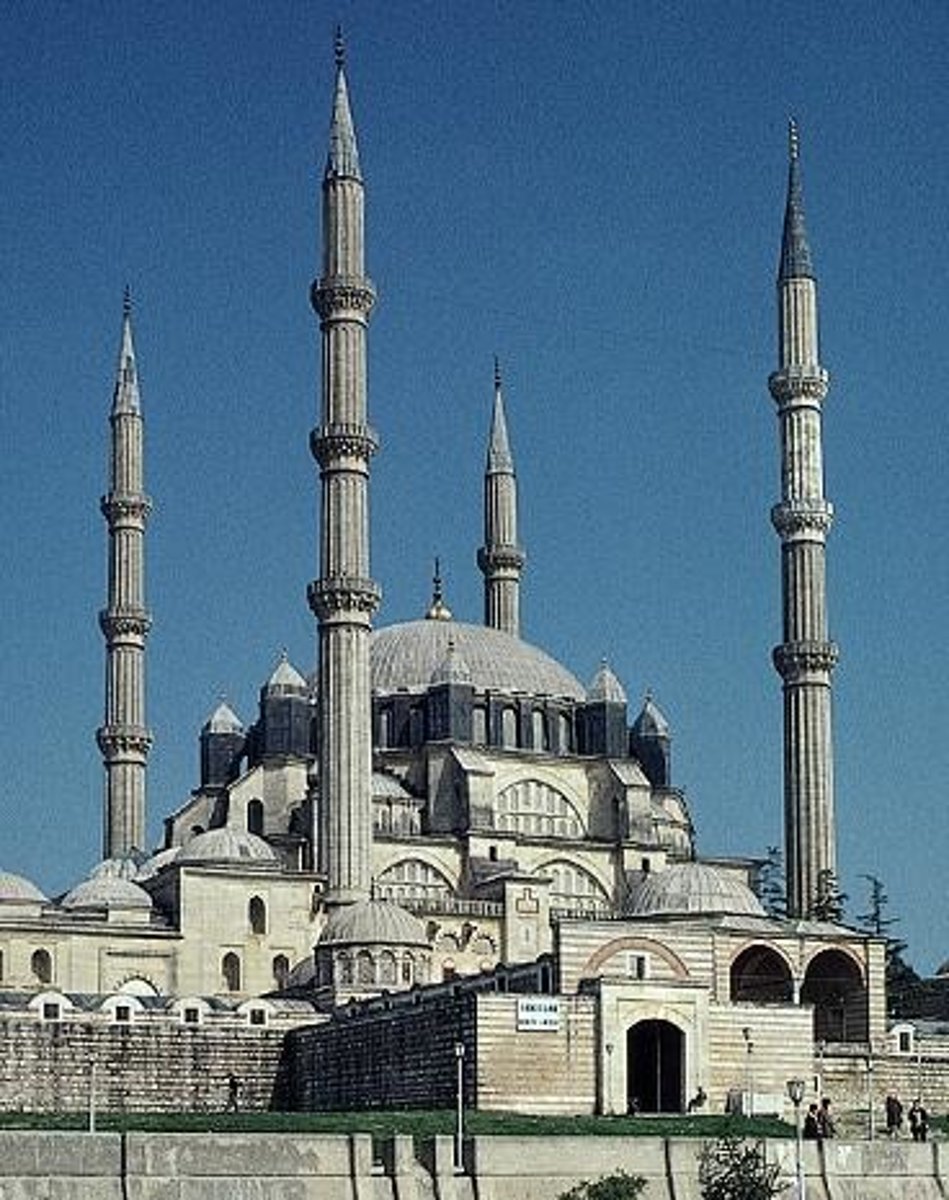
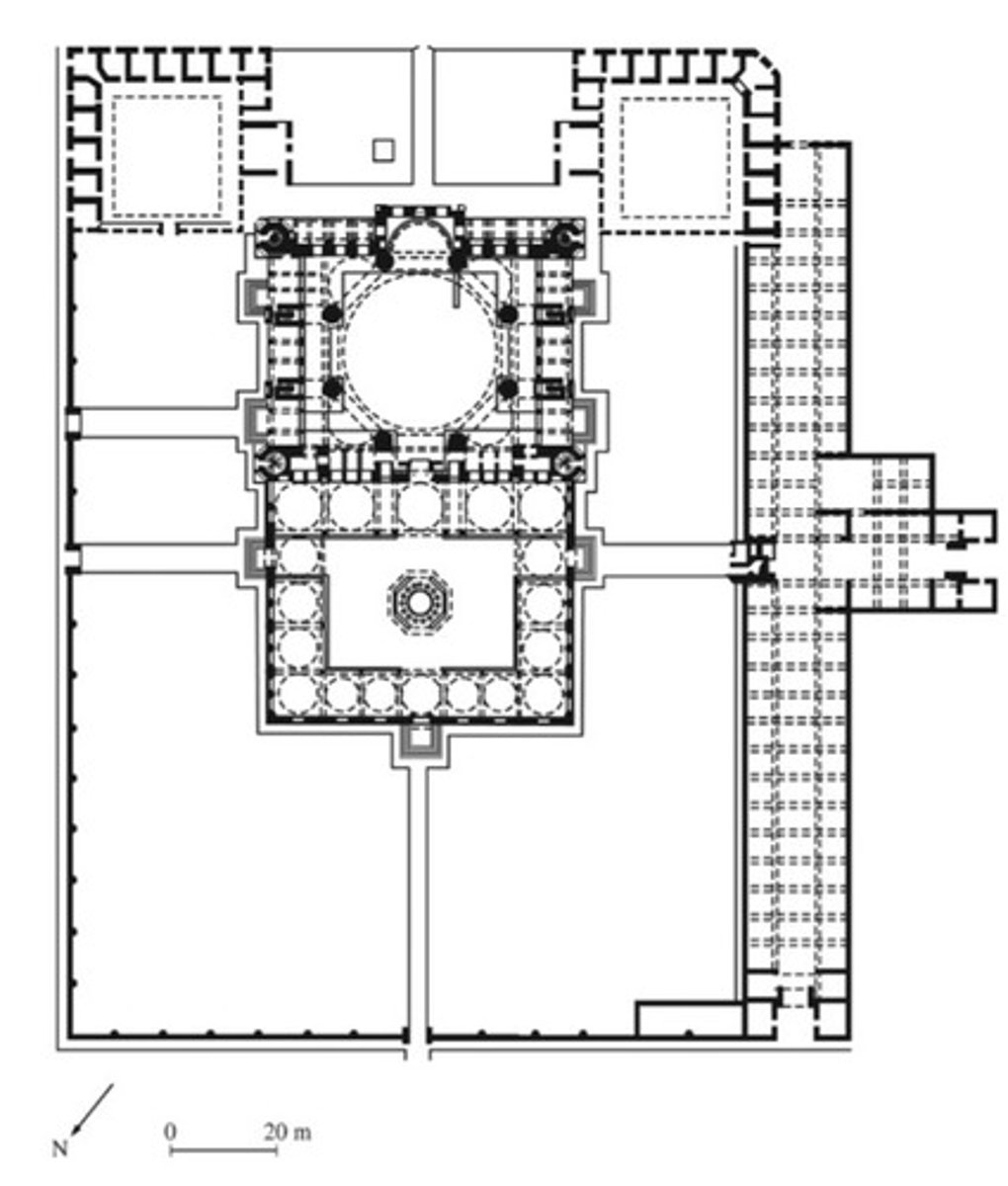
Mosque of Selim II (Exterior)
Edrine, Turkey. Sinan (architect), 1568-1575 C.E. Brick and stone.
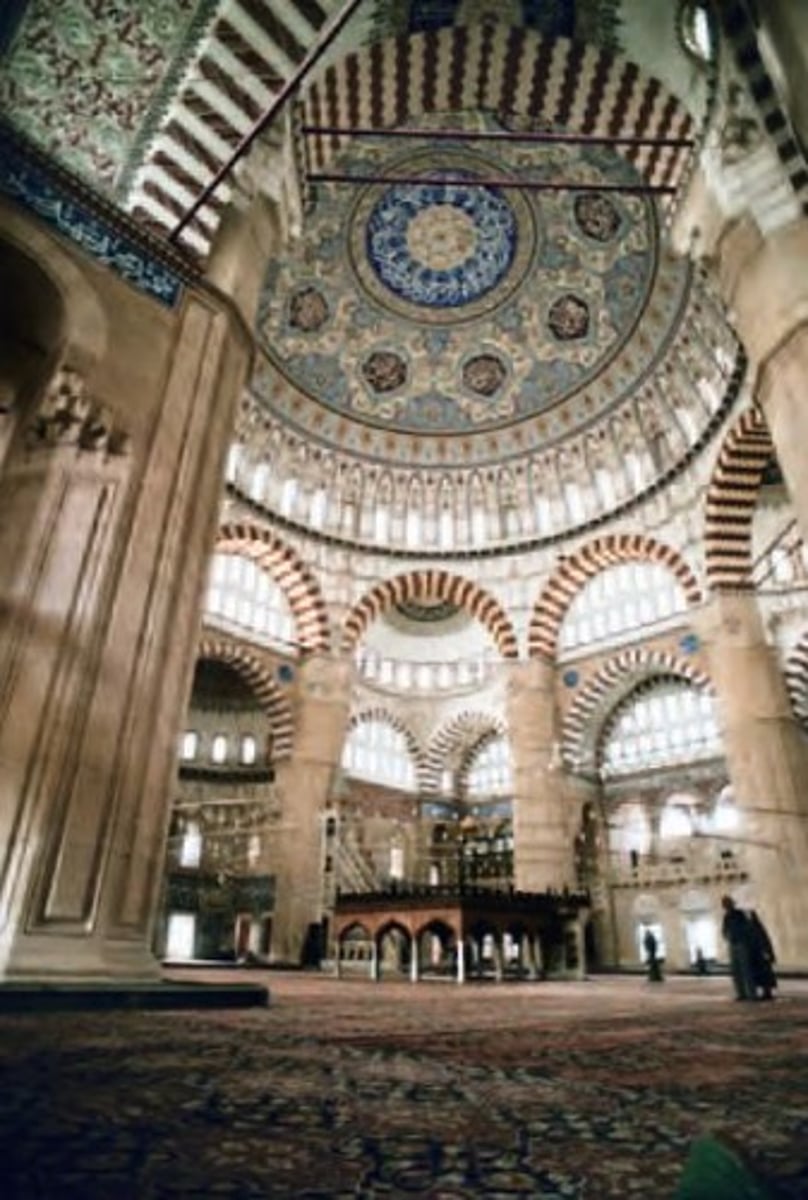
It is one of the most important buildings in the history of world architecture both for its design and its monumentality. It is considered to be the masterwork of the great Ottoman architect Sinan.
Mosque of Selim II (Interior)
Mosque of Selim II (plan)
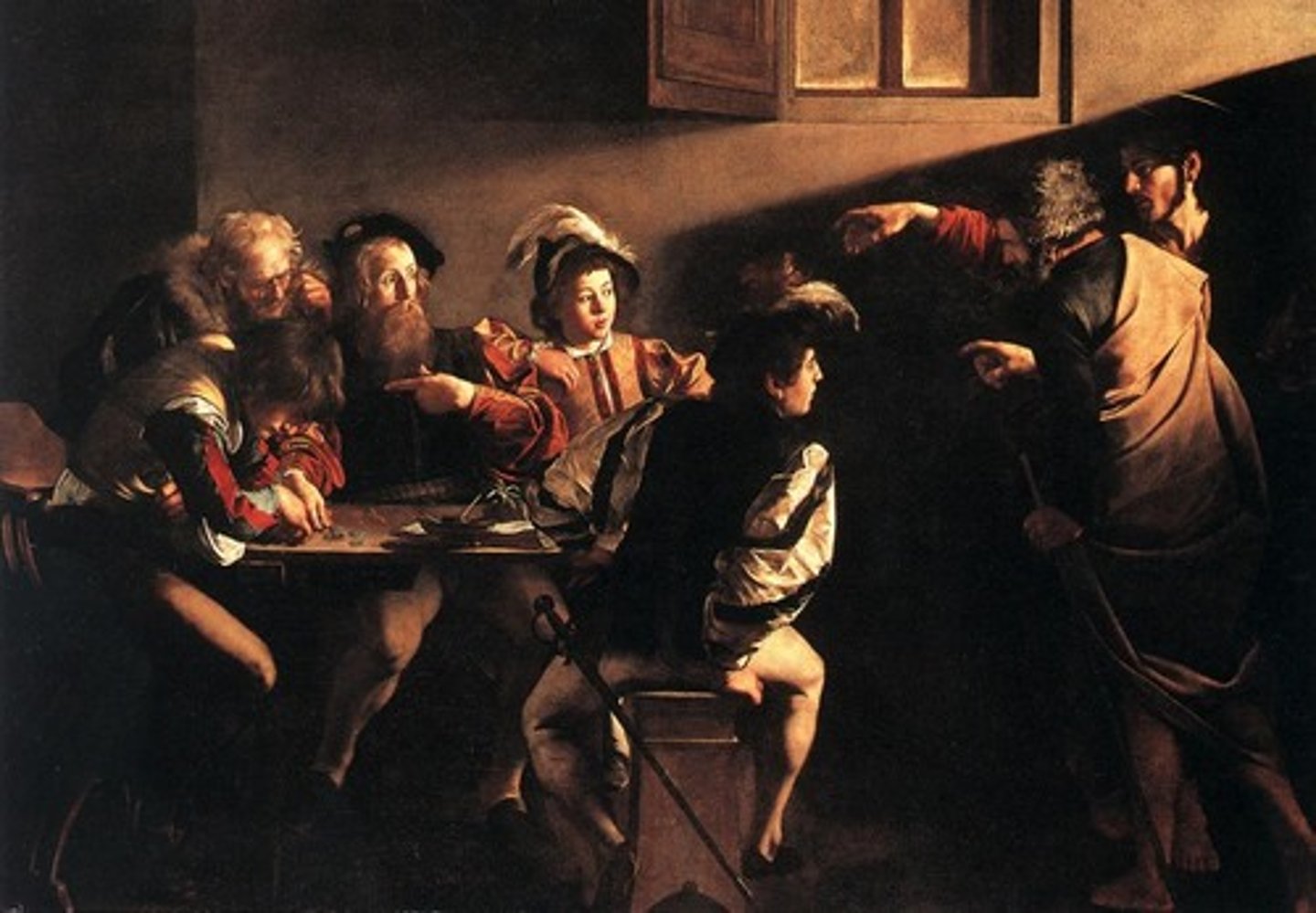
Calling of Saint Matthew
Caravaggio. c. 1597-1601 C.E. Oil on canvas. Commissioned for Contarelli Chapelin Rome.
Contains moralistic tone; depicting the very moment when Levi (Matthew) first realizes he is being called by Christ. Utilizes Tenebrism and non-idealized figures (in fact they appear quite sketchy here.) Concentrated on Catholic themes as a part of the Baroque era.
Tenebrism
The use of strong chiaroscuro and artificially illuminated areas to create a dramatic contrast of light and dark in a painting; commonly used by Caravaggio.
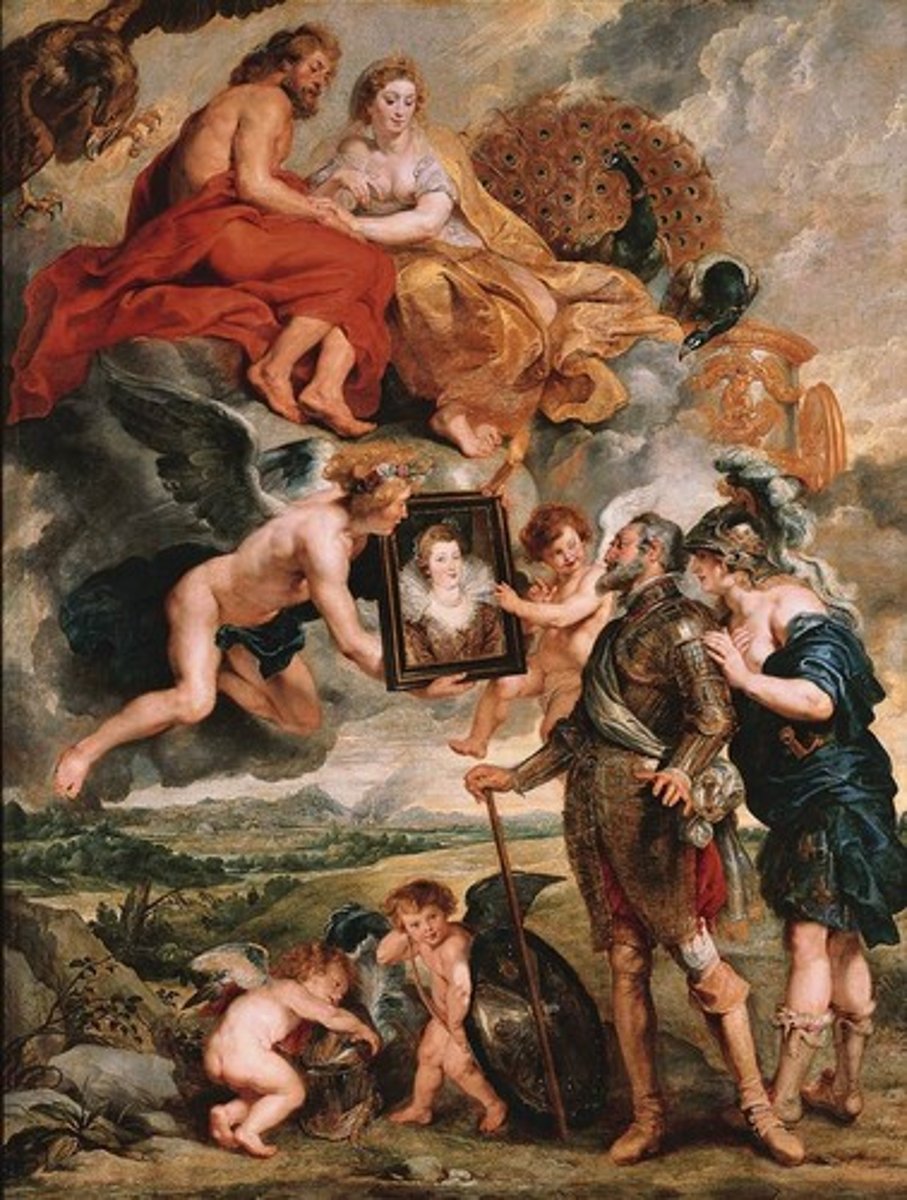
Henri IV Recieves the portrait of Marie de' Medici, from the Marie de' Medici Cycle
Peter Paul Rubens. 1621-1625 C.E. Oil on canvas.
One in a series of commissions for Marie de Medici for her home in Paris. Depicts Greek god of marriage presenting her portrait to King Henri IV, Juno and Jupiter watch the scene. Displays her power when she gazes directly at the viewer. Baroque style and tactile sensation.
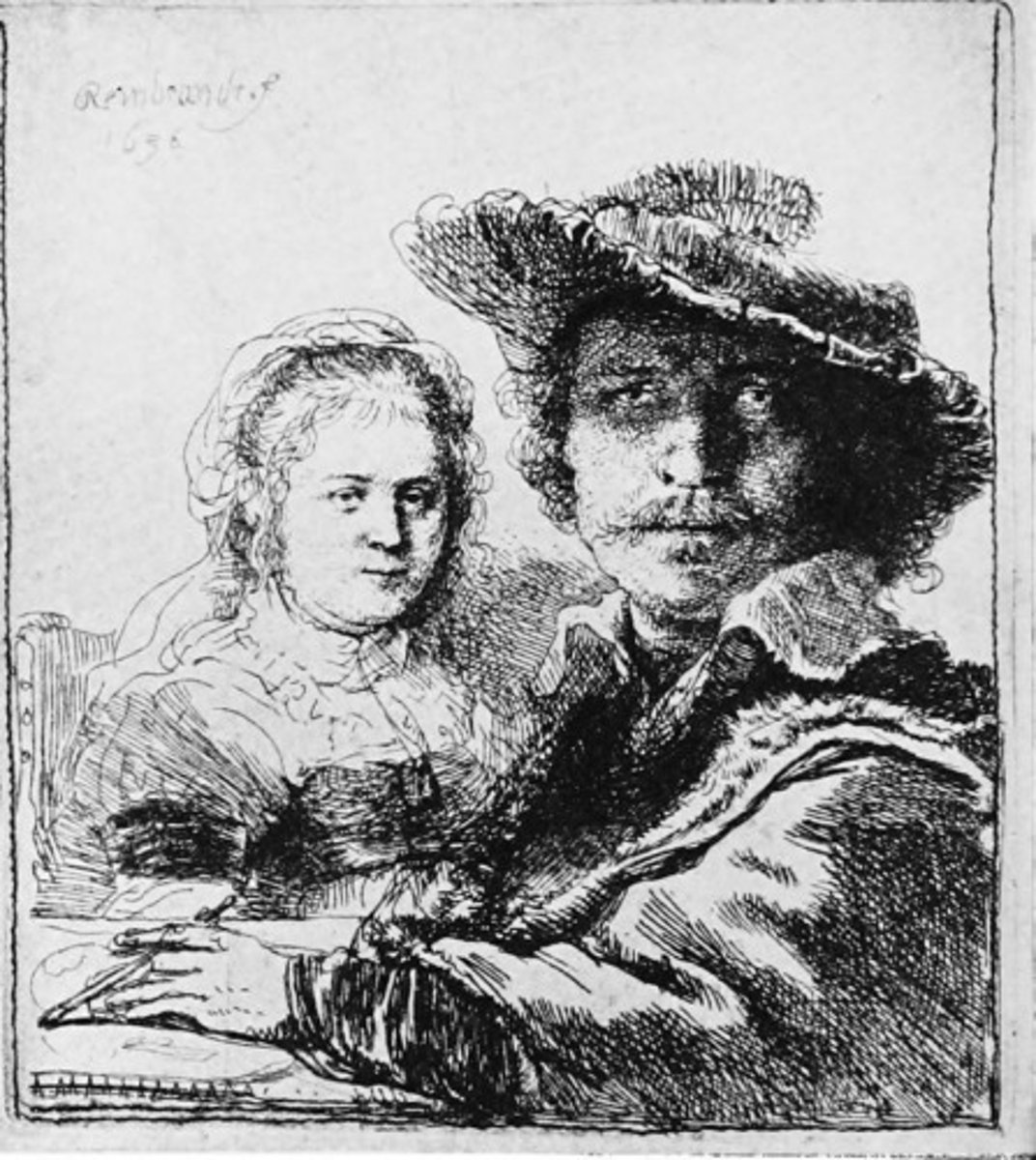
Self-Portrait with Saskia
Rembrandt van Rijn. 1636 C.E. Etching.
Originally intended to be a study of Rembrandt's wife but later inserted himself into the etching. Both he and his wife are wearing 16th-century attire. A marriage portrait. The first time Rembrandt portrays himself as an artist at work. Highlights Rembrandt as a draftsman One of three versions or "states", which were re-workings of the original plate. Made printmaking and etching a popular medium.
San Carlo alle Quattro Fontane (Exterior)
Rome, Italy. Francesco Borromini (architect). 1638-1646 C.E. Stone and stucco. Commissioned by Pope Sixtus V. Embodies Baroque style.
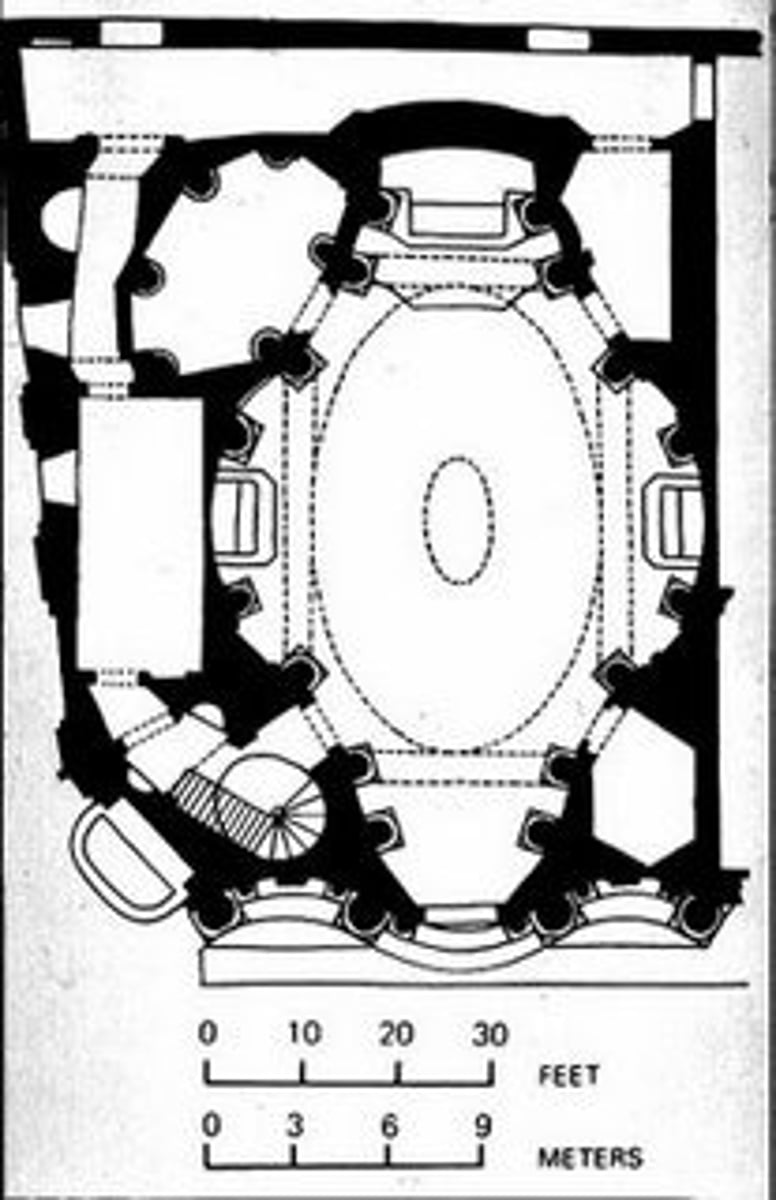
Alternating convex and concave patterns on the ground and upper level undulate. Oval-shaped dome. Lacks symmetry. The elements create the illusion of movement and light with dark.
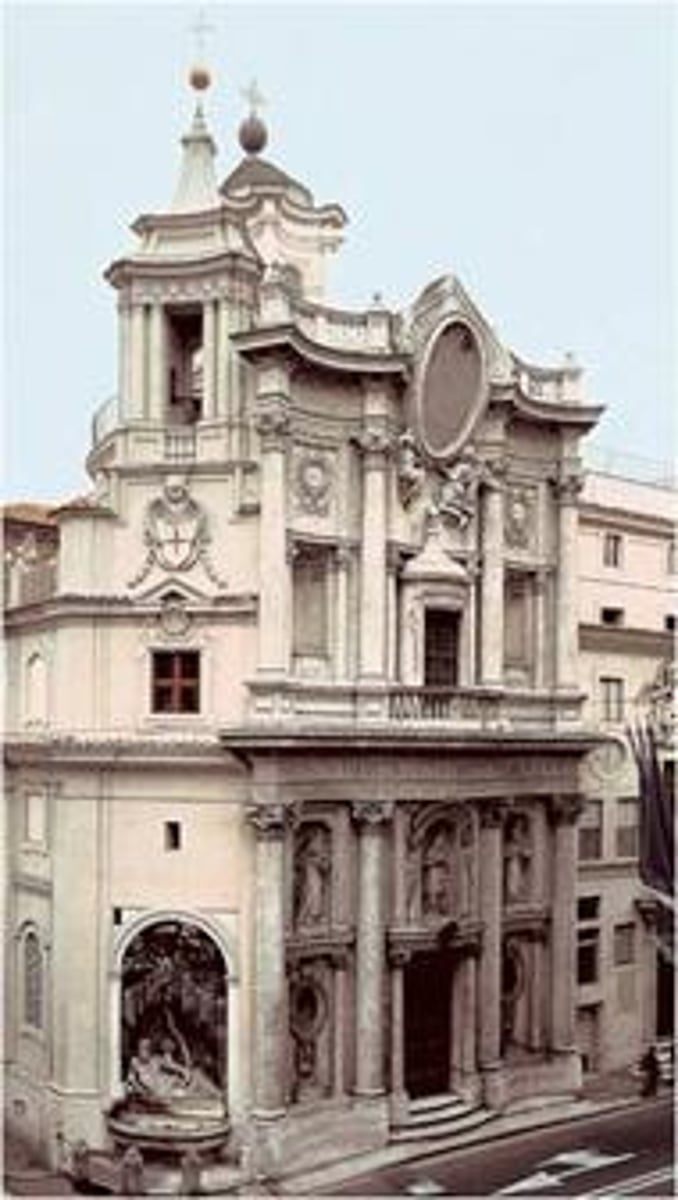
San Carlo alle Quattro Fontane (Interior)
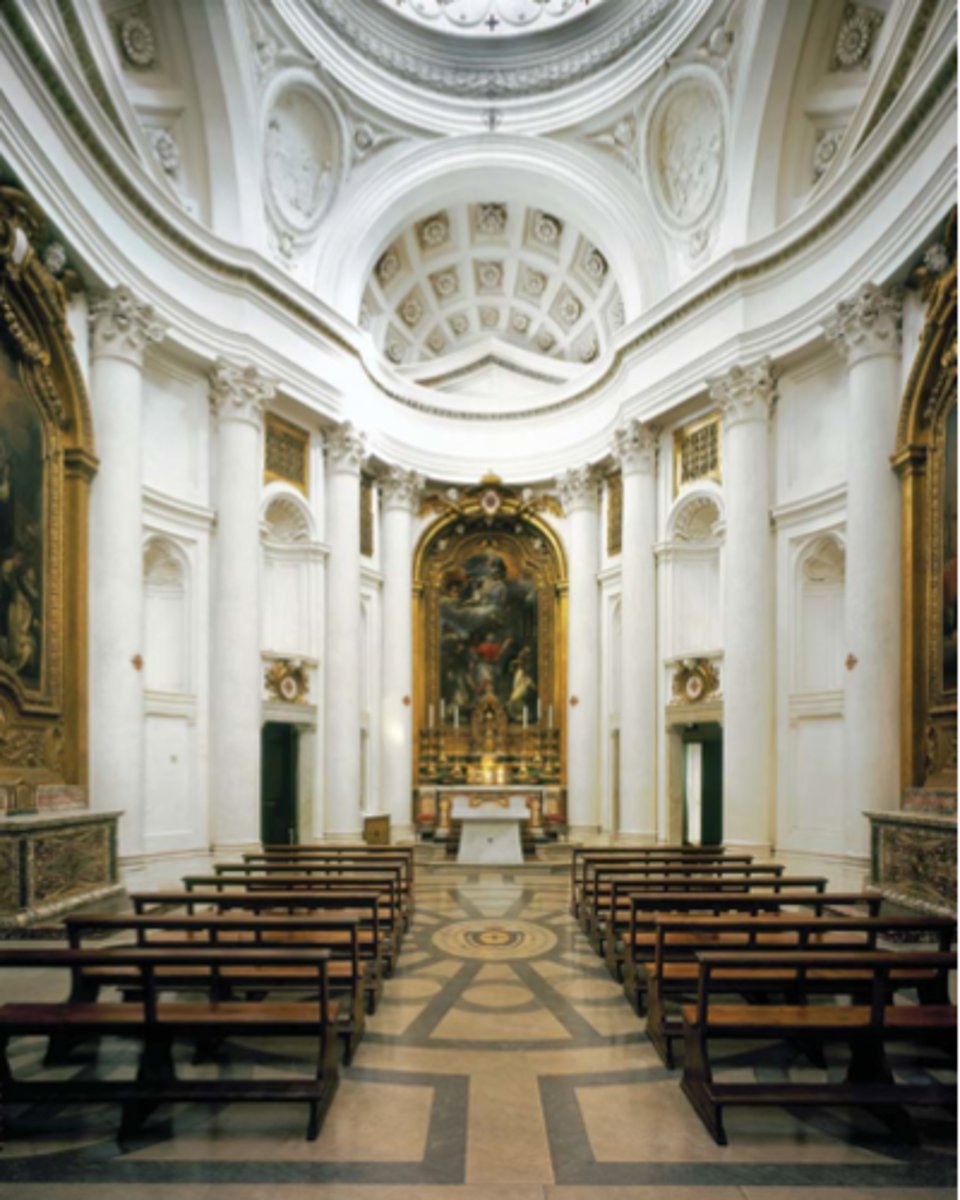
San Carlo alle Quattro Fontane (plan)
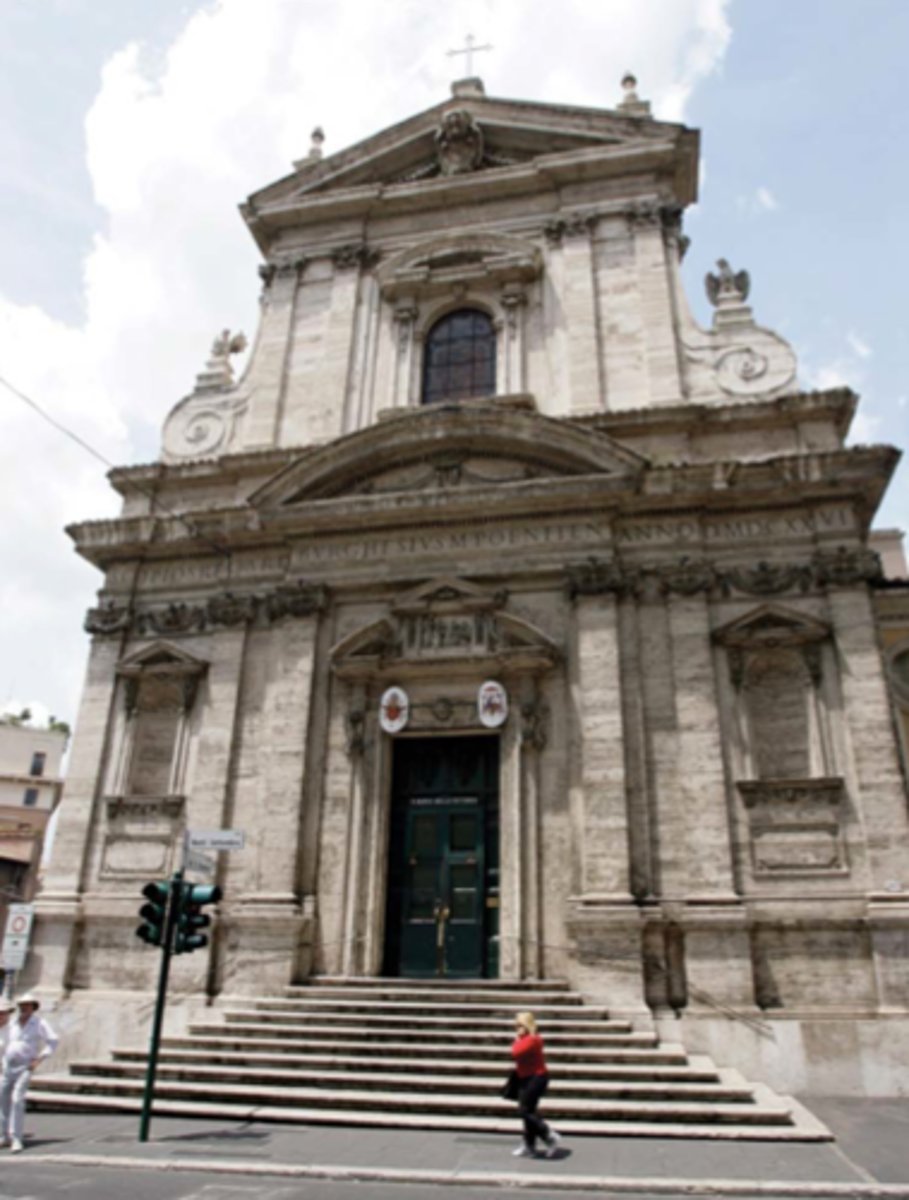
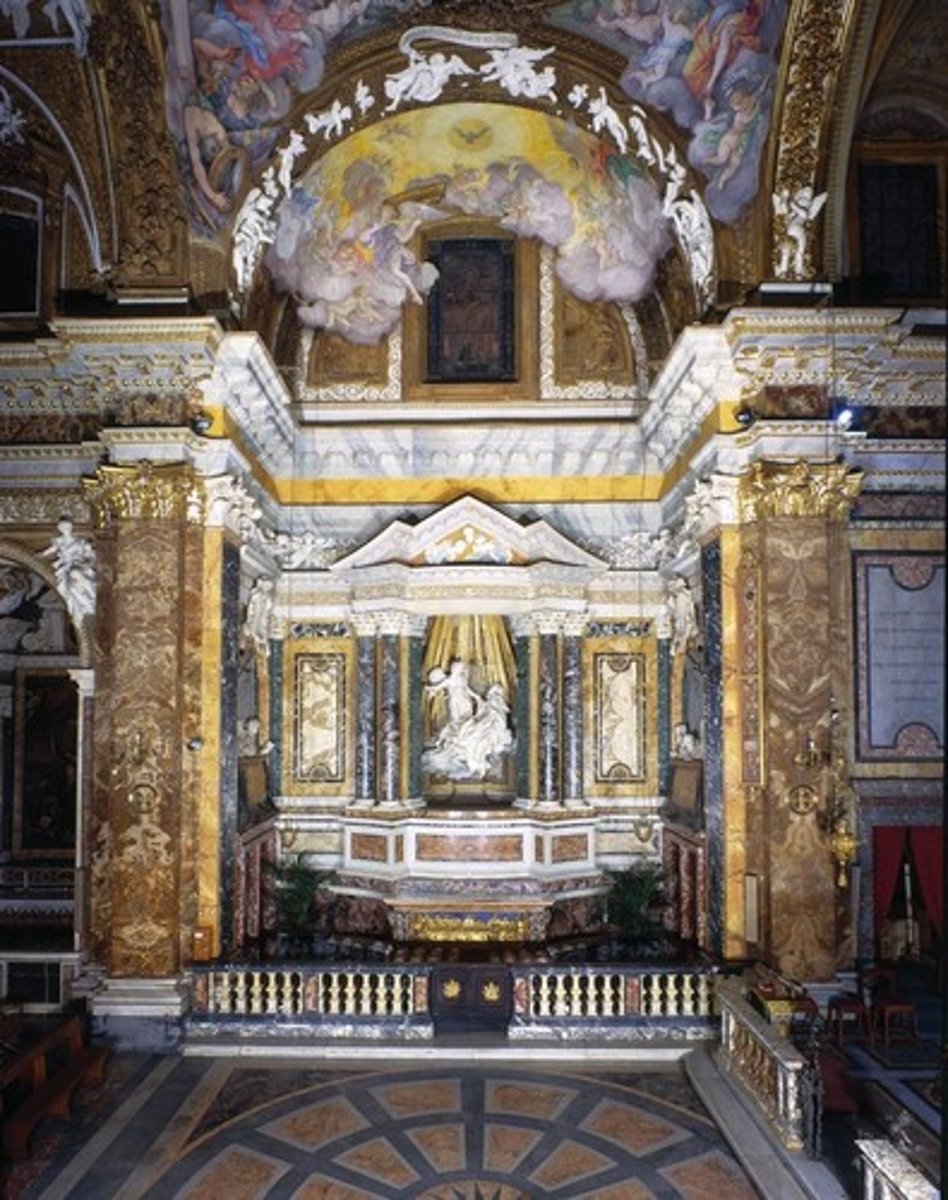
Ecstasy of Saint Teresa (Church of Santa Maria della Vittoria)
Cornaro Chapel, Church of Santa Maria della Vittoria. Rome, Italy. Gian Lorenzo Bernini. c. 1647-1652 C.E. Baroque. Marble (sculpture); stucco and gilt bronze (chapel). Commissioned by Cornaro family of Venice.
Includes overlook of painted balconies resembling theater boxes containing patron portraits (donor painting.) Bronze rods symbolize light rays. A hidden window creates a spotlight effect. Reflects Catholic themes of the Baroque period.
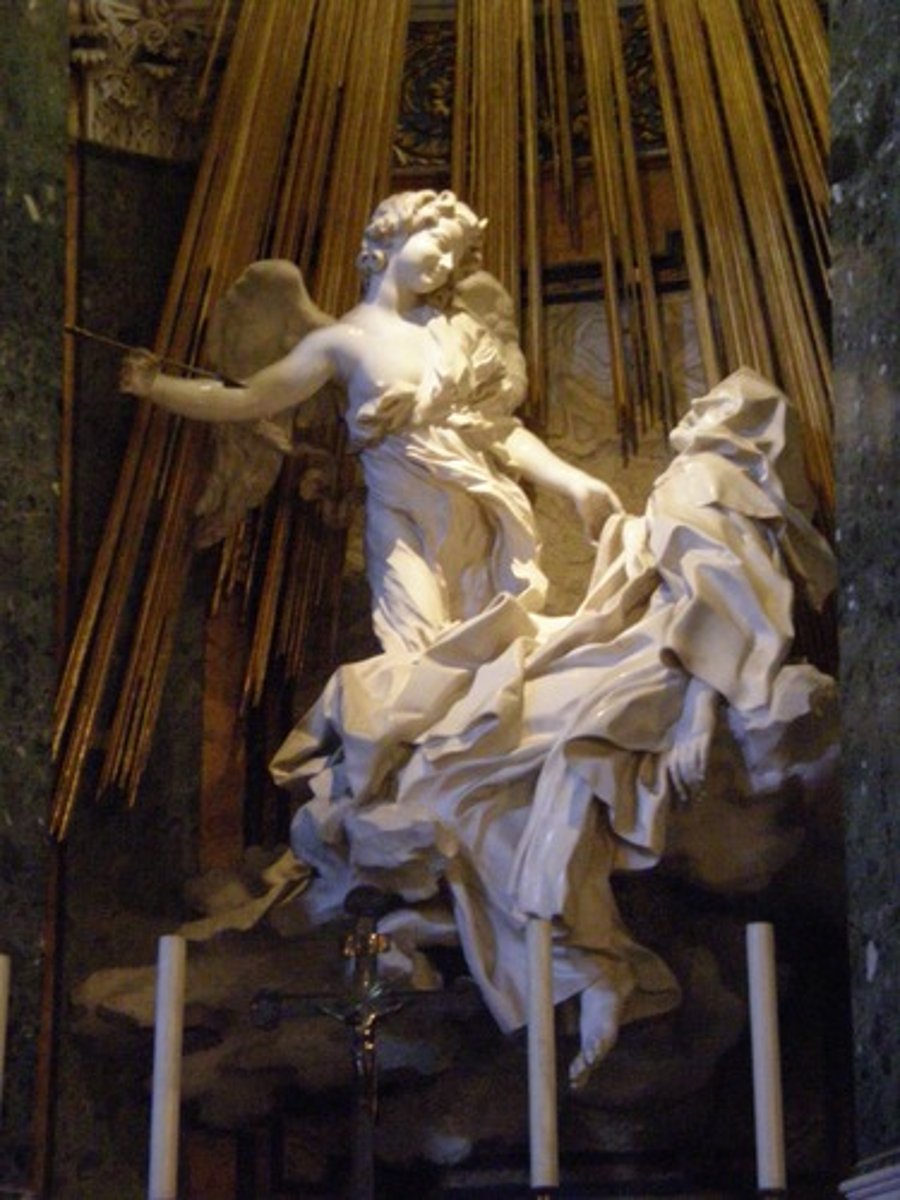
Ecstasy of Saint Teresa (Cornaro Chapel)
-Bernini
-Rome, italy
-Marble
-Combines baroque taste for depiction of inner emotions with sense of mysticism
-Erotic scene within a church
Ecstasy of Saint Teresa (sculpture)
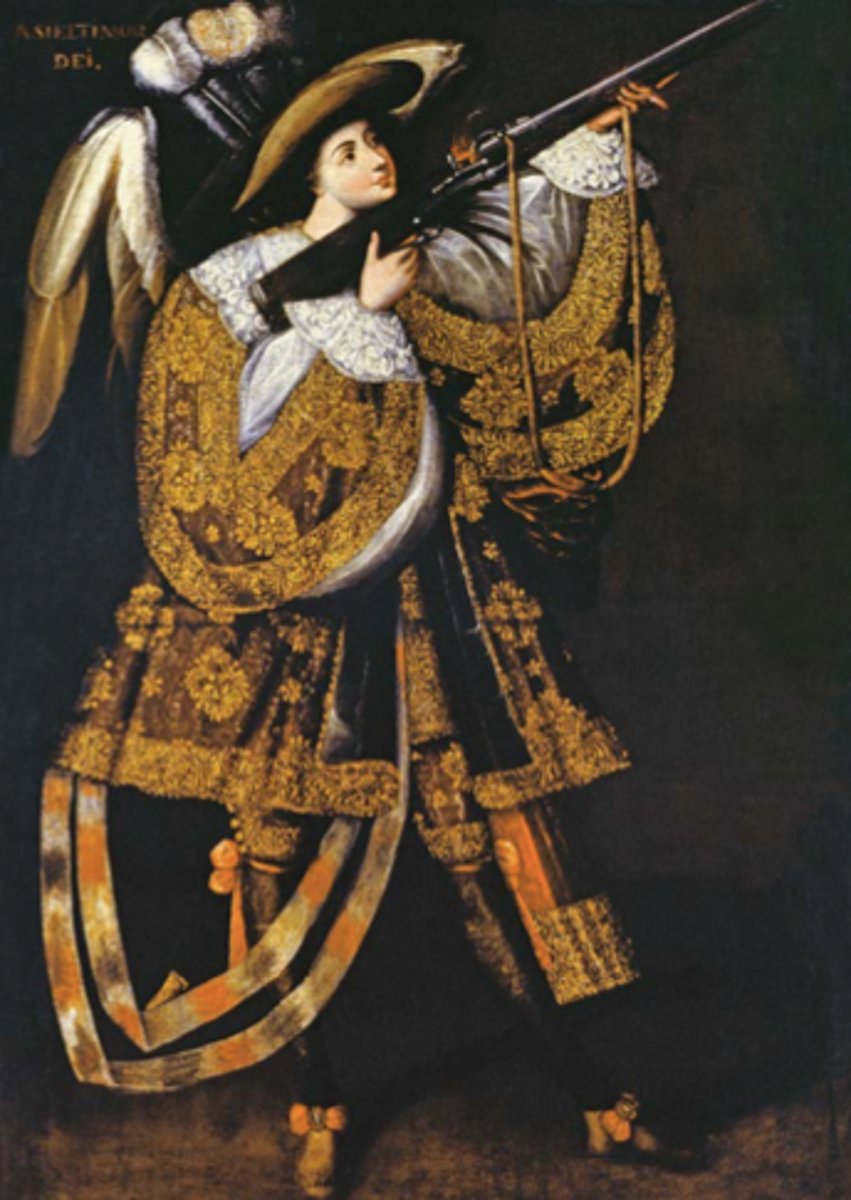
Angel with Arquebus, Asiel Timor Dei
Master of Calamarca (La Paz School). c. 17th century C.E. Oil on canvas. Created in Peru.
Council of Trent did not enforce prohibitions on depicting angels beside Michael, Gabriel, and Raphael in Spain. Asiel Timor Dei (Fears God). Represents triumph of Catholicism in New World. Arguebus is a gun, an odd pair with an angel. Meant to inspire monotheistic belief in the region of New Spain. Feathers indicates wealth or nobility. Depicts silver and gold used only in military garments.
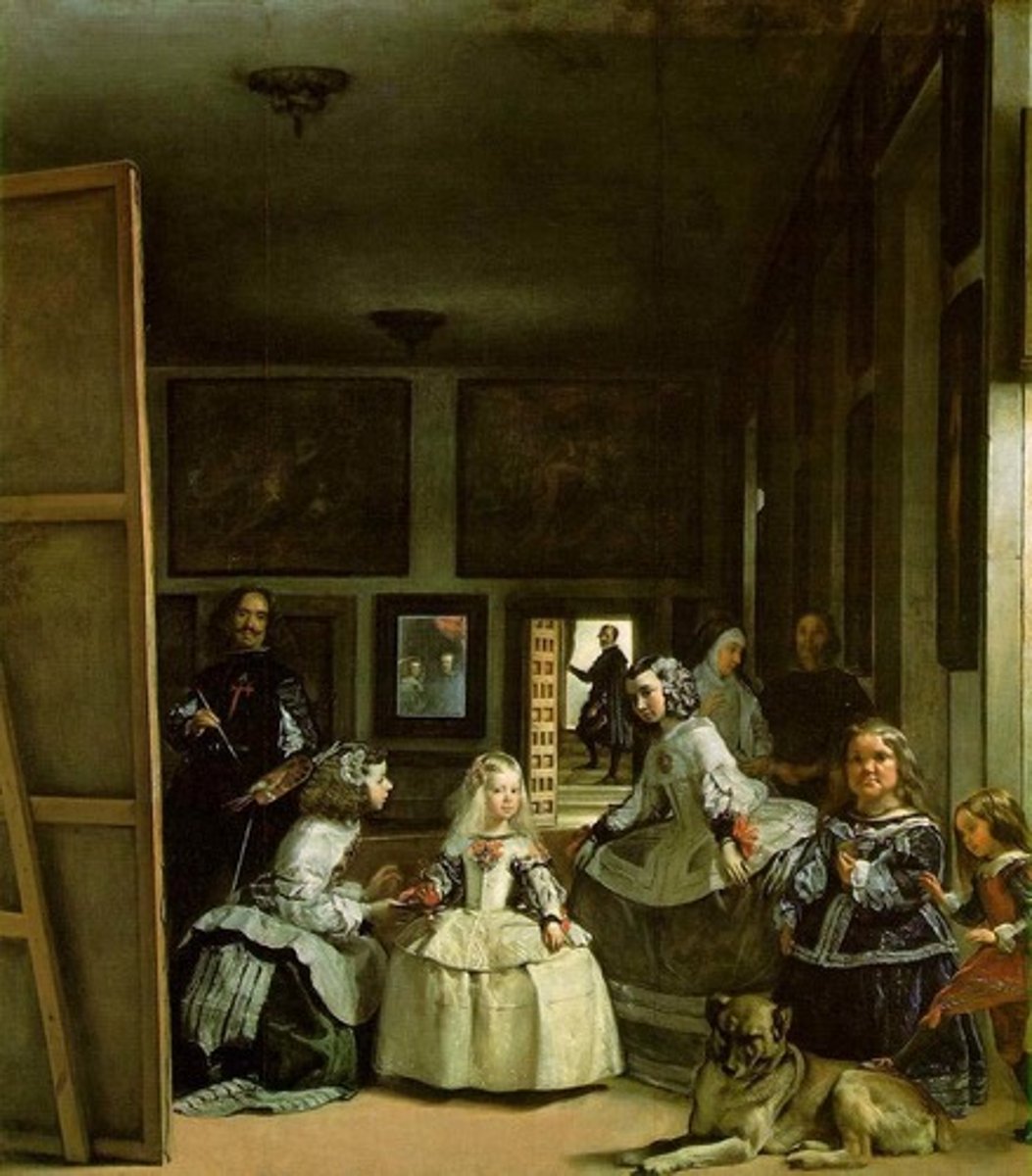
Las Meninas
Diego Velázquez. c. 1656 C.E. Oil on canvas.
Self-portrait of the artist in his studio. Contains cross of Royal Order of Santiago on his chest, elevating Velázquez to knighthood. King and Queen reflected in the mirror. Intended for King Philip IV's study. Depicts Infanta Margharita of Spain and attendants. Influenced by Jan Van Eyck's Arnolfini portrait. Several focal points dominate the painting.
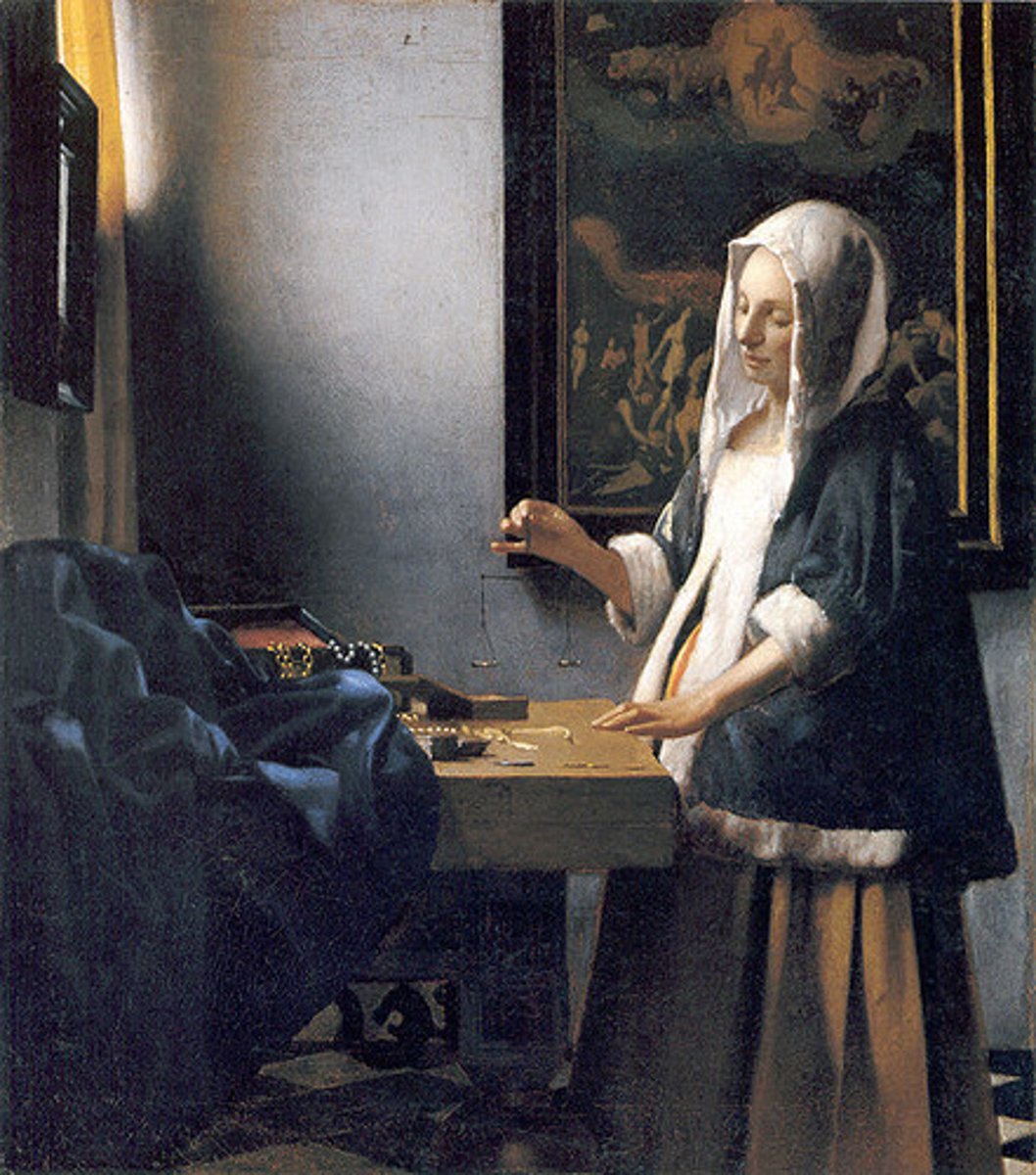
Woman Holding a Balance
Johannes Vermeer. c. 1664 C.E. Oil on canvas.
Woman's pose and robe are reminiscent of Mary. Jewels and empty scale illustrate holding spirituality above material. Vanitas painting. Depicts idea of the Last Judgment, a popular theme in Baroque art.
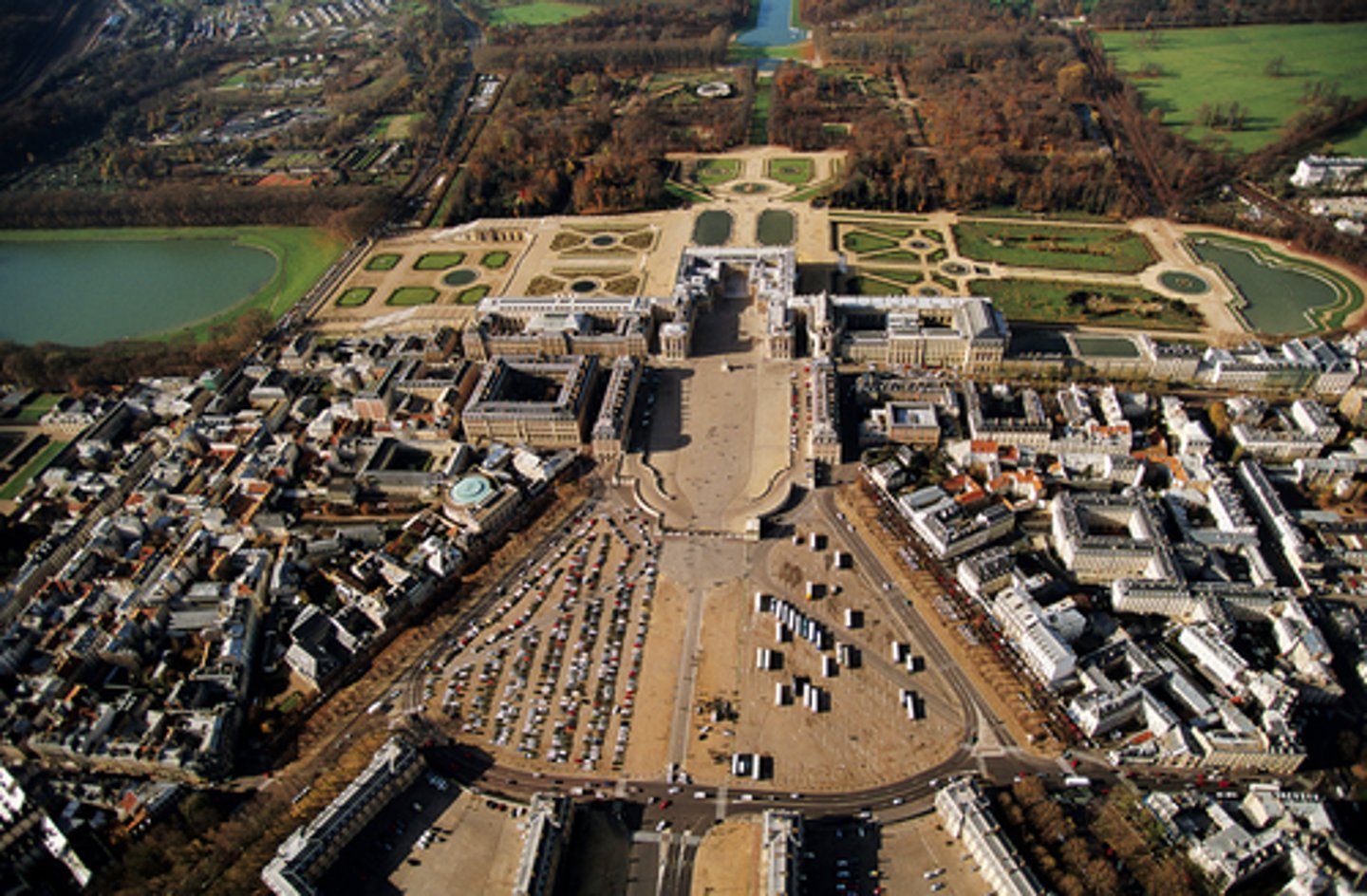
Palace of Versailles (aerial)
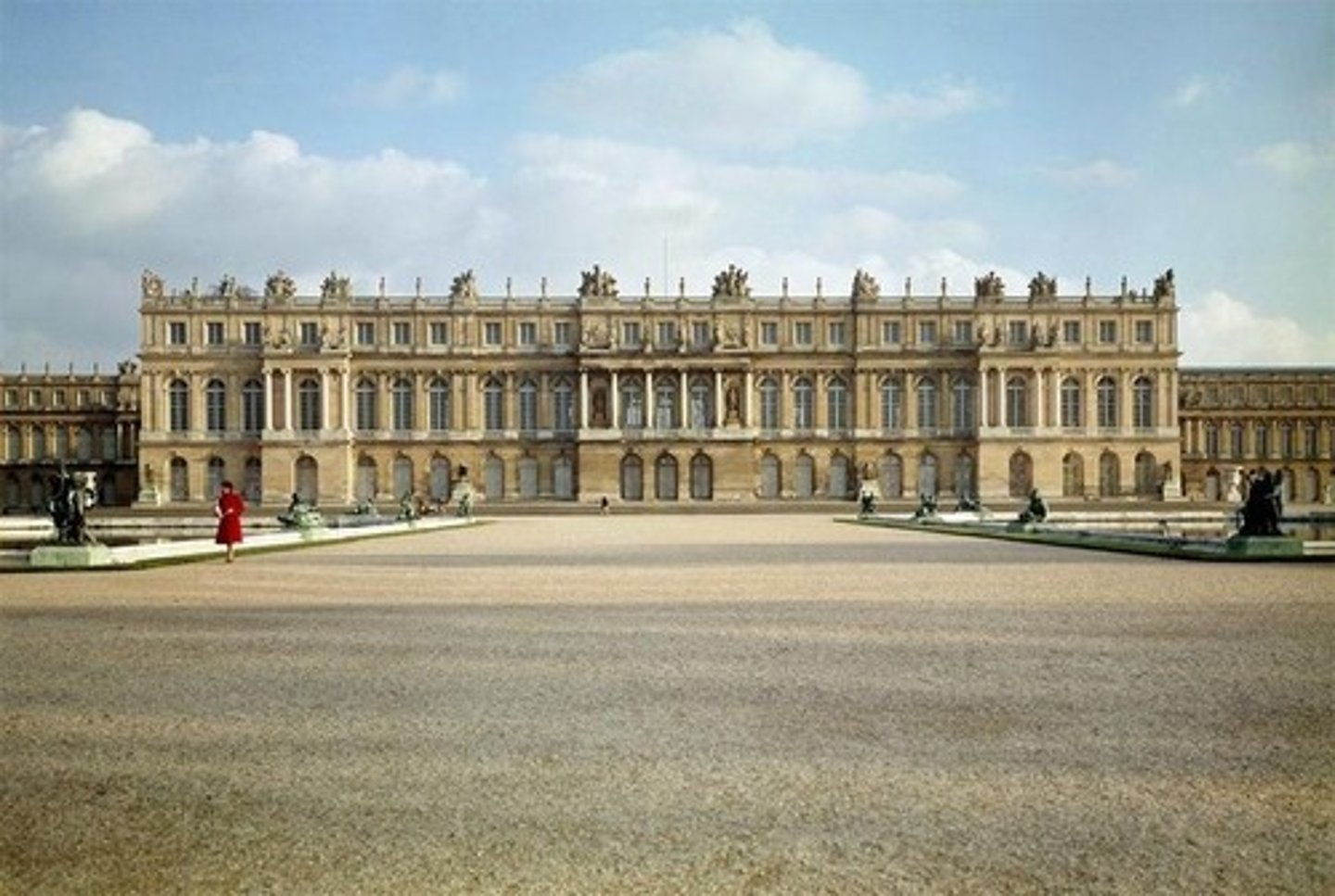
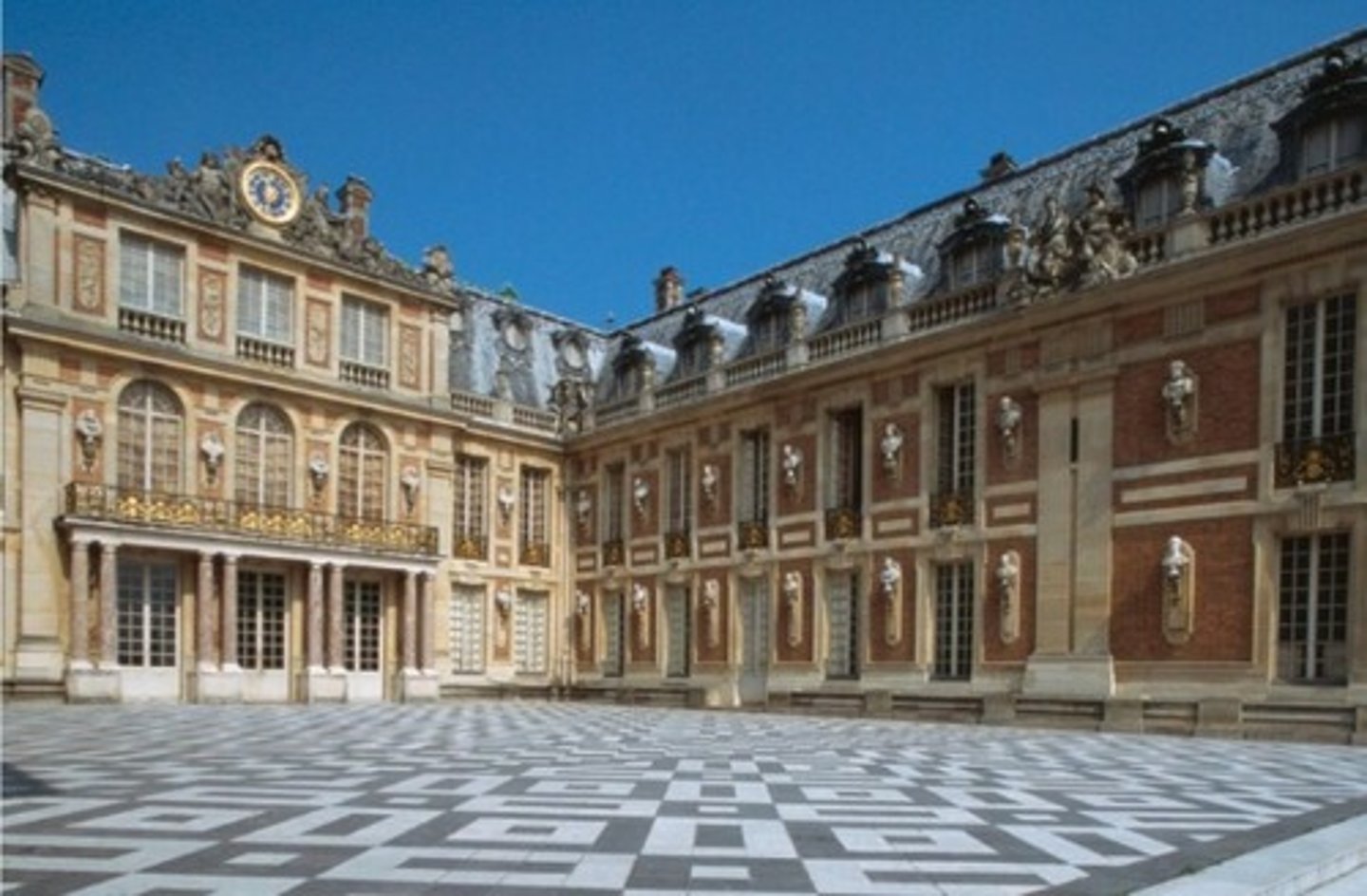
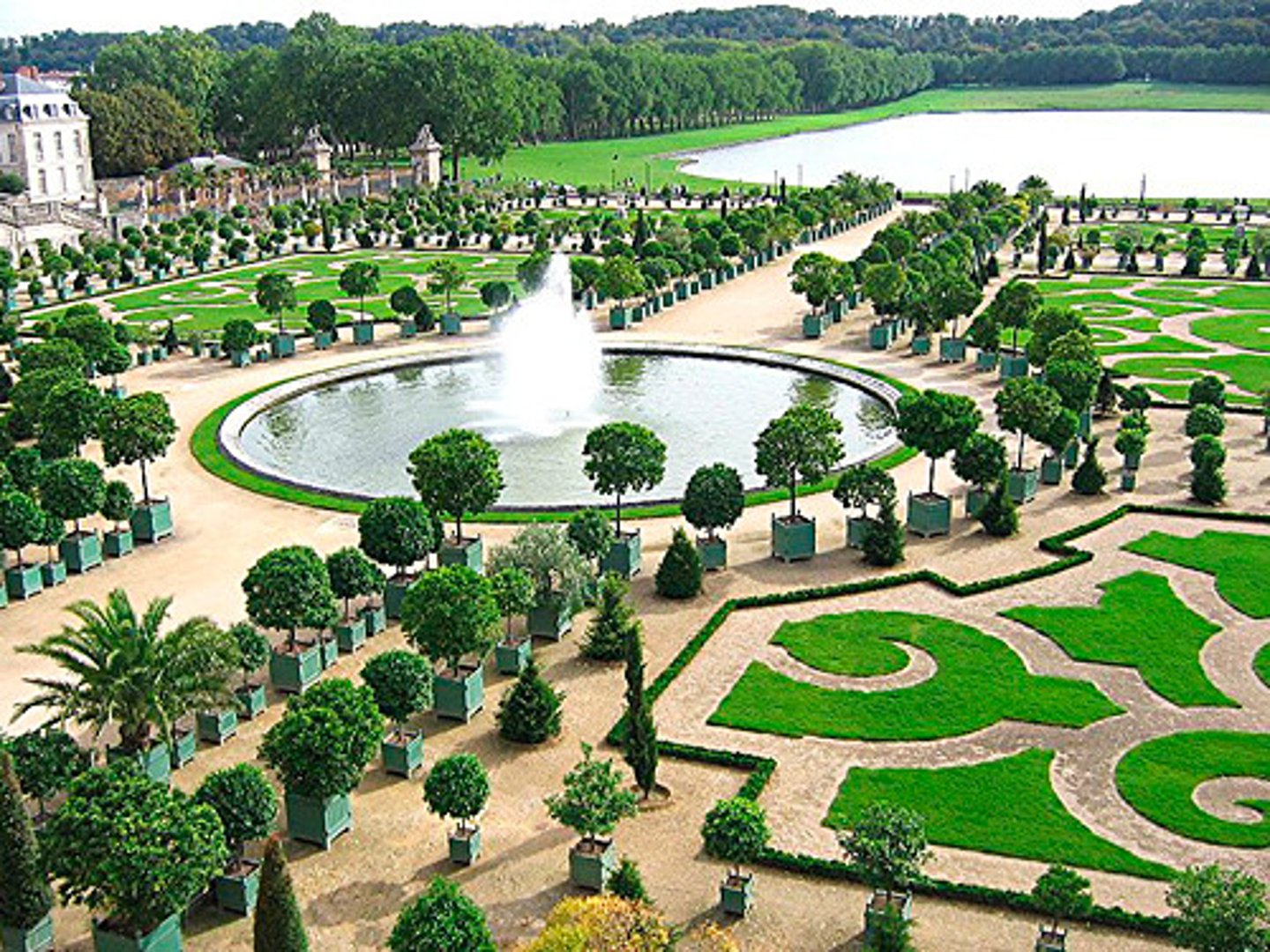
Versailles, France. Louis Le Vau and Jules Hardouin-Mansart (architects). Begun 1669 C.E. Masonry, stone, wood, iron, and gold leaf (architecture); marble and bronze (sculpture); gardens.
Renovated hunting lodge into palace outside Paris. Ornate detail, with thousands of rooms, windows, staicases, and fountains.
Palace of Versailles (Exterior)
Palace of Versailles (courtyard)
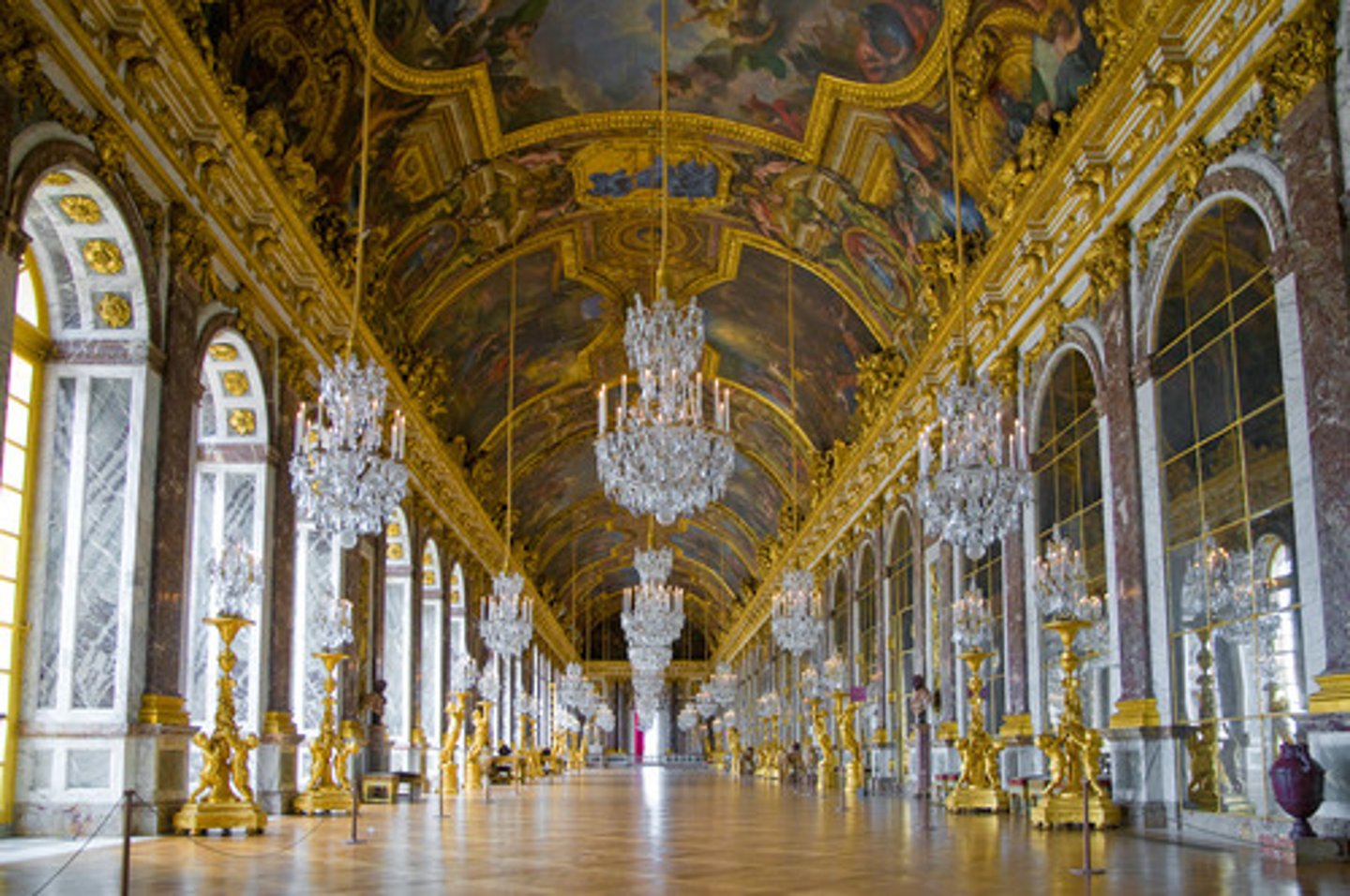
Palace of Versailles (Hall of Mirrors)
The Palace of Versailles, Versailles, Paris. A wall of mirrors diffuses the daylight, overlooking the gardens. The most famous room in the palace.
Palace of Versailles (gardens)
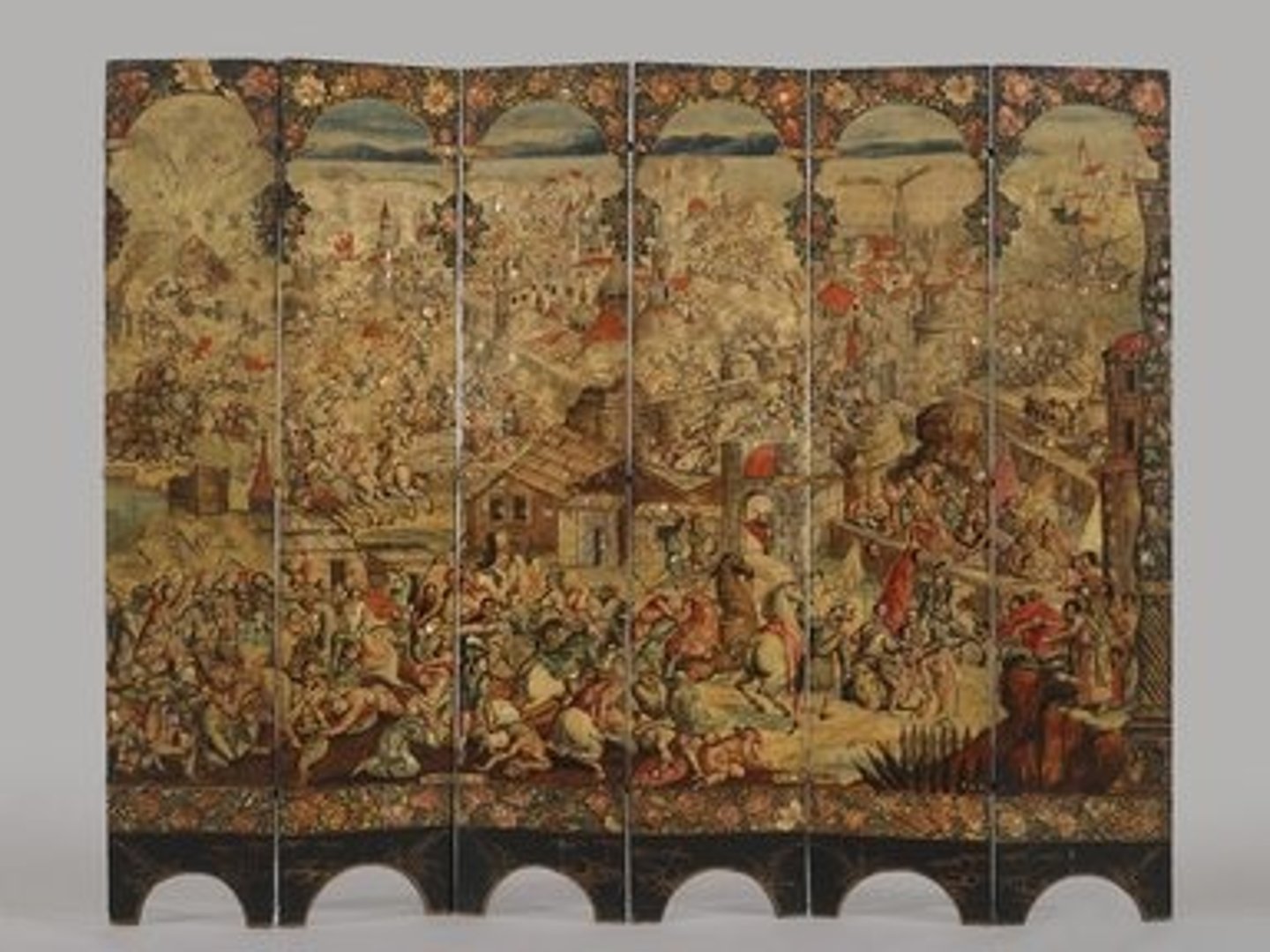
Screen with the Siege of Belgrade
Circle of the Gonzalez family. c. 1697-1701 CE. Tempera and resin on wood, shell inlay.
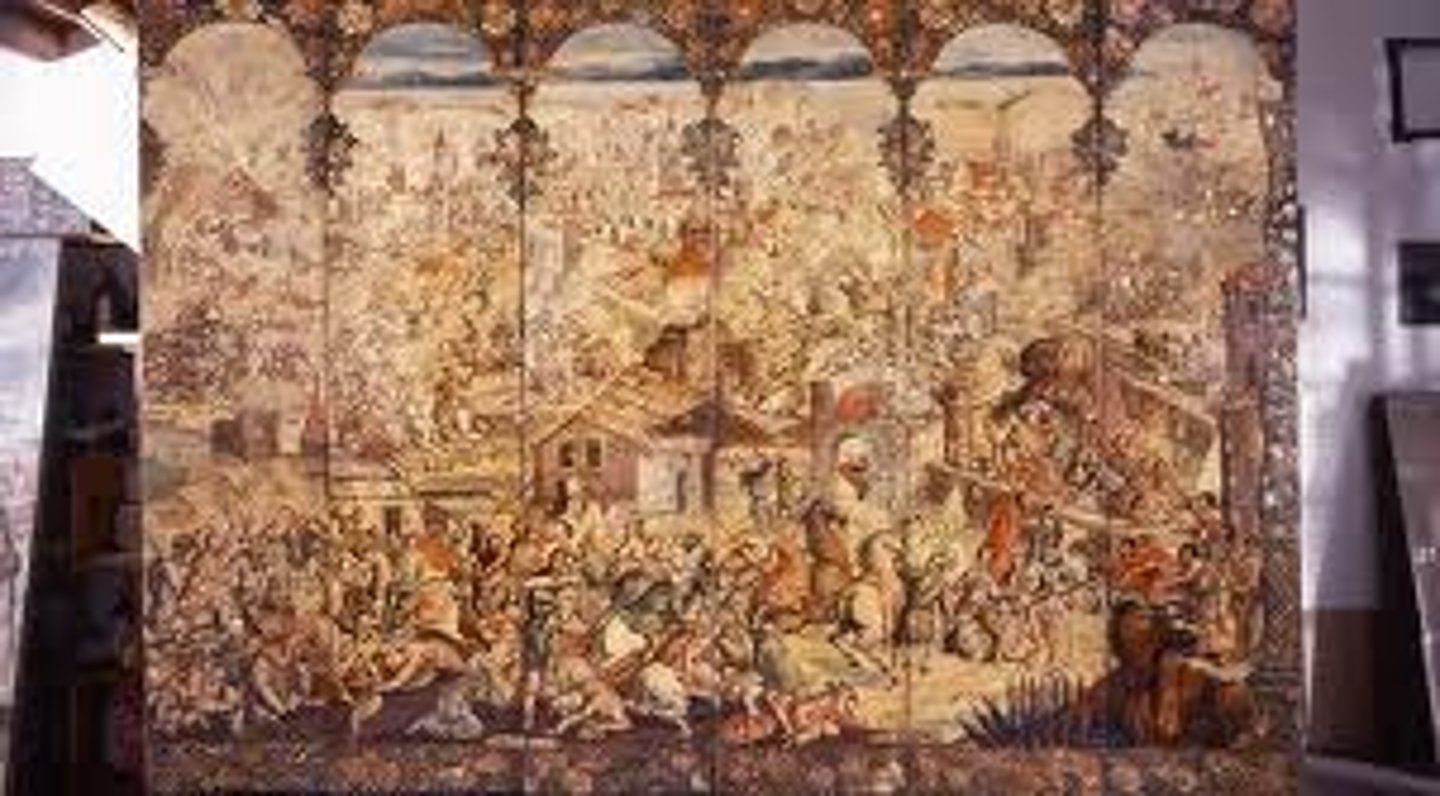
Combines Mexican art forms biombas (folding screens) and enconchados (shell-inlay paintings). Commissioned by the viceroy of New Spain. The inspiration of Dutch print meant to connect Hapsburgs power with New Spain. Hunting scene based on old European print.
Screen with hunting scene
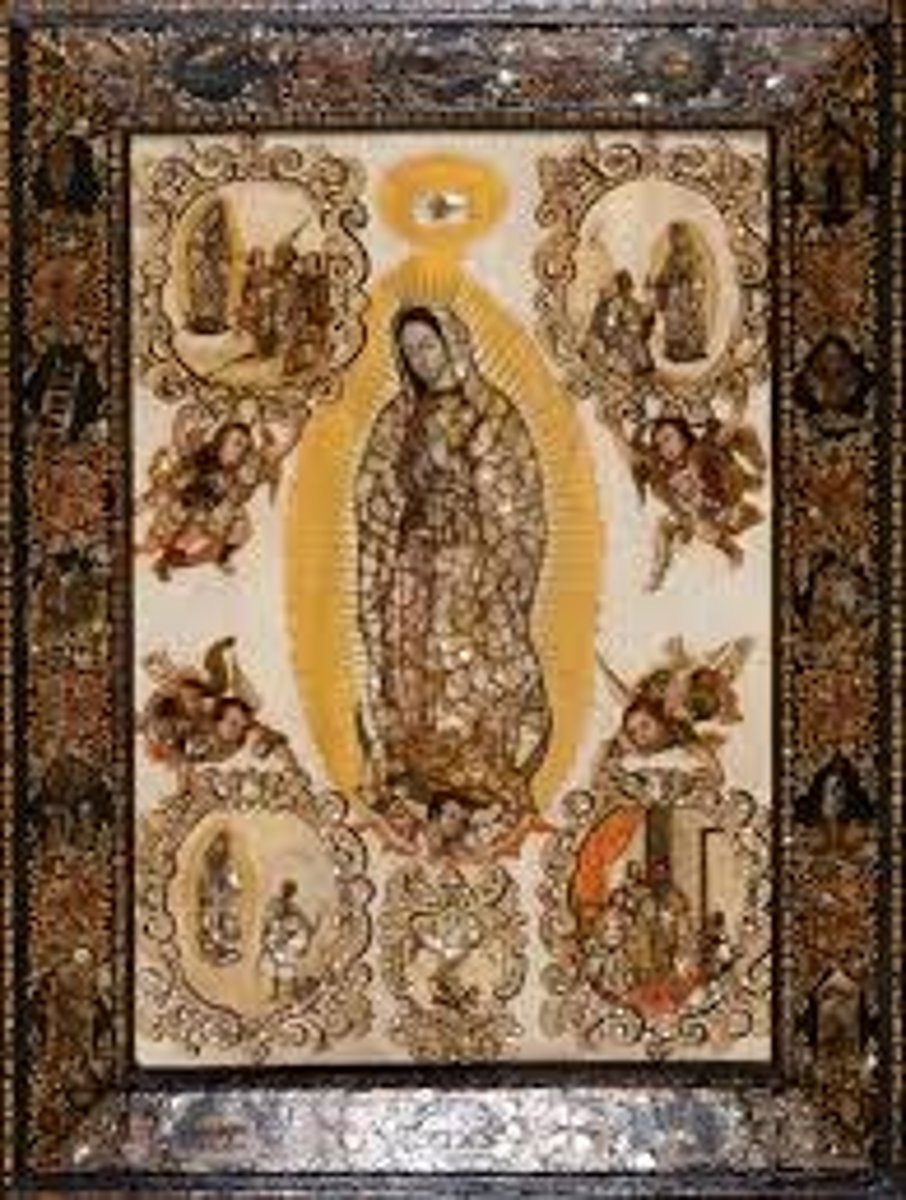
Virgin of Guadalupe
Miguel González. c. 1698 C.E. Based on original Virgin of Guadalupe. Basilica of Guadalupe, Mexico City. Oil on canvas on wood, inlaid with mother-of-pearl (enconchados).
Our Lady of Guadalupe holds a special place in the religious life of Mexico and is one of the most popular religious devotions. Her image of an eagle on a cactus has played an important role as a national symbol of Mexico. Legend says Mary revealed herself to Juan Diego and her image popularized among Native people.
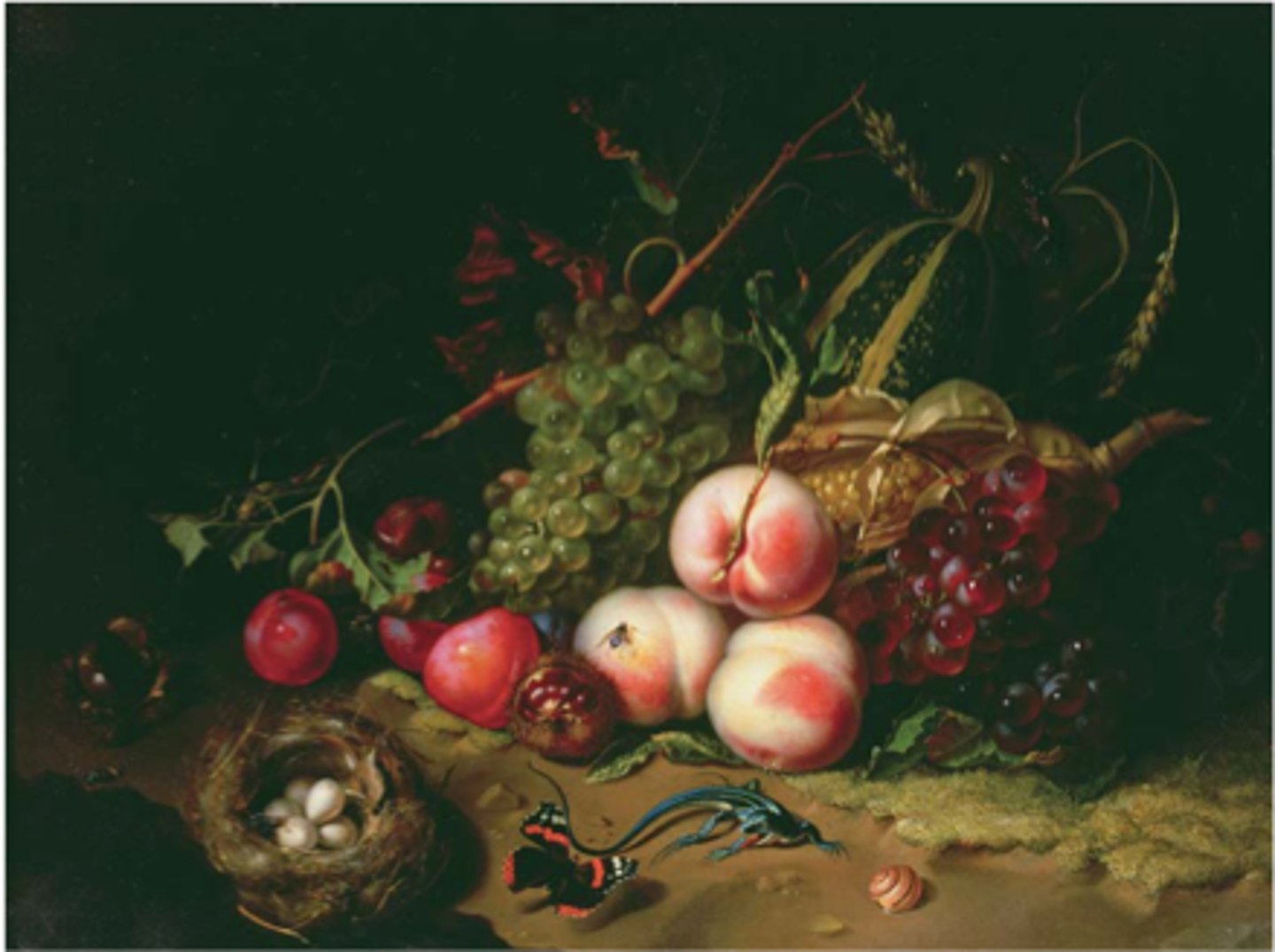
Fruit and Insects
Rachel Ruysch. 1711 C.E. Oil on wood.
One of few successful female artists of the Baroque era. Court artist of Bavaria. Daughter of botanist and anatomist with sketches and illustrations of flowers. Example of vanitas painting, reminder of the briefness of life.
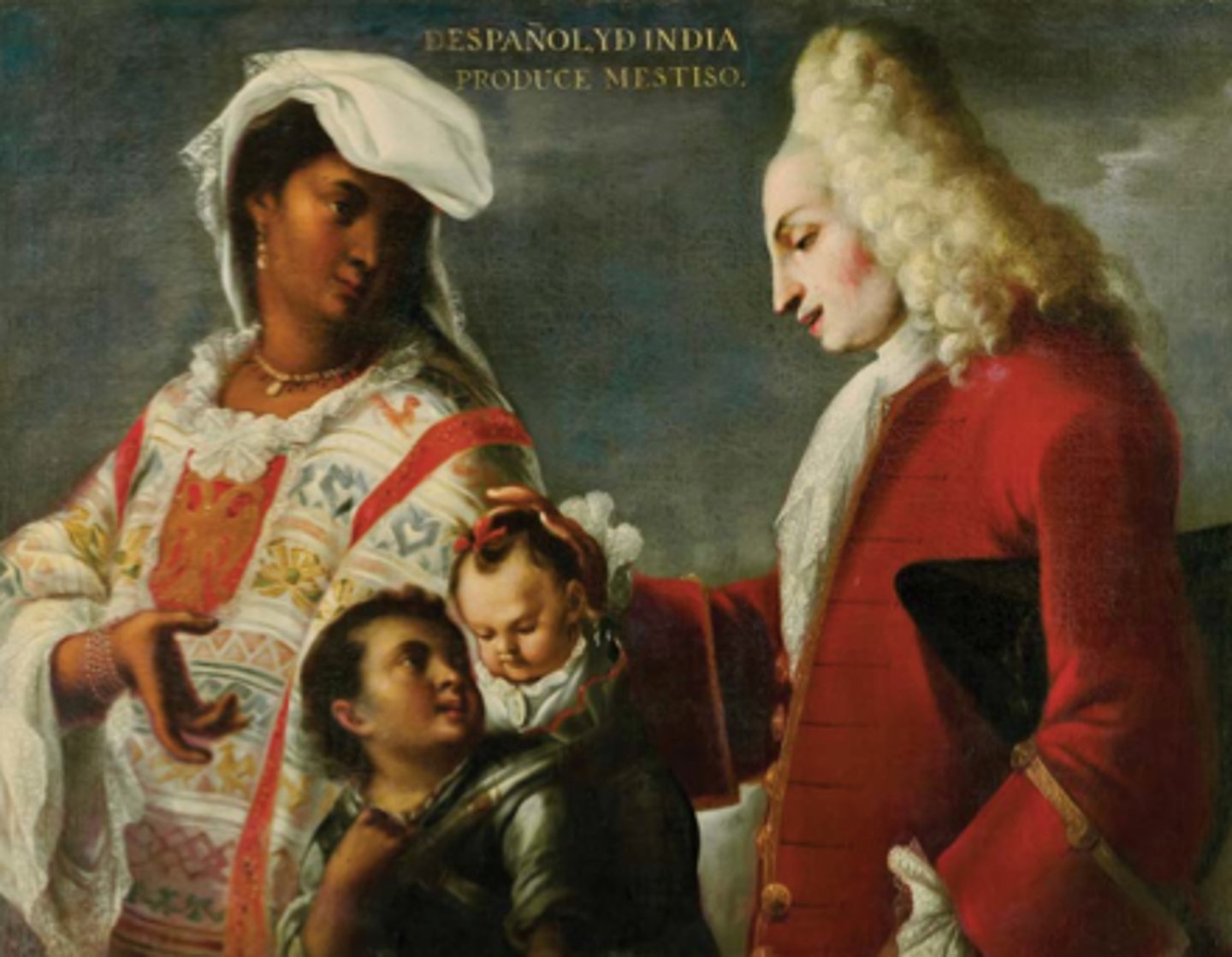
Spaniard and Indian Produce a Mestizo
Attributed to Juan Rodríguez Juárez. c. 1715 C.E. Oil on canvas.
Pinturas de castas (caste paintings). Reflects Mary, Joseph, and Jesus models. Meant to teach Spain about the New Spanish caste system. Commissioned by Spanish elites to warn about ethnic mixing.
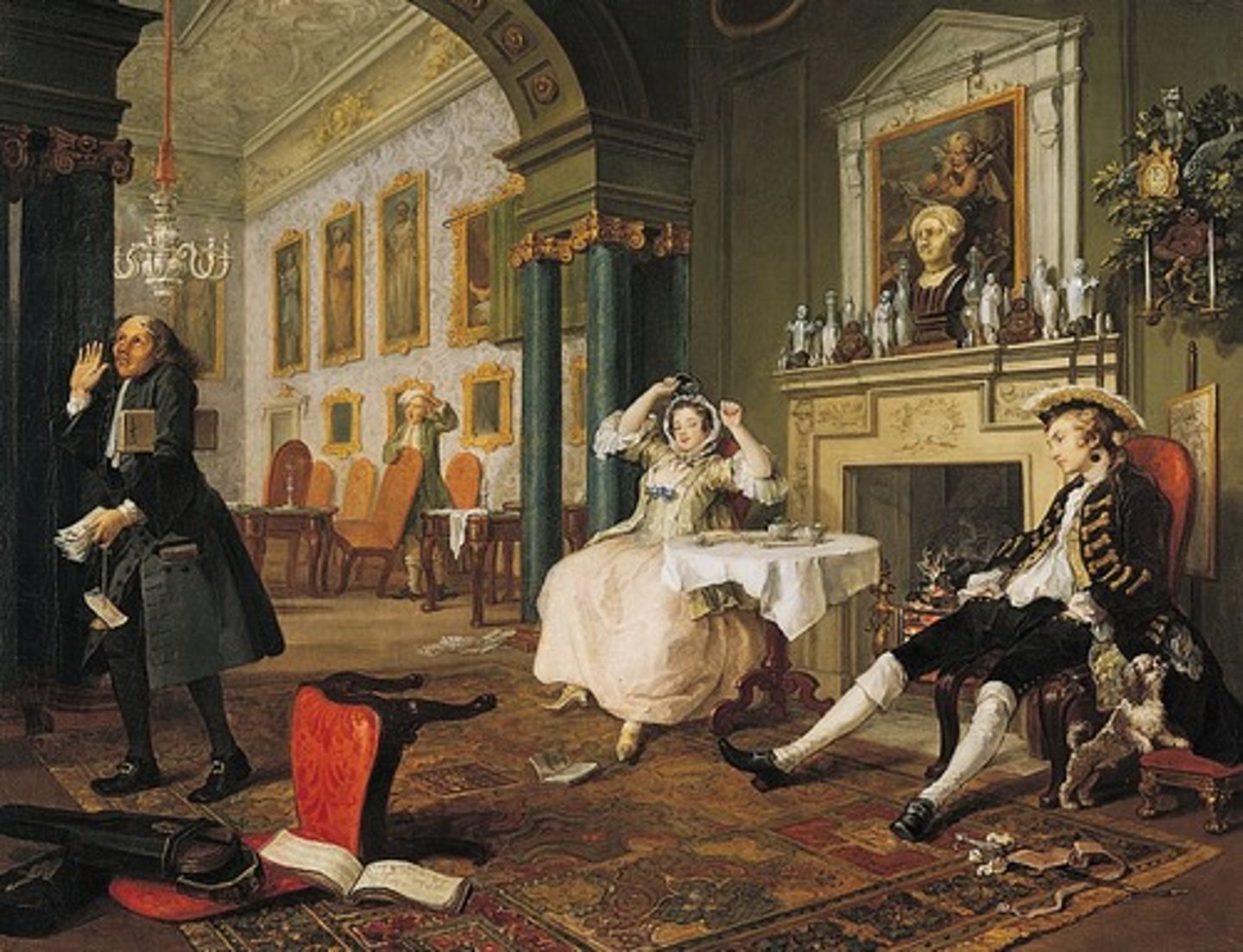
The Tete a Tete from Marriage a la Mode
William Hogarth. 1743 C.E. Oil on canvas.
Contains themes of the aristocratic elite and consumerism. Sold as engraved prints and installments. Comments on arranged marriages and diminished morality of the upper class. Dog behavior indicates infidelity. The decor reflects ostentatious and ornate nature. Depicts a couple as irresponsible.
 Note
Note  Flashcards (76)