Ecology
 Call Kai
 Learn
Learn Practice Test
 Spaced Repetition
 Match
Match Flashcards
 Knowt Play
1/111

There's no tags or description
Looks like no tags are added yet.
Name | Mastery | Learn | Test | Matching | Spaced | Call with Kai |
|---|
No analytics yet
Send a link to your students to track their progress
112 Terms
Ecology
The scientific study of the interactions between organisms and the environment
Levels of ecological organization
Biosphere>Ecosystem>Community>Population>Organism
Climate
Long-term prevailing weather conditions in a given area (temperature, precipitation, sunlight, and wind)
Weather
Short-term state of the atmosphere
Biomes
Major life zones characterized by vegetation type
Global air circulation and precipitation patterns, sunlight
Abiotic factors influencing biodiversity, transporting nutrients
Photic zone
sunlit upper layer of water
Aphotic zone
Layer of water that doesn’t receive light - less life
Benthic zone
Lake/ocean bottom
Abyssal zone
Deep part of aphotic zone
Thermocline
Layer of abrupt temperature change
Species distribution
Diversity affected by climate, precipitation, proximity to equator, disturbance
Climate change
Directional change to the global climate that lasts three decades or more
Ethology
Study of animal behavior (the sum of an animal’s responses to external and internal stimuli)
Tinbergen’s four questions
Proximate causation: “how”
Ultimate causation: “why”
Proximate causation
How and when does the trait develop during the lifetime of an individual
How does the trait work
Ultimate causation
How did the trait evolve
Why does the trait persist over evolutionary time?
Fixed action patterns
a sequence of unlearned acts or largely invariant behaviors directly linked to a simple stimulus
Taxis
more or less automatic, oriented movement toward or away from a stimulus
Kinesis
change in activity or turning rate in response to a stimulus
Biological rhythms
circadian rhythms, migration, circannual rhythms
Learning (modification of behavior as a result of experience)
Modification of behavior as a result of experience
Habituation
Loss of responsiveness to stimuli
Imprinting
establishment of a long-lasting behavioral response
Spatial learning
establishment of a memory that reflects the environment’s spatial structure
Associative learning
the ability to associate one environmental feature with another
Cognition
awareness, reasoning, recollection, and judgement
Problem solving
devising a method to face obstacles
Social learning
observing and interpreting behaviors
Polygyny
A single male and many females
Polyandry
A single female and multiple males
Hamilton’s rule
Natural selection favors altruism when rB > C (r=relatedness, B=benefit, C=cost)
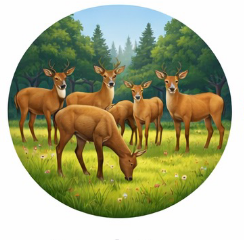
Population
Group of individuals of a single species living in the same general area → share the same resources, affected by the same environmental factors
Population ecology
Study of changes in size, density, and distribution of age classes (range of growth + density → can populations recover from losses)
Population density
Number of individuals per unit of area/volume
Dispersion
Pattern of spacing among individuals within the population, can be clumped, uniform, or random
Semelparity
All offspring in one reproductive event, parent dies afterwards, common in invertebrates, salmon, and plants, typically in harsh environments
Iteroparity
Reproduce several times throughout life, low chances of survival for juveniles = repeated reproductions, can be seasonal or continuous, common in mammals, birds, reptiles
Demography
Study of how populations change over time
Life table
Summarizes the survival & reproductive rates of individuals in a specific age-group (cohort) within a population, longitudinal, concentrates on females
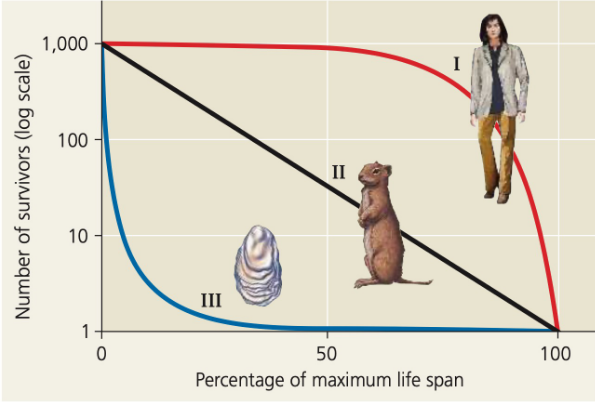
Type 1 survival curve
Common in humans and large mammals, few offspring and high parental care, death at old age
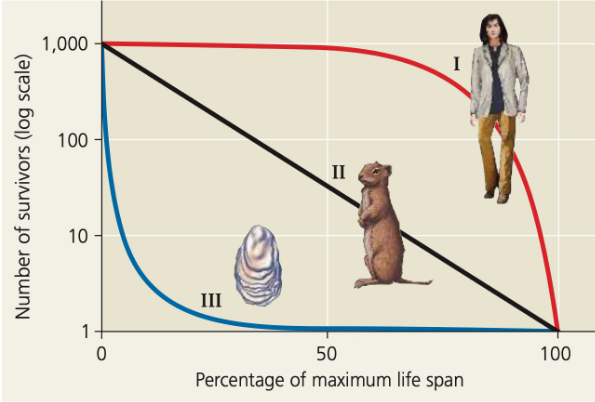
Type 2 survival curve
Common in annual plants, rodents, lizards, and birds, survival probability does not change with age
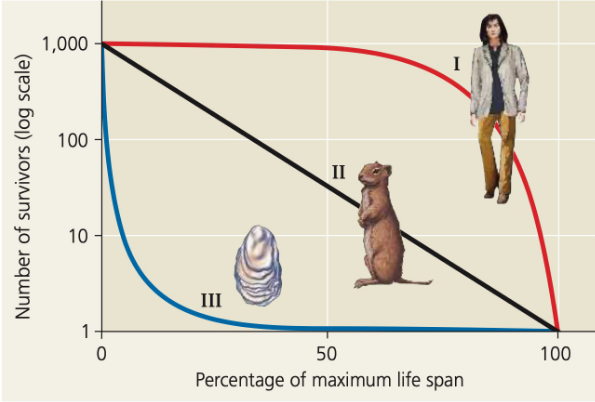
Type 3 survival curve
High death rates for young, a lot of offspring without parental care, those who survive reach old age
Exponential population growth
Potential to expand greatly when resources are abundant
Logistic growth
Per capita rate of population growth approaches zero as population size nears carrying capacity (K)
R-selected species
Selection for traits that maximize reproductive success at low densities
K-selected species
Selection for traits that are advantageous at high densities
Community
Assemblage of populations of various species living close enough for potential interaction
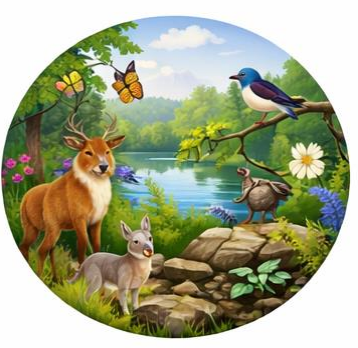
Competition (-/-)
Different species compete for a resource in short supply, can lead to competitive exclusion
Ecological niche
The total of a species’ use of biotic and abiotic resources
Resource partitioning
Differentiation of ecological niches (sharing is caring!)
Fundamental niche vs realized niche
Niche potentially occupied vs. niche actually occupied after resource partitioning
Character displacement
tendency for characteristics to be more divergent in sympatric populations than allopatric of the same species (resource partitioning)
Predation (+/-)
Interaction where one species kills and eats the other
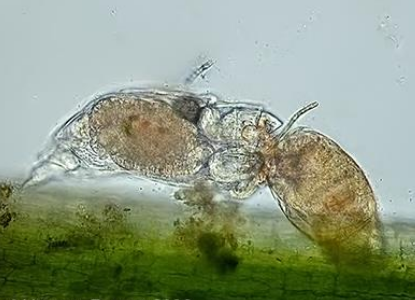
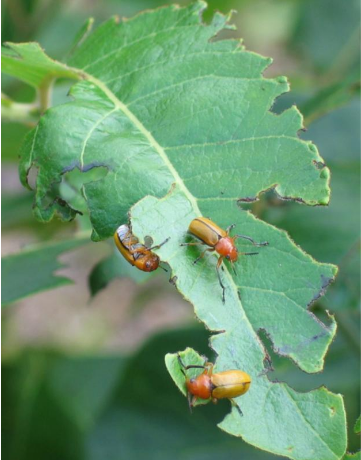
Herbivory (+/-)
A herbivore eats parts of a plant or alga
Symbiosis
dependency relationship where two or more species live in direct and intimate contact with one another
Parasitism (+/-)
A parasite derives nourishment from a host, which is harmed in the process.
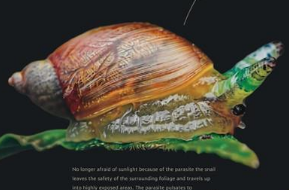
Complex parasites
Have more than one host
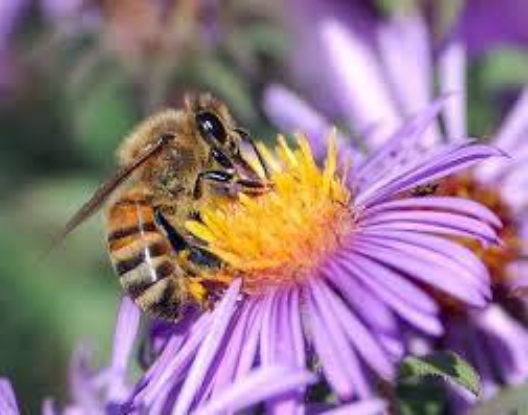
Mutualism (+/+)
An interspecific interaction that benefits both species (Obligate=one species cannot survive without the other, Facultative=optional)
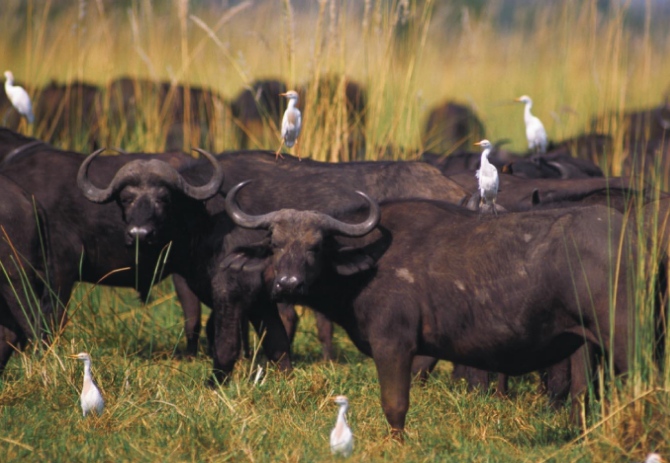
Commensalism (+/0)
One species benefits and the other is apparently unaffected
Species diversity
Variety of organisms that make up the community
Species richness
total number of different species in the community (how many species?)
Relative abundance
proportion each species represents of total individuals in the community (any dominant species?)
Shannon diversity index
index of diversity based on species richness and relative abundance → H= -(pA*ln(pA)+pB*lb(pB)…)
Higher H = more divers
Trophic structure
feeding relationships between organisms in a community, from producers to top carnivores
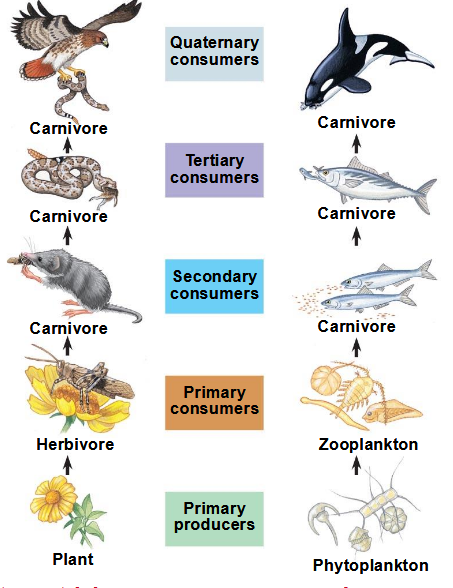
Bottom-up model of community organization
Unidirectional influence from lower to higher trophic levels
Top-down model of community organization (trophic cascade model)
control comes from the trophic level above (predators→herbivores→primary producers)
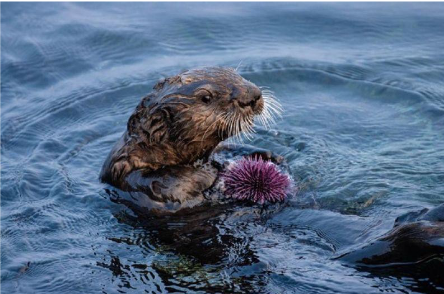
Keystone species
Exert strong control on a community by their ecological niches, not necessarily abundant in a community (yellowstone wolves)
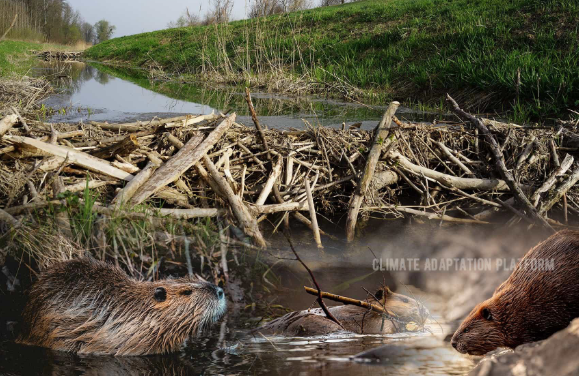
Ecosystem engineers
Cause physical changes in the environment that affect community structure (beavers)
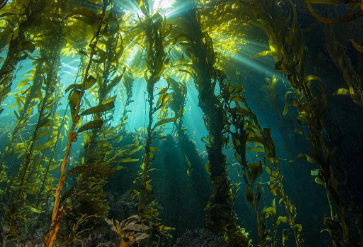
Foundation species
Facilitators that have positive effects on survival/reproduction of other species, abundant or large in size (trees)
Invasive species
introduced to a new environment (usually by humans);
Enemy release hypothesis
Non-native species thrive due to abundance of natural enemies (parasites, predators, etc)
Intermediate disturbance hypothesis
Species diversity is maximized when ecological disturbances occur at intermediate levels of intensity or frequency
Ecological succession
Sequence of community and ecosystem changes after a disturbance
Primary succession
no soil exists when succession begins, pioneer organisms (lichen) are foundational species
Secondary succession
soil remains after a disturbance/disaster
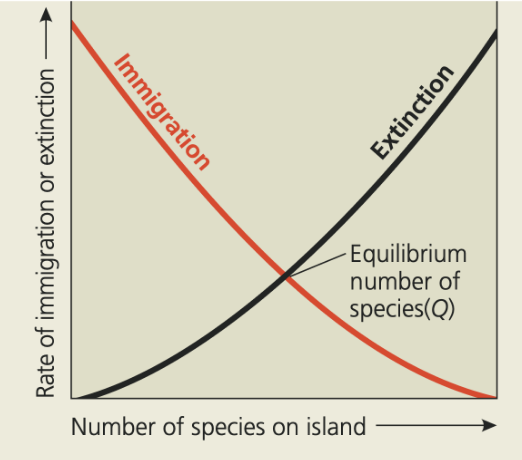
Island equilibrium model
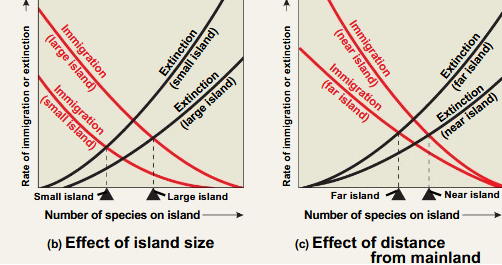
Species richness on islands depends on island size, distance from mainland, immigration, and extinction; levels off at a dynamic equilibrium point. At smaller islands or further from mainland, equilibrium is reached at a lower richness
Smaller islands/islands further from mainland
Equilibrium reached at lower richness
Ecosystem
All organisms living in a community and the abiotic factors with which they interact → energy flow and chemical cycling
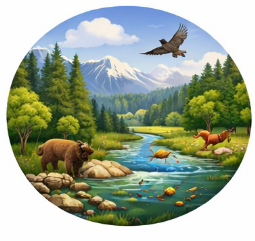
Eutrophication
When nutrient status of an ecosystem changes from poor to rich, can cause algal bloom + mass fish and aquatic life die-off
Archaea
Can live in extreme environments (extremophiles, halophiles for saline, thermophiles for heat >100C),
no nuclear envelope, membrane-enclosed organelles, peptidoglycan in cell wall, some membrane lipids, circular chromosome.
Bacteria
Evolve rapidly in response to environmental conditions (mutation, genetic recombination, rapid reproduction through binary fission),
no nuclear envelope, membrane-enclosed organelles, have unbranched hydrocarbons for membrane lipids, have circular chromosome
Eukarya
Have nuclear envelope, membrane-enclosed organelles, unbranched hydroarbons for membrane lipids, no peptidoglycan in cell wall, no circular chromosome
Transformation
A prokaryotic cell can take up and incorporate foreign DNA from the surrounding environment
Transduction
The movement of genes between bacteria by bacteriophages
Transduction
The process where genetic material is transferred between bacterial cells by bacteriophages
Conjugation
The process where genetic material is transferred between bacterial cells (sex pilus)
Bioaccumulation
Toxins build up as you move up trophic levels
Protists
Classified as eukaryotes, polyphyletic group, closely related to plants, animals, and fungi. Often symbiont, producer, or parasite
Supergroups of eukaryotes
Excavata, SAR, Archaeplastida, Unikonta
Classification by ecological role
Algae - photoautotrophic
Protozoa - heterotrophic
Fungus-like - resemble fungi and absorb nutrients
Classification by habitat
Phytoplankton - photosynthetic, float or swim
Zooplankton - heterotrophic, float or swim
Classification by motility
Flagellates, Ciliates, and amoebas
Flagellates
Swim using eukaryotic flagella
Ciliates
“Hairy”, swim with cilia
Amoebas
Move using pseudopodia
Excavata
Phagotrophs that use a “cave” to take other cells in. Often from anaerobic environments. Includes predators, heterotrophs, and mixotrophs. Typically flagellated
SAR
Stramenopila, Alveolates, Rhizarians
Archaeplastida
Includes land plants and several algaes, green and red algae
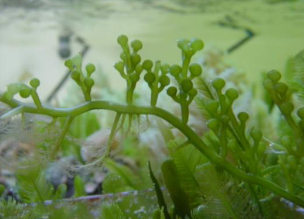
Unikonta
Includes animals, fungi, and related protists. Amoebozoans!
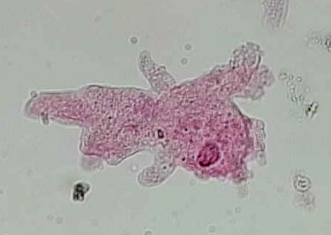
Explore top notes

