HL Biology - Organelles and Compartmentalisation
 Call Kai
 Learn
Learn Practice Test
 Spaced Repetition
 Match
Match Flashcards
 Knowt Play
1/27

There's no tags or description
Looks like no tags are added yet.
Name | Mastery | Learn | Test | Matching | Spaced | Call with Kai |
|---|
No analytics yet
Send a link to your students to track their progress
28 Terms
Organelle
specialized structure that performs important cellular functions within a cell
cell structures that are NOT organelles
- cell wall
- cytoskeleton
- cytoplasm
Prokaryotes + organelles
- no membrane bound organelles
Which organelles do not have membranes?
- ribosomes
- centrioles
- microtubules
Which organelles have single membranes?
- Golgi apparatus
- vacuoles
- vesicles
- lysosome
- ER
Which organelles have double membranes
- nucleus
- mitochondria
- chloroplasts
Compartmentalised
Membrane bound
advantages of compartmentalization
- nucleus: prtoecting the DNA
- mRNA editing: when DNA is transcribed into mRNA in the nucleus, it can be edited before leaving the membrane to be translated
- concentrating enzymes if necessary
- maintaining pH, solute concentration
- storing damaging substances
Draw a diagram of a mitochondria
including:
- inner membrane
- outer membrane
- cristae
- matrix
- intermembrane space
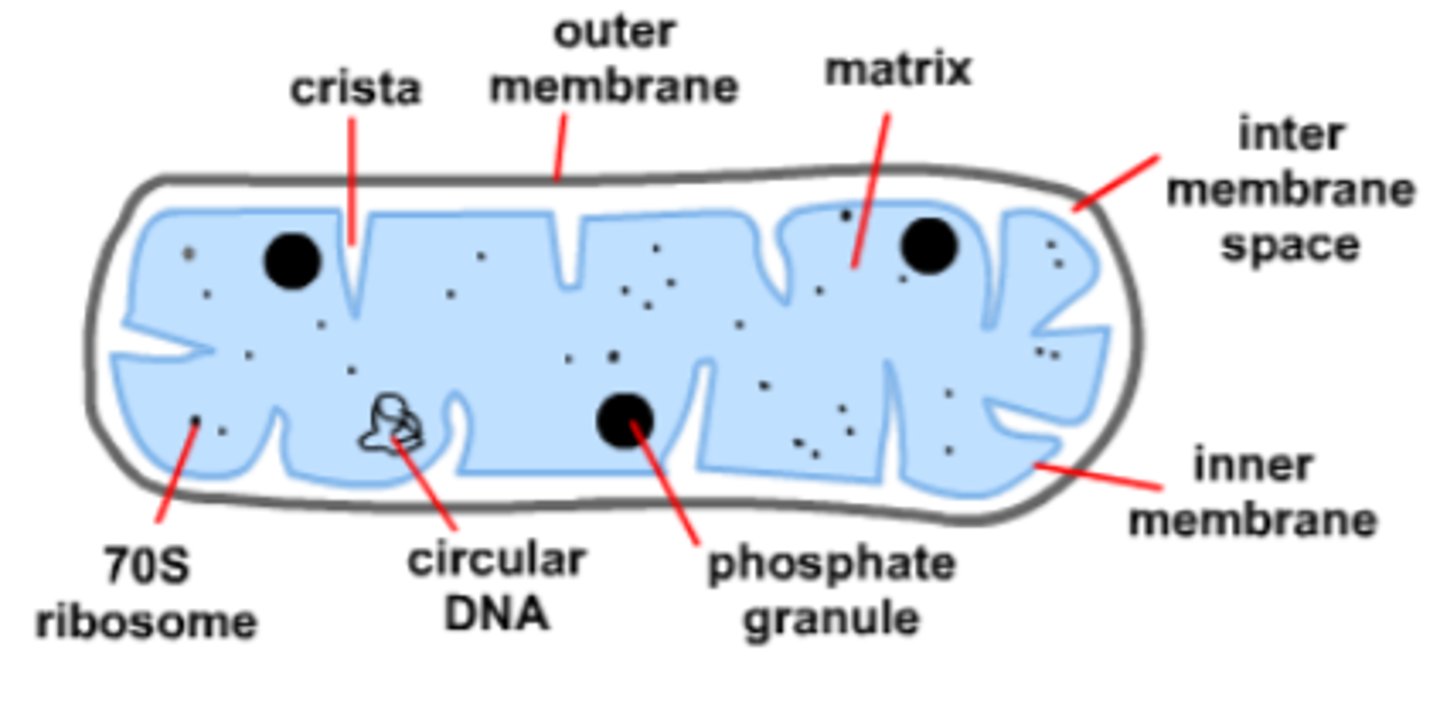
Outer membrane function
Separation from the rest of the cell
Inner membrane function
Contains proteins for the ETC
Cristae function
Increase surface area for more ATP producing proteins
Matrix functions
- link reaction and krebs cycle takes place there
- conentrates enzymes, high concentration where we need it
Inter-membrane space function
- small space allows a high concentration of protons or hydrogen ions
- pumped from the matrix to the inter-membrane space in less time
Draw a chloroplast
including
- outer membrane
- inner membrane
- thylakoid
- granum/a (stacks)
- stroma (fluid)
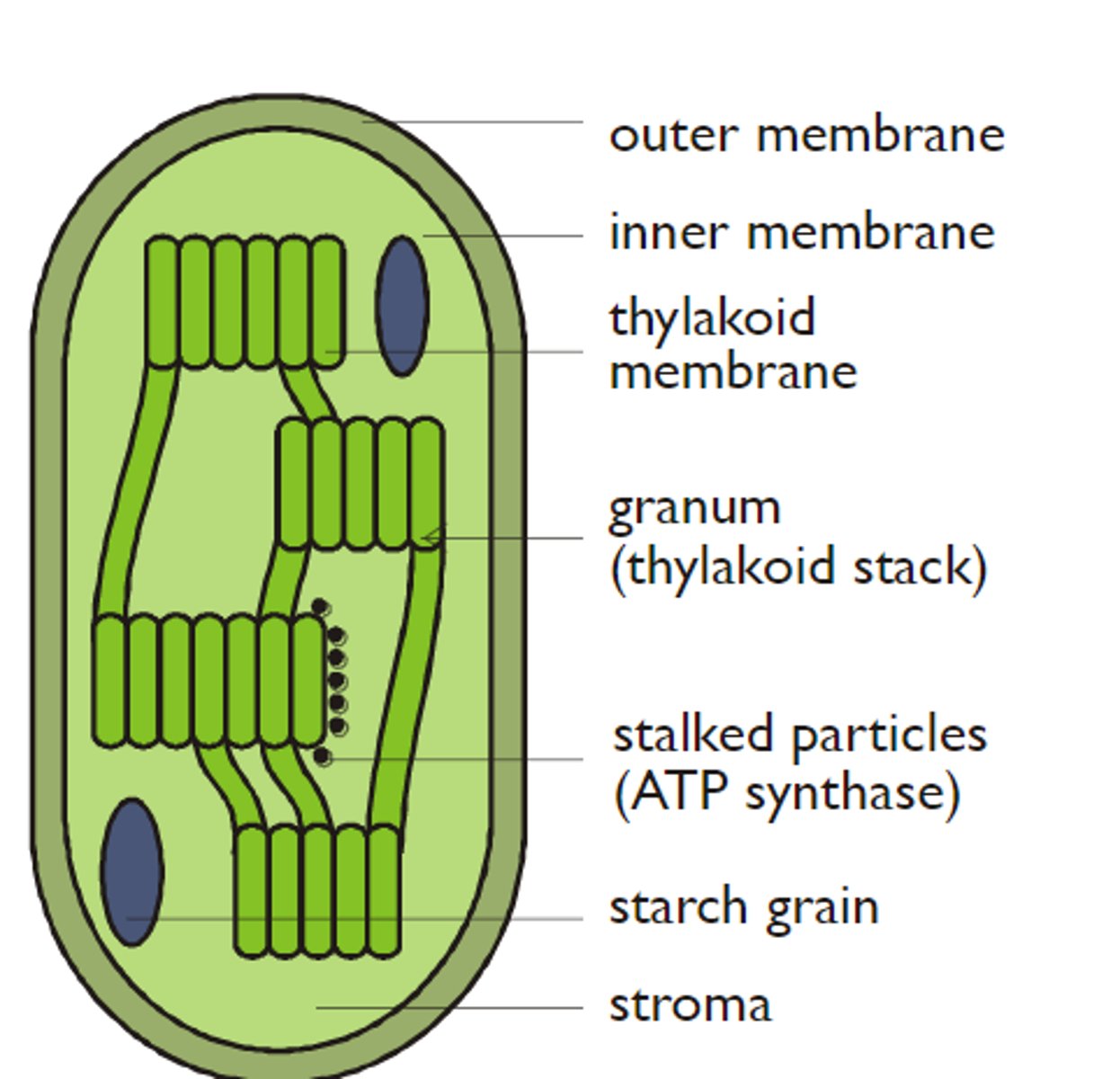
Thylakoid function
- chlorophyll absorbs light to produce ATP in the small thylakoid space
Stroma function
Closed space to contain all the enzymes necessary for the Calvin cycle
The double membrane surrounding the nucleus has...
Large pores
Importance of the double membrane's pores
- created by integral proteins to allow large molecules to pass through as bigger pores can be formed
- easier to break down and reform during mitosis to allow chromosomes to be moved
Which molecules pass through the pores of the double membrane (nucleus)
- mRNA: synthesized in the nucleus during transcription --> needs to leave, requires a large pore
- Ribosomes produced in the nucleolus go to the cytoplasm or the rER
Nucleolus
the site of ribosome production within the nucleus of eukaryotic cells
Does a ribosome have a membrane?
No
Where to find ribosomes in eukaryotes
- free-floating in the cytoplasm
- attached to the rER
What do free ribosomes do and where?
cytoplasm: produce proteins needed in the rest of the cell
rER: produce proteins for excretion, exported from the cell to be sent elsewhere
Draw the golgi apparatus.
- mention vescicles
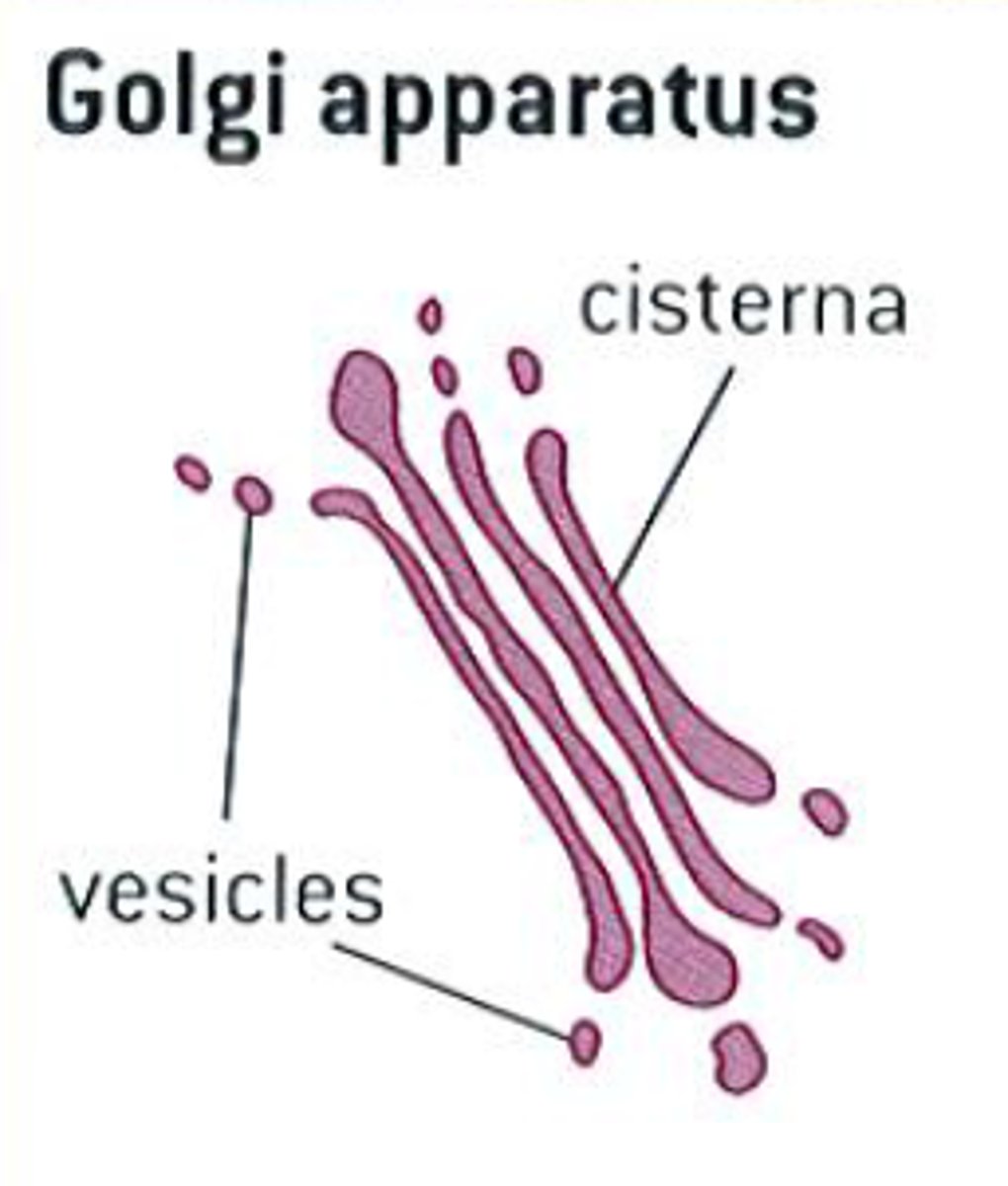
Function of the golgi
- Receives a ribosome from the ER, which fuses with the golgi
- releases its contents into the golgi
- golgi processes it
- repackages it into another vesicle and exports it via exocytosis
When are vesicles formed
Endocytosis
Specific function of vesicles
- moving things around in cells
--> need to move specific contents to a specific location (neurotransmitter)
--> cell membrane growth (vesicles added to membrane)

