Roman History Exam 3
 Studied by 0 people
 Call with Kai
 Learn
Learn Practice Test
 Spaced Repetition
 Match
Match Flashcards
 Knowt Play
1/29

There's no tags or description
Looks like no tags are added yet.
Name | Mastery | Learn | Test | Matching | Spaced | Call with Kai |
|---|
No study sessions yet.
30 Terms
Tactius
Tacitus was a Roman senator and historian known for his sharp, critical accounts of the emperors.
His works Annals and Histories reveal corruption, tyranny, and moral decline in the imperial system.
He emphasized the loss of libertas (political freedom) under emperors like Tiberius and Nero.
Tacitus’s writings shaped modern understanding of early imperial Rome and its political culture.
Tiberius
Tiberius was the second emperor of Rome and the adopted son of Augustus.
His rule began effectively but grew increasingly paranoid and withdrawn.
He relied heavily on the Praetorian Guard prefect Sejanus, which destabilized government.
His reign marked the early shift from principate cooperation toward imperial autocracy.
Gaius Caligula
Caligula was the third emperor, initially popular but later infamous for cruelty and erratic behavior.
His abuses of power shocked Roman elites and undermined the dignity of the principate.
He spent lavishly on games and projects, draining the treasury.
His assassination in 41 CE showed the rising political power of the Praetorian Guard.
Nero
Nero was Rome’s fifth emperor and became notorious for extravagance, violence, and misrule.
He promoted artistic performance and massive building projects like the Domus Aurea.
His persecution of Christians and poor crisis management damaged imperial legitimacy.
His fall in 68 CE triggered the civil wars of the Year of the Four Emperors.
Trajan
Trajan was a military emperor who expanded Rome to its greatest territorial extent.
His Dacian and Eastern campaigns brought immense wealth and prestige.
He invested in major public works such as Trajan’s Forum and the Column of Trajan.
His reign represents the height of Roman power during the Pax Romana.
Hadrian
Hadrian consolidated the empire instead of expanding it, strengthening borders like Hadrian’s Wall.
He traveled extensively to unify provincial administration.
His policies emphasized cultural integration and military discipline.
Hadrian helped stabilize the empire after Trajan’s aggressive expansions.
Marcus Aurelius
Marcus Aurelius was a philosopher-emperor associated with Stoicism.
He faced major military crises, including the Marcomannic Wars.
His rule showed how emperors struggled to balance warfare with internal stability.
His death in 180 CE ended the era of the “Five Good Emperors” and opened the door to instability.
Septimus Severus
Severus founded the Severan dynasty after winning a civil war.
He expanded the army’s privileges and increased their political influence.
His militarization of the state strained finances long-term.
His reign is seen as a major step toward the crisis of the third century.
Constantine
Constantine became emperor after winning the Battle of the Milvian Bridge.
He legalized Christianity through the Edict of Milan and favored the Church politically.
He founded Constantinople, shifting imperial power eastward.
His rule transformed Rome from a pagan empire into a Christian one.
Theodosius I
Theodosius was the last emperor to rule both East and West.
He made Christianity the official state religion of Rome.
He suppressed pagan worship and reshaped religious identity across the empire.
His death in 395 CE permanently divided the empire between his sons.
69 CE
69 CE is the Year of the Four Emperors, a chaotic civil war after Nero’s death.
Galba, Otho, Vitellius, and Vespasian all claimed the throne.
The conflict tested the stability of imperial succession.
Vespasian’s victory established the Flavian dynasty and restored order.
212 CE
granted Roman citizenship to nearly all free inhabitants of the empire.
This expanded tax revenue and unified legal status.
It marked a major social and administrative shift in Roman identity.
The decree helped accelerate cultural integration across the empire.
476 CE
476 CE marks the fall of the Western Roman Empire.
The Germanic leader Odoacer deposed the last western emperor, Romulus Augustulus.
Western imperial institutions collapsed, though the Eastern Empire continued.
The date symbolizes the transition from antiquity to the medieval period.
1453 CE
1453 CE is the year Constantinople fell to the Ottoman Turks.
This ended the Eastern Roman (Byzantine) Empire.
The conquest reshaped Eastern Mediterranean power and trade routes.
It symbolically marked the final end of the Roman state.
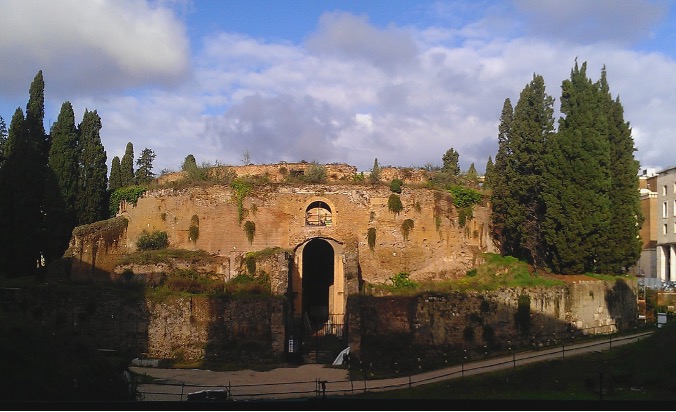
mausoleum of augustus
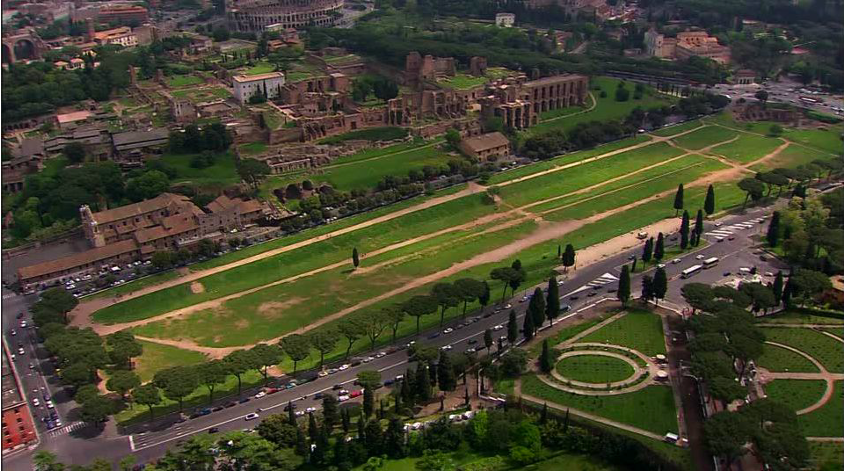
circus maximus
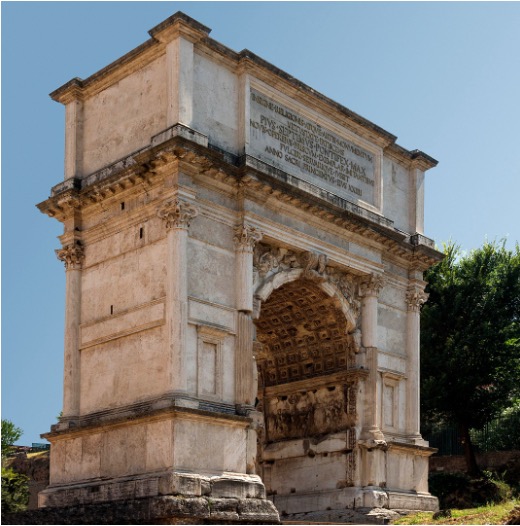
the arch of Titus
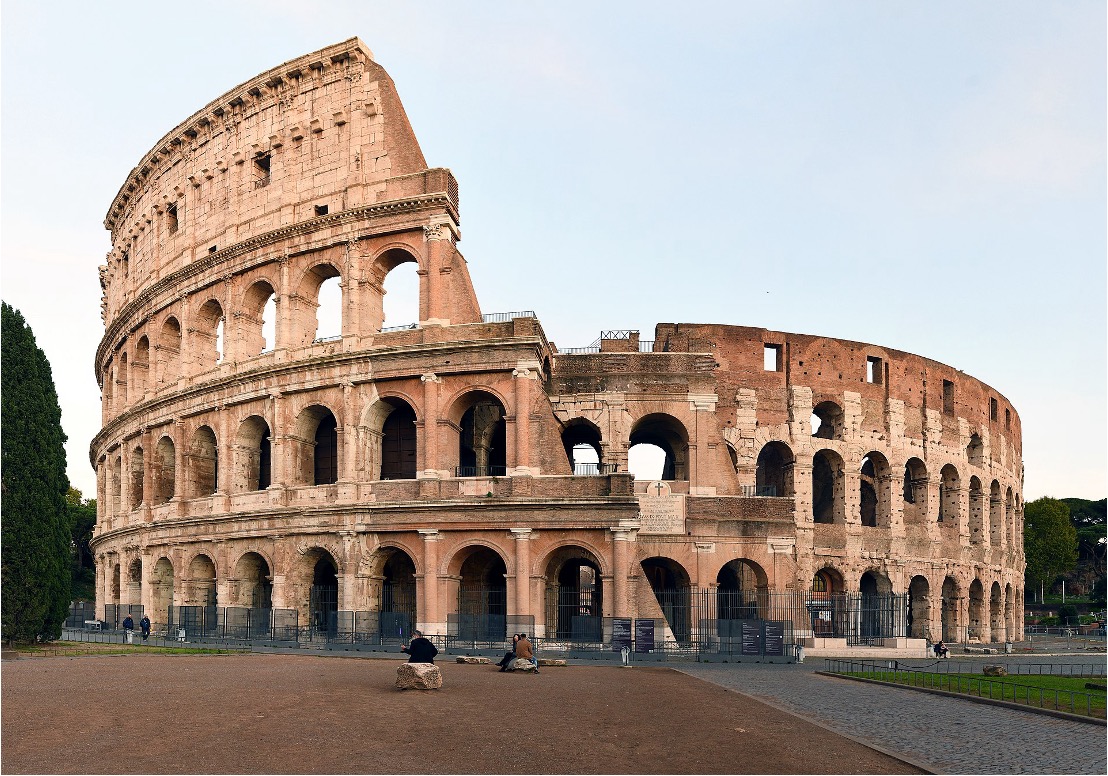
the colosseum
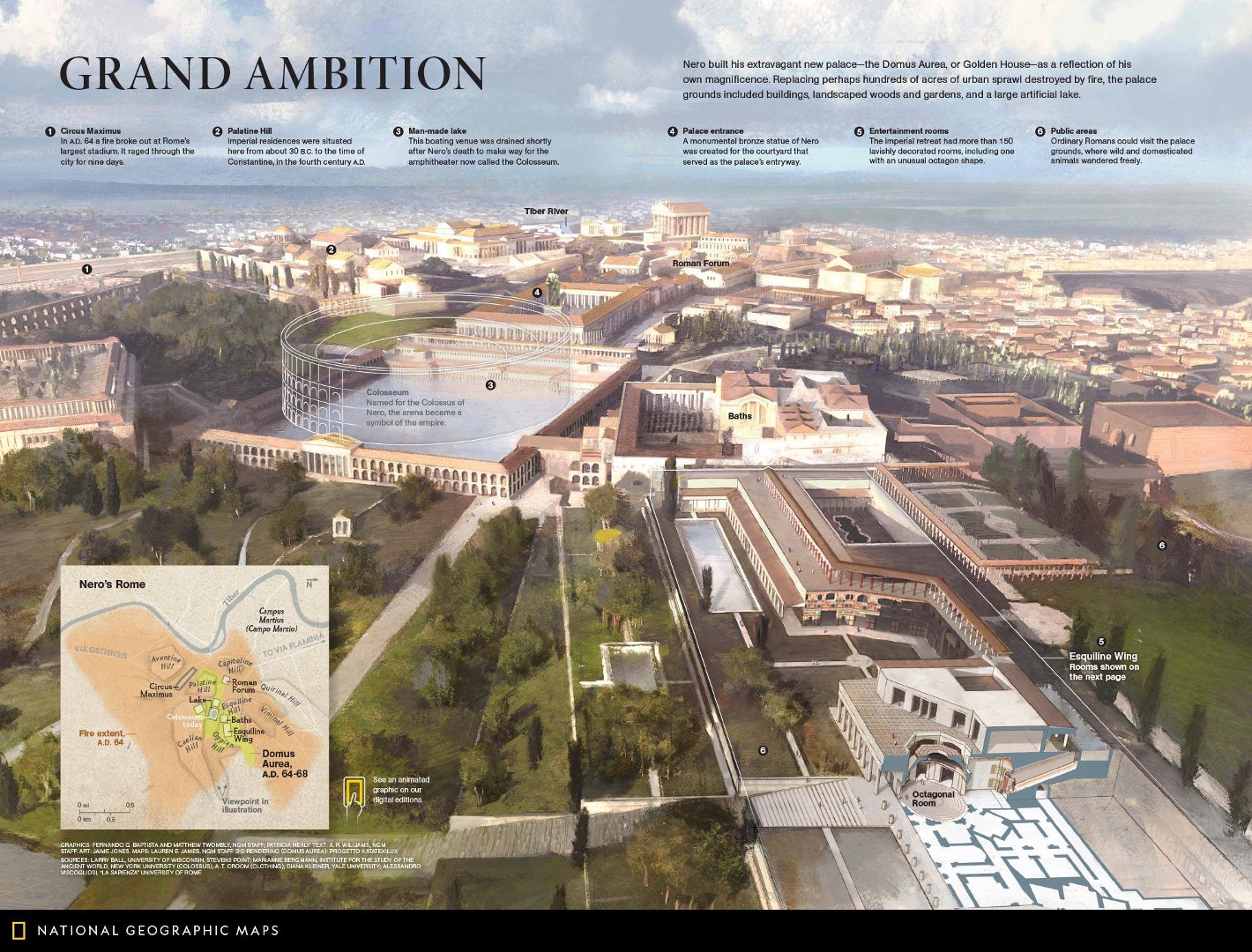
Nero’s golden house
Battle of the Milvian Bridge
This 312 CE battle made Constantine the sole ruler of the Western Empire.
He claimed to have won under a Christian divine sign.
The victory marked the beginning of Christianity’s rise to imperial favor.
It reshaped Roman religion and political ideology.
Edict of Milan
legalized Christianity and ended persecution.
It established religious toleration across the empire.
Christian communities could now own property and worship freely.
This act accelerated Christianity’s growth into a dominant institution.
The Tetrarchy
Diocletian’s system dividing rule among four emperors.
It aimed to improve stability and succession after years of crisis.
The division strengthened frontier defense and administrative efficiency.
Though short-lived, it reshaped imperial governance and set up future rivalries.
Ludi (games)
public games including chariot races, theater, and gladiatorial shows.
They honored the gods but also entertained the masses.
Emperors used them to gain popularity and display power.
The games shaped Roman cultural identity and civic loyalty.
gladiator
a trained fighter who performed in public combat spectacles.
Many were enslaved, but some were volunteers seeking fame.
Their bravery symbolized Roman values of courage and endurance.
Gladiatorial combat reinforced social hierarchy and state power.
praetorian guard
the elite military unit tasked with protecting the emperor.
Over time they became kingmakers, assassinating and appointing emperors.
Their power destabilized the principate.
They were eventually abolished by Constantine to restore imperial control.
Crisis of the Third Century
This was a period (235–284 CE) of civil war, invasion, and economic collapse.
More than 20 emperors rose and fell in rapid succession.
The empire nearly fragmented under military and financial pressures.
The crisis forced major reforms like Diocletian’s Tetrarchy.
manumission
the legal act of freeing an enslaved person.
It created a large population of freedmen with obligations to former masters.
It allowed social mobility within limits.
Manumission shaped Rome’s labor force and social structure.
Freedman
former enslaved people who gained limited citizenship.
They often worked in trades, business, or administrative roles.
Although socially restricted, many gained wealth and influence.
Freedmen contributed to Rome’s diverse urban economy.
sui iris
A woman sui iuris legally controlled her own property and was not under a male guardian.
She still faced social constraints but enjoyed more independence than many ancient women.
This status allowed participation in economic and religious life.
It reflects the complexity of gender and legal identity in Rome.
the “good emperors”
(Nerva–Marcus Aurelius) ruled during a period of peace and prosperity.
They were known for competent governance, merit-based succession, and public works.
Their reign marked the height of imperial stability.
The era is often viewed as Rome’s golden age.
 Note
Note  Flashcards (40)