BIOC 4331 Lecture 21

0.0(0)
Studied by 0 people
call kaiCall Kai
learnLearn
examPractice Test
spaced repetitionSpaced Repetition
heart puzzleMatch
flashcardsFlashcards
GameKnowt Play
Card Sorting

1/34

encourage image

There's no tags or description

Looks like no tags are added yet.

Last updated 4:32 PM on 4/6/26
Name
Mastery
Learn
Test
Matching
Spaced
Call with Kai

No analytics yet

Send a link to your students to track their progress

35 Terms

1
New cards

What two major factors contribute to catalytic rate enhancement from binding energy?

Stabilization of the transition state and entropy reduction.
2
New cards
<p>What do <strong>catalytic groups</strong> often form during enzyme reactions?</p>

What do catalytic groups often form during enzyme reactions?

A covalent intermediate with the substrate or perform group transfer to or from a substrate.
<p>A <strong>covalent intermediate</strong> with the substrate or perform <strong>group transfer</strong> to or from a substrate.</p>
3
New cards
<p>What small groups can be transferred in enzyme catalysis?</p>

What small groups can be transferred in enzyme catalysis?

Electrons (redox) or protons (acid–base catalysis).
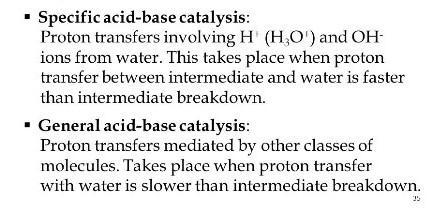
<p>Electrons (redox) or <strong>protons</strong> (<strong>acid–base catalysis</strong>).</p>
4
New cards
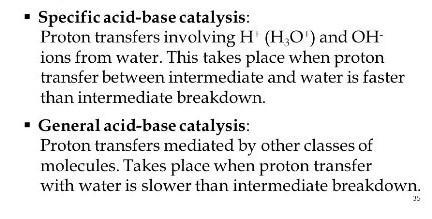
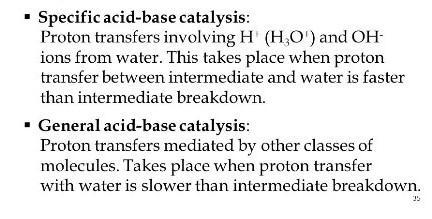
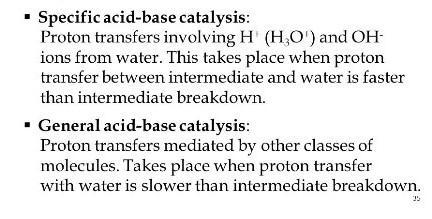
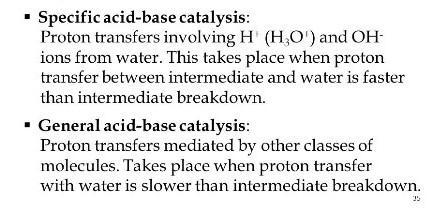
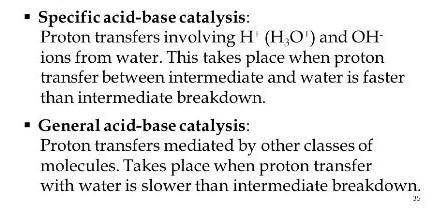
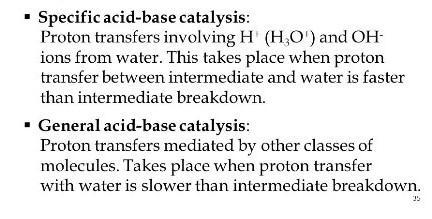
<p>What is <strong>specific acid–base catalysis</strong>?</p>

What is specific acid–base catalysis?

Proton transfer between water and the intermediate that is faster than breakdown to reactants; additional H+ donors/acceptors do NOT increase rate.
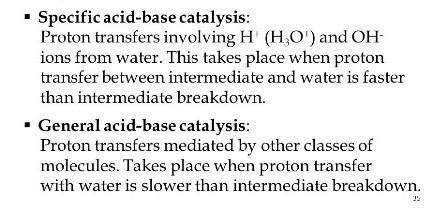
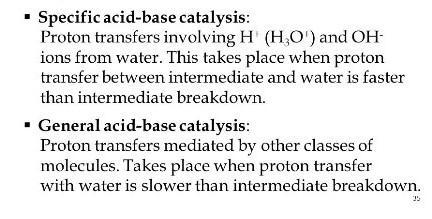
<p><strong>Proton transfer between water and the intermediate that is faster than breakdown to reactants</strong>; <strong>additional H+</strong> donors/acceptors <strong>do NOT increase rate</strong>.</p>
5
New cards
<p>What is <strong>general acid–base catalysis</strong>?</p>

What is general acid–base catalysis?

Proton transfer mediated by groups other than water (e.g., amino acid side chains).
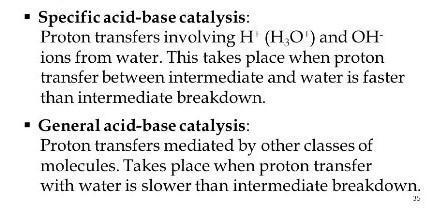
<p>Proton transfer mediated by groups other than water (e.g., amino acid side chains).</p>
6
New cards
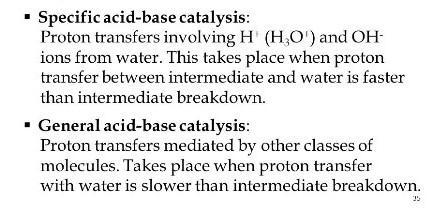
<p>When does <strong>general acid–base catalysis increase reaction rate</strong>?</p>

When does general acid–base catalysis increase reaction rate?

When proton transfer from water is slower than intermediate breakdown, so additional H+ donors/acceptors increase the rate.
<p>When <strong>proton transfer from water is slower than intermediate breakdown</strong>, so <strong>additional H+ donors/acceptors increase the rate</strong>.</p>
7
New cards
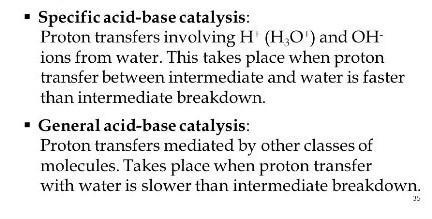
<p>Why might enzymes require general acid–base catalysis?</p>

Why might enzymes require general acid–base catalysis?

The active site may exclude H2O.
<p>The active site may <strong>exclude H2O.</strong></p>
8
New cards

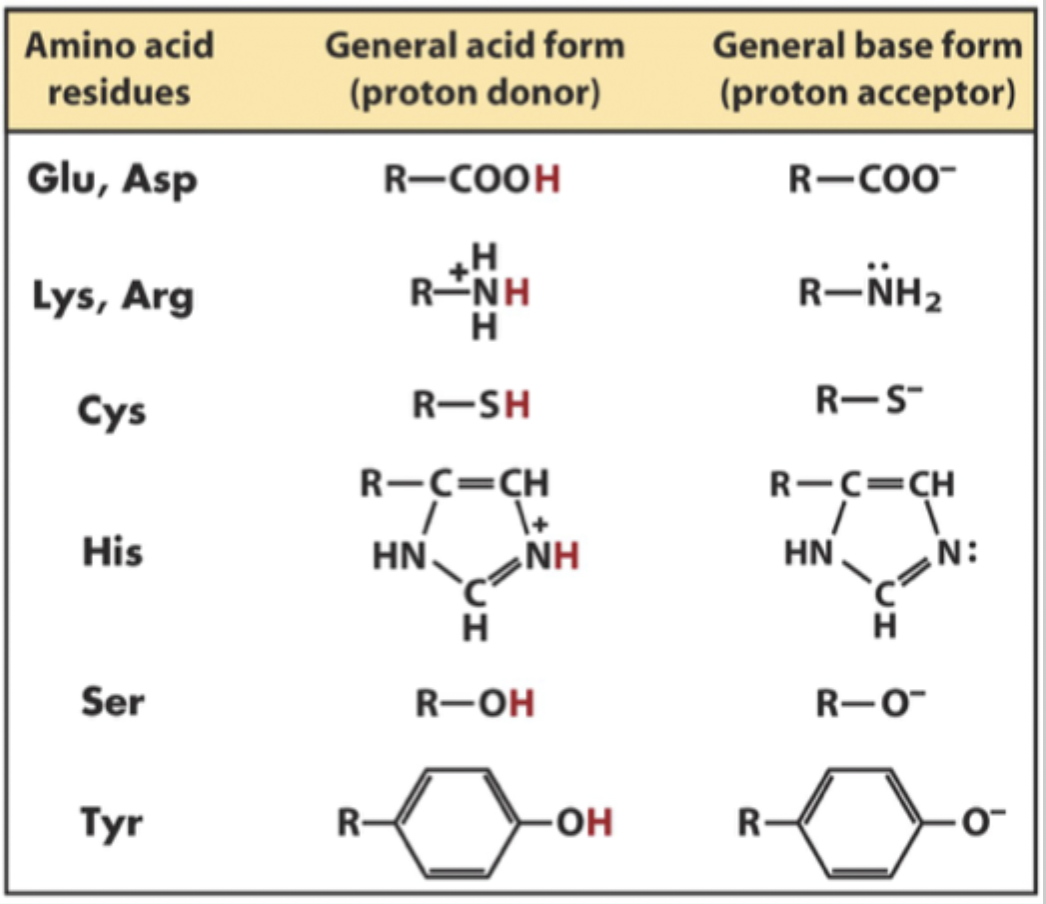
Which amino acids commonly act as general acids/bases?

Glu and Asp
Lys and Arg
Cys
His
Ser
Tyr
<p>Glu and Asp <br>Lys and Arg <br>Cys <br>His <br>Ser <br>Tyr</p>
9
New cards

What does covalent catalysis do to a reaction pathway?

Alters the pathway of the reaction.

10
New cards

When will a covalent pathway dominate?

If the new pathway has a lower activation energy.

11
New cards

What enzyme components can act as nucleophiles in covalent catalysis?

Amino acid side chains and functional groups of some cofactors.

12
New cards

List three ways metal ions promote catalysis.

Orient substrates
Stabilize charged intermediates
Mediate oxidation–reduction reactions.

13
New cards

What is charge shielding?

Metal ions electrostatically shield negative charges to reduce repulsion during nucleophilic attack.
14
New cards
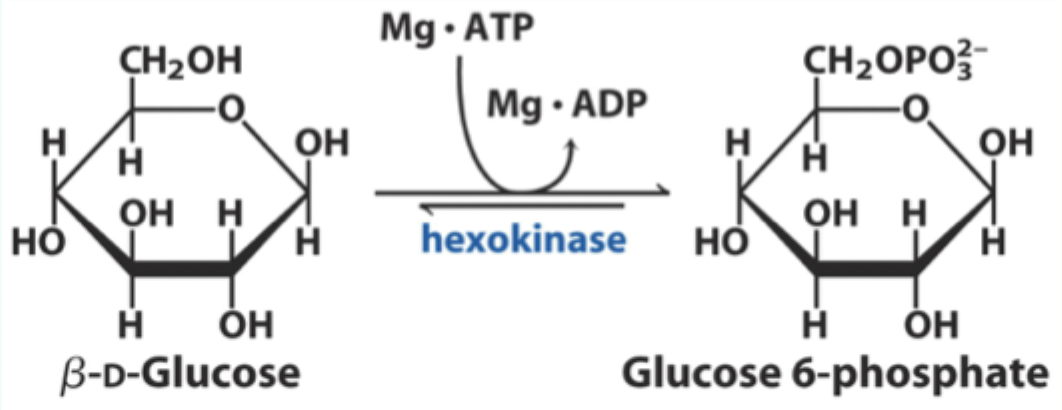
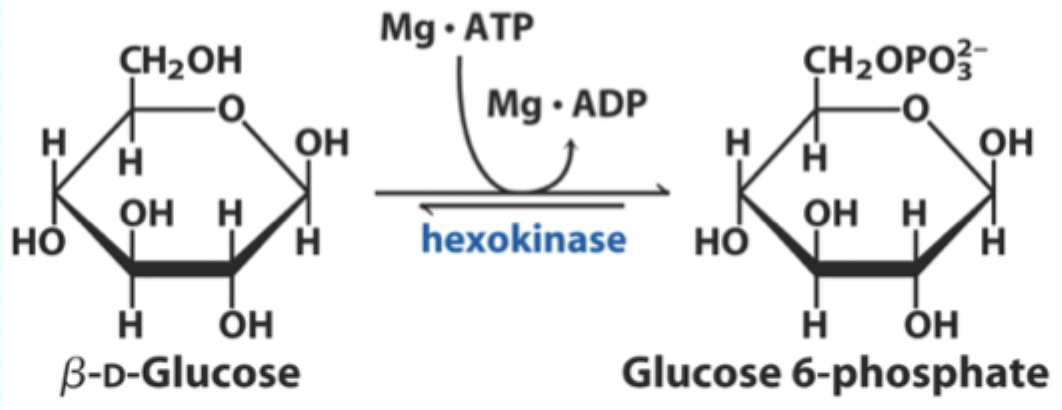
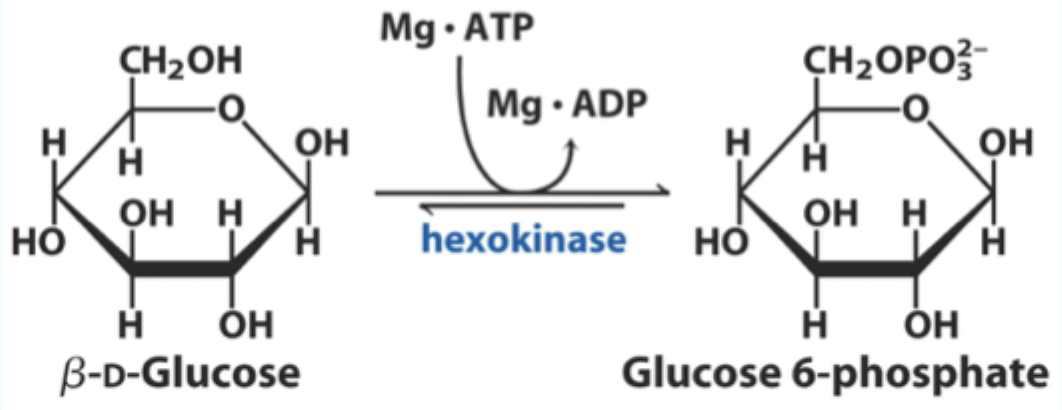
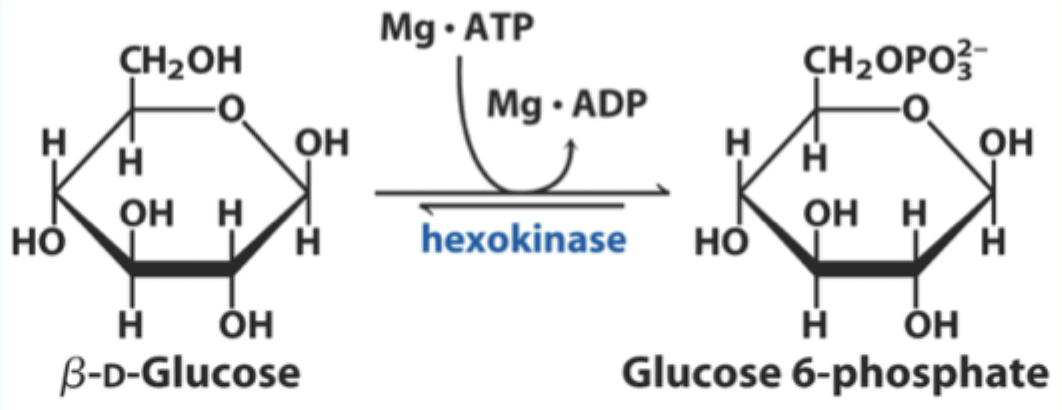
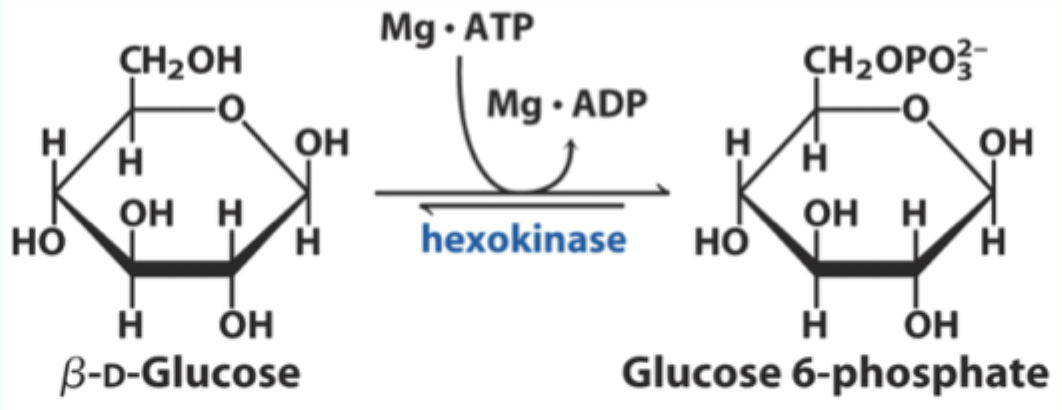
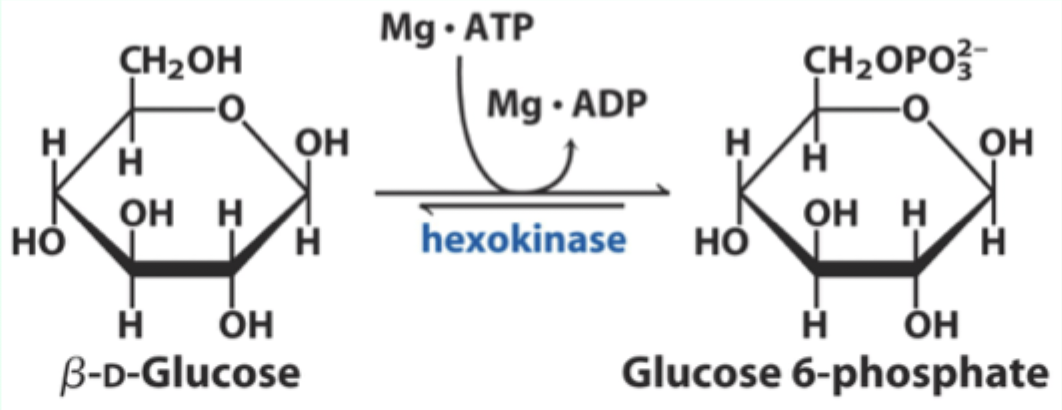
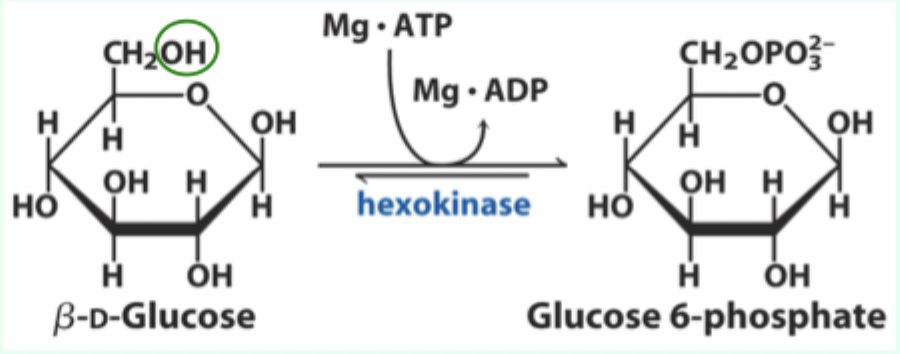
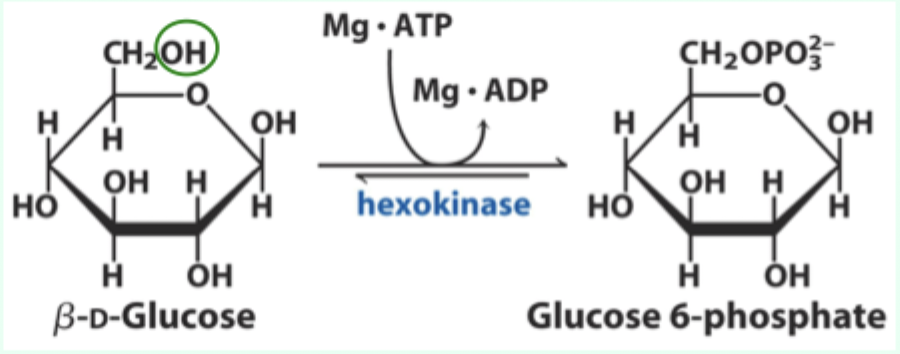
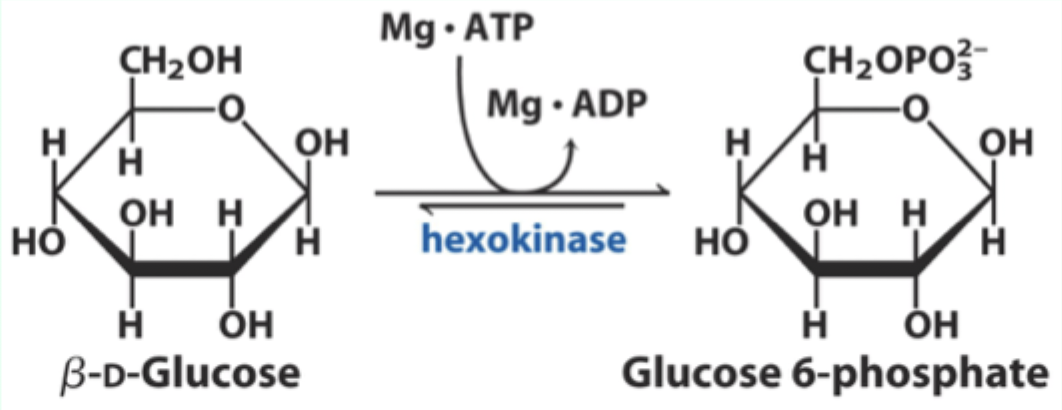
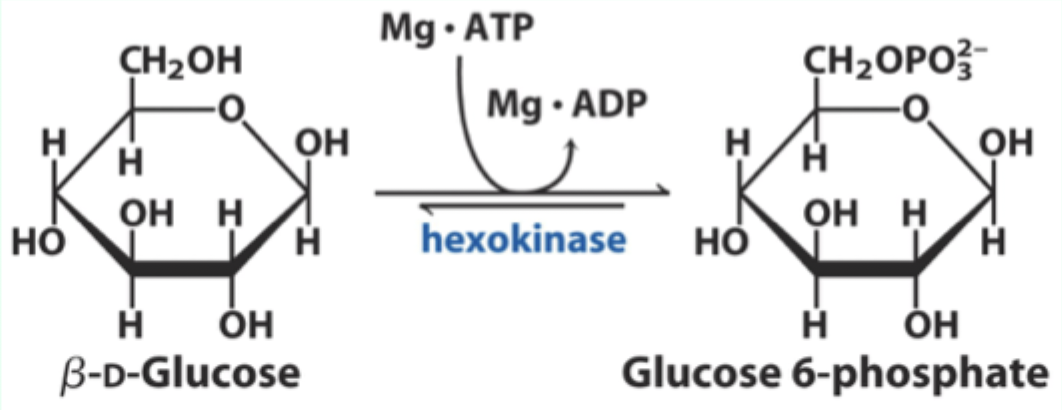
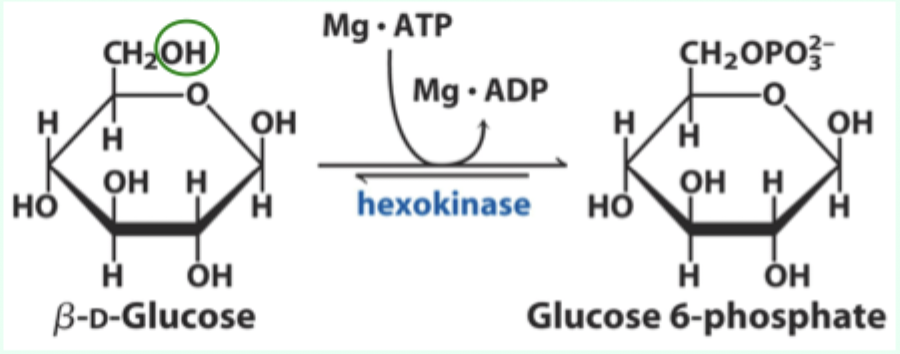
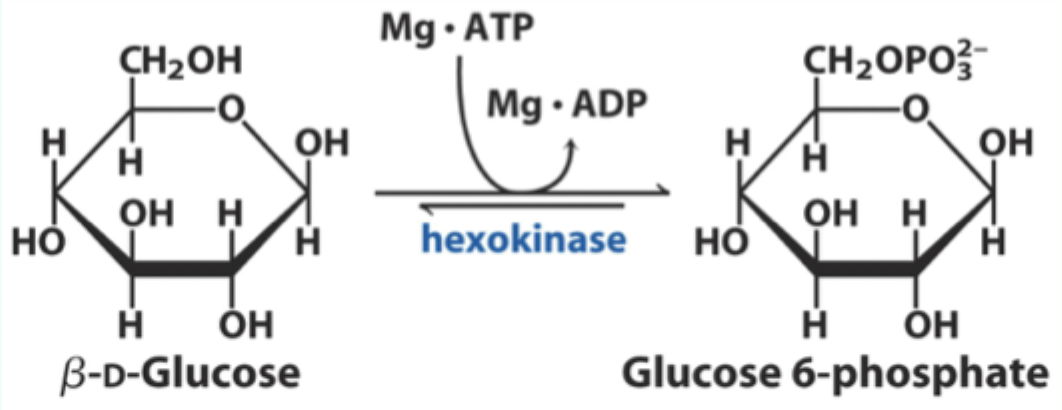
<p>What enzyme <strong>catalyzes</strong> the conversion of D-glucose to glucose-6-phosphate?</p>

What enzyme catalyzes the conversion of D-glucose to glucose-6-phosphate?

Hexokinase.
<p>Hexokinase.</p>
15
New cards
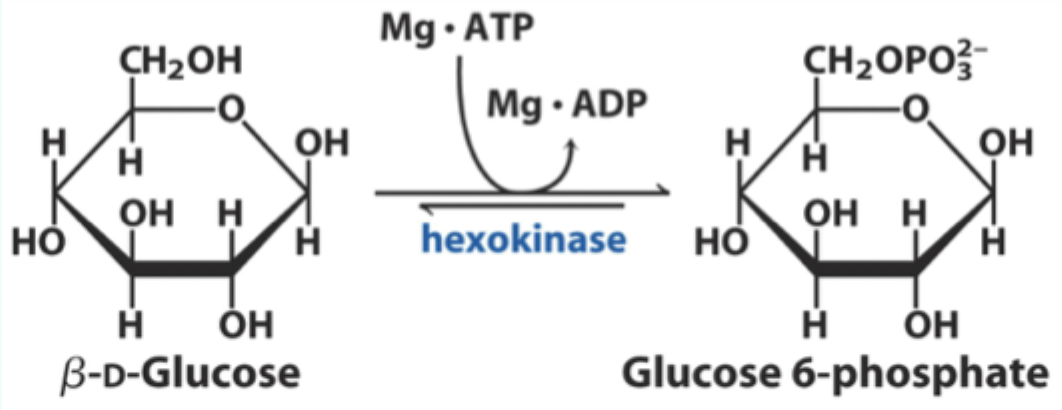
<p>What type of <strong>enzyme</strong> is hexokinase?</p>

What type of enzyme is hexokinase?

Bisubstrate enzyme.
<p><strong>Bisubstrate</strong> enzyme.</p>
16
New cards
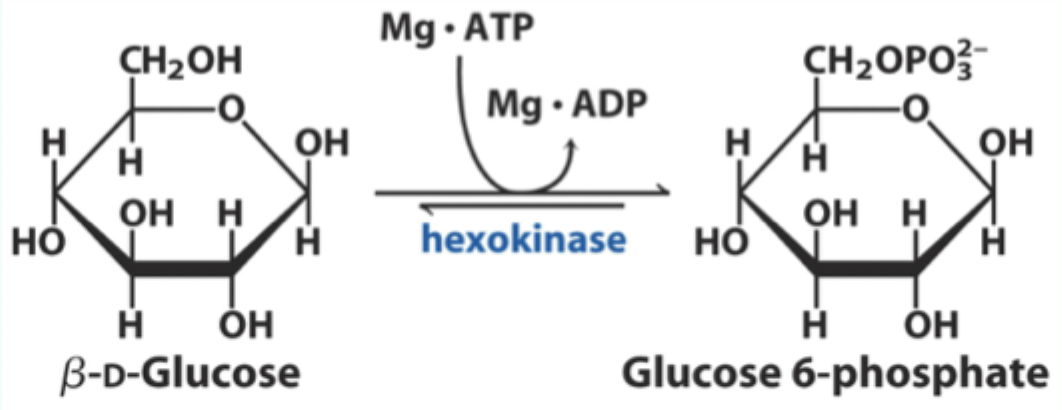
<p>What <strong>two substrates </strong>does hexokinase use?</p>

What two substrates does hexokinase use?

D-glucose and Mg·ATP.
<p><strong>D-glucose</strong> and <strong>Mg·ATP</strong>.</p>
17
New cards
<p>What <strong>product</strong> does hexokinase form from glucose?</p>

What product does hexokinase form from glucose?

Glucose-6-phosphate.
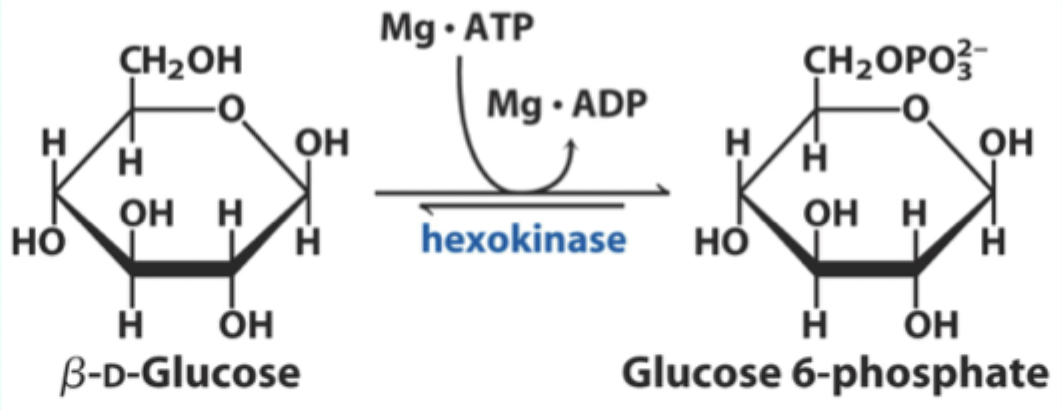
<p><strong>Glucose-6-phosphate.</strong></p>
18
New cards
<p>What happens to hexokinase when glucose is not bound?</p>

What happens to hexokinase when glucose is not bound?

It is in an inactive conformation.
<p>It is in an <strong>inactive conformation.</strong></p>
19
New cards

What triggers the conformational change in hexokinase?

Binding energy from glucose and MgATP2−.
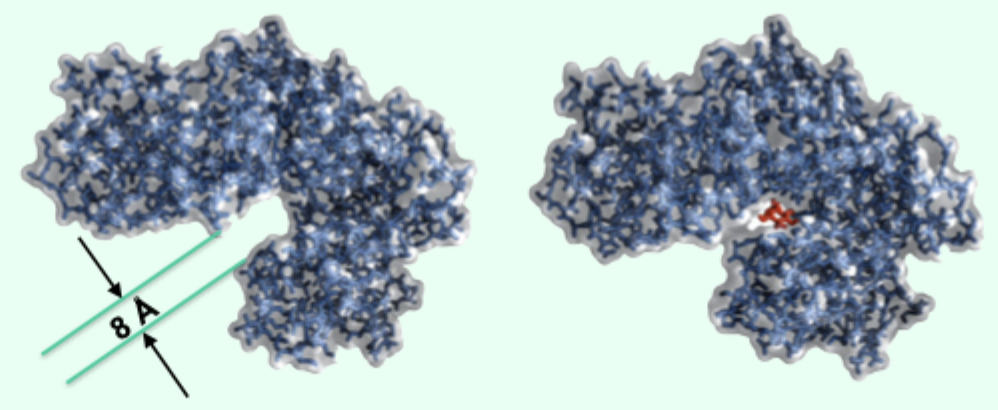
<p><strong>Binding energy </strong>from glucose and MgATP2−.</p>
20
New cards

What structural change occurs in hexokinase upon substrate binding?

8 Å movement that closes the active site.
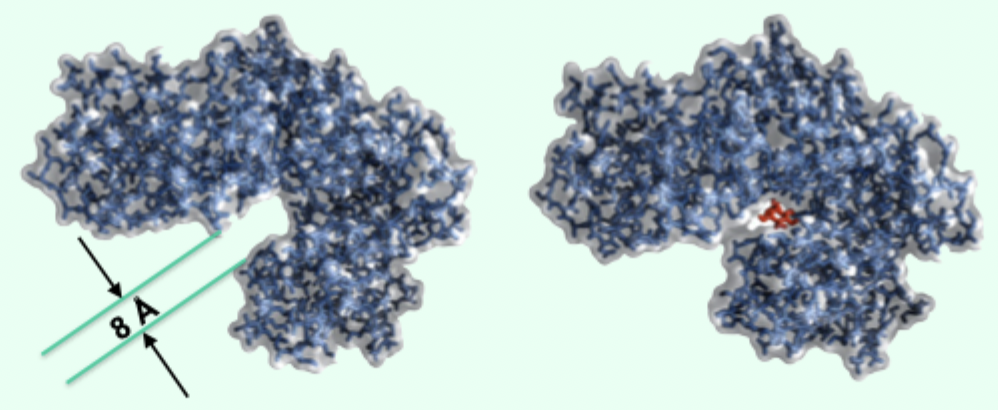
<p><strong>8 Å movement</strong> that closes the active site.</p>
21
New cards
<p>What does<strong> induced fit</strong> accomplish in hexokinase?</p>

What does induced fit accomplish in hexokinase?

Blocks H2O access and brings MgATP2− and glucose closer.
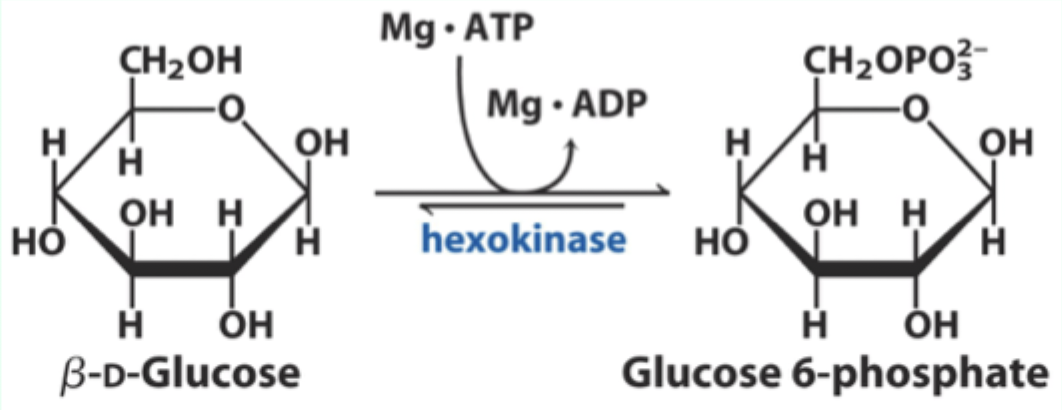
<p><strong>Blocks H2O</strong> access and <strong>brings MgATP2− and glucose closer</strong>.</p>
22
New cards
<p>How much does hexokinase favor glucose over water?</p>

How much does hexokinase favor glucose over water?

~106-fold.
<p>~<strong>10<sup>6</sup>-fold.</strong></p>
23
New cards
<p>Besides <strong>induced fit,</strong> what catalytic strategy does hexokinase use?</p>

Besides induced fit, what catalytic strategy does hexokinase use?

General acid–base catalysis.
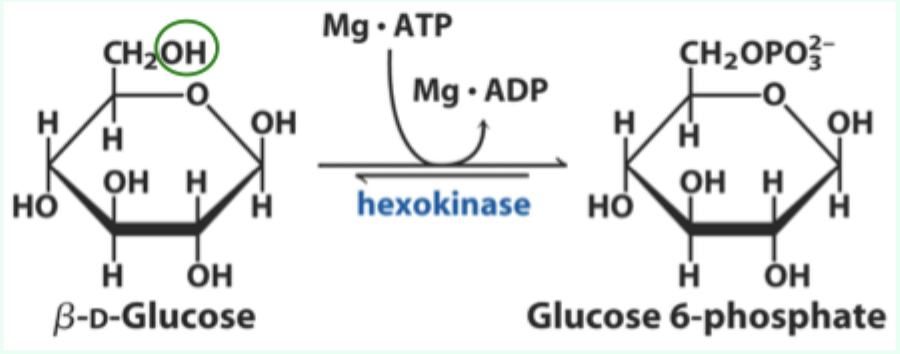
<p><strong>General</strong> <strong>acid–base catalysis.</strong></p>
24
New cards
<p>What additional <strong>catalytic principle</strong> does hexokinase demonstrate?</p>

What additional catalytic principle does hexokinase demonstrate?

Transition state stabilization.
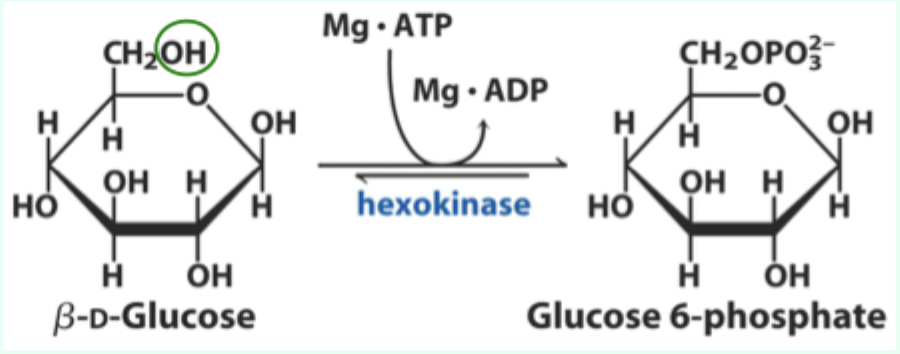
<p><strong>Transition state stabilization</strong>.</p>
25
New cards
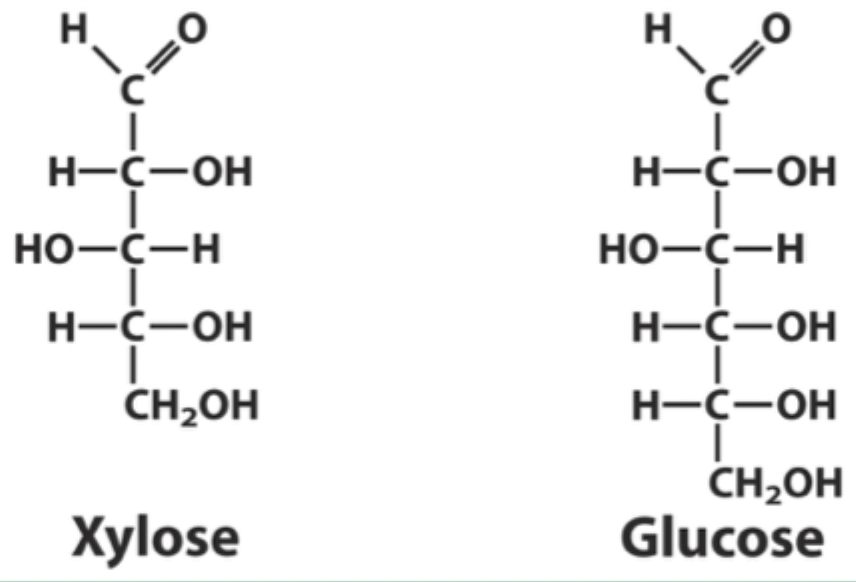
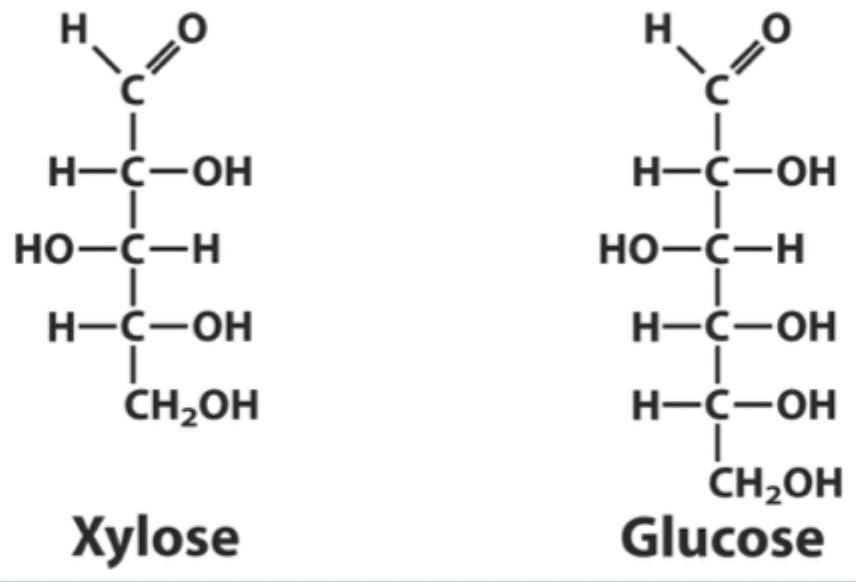
<p>Why can xylose bind hexokinase but not be phosphorylated?</p>

Why can xylose bind hexokinase but not be phosphorylated?

It binds in a position where it cannot be phosphorylated.
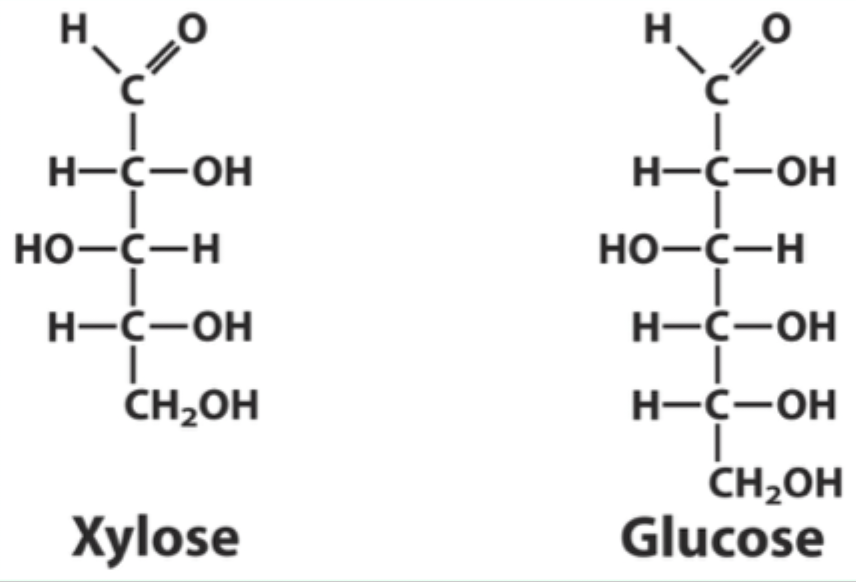
<p>It binds in a position where it cannot be phosphorylated.</p>
26
New cards
<p>What type of ring does xylose form?</p>

What type of ring does xylose form?

A 5-membered furanose ring.
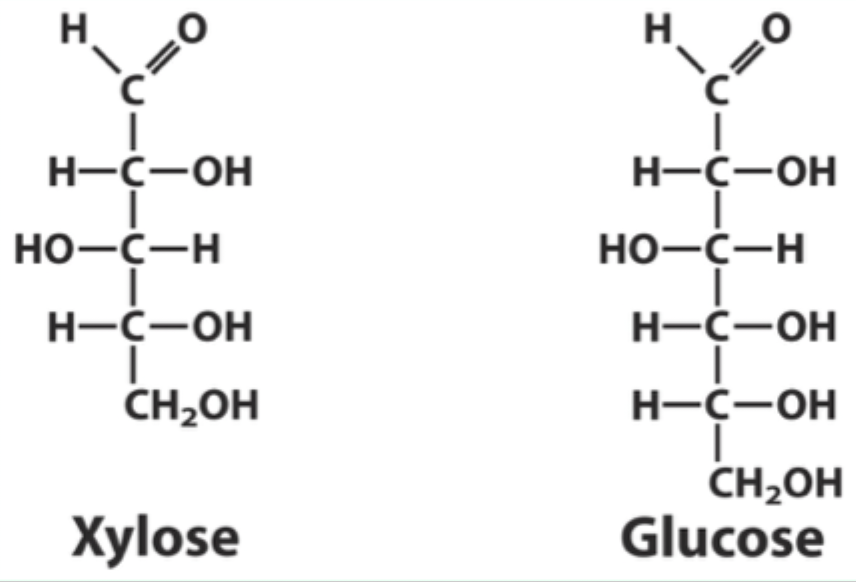
<p>A <strong>5-membered furanose ring</strong>.</p>
27
New cards
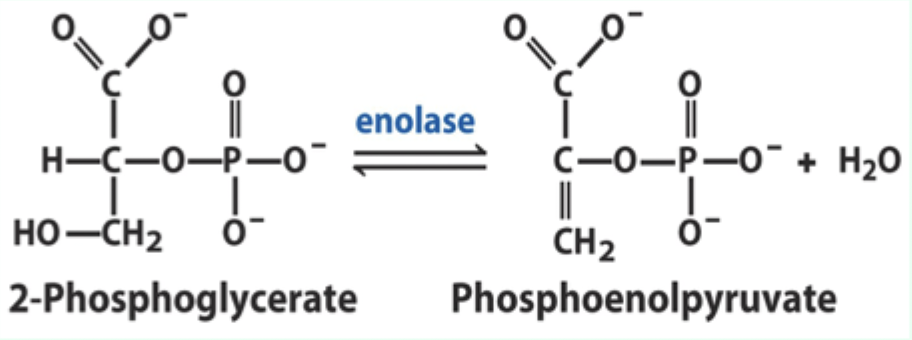
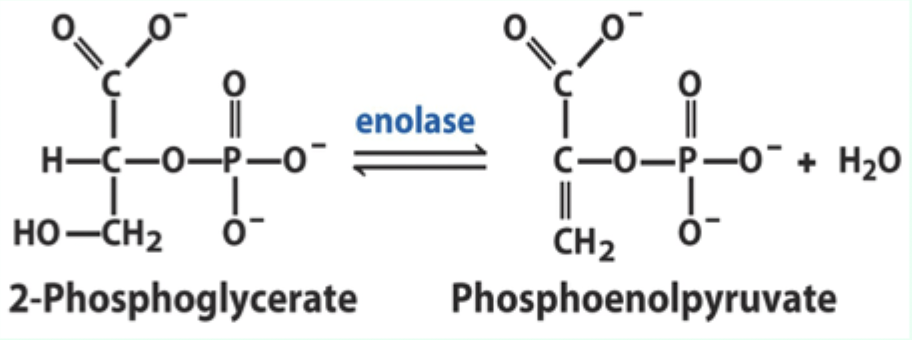
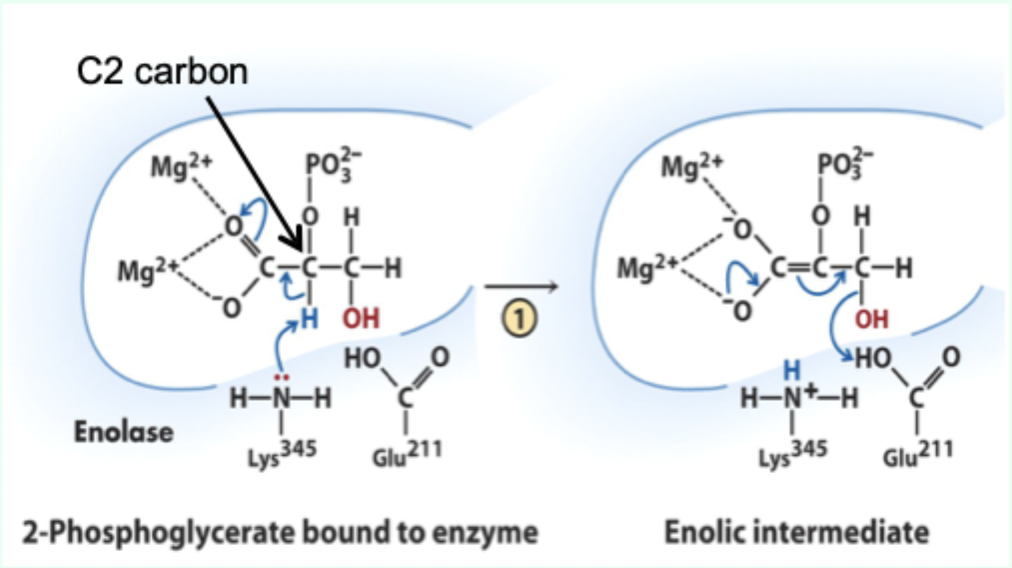
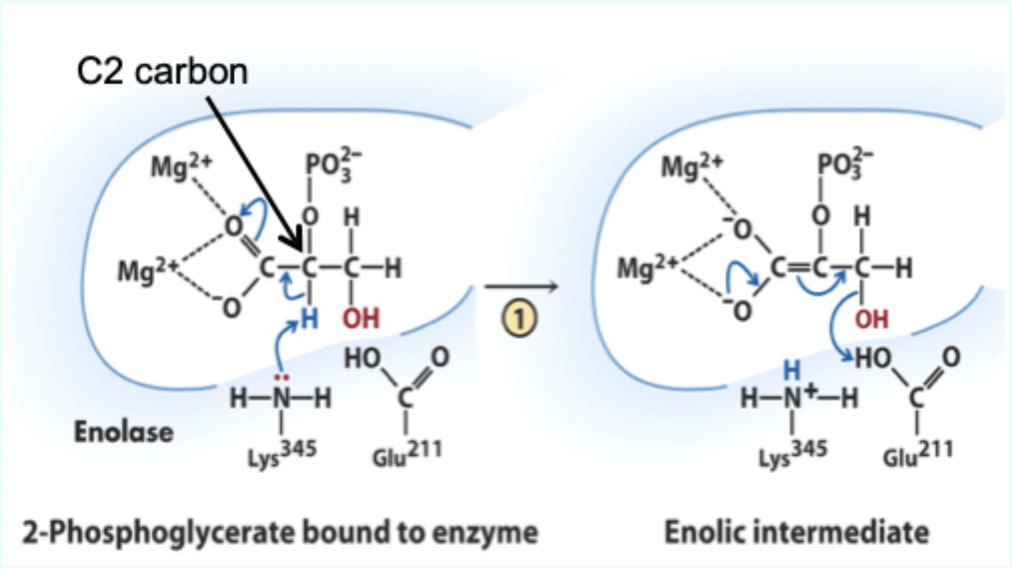
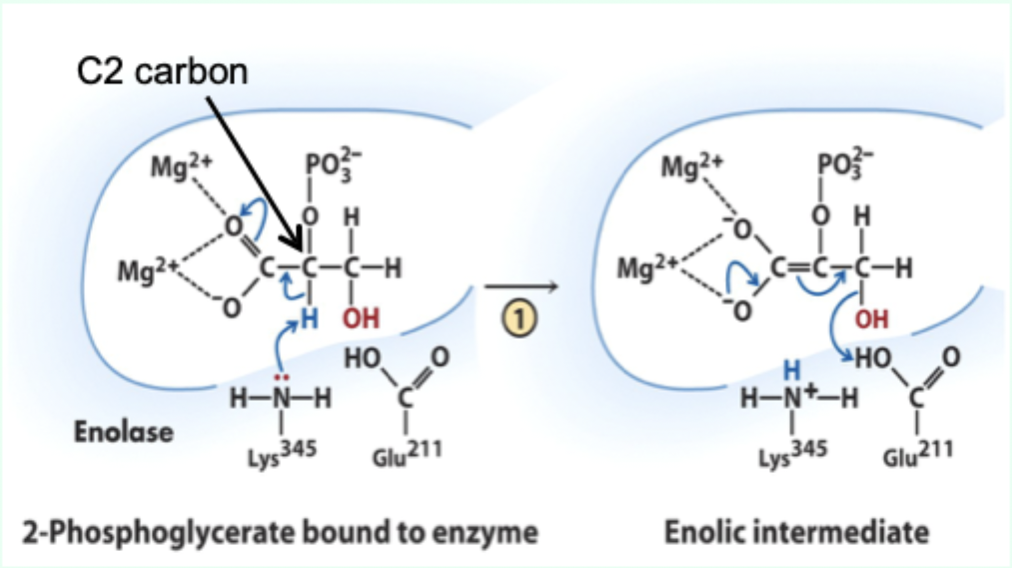
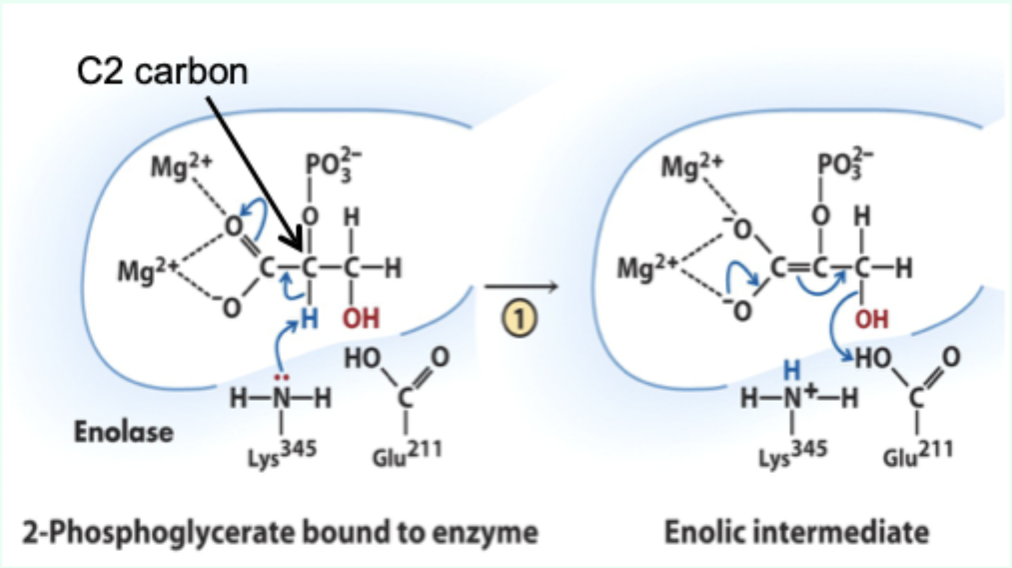
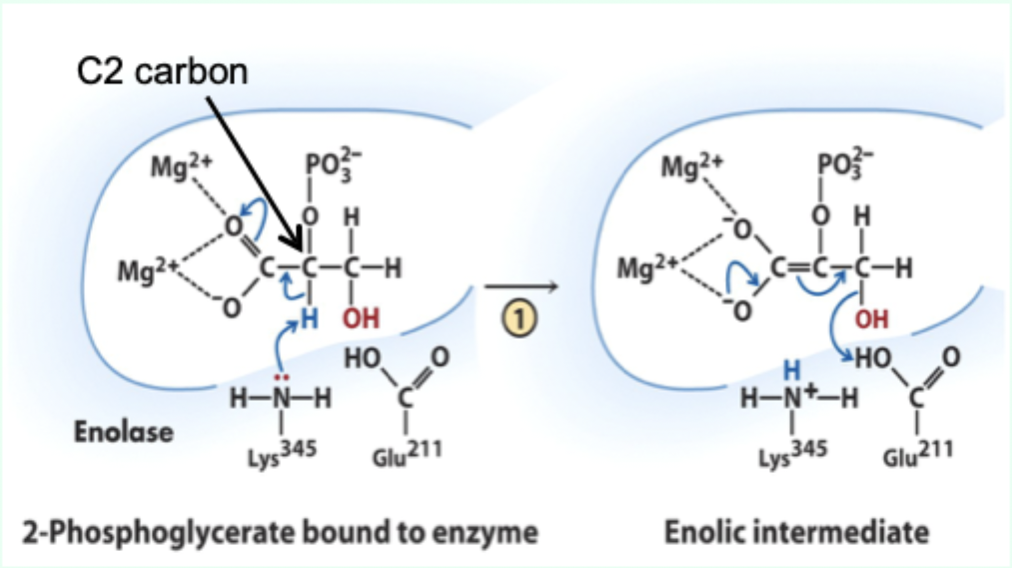
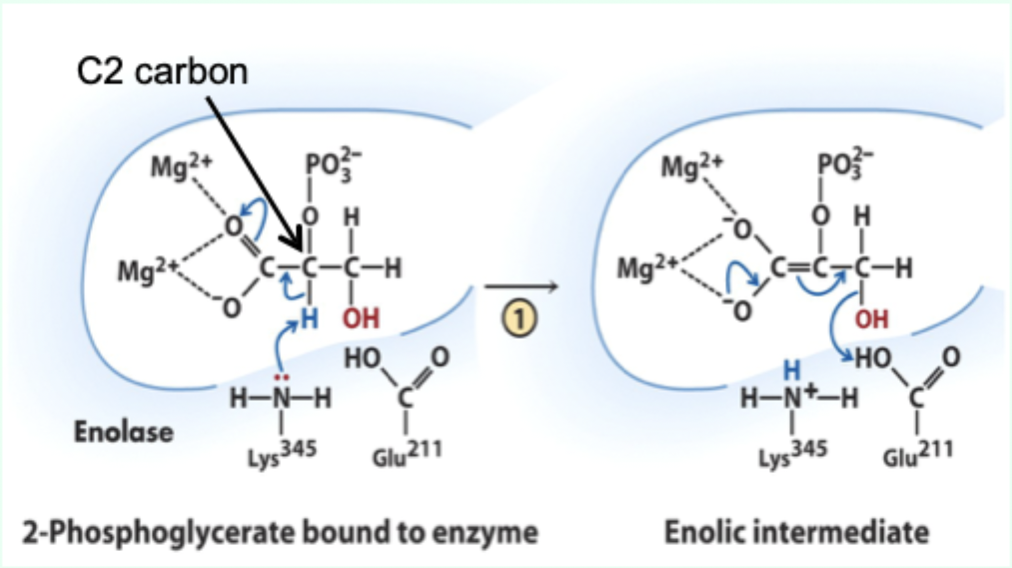
<p>What reaction does <strong>enolase</strong> catalyze?</p>

What reaction does enolase catalyze?

Reversible dehydration of 2-phosphoglycerate to phosphoenolpyruvate.
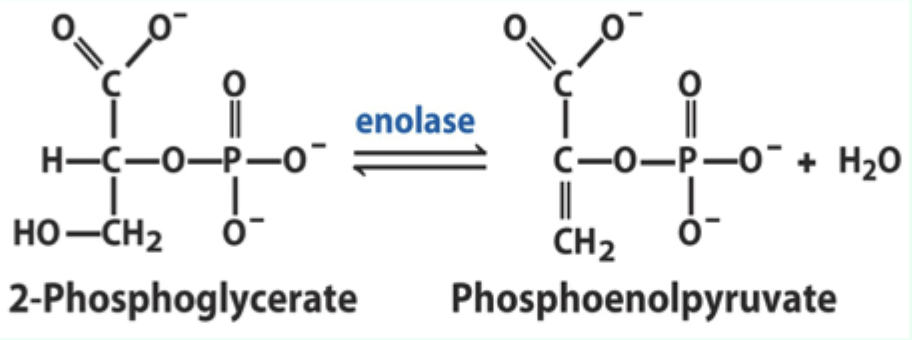
<p><strong>Reversible</strong> <strong>dehydration</strong> of 2-phosphoglycerate to phosphoenolpyruvate.</p>
28
New cards
<p>Enolase is an example of what three catalytic strategies?</p>

Enolase is an example of what three catalytic strategies?

Metal ion catalysis
General acid–base catalysis
Transition state stabilization
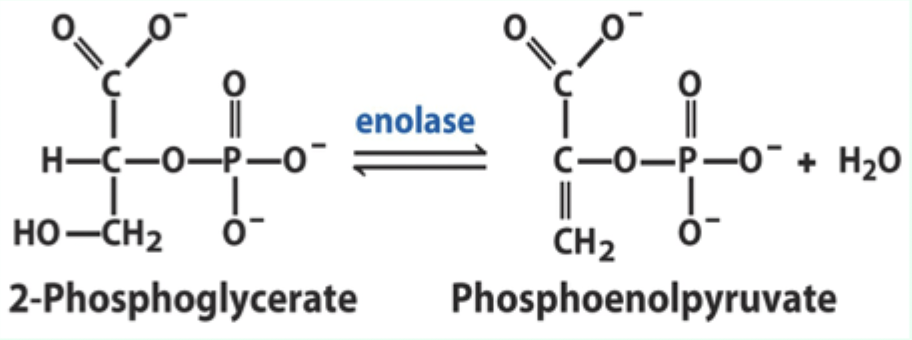
<p><strong>Metal ion catalysis<br>General acid–base catalysis<br>Transition state stabilization</strong></p>
29
New cards
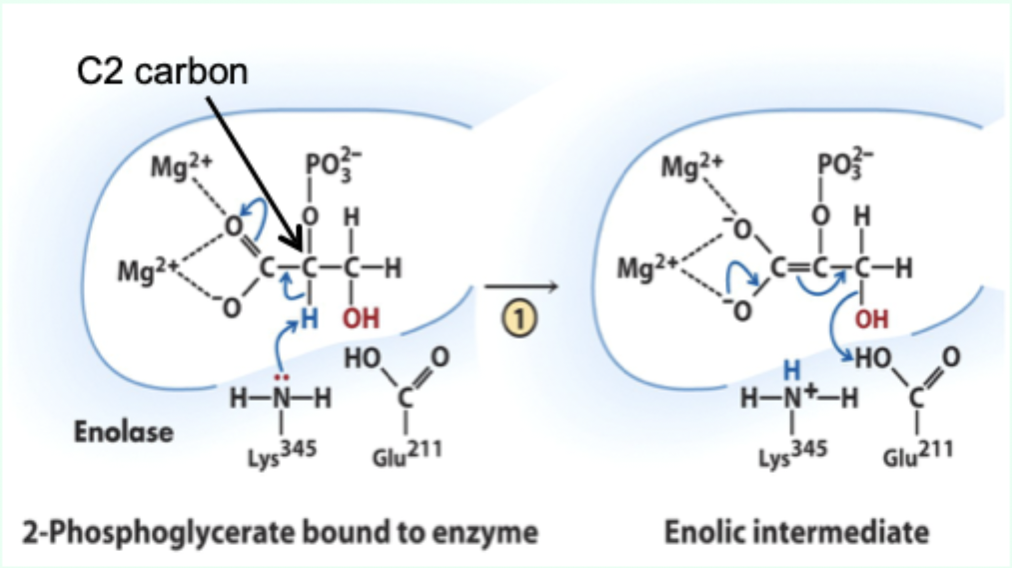
<p>What does <strong>Lys345</strong> act as in <strong>enolase</strong>?</p>

What does Lys345 act as in enolase?

General base catalyst
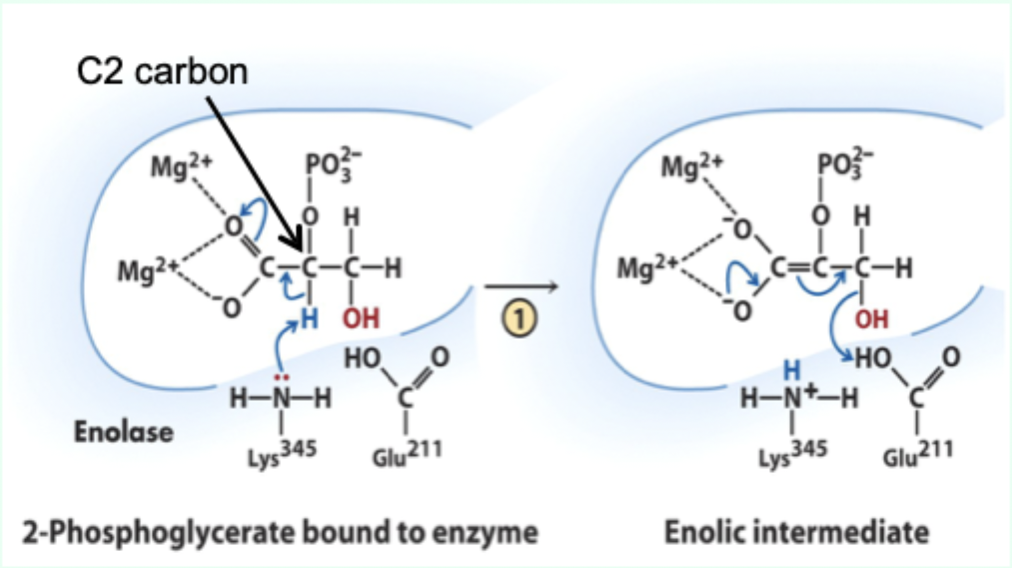
<p><strong>General base</strong> <strong>catalyst</strong></p>
30
New cards
<p>What proton does Lys345 remove?</p>

What proton does Lys345 remove?

Proton from C2 of 2-phosphoglycerate.
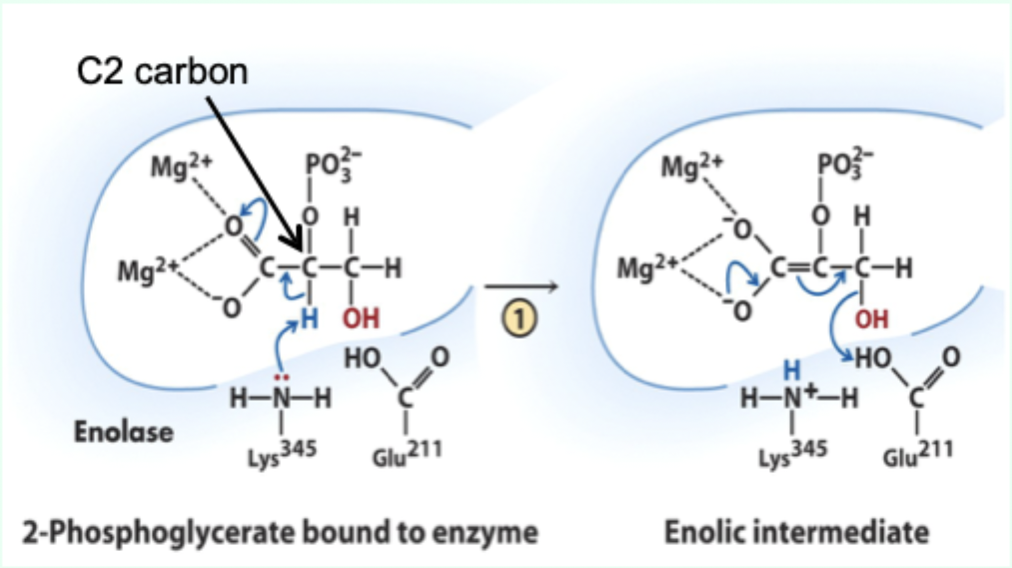
<p>Proton from C2 of 2-phosphoglycerate.</p>
31
New cards
<p>Why is the C2 proton removable in the enzyme but not in solution?</p>

Why is the C2 proton removable in the enzyme but not in solution?

Two Mg2+ ions lower its pKa (make it more acidic).
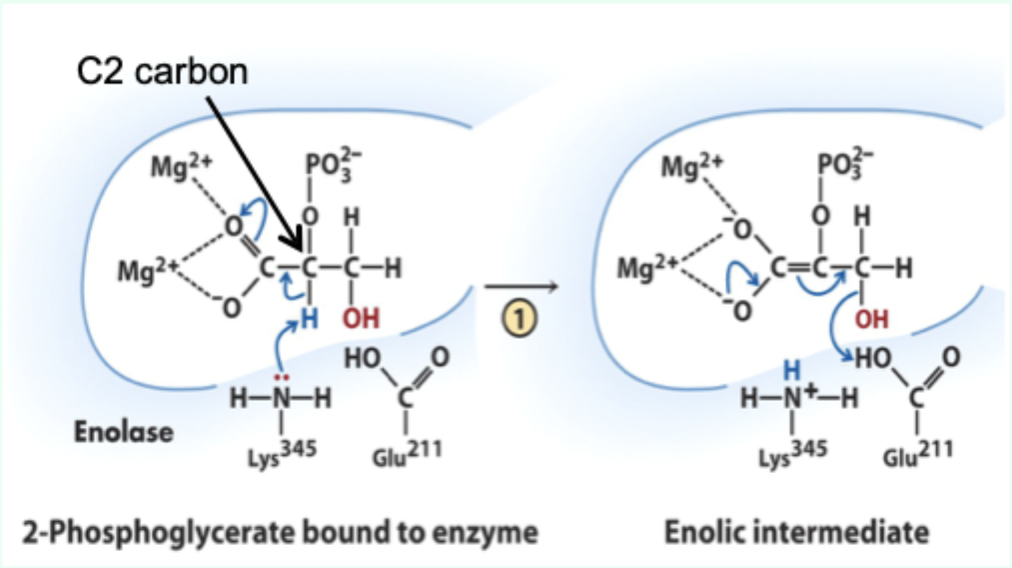
<p>Two Mg2+ ions lower its pKa (make it more acidic).</p>
32
New cards
<p>What role do Mg2+ ions play in enolase?</p>

What role do Mg2+ ions play in enolase?

Stabilize negative charges and promote formation of enolic intermediate.
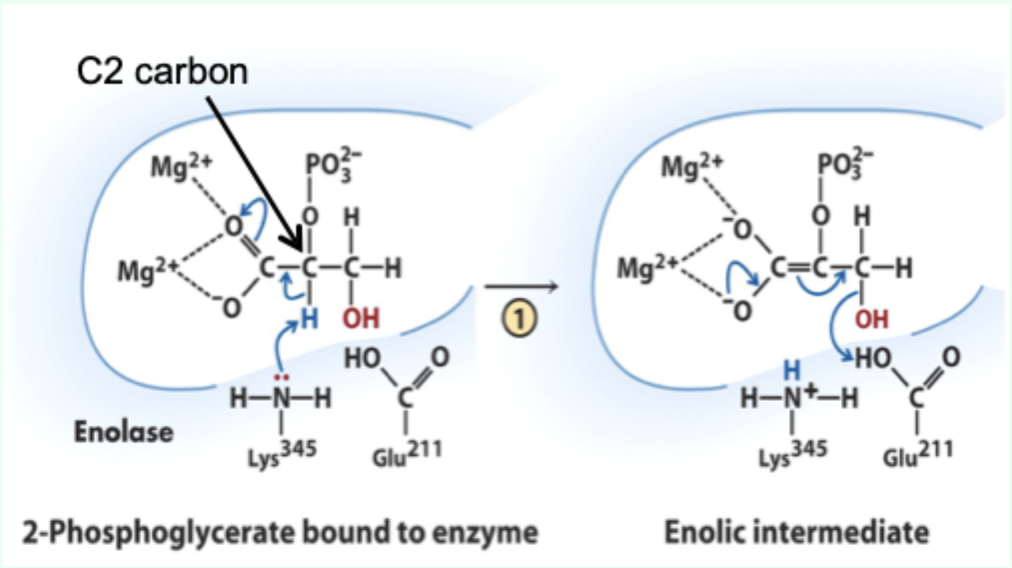
<p>Stabilize negative charges and promote formation of enolic intermediate.</p>
33
New cards
<p>Which residue acts as general acid in step 2 of enolase?</p>

Which residue acts as general acid in step 2 of enolase?

Glu211.
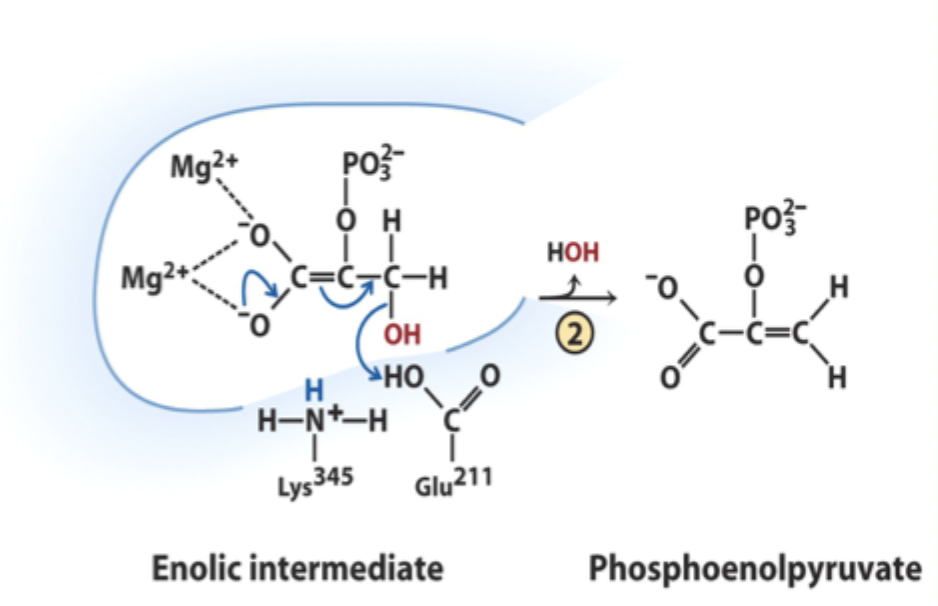
<p>Glu211.</p>
34
New cards
<p>What does Glu211 protonate?</p>

What does Glu211 protonate?

The hydroxyl leaving group to produce water.
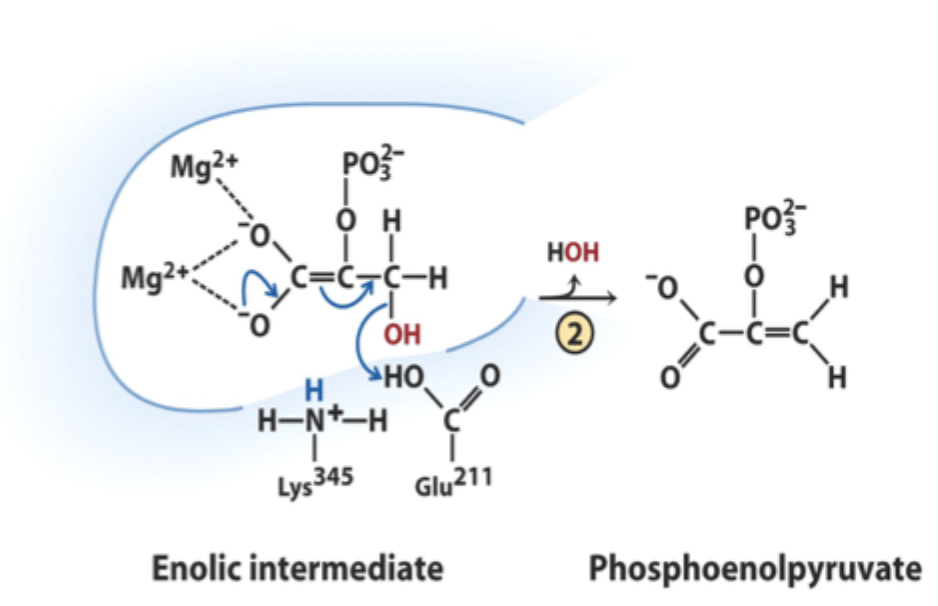
<p>The hydroxyl leaving group to produce water.</p>
35
New cards
<p>What intermediate forms in enolase catalysis?</p>

What intermediate forms in enolase catalysis?

Enolic intermediate.
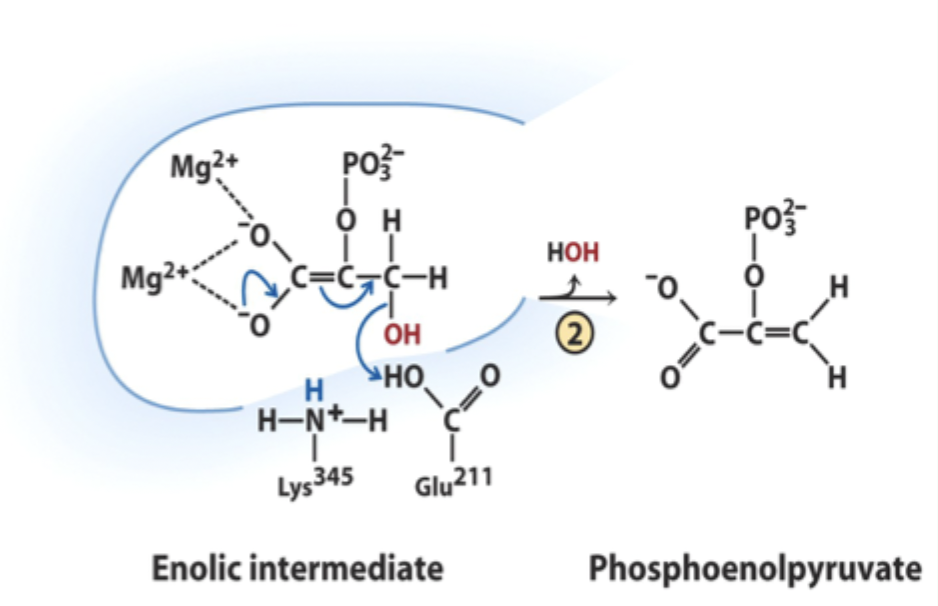
<p>Enolic intermediate.</p>

Explore top notes

note
Excretory system
Updated 713d ago
0.0(0)
note
Module 1.5a Sleep: Consciousness
Updated 187d ago
0.0(0)
note
Chapter 14-Natural Resources
Updated 1040d ago
0.0(0)
note
Napoleon
Updated 1169d ago
0.0(0)
note
AP World Unit 2
Updated 349d ago
0.0(0)
note
Excretory system
Updated 713d ago
0.0(0)
note
Module 1.5a Sleep: Consciousness
Updated 187d ago
0.0(0)
note
Chapter 14-Natural Resources
Updated 1040d ago
0.0(0)
note
Napoleon
Updated 1169d ago
0.0(0)
note
AP World Unit 2
Updated 349d ago
0.0(0)

Explore top flashcards

flashcards
Así se dice 2 Cap. 2
51
Updated 1006d ago
0.0(0)
flashcards
List 1B
86
Updated 934d ago
0.0(0)
flashcards
Chapter 9- Management
91
Updated 1105d ago
0.0(0)
flashcards
Key Terms ITI Exam 2
58
Updated 784d ago
0.0(0)
flashcards
Exam 1
89
Updated 1149d ago
0.0(0)
flashcards
Economics
61
Updated 894d ago
0.0(0)
flashcards
Así se dice 2 Cap. 2
51
Updated 1006d ago
0.0(0)
flashcards
List 1B
86
Updated 934d ago
0.0(0)
flashcards
Chapter 9- Management
91
Updated 1105d ago
0.0(0)
flashcards
Key Terms ITI Exam 2
58
Updated 784d ago
0.0(0)
flashcards
Exam 1
89
Updated 1149d ago
0.0(0)
flashcards
Economics
61
Updated 894d ago
0.0(0)