CHAP 5 Continued!!! (regulation of reproduction)
 Call Kai
 Learn
Learn Practice Test
 Spaced Repetition
 Match
Match Flashcards
 Knowt Play
1/43

There's no tags or description
Looks like no tags are added yet.
Name | Mastery | Learn | Test | Matching | Spaced | Call with Kai |
|---|
No analytics yet
Send a link to your students to track their progress
44 Terms
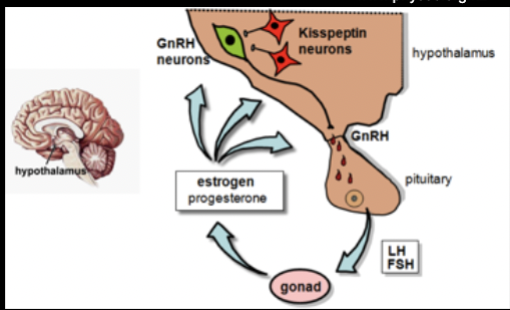
Kisspepins
“gatekeeperes” for GnRH
neuropeptides by hypothalamus
appears to act directly on GnRH neurons to stimulate GnRH secretion
Important regulator of sexual differentiation of the brain (puberty)
Important regulator of seasonality
Affected by pheromones, stress, photoperiod, nutrition, age, etc.
Reproductive hormones
act in minute quantities
have short half-lives
bind to specific receptors
regulate intracellular biochemical reactions
half-life
the time taken for the radioactivity of a specified isotope to fall to half its original value.
Reproductive hormones classified by:
Source → ex. pituitary hormones (FSH, LH, oxytocin, prolactin)
Mode of action → Gonadotropins (FSH, LH)
Biochemical classification → Glycoproteins (FSH, LH)
Reproductive hormones must first interact with specific __________
Target Tissue
receptors
binding w specific receptor initiates series of intracellular biochemical reactions
Regulation of reproductive hormones
biochemical reactions
Target cell - only secretes substance in response to hormone
doesn’t secrete if hormone is not present
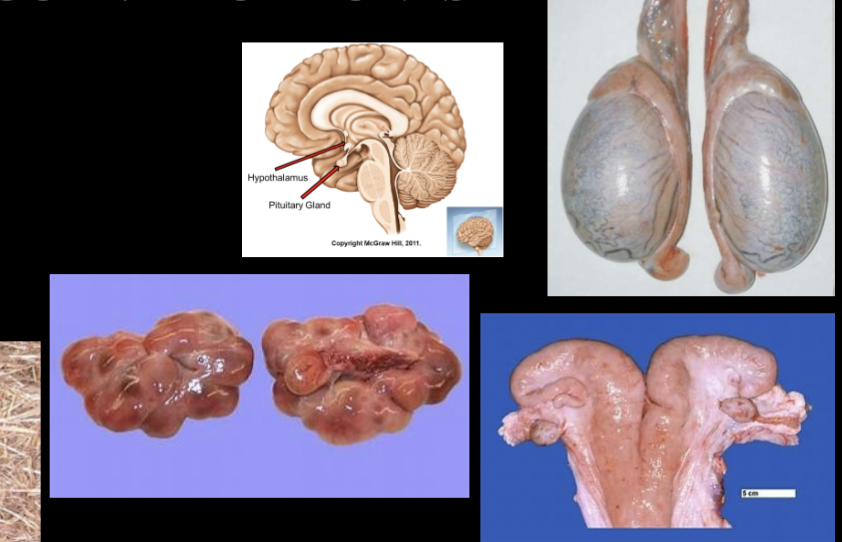
repro hormones originate from:
hypothalamus
pituitary
gonads
uterus
placenta
Functions of reproductive hormones
Release of other hormones - releasing hormones
stimulation of the gonads - gonadotropins
sexual promotion - steroids
pregnancy maintenance
luteolysis - regression of CL
Repro horm classification: Tissues of Origin
Hypothalamus → GnRH
Pituitary → FSH, LH, prolactin, (oxytocin stored)
Gonadal hormones → estrogens, progesterone, inhibin, testosterone
Uterine hormone prostaglandin
lactocrine signaling (relaxin transported via milk)
Repro horm classification: Modes of action - Neurohormones
synthesized by neurons, released directly into blood to target tissues (oxytocin)
Repro horm classification: Modes of action - Releasing hormones
synthesizes by neurons in hypothalamus (GnRH)
Repro horm classification: Modes of action - Gonadotropins
Hormones synthesized and secreted by specialized cells in the antirior lobe of the pituitary gland
“tropin” → to nourish
FSH & LH
Repro horm classification: Modes of action - Sexual promoters
secreted by gonads
stimulate reproductive tract
regulate function of the hypothalamus
regulate reproductive behavior
development of secondary sex characteristics
**Driving force for ALL reproductive function**
Estrogen, testosterone, human chronic gonadotropin (hCG), equine chronic gonadotropin (eCG) are secreted by early embryo (conceptus)
progesterone, placental lactogen
Repro horm classification: Modes of action - General metabolic hormones
promote metabolic well-being
thyroxin, adrenal corticoids, GH
Indirect effect on reproduction
Repro horm classification: Modes of action - Luteolytic hormones
destroy CL
prostaglandin F2⍺
Repro horm classification: Biochemical structure - Peptides
small; only a few amino acids joined by peptide bonds
GnRH (10 aa)
Prolactin (198aa; not glycosylated)
Repro horm classification: Biochemical structure - Glycoproteins
Polypeptide hormones - contain carbohydrate moieties
FSH, LH, inhibin
Carbohydrate Moieties
Sugar structure (monosaccharide, disaccharide, or oligosaccharide) dispersed along each subunit of glycoprotein
thought to prolong half-life and protect from short-term degradation
more glycosylation (more CHO units); the longer the half-life
not effective when given orally - degraded by proteolytic enzymes in digestive tract
Repro horm classification: Biochemical structure - Steroid
common molecular nucleus
4 carbon rings
synthesized from cholesterol
series of complex pathways - many enzymatic conversions
sexual promoters → estradiol, progesterone, testosterone
Repro horm classification: Biochemical structure - Prostaglandins
active, rapidly degenerate in blood (half life = seconds)
PGF2⍺ and PGE2 - control ovulation
Pheromoes

substances that are secreted to the outside of the body
detected by olfactory system (vomeronasal organ) by members of same species
Cause specific behavioral or physiological responses
onset of puberty, detection of estrus
Target tissues
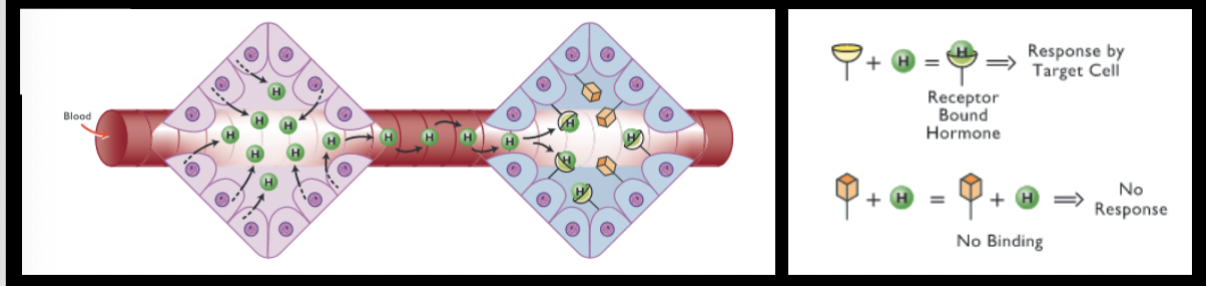
Only certain cells with specific receptors are capable of responding to a hormone
even though every cell in the body may be exposed to it
receptors have affinity for specific hormone and bind to it
Protein hormones - plasma membrane receptors
Once receptor binds the hormone, target tissue performs new function
often secretes another hormone that acts on a new target tissue
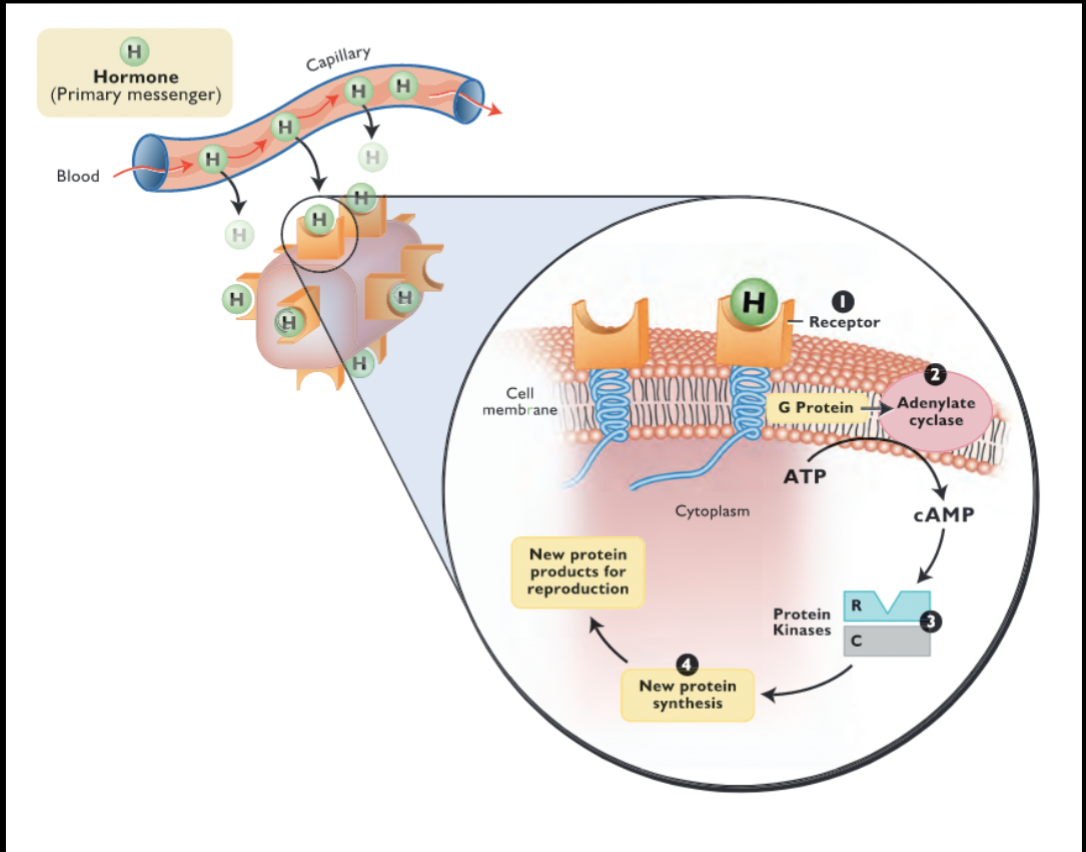
Protein hormones - plasma membrane receptors: STEPS
Hormone-receptor binding
Adenylate cyclase activation
protein kinase activation
synthesis of new products
STEP 1
Hormone-receptor binding
surface of target tissues
sparse
specific shapes - fit together
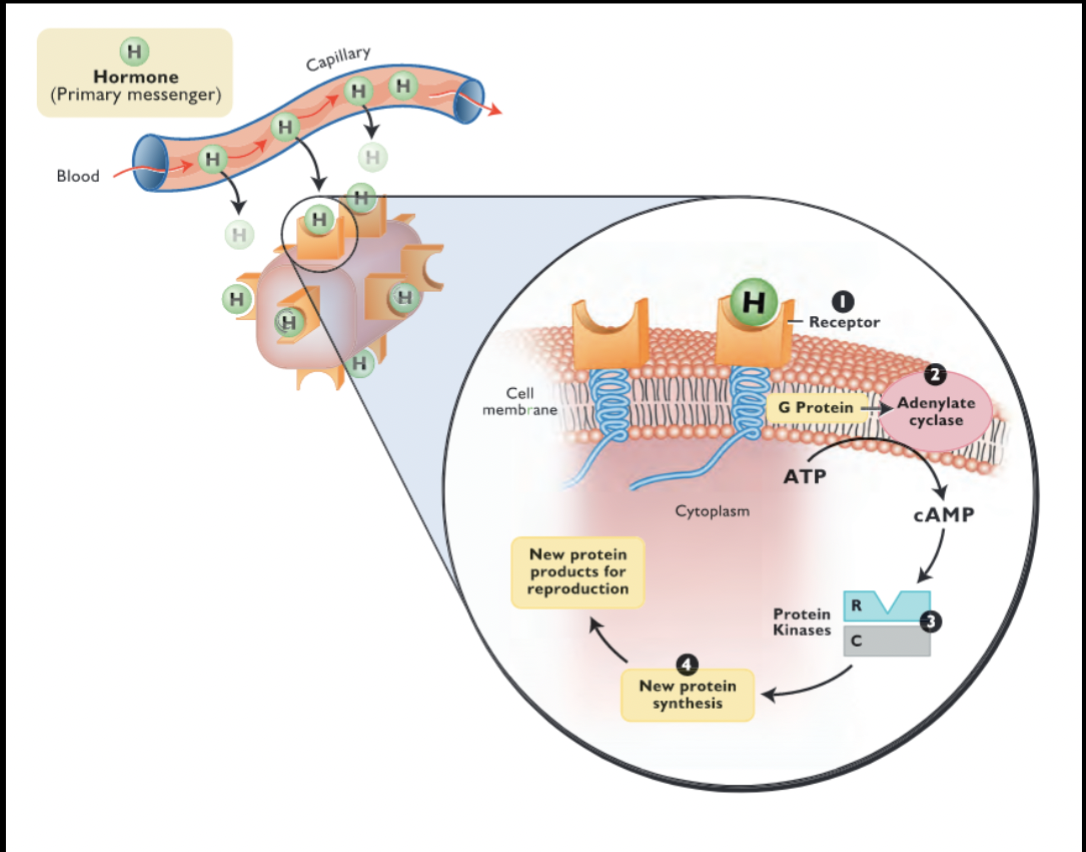
STEP 2
Adenylate Cyclase Activation
G-protein
Membrane bound
Converts ATP to cyclic AMP
Cytoplasm
cAMP = “secondary messenger” (primary messenger = hormone)
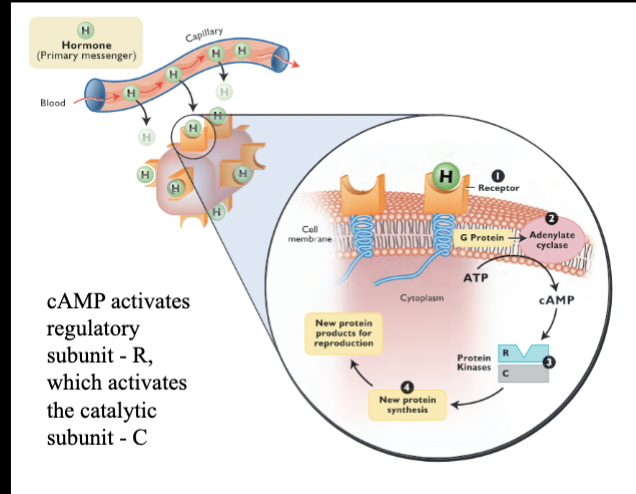
STEP 3
protein kinase activation
control enzymes
activate other enzymes in cytoplasm that convert substrates into products
regulatory and catalytic subunits
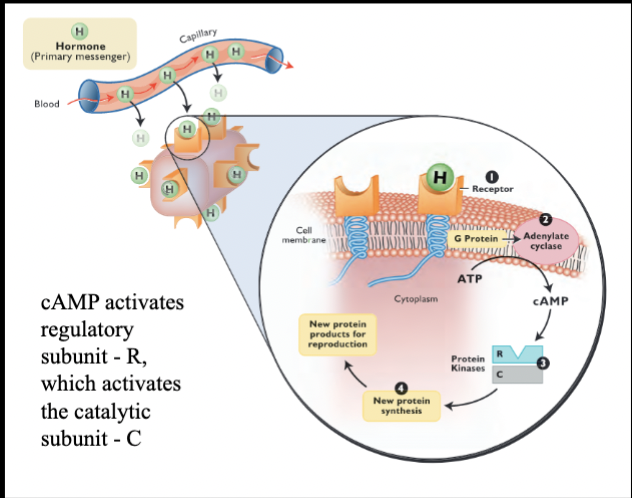
STEP 4
Synthesis of new products
generally secreted
specific functions that enhance reproductive processes
FSH and LH bind to follicle cells - synthesis of estradiol
steroids simply diffuse through plasma membrane
Steroid hormones
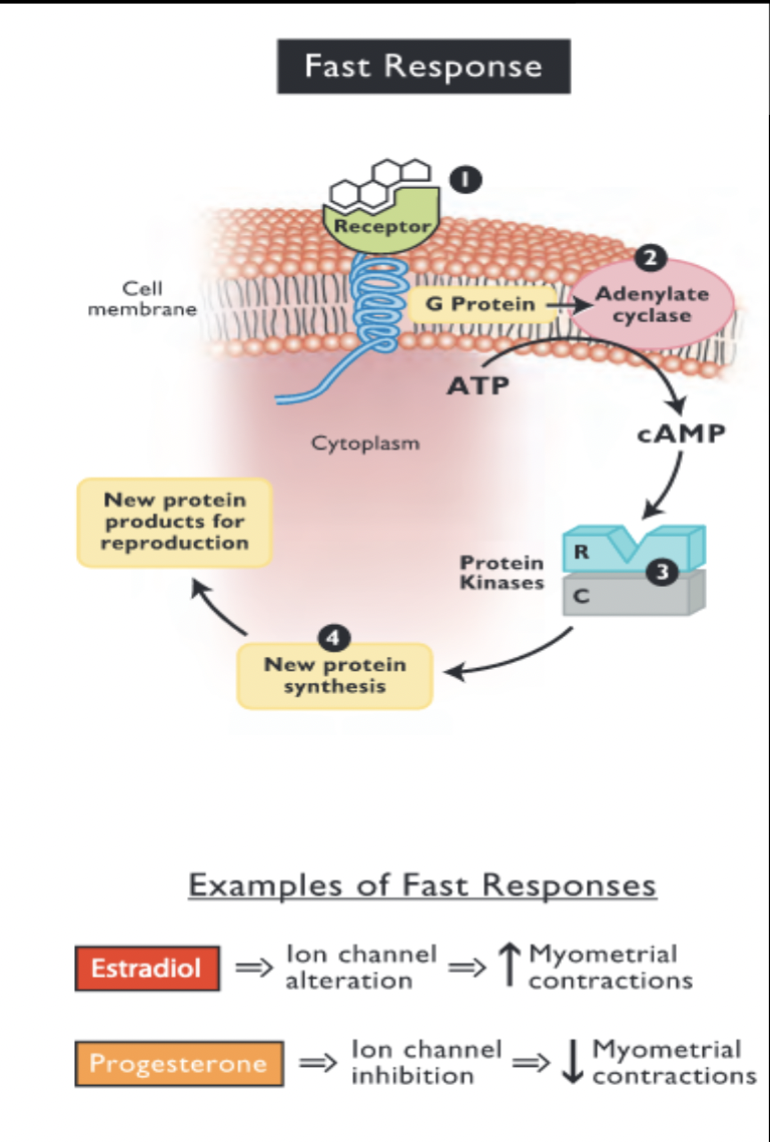
2 types of receptors:
A. Fast response → seconds to minutes
B. Slow response → days to weeks
Fast response steroid
Similar pathway as protein hormones:
hormone-receptor binding
adenylate cyclase activation
protein kinase activation
changes in Ca++ channel permeability
diffuses across plasma membrane into interstitial spaces and blood
Slow response steroid
steroid transport
movement through the cell membrane and cytoplasm
binding of steroid to nuclear receptor
mRNA synthesis and protein synthesis
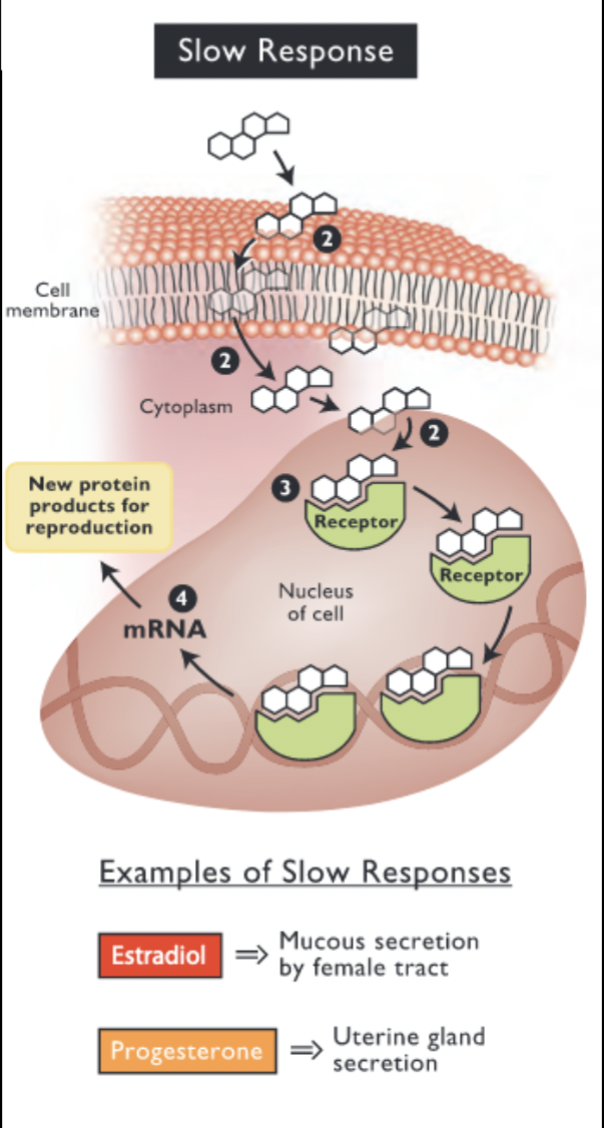
steroid transport
Transported in blood by comples system
not water soluble
cannot be transported as free molecules
must attach to molecules that are water soluble
transport proteins → helps to extend their half-life
movement through the cell membrane and cytoplasm
Dissociates with transport protein
diffuses through plasma membrane
lipid soluble
diffuses through cytoplasm and into nucleus
binding of steroid to nuclear receptor
similar to protein receptor binding - must “fit” together
steroid0receptor complex = transcription factor
initiates DNA-directed messenger RNA synthesis (transcription)
mRNA synthesis and protein synthesis
New mRNA leaves nucleus and attaches to ribosomes
“STRENGTH” of hormone action
pattern and duration of secretion
half-life
receptor density
receptor-hormone affinity
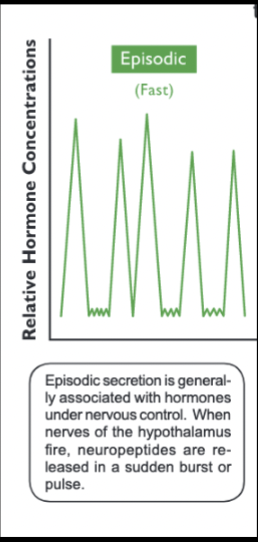
Pattern and duration of secretion - Episodic secretion
Associated with hormones under nervous control
when nerves in hypothalamus fire, neuropeptides are released in a sudden burst/pulse
“fast”
pulsatile secretion
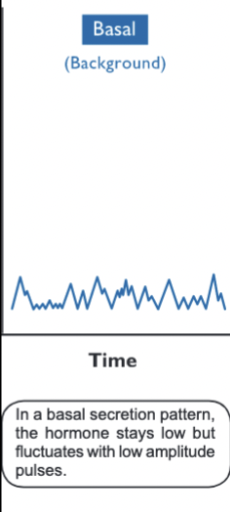
Pattern and duration of secretion - Basal secretion
hormone level stays low, but fluctuates with low amplitude pulses
GnRH secretion from tonic center
“background”
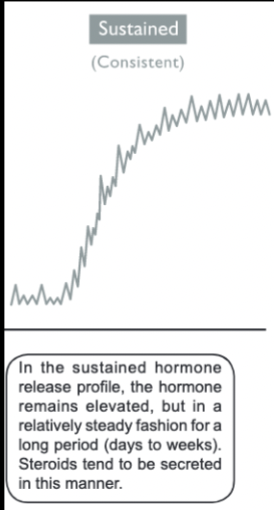
Pattern and duration of secretion - Sustained secretion
hormone level remains elevated
relatively steady, stable fasion for long period of time (days, weeks)
Steroids (think progesterone during pregnancy)
“consistent”
Half-life
Different life expectancies
rate at which hormone is cleared from the circulation
seconds: PGF2⍺
days: eCG
Determined by rate of metabolism within body
metabolized/inactivated by liver and excreted in urine and feces
Receptor density
Changes between cell type and function
can be influenced by nutrition and body condition
hormones may promote synthesis of receptors for other hormones (or themselves)
FSH promotes the synthesis of LH receptors
the more receptors = higher potential for response
Receptor affinity
the greater the affinity of the hormones for the receptor, the greater the biological response
Analogs:
agonists and antagonists
bind to specific receptor
interferes with native hormone action
Measuring hormones
Hormones can be detected in blood, saliva, milk, urine, tears, and feces
RIA - radioimmunoassay
radioactive hormones compete with same hormone in blood
requires specialized labs, isotope detection equipment and expensive disposal
ELISA - enzyme-linked immunosorbent assay
series of steps to determine presence or absence as well as quantity
Minimal training, no health/safety hazards, relatively inexpensive
over the counter pregnancy test
SARS-CoV-2 antibody test (COVID)

