Bonding and Polarity
 Studied by 0 people
 Call Kai
 Learn
Learn Practice Test
 Spaced Repetition
 Match
Match Flashcards
 Knowt Play
1/33

There's no tags or description
Looks like no tags are added yet.
Name | Mastery | Learn | Test | Matching | Spaced | Call with Kai |
|---|
No analytics yet
Send a link to your students to track their progress
34 Terms
What is an ionic bond?
A bond formed by electrostatic attraction between oppositely charged ions
Give an example of an ionic bond.
Bond in NaCl. Sodium transfers an electron to chlorine to give Na+ and Cl-
What is a covalent bond?
A shared pair of electrons
What is a nonpolar covalent bond?
A covalent bond where electrons are symmetrically distributed within the bond.
What is a polar covalent bond?
A covalent bond with an unsymmetrical electron distribution.
What is bond polarity?
Unsymmetrical distribution of electrons in a covalent bond due to differences in electronegativity.
What is electronegativity?
The intrinsic ability of an atom to attract the shared electrons in a covalent bond
How does electronegativity change across the periodic table?
Increases from left to right
How does electronegativity change going down the periodic table?
Decreases from top to bottom
Which elements have high electronegativity
Reactive nonmetals on the right-hand side of the periodic table.
Which elements have low electronegativity?
Metals on the left-hand side of the periodic table.
What difference in electronegativity defines a non-polar covalent bond?
Less than 0.5
What difference in electronegativity defines a polar covalent bond?
Between 0.5 and 2.0
What difference in electronegativity defines an ionic bond?
Greater than 2.0
What symbol is used for partial charges?
δ⁺ (partial positive) and δ⁻ (partial negative)
When does carbon become δ⁺?
When bonded to a more electronegative atom
When does carbon become δ⁻?
When bonded to a less electronegative atom
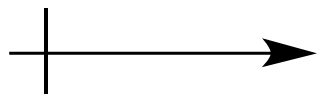
What does the crossed arrow represent?
Direction of bond polarity
What does the tail of the crossed arrow represent?
Electron-poor atom (δ⁺)
What does the head of the crossed arrow represent?
Electron-rich atom (δ⁻)
What is polarizability?
The measure of change in electron distribution around the atom to an external electrical influence
Which atoms are more polarizable?
Larger atoms with loosely held electrons
Which atoms are less polarizable?
Smaller atoms with tightly held electrons
What is the inductive effect?
Atoms’ ability to polarise a bond
Which elements show an electron-withdrawing inductive effect?
Electronegative nonmetals
Which elements donate electrons inductively?
Metals
Why is the inductive effect important?
It plays a major role in understanding chemical reactivity
When carbon bonds to N, O, F, Cl, Br, what charge does carbon have?
Partial positive (δ⁺)
When carbon bonds to metals (e.g. Mg), what charge does carbon have?
Partial negative (δ⁻)
What is dipole moment?
A net measure of molecular polarity
How is molecular dipole moment calculated?
By vector summation of all bond dipoles and lone-pair contributions
For a molecule with one bond, what equals its dipole moment?
The dipole moment of that bond
How do lone pairs affect dipole moment?
They contribute significantly due to charge separation
Why do symmetrical molecules often have zero dipole moment?
Bond polarities and lone pairs cancel out
 Note
Note  Flashcards (22)