Fungi 3218
 Studied by 0 people
 Call with Kai
 Learn
Learn Practice Test
 Spaced Repetition
 Match
Match Flashcards
 Knowt Play
1/22

There's no tags or description
Looks like no tags are added yet.
Name | Mastery | Learn | Test | Matching | Spaced | Call with Kai |
|---|
No study sessions yet.
23 Terms
The Linnaean Hierarchy (acronym)
Dumb King Phillip Came Over For Good Soup
Domain, Kingdom, Phylum, Class, Order, Family, Genus, species [subspecies/variety, f.sp.]
Taxon Names for Fungi
Phylum = -mycota
subphylum = -mycotina
class = -mycetes
order = -ales
family = -aceae
The Five* Phyla of Fungi
A,B,C,G,Z: Ascomycota, Basidiomycota, Chytridiomycota, Glomeromycota, Zygomycota
Fungal Phylogeny
Ascomycota, Basidiomycota, and Glomeromycota are generally considered monophyletic (one common ancestor and all descendants)
Zygomycota is NON-monophyletic
it is paraphyletic (one common ancestor but excludes decendants ABG)
it is polyphyletic (multiple evolutionary roots, grouped based on similartraits not ancestry)
Chytridiomycota is NON-monophyletic
may be paraphyletic
Kingdom Fungi - 5 overall characteristics
A KINGDOM of eukaryotic1 organisms most closely related to ANIMALS
Heterotrophic2, with extracellular digestion3 and absorptive nutrition4, and with cell walls containing chitin, glucans and mannans5 [There are exceptions]
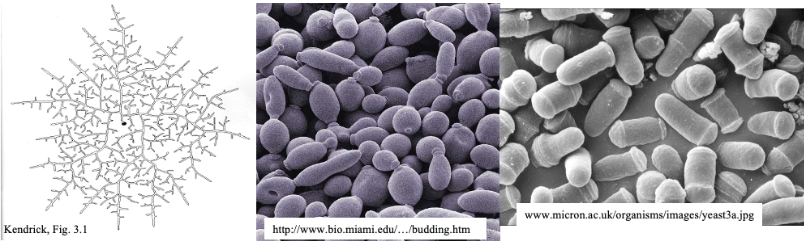
Fungi Charactieristics - Growth
The characteristic feature of most fungi is filamentous growth
The fungal body (thallus) is composed of microscopic threads called hyphae
Hyphae are tube-like and branching
This tube-like branching pattern defines filamentous growth
The collective, growing mass of hyphae is called the mycelium
Mycelium makes up the main vegetative body of a fungus
Yeasts do not show filamentous growth
They grow as single cells (cellular growth)
Yeasts reproduce by:
Budding
Typical of Saccharomyces
A small daughter cell forms and pinches off from the parent
Fission
Cell divides into two equal cells
Cells split apart after division
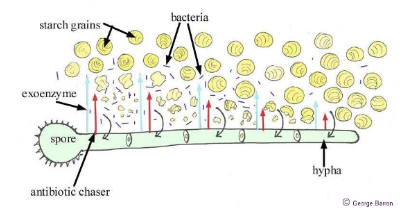
Fungi Charactieristics - Nutrition
Fungi are heterotrophic
Obtain carbon and energy from organic matter
Do extracellular digestion followed by absorptive nutrition
Fungi produce a wide array of lytic (digestive) enzymes
Enzymes are made inside the cell and secreted outside (exoenzymes)
Examples:
Cellulase → breaks down cellulose
Laccase
Chitinase
Pectinase → breaks down pectin (the “glue” holding plant cell walls together)
Hyphal growth allows fungi to penetrate solid substrates
Hyphae grow directly through the material being digested
This allows access to nutrients unavailable to many other organisms
Large substrates (e.g., starch grains) are too big to cross membranes
Fungi secrete enzymes to digest polymers into small, soluble molecules
Starch is broken down into simple sugars
Simple sugars are then absorbed across the fungal membrane
Fungi Charactieristics - Nutrition - Competition Problem
Competition problem
Bacteria grow faster than most fungi
Bacteria readily consume free sugars
Digesting polymers in a mixed environment can “give away” nutrients to competitors
Fungal solution to competition
Some fungi produce antibiotic compounds
Antibiotics are released into the environment
This reduces bacterial growth so fungi can retain access to liberated sugars
Filamentous fungi vs bacteria
Fungi: penetrate solid substrates via hyphae
Bacteria: generally remain in solution and cannot penetrate solids effectively
Fungi Charactieristics - Nutrition - Why Produce Chitinase?
Why fungi produce chitinase (despite having chitin cell walls)
Chitin is rigid and inflexible
For hyphae to grow:
The cell wall must be temporarily flexible
Chitin is partially digested before being re-laid and hardened
Chitinase allows:
Hyphal extension
Branch formation toward nutrient sources
Remodeling of the fungal cell wall
Chitinase is also needed because:
Fungi can digest other fungi, which also have chitin cell walls
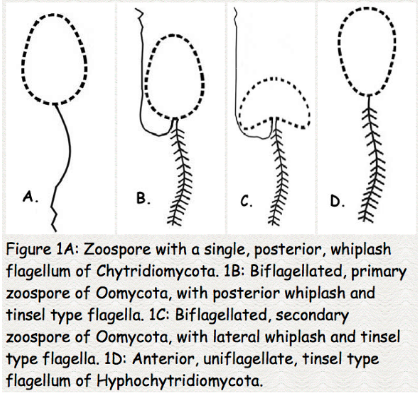
“Fungi” and Fungi with flagella
“Fungi” (broadly defined) include some organisms with flagellated stages
A flagellum (plural flagella) is a motile, whip-like structure used for movement, typically in water
“Water moulds”
Aquatic or water-associated organisms
Many produce flagellated spores or cells
Examples include:
Oomycota
Belong to the kingdom Chromista
Not true fungi, despite similar growth forms
Chytridiomycota
Belong to the kingdom Fungi
The only true fungi with flagellated cells
Slime moulds
Not fungi
Have amoeboid (amoeba-like) stages
Will be covered later in the course
Fungi Charactieristics - Cell Walls
Fungal cells have cell walls
Unlike animal cells, which lack cell walls
True fungi cell walls are composed mainly of:
Chitin
Glucans
Mannans
This combination is characteristic of Kingdom Fungi
Oomycota cell walls are composed mainly of:
Cellulose
This distinguishes them from true fungi despite similar growth forms
Outside the cell wall, fungi have microscopic proteinaceous fimbriae
Fine, protein-based surface structures
Involved in managing the immediate environment around the cell
Proposed functions of fimbriae (not fully understood):
Help control release of extracellular enzymes
Help capture and retrieve digestion products
May regulate interactions between the hypha and surrounding substrate
Fungi Charactieristics - Nutrition/Physiology
Can live in high acid (pH 1) or alkaline (pH 9) environments
tolerate cold or heat (-5 to 60 C) or low O2
tolerate low water availability (.65 vs plants 0.98)
Most strains can make many compounds directly from simple or complex sources (source of C, N, inorganic ions = prototrophs
Some strains/mutants have lost ability to make a growth factor (eg vitamin B1) = auxotrophic - so need this factor as a food source
Fungal Numbers
97k accepted in DictFun10 (64k A, 32k B, 700 C, 150 G, 1k Z), plus 1k ea Slime moulds & Oomycota
>350k described species including synonyms (Saccardo, Index of Fungi)
1.5M estimated by Hawksworth (1991), based in part on estimate of 5:1 fungi to plant species in the UK [updated to 2.5 M]
For comparison, there are an estimated 500k species of vascular plants, 55k vertebrates, 30M insects
Group Based on Life Style
Filamentous fungi (most) vs Yeasts (2k spp)
Sexual (meiosporic; ~77k spp) vs asexual (mitosporic; ~20k spp)
Aerobic (almost all?) vs anaerobic (a few chytrids)
Microfungi (individuals measured in micrometers, fruiting bodies usually lacking) vs macrofungi (individuals may occupy hectares, fruiting bodies > 1 cm)
Groups (Guilds) Based on Nutritional Modes
Fungi can be grouped into nutritional guilds based on how they obtain nutrients
Two broad categories: saprotrophs and symbionts
Saprotrophs
Obtain nutrients from dead organic matter
Secrete enzymes to decompose tissues and absorb released nutrients
Symbionts
Live in close association with another organism
Types of symbiotic fungi:
Mutualistic symbionts
Both partners benefit
Examples:
Mycorrhizae
Fungus associated with plant roots
Fungus receives carbon; plant gains nutrients and water
Lichens
Fungus partnered with a photoautotroph (alga or cyanobacterium)
Fungus provides protection and structure; photosynthetic partner provides carbon
Ant–fungus associations
Ants cultivate fungi for food
Fungi receive substrate and protection
Parasitic symbionts
Fungus benefits while the host is harmed
Include pathogens of:
Plants
Animals
Other fungi
Virtually all major groups of living organisms
Endophytes (do not fit neatly into one category)
Live inside plant tissues
Obtain nutrients from the plant
Effects on the host can vary:
Sometimes beneficial
Sometimes detrimental
When plant tissue dies:
Endophytes often switch to saprotrophic nutrition
Decompose dead leaves or stems
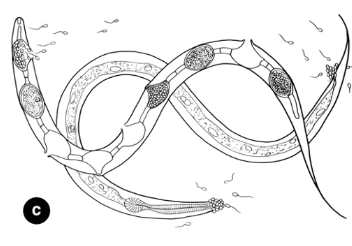
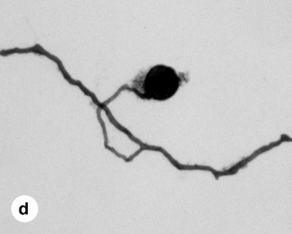
Chytridiomycota* = chytrid
Chytridiomycota (chytrids)
True fungi
Depend on free water for reproduction
Produce flagellated cells
Flagella
Most chytrids have one posterior flagellum
Similar in form to animal sperm flagella
Presence of a single flagellum is a key feature used to recognize chytrids
Exceptions
Some chytrids (e.g., rumen fungi in herbivore guts) have multiple flagella
These were historically misclassified as protozoa because of their motility
Ecological and applied importance
Synchytrium endobioticum
Causes potato wart disease
Serious agricultural pathogen
Led to restrictions on potato movement (e.g., U.S. bans on PEI potatoes in 2000–2001 and again in 2021)
Related or formerly included groups
Blastocladiomycota
Sanchytriomycota
These groups were once lumped with chytrids but are now recognized as distinct lineages
Glomeromycota
Glomeromycota
Formerly included within Zygomycetes as the group “Glomales”
Correct name of the order is Glomerales
Later shown to be distinct and elevated to their own phylum
All known members of this group form symbioses with photoautotrophs
One exception:
Geosiphon
Forms an endosymbiosis with a cyanobacterium
The cyanobacterium lives inside fungal cells
Cyanobacterium performs photosynthesis
Fungus takes up the sugars produced
The majority of species (~200 species):
Form mycorrhizal associations with plants
Occur in >80% of green plant species
This symbiosis is called:
Endomycorrhizae
Or Arbuscular Mycorrhizae (AM)
In arbuscular mycorrhizal (AM) relationships:
Fungus associates with roots of grasses, trees, and many other plants
Fungus receives sugars (carbon) from the plant
Fungus supplies the plant with:
Water
Mineral nutrients (especially phosphorus) from the soil
Zygomycota*
Zygomycota*
Not monophyletic
Traditional grouping rather than a natural evolutionary lineage
Contains ~1200 species
Best-known members are the “bread moulds”
Includes Rhizopus and relatives
Part of the order Mucorales
Commonly grow on bread, fruit, pumpkins
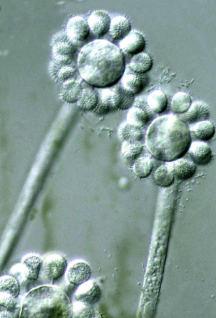
Hyphae
Hyphae are tubular fungal cells
In most fungi:
Diameter ~2–5 µm
In zygomycete-type fungi:
Diameter ~20–50 µm
~10× wider than typical fungal hyphae
Appear:
Tall, Broad, Glassy
Often visible to the naked eye
Modern view:
Zygomycota has been split into:
Mucoromycota
Zoopagomycota
Typical morphology:
Tall, glassy hyphae
Hyphae often topped with spore-producing structures
Ascomycota
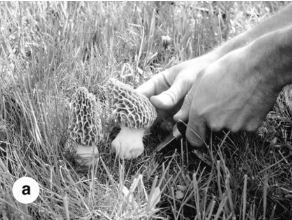
Largest phylum of fungi
~64,000 described species
Divided into three subphyla
Taphrinomycotina
Saccharomycotina
Pezizomycotina
Includes most of the ~20,000 “mitosporic fungi”
Reproduce by mitosis only
No observed sexual stage
Do not form asci
DNA sequence data shows they are ascomycetes
Includes ~20,000 species of lichens
Lichens are a symbiosis between:
A fungus (usually an ascomycete)
A photoautotroph (green alga or cyanobacterium)
Commonly grow on:
Rocks
Tree trunks
Soil
Extremely diverse
Wide range of:
Nutritional modes
Ecological roles
Morphologies
Common examples include green moulds (e.g., mould on food like pasta sauce)
The Ascus (pl. asci) defines the Ascomycota
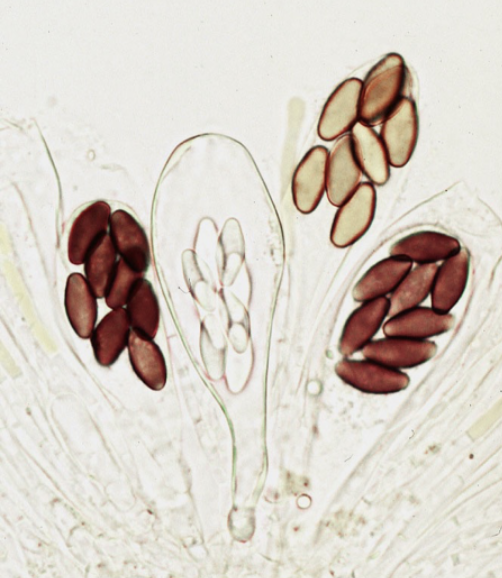
Ascus (plural asci)
A sac-like, balloon-shaped cell
Spores develop inside the ascus
Ascospore development
Immature spores are pale
Mature spores develop thicker walls and often become darker/brown
Nuclear events inside the ascus
A cell initially contains a dikaryon
Two haploid nuclei
Genetically different
Karyogamy
Fusion of the two haploid nuclei
Forms a diploid nucleus
Diploid stage is very short
Occurs only inside the ascus
Meiosis and spore formation
Diploid nucleus undergoes meiosis
Produces 4 haploid nuclei
Often followed by mitosis
Doubles the number to 8 haploid ascospores
Variation among ascomycetes
Many species produce 8 ascospores per ascus
Some produce 4 spores (no post-meiotic mitosis)
Others produce 16, 64, or more spores via multiple mitotic divisions
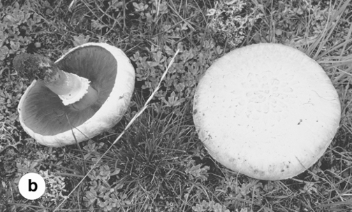
Basidiomycota
~32,000 species
Divided into three subphyla
Agaricomycotina (~22,000 spp.)
Includes most mushrooms
Mostly mycorrhizal fungi and decomposers
Pucciniomycotina (~8,000 spp.)
The rust fungi
Major plant pathogens
Ustilaginomycotina (~1,500 spp.)
The smut fungi
Major plant pathogens
Overall includes fungi with diverse ecologies, but rusts and smuts are especially important agriculturally
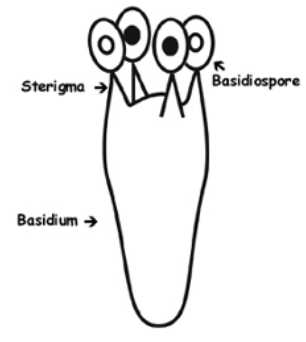
The Basdium (pl. basdia) defines the basidiomycota
Basidium (plural basidia) is the spore-producing cell
Similar to an ascus in function, but:
Spores are produced on the outside
Spores sit on small projections (sterigmata)
Typically produces 4 spores
Some species undergo mitosis after meiosis and produce 8 spores
Basidium begins as a dikaryotic cell
Contains two haploid nuclei
Genetically different (often shown as black vs white nuclei)
Karyogamy
Two haploid nuclei fuse
Form a diploid nucleus
Meiosis
Diploid nucleus undergoes meiosis
Produces haploid nuclei
These migrate into the externally formed basidiospores
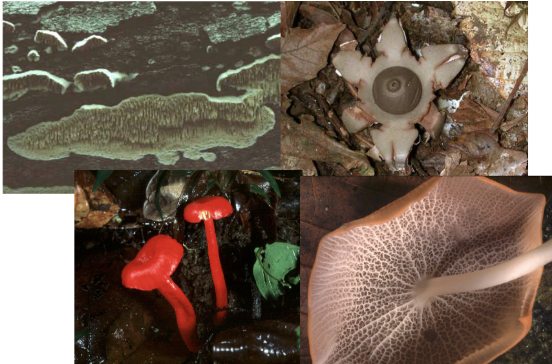
Agaricomycetes* - a class within basidiomycota
Are the dominant decomposers of lignocellulose
Especially effective at breaking down lignin
Equipped with powerful lignin-modifying enzymes, including:
Laccases, Lignin peroxidases, Manganese-dependent peroxidases
Lignin
Acts as the rigid “glue” that holds cellulose fibers together in plant cell walls
When lignin is chemically removed (e.g., with sulphuric acid), cellulose becomes soft
Example: cellulose processed into Kleenex-like tissue
Comprise the majority of ectomycorrhizal fungi
Associated with most Canadian trees
Ecto = outside, Myco = fungus, Rhizal = root
Ectomycorrhizal relationship
Fungi form a sheath or “mitten” around the outside of plant roots
Fungal hyphae:
Transport water and mineral nutrients from soil to the tree
Receive sugars (carbon) from the tree
Fungi are often better at soil exploration than plant roots
Hyphae are:
Extremely thin
Energetically inexpensive to build and maintain
Can explore a much larger soil volume than thick plant roots at lower cost
Public interest in Agaricomycetes has increased recently
Especially after the documentary “Fantastic Fungi”
 Note
Note  Flashcards (98)