BS 181H - Unit 3
 Call Kai
 Learn
Learn Practice Test
 Spaced Repetition
 Match
Match Flashcards
 Knowt Play
1/175

There's no tags or description
Looks like no tags are added yet.
Name | Mastery | Learn | Test | Matching | Spaced | Call with Kai |
|---|
No analytics yet
Send a link to your students to track their progress
176 Terms
What are the four elements of cell communication?
Signaling cell, signaling molecule, responding cell, receptor
What are the four steps in cell signaling?
Receptor activation, signal transduction, response, and termination
What is a ligand?
Small molecules that usually bind to a larger receptor
What is a receptor?
A protein structure that provides binding sites to attach the signaling molecule to the responding cell and initiate signal transduction
What happens when the affinity of a ligand for a receptor is high?
It creates a longer and stronger response to the signaling molecule
What happens when the concentration of a ligand is high?
it creates a stronger and longer-lasting response and activation of the receptor is increased
After a ligand unbinds from a receptor. does the receptor stay activated?
No
What occurs during signal transduction?
Receptors transmit a message to the cells through the cytoplasm
Where can signals go during singal transduction?
To the cytosol or the nucleus
What are some of the responses that occur downstream of protein transduction?
Enzyme activation, turning on genes, signaling other cell and causing cells to divide or change shape
What steps occur during termination?
The ligand disassociates from the receptor which resets the proteins in the signal transduction pathway
If the termination process is strong, howdoes this affect the strength of the response of a ligand bind to a receptor?
The response is short and weak
Which is more important, activation or termination?
They are equally important
What determines the extent and duration of a cellular response to a signal?
The binding affinity of the receptor, concentration of the signaling molecules near the receptor, level of expression of the signal transduction protein, and level of expression of proteins that terminate the response
What is the endocrine signaling?
Long-distance signaling via the circulatory system
What is the paracrine signaling?
Signaling over a short distance of a couple of cells via diffusion
What is the contact dependent signaling?
Signaling from one cell directly to another via a transmembrane ligand on one cell activating a transmembrane receptor on the other cell
What is the autocrine signaling?
Where the one cell both is the signaling cell and the responding cell
Do cells have to touch each other for contact-dependent signaling to work?
Yes
How far can paracrine signaling occur?
Over a few hundred micrometers
What is the minimum number of cells required for autocrine signaling?
1
If a cell lacks a receptor for a signal, will it signal?
No
Are receptors switches or dials?
Switches
Why do cells respond to signals as if they were controlled by dials?
Because the differing number of receptors that are activated controls the intensity of the response as if receptors behaved as dials
What happens when a ligand binds to a ligand binding site on a receptor?
The ligand changes the tertiary structure of the receptor which activates the protein
Are large proteins ligands?
No
What are the 3 main types of molecular switches?
Ligand binding to a receptor, phosphorylation/dephosphorylation of a protein, and GTP binding/hydrolysis
What does allosteric mean?
Binding changes the overall shape of the protein far away from the binding site
When a ligand binds a receptor, does the receptor’s shapre change away from the binding site?
Yes
What types of proteins phbosphorylate proteins?
Kinases
Why does phsophorylation change the activity of a protein?
Since phosphates are convalently bonded to an amino acid, their large structure and negative charge changes the shape and activity of the protein
What types of proteins dephosphorylate proteins?
Phosphatase
What is GTP?
It’s 3 phosphates bound to a ribose sugar which is bound to a pruine
What does GTP stand for?
Guanine tri-phosphate
How is GDP different from GTP?
GDP only has two phosphates while GTP has three phosphates
Is there a difference between GTP hydrolysis and GTP dephosphorylation?
No
Is the concentration of GTP higher or lower than GDP in cells?
GTP
Why is it important that the concentration of GTP is higher in comparison to GDP?
So it can quickly bind and activate G proteins when a signal causes the diffusion of GDP and so GDP does not rebind
Does GTP binding activate or inactive a g-protein?
Activates
How does a G-protein go from its active to inactive form?
GTP goes through hydrolysis which releases GDP and inactivates the G-protein
Are all receptors found on the cell surface?
No
If a cell surface receptor is inside the cell, why can’t it be activated?
Because surface receptors bind to polar molecules which cannot diffuse through the plasma membrane
What are the thre main types of cell surface receptors?
Ligand-gated ion channels, G-protein coupled receptors, and receptor kinases
Can estrogen and testosterone pass through the cell membrane? If they can, how?
Yes, they pass through the membrane using simple passive diffusion
Do estrogen and testosterone activate intracellular or cell surface receptors?
Intracellular receptors
What do intracellular receptors often do in response to ligand binding?
They often regulate transcription
Can intracellular receptors act as transcription factors?
Yes
Do transcription factors bind to DNA?
Yes
How do transcription factors change gene expression?
They activate or suppress transcription
What binds transcription factors?
Enhancers
Why are GFP tags useful?
It can help us locate proteins during experiments
What molecule is central to the fight or flight response?
Adrenaline
What form is glucose stored in in animals?
Glycogen
How is glucose released from storage in a molecule?
Glycogen phosphorylase is an enzyme that phosphatases glycogen to regenerate glucose from storage
What is a G-protein coupled receptor?
A transmembrane protein that has an extra-cellular receptor, which when activated, it changes shape to bind to and activate a G protein in the cytoplasm
What is a G protein?
A intercellular protein that is inactivate when GDP is bound and is activate when GTP is bound
How many and which subunits do G proteins?
3: alpha, beta and gamma subunits
To which part of the G-protein do G-protein coupled receptors bind to?
They bind to the alpha subunit of G-proteins
When a G-protein coupled receptor is activated by ligand binding, does the activity of the G protein increase or decrease?
Activity increases (G-proteins are activated)
When a G-protein is activated does it bind GTP or GDP?
GTP
When the beta and gamma subunits are bound to the alpha subunit in a G-protein, is it active or inactive?
Inactive
What is the target of the active alpha subunit of G-proteins in the fight or flight response?
Adenylate cyclase
How are G proteins inactivated?
GTP is hydrolysized, converting it to GDP and inactivating the G protein
Why is G protein inactivation important?
G proteins deactivatation inactivates adenylyl cyclase which stops production cAMP which allows the pathway to be reactivated by a new signal and prevents an excessive response to the signaling
What does adenylate cylase make?
cAMP (cyclic adenosine monophosphate)
Are proteins 2nd messengers?
No
What are the key properties of 2nd messengers?
They are small, nonprotein, water-soluble molecules or ions that spread via diffusion inside the cell
Is cAMP a 2nd messenger?
Yes
Why types of interactions are important for cAMP binding to protein kinase A (PKA)
Hydrogen and ionic interactions between cAMP and PKA
Does PKA phosphorylate or dephosphorylate other proteins?
Phosphorylates
Why are there so many steps between the activation of the receptor by adrenaline and the activation of PKA?
To allow the signal to be amplified at each step to create a large enough cellular response at the end of the pathway from a single signaling molecule
What is the purpose of signal transduction cascades?
To amplify the signal so that a very small amount of signaling molecule has a large effect on a responding cell
Does the phosphorylation of a protein always activate it?
No
Does adrenaline increase or decrease the production of glycogen?
Decreases
Why is it important that glycogen synthesis is decreased during the fight or flight response?
This prevents glucose that the cell needs for energy during the fight or flight response being stored in the form of less-accessable glycogen and it increases glucose levels
Does the termination of a G-protein mediated signal occur at just one point in the pathway?
No
In what four ways is the signal in a G-protein pathway terminated?
Adrenaline detaches from the receptor, G protein converts GTP to GDP, cAMP is converted to AMP, and phosphatases remove phosphates
When a ligand binds a receptor, does it ever unbind?
Yes, almost always
When proteins are phosphorylated, are they then later dephospharylated in signaling pathways?
Yes, they are dephospharylated when inactivated
Is it more important to activate or inactivate the various components in a signaling pathway?
They are both equally as important
Why is it a problem wen a G-protein is permanently modified so that it can not be inactivated?
It causes adenylyl cyclase to be continuously activated, leading to high levels of cAMP and increased activation of PKA which can lead to thicken blood, decreasing oxygen that the brain receives, and it causes water to flow from the blood into the intestine
Which amino acids are phosphorylated by serine/threonine kinases?
Serine and threonine
How many times does a G-protein coupled receptor pass through the membrane?
7
How many times does the receptor tyrosine kinase pass through the membrane?
1
In regions of proteins that pass through the membrane, are amino acids hydrophobic or hydrophilic?
Hydrophobic
When a receptor kinase binds a ligand, does it dimerize?
Yes
Do receptor kiases interact with the alpha unit of G-proteins or small G-proteins?
Small, single subunit G-proteins
What does haploid mean?
A cell has one copy of chromosomes
What does diploid mean?
A cell has two copies of a chromosome that are homologous to each other
What is homologous mean?
It means that chromosomes have the same types of genes but not necessarily the same version of them (allele)
What are variations in genes between homologous chromosomes called?
Alleles
What is an allele?
Different variations of the same gene between homologous chromosomes due to differences in DNA sequences
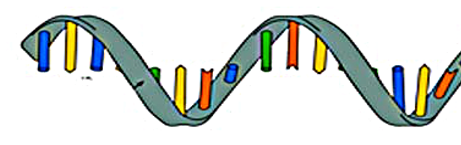
What is this?
ssDNA
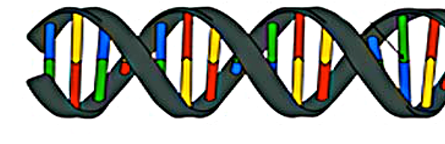
What is this?
dsDNA
After the S phase, what are the two dsDNA strands attached at the centromere called?
Chromatids
Where does cohensin bind two dnDNA strands (sister chromatids)?
At the centromere
What are the fur major phases in the cell cycle?
G1, S, G2 and M phase
What happens at G1?
Cell’s grow and prep for DNA synthesis
What happens at the S phase?
DNA is replicated
What happens at the G2 phase?
Cells grow and preps for mitosis

