cognition and development
 Call Kai
 Learn
Learn Practice Test
 Spaced Repetition
 Match
Match Flashcards
 Knowt Play
1/38

There's no tags or description
Looks like no tags are added yet.
Name | Mastery | Learn | Test | Matching | Spaced | Call with Kai |
|---|
No analytics yet
Send a link to your students to track their progress
39 Terms
what is cognition
mental processes → how we think about and process the world
what is cognition development
the way these processes change throughout our lives
what does piaget think about cognition development
children don’t just possess less info than adults, they also think in different ways to adults
→ seen as ‘lone scientists’before this, there was a general consensus that children were only different in the amount of knowledge they have
children have to learn to think
name the 3 ways knowledge develops (piaget)
schemata
assimilation
accomodation
explain schemata (piaget)
internal template/mental representation of the world
babies have innate schemas like sucking and gripping
→ allows them to explore the world
→ allows more schemas to be built up and gain more knowledge from environment
explain assimilation (piaget)
when we gain new or more advanced info abt pre-existing scheme
new info doesn’t oppose schema so can be assimilated and added to schema
→ e.g. child has a pet dog and therefore has a dog schema. when they meet a new dog breed, they can assimilate to their dog schema
explain accommodation (piaget)
when we receive new info which opposes pre-existing schemas
to understand, we need to create new schemas
→ e.g. child has a pet dog. when they meet a cat, they try to fit it in the dog schema. however, when it meows not barks they need to create a new schema to hold info
what are piaget’s 2 motivations to learn?
disequilibrium
equilibriation
explain disequilibrium (piaget)
uncomfortable feeling child has when world doesn’t make sense
gained new info that can’t be explained by existing schemas
have to restore comfortable feeling through accommodation/assimilation
explain equilibration (piaget)
preferred mental state
achieved when all new info makes sense
schemata don’t have to be added, challenged or created
current experience matches our current schema
name 2 strengths of piaget
real life applications
revolutionised educational practices
before 1960s, children used to sit silently at desks and copy work from board
→ replaced by activity based environments like sandpits
very prominent in montessori education for pre-school children
→ where children are encouraged to learn through discovery and create their own understanding
flipped learning also used in further education
→ given material to learn alone and then focus on exam skillssupporting evidence
children aged 9-12 in groups of 4 asked to study how objects move down a slope
understanding measured before and after discussion
while all children increased knowledge about topic, they hadn’t all come to the same conclusions
supports concept children learn and form own personal mental representations despite same environment
name 2 limitations of piaget
underplayed role of others- vygotsky
did acknowledge the role of both peers and teachers in learning and saw them as sources of info
→ e.g. teacher facilitates situation for learning to occur
however, he thought that learning primarily happened in mind of individual (lone scientists)
other people not important
→ vygotsky’s theory emphasises need for othersmethodology
majority of research done on middle class ppts who may have been more motivated to learn than others
gives biased sample
his theory suggests all children have the drive to rid themselves of disequilibriation
however, not all children care as much to find out why things don’t fit schemata
should use more representitive sample with diff classes, races and cultures
what are piaget’s stages of cognitive development? (diff to his theory)
4 stages of intellectual development
each stage signifies a different ability in reasoning
child has to complete one stage before moving onto the other
sensorimotor, pre-operational, concrete operations, formal operations
explain the sensorimotor stage of development
0-2 years
baby’s focus is on physical sensations and development of motor skills
schemata include sucking and gripping
learn control of their body through trial and error and eventually can move objects
child under 8 months lack object permanence, over 8 months they understand it still exists
learning that they are separate from others and basic language
explain the pre-operational stage of development
2-7 years
toddler is mobile and using language
errors occur in language
behaviour characterised by:
ego centrism
lack of conservation
lack of class inclusion
explain egocentrism (piaget)
children are self centrered and assume everyone sees things the same way they do
unable to hold beliefs of another persons perspective
3 mountains task:
children shown models of 3 mountains with 3 diff features
doll was placed facing the scene but with a different view as the child
pre-operational children were shown a range of photos and asked what the doll saw
often chose photo of what they saw rather than the doll
explain lack of conservation (piaget)
children lack ability to realise that although an object might look different over time, it’s the same object
liquid conservation task:
child is shown 2 identical glasses with same amount of water
child agrees both glasses have the same amount of water
researcher pours one glass into taller and thinner glass
they ask which has more liquid or are they the same
pre-operational children say taller glass since the level is higher
explain lack of class inclusion (piaget)
children haven’t fully developed understanding that an object can be part of a larger class and several subsets
e.g. lab, poodle, shitzu are all breed of dogs and children fail to realise subsets
research:
showed children pictures of dogs and cats (more dogs than cats)
asked if there are more dogs or animals
they replied more dogs
explain concrete operations stage of development
7-11 years
most children have mastered previous skills
can think logically and apply that to diff situations
→ e.g. if i eat too many sweets i might get sick againalso gained skill of reversability (2×4=4×2)
however, unable to think in abstract terms (e.g. hypothetical sitations, philosophical ideas, etc, things that are not physically present)
explain formal operations stage of development (11+)
children are able to reason about things outside their experience
have all the things children lack in previous stages
able to follow a hypothetical argument through:
premise: all yellow cats have 2 heads. i have a yellow cat called charlie
question: how many heads does charlie have?
answer: 2
formal operational children can understand that answer, concrete operational children couldn’t as they get too distracted by their knowledge cats don’t have 2 heads
explain piaget’s research into object permanence
hid object under cover and observed infant reactions
children up to 5 minths didn’t search for object they were originally interested in
by 8 months, same children searched for it
repeated measures- good methodology
name a strength of piaget’s stages of development
supporting evidence
use any evidence i haven’t previously used
e.g. 3 mountains, liquid conservation, cats and dogs, yellow cats
→ replicated with similar results which improves reliability
shows cognitive ability of children
name 3 limitations of piaget
contradictory evidence for object permanence
baillargeon suggests that infants as young as 3-4 months display object permanencemethodology
samples were small and biased→ middle class children at university
not representitive or generalisable to rest of population
carried out his own research to construct and support theory
→ high chance of researcher bias affecting results which decreases validitycontradictory evidence for egocentrism
research created child friendly version of 3 mountains task
constructed model brick wall in shape of a cross
researchers had 3 dolls: 2 police and 1 boy
child was asked to position the boy so police men couldn’t see him
children as young as 3.5 could position him 90% of the time with one not being able to see him
4 years olds could do it without both seeing
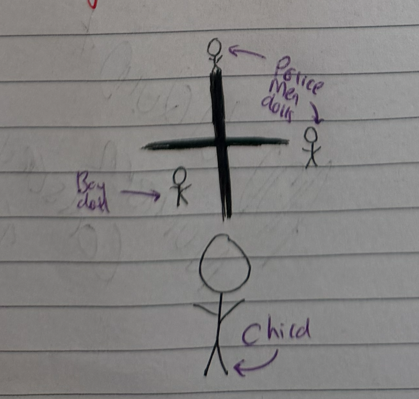
explain vygotsky’s view of children as young apprentices
felt cog development was mainly dependent on social and cultural experiences
interaction with others is vital for them to make sense of environment
this has 2 processes involved: interpsychological and intrapsychological
they gain knowledge from more knowledgeable others such as parents, teachers, peers, aka experts
explain the 2 processes vygotsky suggest
stage 1: interpsychological
parent explains to child how to work out multiplication questions
stage 2: intrapsychological
after practicing with adult, child talks through steps in their head and solves the problems independently
explain vygotsky and speech
lang is a key signifier for process of learning
referred to private speech
→ when a child talks to themselves while carrying out a task, repeating instructions given to them by parents and teachersand inner speech
→ when children talks tasks through themselves and thinks for themselves
explain vygotksy and the zone of proximal development (zpd)
gap between child’s current ability and potential ability if they get assistance
believed a child’s cognitive capabilities developed faster if they were frequently around MKOs
→ more social interactionhelped to cross ZPD by scaffolding
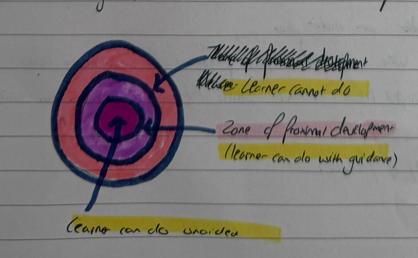
explain vygotsky and scaffolding
social support expert uses to help child cross ZPD
involves:
encouragement
prompting
demonstrating
temporary structures used to support child until they gain new ability and competent enough to carry out without help
→ e.g. when a child is learning to ride a bike, adult will show basics and run alongside child providing support and encouragement until child can do it alone
give 3 strengths of vygotsky
supporting evidence for zpd
had 2 groups of kids (4-5) perform an estimation task
had to estimate number of sweets in a jar
one group did task alone and the other received advice/guidance on how to estimate
found group who received support performed significantly better
→ developed more advanced skills through expertsupporting evidence for scaffolding
longitudinal study observed 45 children at intervals
→ age 16 months and 54 months
found as children got older, they required less help from parents to carry out certain tasks
→ e.g. using cutlery
→ supports use of scaffolding techniques helping children learnreal life applications
effective classroom procedures developed
→ e.g. peer tutoring, 1-2-1s, reading buddies
supporting evidence for effectiveness on reading buddies found 7 year olds who were tutored by 10 year olds (plus normal lessons) progresses further than control group (normal lessons)
supports validity of theory and helped enhance development
name a limitation of vygotsky
lack of beneficial interactions identified
argued some social interactions may not be beneficial to child’s learning
may just confuse or frustrate them
some people may use superior knowledge to try and control/manipulate others
→ e.g. older peer getting child to bully others or speak rudely to people
other explanations- piaget
what did baillargeon think about object permanence?
infants understand object permanence
they just don’t have motor skills to acquire hidden object/lose interested when distracted
violation of expectation research (VOE)
explain violation of expectation research
aimed to see if children are aware of object permanence by seeing if they pay attention to impossible or possible event longer
used infants aged 5-6 months
had 2 events: familiarisation event and test event
found children looked at possible events for 25 seconds and impossible event for 33 seconds
explain baillargeon’s familiarisation event
infants shown tall and short rabbit disappearing as they passed behind a screen
fits expectation of object permanence
rabbits appear when they’re meant to
explain baillargeon’s test events
possible condition
watched short rabbit pass behind a screen with window
due to height of the window, the rabbit wasn’t able to be seen until it reappeared
tall rabbit passed and this could be seen through the window due to height
→ expected events as they fit with object permanenceimpossible condition
tall rabbit passed behind a screen but couldn’t be seen through window
→ goes against object permanence
violation of expectation conclusions
infants surpised by impossible events as they knew rabbits should appear behind windows
→ babies do understand object permanence
explain baillargeon’s theory of infant physical reasoning
humans are born with physical reasoning systems which give us a simple understanding of the world and the ability to learn about it quickly
we have object permanence skill since birth
suggests that during first few weeks, infants identify event categories (the way objects interact with each other)
give an example of physical reasoning systems
when an object blocks view of another
infants understand that from a young age because of their basic knowledge of object persistance (shown in rabbit study)
because of this, unexpected event draws more attention as their physical reasoning system makes them want to understand the physical world
name 2 strengths of baillargeon
better understanding of infants
voe technique allows us to control things piaget didn’t
piaget thought that when infants didn’t look for hidden object, it was because they thought it no longer existed
→ however, infants could’ve just been distracted
voe method allows to control this possibility as distractions weren’t present
→ controls extraneous variables
evidence suggests they have innate abilities like distance perception
→ suggests they have cognitive capabilities, supports PRSexplains universibility of physical understanding
obvious that very basic skills and awareness are understood by majority of human population
→ if you drop a ball, we know it will bounce
this basic/simple understanding being universal means we can conclude it is innate
no matter where we are born or how we are raised we understand → no cultural differences
provides support for PRS being innate
→ if piaget was right then some wouldn’t learn
name 2 limitations of baillargeon
researcher bias
did research around her own theories, which means she may have interpreted findings to ensure they fit
for example, she may have interpreted surprise wrongly to fit her theory
→ especially since infants can’t express surprise in another way than looking
she may have overinflated results to fit research, decreasing validitymethodology
because infants can’t articulate anything, she had to assume about behaviour
→ e.g. VOE tasks only show that they notice a difference
findings may be inflated to appear more impressive than they actually are
→ support her own view
could be lots of other reasons than shock that they looked at the impossible event for longer
→ e.g. familiarity with the event
hard to conclude and inferences needed to be made

