[6] PHA6131 LAB - Activity 5: Onion Root Tip Assay
 Call Kai
 Learn
Learn Practice Test
 Spaced Repetition
 Match
Match Flashcards
 Knowt Play
1/87

There's no tags or description
Looks like no tags are added yet.
Name | Mastery | Learn | Test | Matching | Spaced | Call with Kai |
|---|
No analytics yet
Send a link to your students to track their progress
88 Terms
onion root tip assay
commonly used in pharmaceutical toxicology to determine whether a chemical or drug can damage the cell or the DNA.
The onion root tip is a good model because
its cells divide rapidly, making it easier to observe cell division under the microscope.
Somatic growth in plants and animals takes place by
the increase in the number of cells
A cell divides mitotically to form two daughter cells wherein
the number of chromosomes remains the same (i.e., unchanged) as in the mother/parent cell.
in plants, cell divisions
rapidly take place in meristematic tissues of root and shoot apices, where the stages of mitosis can be easily observed.
In animals, mitotically dividing cells can be easily viewed in the
bone marrow tissue of a vertebrate, epithelial cells from gills in fishes and the tail of growing tadpole larvae of frog
Cytotoxicity
refers to the ability of a substance to cause damage to cells, leading to cell dysfunction or death.
Cytotoxicity
Effects on Cells
It can result in apoptosis (programmed cell death), necrosis (uncontrolled cell death), or inhibition of cell growth.
Cytotoxicity
Causes
Toxic chemicals, radiation, certain drugs (like chemotherapy), or immune system responses
Cytotoxicity
assessment
Measured using assays like the MTT assay, Trypan Blue exclusion, or Lactate Dehydrogenase (LDH) release assay, Onion root tip assay (for preliminary screening)
CYTOTOXIC SUBSTANCES
Cause cell damage or death
CYTOTOXIC SUBSTANCES
Chemotherapeutic/Chemotherapy Drugs
doxurubicin
cisplatin
Doxorubicin
Kills rapidly dividing cancer cells but also harms healthy cells.
Cisplatin
Causes cell death by damaging proteins and membranes.
Heavy Metals (cytotoxic substances)
lead (pb)
mercury (Hg)
Lead (Pb)
Disrupts cellular functions and can cause oxidative stress.
Mercury (Hg)
Interferes with cell metabolism, leading to cell death.
[cytotoxic substance]
Toxins
snake venoms
bacterial toxins (like diptheria toxin)
Snake Venom
Some venom components destroy red blood cells and tissues.
Bacterial Toxins (e.g., Diphtheria Toxin)
Inhibit protein synthesis, leading to cell death.
[cytotoxic substances] industrial chemicals
benzene
pesticides (paraquat)
Benzene
Disrupts bone marrow cells, leading to blood disorders.
Pesticides (e.g., Paraquat)
Causes oxidative stress, leading to cell death.
Genotoxicity
refers to the ability of a substance to damage the genetic material (DNA) within a cell, leading to mutations or chromosomal alterations.
Genotoxicity
effects on cells
It may cause mutations, chromosomal breaks, or abnormal recombination, potentially leading to cancer or hereditary diseases.
Genotoxicity
causes
Exposure to radiation, chemicals, environmental pollutants, or certain pharmaceuticals.
Genotoxicity
assessment
Tested using assays like the Ames test, Comet assay, or Micronucleus test (animals) or Onion Root tip assay (plants)
GENOTOXIC SUBSTANCES
Damage DNA and cause mutations
GENOTOXIC SUBSTANCES
radiation
Ultraviolet (UV) Radiation
Ionizing Radiation (X-rays, Gamma rays)
GENOTOXIC SUBSTANCES
chemicals
Benzene
Aflatoxins (from mold)
GENOTOXIC SUBSTANCES
drugs
Cisplatin
Cyclophosphamide
GENOTOXIC SUBSTANCES
environmental pollutants
Polycyclic Aromatic Hydrocarbons (PAHs, e.g., from cigarette smoke)
Asbestos
Ultraviolet (UV) Radiation
Causes DNA damage, leading to skin cancer.
Ionizing Radiation (X-rays, Gamma rays)
Induces DNA breaks and mutations.
Benzene
Not only cytotoxic but also genotoxic, causing DNA damage in bone marrow cells.
Aflatoxins (from mold)
Causes mutations in liver cells, leading to liver cancer.
Cisplatin
While used in chemotherapy, it also causes DNA crosslinking, leading to mutations.
Cyclophosphamide
Induces DNA breaks, leading to potential secondary cancers.
Polycyclic Aromatic Hydrocarbons (PAHs, e.g., from cigarette smoke)
Cause DNA adduct formation leading to mutations.
Asbestos
Induces oxidative stress and chromosomal damage, increasing lung cancer risk.
key difference
Cytotoxicity affects overall cell survival and function, it damages or kill the cells. Cytotoxic substances kill or harm cells by disrupting their normal functions
Genotoxicity specifically targets the DNA, potentially leading to mutations and long-term genetic effects, it damages or targets the DNA. Genotoxic substance specifically damage DNA, leading to mutations and cancer
A genotoxic substance can also be cytotoxic, but
NOT ALL cytotoxic substances are genotoxic. Some substances (e.g., benzene, cisplatin) are both cytotoxic and genotoxic.
APPLICATION IN PHARMACEUTICAL TOXICOLOGY
cytotoxicity assessment
genotoxicity testing
drug development & screening
environmental & regulatory applications
Cytotoxicity Assessment
The assay helps determine the toxicity of pharmaceutical compounds by analyzing changes in the mitotic index.
Mitotic index
- the number of cells undergoing cell division
Cytotoxicity Assessment
If a drug has a reduced mitotic index
indicates cytotoxic effects
Cytotoxicity Assessment
this helps researchers
evaluate the safety of a new pharmaceutical compound
Genotoxicity Testing
Detect genotoxic effects
The assay detects chromosomal aberrations such as breaks, bridges, and micronuclei.
If these abnormalities increase, it indicates that the substance causes genetic damage or mutations.
Genotoxicity Testing
useful in _
dentifying potential mutagenic and carcinogenic effects of drugs.
Drug Development and Screening
Provides preliminary screening for drug-induced toxicity before advanced mammalian studies.
Drug Development and Screening
helps in
assessing the safety profile of newly developed pharmaceutical compounds
Preliminary toxicity screening is
performed first before testing drugs on animals or humans
Environmental and Regulatory Applications
Used to evaluate the impact of pharmaceutical pollutants on plant systems.
Recognized in environmental toxicology and regulatory compliance studies.
It can determine pharmaceutical waste or industrial chemicals that could cause genetic damage in the plants
Advantages
Cost-effective and easy to perform.
Does not require sophisticated equipment.
Ethical alternative to animal testing in preliminary toxicology studies.
Limitations
Limited to plant cells, which may respond differently than human cells.
Requires confirmation with mammalian cell assays for comprehensive toxicological evaluation.
ONION ROOT TIP ASSAY
widely used method in cytogenetics to study cell division, chromosome structure, and assess cytotoxicity and genotoxicity.
ONION ROOT TIP ASSAY
This assay is particularly valuable in pharmaceutical toxicology to
evaluate the effects of drugs and chemicals on cellular processes.
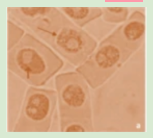
Interphase (first stage of mitosis)
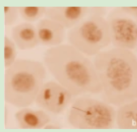
prophase
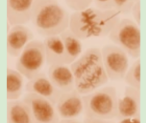
metaphase
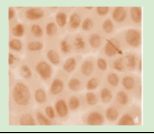
anaphase
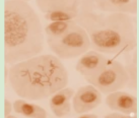
telophase
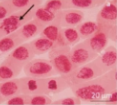
Irregular metaphase
Chromosomes are not properly aligned
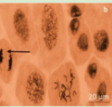
sticky anaphase
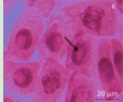
sticky chromosome at prophase
chromosomes that clump together
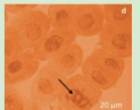
anaphase bridge
chromosomes remain attached while separating
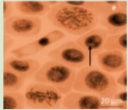
condensed nucleus prophase
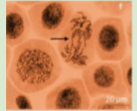
polyploidy
extra sets of chromosomes
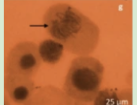
sticky metaphase
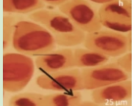
telophase with vagrant chromosome
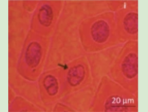
nuclear buds
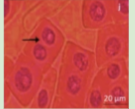
binucleated cell
small extra nuclei caused by DNA damage
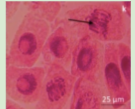
delayed anaphase
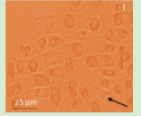
chromosome missegregation and fragmentation
Mitotic index (%)
(number of dividing cells/ total cells counted) x100
A low mitotic index indicates
cytotoxicity
high mitotic index
may indicate cell proliferation/ division
Types of Abnormalities Observed
Chromosomal breaks
Bridges and laggards
Micronuclei formation
Disturbed metaphase and anaphase
An increase in chromosomal aberrations suggests
genotoxic effects of the tested pharmaceutical compound
Higher concentrations of a toxic compound generally lead to a
decrease in mitotic index and an increase in chromosomal aberrations.
Establishing a dose-response curve helps in
determining the safe and toxic threshold for pharmaceutical compounds.
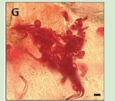
Nuclear clumping and lesions
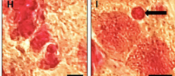
(Black arrow shows the feature)
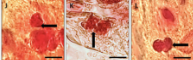
Binucleate

Sticky chromosomes at metaphase
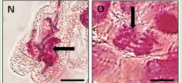
Disturbed metaphase
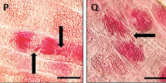
Anaphase bridge and laggard chromosome

Disturbed telophase

