Perio: Chemical Agents in Periodontal Care (ch. 28)
 Call Kai
 Learn
Learn Practice Test
 Spaced Repetition
 Match
Match Flashcards
 Knowt Play
1/73

There's no tags or description
Looks like no tags are added yet.
Name | Mastery | Learn | Test | Matching | Spaced | Call with Kai |
|---|
No analytics yet
Send a link to your students to track their progress
74 Terms
How are chemical agents delievered in periodontal care? and why
chemical agents can be delivered systemically or topically to help control biofilm
How are systemic chemical agents taken?
taken through tablet or capsule and circulated through the bloodstream
How are topical chemical agents used?
intraoral placement of chemical agent or localized controlled release devices into periodontal tissues
What are the possible benefits of using systemic chemical agents?
helps control more aggressive forms of periodontitis
• fights acute oral infections
What are the possible benefits of using a topical chemical agent like therapeutic dentifrices?
• reduction in dentinal hypersensitivity
gingival inflammation
• supragingival calculus
surface stains
What are the possible benefits of using a topical chemical agent like subgingival irrigation?
disruption and dilution of bacteria within the dental biofilm
What are the possible benefits of using a topical chemical agent like controlled-release delivery devices?
subjects subgingival bacteria to therapeutic levels of a drug for a period of a week or longer
In order to be effective, chemical agents must:
• reach the site of disease
• be delivered at a therapeutic concentration
• remain long enough to be effective
Mouth Rinsing:
• Adequate drug concentration?
• Reaches sites of disease activity?
• Adequate time in place to be effective?
• Adequate drug concentration? good
• Reaches sites of disease activity? poor
• Adequate time in place to be effective? poor
Subgingival Irrigation:
• Adequate drug concentration?
• Reaches sites of disease activity?
• Adequate time in place to be effective?
• Adequate drug concentration? good
• Reaches sites of disease activity? good
• Adequate time in place to be effective? poor
Systemic Delivery:
• Adequate drug concentration?
• Reaches sites of disease activity?
• Adequate time in place to be effective?
• Adequate drug concentration? fair
• Reaches sites of disease activity? good
• Adequate time in place to be effective? fair
Controlled-Release Delivery:
• Adequate drug concentration?
• Reaches sites of disease activity?
• Adequate time in place to be effective?
• Adequate drug concentration? good
• Reaches sites of disease activity? good
• Adequate time in place to be effective? good
T/F: You only need to use one chemical agent to halt periodontitis. and why
FALSE
• various chemical agents are used to act as an ADJUNCT to nonsurgical therapy
• no one agent can halt periodontitis alone
• Type of Agent: Antibiotics
• Example of Agent:
• Means of Administration:
• Type of Agent: Antibiotics
• Example of Agent: tetracyclines
• Means of Administration: tablet/capsule, local delivery mechanism
• Type of Agent: Bisbiguanide antiseptics
• Example of Agent:
• Means of Administration:
• Type of Agent: Bisbiguanide antiseptics
• Example of Agent: Chlorhexidine
• Means of Administration: Mouth rinse, local delivery mechanism
• Type of Agent: Fluorides
• Example of Agent:
• Means of Administration:
• Type of Agent: Fluorides
• Example of Agent: Stannous fluoride
• Means of Administration: mouth rinse, toothpaste
• Type of Agent: Metal salts
• Example of Agent:
• Means of Administration:
• Type of Agent: Metal salts
• Example of Agent: tin/zinc
• Means of Administration: mouth rinse, toothpaste
• Type of Agent: Oxygenating agents
• Example of Agent:
• Means of Administration:
• Type of Agent: Oxygenating agents
• Example of Agent: hydrogen peroxide
• Means of Administration: mouth rinse
• Type of Agent: Phenolic compounds
• Example of Agent:
• Means of Administration:
• Type of Agent: Phenolic compounds
• Example of Agent: essential oils
• Means of Administration: mouth rinse
• Type of Agent: Quaternary ammonium
• Example of Agent:
• Means of Administration:
• Type of Agent: Quaternary ammonium
• Example of Agent: cetylpyridinium chloride
• Means of Administration: mouth rinse
• Type of Agent: Tertiary amine surfactant
• Example of Agent:
• Means of Administration:
• Type of Agent: Tertiary amine surfactant
• Example of Agent: delmopinol
• Means of Administration: mouth rinse
Why is the systemic use of antibiotics not commonly used in periodontal care?
• antibiotic resistance concerns
• disease typically responds to conventional mechanical periodontal therapy (periodontal instrumentational)
what would patients may ask about during education
systemic use of antibotics
IF the systemic use of antibiotics were to be used, which antibiotic is most commonly used?
Tetracycline
Why is tetracycline used in periodontal care? there’s 4
• higher concentrations in gingival crevicular fluid than blood serum
• effective against a.a. bacteria
• inhibits collagenase
• effective in subantimicrobial doses
define subantimicrobial does
dosing at a lower than effective rate
• doesn't affect microbes does control inflammation
how much as an subantimicrobial doses?
20 mg bid
what an example of subantimicrobial drug and why
doxycycline, No sign of antibiotic resistance with
What other systemic antibioticsis being researhced but is inconclusive
amoxicillin + metronidazole/azithromycin
How is controlled release of antimicrobial chemicals done?
through controlled release delivery device
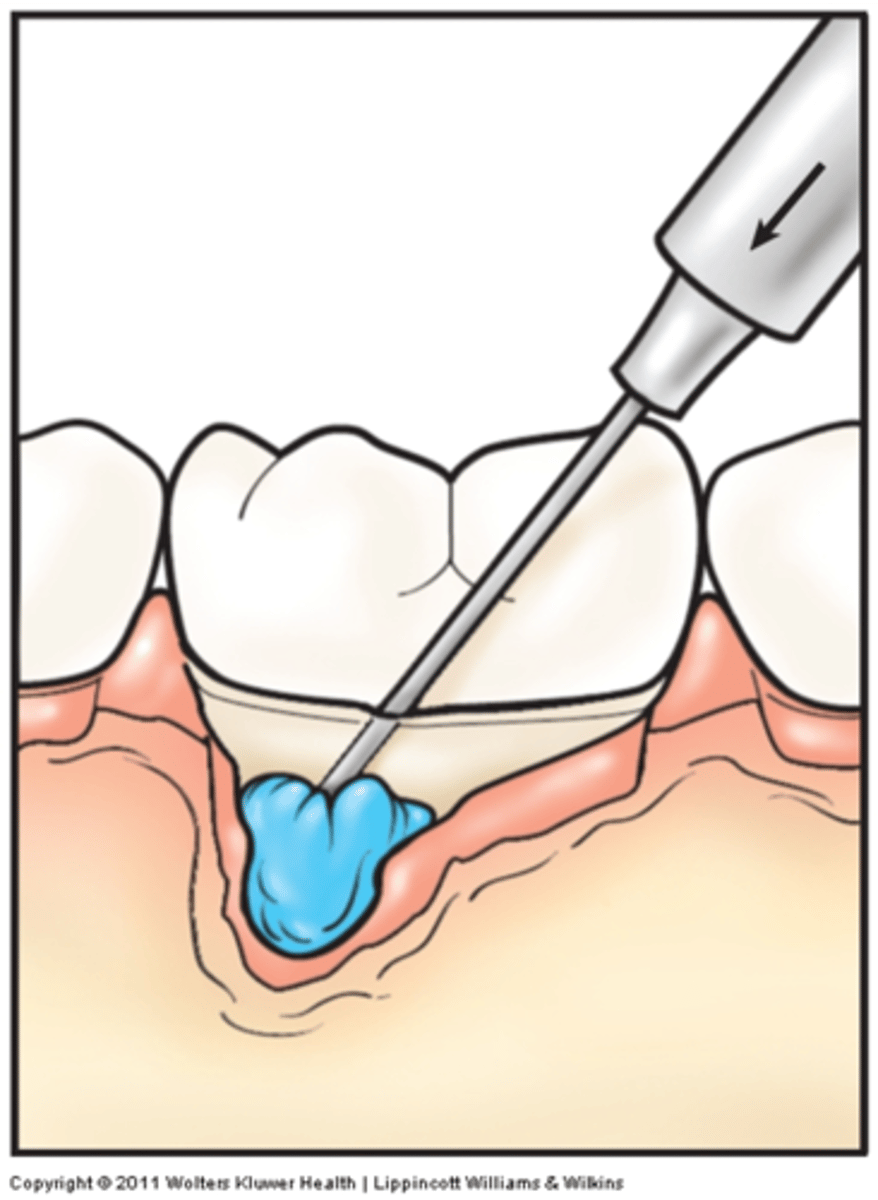
how does a controlled release delivery device work
antibacterial chemica is in a carrier, material placed directly into perio pocket and • dissolve slowly (1 week)
● Controlled release delivery device includes
chlorhexidine, tetracycline, possible future drugs
benefit of Controlled release delivery device
• shown to have increased attachment compared to instrumentation alone
What is Minocycline and brand name?
a controlled release mechanism -- brand name Arestin
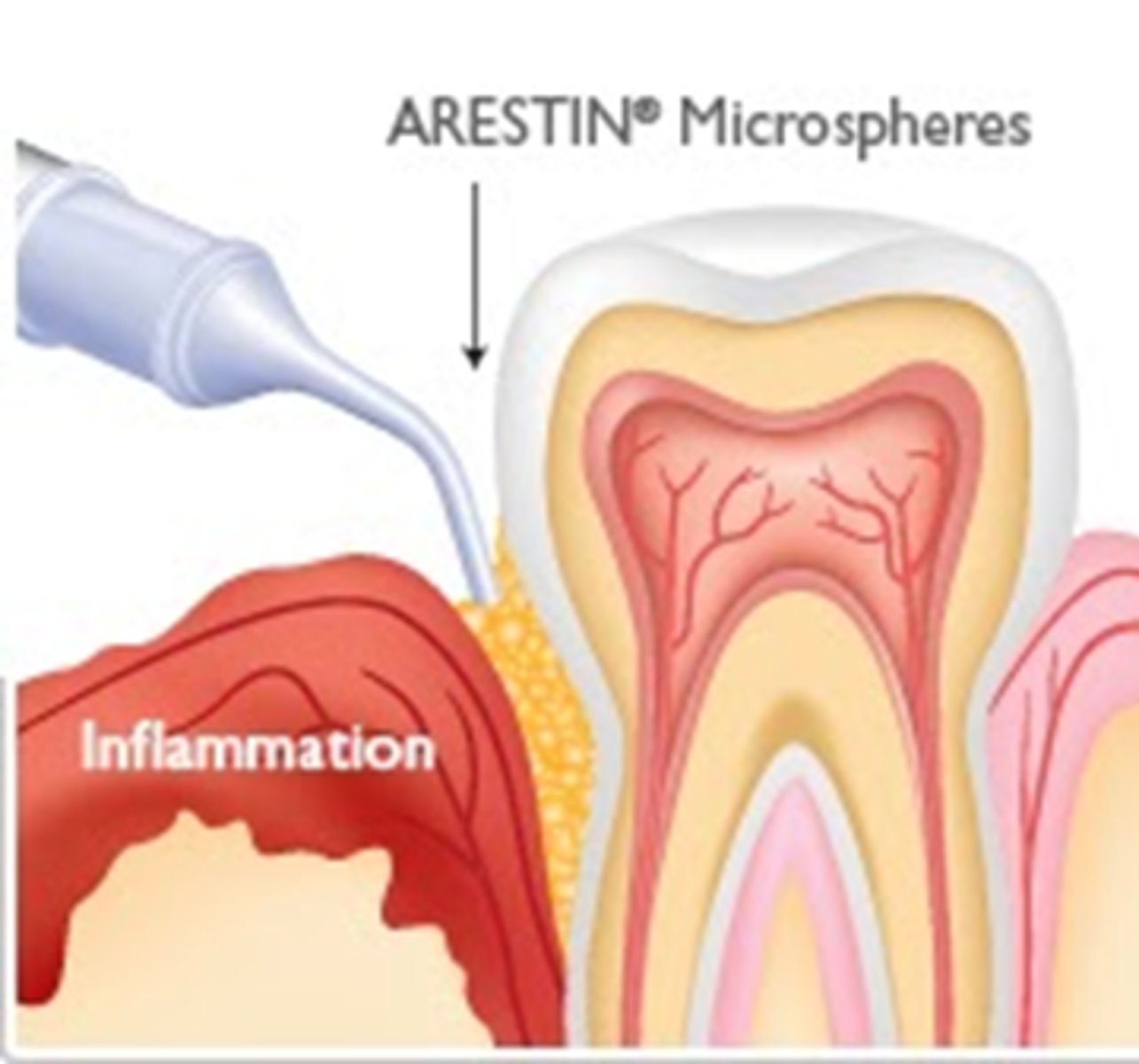
how long does minocycline last
over 5-7 days
What does Minocycline use (mehcnaicl)
• uses micro-spores
• has a cannula tip in a reusable syringe
What is Doxycycline Hyclate Gel? and brand name
a controlled release mechanism -- brand name Atridox
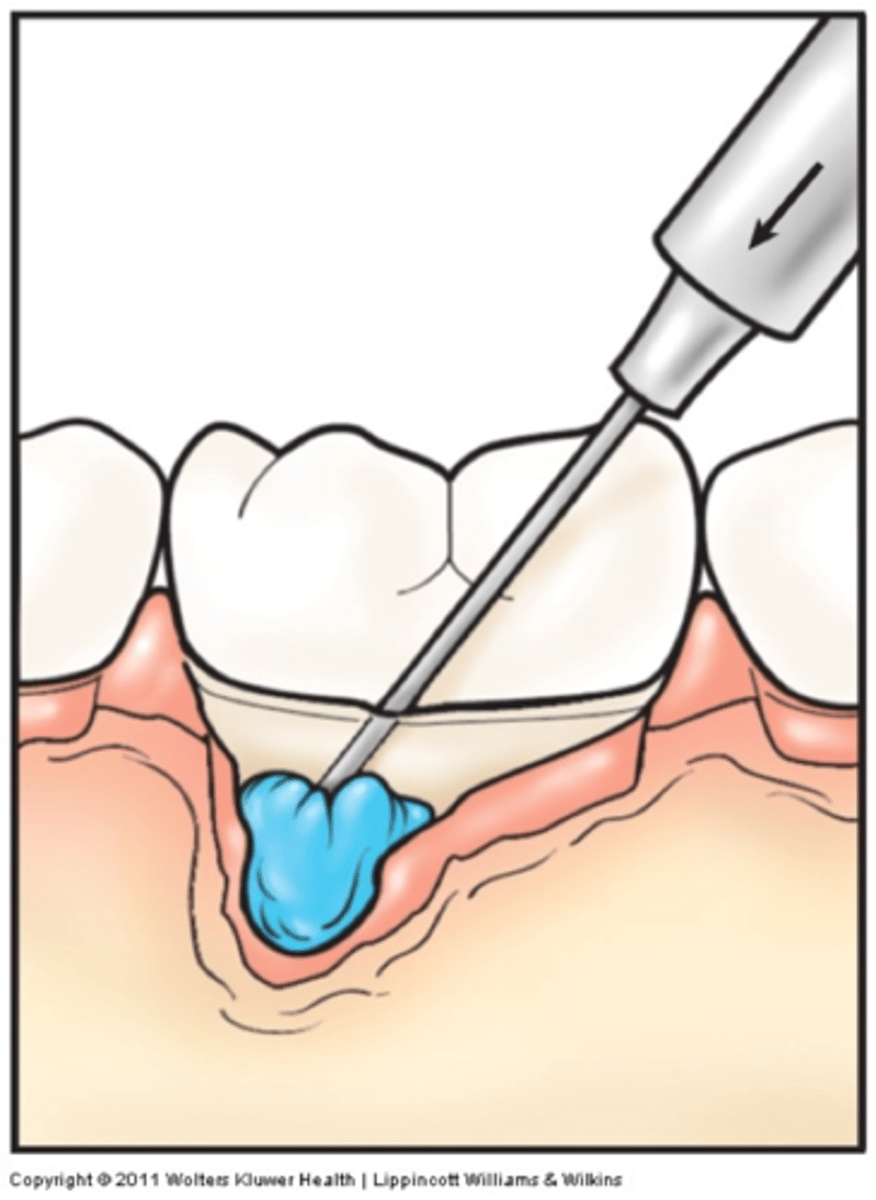
how does Doxycycline Hyclate Gel work (steps)
• gel expressed into pocket from cannula
• gel solidifies into wax-like substance
• dissolves
• tends to stick to cannula
What is a Chlorhexidine Gluconate Chip? 4 tings
controlled release mechanism -- brand name Perio Chip
• dissolves
• no risk of antibiotic resistance
• shown in studies to reduce alveolar bone loss compared to periodontal instrumentation alone
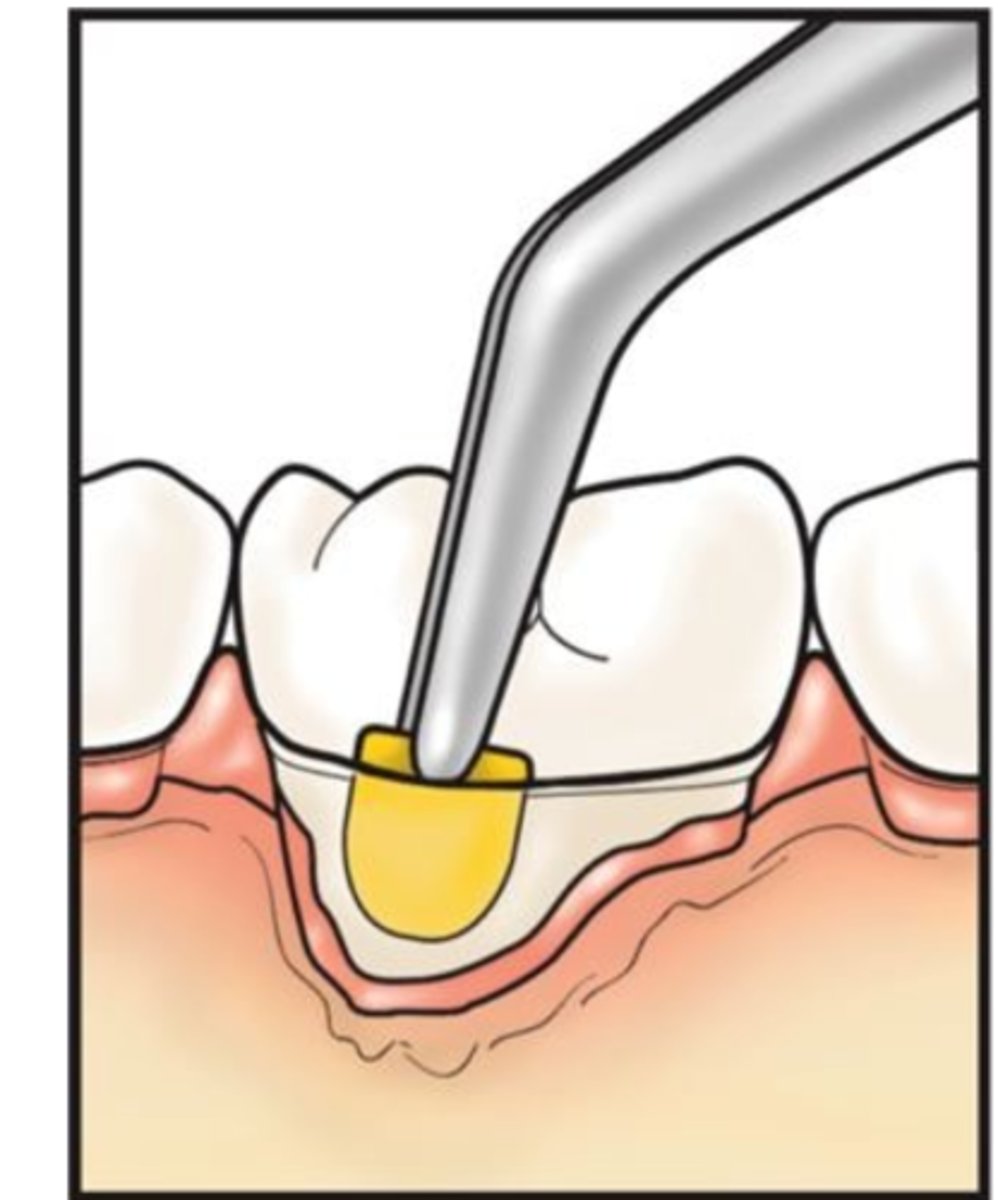
when to use Chlorhexidine Gluconate Chip? and what does it do
5mm+ pockets and • dissolves
why is Chlorhexidine Gluconate Chip good
No risk of antibiotic resistance
○ Shown in studies to reduce alveolar
bone loss compared to periodontal
instrumentation alone
an examaple of desiccation therapy
● Sulfonated Phenolics
what is the property of Sulfonated Phenolics like it what form does it come in
○ Desicate gel or liquid
● Sulfonated Phenolics benfits
Rapidly dehydrates microbes
○ Can soften calculus
○ No risk of antibiotic resistance
what is desiccation shock therapy
○ Rapidly dehydrates microbes
how long does it take to apply sulfonated phenolics
○ 30 second application
example of sulfonated phenolics
HybenX & PerioDT
For mouth rinses to be considered therapeutic, what must they have?
and what does it not replace
• must have supporting clinical evidence
• must decrease biofilm enough to decrease severity of gingivitis
• not a replacement for mechanical biofilm removal
An ideal mouth rinse has:
• efficacy -- bacteriostatic
• stability -- reasonable shelf-life
• substantivity -- active ingredient retained in the oral cavity for several hours
• safety
What are common active ingredients in therapeutic mouth rinses?
• chlorhexidine gluconate
• essential oils
• cetylpyridinium chloride
• delmopinol
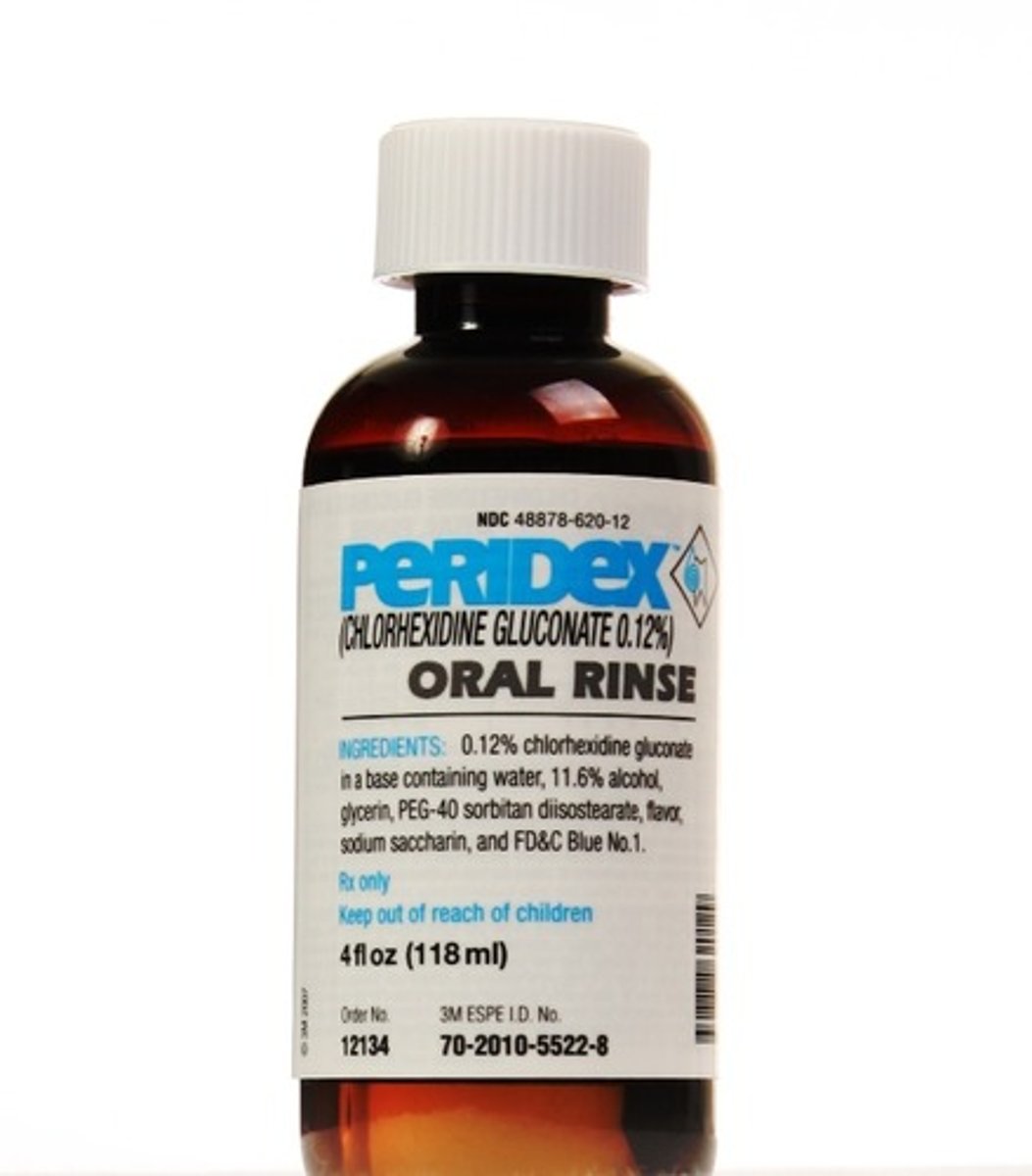
What is Chlorhexidine Gluconate (0.12%)?
MOST EFFECTIVE antimicrobial mouth rinse available
• rx only
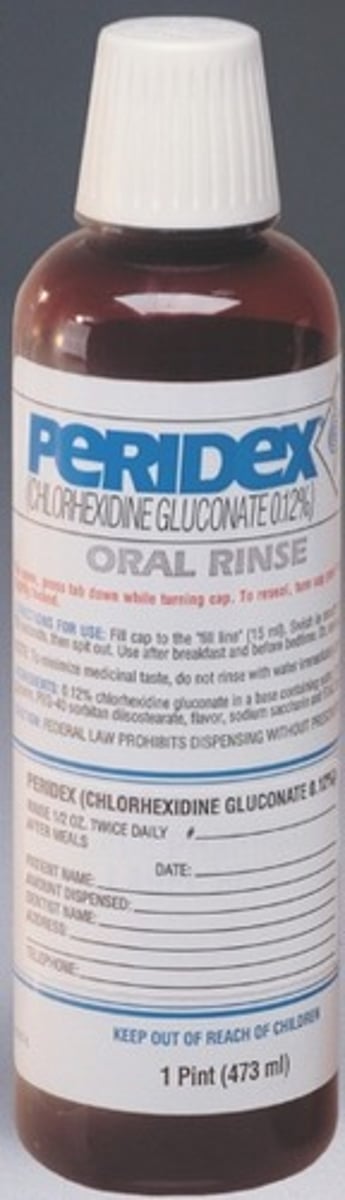
Why is chlorhexidine gluconate the most effective antimicrobial mouth rinse?
• it has a broad spectrum -- affects both gram + and - bacteria
• it binds with oral tissues and releases over time -- better duration
• it has low toxicity with no permanent retention in the body
• available in alcohol-free
What are the directions for using chlorhexidine gluconate?
0.5 oz rinse for 30 seconds twice a day 30 minutes after brushing
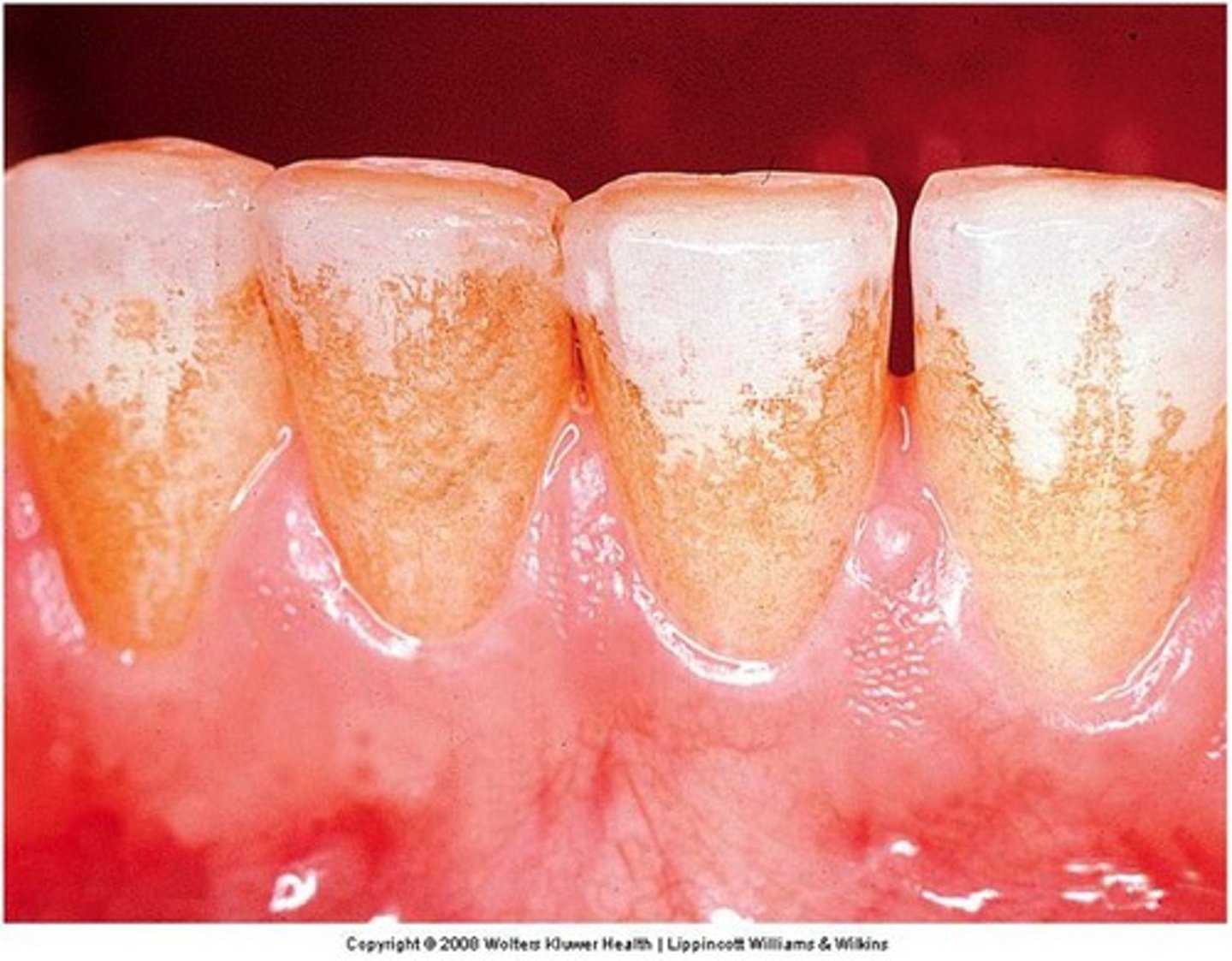
Prolonged use of chlorhexidine may result in what?
• tooth staining
• altered taste
• calculus formation
How are essential oils used as chemical agents in periodontal care?
like why is it good
utilized as antiseptic since the 1800's
• OTC availability
• acceptance by ADA to reduce gingivitis
• 6 month controlled study shows similar results to chlorhexidine
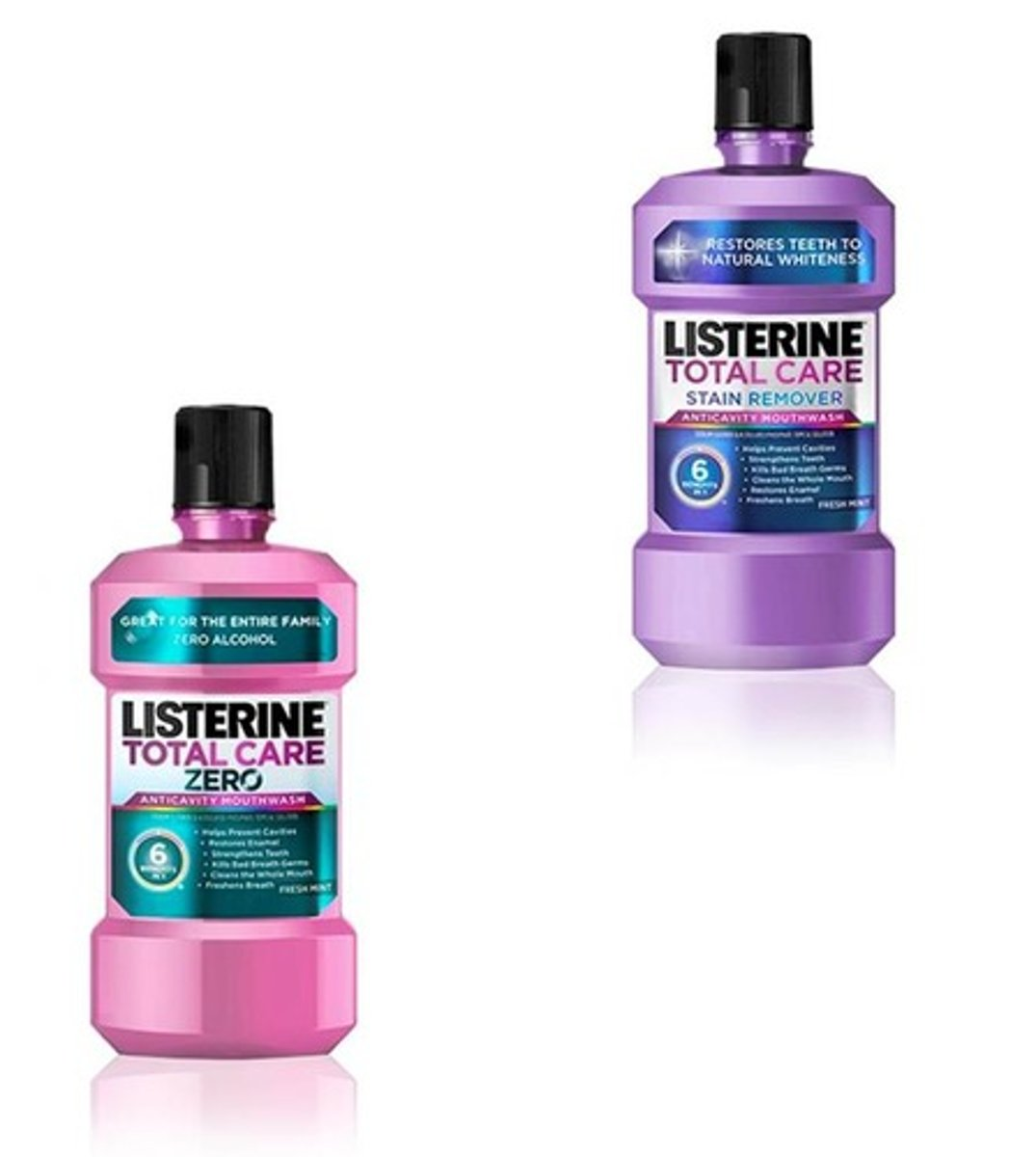
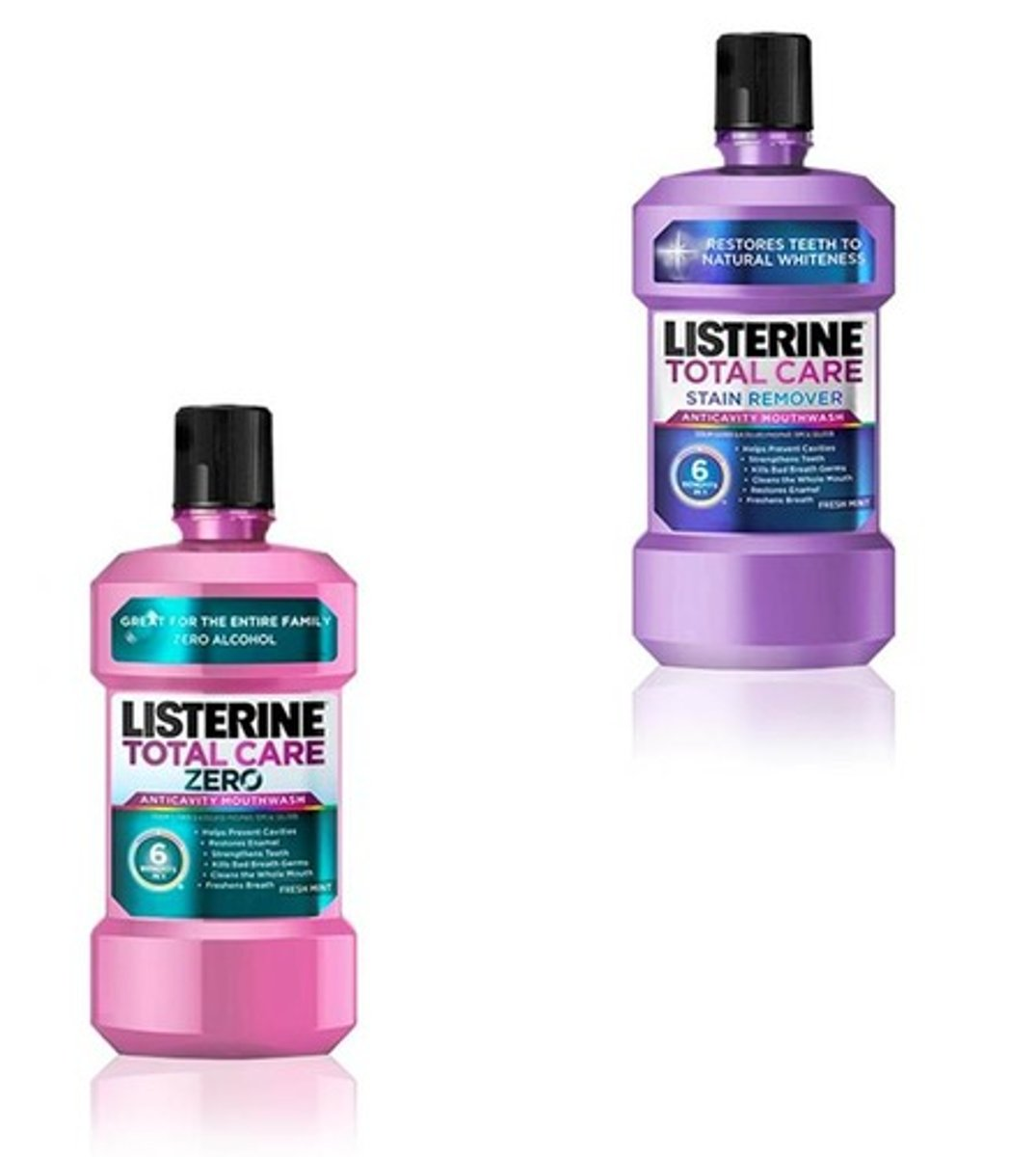
What essential oils are present in Listerine and what do they do?
•• eucalyptol
thymol
• menthol
• methyl salicylate
• they disrupt bacterial cell walls
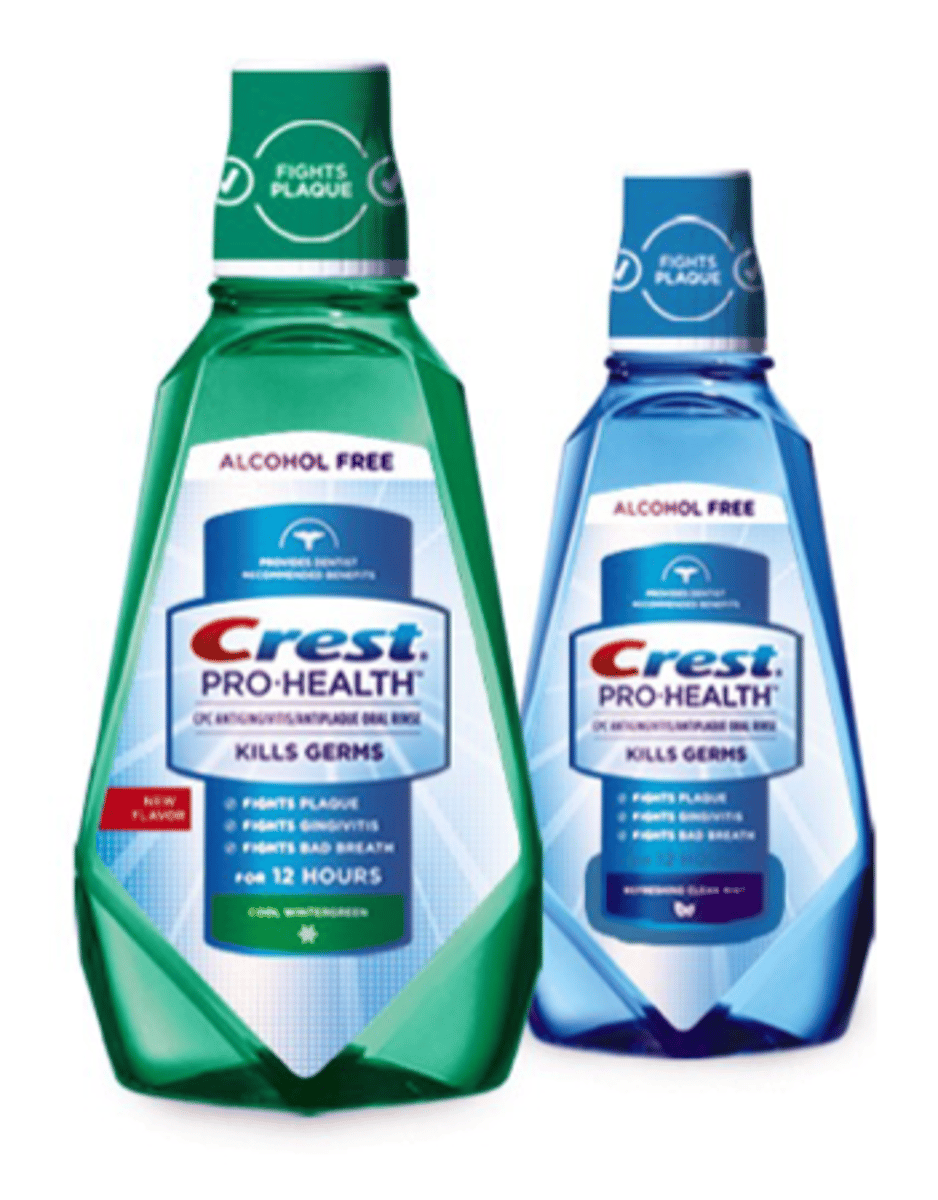
an example of Cetylpyridinium Chloride
● Crest ProHealth mouth rinse
How is cetylpyridinium chloride used as a chemical agent?
disrupts bacterial cell walls
• typically alcohol free
• binds to oral tissue but released rapidly -- low substantivity
• effective at reducing gingivitis but not as much as chlorhexidine or essential oils
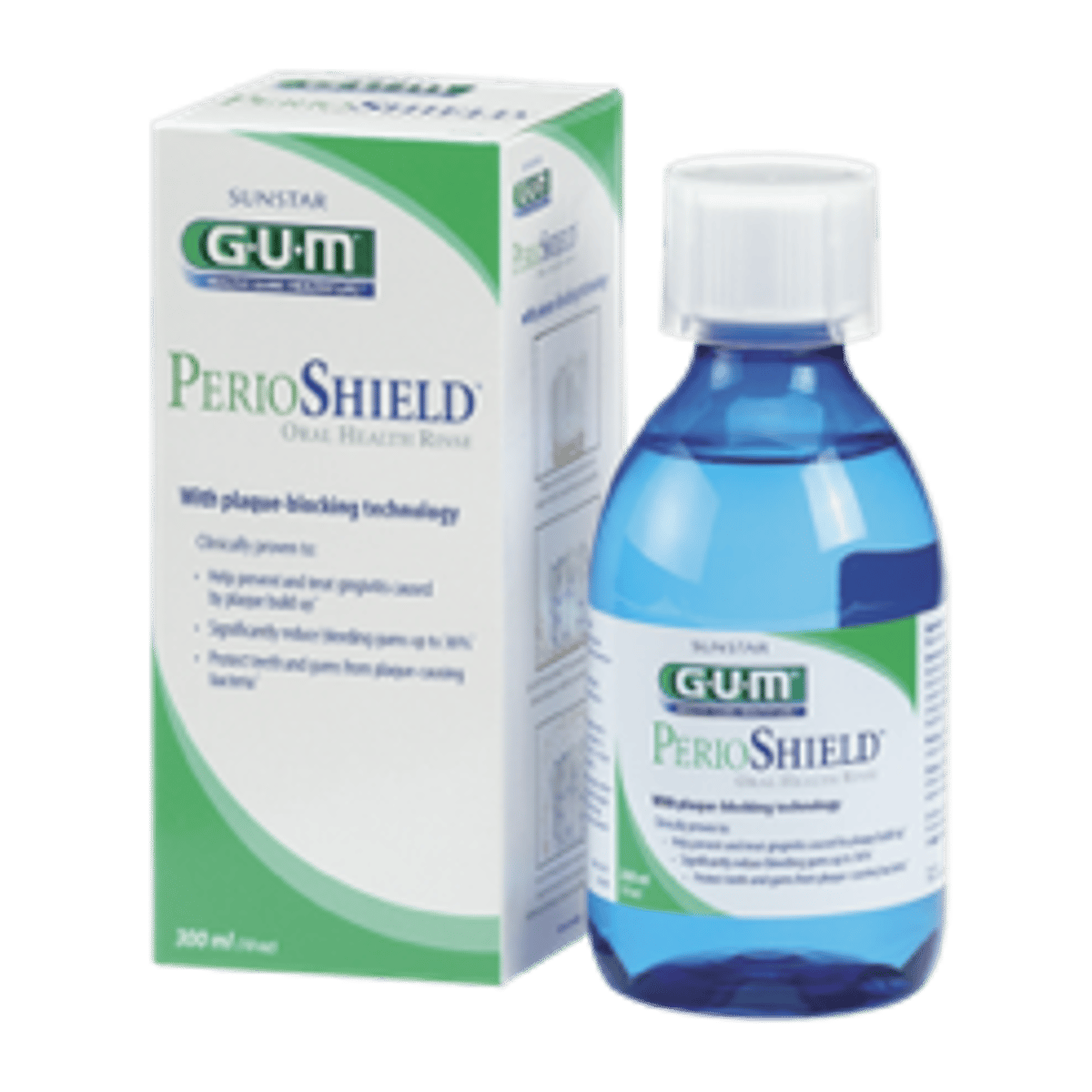
an example of delmopinol
GUM PerioShield
How is delmopinol used as a chemical agent?
acts as a chemical barrier preventing biofilm adhesion
• decent alternative to patient that cannot tolerate chlorhexidine side effects
OTC, non rx
downside of Delmopinol
• may cause staining
What are some of the reasons why there is no perfect single solution for all periodontal care?
Allergies
● Salt content
● Alcohol content
What are possible side effects of essential oils rinses?
• burning sensation in mouth
• bitter taste
• drying out of mucous membranes
What are possible side effects of chlorhexidine gluconate rinses?
• allergic reaction
• extrinsic staining of teeth
• discoloration of tongue
• alterations of taste
• increase in calculus formation
• transient anesthesia
What are the types of toothpastes that the ADA loosely classifies?
• anti-tartar activity
• caries prevention
• cosmetic effects
• biofilm reduction
• reduction of tooth sensitivity
If a toothpaste has pyrophosphates, what is the periodontal benefit?
reduces supragingival calculus
If a toothpaste has stannous fluoride, what are the periodontal benefits?
• reduces supragingival biofilm & gingival inflammation
If a toothpaste has triclosan, what are the periodontal benefits?
• reduces supragingival calculus & gingival inflammation
If a toothpaste has zinc citrate, what are the periodontal benefits?
reduces supragingival calculus
What are unconventional dental products?
• charcoal toothpaste
• oil pulling
What is charcoal toothpaste ?
• used as far back as ancient greece
• evaluated in 1930s-40s by Council of Dental Therapeutics
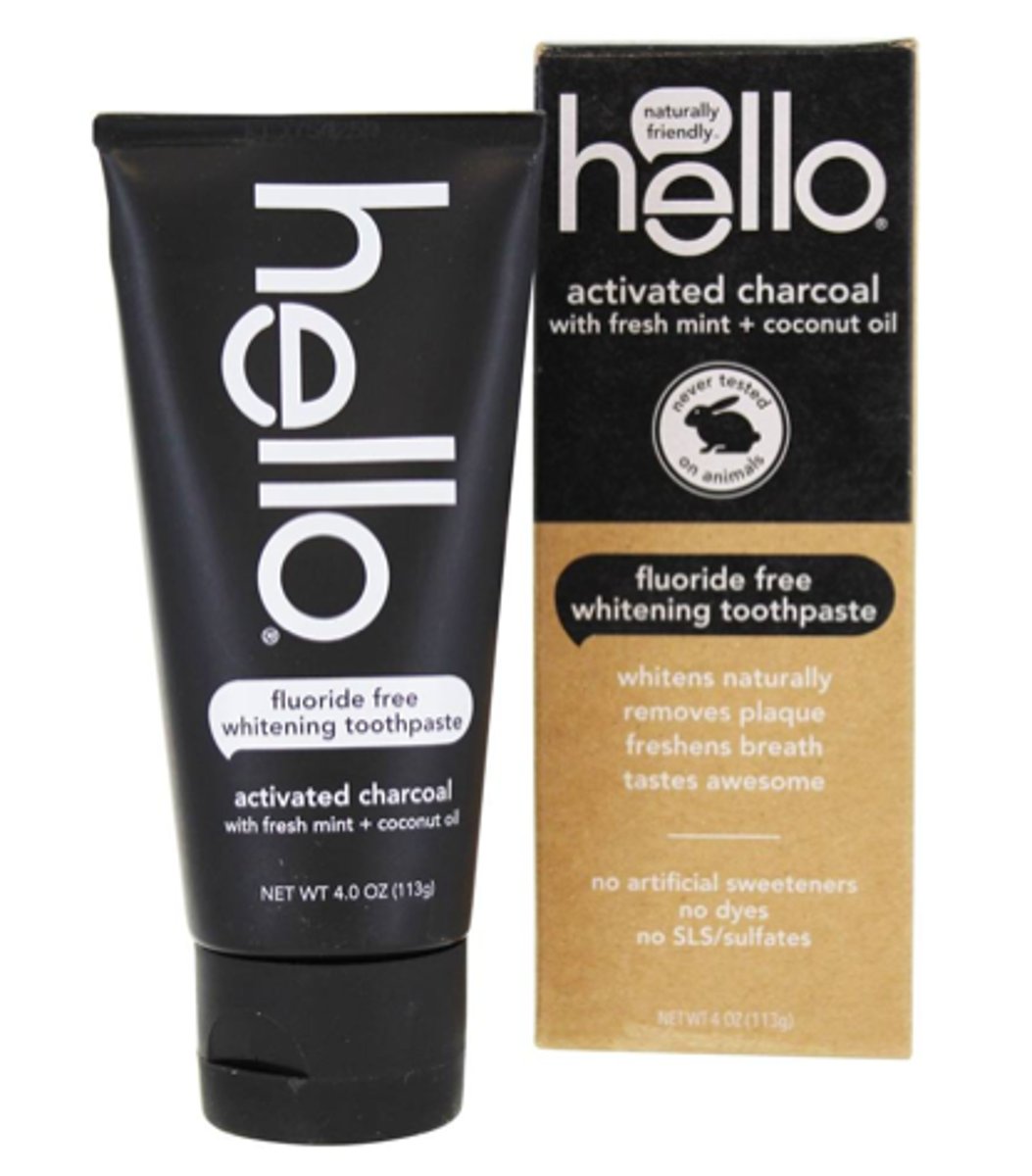
Why is charcoal toothpaste not recommended?
• there is NO EVIDENCE to support the effectiveness or safety -- modern charcoal toothpaste is supported by anecdotal evidence at best
• most are not fluoridated
What is oil pulling?
ancient Indian folk remedy for bleeding gums
• sunflower, sesame, palm, coconut, or olive oil is swished back and forth for 10-20 minutes
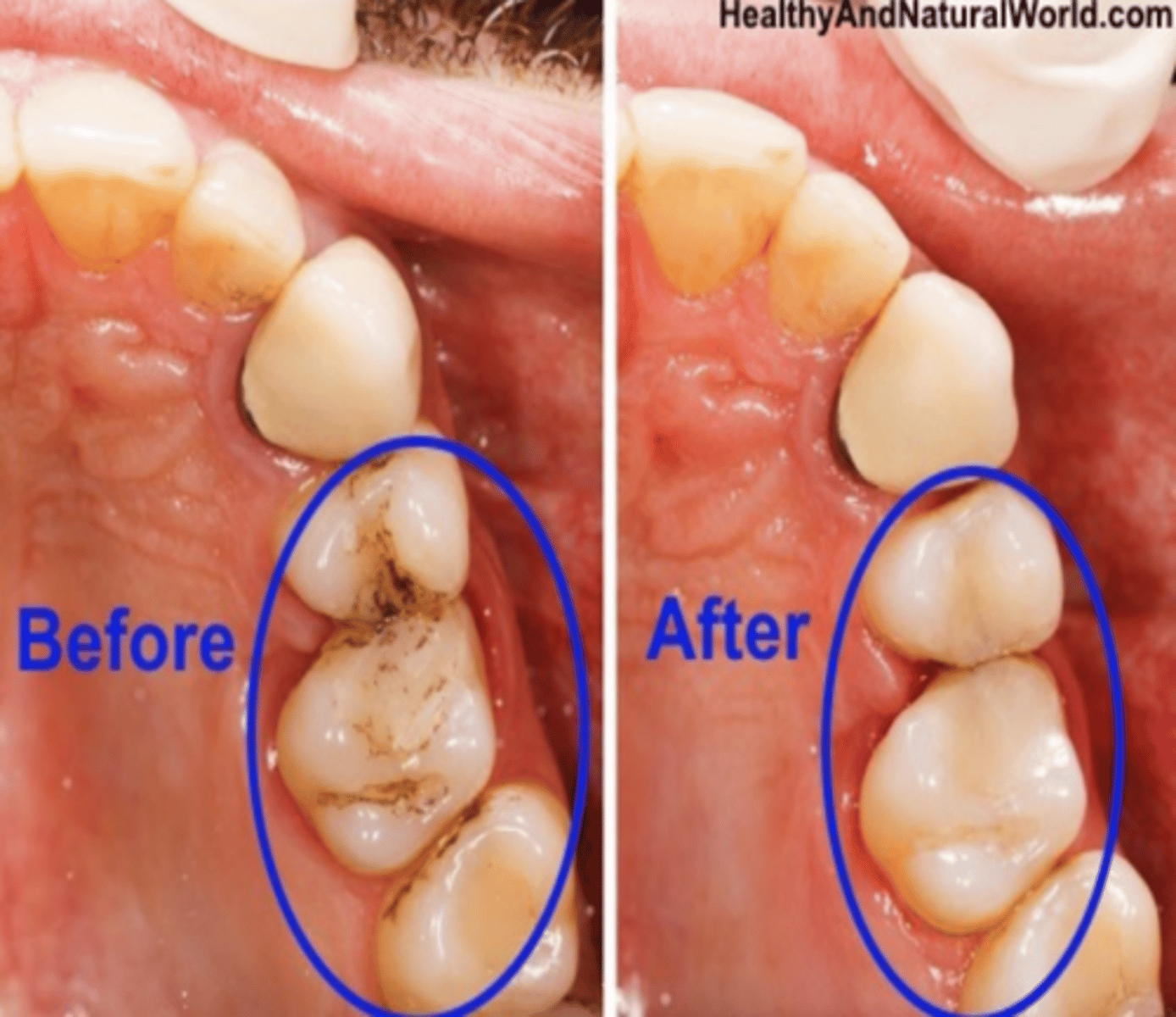
Why is oil pulling not recommended?
there is NO scientific evidence to support or reject at this time -- only anecdotal support thus far
○ limited studies reject at this point

