Oxidation Reaction Classification
 Call Kai
 Learn
Learn Practice Test
 Spaced Repetition
 Match
Match Flashcards
 Knowt Play
1/27

There's no tags or description
Looks like no tags are added yet.
Name | Mastery | Learn | Test | Matching | Spaced | Call with Kai |
|---|
No analytics yet
Send a link to your students to track their progress
28 Terms
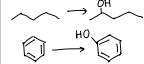
What happens during Hydroxylation?
Adds OH to either an aliphatic carbon or aromatic ring carbon
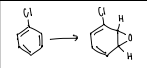
What happens during epoxidation?
Adds oxygen across a double bond → forms epoxide (3-membered ring)

What happens during N-dealkylation?
Removes alkyl group from nitrogen → forms amine + aldehyde/ketone
has hemiaminal intermediate → functional group with a hydroxyl and an amine bonded to the same carbon atom
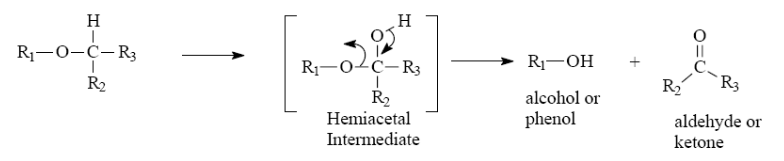
What happens during O-dealkylation?
Removes alkyl group from oxygen → forms alcohol/phenol + aldehyde/ketone
has hemiacetal intermediate → functional group with a hydroxyl and one alkoxy (—OR) group attached to the same carbon atom
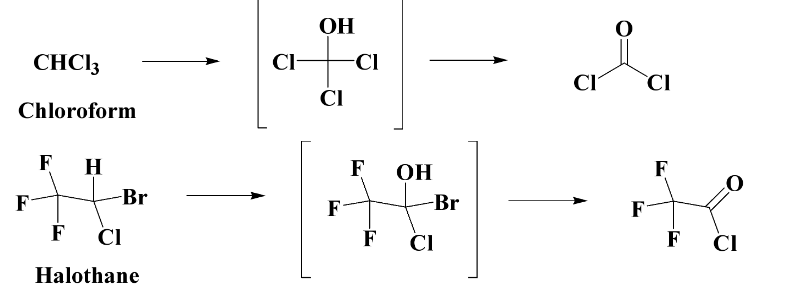
What happens during Oxidative dehalogenation?
Removes halogen (Cl, F, etc.) and replaces with oxygen
What happens during S-Dealkylation?
Removes an alkyl group from sulfur (S) → forms a thiol (–SH) + aldehyde/ketone
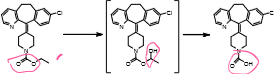
What happens during Ester Cleavage (CYP-Catalyzed)?
breaks ester bond → forms alcohol intermediate → carboxylic acid

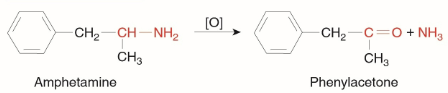
What happens during oxidative deamination (CYP) ?
Removes NH₂ group → forms ketone or aldehyde + ammonia (NH3)

What happens during oxidative deamination (MAO) ?
Removes NH₂ group → forms ketone or aldehyde + ammonia (NH3)
ALSO creates H2O2, hydrogen peroxide → reactive/damaging byproduct
How does MAO in oxidative deamination work?
The amine becomes an aldehyde
Nitrogen leaves as ammonia
Oxygen gets reduced → forms hydrogen peroxide (H₂O₂)
H₂O₂ is reactive/damaging, so cells often use catalase to break it down.
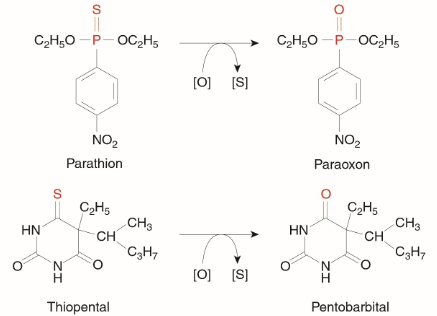
What happens in oxidative desulfurization?
Replaces sulfur (S) with oxygen (O)
thiol → alcohol or similar
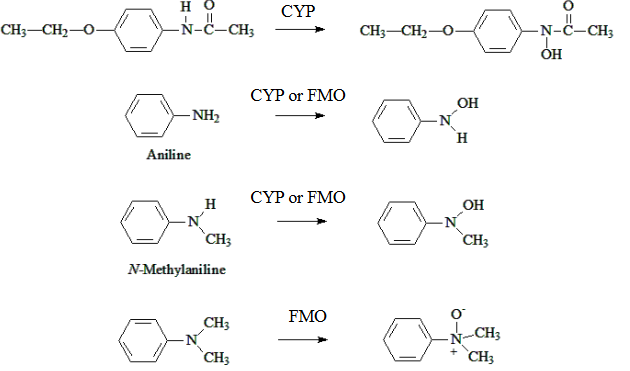
What happens in N-Oxidation (CYP and FMO)?
Adds oxygen to nitrogen → forms N-oxide (N—O)
FMO Used for tertiary N (3*)
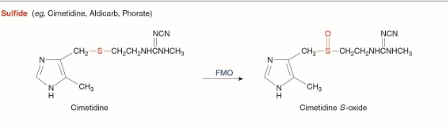
What happens in S-Oxidation?
Adds oxygen to sulfur → forms sulfoxide or sulfone (S=O or O=S=O)
Occurs mostly with FMO
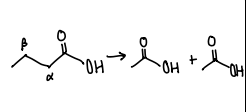
What happens in Beta-Oxidation?
Breaks down fatty acids by removing 2-carbon units (acetyl-CoA) from the β-carbon
Occurs in mitochondria → fuels ATP production
coenzyme A required
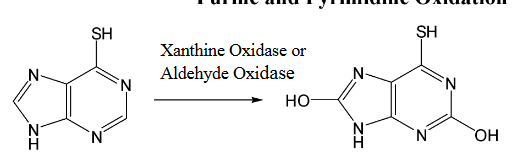
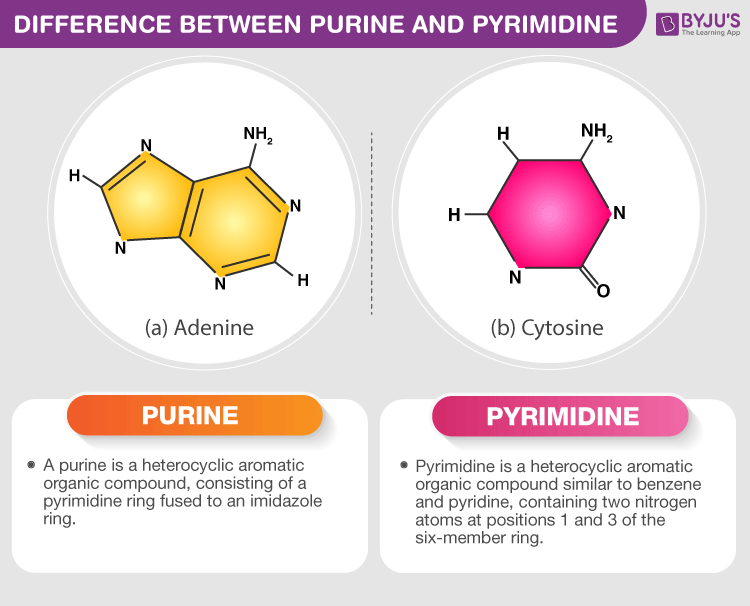
What happens in purine / pyrimidine oxidation?
Adds –OH to the purine/pyrimidine → generates reactive oxygen species (ROS)
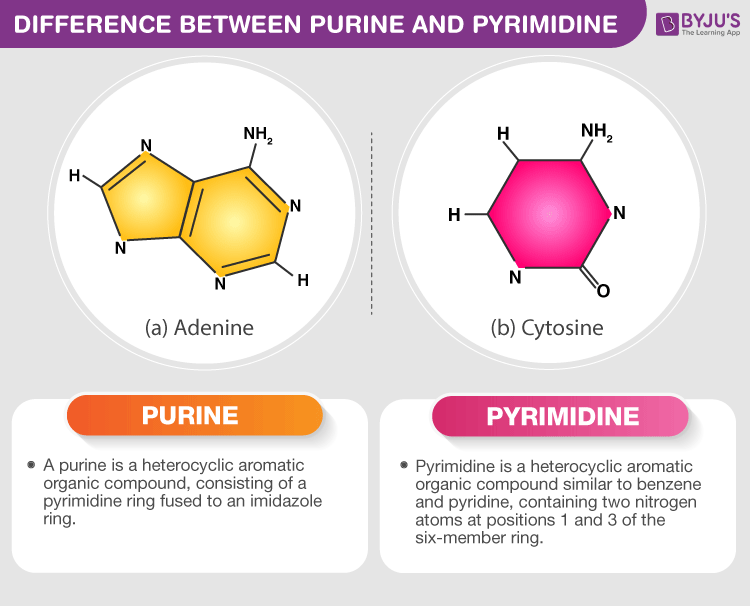
What enzymes are needed for purine / pyrimidine oxidation?
Xanthine oxidase
or
Aldehyde oxidase

What happens during Alcohol Oxidation?
Alcohol → aldehyde (or ketone)
What enzymes and cofactors required for alcohol oxidation?
Alcohol dehydrogenase → ADH
Cofactor → NAD+
Is a reversible reaction

What happens during Aldehyde oxidation?
Aldehyde → carboxylic acid
What enzymes and cofactors required aldehyde oxidation?
Aldehyde dehydrogenase → ALDH
Cofactors → NAD+ and H2O
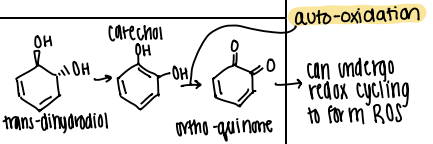
What happens during Dihydrodiol Dehydrogenase?
Dihydrodiol → catechol → auto-oxidizes → ortho-quinone
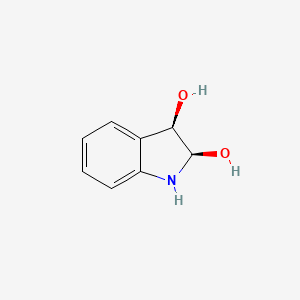
What enzymes are required for dihydrodiol dehydrogenase?
Enzyme → DDH or dihydrodiol dehydrogenase
Cofactors → NADP+, gets turned into NADPH
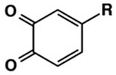
What can happen to ortho-quinones?
Undergo redox cycling → repeatedly reduced/oxidized → generates ROS
What reactions are CYP catalyzed?
Hydroxylation
Epoxidation
N-dealkylation
O-dealkylation
Oxidative dehalogenation
Ester Cleavage
Oxidative desulfurization
What reactions are non-CYP catalyzed?
Beta Oxidation → Coenzyme A
Purine / Pyrimidine Oxidation → Xanthine oxidase / Aldehyde Oxidase
Alcohol oxidation → ADH
Aldehyde oxidation → ALDH
Dihydrodiol dehydrogenase → DDH
What reactions are occurs with multiple enzymes?
Oxidative deamination → CYP and MAO
N-oxidation → CYP and FMO for tertiary amines
S-oxidation → FMO mostly, but CYP can happen
What is needed for the enzyme MAO?
O2
H2O
What is needed for the enzyme FMO?
NADPH
O2
H+

