A&P 2 Practical 3 Definitions, Equations, and Values
 Call Kai
 Learn
Learn Practice Test
 Spaced Repetition
 Match
Match Flashcards
 Knowt Play
1/75

There's no tags or description
Looks like no tags are added yet.
Name | Mastery | Learn | Test | Matching | Spaced | Call with Kai |
|---|
No analytics yet
Send a link to your students to track their progress
76 Terms
air that moves into and out of the lungs with each breath
Tidal Volume (TV)
500 mL
Average Approximate Value of TV
air that can be inspired forcibly beyond the tidal volume
Inspiratory Reserve Volume (IRV)
lung's ability to strech/expand, increases in smokers
Lung Compliance
2100-3200 mL
Average Approximate Value of IRV
air that can be inspired forcibly evacuated from the lungs after a tidal expiration
Expiratory reserve volume (ERV)
1000-1200 mL
Average Approximate Value of ERV
air left in lungs after strenuous expiration
Residual Volume (RV)
1200 mL
Average Approximate Value of RV
total amount of exchangeable air
Vital Capacity (VC)
20-30%, lower
Females have approximately ___-____% ____________ (higher/lower) lung volumes and capacities than males
Increased RV, decreased VC, TLC, IRV, and ERV
Smoking causes increased ____ and decreased ___, _____, _____, and ____
Reduction in airflow, shortness of breath in exhaling, the air will remain inside the lung even after a full expiration
How are obstructive lung disorders characterized
COPD, asthma, Bronchiectasis
Examples of obstructive lung disorders
reduction in lung volume, difficulty taking air in due to stiffness inside the lung tissue or chest wall cavity
How are restrictive lung disorders characterized
Interstitial lung disease, scoliosis, neuromuscular cause, marked obesity
Examples of restrictive lung disorders
Tidal volume (TV)
part indicated in red
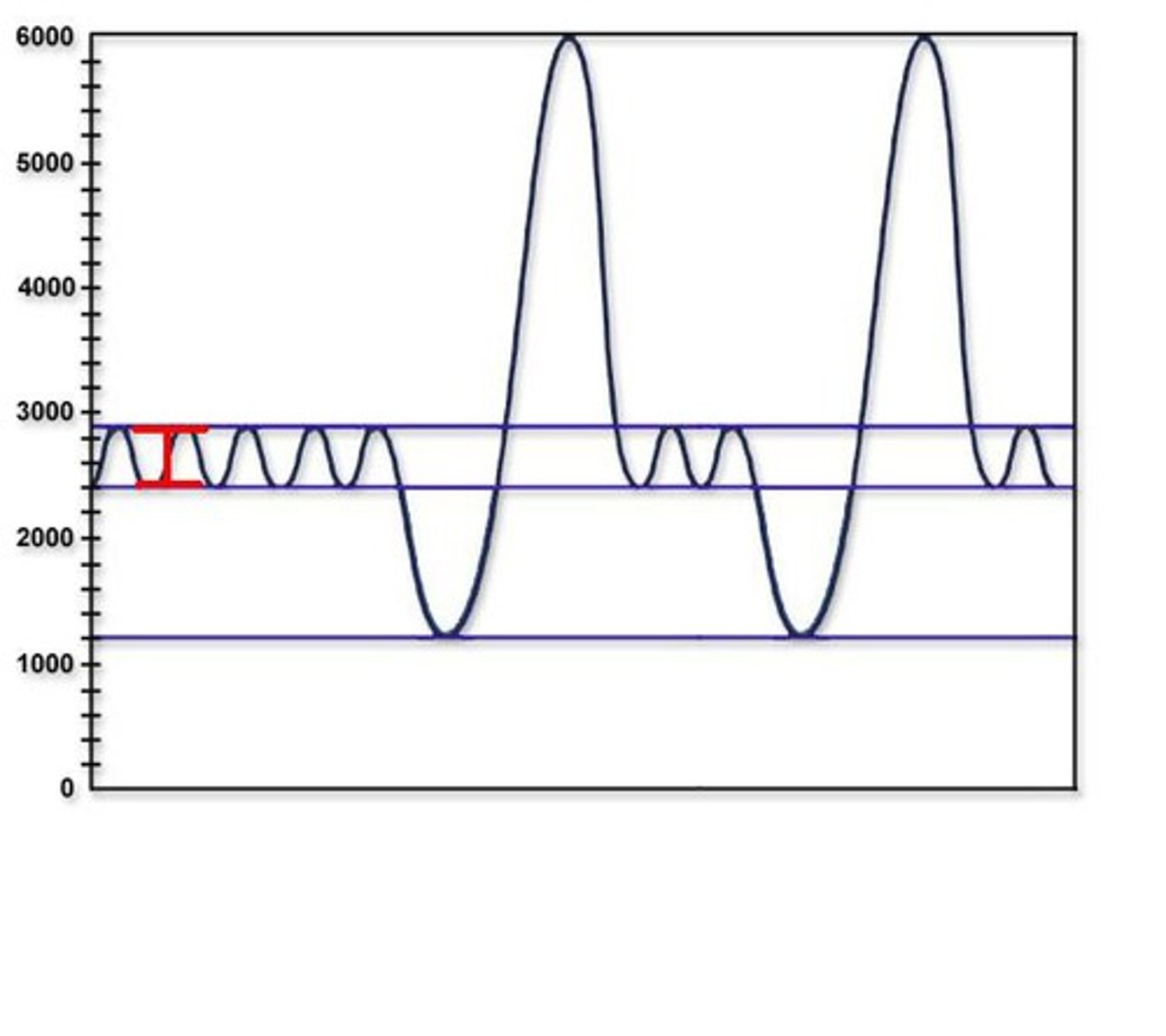
Inspiratory reserve volume (IRV)
part indicated in red
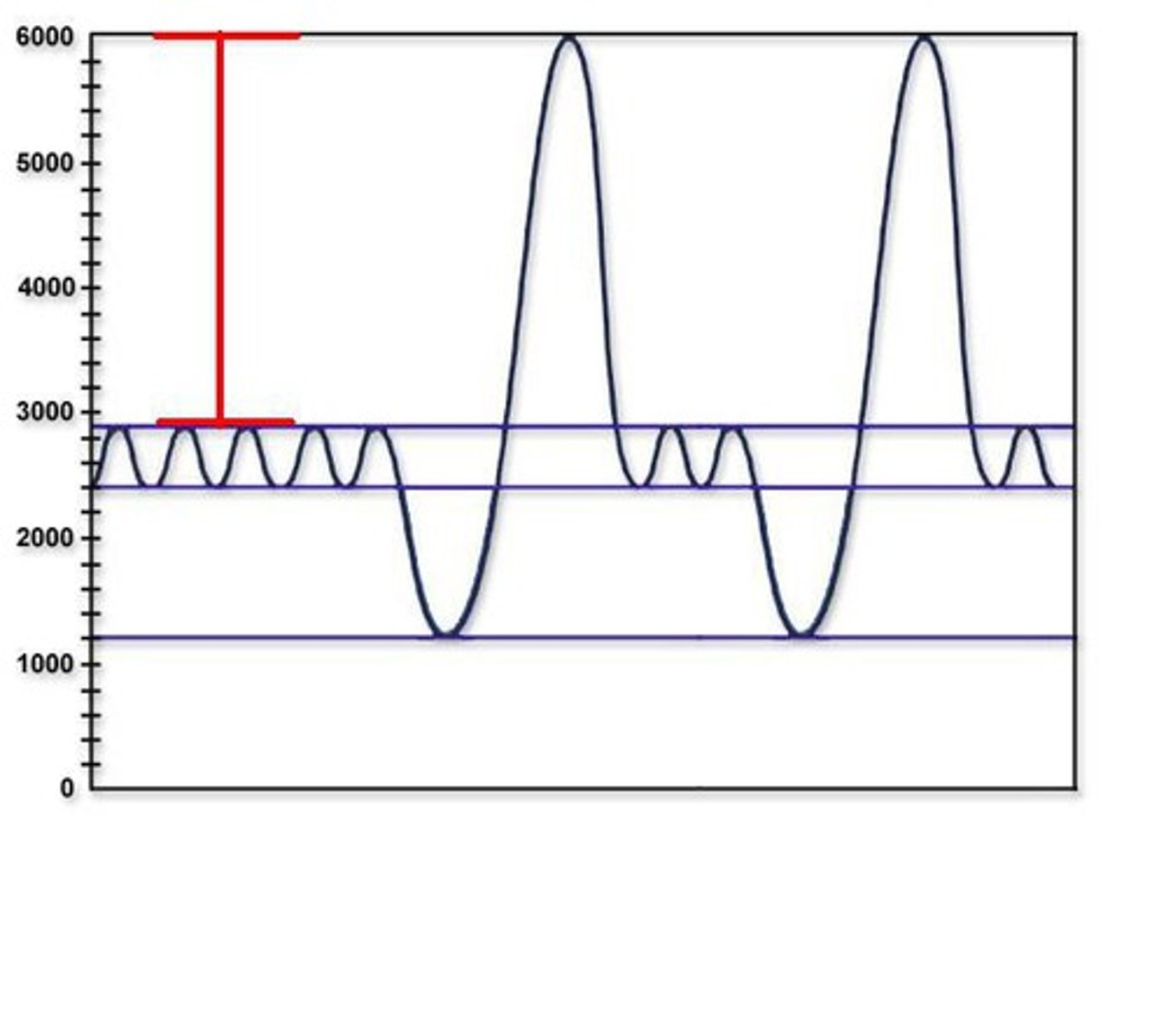
Expiratory reserve volume (ERV)
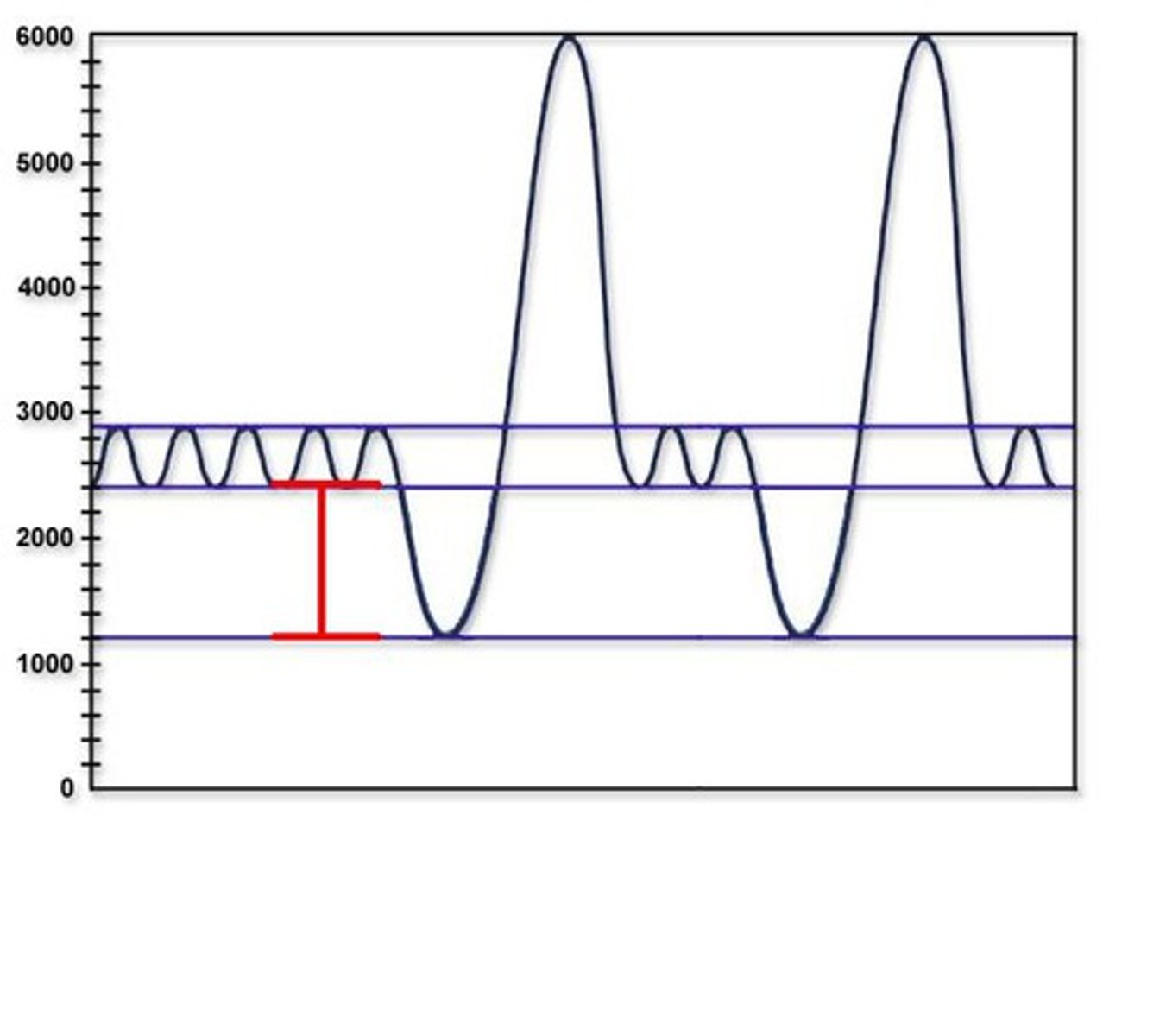
Residual volume (RV)
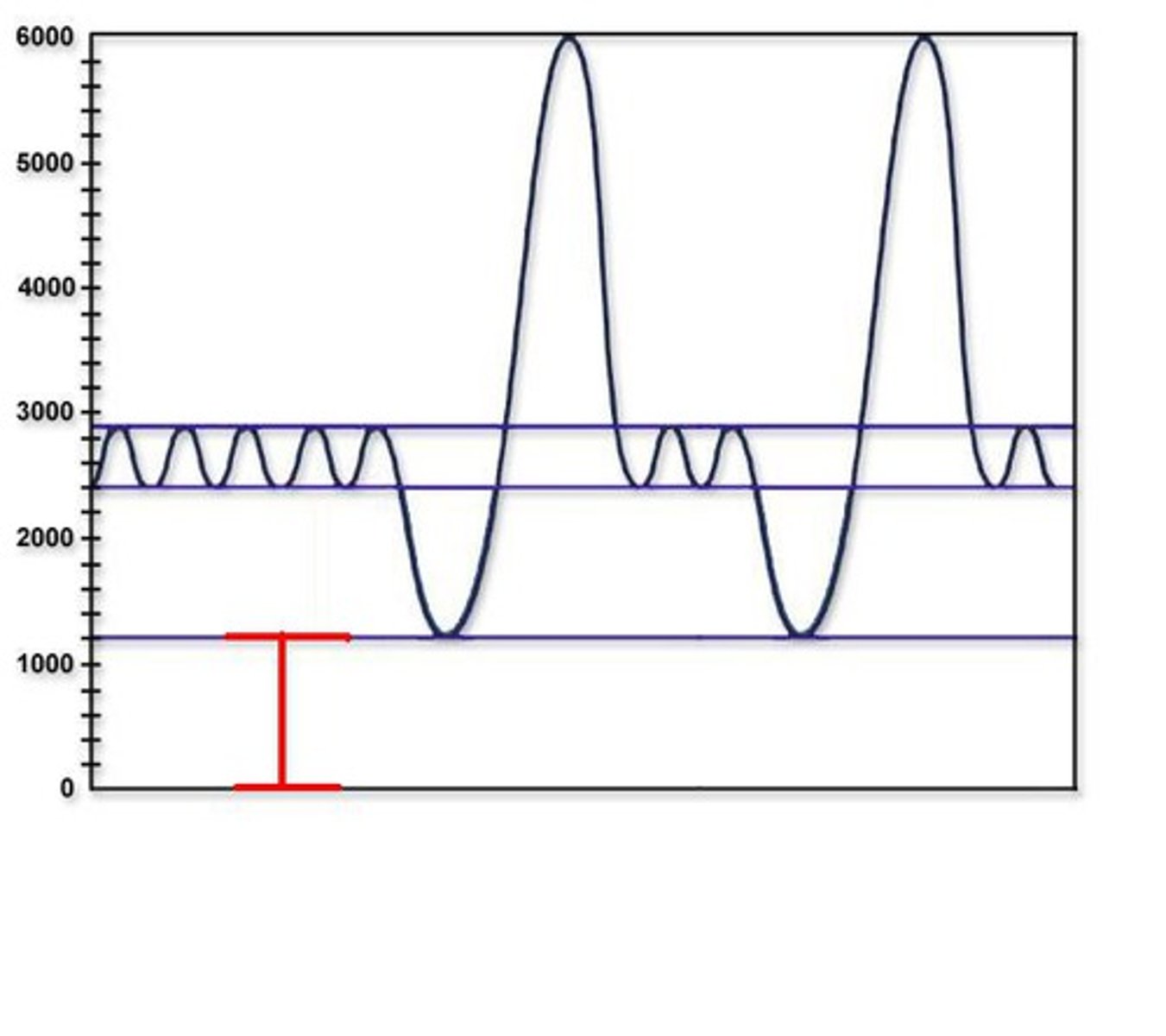
Maximum voluntary expiration
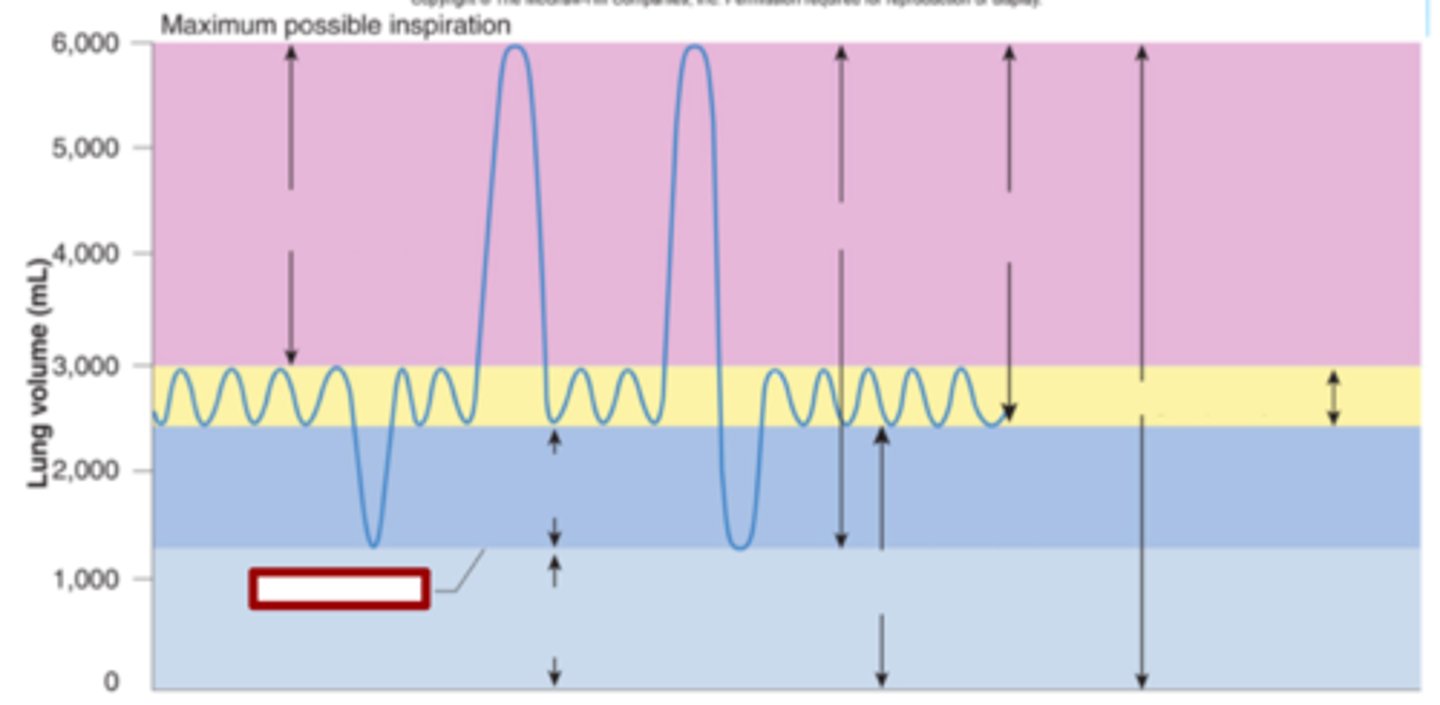
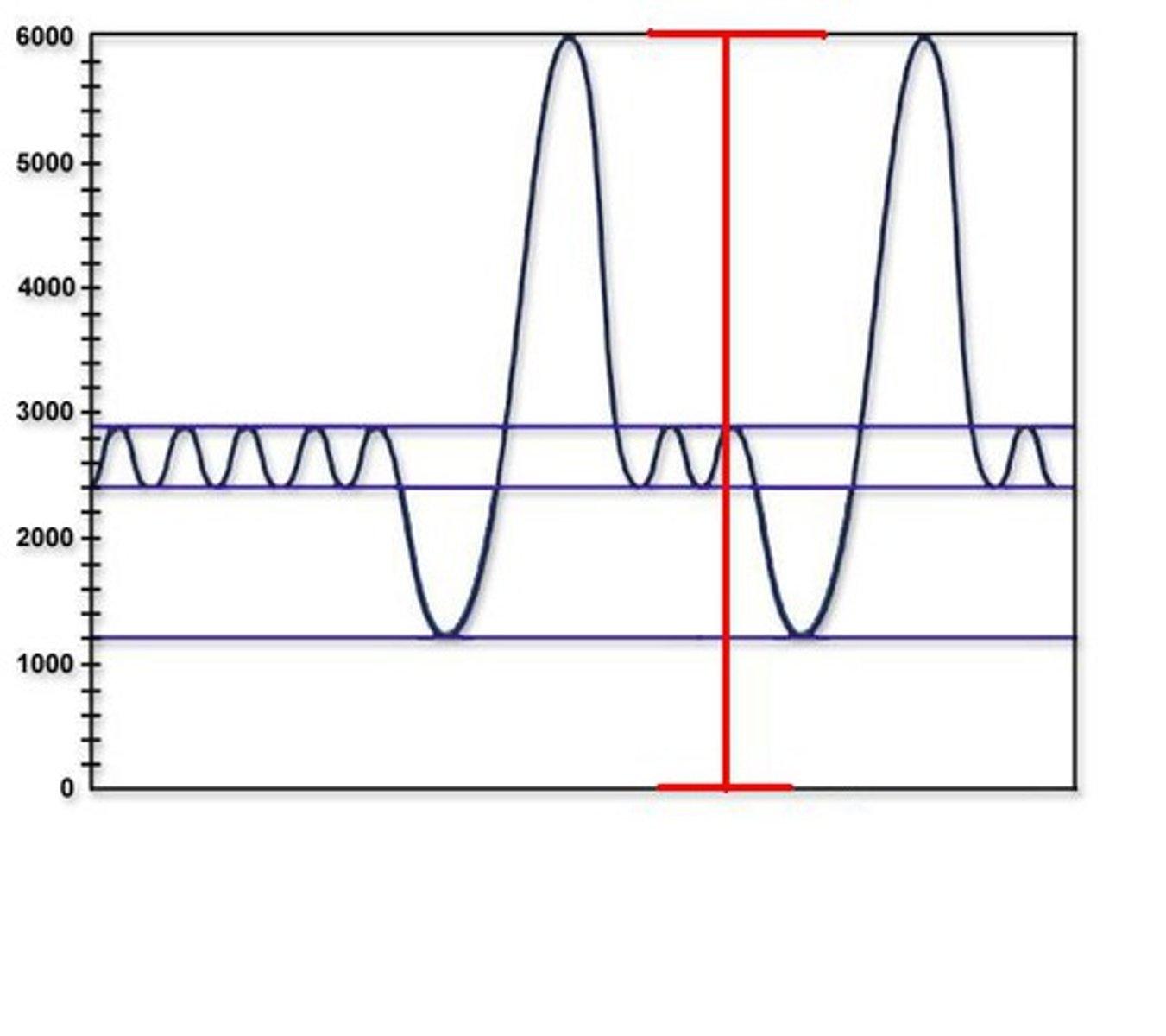
Vital Capacity (VC)
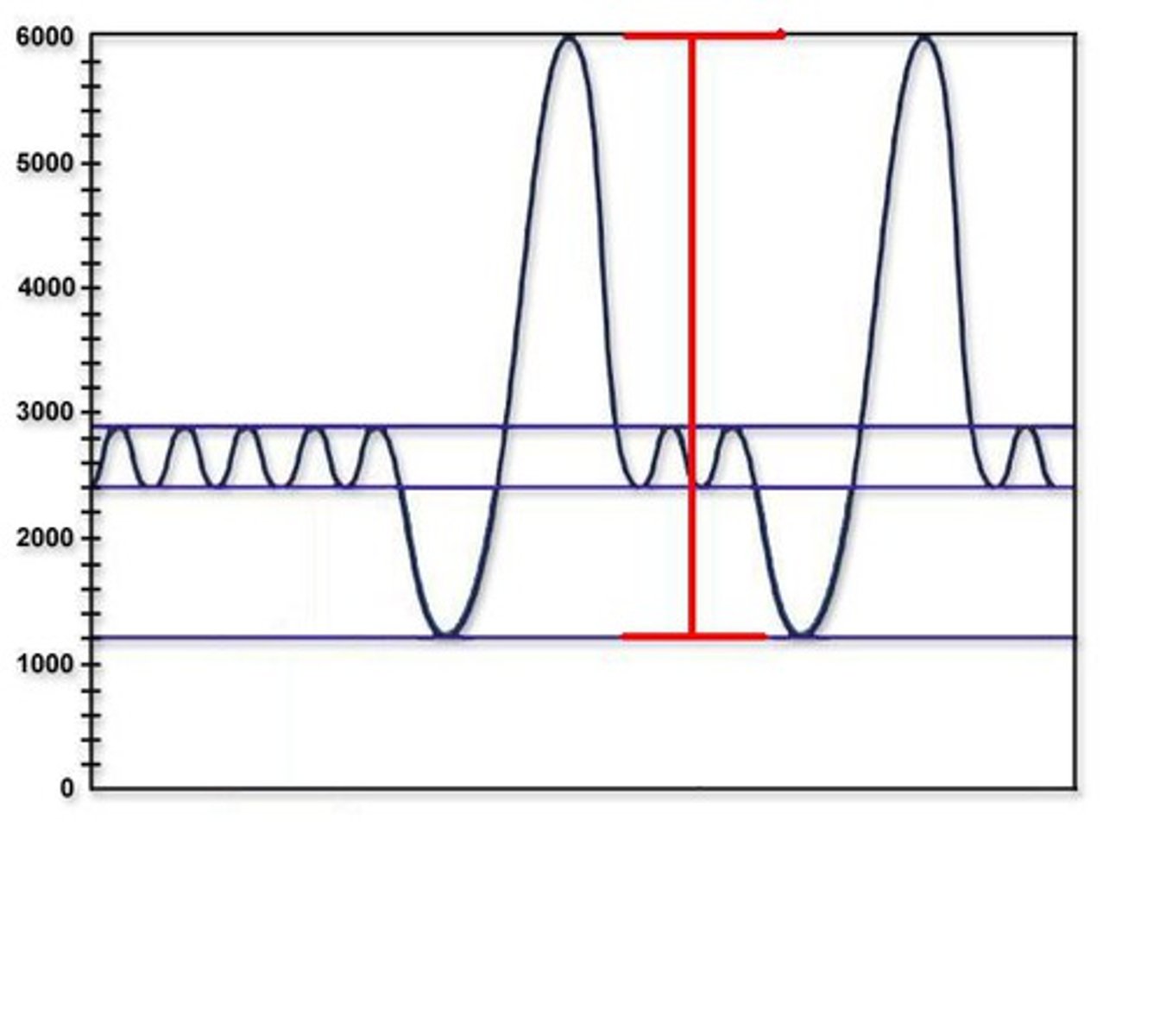
Total Lung Capacity (TLC)
IRV=VC-(TV+ERV)
Equation to calculate IRV
VC=IRV+TV+ERV
Equation to calculate VC
RV=(VC)(Subject Age Factor)
Equation to calculate RV
0.250
Subject Age Factor ages 16-34
0.305
Subject Age Factor ages 35-49
0.445
Subject Age Factor ages 50-69
TLC=TV+IRV+ERV+RV
TLC=VC+RV
Equations to calculate TLC
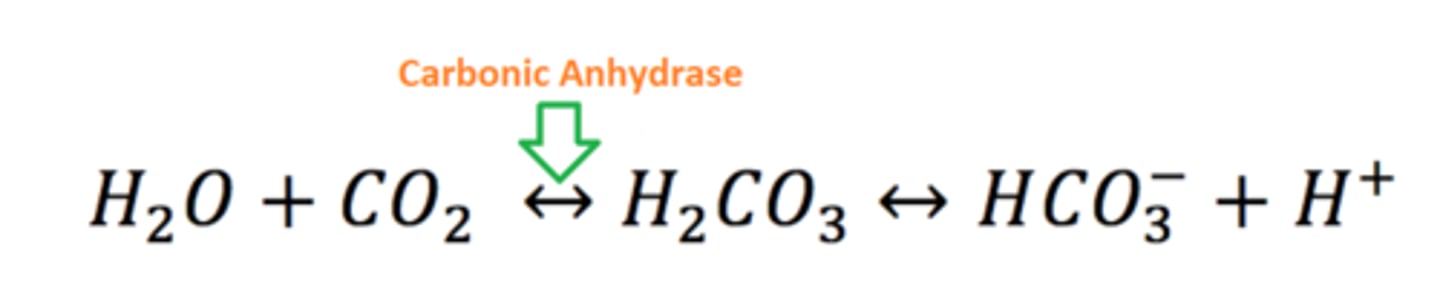
bicarbonate equation, goes to the left (ending with Carbon Dioxide and water), it raises blood pH slightly to make sure it stays stable
What is this equation, which direction does it go in for the lungs, and what is it's function
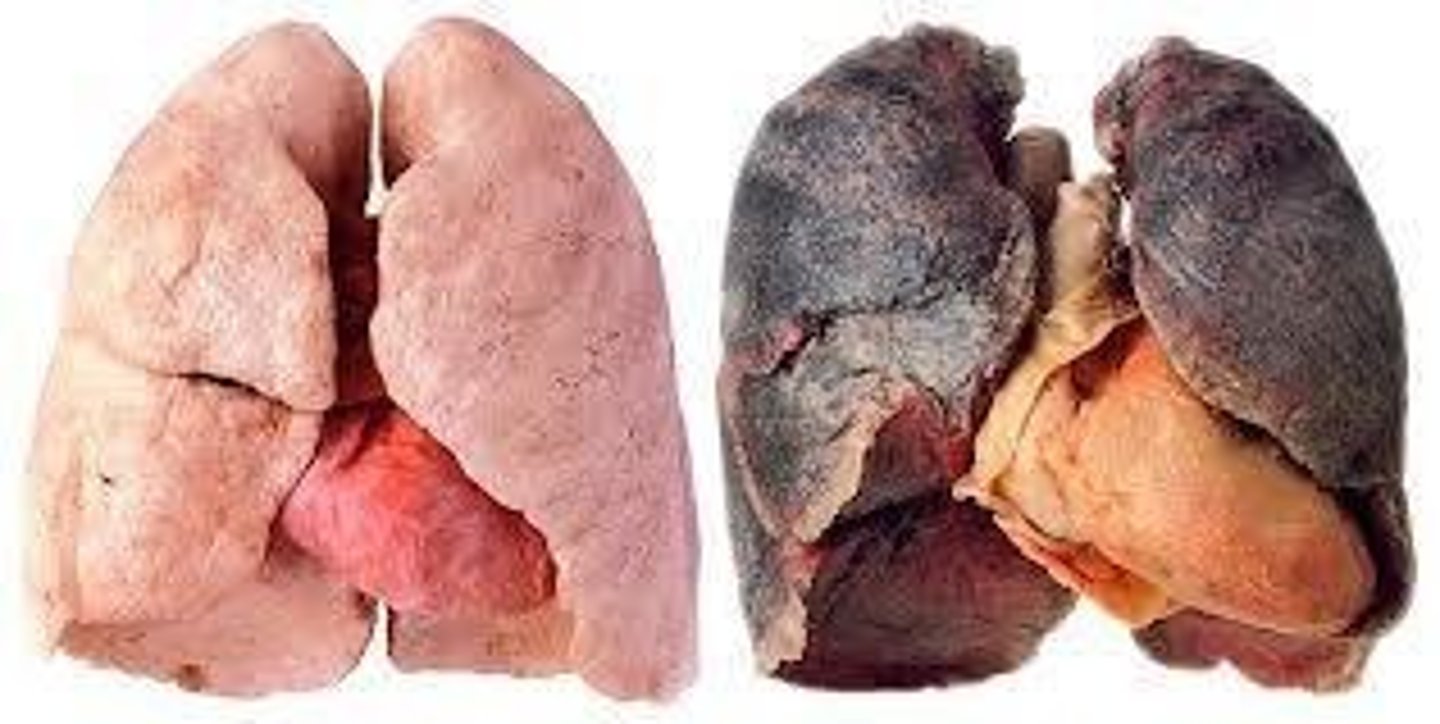
smoker's lungs
lungs on the right
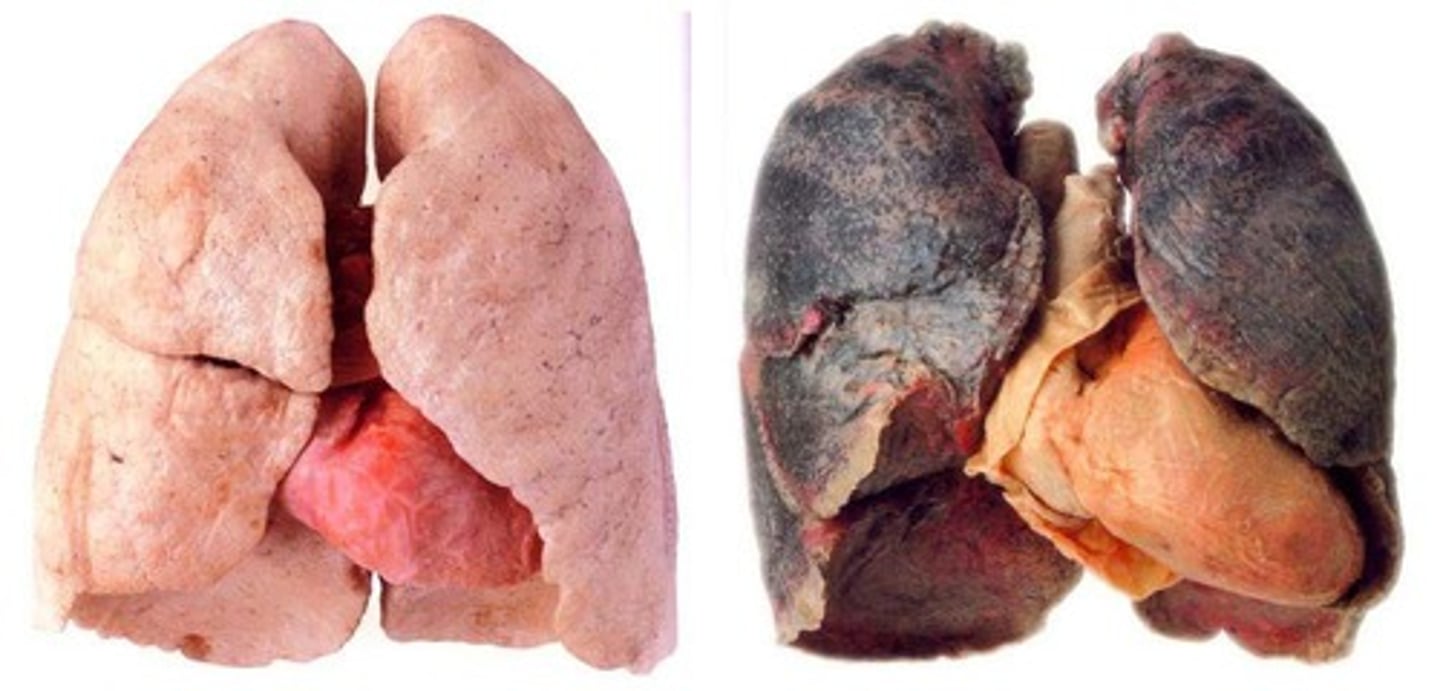
healthy lungs
lungs on the left
ability of lungs to recoil to original shape, decreases in smokers which makes exhaling more difficult
Lung elasticity
Oral/Nasal Cavities -->Pharynx --> Trachea --> Primary Bronchi --> Secondary Bronchi --> Tertiary Bronchi --> Bronchioles --> Terminal Bronchioles --> Respiratory Bronchioles --> Alveolar ducts --> Alveolar sacs --> Alveoli
Pathway of air through the lungs
Phenol red added in to water solution, blow into the solution with a straw, the solution should turn yellow (indication of increasing pH)
Phenol Red Test Procedure and Expected Results
Mouth (oral cavity) --> Oropharynx --> Laryngopharynx --> esophagus --> Lower esophageal sphincter --> Fundus of stomach --> body of stomach --> pyloric antrum of stomach --> pyloric sphincter --> Duodenum --> Jejunum --> Ileocecal valve --> Cecum --> ascending colon --> Hepatic flexure --> transverse colon --> splenic flexure --> descending colon --> sigmoid colon --> rectum --> anal canal --> anus
Pathway of Food through digestive system
CO2 + H2O <--> H2CO3 <--> H+ + HCO3-
Bicarb Equation
Using Benedict's reagent to detect presence of sugars; reagent added to solution, placed in hot water bath, and color change observed
Benedict's Test, what you're testing for
Blue color = no sugar, Green color = trace amounts of sugar, Yellow = moderate amounts of sugar, Red/orange = large amounts of sugar
Expected Results for Benedict's Test
Testing for presence of starch, add some iodine into your solution and observe the changes
Reagent Test -- Iodine, what you're testing for
Blue/Black color: positive for starch
Expected Results for Reagent Test -- Iodine
Determining is solution is acidic or basic, uses Litmus cream
Reagent Test -- Litmus Test, what you're testing for
Pink = acidic, blue/purple = basic
Expected Results for Reagent Test -- Litmus Test
Visceral pleura (on lungs), pleural space, parietal pleura lining chest cavity
Pleural Layers of Lungs
canal for food (mouth, pharynx, esophagus, stomach, small intestine, large intestine, anus)
Alimentary canal
mechanical, propulsion
What type of digestion happens in the mouth
propulsion
What type of digestion happens in the esophagus
mechanical, chemical, propulsion
What type of digestion happens in the stomach
mechanical, chemical, absorption, propulsion
What type of digestion happens in the small intestine
mechanical, propulsion, absorption
What type of digestion happens in the large intestine
Ileum of small intestine
green part
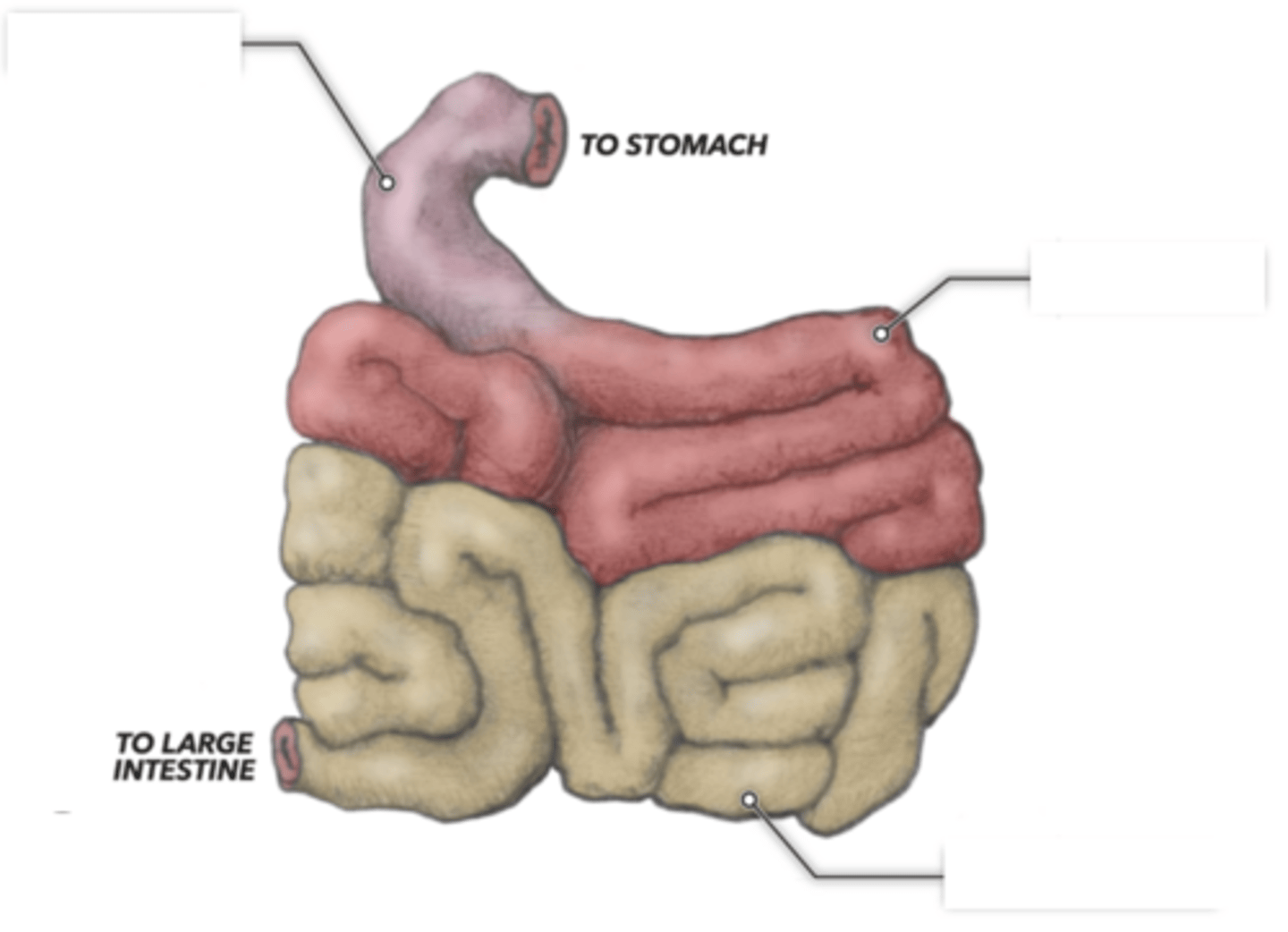
Jejunum of small intestine
pink part
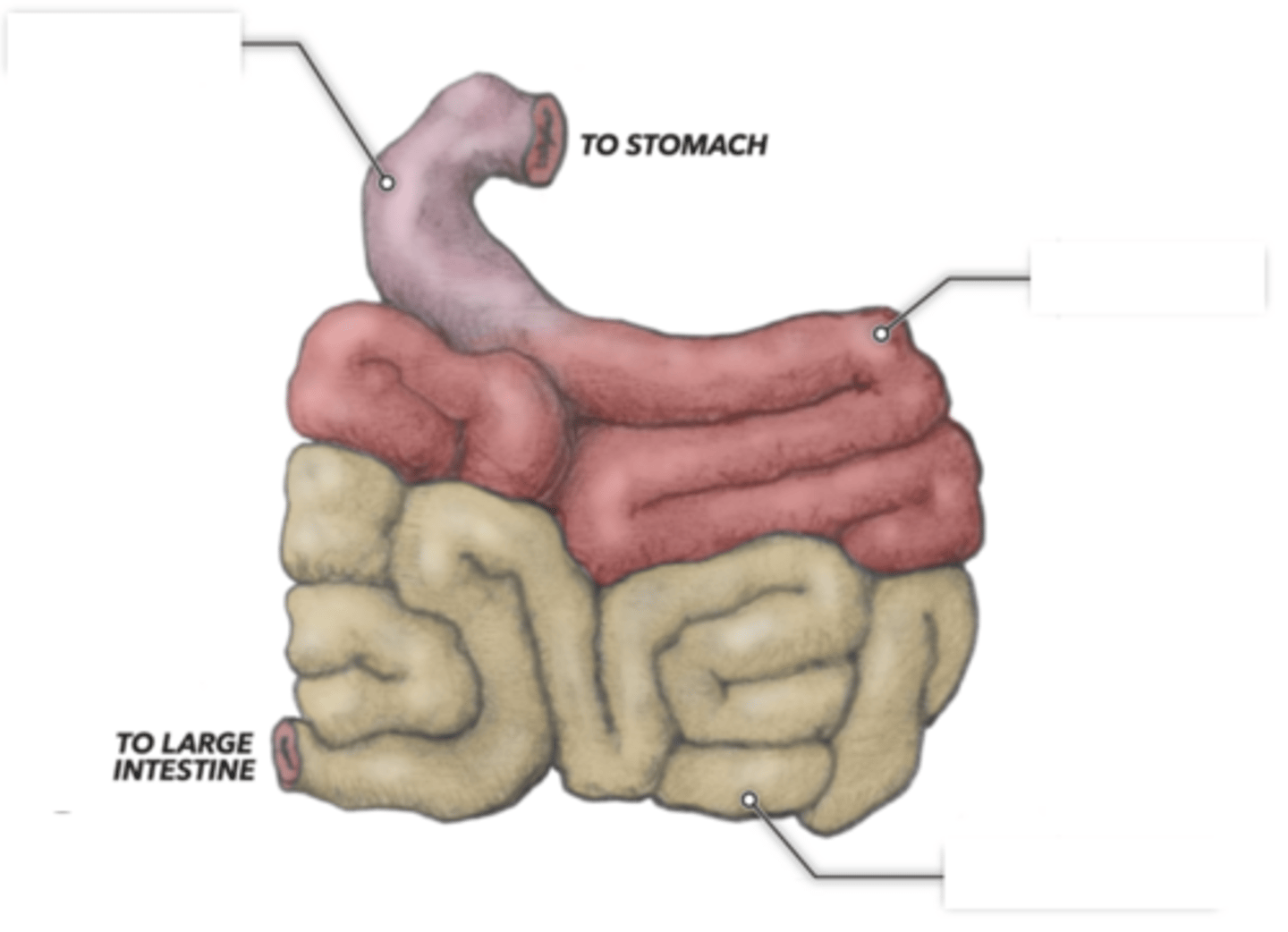
Duodenum
purple part
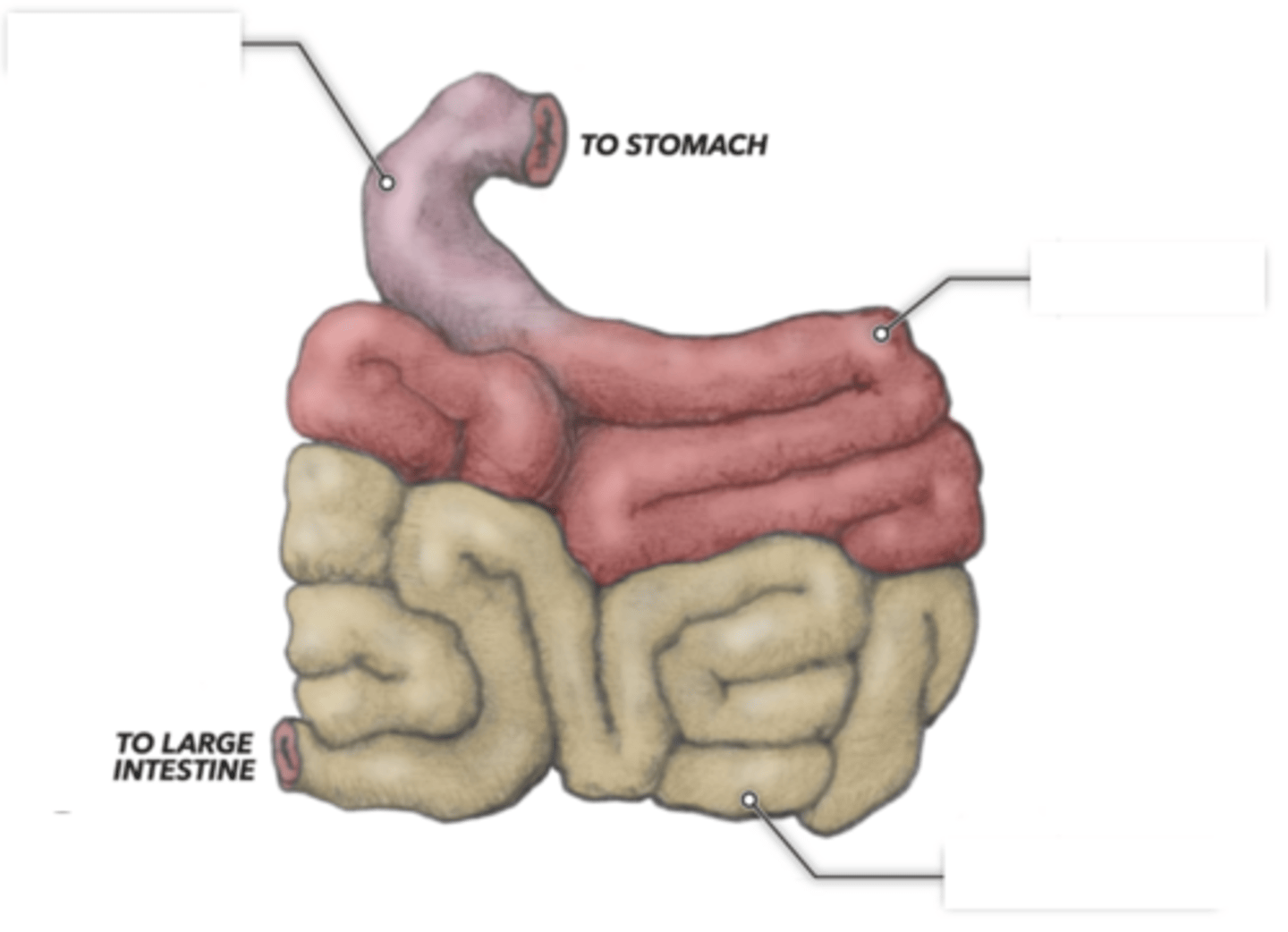
mucinous (mucus and enzymes)
What type of secretion does the sublingual salivary gland secrete
serous (water and enzymes)
What type of secretion does the parotid salivary gland secrete
mixed mucinous and serous
What type of secretion does the submandibular salivary gland secrete
stores beneficial gut bacteria, allowing them a safe place to repopulate
Appendix function
transports food and liquids from pharynx to stomach via peristalsis
Esophagus function
releases bile into small intestine to emulsify fat so it can be absorbed
Gallbladder function
finalizes digestion by absorbing water, electrolytes, and vitamins via gut bacteria from remaining food waste
Large intestine function
processes and stores nutrients, produces bile, detoxifies harmful substances, regulates blood sugar levels, metabolizes proteins, making blood-clotting factors
Liver function
initiates digestion through mechanical and chemical processespro
Mouth (oral cavity) function
produces digestive enzymes to break down fats, proteins, and starches
Pancreas function
produce salive to initiate digestion
Salivary glands function
nutrient absorption
Small intestine function
filters out old/dead red blood cells, stores white blood cells to fight infection
Spleen Function
storing, churning, and breaking down food by chemical substance called chyme
Stomach function
prevent food/liquid from entering airway and directing it into esophagus
Epiglottis function
transporting, filtering, warming, and humidifying air to the lungs
Trachea function
allows stomach to expand, increasing surface volume to accomodate food and drink without significant pressure increase
Rugae function
facilitate digestion via brush border enzymes, transport monosaccharides, amino acids, and fats into blood or lymphatic system
Function of absoprtive cells of Villi
secrete mucin glycoproteins to form a protective, lubricating mucus barrier
Function of goblet cells of Villi
absorbing dietary lipids and fat soluble vitamins
Function of lacteal cells of Villi
maximizes nutrient absorption
Function of villi
final storage chamber for feces, recieving waste from sigmoid colon
Function of rectum

