Unit 4.1 Personality Psychology (PART 2)
 Call Kai
 Learn
Learn Practice Test
 Spaced Repetition
 Match
Match Flashcards
 Knowt Play
1/52

There's no tags or description
Looks like no tags are added yet.
Name | Mastery | Learn | Test | Matching | Spaced | Call with Kai |
|---|
No analytics yet
Send a link to your students to track their progress
53 Terms
Personality
an individual characteristic pattern of thinking, feeling, and acting
Personality traits
durable disposition to behave in a particular way in a variety of situations
Free will or determinism
Are we free to be who we want or are we victims of biology unconscious forces, and external stimuli
Nature or Nurture?
Is personality inherited or shaped by our environment?
Past, present, or future?
Do we develop personality early in childhood or are we more influenced by present experiences?
Uniqueness or Universality?
Is everyone’s personality unique or are there broad personality patterns that fit large numbers of people?
Equilibrium or pessimism
Are we primarily tension-reducing and pleasure seeking animals or are we motivated primarily by the need to grow?
Optimism or pessimism
Are we basically good or basically evil
Sigmund Freud (1856-1939)
started as a physician specialized in nervous disorders → found patients whose disorders made no neurological sense → set out to study the unconscious mind
Id
the impulsive, primal part of your personality that wants what it wants right now
Pleasure principle
Superego
is your internal "moral compass" or conscience.
It is the part of your personality that stores the rules, values, and morals you've learned from your parents and society
Oedipus Complex
ACCORDING TO FREUD: When a boy is sexually attracted to his mother and resents his father → realizes societal restraints do not allow this → switches to being more in favor of his father and identifying with him
Ego
the rational, decision-making part of your personality that deals with the real world. It acts as a mediator, constantly trying to balance the impulsive demands of the id with the strict moral standards of the superego
Free association
method of exploring the unconscious in which you relax and let whatever thoughts you have come to mind
Projective Tests
a type of personality assessment that uses ambiguous stimuli—like inkblots, vague pictures, or incomplete sentences—to reveal a person's unconscious thoughts, feelings, and internal conflicts
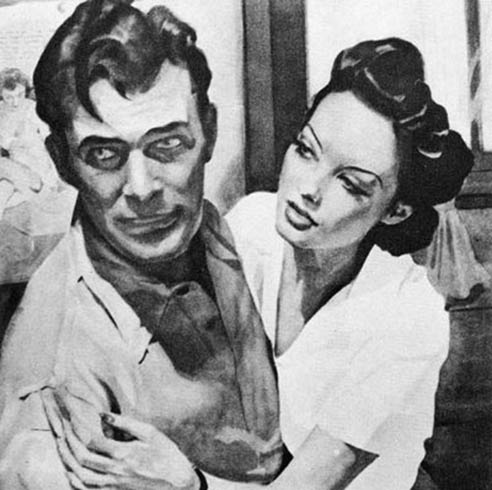
Thematic Apperception Test
where you are shown ambiguous pictures and asked to tell a story about them
Rorschach inkblot test
interpretation of blots

Freud’s defense mechanisms
unconscious psychological strategies used by the ego to protect itself from anxiety
Denial
Refusing to accept the truth
Projection
Projecting or directing weaknesses and thoughts onto other people
Regression
consciously retreating back to an infantile reaction, or time period
Repression
Unconsciously "forgetting" or blocking out painful memories or unacceptable urges.
Reaction formation
Acting in a way that is the exact opposite of your true, unacceptable feelings.
Displacement
taking out anger or feelings on a less threatening target, someone or something that cannot fight back
Rationalization
providing justifications or excuses to make behaviors and thoughts acceptable
Sublimation
Re-channeling unacceptable impulses into socially approved activities
Humanstic approach
an optimistic branch of psychology that focuses on a person's inherent goodness and their potential for personal growth.
Abraham Maslow and Carl Rogers
studied healthy people, those who were “neurotic, or troubled”
Self-Actualization
The accomplishment of human potential and personal satisfaction
Masclow’s Hierachry of needs
Motivating factors that lead us to self actualization
Actualizing tendency
An innate drive within a person that pushes him or her to reach their potential and live life to their fullest
Genuiness
openess and self-disclosure
Acceptance
being seen with affection and love no matter what
Empathy
Bring listened to and understood
Self-concept
all our thoughts and feelings about ourselves → “who am I?”
Conditional positive regard
when love, praise, and social acceptance are given only when a person acts in a certain way
Leads to incongruence
Unconditional positive regard
the practice of accepting and respecting someone exactly as they are, without any "ifs," "ands," or "buts."
Leads to congruence
Congruent
describes the state where your Real Self (who you actually are) is aligned with your Ideal Self (who you wish to be) and the image you present to the world.
Incongruence
significant gap between your Real Self (how you actually think, feel, and act) and your Ideal Self (the person you feel you should be to be loved or successful).
Trait
a stable, long-term characteristic that describes how you typically think, feel, and behave.
Personality inventory
a questionnaire on which people respond to items designed to gauge a wide range of feelings and behaviors (personality)
Factor analysis
a statistical "shredder and sorter" used to find hidden patterns in large amounts of data.
Robert McCrae and Paul Costa - Big Five Theory of personality
Conscientiousness - organized, careful, disciplined (⬇: disorganized, careless, impulsive)
Agreeableness - soft-hearted, trusting, helpful (⬇: ruthless, suspicious, uncooperative)
Neuroticism - calm, secure, self-satisfied (⬇: anxious, insecure, self-pitying)
Openess - imaginative, independent, preference for variety (⬇: practical, preference for routine, conforming)
Extraversion - sociable, fun-loving, affectionate (⬇: retiring, sober, reserved)
Person-situation controversy
Are our personalities defined more on our personal dispositions or environmental stimuli?
Barnum effect
Feeling very strongly that personality tests give accurate answers just for us, when in reality the info is general enough to apply to a wide variety of individuals
Social-cognitive perspective
Research that views personality as something learned through the interaction of your thoughts, your behaviors, and your environment
Reciprocal Determinism
the idea that your personality is shaped by a continuous "three-way loop" between your thoughts, your behavior, and your environment
Self-concept
how you view yourself and in relation to others
Self-effiency
how much we believe in ourselves, our perceived ability to perform a task or obtain certain results
Self-esteem
Our feelings of high or low self-worth
Self-personal control
belief about how much power you have over the events in your life
External Locus
the belief that your life is guided by forces beyond your influence (environment)
Internal Locus
believe you control your own fate

