HUMBEHV 2B06 - WEEK 12 EXTINCTION AND PUNISHMENT
 Call Kai
 Learn
Learn Practice Test
 Spaced Repetition
 Match
Match Flashcards
 Knowt Play
1/18

There's no tags or description
Looks like no tags are added yet.
Name | Mastery | Learn | Test | Matching | Spaced | Call with Kai |
|---|
No analytics yet
Send a link to your students to track their progress
19 Terms
What is Extinction?
- A behaviour that has previously been reinforced is no longer reinforced (reinforcing consequence is withheld)
- Therefore the behaviour stops happening
- Must be applied consistently or you will intermittently reinforce the behaviour
How do we talk about extinction or the effects of extinction?
Yes!
- A behaviour was put on extinction
- A behaviour was extinguished
No!
- The behaviour is extinct
- He is on extinction
What are the functions or behaviour?
- Escape: To get away from something unpleasant or difficult.
- Attention: To gain attention from others (positive or negative).
- Tangible: To get access to a specific item or activity.
- Sensory: The behaviour itself feels good or meets a sensory need.
Acronym: SEAT
Why is understanding the function of behaviour important for proper extinction?
You need to be certain that the consequence that you intend to withhold is indeed the consequence reinforcing the behaviour
How to use extinction effectively?
- Withholding all reinforcers that maintain the problem behaviour
- Withholding reinforcement consistently
- Combining extinction with other procedures
- Using instructions (making them aware of the behavioural intervention)
- Increasing the number of extinction trials
- Guarding against unintentional extinction
Extinction bursts
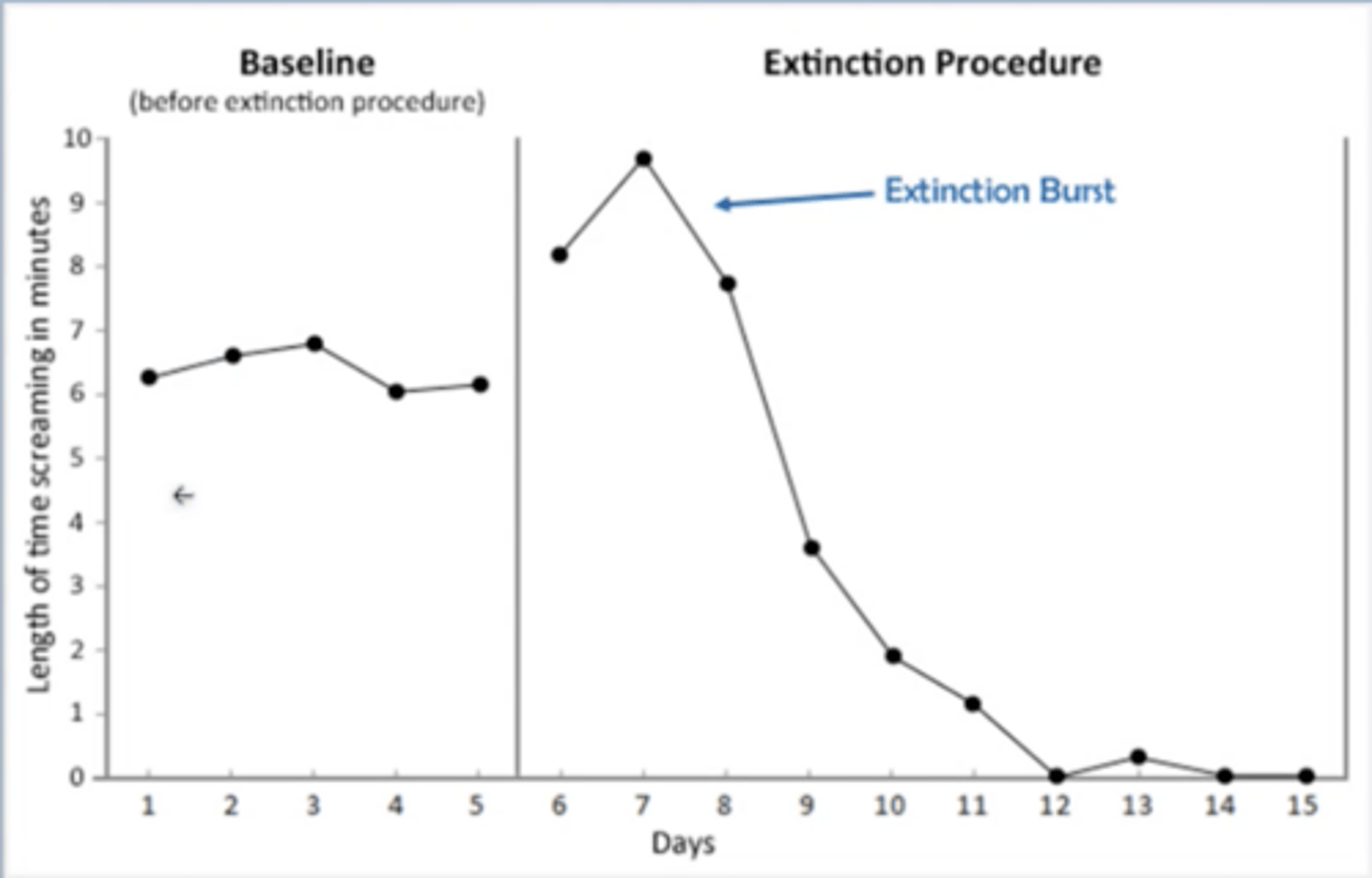
- A phenomenon that is often observed is an "extinction burst"
- This is a brief increase in the frequency, duration, and/or intensity of the target behaviour when a reinforcement is stopped
- You need to be prepared for the burst
- The worst thing you can do is give in during the extinction burst!

Extinction burst: Graph
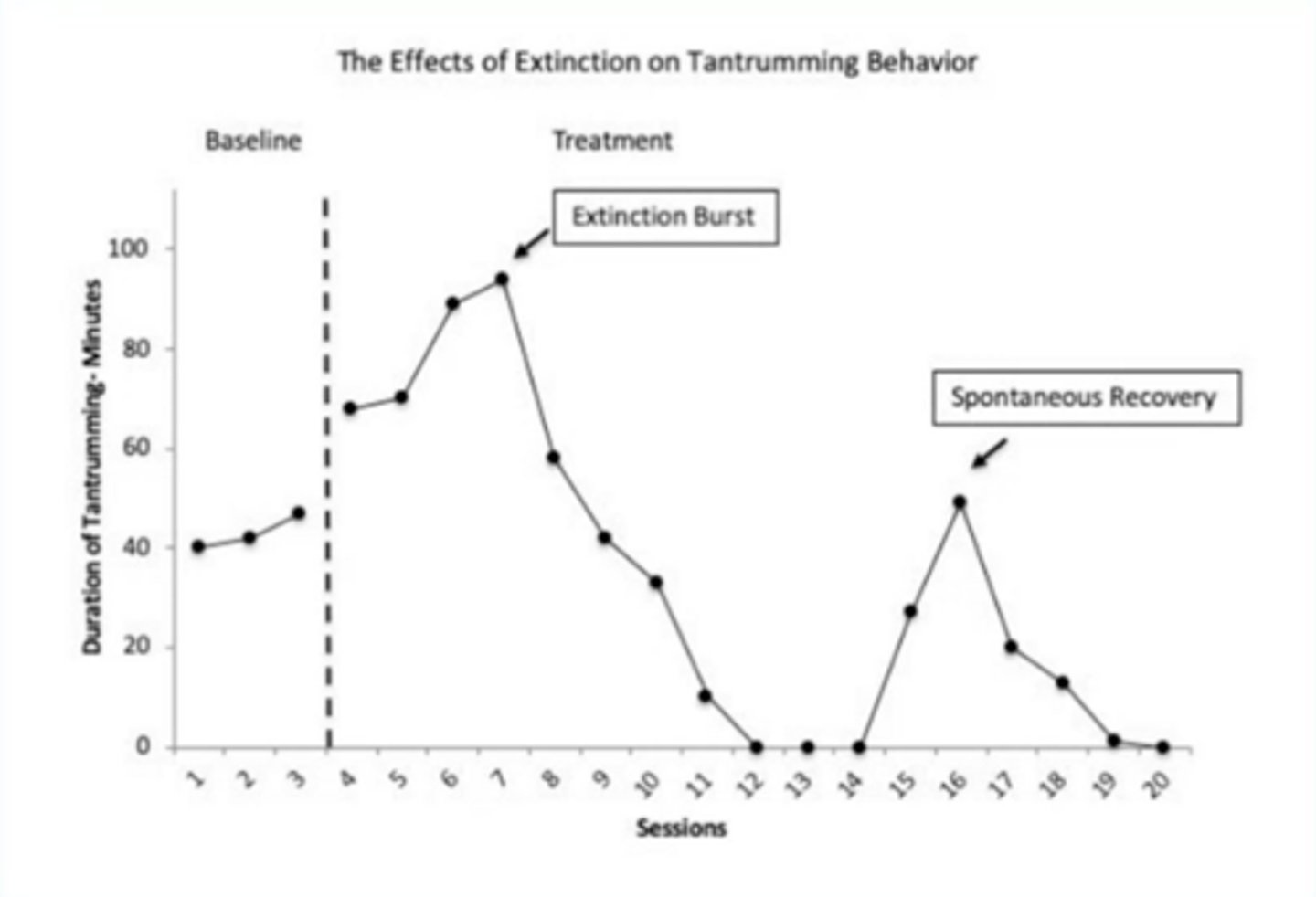
Spontaneous recovery
- After a behaviour has been extinguished for a period of time, it may reappear suddenly
- Spontaneous recovery does not last long, so long as the behaviour is not reinforced
What is Punishment?
The delivery or removal of a stimulus following a behaviour which results in the subsequent decrease of that behaviour in the future
Why is it important to study and understand punishment?
- May be needed when we can't identify or control competing reinforcers
- Need to understand the process so we can use it effectively

Negative punishment
The termination or removal of an already present appetitive stimulus (or a decrease in the intensity of an already present stimulus) immediately following a behaviour that results in a decrease in that behaviour in the future (e.g., Response cost and Time out)

Positive punishment
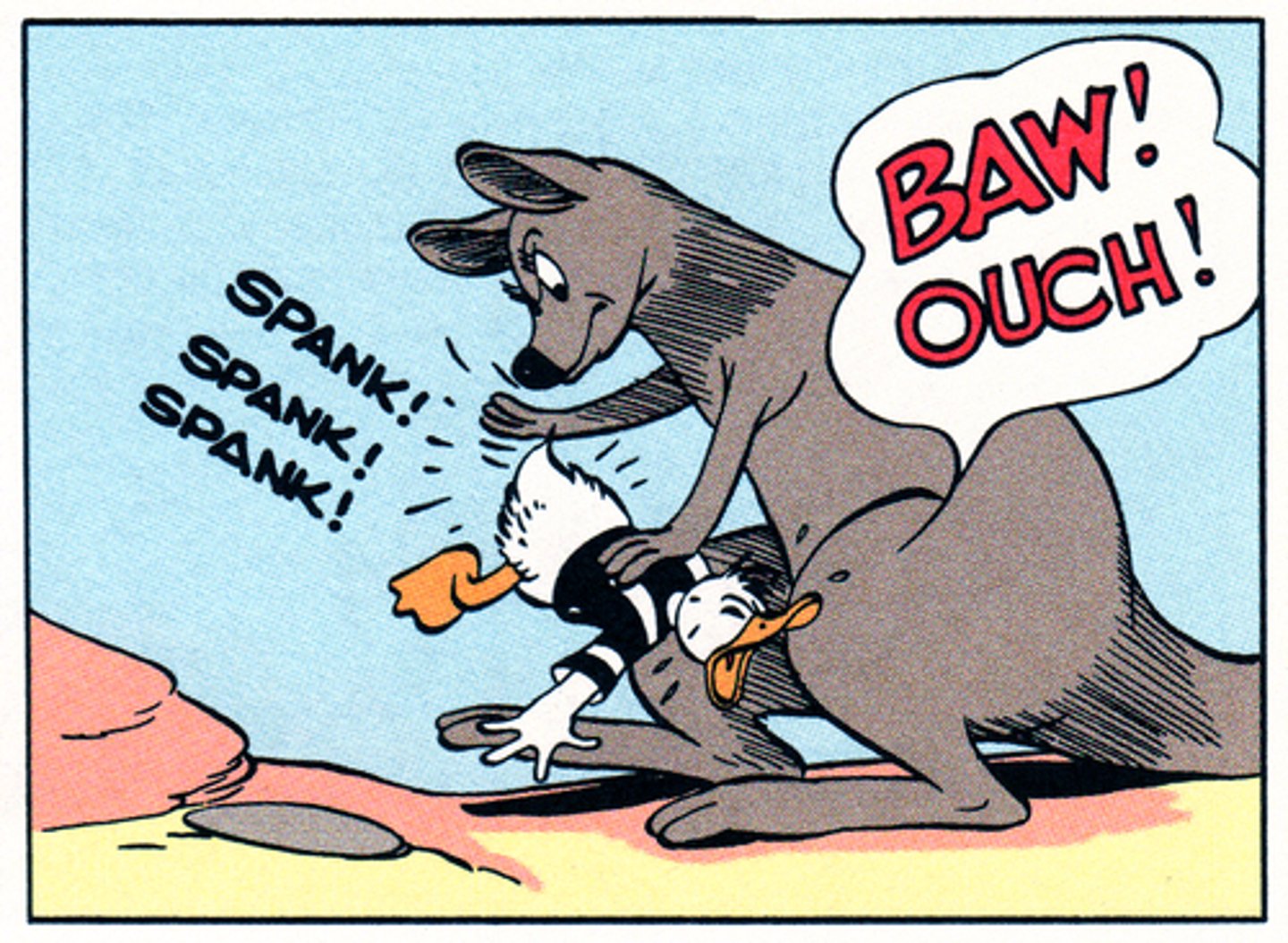
The presentation or addition of an aversive stimulus (or increase in the intensity of an already present stimulus) immediately following a behaviour that results in a decrease in that behaviour in the future
What is a Punisher?
A stimulus change that immediately follows the occurrence of a behaviour and reduces the future frequency of that type of behaviour

Primary/Unconditioned punisher
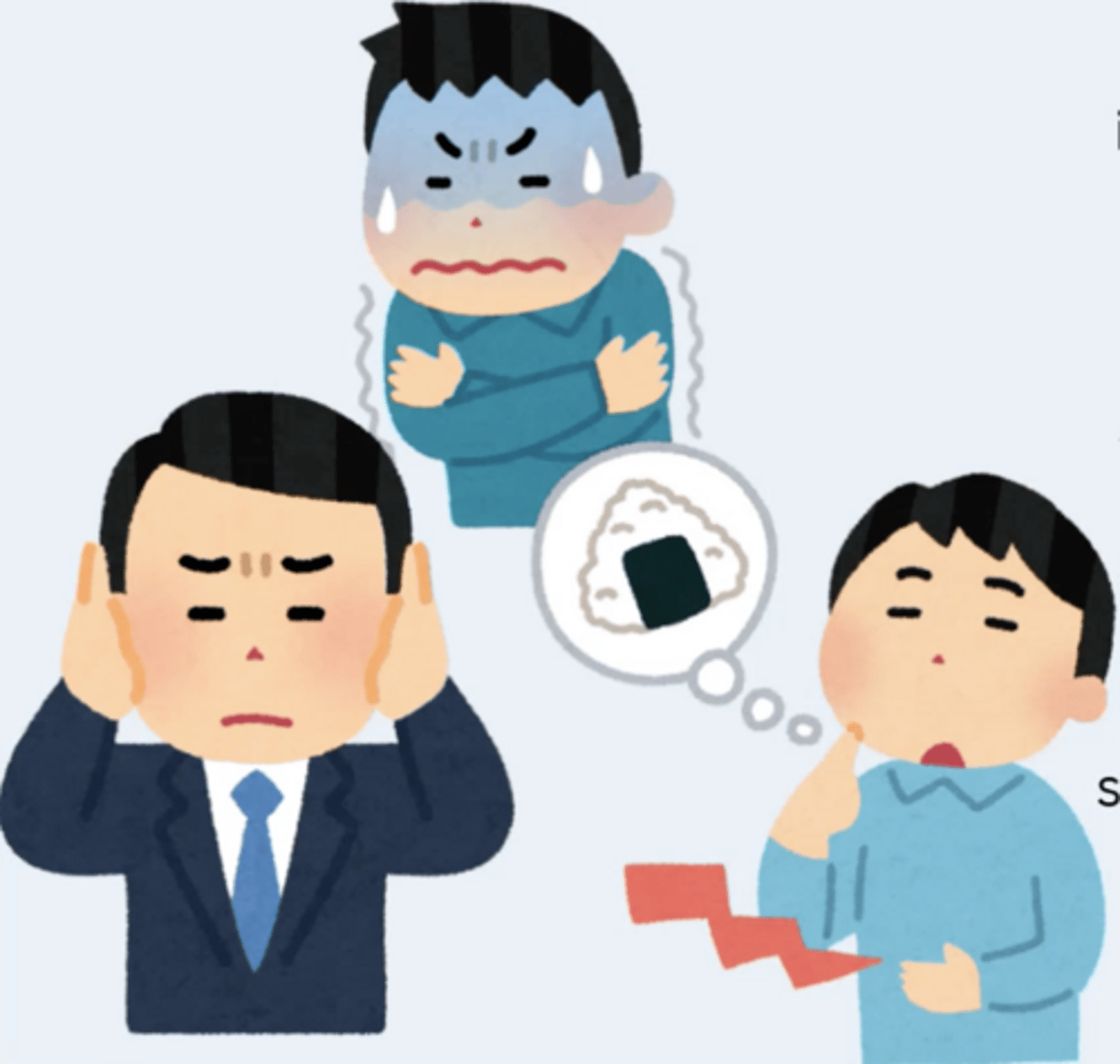
- A stimulus whose presentation functions as punishment without having been paired with any other punishers (e.g., pain, hunger, extreme temperature)
- This is a product of the evolutionary history of a species (phylogeny); all biologically intact members of a species are more or less susceptible to punishment by the same unconditioned punishers
Secondary/Conditioned punisher
- A stimulus change that functions as punishment as a result of a person's conditioning history (through stimulus-stimulus pairing with one or more unconditioned or conditioned punishers)
- If the conditioned punisher is repeatedly presented without the punisher(s) with which is was initially paired, its effectiveness as punishment will diminish until it is no longer a punisher
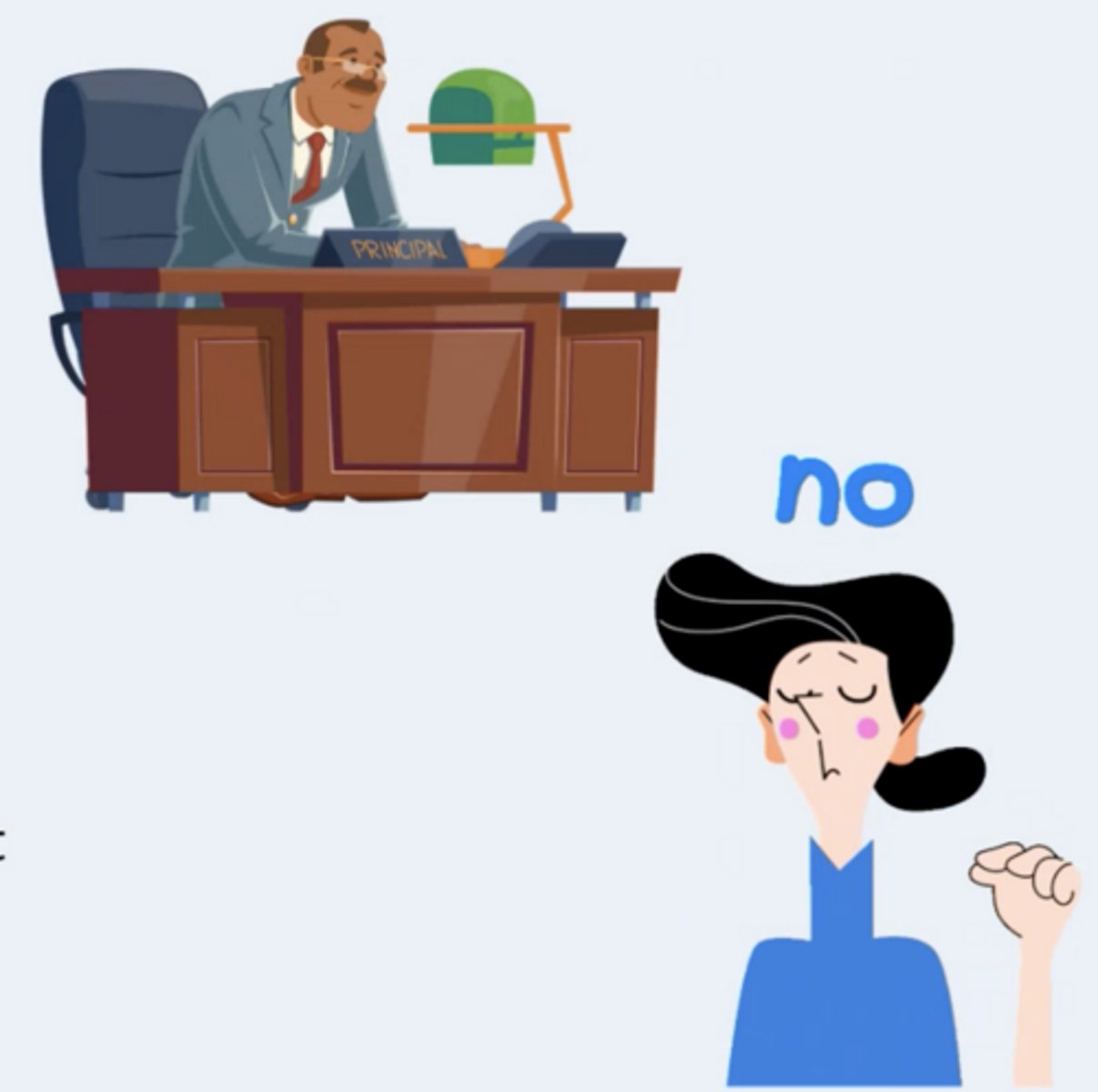
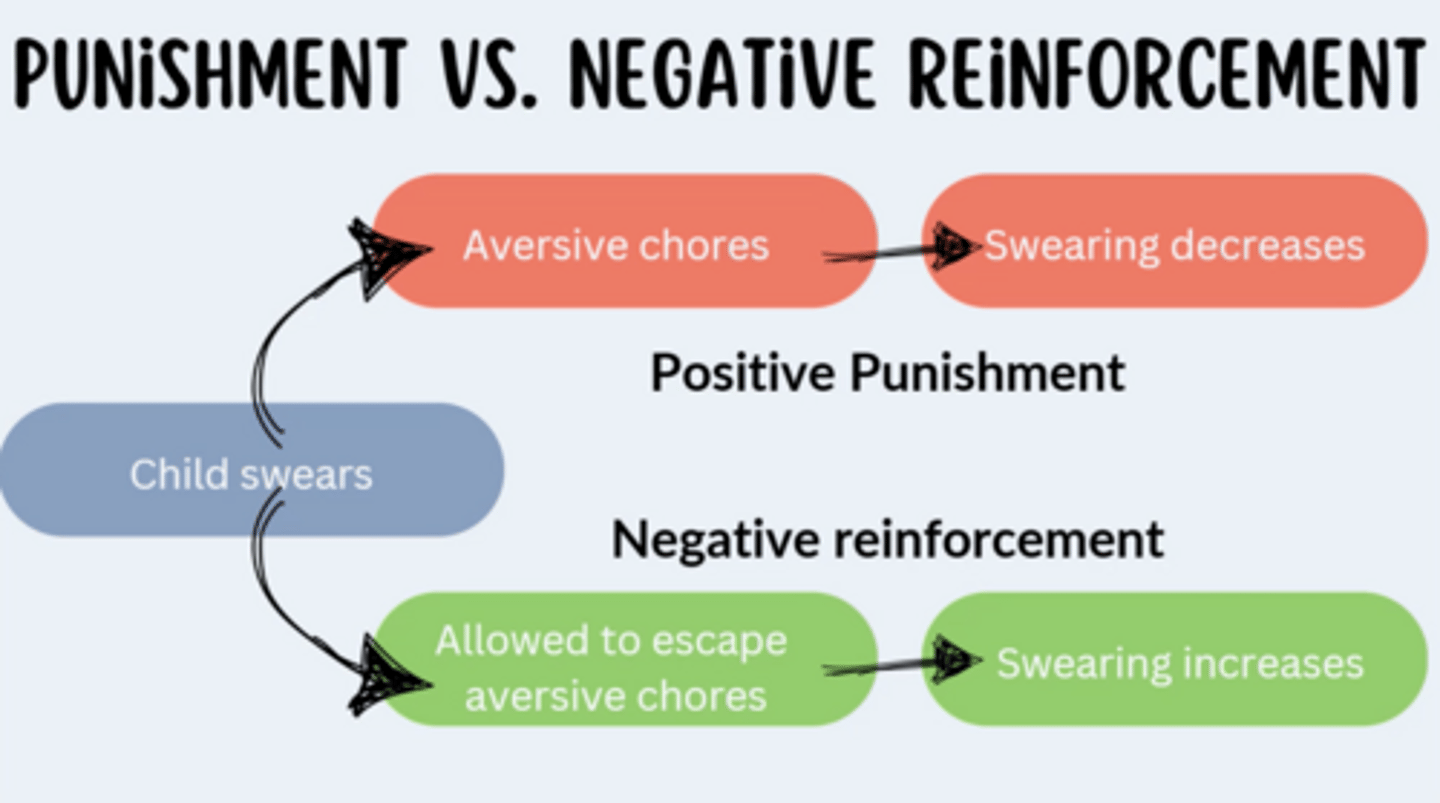
Positive Punishment vs. Negative reinforcement: Diagram scenario
How can we ensure that punishment is effective?
- Immediacy: Must be delivered immediately after the behaviour has occurred
- Contingency: explain to the learner why they are encountering the contingencies of punishment
- Motivating operations: consider what might make a punisher more or less desirable which can change how likely they are to do a behaviour
- Individual differences/magnitude: punishment might need to be applied differently based on the individual
What are the ethical considerations when using punishment?
- Should minimize risk of harm
- Should only be used after all reinforcement-based procedure attempts have failed
- Should only be used when the risk of harm outweighs the risk of implementing a punishment based procedure (usually when the behaviour is dangerous to the learner or others around them)
Punishment vs. Extinction: How are they similar?
Extinction, Positive punishment, and Negative punishment all result in a decrease in behaviour!

