Ch. 14 - Sales Promotion
 Call Kai
 Learn
Learn Practice Test
 Spaced Repetition
 Match
Match Flashcards
 Knowt Play
1/45

There's no tags or description
Looks like no tags are added yet.
Name | Mastery | Learn | Test | Matching | Spaced | Call with Kai |
|---|
No analytics yet
Send a link to your students to track their progress
46 Terms
sales promotion
direct inducement within an action-focused marketing event that offers an extra value or incentive for the product to the salesforce, distributors, or the ulitmate consumer with the primary objective of influence customer and potential customer behaviour which may include an immediate purchase
extra incentive to buy - financial
coupon, price discount, refund or rebate
extra incentive to buy - emotionally based
contest entry, premium
extra incentive to buy - value oriented
extra amount of product, sample
extra incentive to buy - experiential
attend an event
acceleration technique
speed up the buying process and buying decisions
types of sales promotion - consumer (B-C)
designed to induce the consumer to purchase
used by manufacturers and retailers
types of sales promotion - trade (B-B)
motivate organizations in the distribution channel to carry and merchandise a product
directed at intermediaries (wholesalers, distributors, and retailers)
consumer sales promotions
sampling, coupons, premiums, promotional products, contest/sweepstakes, refunds/rebates, bonus packs, price discounts, event marketing
trade sales promotions
trade allowances, point of purchase displays, cooperative advertising, contests and incentives, sales training programs, trade shows
promotional PUSH strategy
persuade the trade to stock, merchandise, and promote product
sales reps and trade advertising communicate when there are favourable relations
promotional PULL strategy
efforts directed to the ultimate consumer to create demand
use if product has unique benefits
growth of sales promotions
brand building
reaching specific target audience
geographic, demographic, and psychographics
promotional sensitivity
consumers respond favourably, consistent with economic theory
declining brand loyalty
consumers loyal to coupons use or deals
brand switchers see no difference in products
brand proliferation
new brands entering mature product categories
short term focus
accountability
quick and easy ROI
power of retailers
competition
account specific marketing
account specific marketing
development of customized promotional programs for individual retail accounts by marketers
objectives of sales promotion plan - trial purchase
new product introduction, introduce to new users
objectives of sales promotion plan - repeat purchase
price promotions, coupons, or bonus packs to stock up
objectives of sales promotion plan - consumption
recipe books or calendars
objectives of sales promotion plan - brand equity
contests, sweepstakes, premiums
consumer franchise building (CFB)
communicate distinctive brand attributes and contribute to the development and reinforcement of brand identity
non franchise building (non-FB)
accelerate purchase decision process and generate an immediate increase in sales but do little or nothing to communicate information about a brand and contribute to its identity and image
incentive characteristic
sales promotions provide consumers with an extra incentive or reward to influence their behaviour
repurchase or brand switching
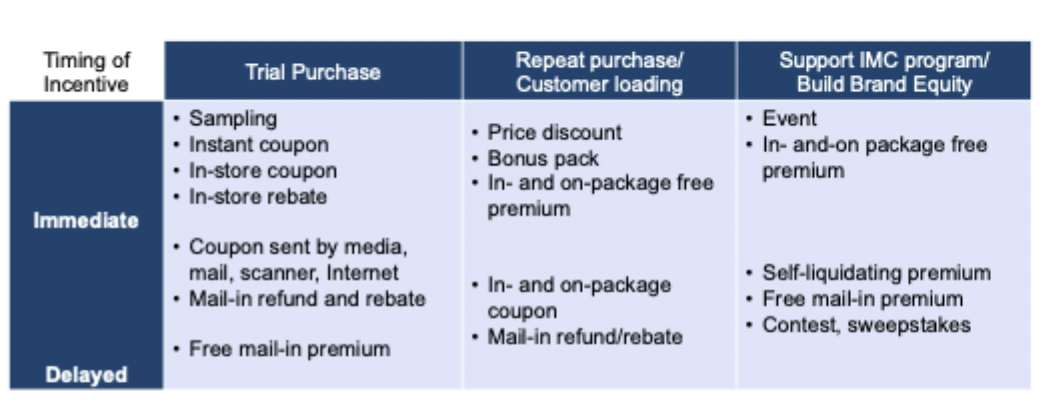
types of sales promotion activities
operant conditioning
learning theory that views the probability of a behaviour as being dependent on the outcomes or consequences associated with it
individuals act on an aspect of environment that reinforces behaviour
if a consumer buys a product with a sales promotion and experiences a positive outcome, likelihood that consumer will use product again increases; and vice versa
operant conditioning - schedules of reinforcement - continuous
every response is rewarded so learning is fast, but behaviour is likely to cease when reinforcement stops
operant conditioning - schedules of reinforcement - partial or intermittent
only some of the individuals responses are rewarded so learning is slower and lasts longer
operant conditioning - shaping
reinforcement of successive acts that lead to a desired behaviour pattern or response
part of new product launches
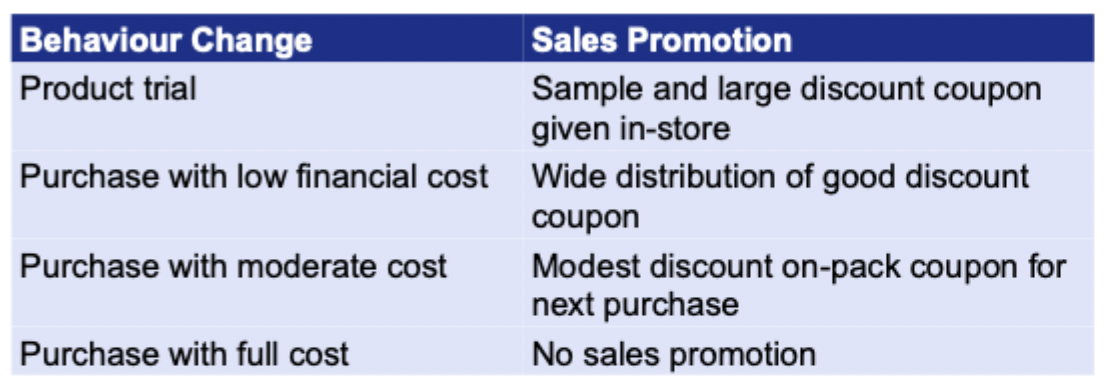
application of shaping behaviour with sales promotion
application across product lines
should it be run across the entire line, or on individual items?
which specific items should the sales promotion target?
should it run on “regular” stock or another special version?
application across geographic markets
sales promotion are run nationally or in select markets so need to consider:
regional focus requires greater managerial commitment in planning and implementation
achieving objectives more specifically may result in greater expense
national accounts may not be receptive
consumer sales promotion tactics
value of incentive
depends on threshold at which consumers will response and number of potential responses
timing
which months, weeks, days to offer promotion
distribution
how will it get to consumers; how will they get it
sampling
a variety of procedures whereby consumers are given some quantity of a product for not charge to trial
packaged goods: relatively low unit value, products are divisible, purchase is cycle is relatively short
strengths:
stimulates trial, incentivizes brand switching, encourages consideration among non category users
limitations:
brand must have unique benefit to induce purchase, cost of sampling program is recovered only if it gets consumers to become regular users
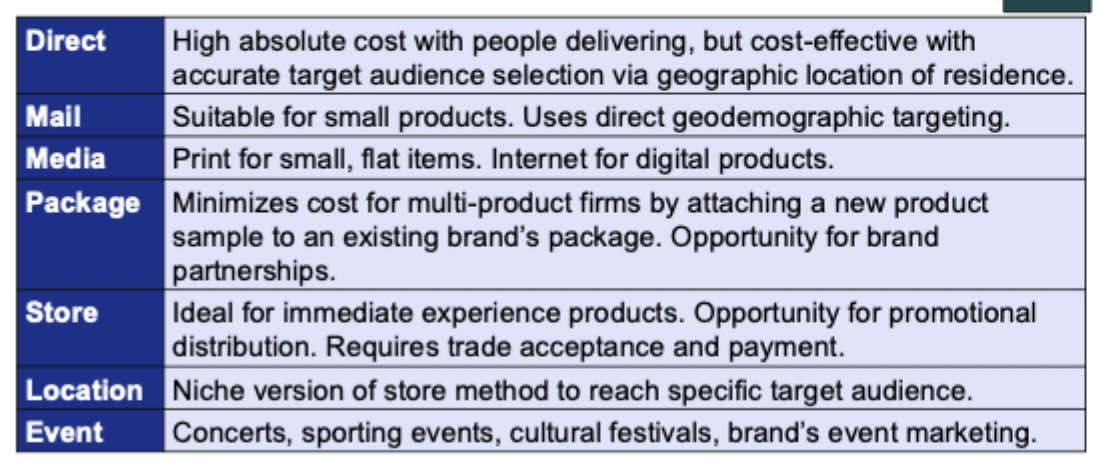
sampling distribution methods
coupons
voucher providing a discount or free good
variability in discount offered, time flexibility in terms of offer and expiration, how it’s distributed
strengths:
appeal to price-sensitive consumers, offer price break without retailer cooperation, effective way to induce trial, encourage purchases after initial trial, encourage trial by non users, stimulate repeat purchases
limitations:
potential they won’t reach new or current users, difficult to estimate how many customers will use and when, often used by loyal consumers who may purchase anyway, low redemption rates and high costs, mistaked in redemption and potential fraud
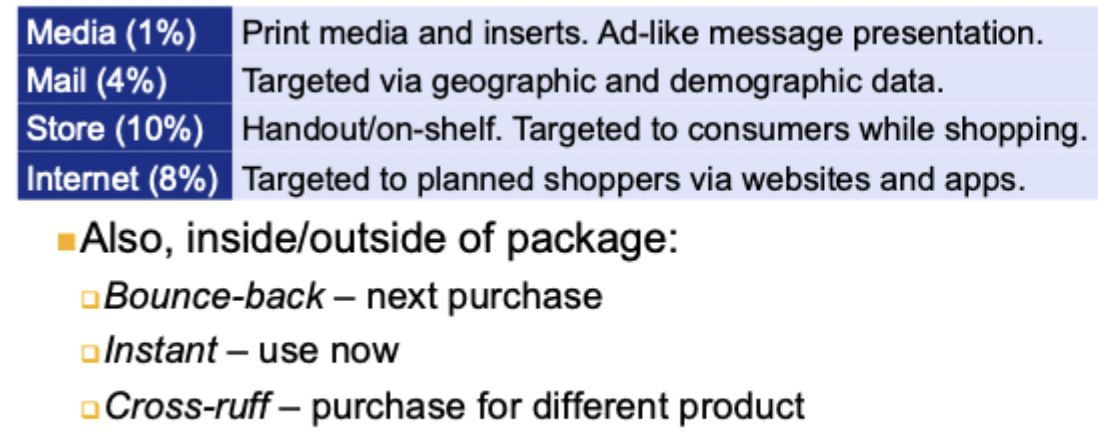
coupon distribution and redemption rates
premium
an offer of an item of merchandise or service either free or at a low price that is an extra incentive to purchasers
in a product package, given at retail locations, sent to consumers who mail in a request. reflect quality of product, consistent with image and positioning (emotion-based)
strengths:
package-carried immediately provide an extra incentive, build and reinforce a brand image, high impulse value, work with rest of IMC, encourage trade support with in-store displays
limitations:
cost of premium and extra packaging, self-liquidating premiums re`quire consumer to pay some or all of the cost, embedded premium brand donates money to a social cause to strengthen brand, usually requires consumers to send in proofs, risk of poor acceptance
promotional products
useful and/or symbolic items that are implemented in marketing communication programs as a sales promotion or message vehicle, or a combination of both
mostly given as a gift to company stakeholders, pens, mugs, etc.
strengths:
high degree of target audience selectivity and coverage, repeat exposure makes high absolute cost a low relative cost per exposure, high degree of message flexibility, positive cognitive and emotional responses, both small and large companies can employ, attention processing, and involvement may vary
limitations:
cost implications would severely curtail significant geographic distribution for most advertisers, lead time required is longer, recipients in control of whether to keep or display, company image can be damaged with poorly designed products
contest / sweepstakes
conest: consumers compete for prizes or money on the basis of skills or ability
companies judge entries and determine winners, usually requires a purchase incentive to enter
sweepstakes: winners are determined purely by chance, it can’t require proof of purchase as condition for entry
game of chance, popular among retailers and fast food chains
strengths:
sales enhanced by trial and repeat purchases, involve consumers with a brand making it relevant or connecting the prizes to target audience
limitations:
rarely contribute to consumer franchise building, numerous legal considerations affect design and administration, participation by professionals or hobbyists who don’t have intention to purchase
refunds / rebates
offers by manufacturer to return a portion of the purchase price, usually after consumer supplies proof of purchase
consumers responsive, particularly as size of saving increase, used by makers of all types of products, may perceive savings offered through cash refund as immediate value that lowers cost of item
strengths:
induce trial to encourage brand switching or non-category user, encourage repeat purchase, temporary price reduction in face of competition, influence purchase timing
limitations:
not all are motivated due to delay of offer, negative relationship between use of rebated and difficulties of redemption process, consumers believe used for inferior products, consumers may delay purchase awaiting rebates
bonus packs
offer the consumer an extra amount at the regular price
strengths:
give marketers a direct way to provide extra value, due to the simplicity of presentation, consumers prefer a bonus pack, defend against a competitor’s promotion or introduction of new brand, may result in larger purchase orders and favourable displays in store
limitations:
usually requires additional shelf space without providing any extra profit margin to retailer, may appeal primarily to current users who would have purchases the brand anyway or to promotion-sensitive consumers who may not become loyal
price discount
reduces the price of the brand, offered right on the package through specially marked price packs. typically 10-25% affect on manufacturers profit
strengths:
can make sure promotional discount reaches consumer rather than being kept by trade, have a readily apparent value to shoppers, attracts attention at point of purchase, encourage consumers to purchase larger quantities
limitations:
may create pricing and inventory problems for retailers, may be interpreted by retailers and interfering with their decision-making control, appeal primarily to regular users instead of attracting non-users, subject to federal government regulations regarding labelling
event marketing and sponsorship
marketing: promotion where a company or brand is linked to an event or where a themed activity is developed for a purpose of promoting brand by creating consumer experiences
sponsorship: integrated marketing communications activity where a company develops sponsorship relations with an established event operated by another organization
trade allowance
discount or deal offered to retailers or wholesalers to encourage them to stock, promote, or display a manufacturers products
buying: price reduction on product ordered during a fixed period
off-invoice allowance: per case or percentage discount
free goods: extra items with volume order
promotional/display: allowances or discounts for merchandising activities away from regular shelf position, running in-store promotional programs, or including the product in the ad
slotting: fees retailers charge for providing a slot or position to accommodate the new product
strengths and limitations of trade allowances
strengths: easy to implement and well accepted, effective way to encourage resellers to buy manufacturers product, expect price reduction to pass through consumers, opportunity for specialized displays, high traffic areas
limitations: only 1/3 of discounts reach consumers, 1/3 lost in inefficiencies, 1/3 pocketed by trade
forward buying: stock up on a product at the lower deal or off-invoice price and resell it to consumers after the marketers promotional period
diverting: take advantage of the promotional deal and then sell the product at the low price to a store outside its area
point of purchase advertising institute
organization serving marketers and retailers worldwide with research information and examples of successful display innovations
strengths and limitations of point of purchase displays
strengths: target audience reach, deterministic benefits can be communicated just prior to purchase, attention - especially with innovative POP options, achieve coverage objectives, absolute cost and CPM are reasonable
limitations: clutter, competition, consumers in complete control of attention, frequency is limited as requires audience to be in-store, reliant on retailer for proper display and requires payment
cooperative advertising
manufacturer pays a certain percentage of the expenses a retailer or distributor incurs for advertising their product
vertical: manufacturer pays for a portion of the ad a retailer runs (50/50)
horizontal: sponsored in common by a group of retailers
ingredient sponsored: supported by raw materials manufacturers

