Digestive System, Digestive system (copy)
 Call Kai
 Learn
Learn Practice Test
 Spaced Repetition
 Match
Match Flashcards
 Knowt Play
1/19

Earn XP
Description and Tags
Name | Mastery | Learn | Test | Matching | Spaced | Call with Kai |
|---|
No analytics yet
Send a link to your students to track their progress
20 Terms
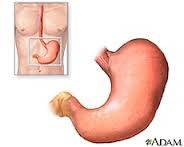
stomach
An organ of the digestive system where most mechanical breaking down of food happens, churning, protein digestion
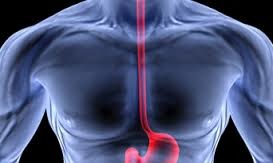
esophagus
A muscular tube that connects the mouth to the stomach through peristalsis, rhythmic contractions of its walls
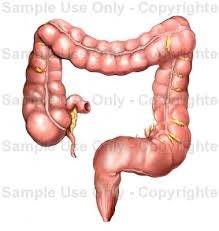
large intestine
Absorbs water and forms feces
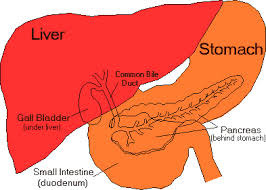
liver, gallbladder, pancreas
organs that create chemicals that help the small intestines break down food
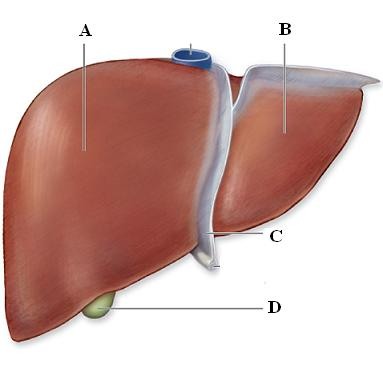
Liver
Breaks down toxins, such as alcohol and processes nutrients into forms easier for the rest of your body to use. Makes glycogen from glucose
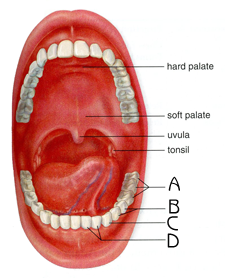
mouth
where digestion begins, mechanically breaks down food. Chemical → amylase
small intestine
Long hollow tube where most absorption of nutrients occurs. Absorbs water, and electrolytes for un absorbed food → feces. Houses beneficial bacteria
pancreas
An organs in the abdominal cavity with two roles. The first is to produce digestive enzymes . The second is to secrete insulin into the bloodstream to help regulate blood glucose levels. Absorption of nutrients takes place. Inner surfaces lined with finger like projections (villi), covered even smaller with micovilli, increases the surface area for nutrient absorption
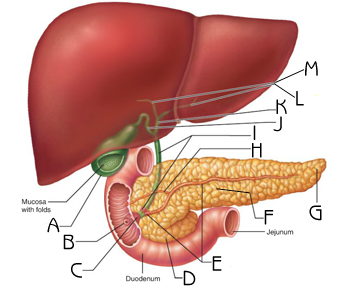
gall bladder
An organ that stores bile and releases it as needed into the small intestine
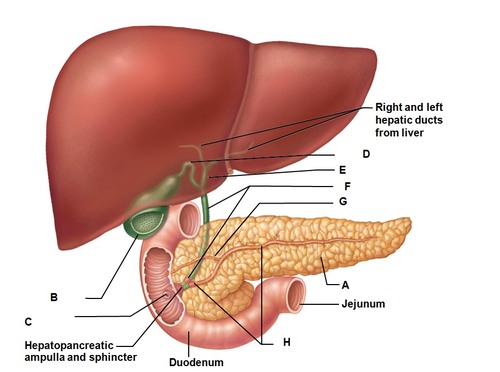
liver
produces bile
rectum
stores solid waste and compresses into more solid form
chemical digestion
breaking down food with enzymes
mechanical digestion
crushing, mashing or breaking down food into smaller pieces
chyme
thick slippery paste of food molecules
hydrochloric acid
kills bacteria in stomach and gives an acidic environment for enzymes to work
villi
fingerlike projections in the small intestine that increase surface area
peristalsis
involuntary squeezing action of the muscles in the digestive system; causes food to move through
epiglottis
flap of tissue that covers the trachea when swallowing food
bacteria
organisms found in the large intestine that help with digestion of solid matter

