Wind
 Call Kai
 Learn
Learn Practice Test
 Spaced Repetition
 Match
Match Flashcards
 Knowt Play
1/41

There's no tags or description
Looks like no tags are added yet.
Name | Mastery | Learn | Test | Matching | Spaced | Call with Kai |
|---|
No analytics yet
Send a link to your students to track their progress
42 Terms
What is “wind”?
“Moving air”
What are the 2 types of wind based on geographical locations?
Mediterranean = Mistral
Rocky Mountain = Chinook
Why is wind important to aviation?
Takeoff, en-route, landing
Navigation
Fuel management
Flight safety purpose
What are the 2 causes of wind?
Atmospheric pressure
Temperature variations
What are the 2 types of wind motions?
Vertical
Ascending current
Descending current
Horizontal
True or false: “wind direction is measured according to whichever direction the wind is blowing from”
True!
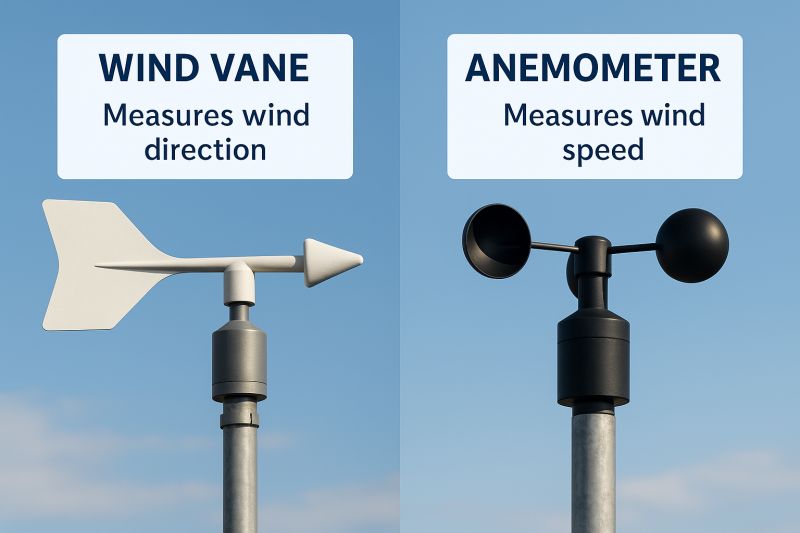
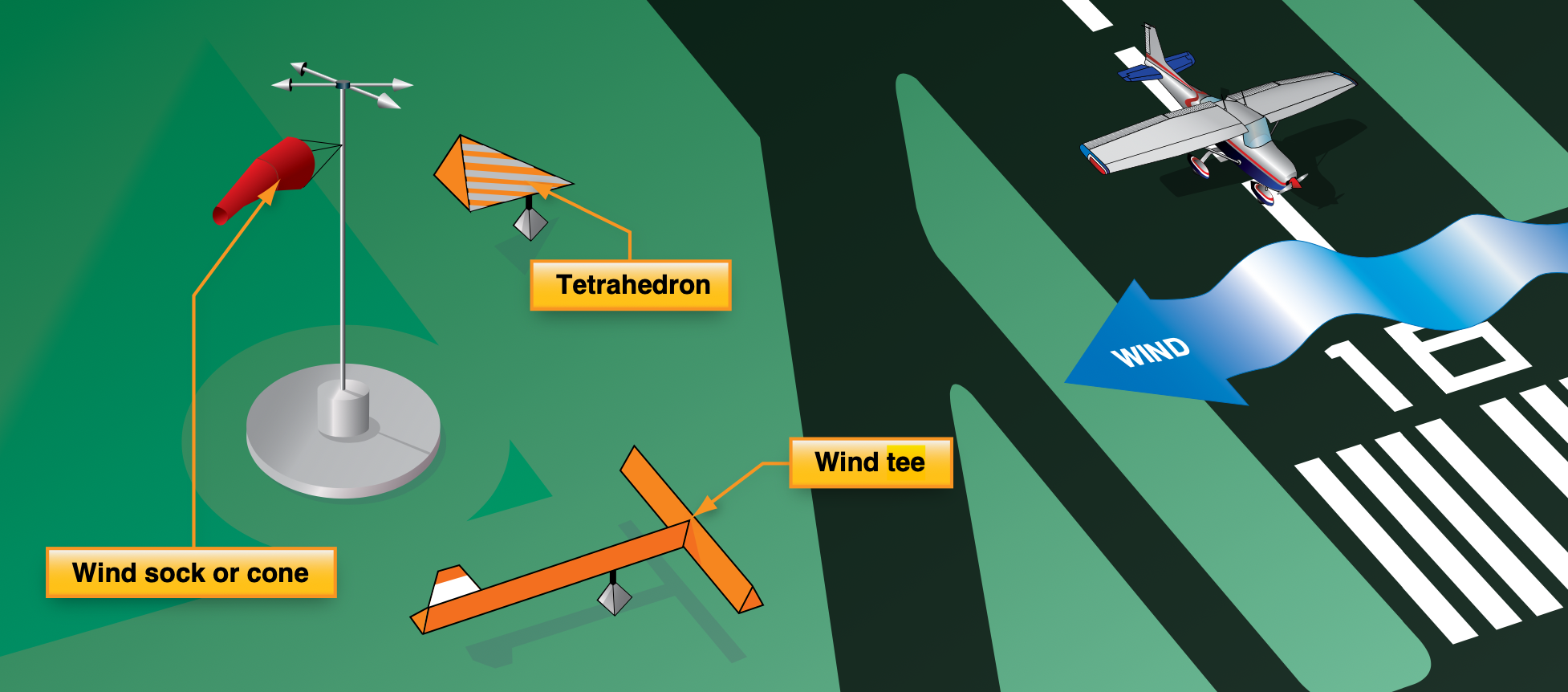
What are some instruments used to determine “wind direction”?
Wind vane
Wind sock
Wind sleeve
Wind tee
What is “wind speed”? What are the 3 standard units for wind speed?
The rate of wind movement in distance per unit of time
Units:
Knots (KT)
Kilometers per hour (kph)
Meters per second (mps)
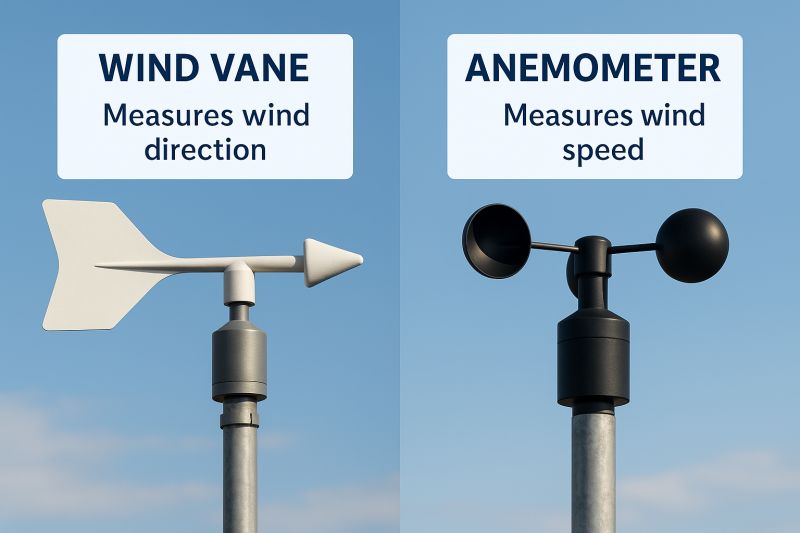
What are some instruments used to measure “wind speed”?
Anemometer
Aerovane
Describe “general circulation”
The observed patterns of winds & pressure which continue throughout the year
What is the key driver of atmospheric circulation?
The uneven heating of the earth’s surface by the sun
True or false: “the equator region is colder than the polar region”
False! (The most direct rays strike the earth near the equator, heating equatorial regions much more than polar regions)
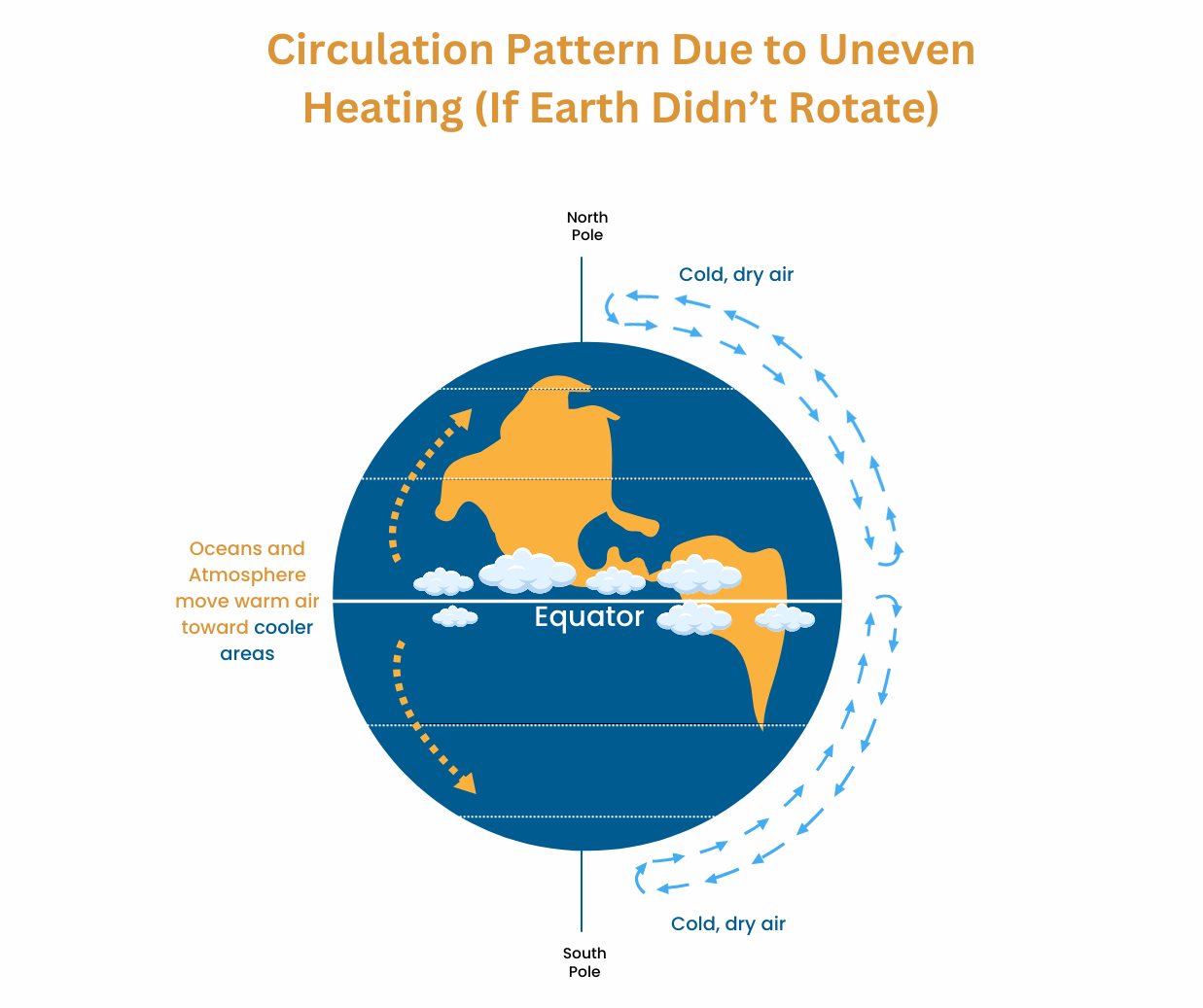
What is the name of the circulation if the earth didn’t rotate? (Hint: … cell)
“Single cell”
Explain wind circulation if the earth did not rotate
The wind simply flow back-and-forth between the poles and the equator.
At the poles = cold air sink, move toward the equator
At the equator = warm air rises, move toward the poles
As the earth rotates, the single cell breaks up into how many cells? What are they?
3 cells!
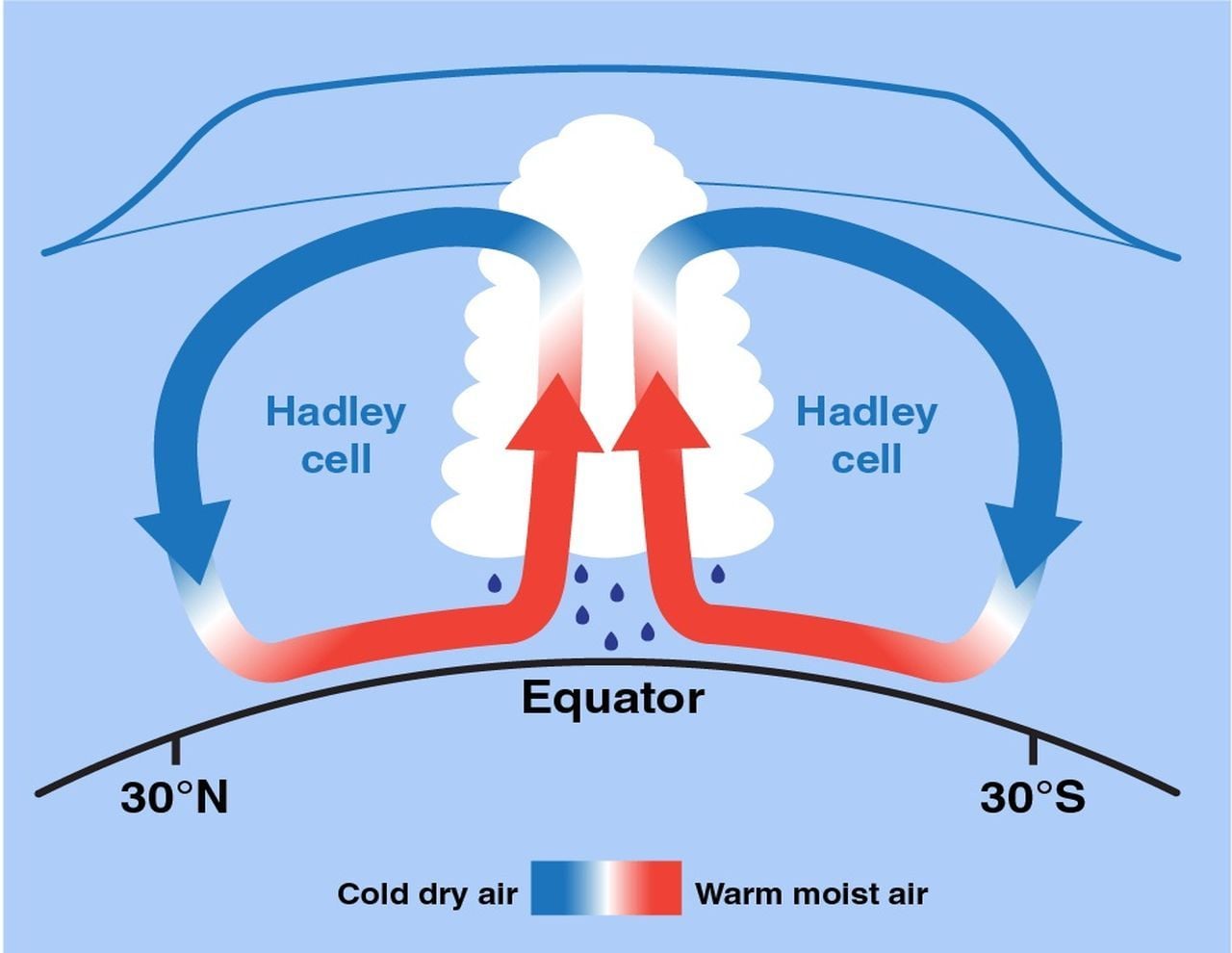
Hadley cell
Ferrel cell
Polar cell
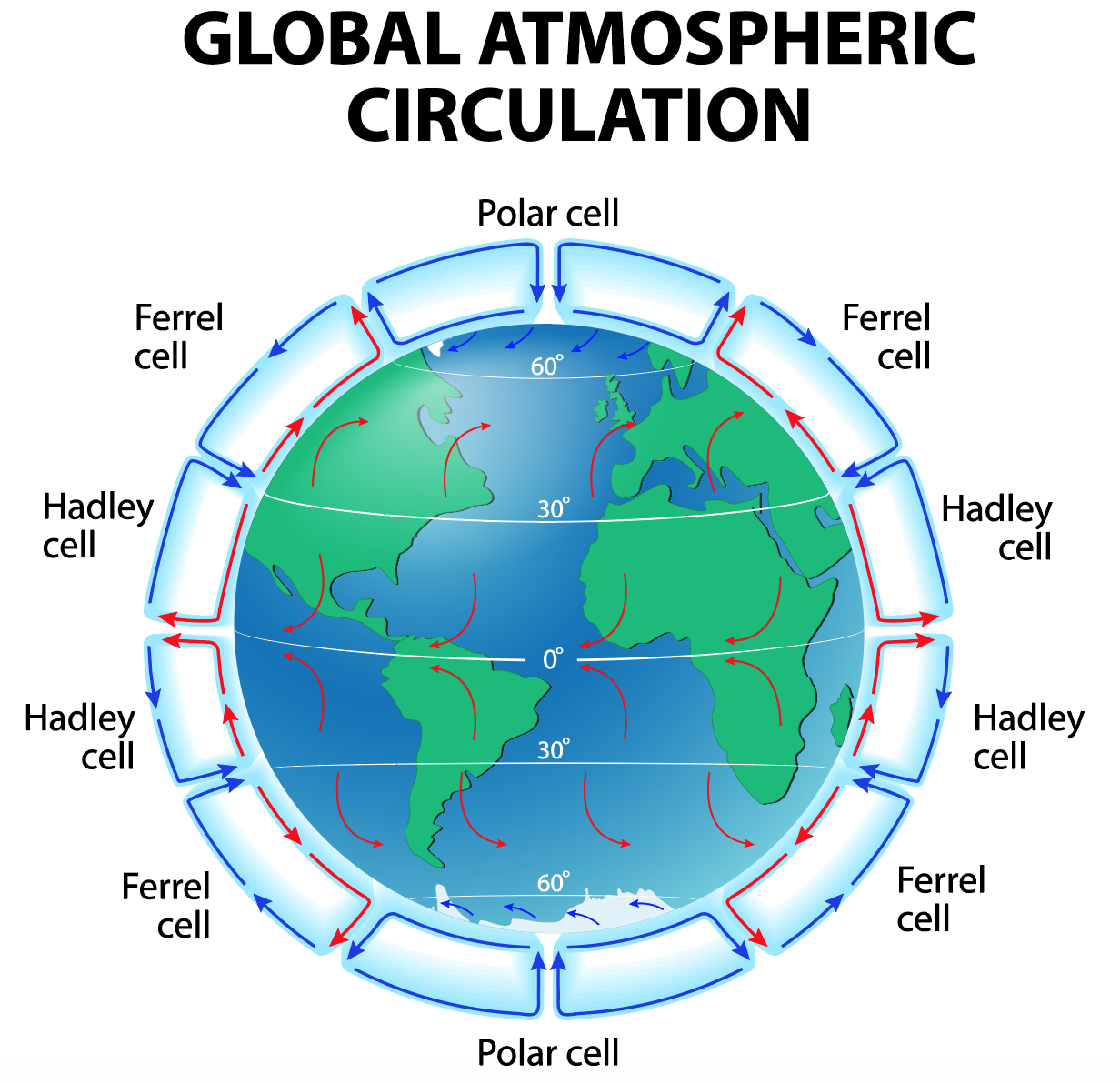
Explain “Hadley cell”
Movement = counterclockwise
The air rises at the equator
Flows toward the poles aloft
Reaching only about 30 degrees latitude
Cool down and sink
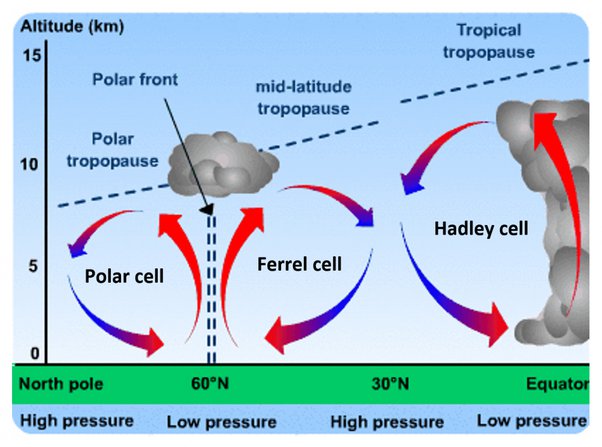
Explain “Ferrel cell”
Movement = clockwise
Between 30-60 degrees latitude
Air move poleward until 60 degrees latitude
Meet cooler air from the pole
Acting as a "gear" between the Hadley and Polar cells
Explain “Polar cell”
Movement = counterclockwise
Between 60 degree latitude and the poles
Cooler air sink to 60 degrees latitude
Then move upward
What are the 6 forces and winds?
Forces:
Pressure Gradient Force (PGF)
Coriolis Force (CF)
Centrifugal Force
Friction
Winds:
Geostrophic Wind
Gradient Wind
Explain “pressure gradient force”
Different pressure create the force to drive the wind
Develops from the poles to the equator
Always flow from H → L!!!
If the earth did not rotate, PGF = the only force acting on the world
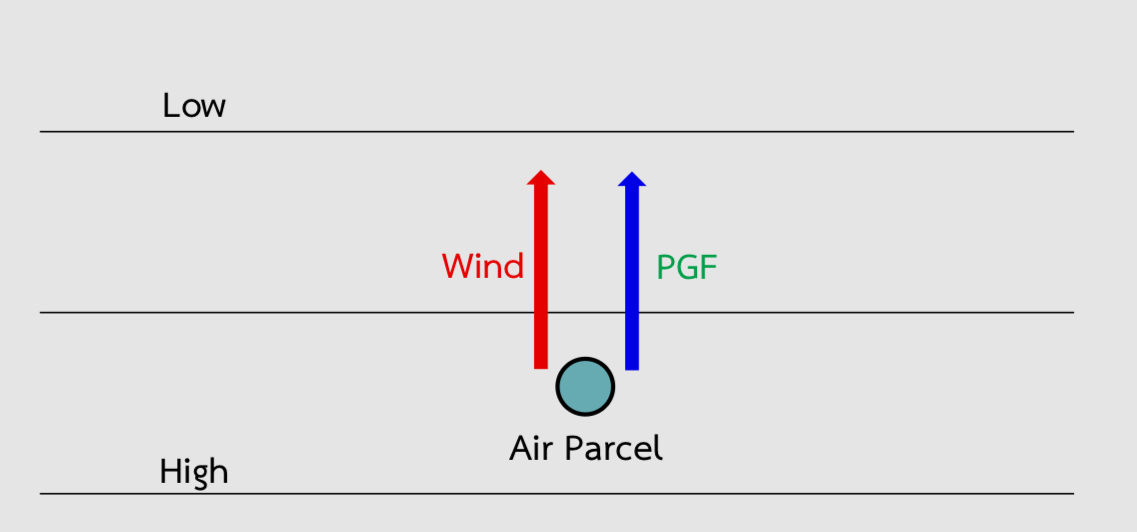
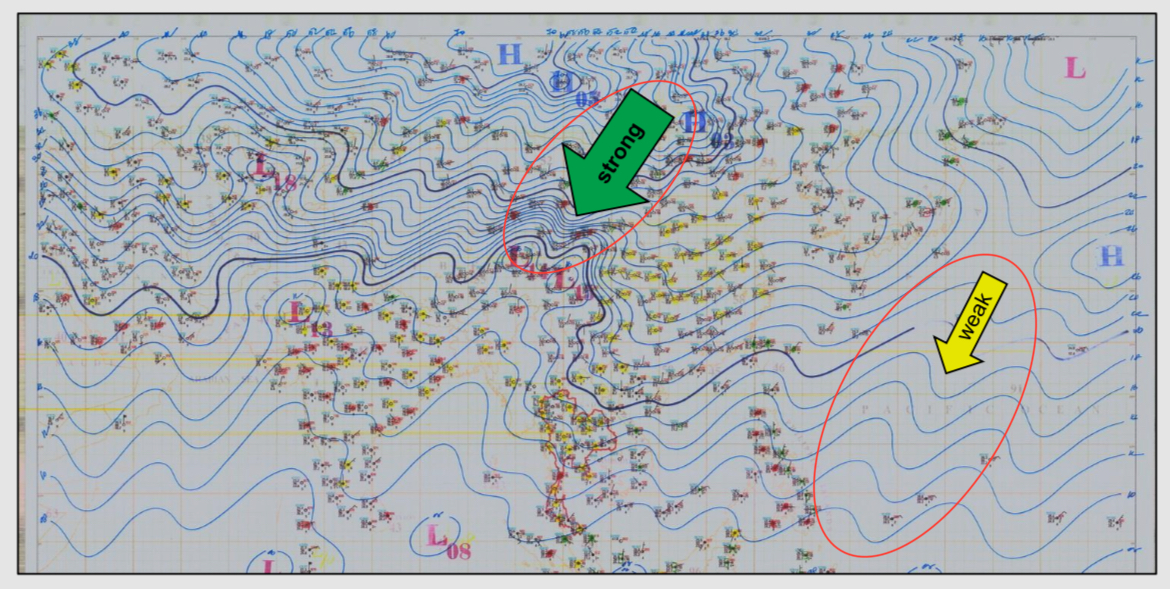
How does different PGF affect the wind?
Weak/loosely aligned PGF = light wind
Strong/tightly packed PGF = strong wind
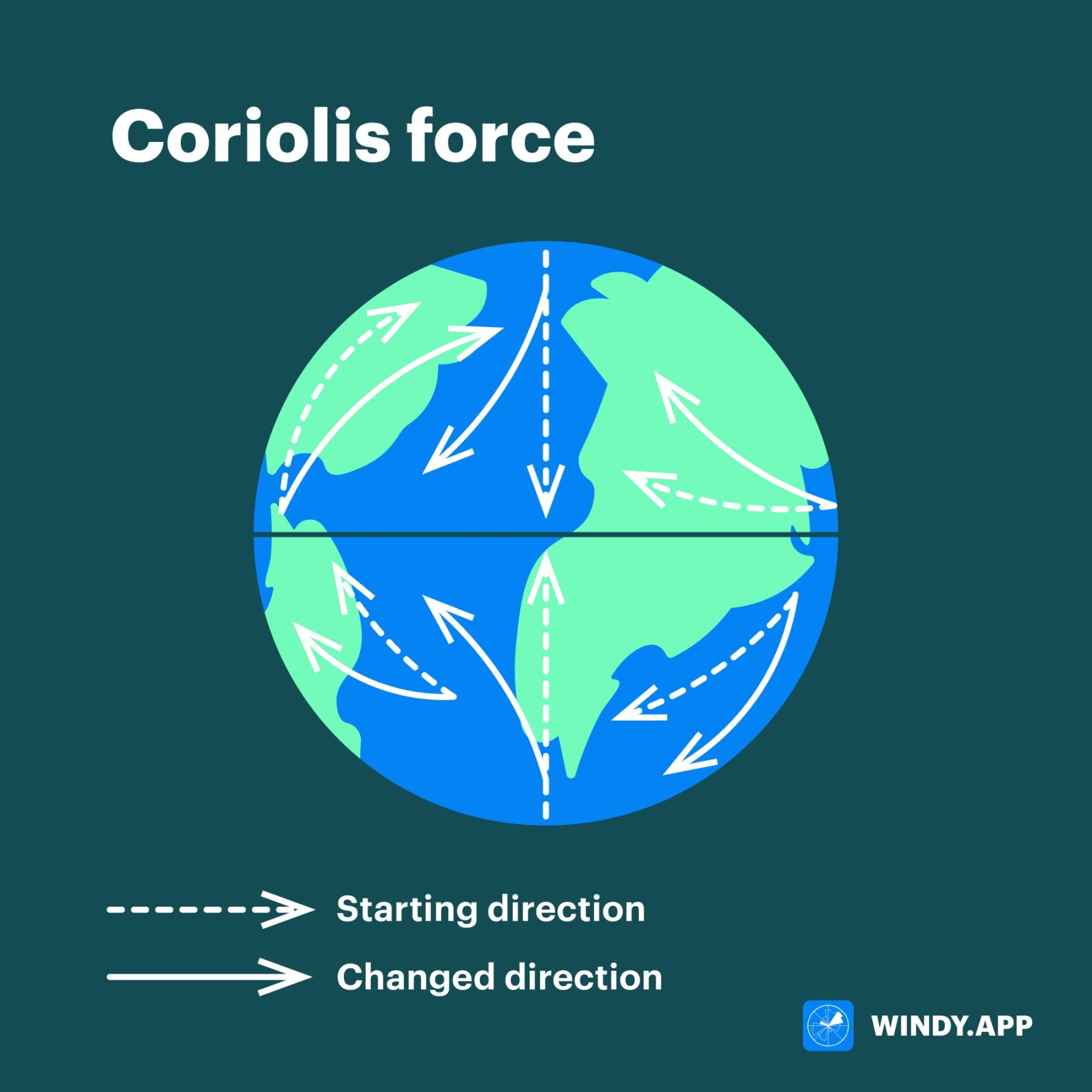
Explain “Coriolis force”
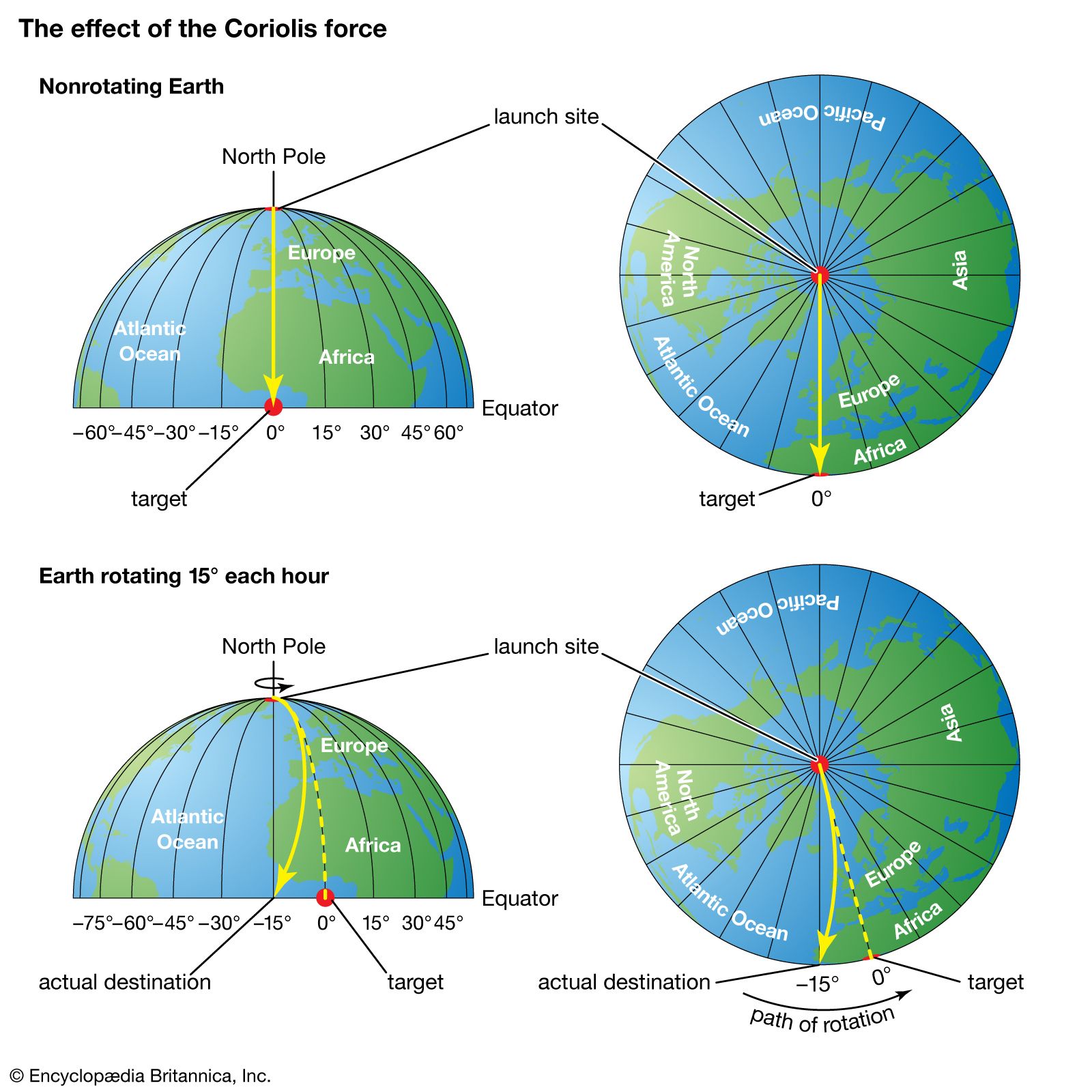
A defective force resulting from the earth’s rotation and the law of inertia
Northern hemisphere = acts to the right of wind direction
Southern hemisphere = acts to the left of wind direction
Vary with wind speed and latitude, zero at equator, max at the poles
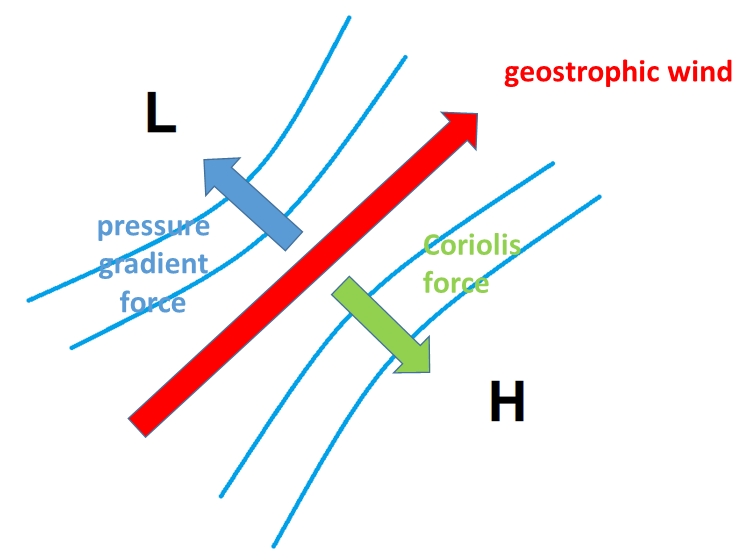
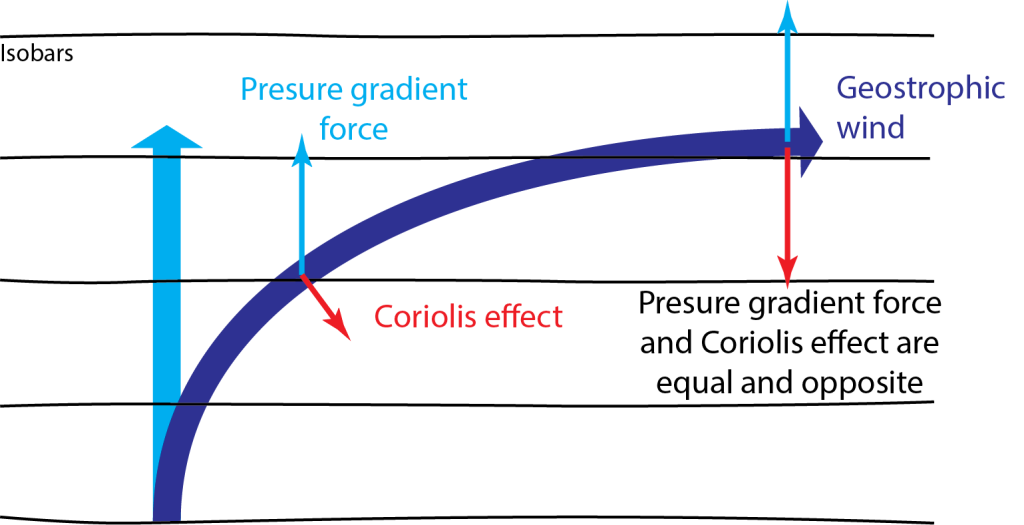
Explain “Geostrophic wind”
A steady horizontal air motion along straight, parallel isobars
Perpendicular to that in which the CF and the PGF are acting equally and oppositely
Layer of frictionless
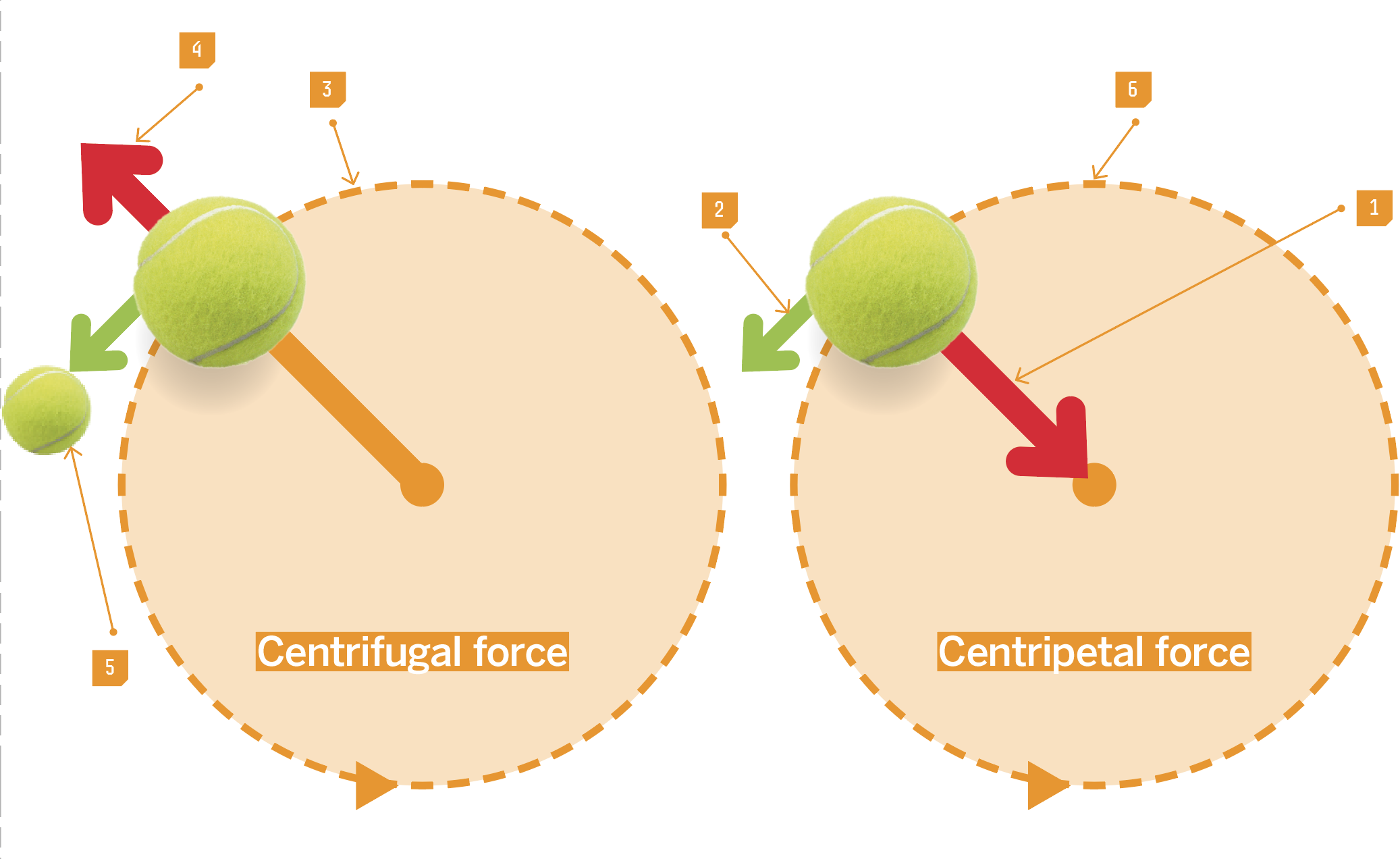
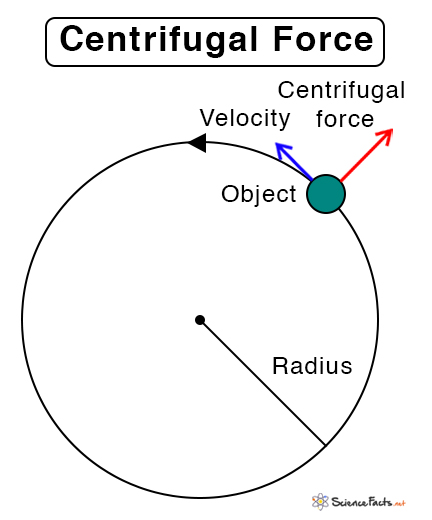
Explain “Centrifugal force”
Cause a rotating body to be propelled away from the center of rotation
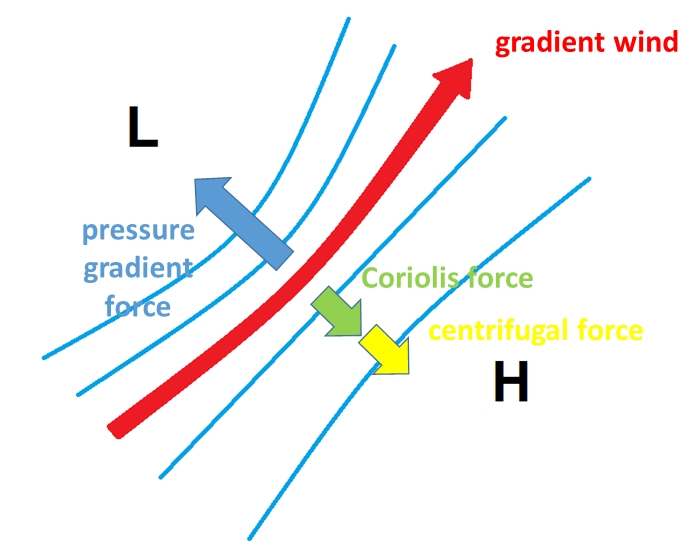
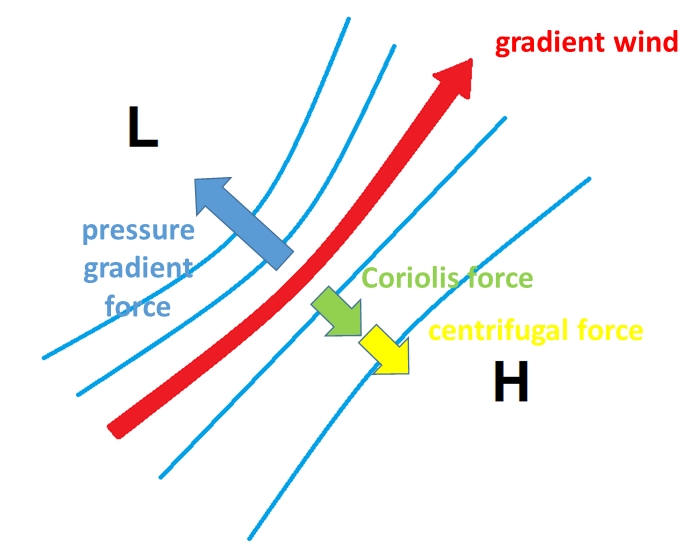
Explain “Gradient wind”
Steady horizontal and frictionless
Wind blows parallel to curved isobars
CFF, CF, and PGF are balanced.
PGF = CF + CFF
True or false: “gradient wind occurs at the earth’s surface”
False! (It doesn’t occur at the earth’s surface due to friction)
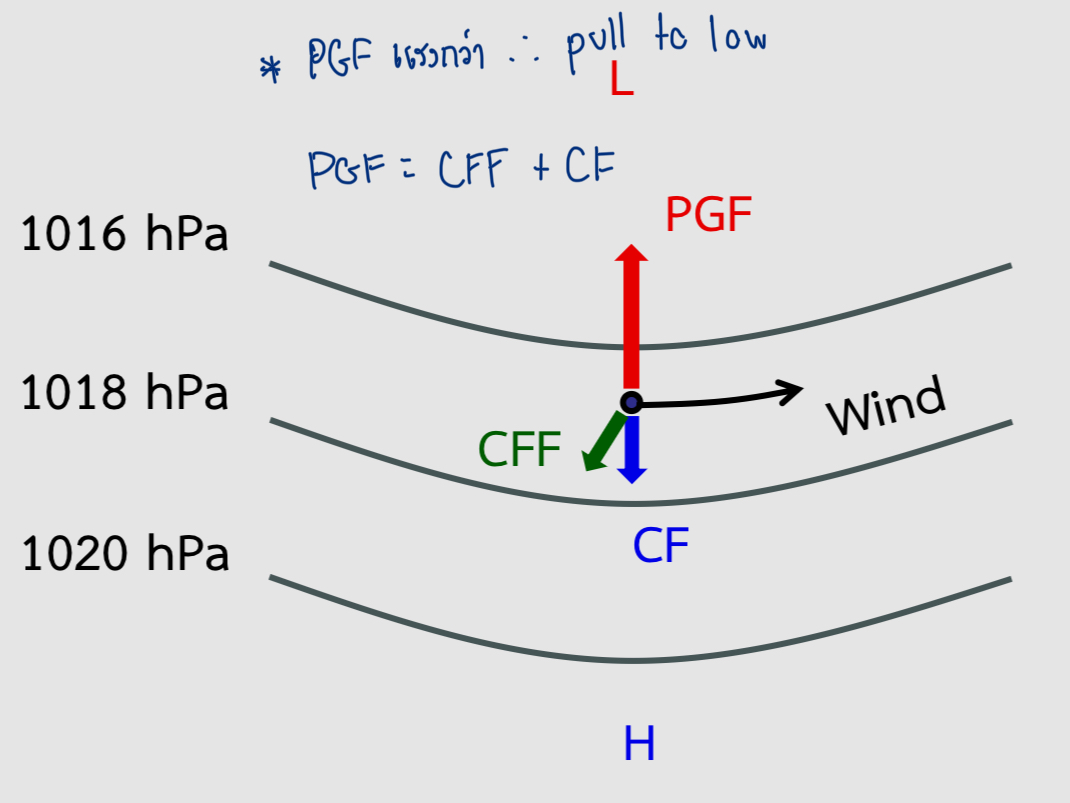
What will happen when PGF is stronger than CF
PGF = CF + CFF
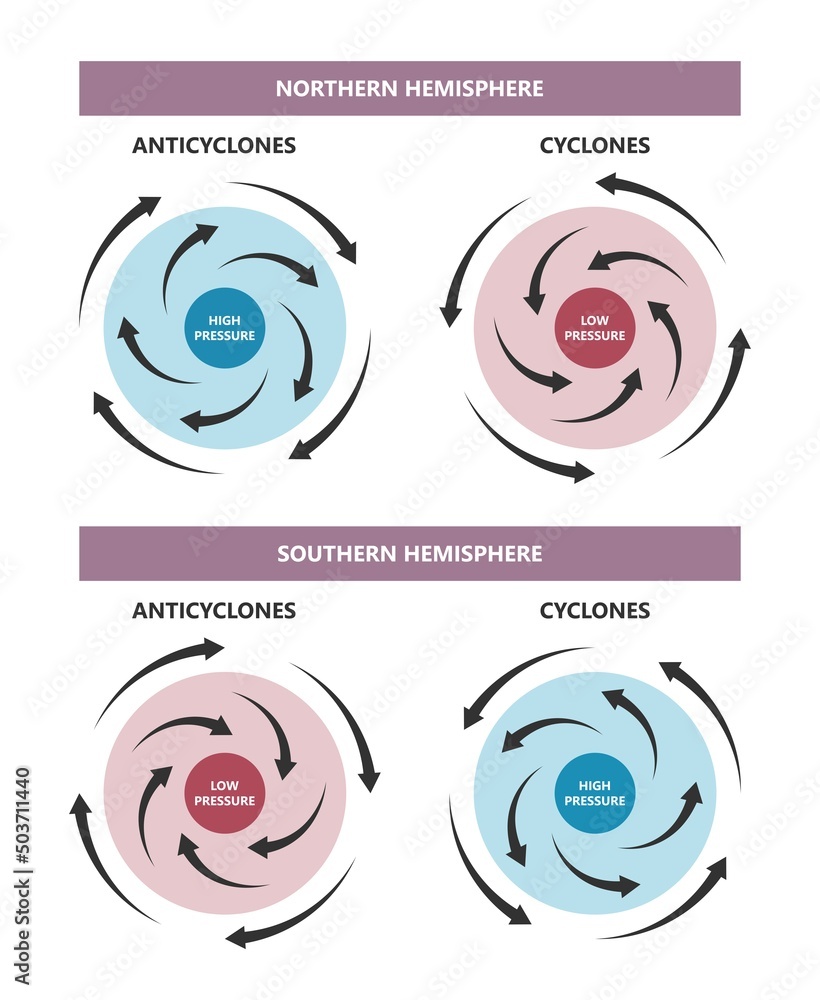
Wind flow counterclockwise around low in the Northern hemisphere
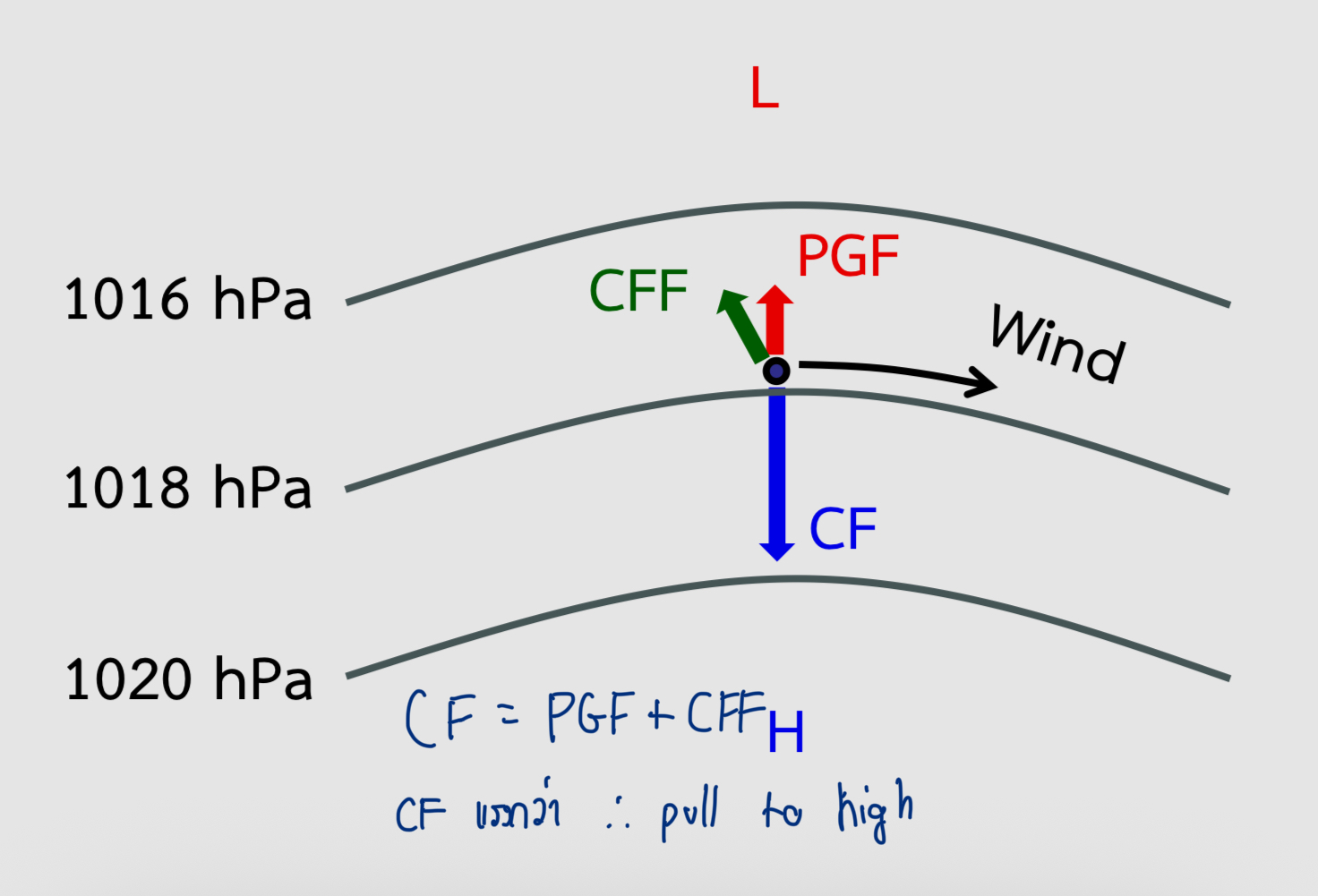
What will happen when CF is stronger than PGF
CF = PGF + CFF
Wind flow clockwise around high in the Northern hemisphere
Explain “friction”
Surface friction slows down air movement
Reduction in wind speed by friction = reduced CF
Disrupt the balance between CF and PGF
What are the 2 types of circulations that result from friction? Simply elaborate
Cyclonic = into a low pressure cell in the Northern Hemisphere
Anticyclonic = out of a high pressure cell in the Northern hemisphere
True or false: “geographical characteristics create local pressure and wind systems”
True!
Land
Water
Mountains
Valleys
What are the 5 different types of local wind?
Land breeze
Sea breeze
Mountain wind
Valley wind
Katabatic wind
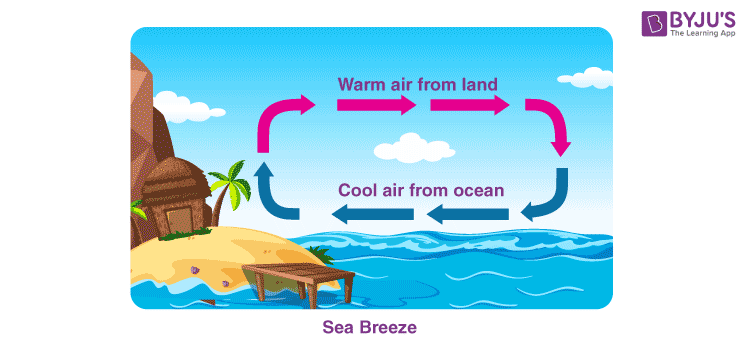
Explain “sea breeze”
Occurs during the day
Land heats up more quickly → hotter than the sea
Wind blows from sea (H) → land (L)
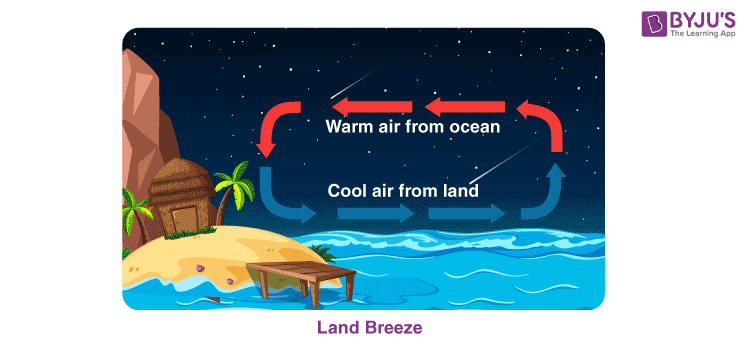
Explain “land breeze”
Occurs at night
Land releases heat faster than the sea
The wind reverses and blow from cool land to warmer water
Land (H) → Sea (L)
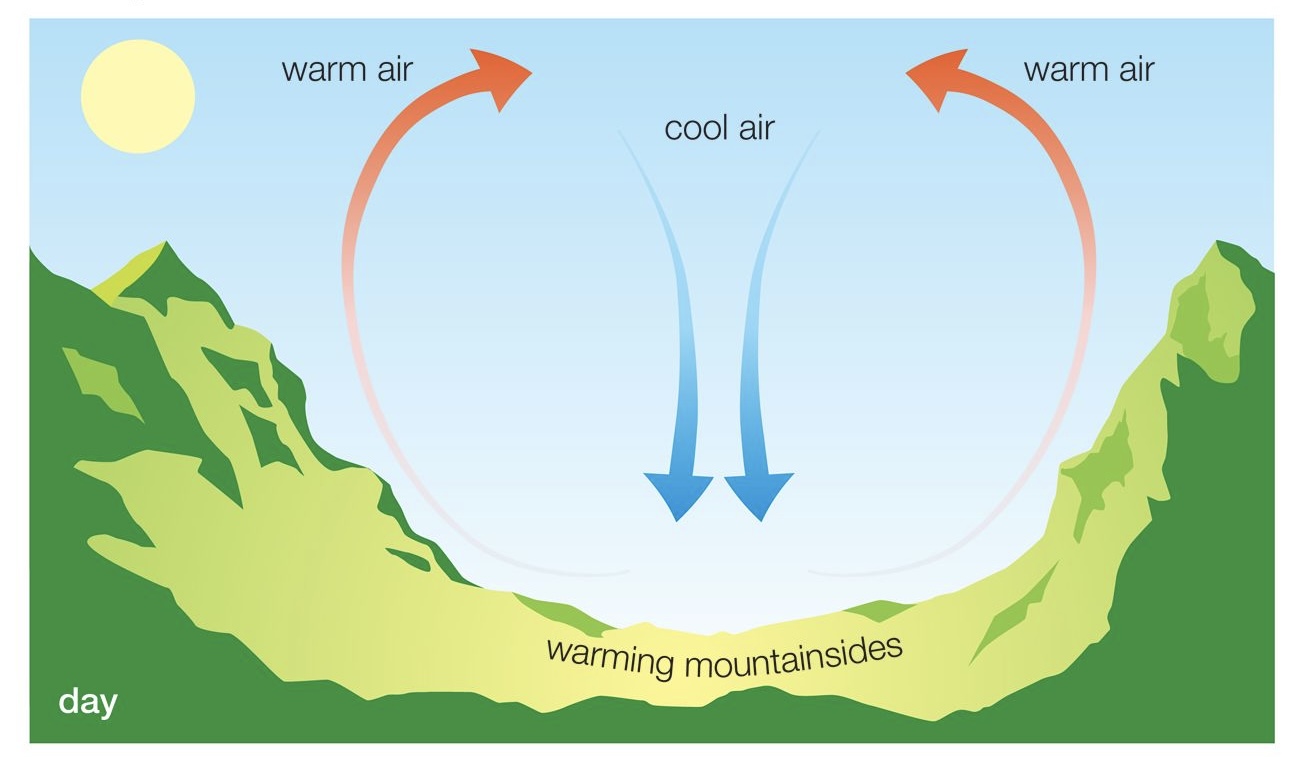
Explain “valley wind”
Occurs during the day
“Anabatic wind”
Air near the slope of the mountain receives radiation from the sun and is heated by the contact with the ground
Ground (H) → top of mountain (L)
Explain “mountain wind”
Occurs at night
“Katabatic wind”
The air in contact with the mountain slope is cooled down by terrestrial radiation → becomes heavier than the surrounding air → sinks
Air sinking → mountain wind (stronger than valley wind, especially in winter)
Top of the mountain (H) → ground (L)
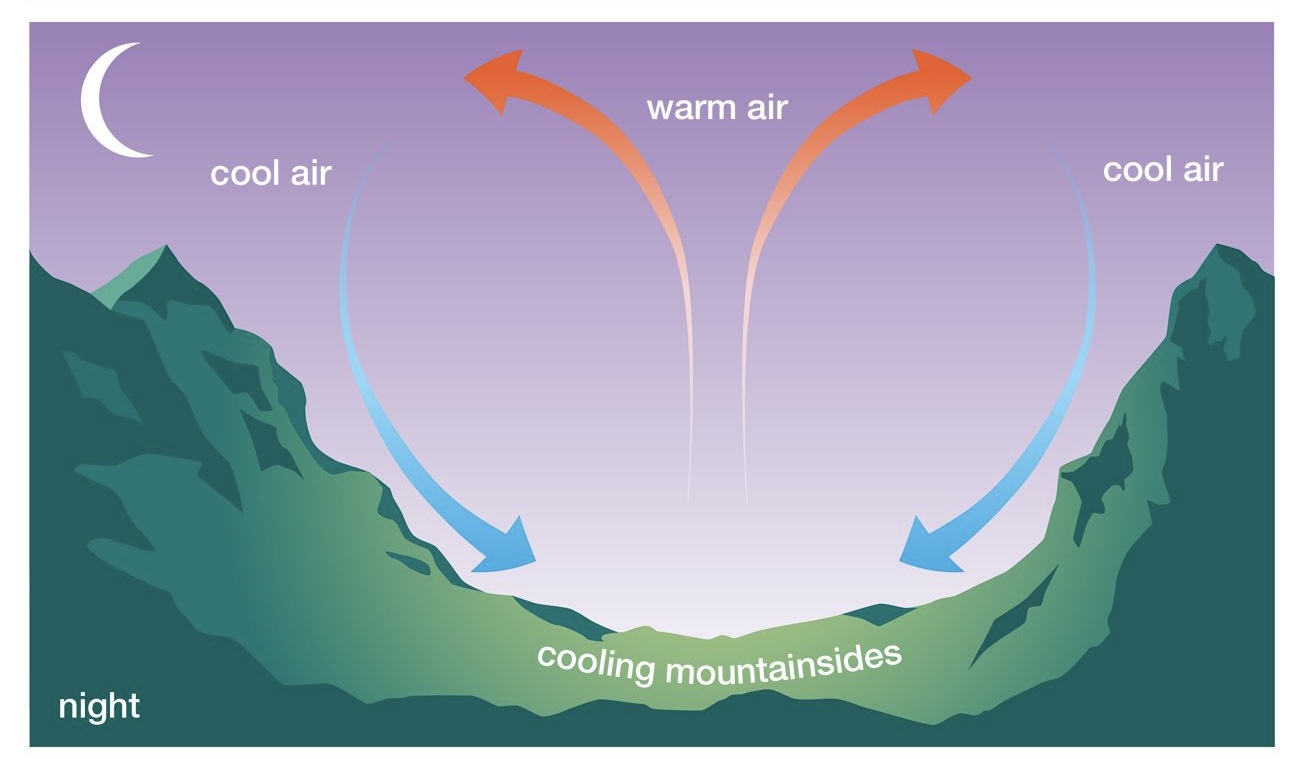
Explain “Katabatic wind”
Any wind blowing down an incline (e.g. mountain breeze)
What are the 2 types of Katabatic wind?
Foehn wind = warm downslope wind
Fall/gravity wind = cold downslope wind
What are the 2 Foehn wind called?
Chinook = located along the Eastern slopes of the Rockies
Santa Ana = descends from the Sierra Nevada mountain into the Santa Ana valley
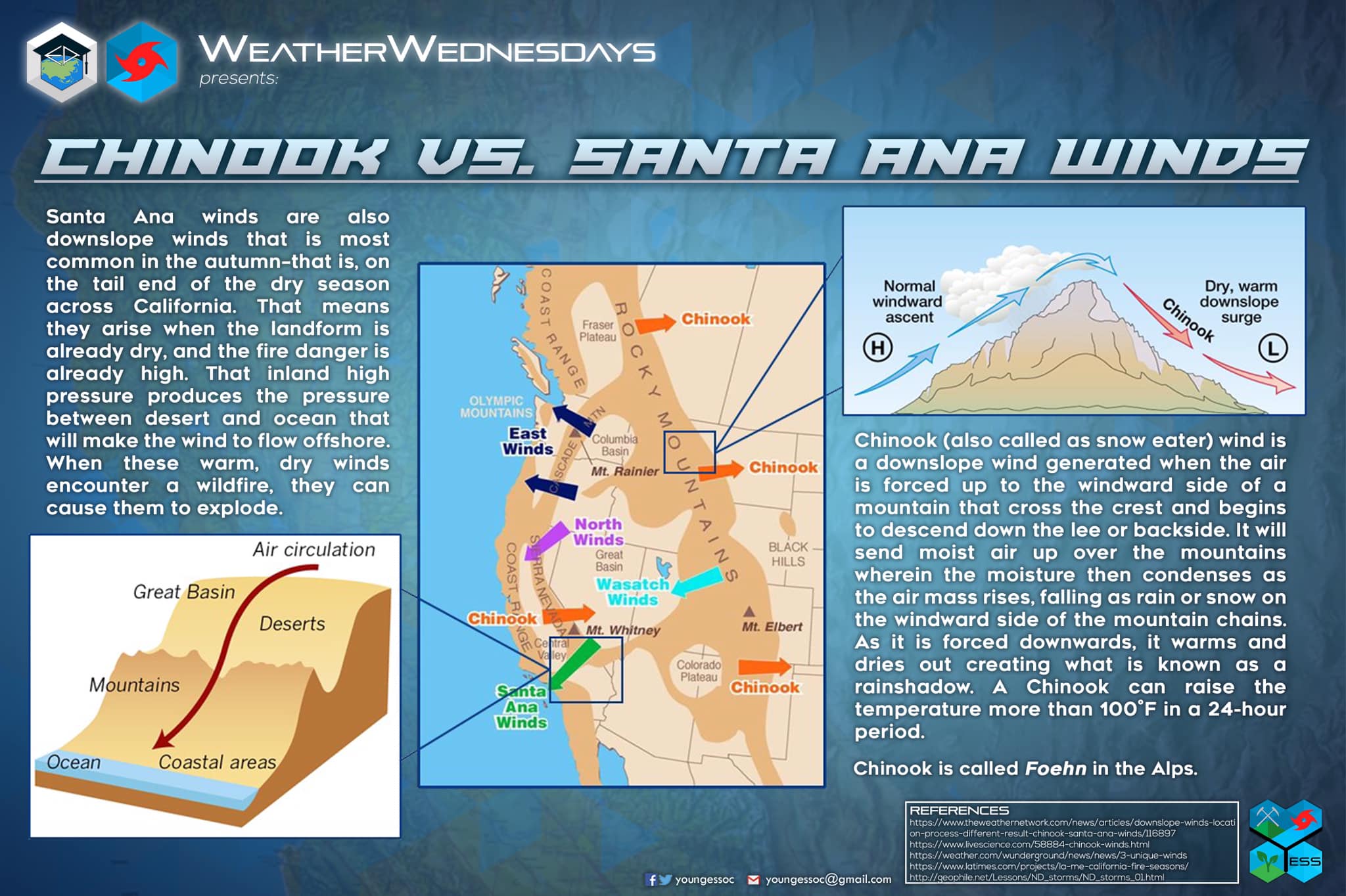
What are the 3 gravity wind called?
Bora = Northeast wind blowing in the upper Adriatic Sea
Mistral = blows through the Rhône valley into the Mediterranean
Taku = Southeast Alaska
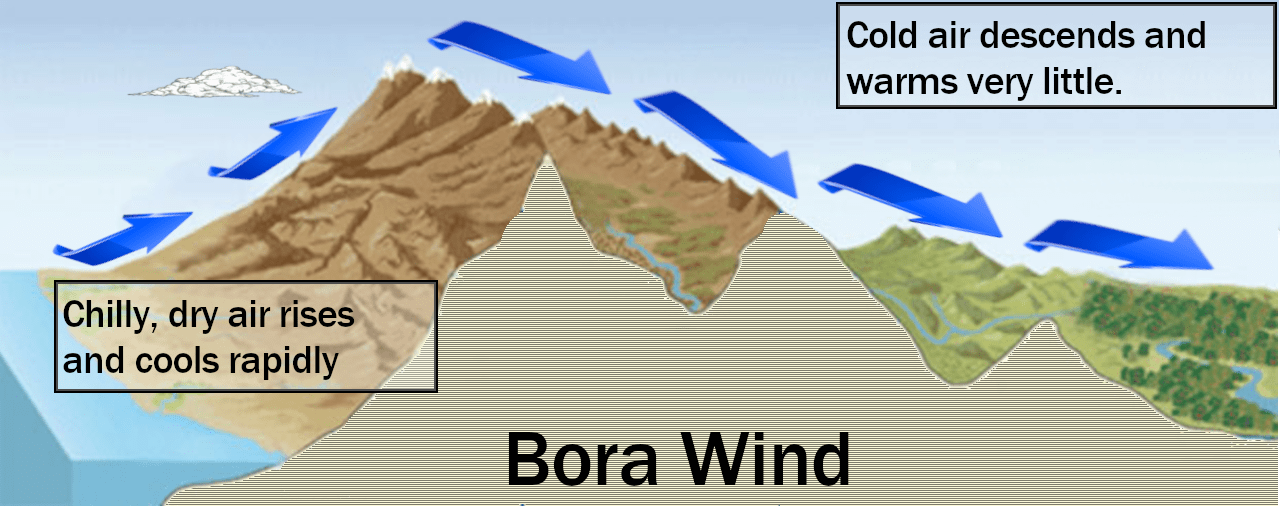
True or false: “L = counterclockwise, H = clockwise”
True!
What determines good/bad weather?
Bad weather = low pressure & troughs
Good weather = high pressure & ridges

