5. External Economies and Diseconomies of scale.
 Studied by 0 people
 Call with Kai
 Learn
Learn Practice Test
 Spaced Repetition
 Match
Match Flashcards
 Knowt Play
1/8

There's no tags or description
Looks like no tags are added yet.
Name | Mastery | Learn | Test | Matching | Spaced | Call with Kai |
|---|
No study sessions yet.
9 Terms
Define external economies of scale.
Changes outside a firm which cause average costs to fall when the industry the firm is in grows.
Define external diseconomies of scale.
Changes outside a firm which cause average costs to rise when the industry the firm is in grows.
Give some examples of external economies of scale.
1. Lots of firms doing similar things can share resources if located closely.
2. High numbers of staff with desired skills reduces training requirements.
3. Ability to pool/ share R&D
4. Suppliers may chose to locate nearby.
5. Local colleges/ unis may offer qualifications desirable to that firm.
6. Improved infrastructure and transport.
Give some examples of external diseconomies of scale.
1. As industry grows, suppliers will increase price due to demand.
2. Localisation of business leads to increased demand for transports, increasing costs.
3. Competition among firms for factors of production and raw-materials - raises prices.
When do external economies and diseconomies of scale occur?
In the long run.
Draw a long run average cost curve. (LRAC)
Periods of short run make up the long run, moving into a short run when a variable becomes fixed.
Returns to scale = bottom of curve.
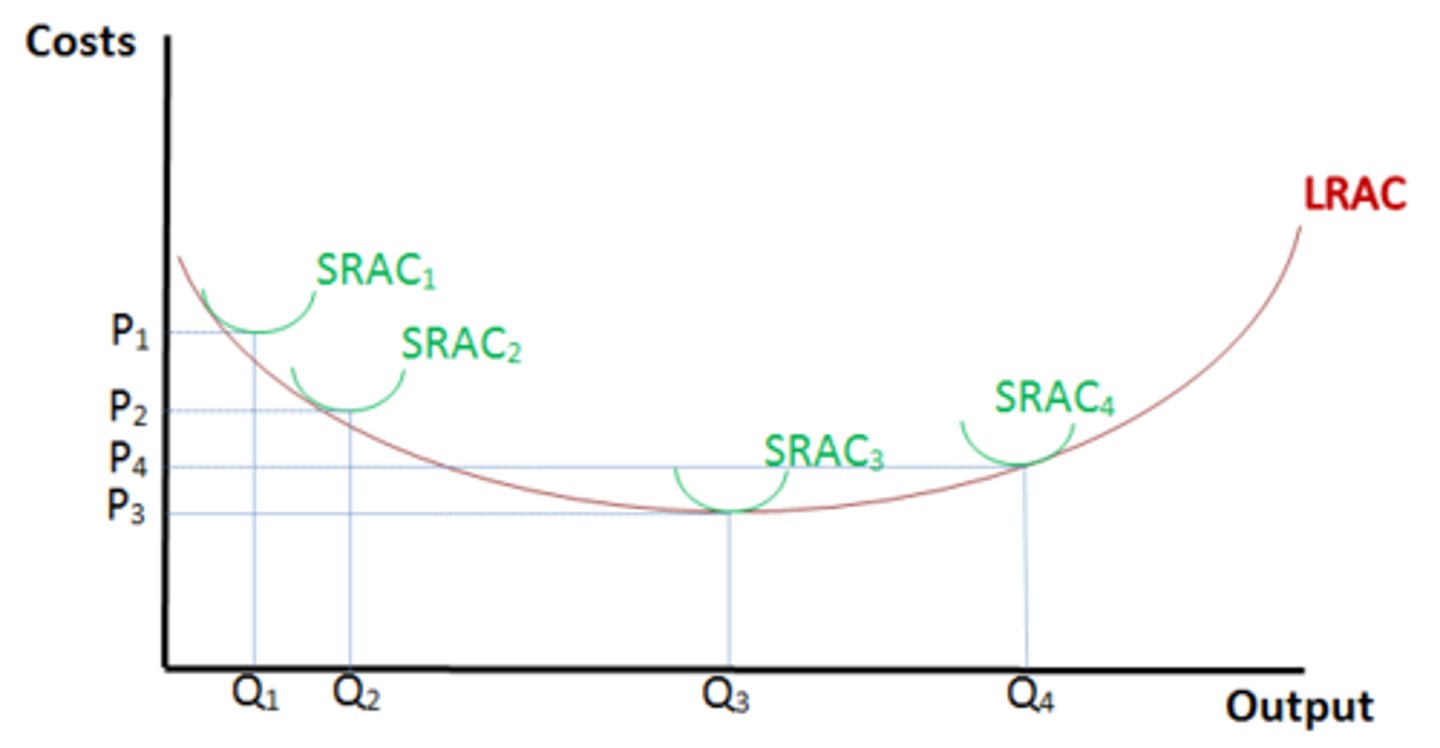
Explain what 'returns to scale' means.
The point where a business is managing growth well before cost per unit rises due to inefficiencies.
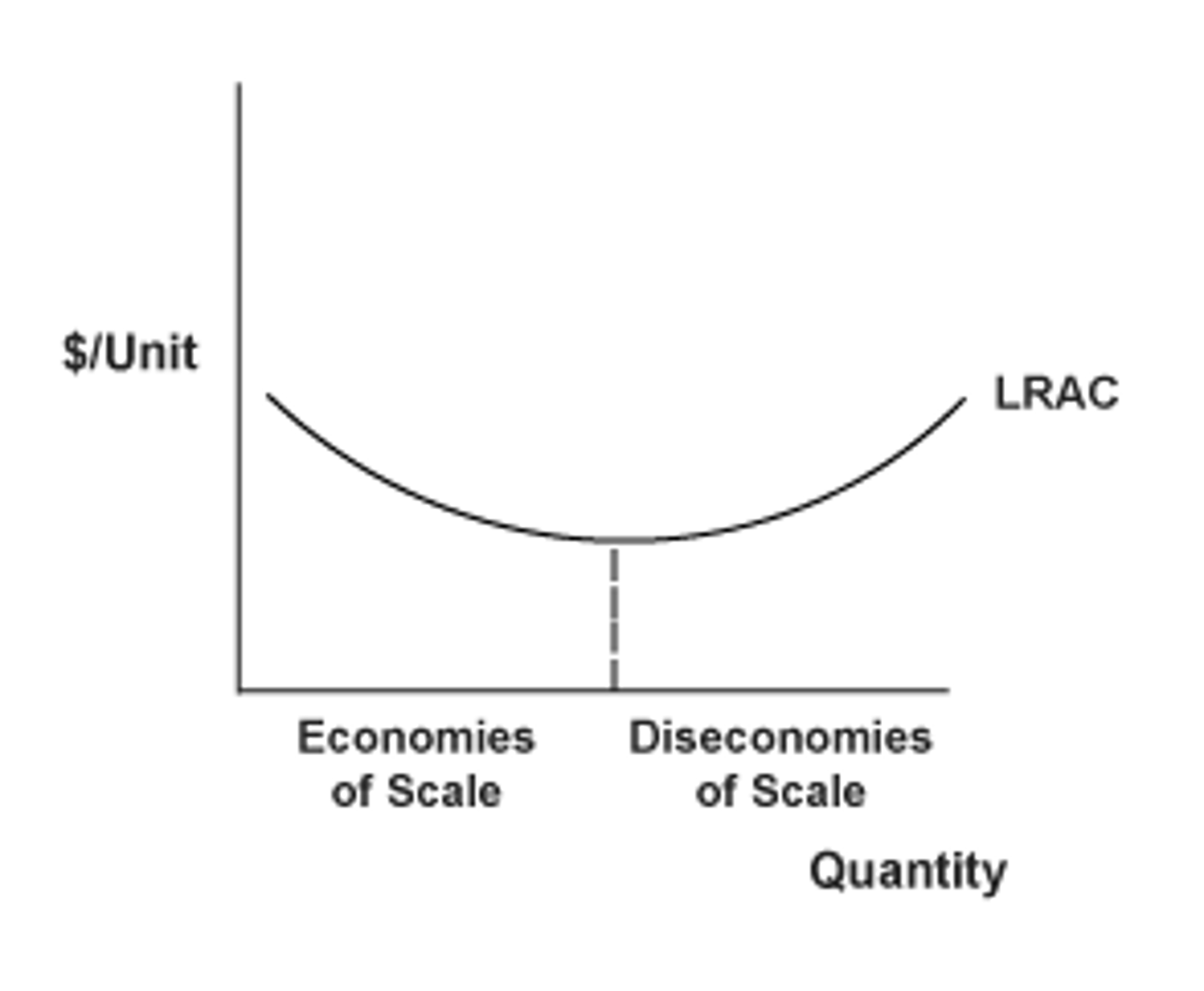
Draw an external economies and diseconomies of scale diagram and its shifts.
External economies = curve shifts down.
External diseconomies = curve shifts up.
What other factors may cause a shift in the LRAC curve for external economies and diseconomies of scale.
- A change in tax
- New technology
 Note
Note  Flashcards (116)