Lecture 7 - Neuro 4; Ligands, Acetylcholine, and Norepinephrine
 Call Kai
 Learn
Learn Practice Test
 Spaced Repetition
 Match
Match Flashcards
 Knowt Play
1/25

There's no tags or description
Looks like no tags are added yet.
Name | Mastery | Learn | Test | Matching | Spaced | Call with Kai |
|---|
No analytics yet
Send a link to your students to track their progress
26 Terms
Past lecture summary
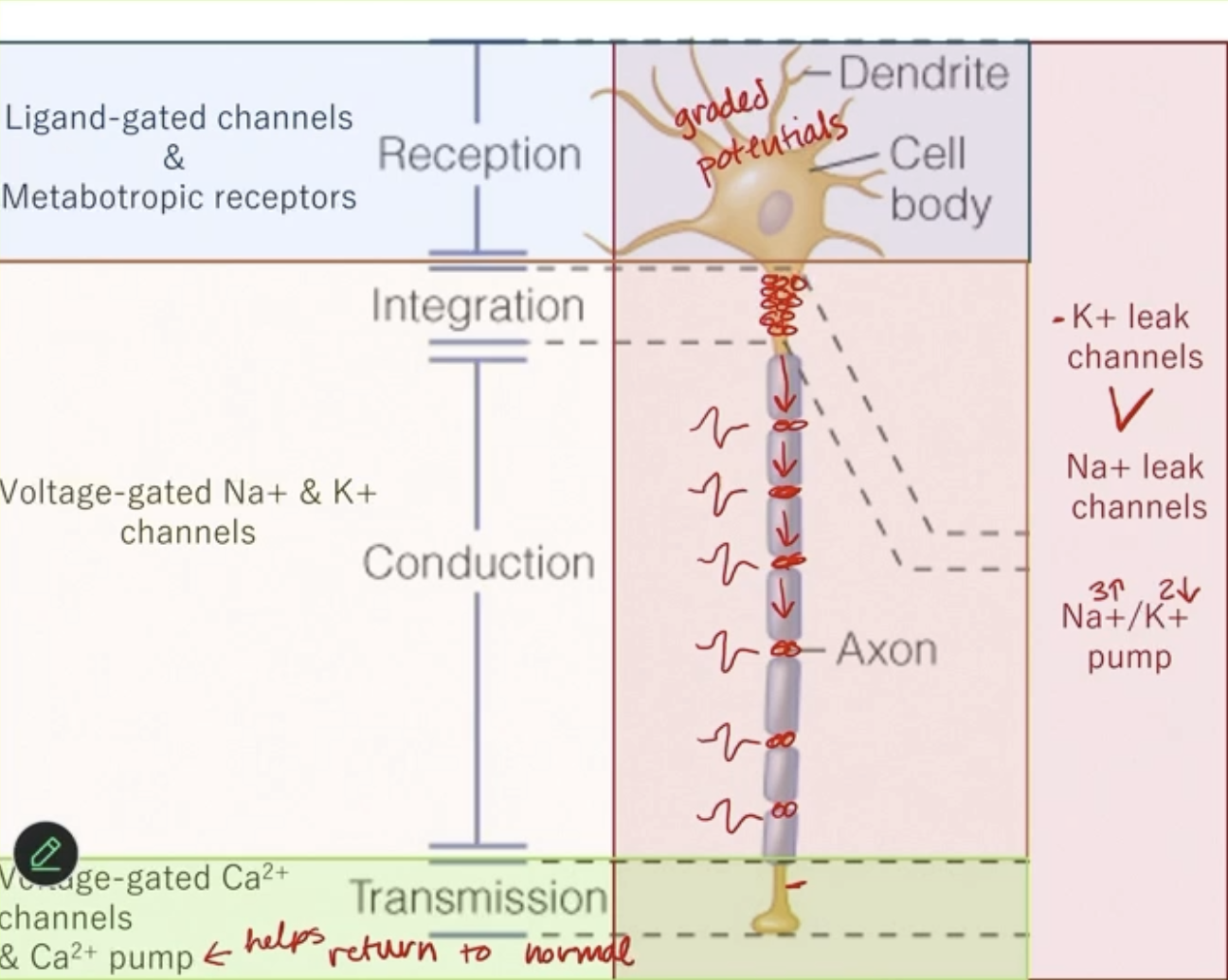
Soma + Dendrites = Ligand-gated channels and metabotropic receptors
Axon hillock = lots of Voltage-gated Na+ and K+ channels since need graded potentials to be large enough to reach threshold potential to fire an AP
Axon = lots of voltage-gated Na+ and K+ voltage-gated channels in Nodes of Ranvier
Terminal = Ca2+ channels and Ca2+ pump
Calcium rushed in, then pumped out
Ligand
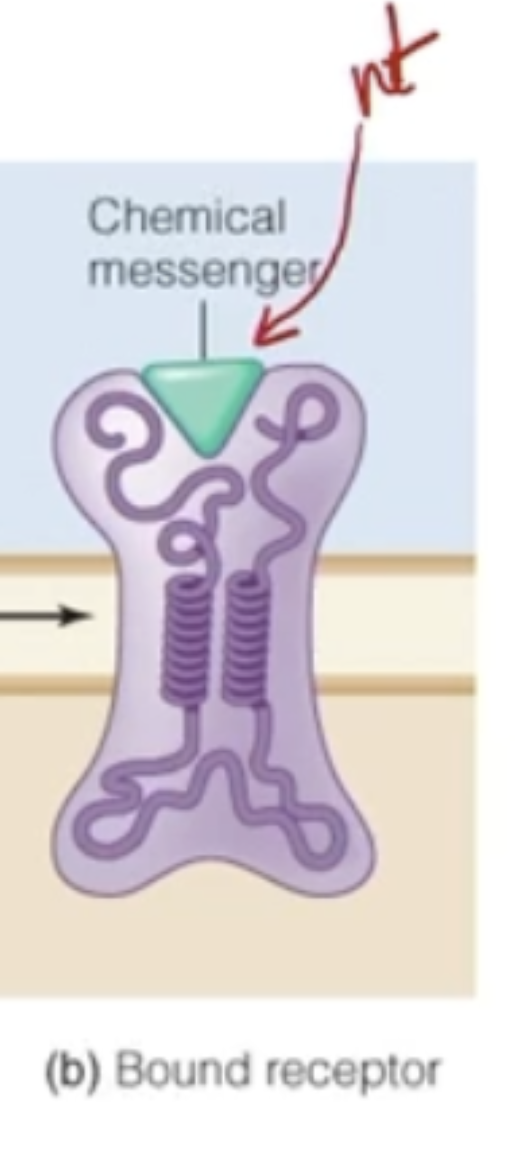
Chemical messenger that interacts with a receptor
Neurotransmitter (NT) is a specific type of ligand
Receptor
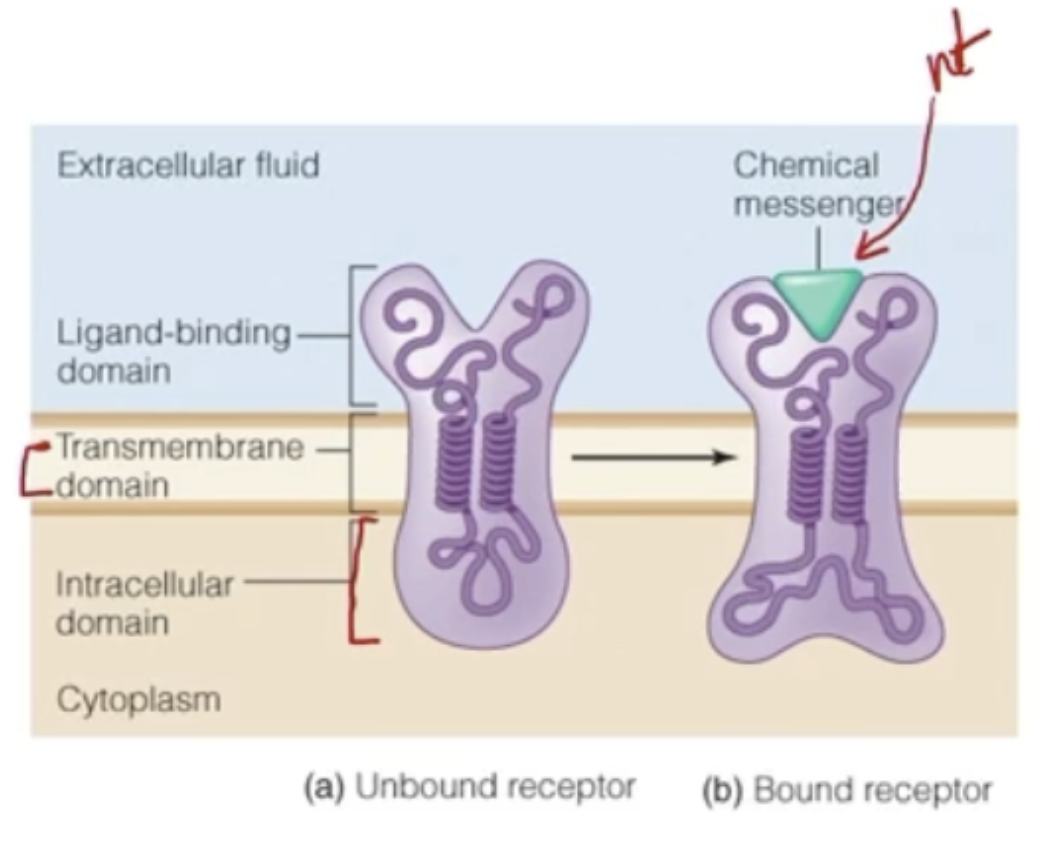
Protein that binds to a ligand a communicates a signal via biochemical pathways inside the cell
Most receptors for NT are embedded in the membrane
Have an NT-specific ligand-binding domain
Intracellular function domain - determines effect of the ligand binding to the receptor
Ligand vocab
Endogenous
Agonist
Antagonist
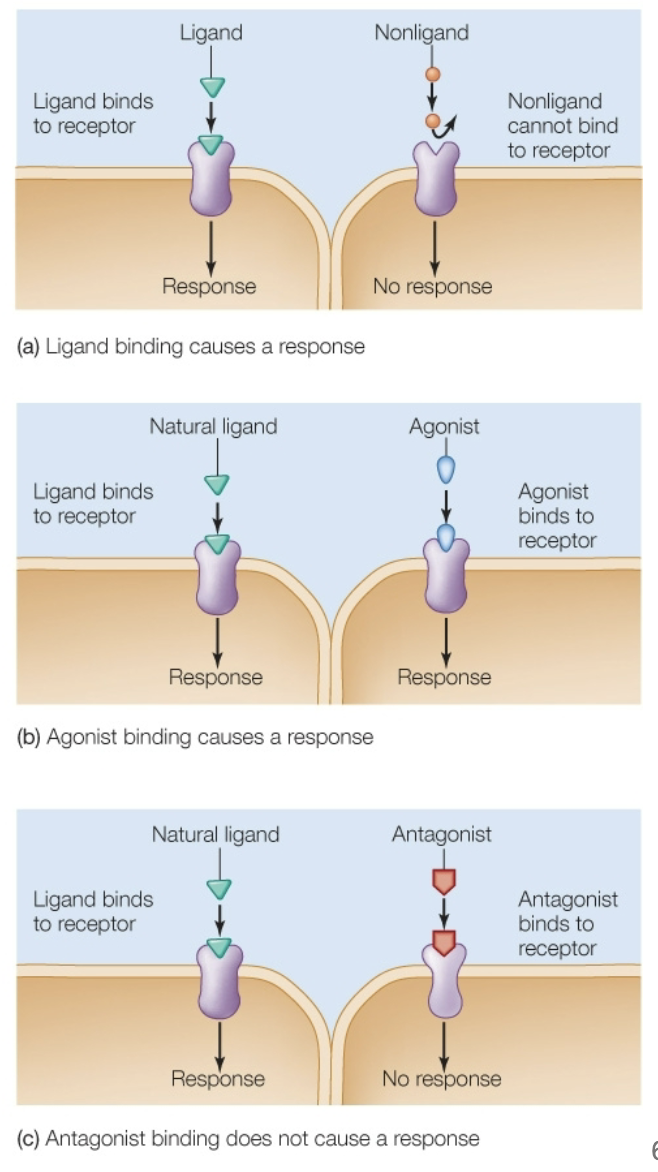
Endogenous
Found in the body, the natural ligand
Not something like Coffee - comes from outside
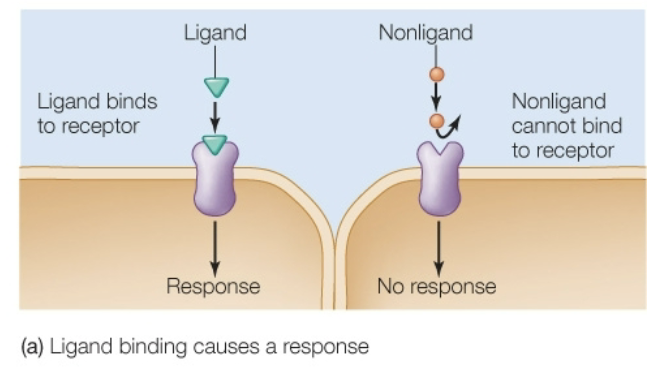
Agonist
Mimics the natural ligand ; binds and activates the receptor
Agonists generally produce similar types of physiological effects by binding to and activating receptors, mimicking natural ligands to initiate a biological response. However, they do not always cause the same intensity of effects
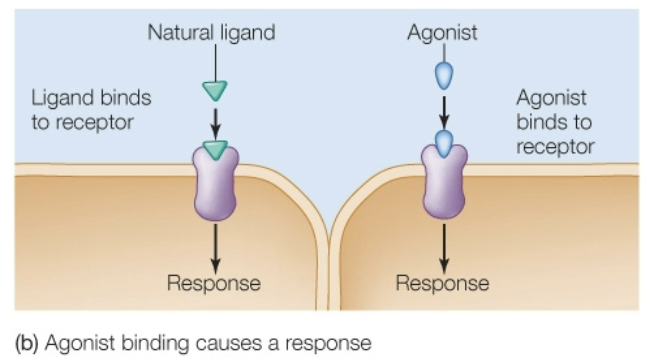
Antagonist
Binds, but doesn’t activate the receptor ; may block other ligands from binding
Ligand-receptor interactions - Law
Ligand and receptors bind to each other = Ligand-receptor complex
Ligand-receptor complex is reversible
Think of their interactions through the Law of Mass Action
The rate of reaction (rate of creating the complex and then giving a response) is proportional to the mass of the reactants
Can then increase response by:
Increasing number of receptors
More possible binding sites
Increase mass (number) of ligand
Because ligand-receptor complex can spontaneously unbind, more ligand will increase the likelihood of getting binding and then getting a response
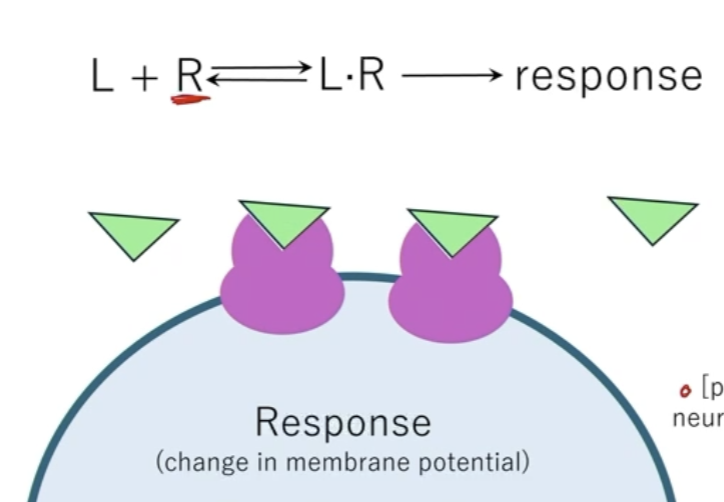
Neurotransmitters
50 substances
They are:
Synthesized in neurons
Released from presynaptic cells following depolarization
Bind to a postsynaptic receptor and cause an effect
Change in membrane potential (±)
Depolarization change: ESPS
Hyperpolarizating effect: IPSP
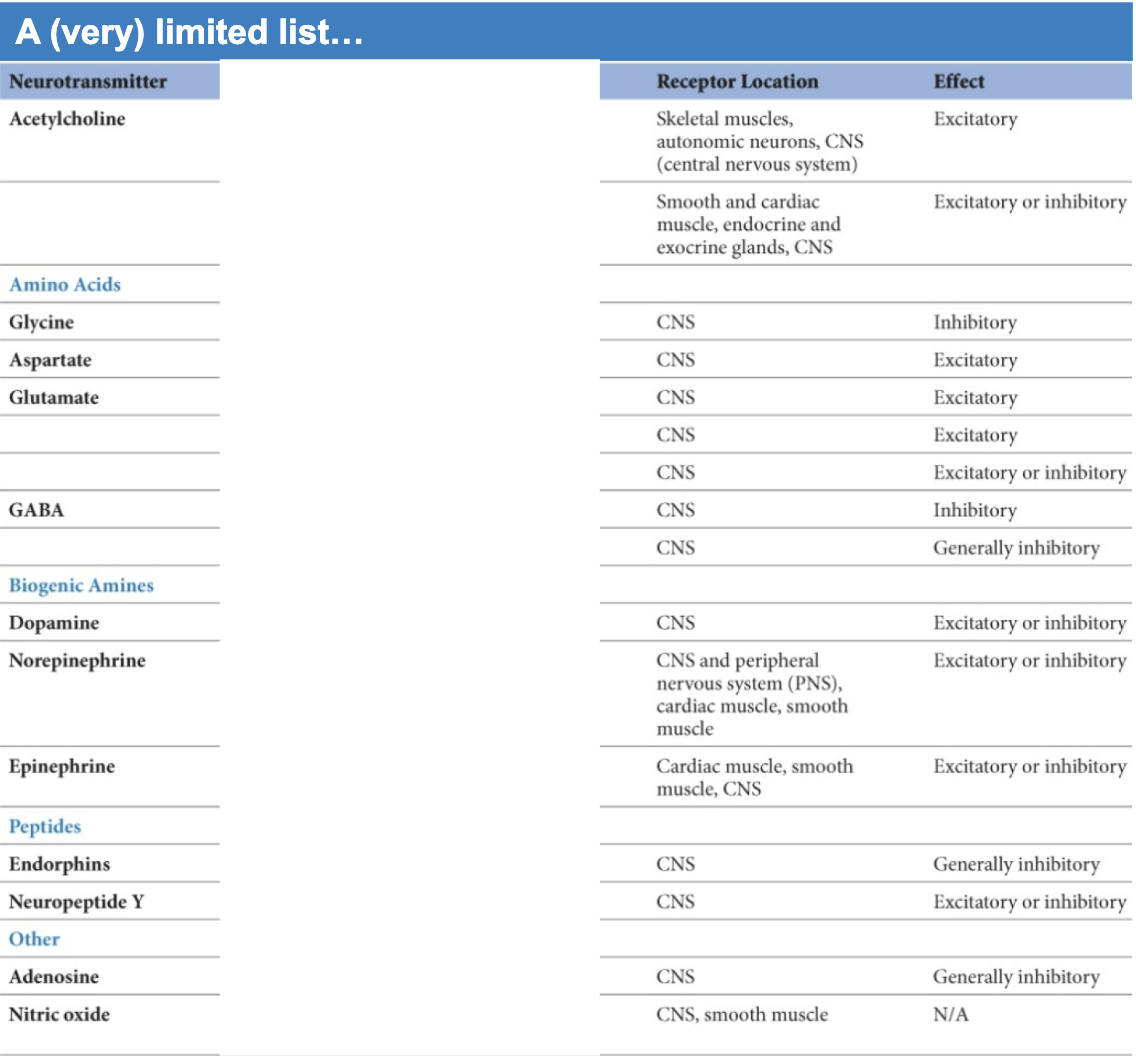
Neurotransmitter and receptor diversity
Axes of diversity:
What is it?
Amino acids
Biogenic amines (from amino acids)
Neuro peptides (proteins)
*Acetylcholine
*Adenosine
*Nitric oxide
Where is it?
What effect does it have?
A single neuron can produce and release more than 1 neurotransmitter, but they usually use just one
Genetically determined, no spontaneous switching
Their synaptic machinery (enzymes, transporters, vesicle proteins) is optimized for that transmitter
Postsynaptic targets are wired to expect that specific chemical signal
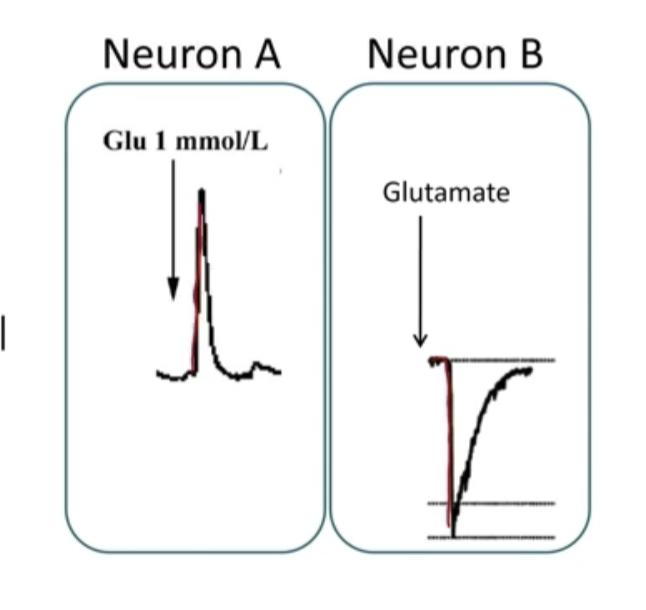
A single neurotransmitter can have very different effects on target cells
Different receptors to the same neurotransmitter can have opposite effects
Multiple receptors to a single neurotransmitter could be excitatory, or inhibitory, or both
The neurotransmitter AND the receptor determine what the effect on the postsynaptic cell will be
Ex: Glutamine can depolarize and hyperpolarize
Receptor classification (2)
Ionotropic
Metabotropic
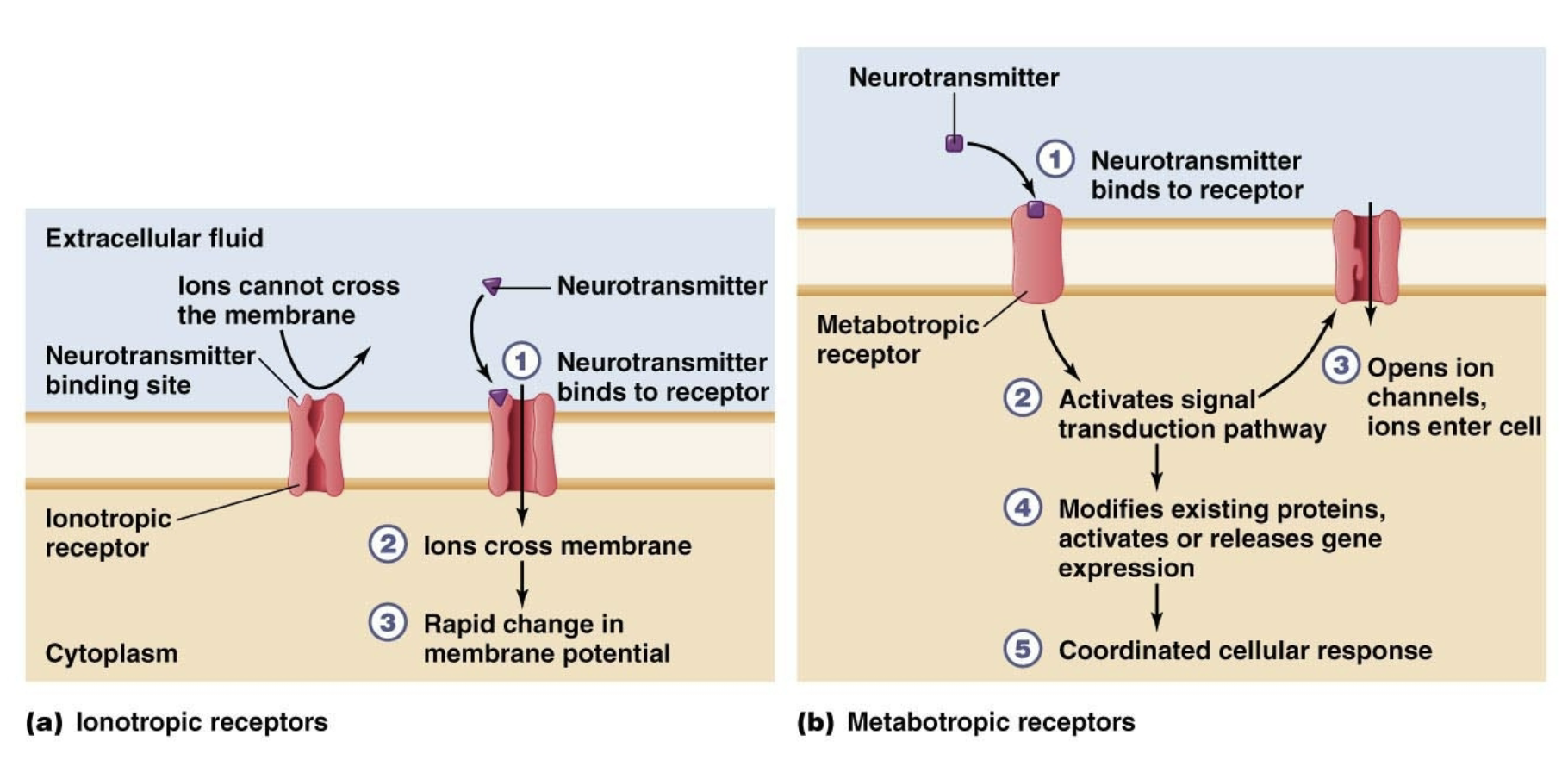
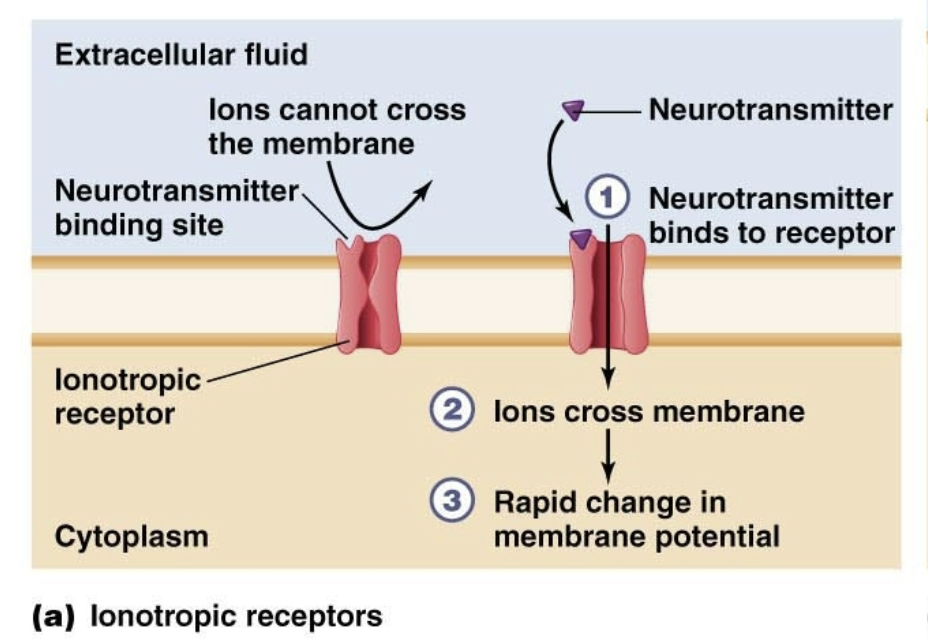
Ionotropic receptors
Ion channel receptors
NT binds, ion channel opens, ions cross into neuron, change in membrane potential
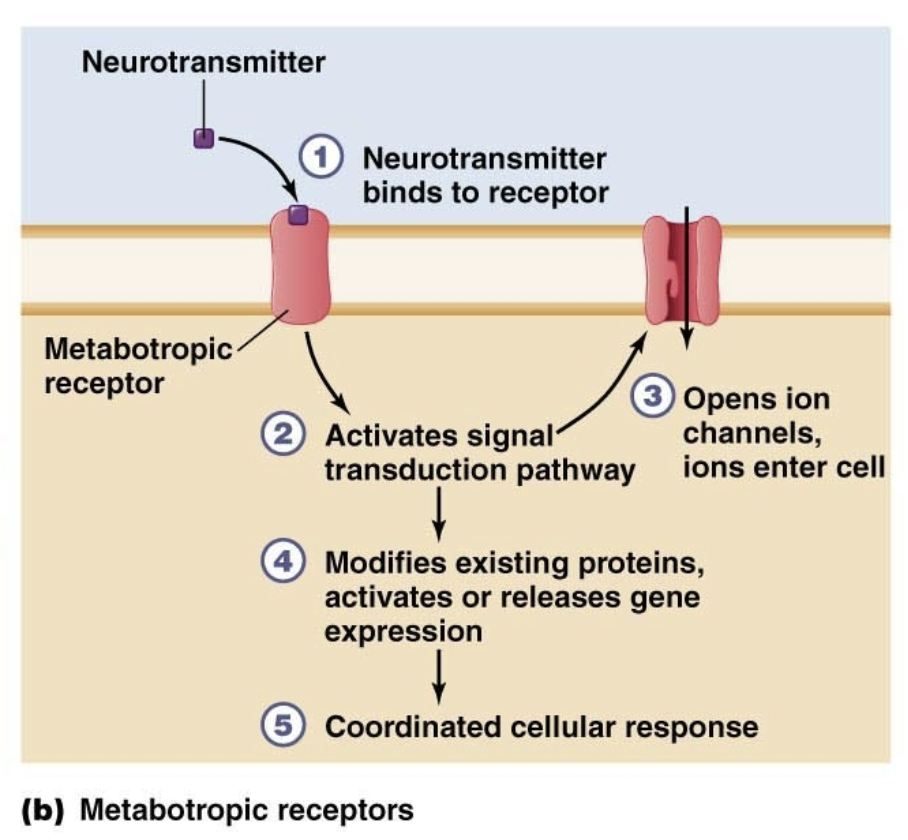
Metabotropic receptors
NT binds to receptor, binding causes a signal transduction pathway which opens an ion channel separate from the receptor
Modifies existing proteins, activates or releases gene expression
Coordinated cellular response
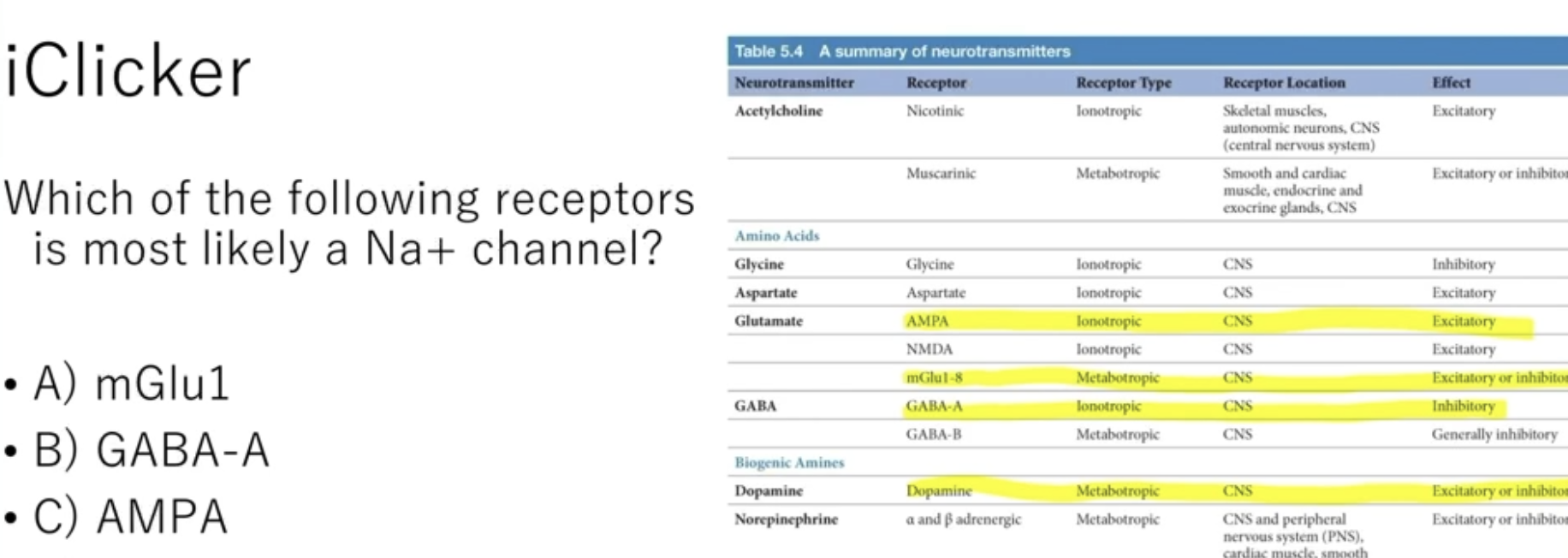
Which of the following receptors is most likely an Na+ Channel?
AMPA
Ionotropic and Excitatory
NT: Acetylcholine (ACh)
Synthesized at axon terminal of “cholinergic” neurons
Adjective version of Acetylcholine
NT at neuromuscular junction and parts of central and peripheral nervous systems
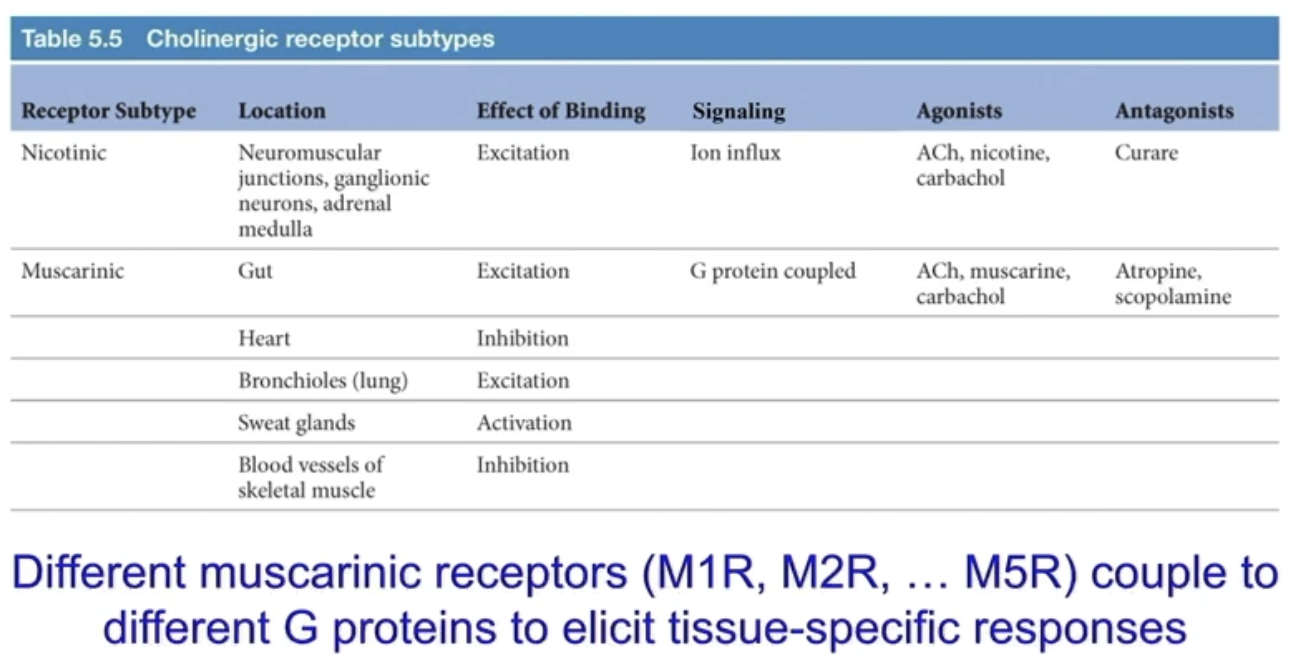
ACh has 2 types of receptors (AChR):
Ionotropic receptor: Nicotinic AChR
Metabotropic recteptor: Muscarinic AChR
Nicotinic AChR
Also activated by nicotine
Nicotine is an agonist for this receptor
Ionotropic
Found on skeletal muscle, autonomic neurons, and CNS
Non-specific cation channel
Permeable to Na+, K+, and sometimes Ca2+
Na+ mostly moves through because it has a super high driving force
Excitatory
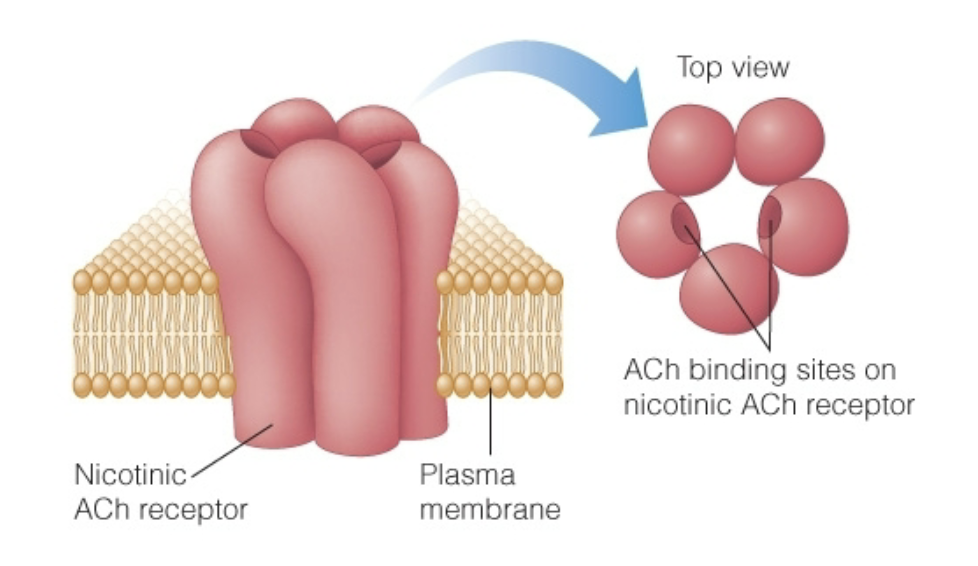
Myasthenia gravis and the Law of Mass Action
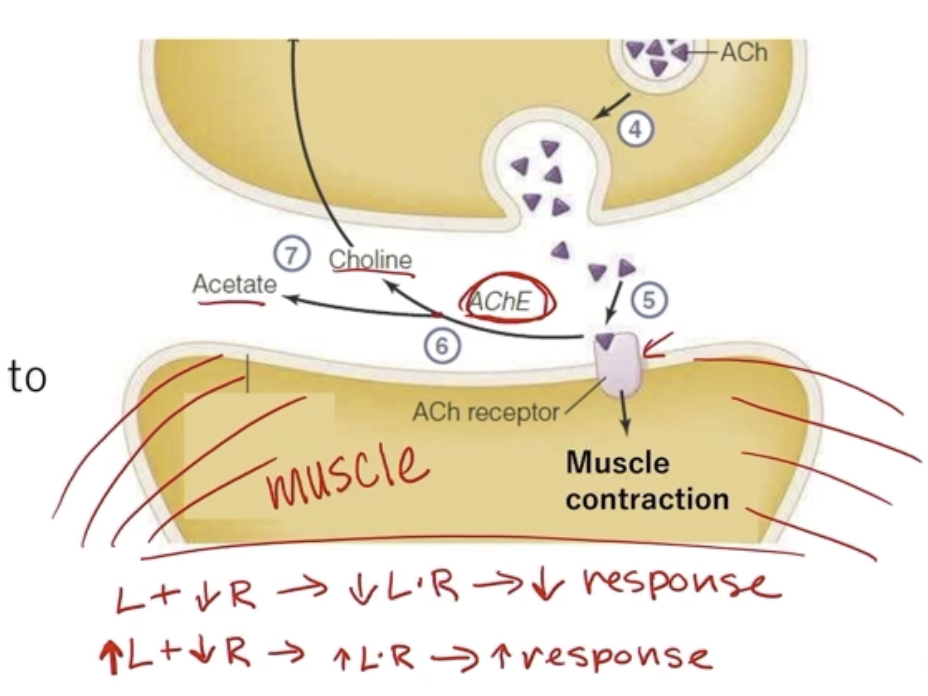
Myasthenia gravis is characterized by muscle weakness due to loss of nAChRs (Nicotine)
Ligand present, but less receptors → decrease in ligand-receptor complexes → decreased response
Involves inotropic receptors
Presynaptic ACh release is normal, postsynaptic response is reduced
Treated with Acetylcholine esterase (AChE) inhibitors to prevent degradation of ACh in the synapse
AChE splits ACh into acetate and Choline, ending transmission → we don’t want this, so we inhibit it
We can’t easily increase receptors, so we increase ligand / prevent its breakdown
More ligand (stop it from being degraded, slight increase in ligand-receptor complex, restore muscle response
Muscarinic AChR
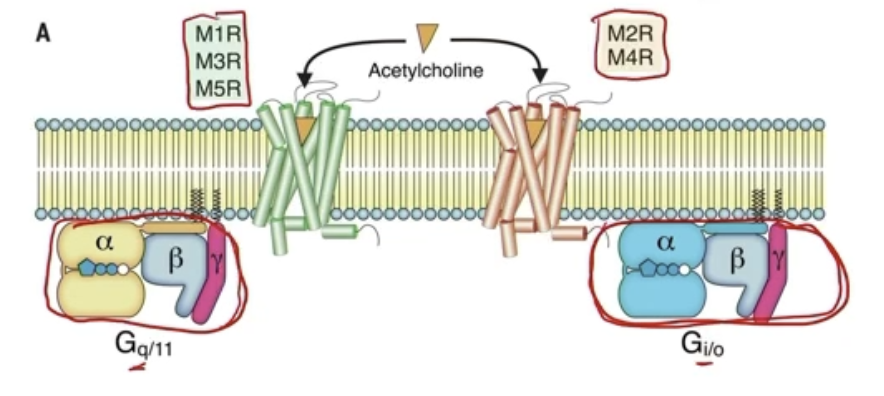
Also activated by muscarine (agonist)
Metabotropic
G-protein coupled receptors (GPCR)
Found in smooth/cardiac muscles, glands, and CNS
Excitatory or inhibitory (depending on receptor type)
Summary for Cholinergic receptors
Nicotine - nAChR
Muscarine - mAChR
Norepinephrine
Catecholamine synthesized from amino acid Tyrosine
Related to Dopamine and Norepinephrine (NE)
Used throughout the body for diverse and sometimes opposite effects
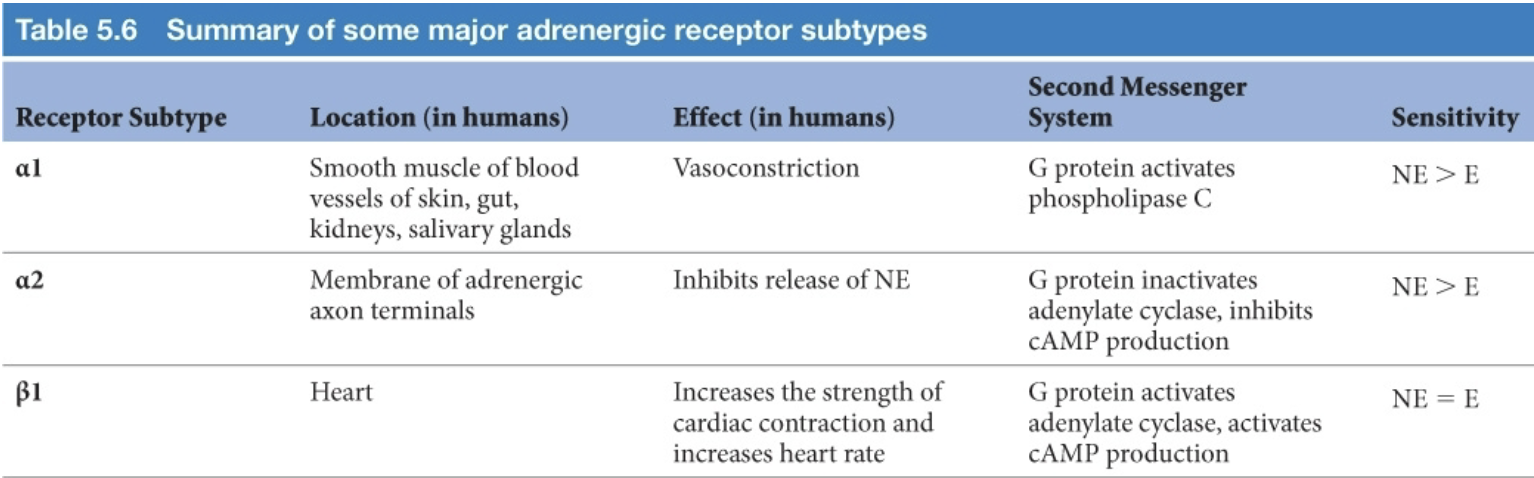
Binds to adrenergic receptors which are metabotropic
Alpha (a1 and a2)
Beta (B1 and B2)
No ionotropic receptors
Ignore B2 for now
Effect of Adrenergic receptors
Depends on the G protein they’re coupled to:
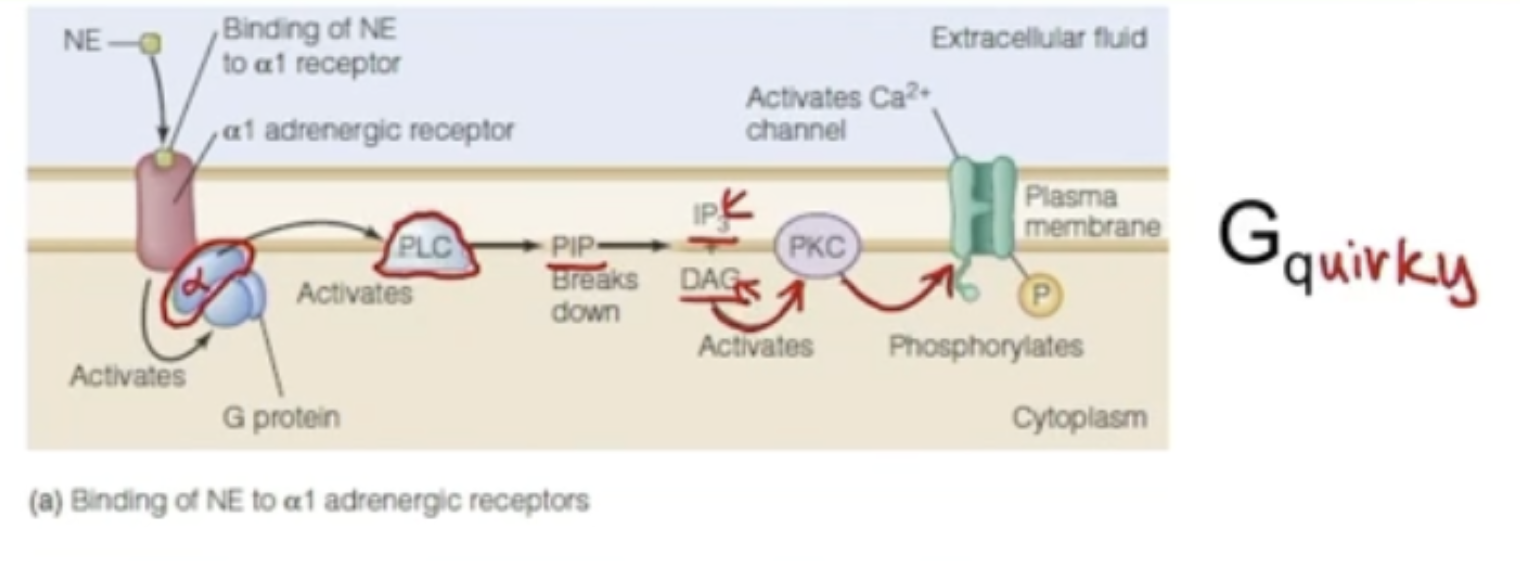
a1 → Gq
Gq “quirky”
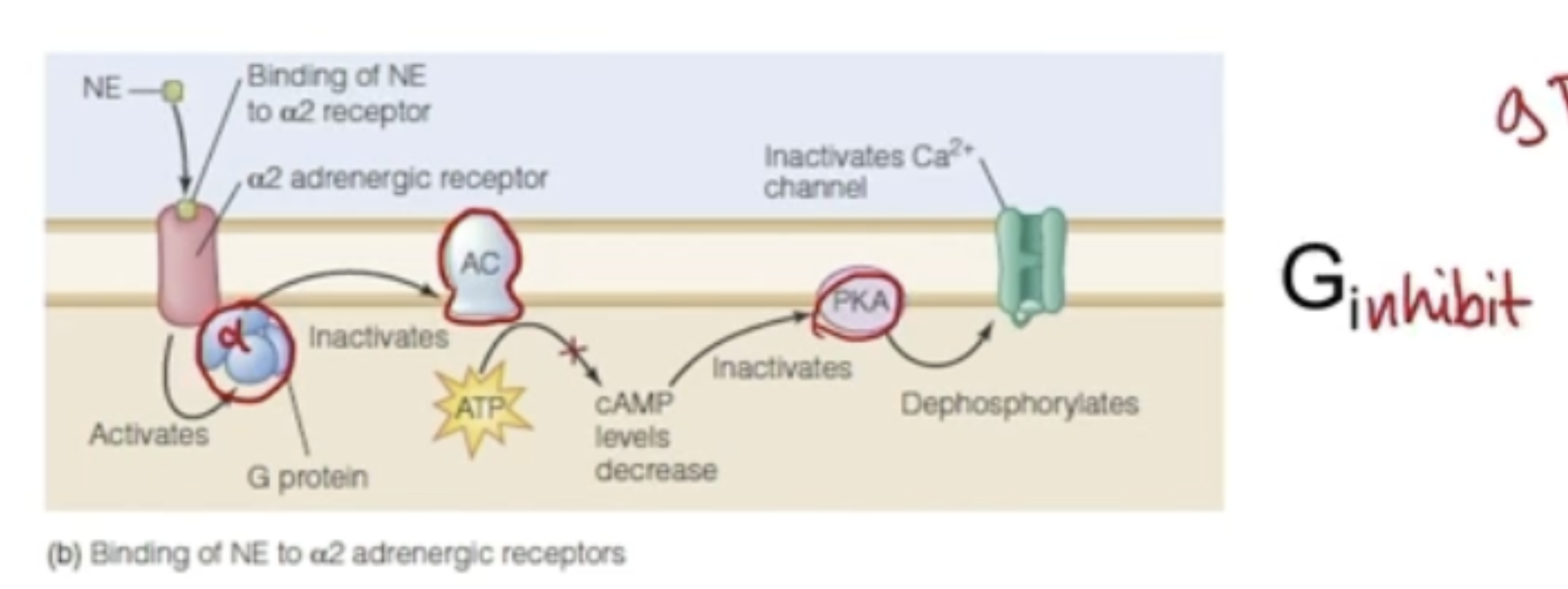
a2 → Gi
Gi inhibits
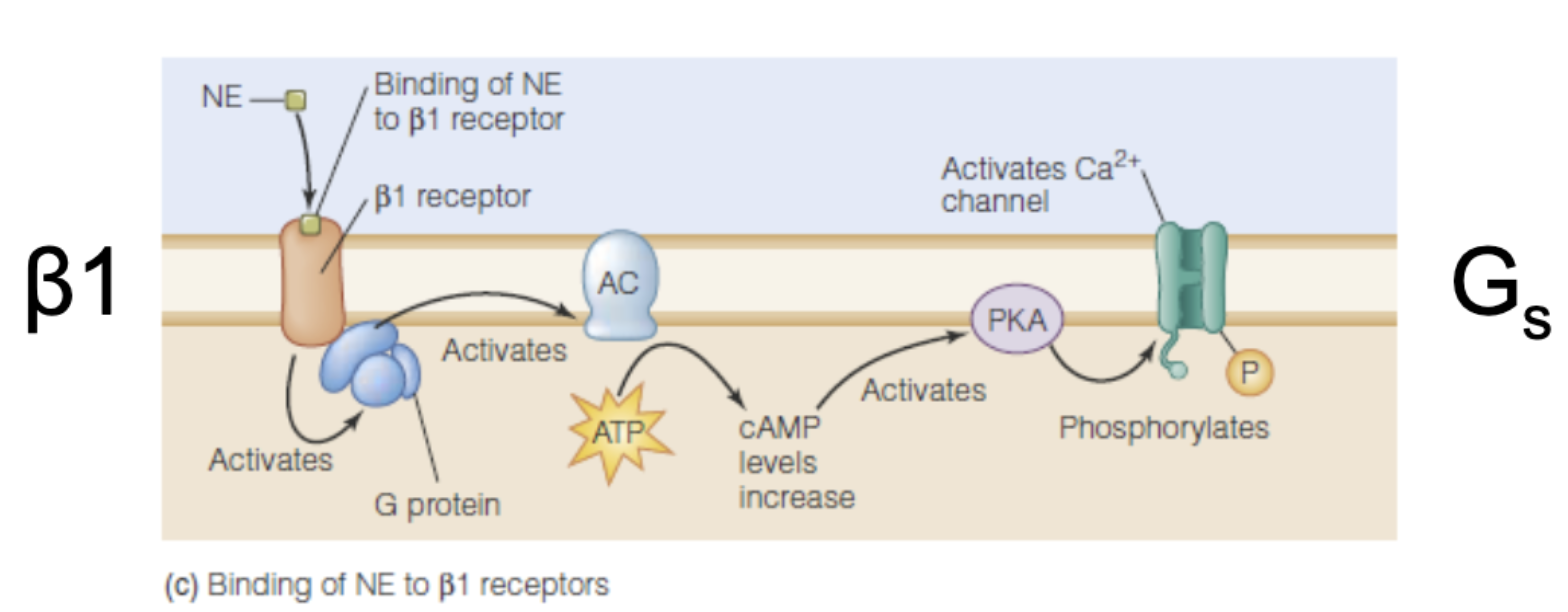
B1 → Gs
Gs stimulates
B1 receptor and Gs
When norepinephrine binds to B1 receptor, activates Gs protein
Gs protein has 3 subunits:
Alpha subunit + 2 others
Alpha subunit of Gs protein dissociate from the other 2 and talks to enzyme adenyl cyclase
Adenyl cyclase turns ATP into cyclic AMP (messenger)
Cyclic AMP activates Protein Kinase A (PKA)
PKA phosphorylates - activates Ca2+ channel, making them easier to open, and cell becomes more excitable
A2 receptor and Gi
When norepinephrine binds to A2 receptor, activates Gi protein
Gi protein has an Alpha subunit
Alpha subunit of Gi protein dissociate from the other 2 and binds to enzyme adenyl cyclase, inhibiting it
Decreased cyclic AMP = decreased PKA = less phosphorylation
Ca2+ channels are harder to open, Ca2+ levels decrease, and cell becomes less excitable
A1 receptor and Gq
When norepinephrine binds to A1 receptor, activates phospholipase C
Phospholipase C breaks down lipid PIP into IP3 and DAG, which act as messengers
DAG activates protein kinase C
Protein kinase C phosphorylates Ca2+ channels, which make the cell more excitable
Adrenergic Receptors Summary