Shoulder Complex
 Call Kai
 Learn
Learn Practice Test
 Spaced Repetition
 Match
Match Flashcards
 Knowt Play
1/65

There's no tags or description
Looks like no tags are added yet.
Name | Mastery | Learn | Test | Matching | Spaced | Call with Kai |
|---|
No analytics yet
Send a link to your students to track their progress
66 Terms
Shoulder Complex
Shoulder Joint - Glenohumeral Joint
Shoulder Girdle - Scapulothoracic “joint” , Clavicular Joints
Highly mobile region
Variety of muscles allow for movement of joint in many directions
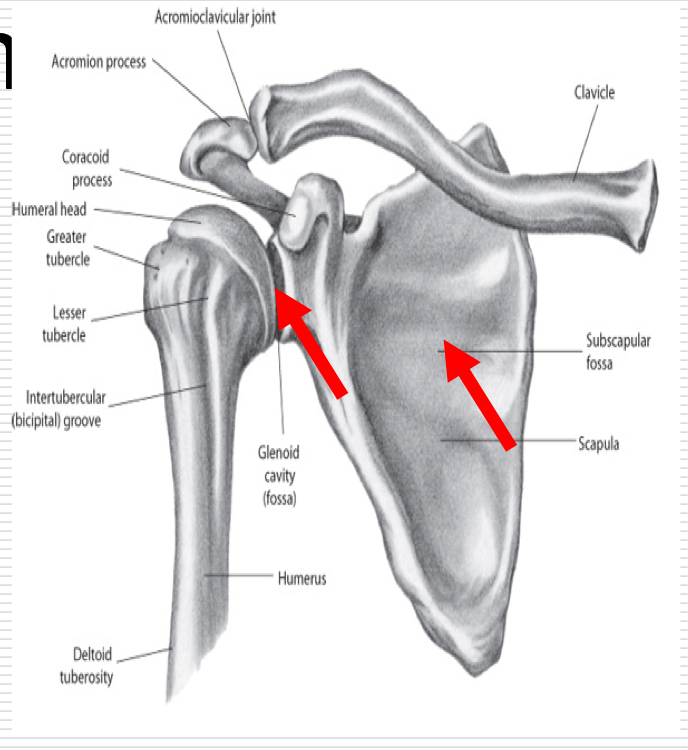
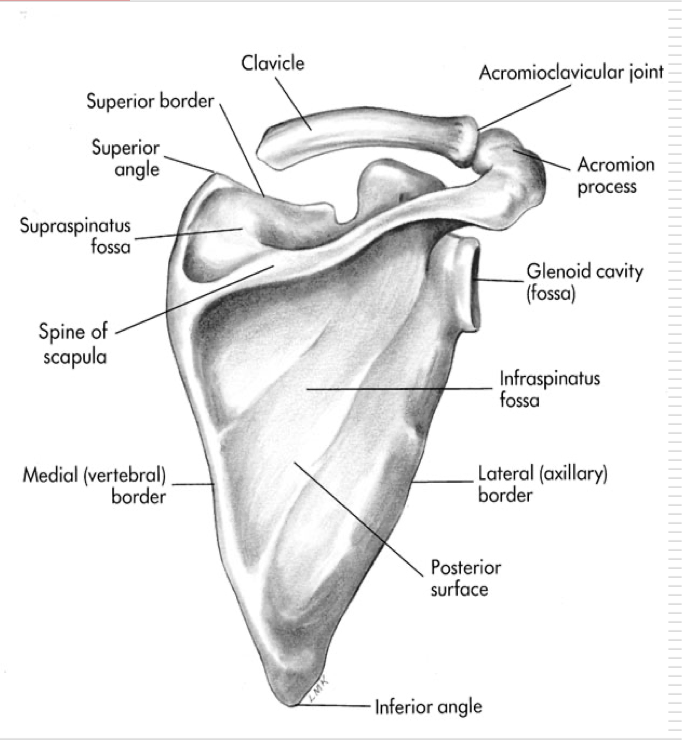
Scapular Landmarks
Supraspinatus Fossa
Infraspinatus Fossa
Subscapular Fossa
Spine of the Scapula
Glenoid Fossa
Coracoid Process
Acromion Process
Inferior Angle
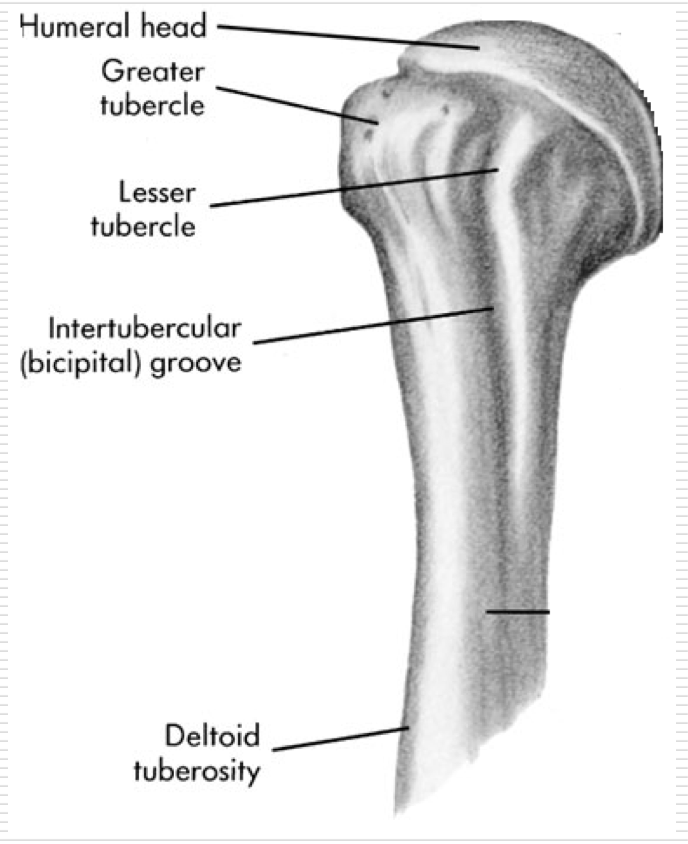
Humeral Landmarks
Head
Greater Tubercle
Lesser Tubercle
Intertubercular (Bicipital) Groove
Deltoid Tuberosity
Clavicular Landmarks
Sternal end (medial)
Acromial end (lateral)
Body of Clavicle
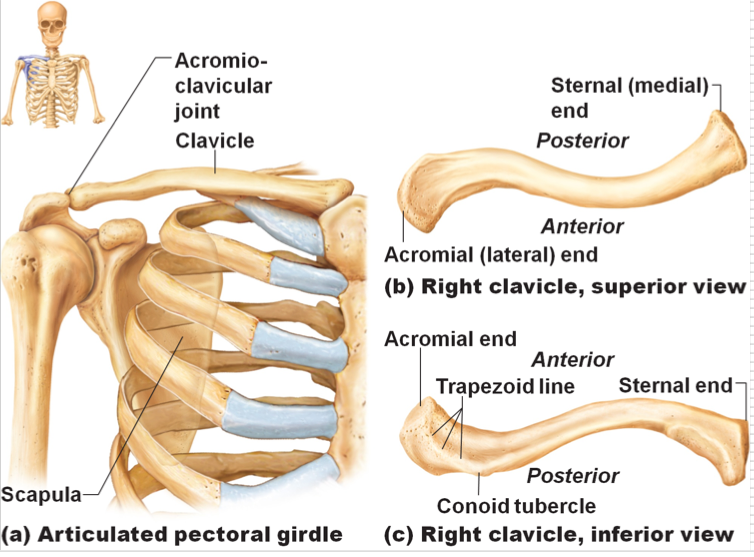
Glenohumeral Joint
Glenoid Fossa of Scapula
Head of Humerus
Enarthrodial (multiaxial ball and socket)
All motions in all planes
Large ROM
Decreased bony stability
Stability enhanced by:
Glenoid Labrum
Glenohumeral Ligaments
Rotator Cuff Muscles
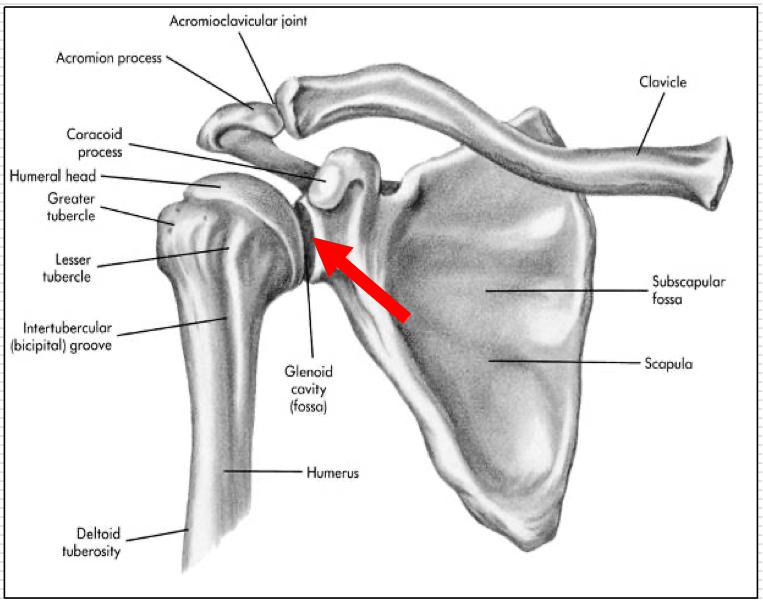
Glenoid Labrum
Fibrocartilage rim around glenoid fossa
Deepens fossa to better hold humeral head
Provides cushioning
Static stability
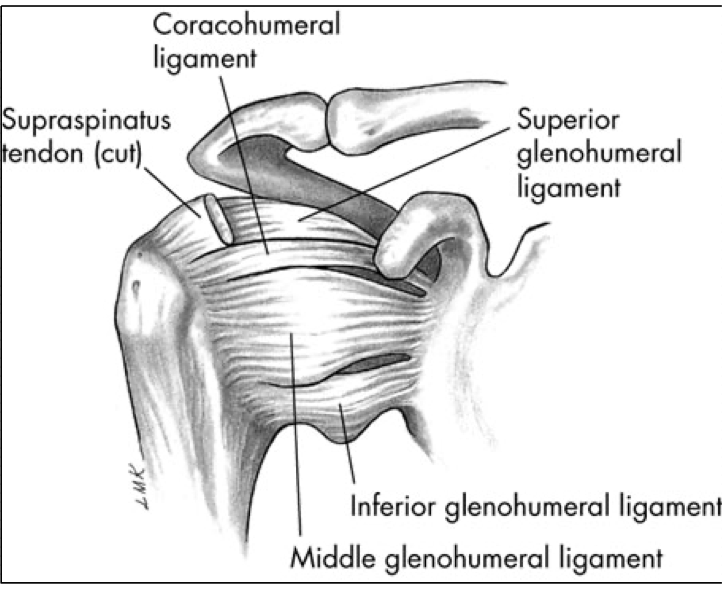
Glenohumeral Ligaments
Static Stability
Anterior and inferior translation most common due to bony structure
Middle and Inferior GH ligament - not tested
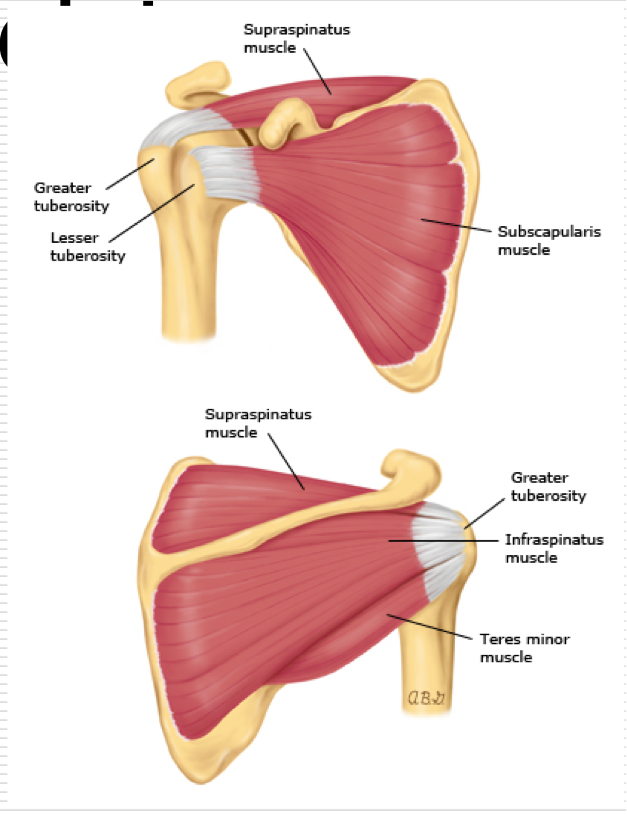
Glenohumeral Joint
Rotator Cuff provides dynamic stability
SITS
Supraspinatus
Infraspinatus
teres minor
Subscapularis
Attach to the anterior, posterior, and superior humerus
Keep humeral head in correct approximation within glenoid fossa
Scapulothoracic “Joint”
Not a true synovial joint
Supported dynamically by its muscles
No ligaments support
Moves in conjunction with clavicular joints
Increases Glenohumeral ROM
Moves only in frontal plane
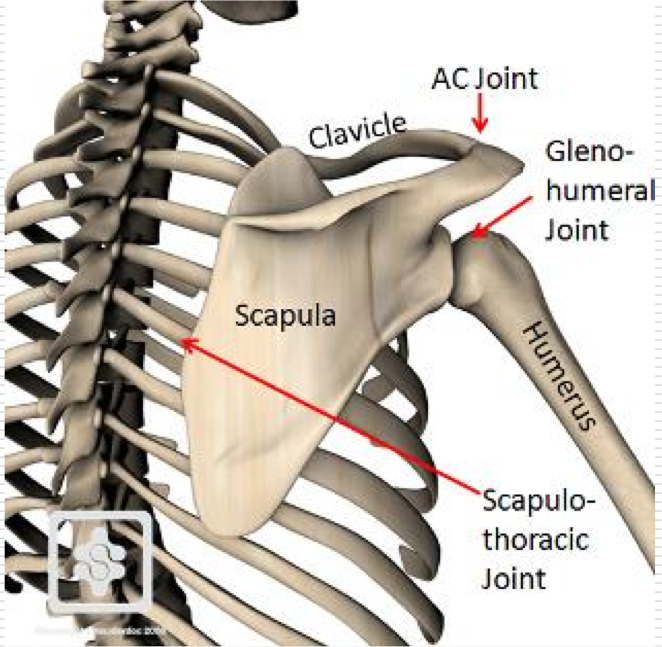
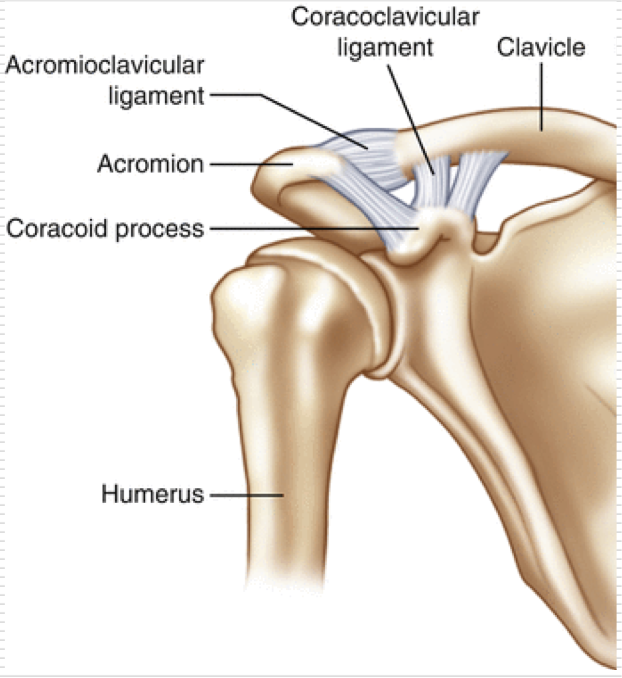
Acromioclavicular Joint
Arthrodial (gliding) Joint
Small movements in all planes
Held to scapula via ligaments
Coracoclavicular Ligaments
Acromioclavicular Ligaments
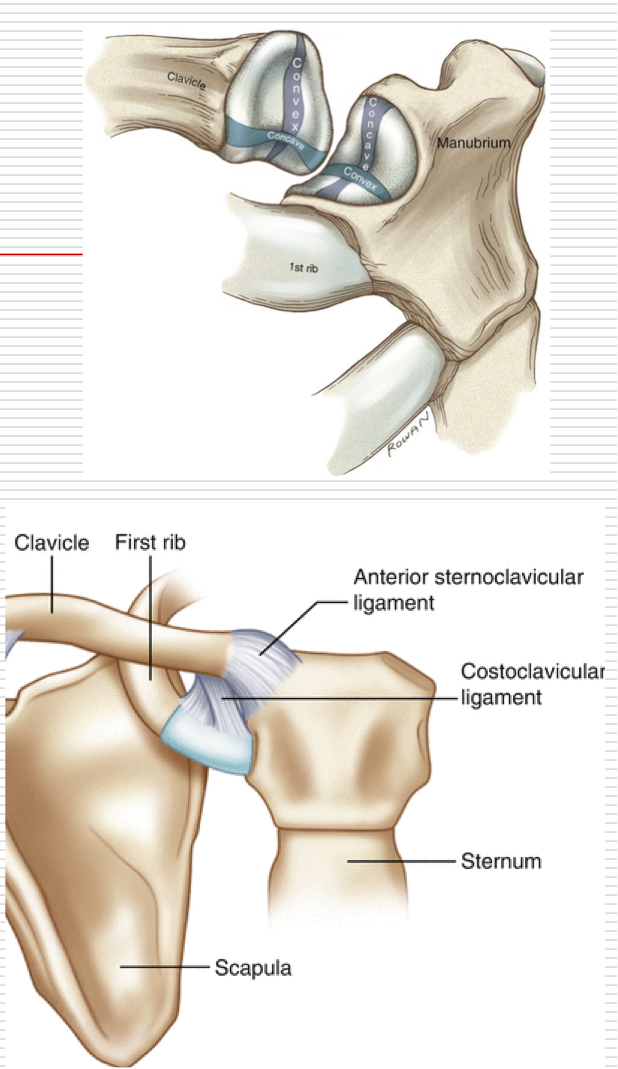
Sternoclavicular Joint
Arthrodial (gliding) Joint
Small movements in all planes
More motion than the AC Joint
SC also sometimes referred to as a seller (saddle) joint
Held to sternum 1st rib via ligaments
Sternoclavicular Ligaments
Costoclavicular Ligament
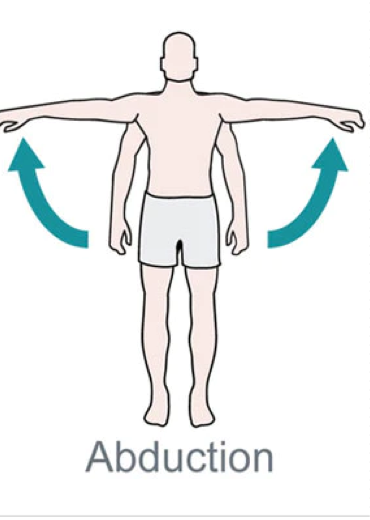
Abduction (GH)
Upward lateral movement of humerus out to the side - away from body
Frontal Plane
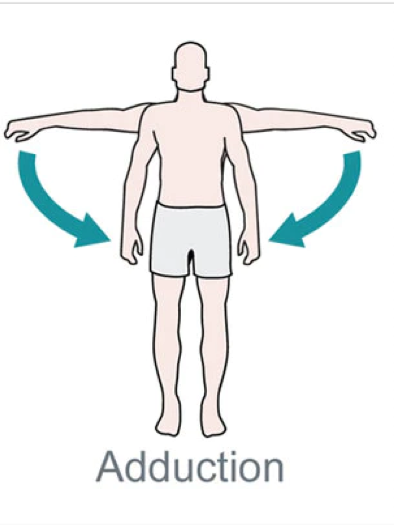
Adduction (GH)
Downward movement of humerus medially toward body
Frontal Plane
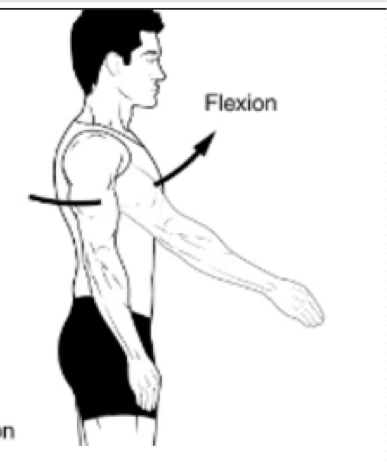
Flexion (GH)
Movement of humerus strait anteriorly
Sagittal Plane
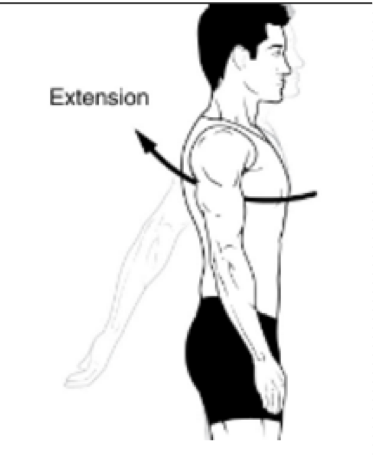
Extension (GH)
Movement of humerus strait posteriorly
Sagittal Plane
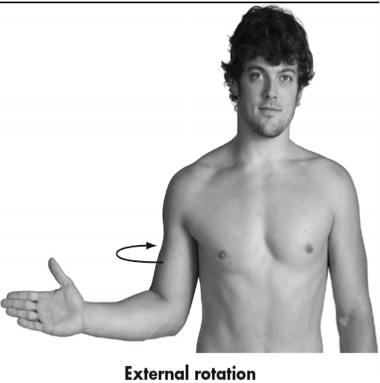
External Rotation (GH)
Movement of humerus laterally around its long axis away from midline
Transverse Plane
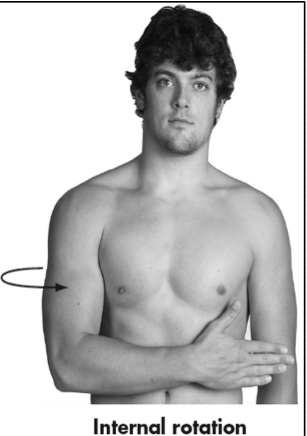
Internal Rotation (GH)
Movement of humerus medially around its long axis toward midline
Transverse Plane
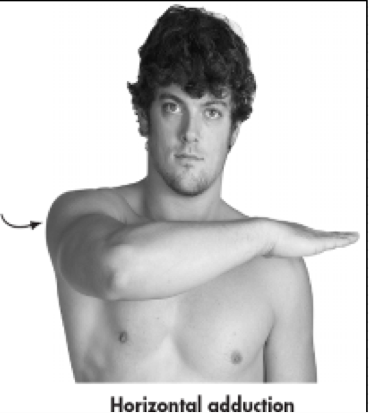
Horizontal Adduction (GH)
Movement of humerus in a horizontal or transverse plane toward and across chest
Transverse Plane
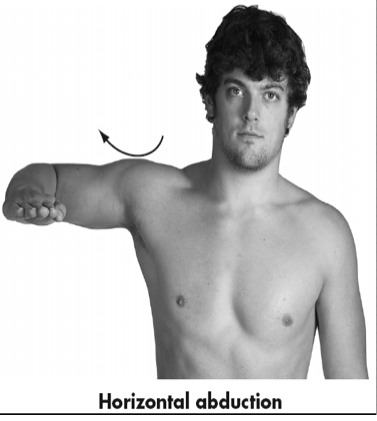
Horizontal Abduction (GH)
Movement of humerus in a horizontal or transverse plane away from chest
Transverse Plane
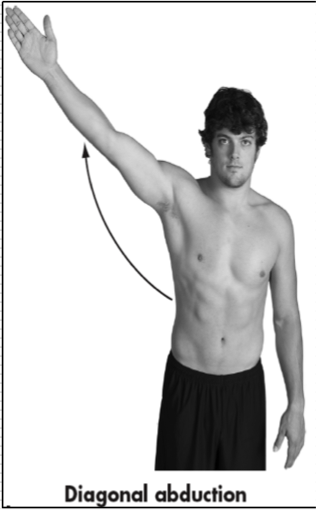
Diagonal Abduction (GH)
Movement of humerus in a diagonal plane away from midline of body
Diagonal Plane
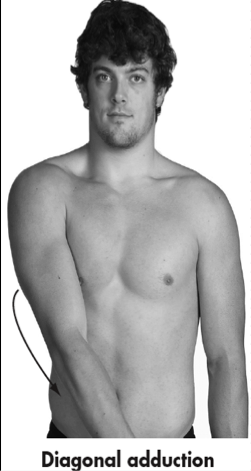
Diagonal Adduction
Movement of humerus in a diagonal plane toward midline of body
Diagonal Plane
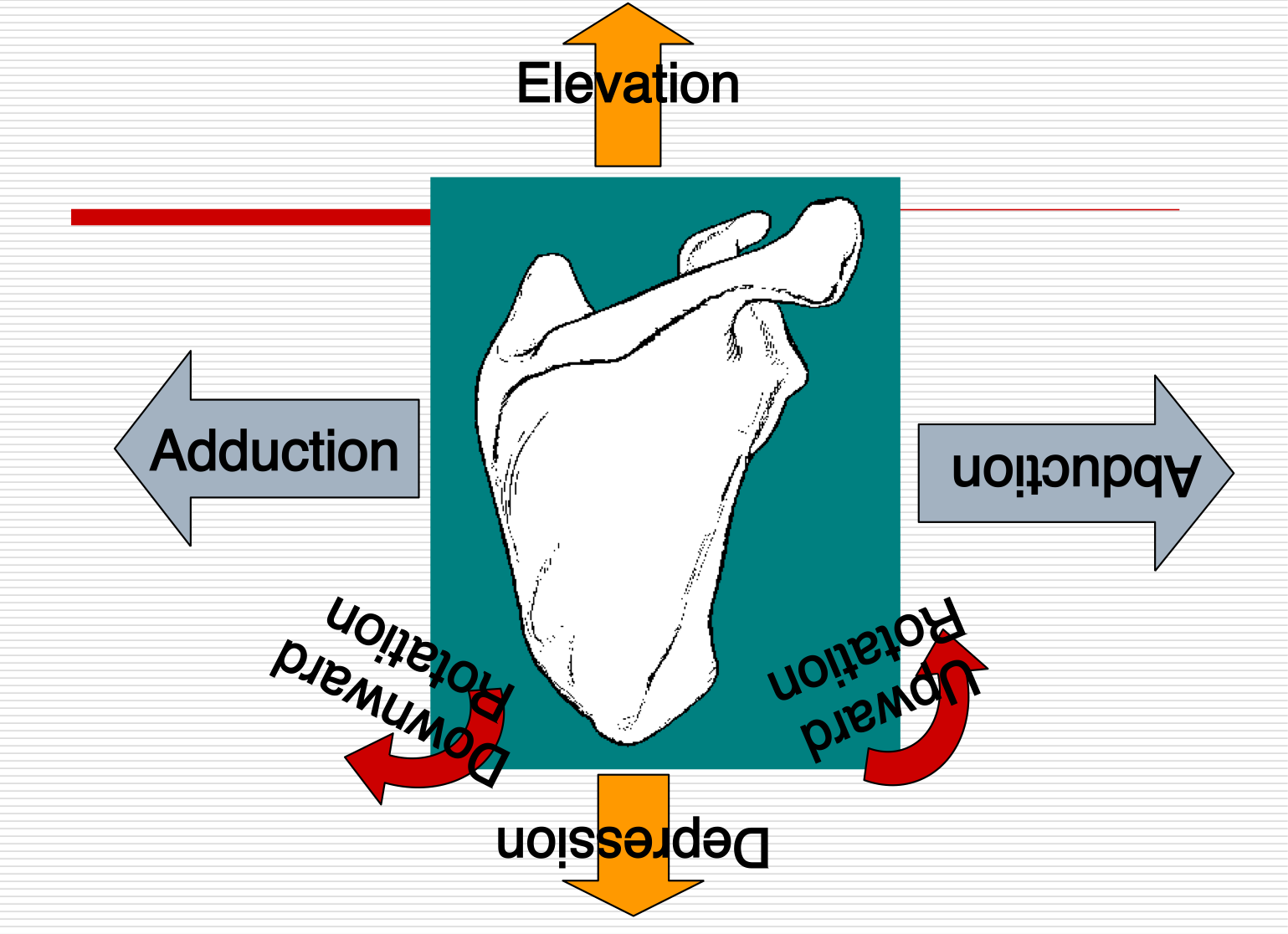
Scapula Movement Diagram
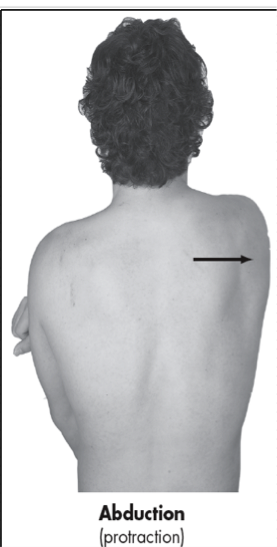
Abduction (Protraction) (ST)
Scapula moves laterally away from spinal column
Frontal Plane
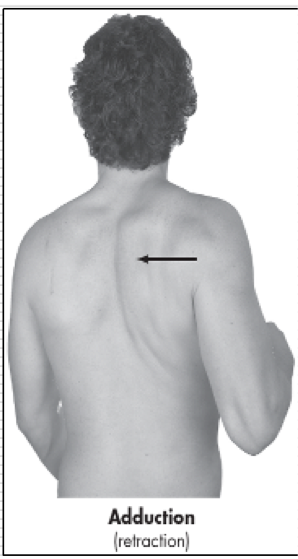
Adduction (Retraction) (ST)
Scapula moves medially toward spinal column
Frontal Plane
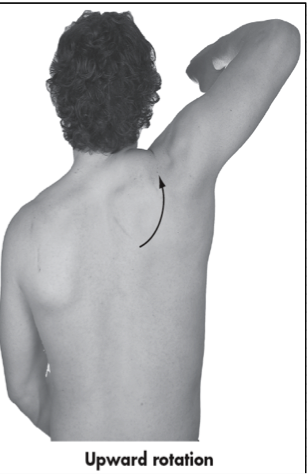
Upward Rotation (ST)
Moving inferior angle superolaterally away from spinal column
Frontal Plane
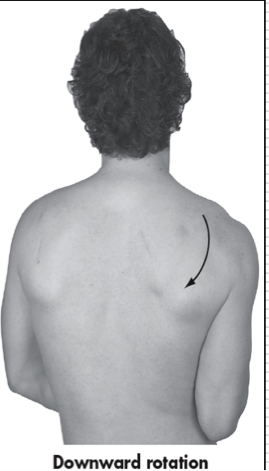
Downward Rotation (ST)
Returning inferior angle inferomedially toward spinal column
Frontal Plane
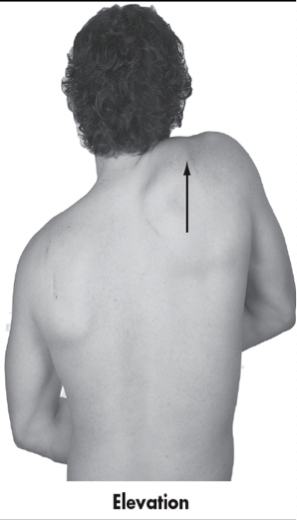
Elevation (ST)
Upward or superior movement, as in shrugging shoulders
Frontal Plane
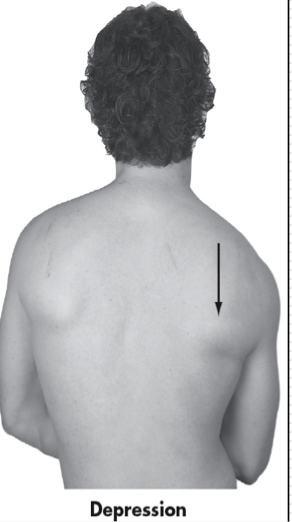
Depression (ST)
Downward or inferior movement, as in returning to neutral position
Frontal Plane
Movements
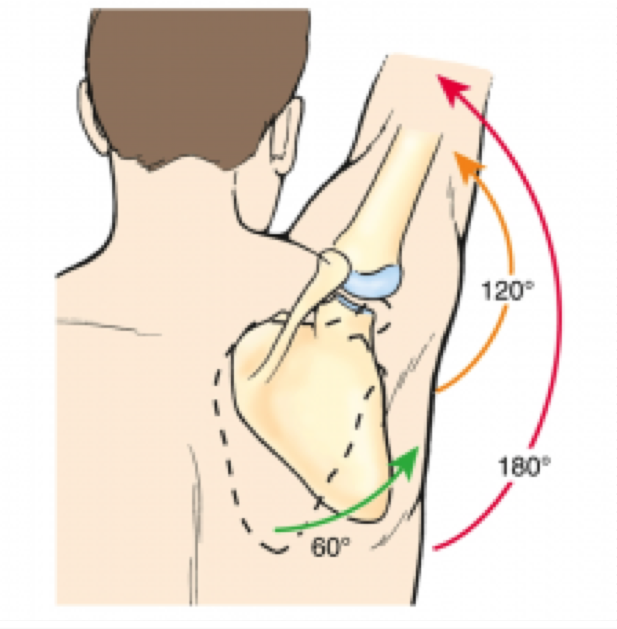
Glenohumeral joint is paired with shoulder girdle to accomplish total shoulder range of motion
Scapulohumeral Rhythm
Synergistic relationship
2 to 1 ratio
For every 2 degrees of glenohumeral motion, there is 1 degree of scapular motion
May vary within and between individuals
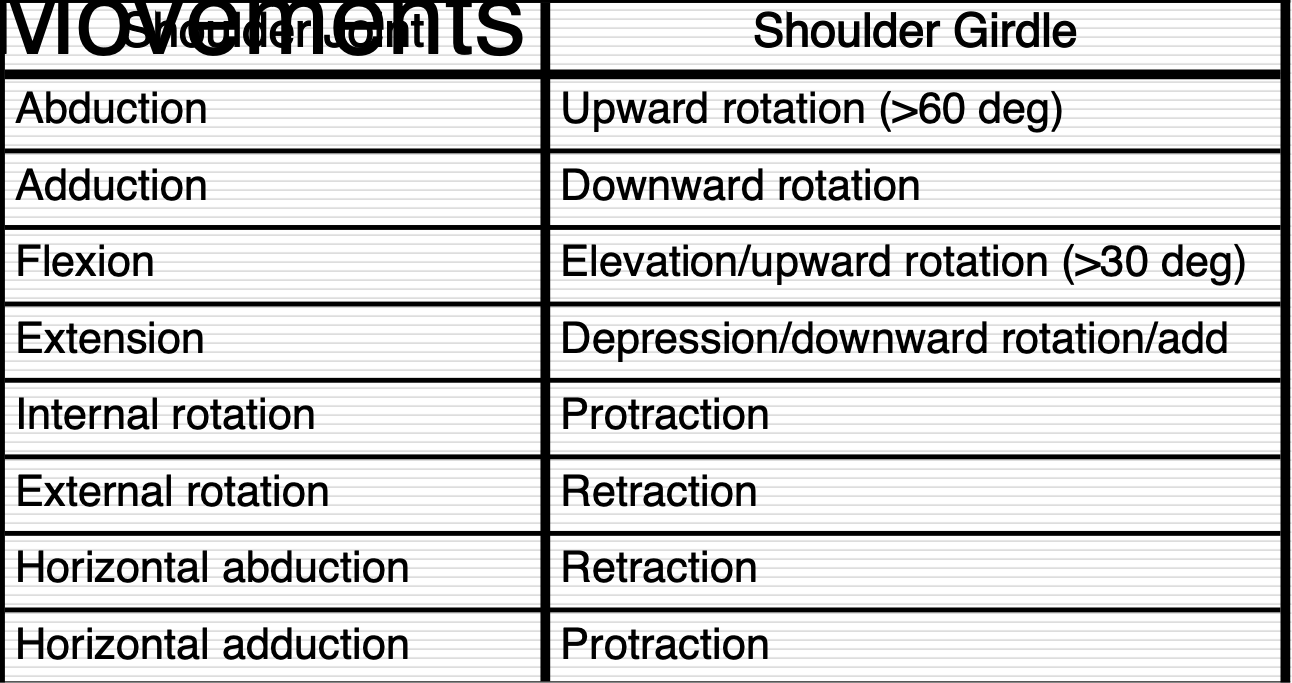
Movements Overview
Muscles (GH)
Intrinsic Glenohumeral Muscles
Originates on the scapula and clavicle
Deltoid
Coracobrachialis
Teres Major
Rotator Cuff Group
Extrinsic Glenohumeral Muscles
Originate elsewhere in the body
Latissimus Dorsi (back)
Pectoralis Major (chest)
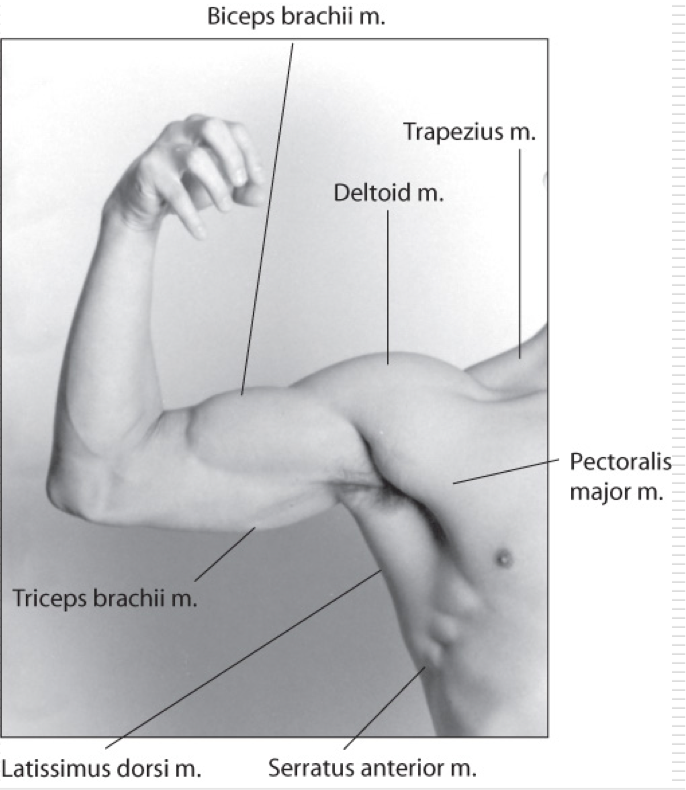
Anterior Muscles (GH)
Pectoralis Major
Coracobrachialis
Subscapularis
Deltoid
Superior Muscles (GH)
Deltoid
Suprascapularis
Posterior Muscles (GH)
Latissimus Dorsi
Teres Major
Infraspinatus
Teres Minor
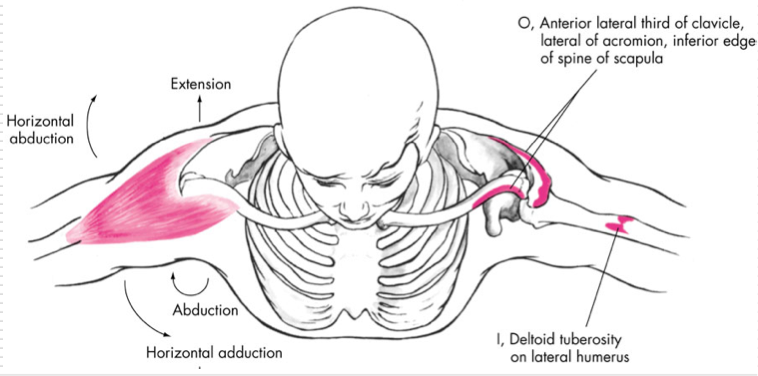
Deltoid
Abduction
Flexion - ant.
Extension - pos.
Internal Rotation - ant.
External Rotation - pos.
O - Anterior lateral 1/3 of clavicle, lateral acromion, inferior edge of scapular spine
I - Deltoid tuberosity
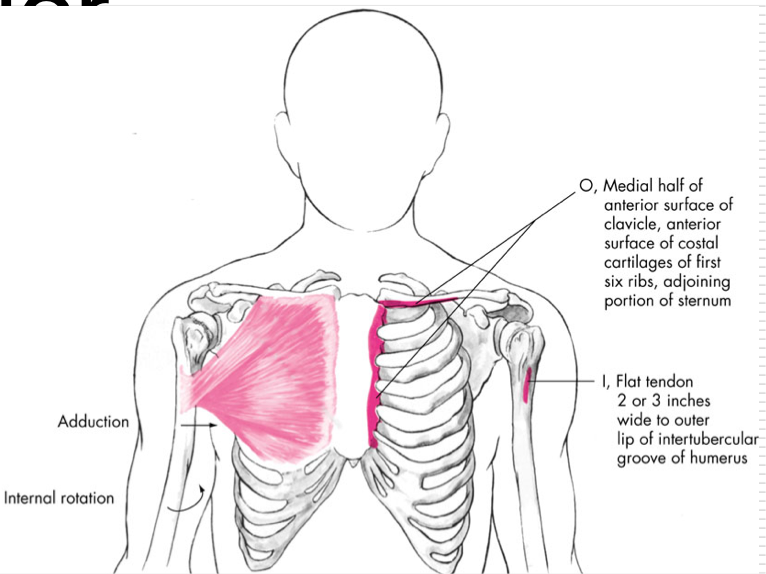
Pectoralis Major
Adduction
Internal Relations
Flexion
O - Medial ½ of clavicle, manubrium, and body of sternum, costal cartilage 1-6
I - Crest of greater tubercle of humerus (bicipital groove)
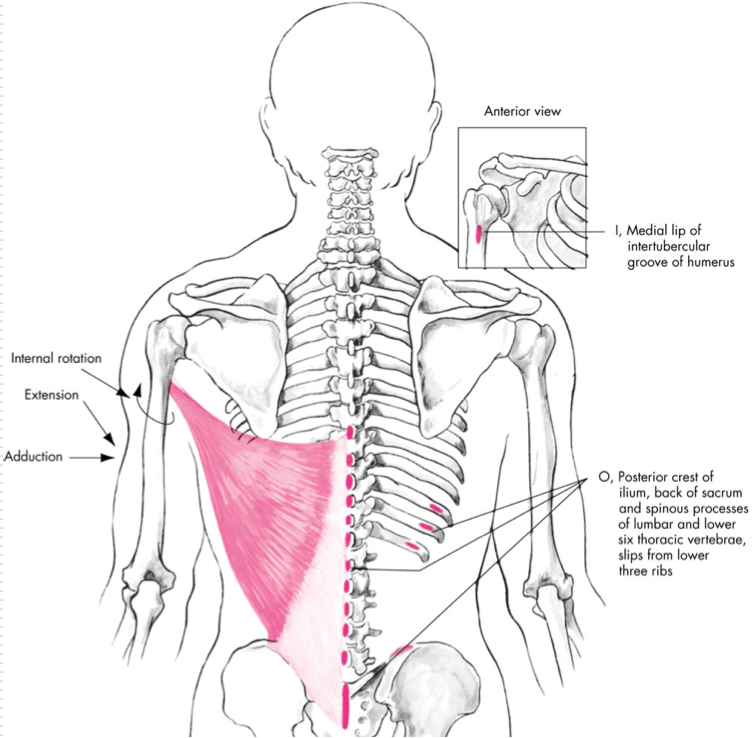
Latissimus Dorsi
Adduction
Extension
Internal Rotation
O - Posterior ilium, spinous processes of L spine, T7-12, lower 3 ribs
I - Medial side of intertubercular groove(bicipital groove) of humerus
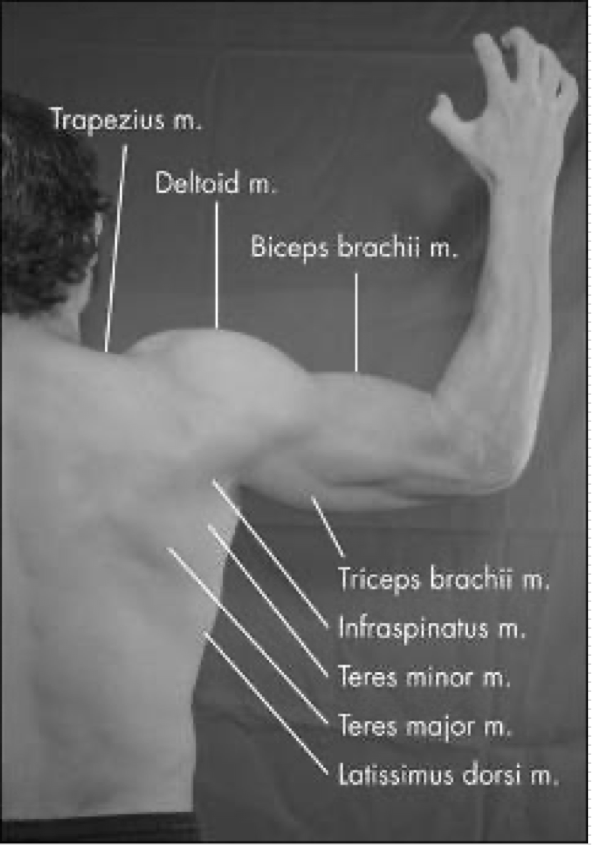
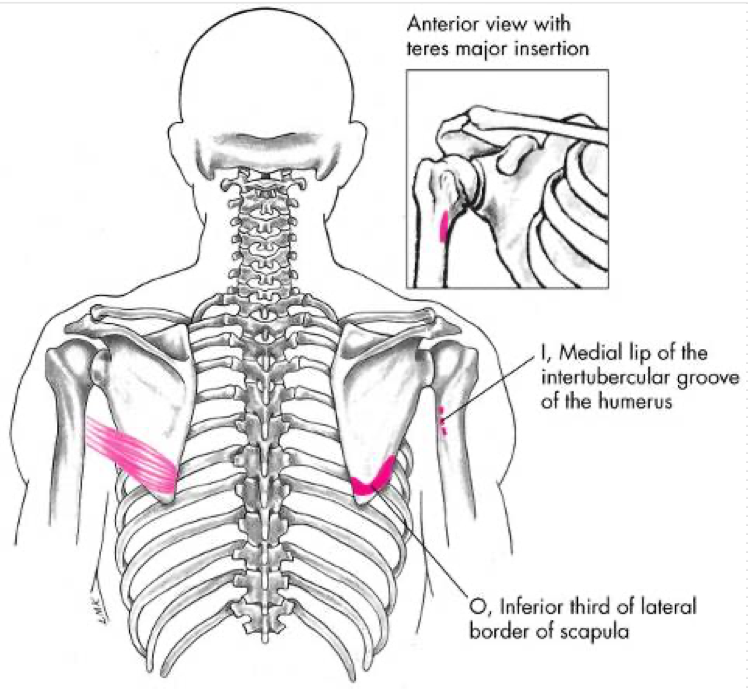
Teres Major
Extension
Internal Rotation
Adduction
O - Dorsal surface of inferior angle of scapula
I - Crest of the lesser tubercle of humerus (bicipital groove)
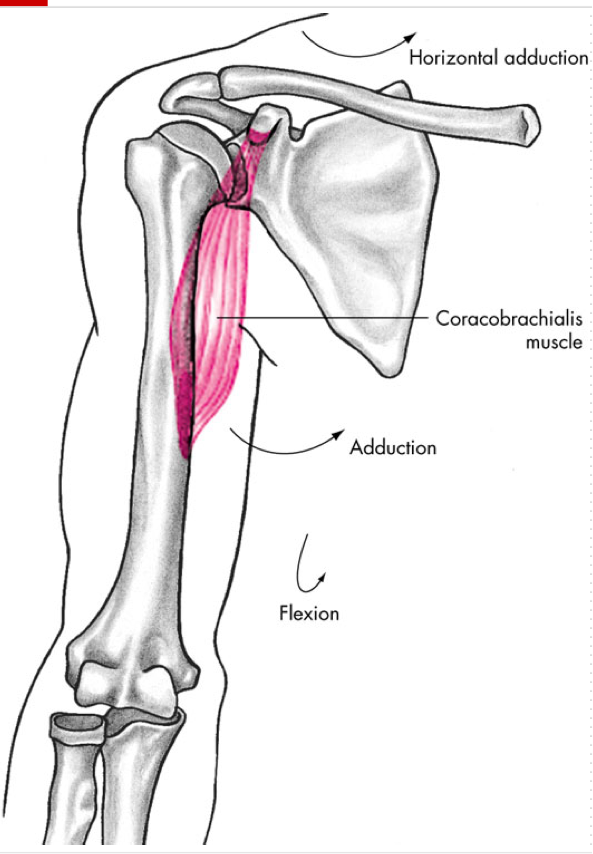
Coracobrachialis
Flexion
Adduction - primary
Internal Rotation
O - Coracoid Process of scapula
I - Upper 1/3 of anterior humerus
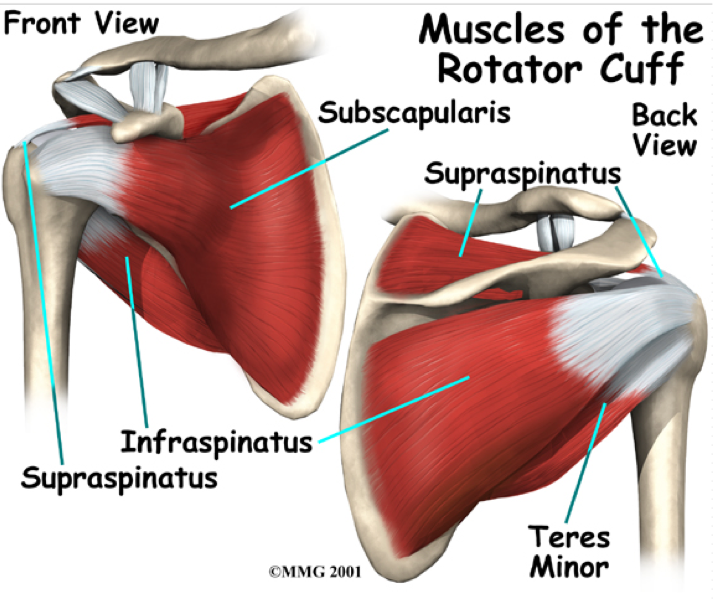
Rotator Cuff Muscles
SITS
Supraspinatus - Attach to greater tubercle from above (Abduct)
Infraspinatus - Attach to greater tubercle posteriorly (Ext. Rot.)
Teres Minor - Attach to greater tubercle posteriorly (Ext. Rot.)
Subscapularis - Attach the lesser tubercle anterior (Int. Rot.)
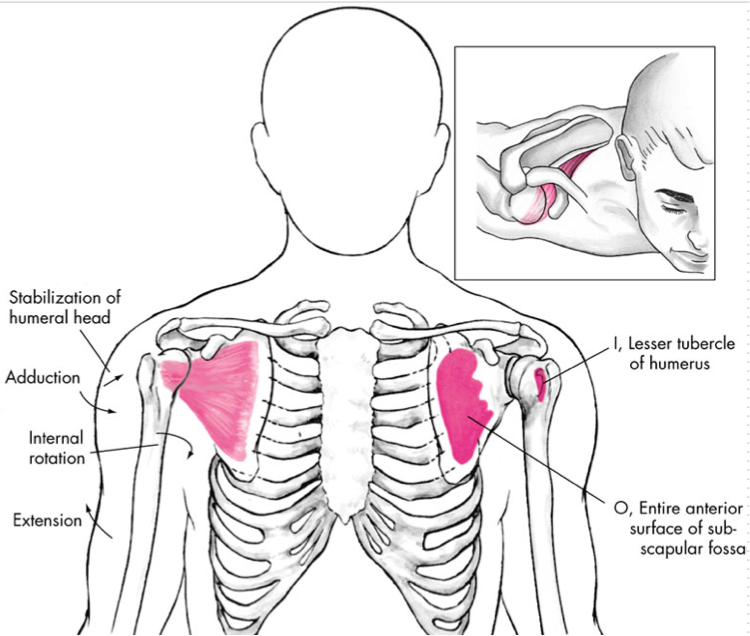
Subscapularis
Internal Rotation - primary
Extension
Adduction
Stabilization of the humeral head in glenoid fossa
O - Subscapular Fossa
I - Lesser tubercle of humerus
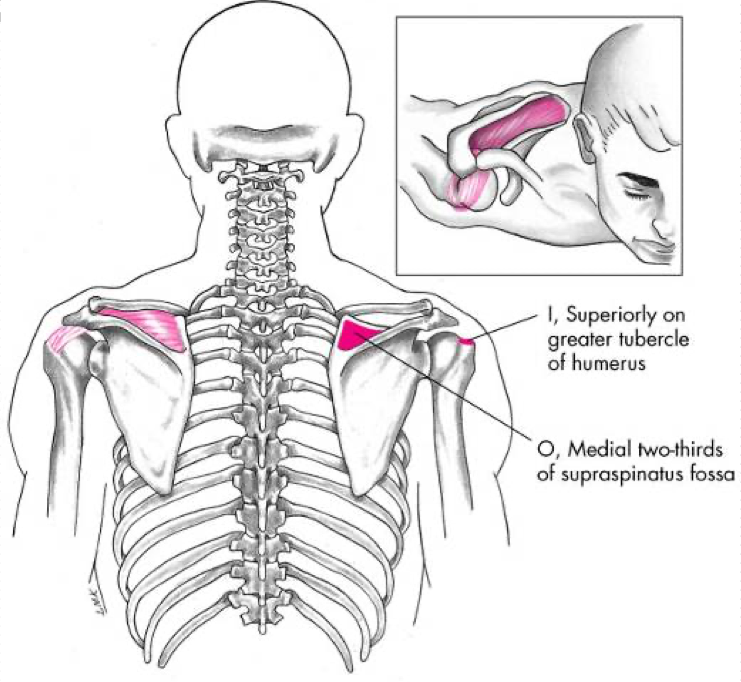
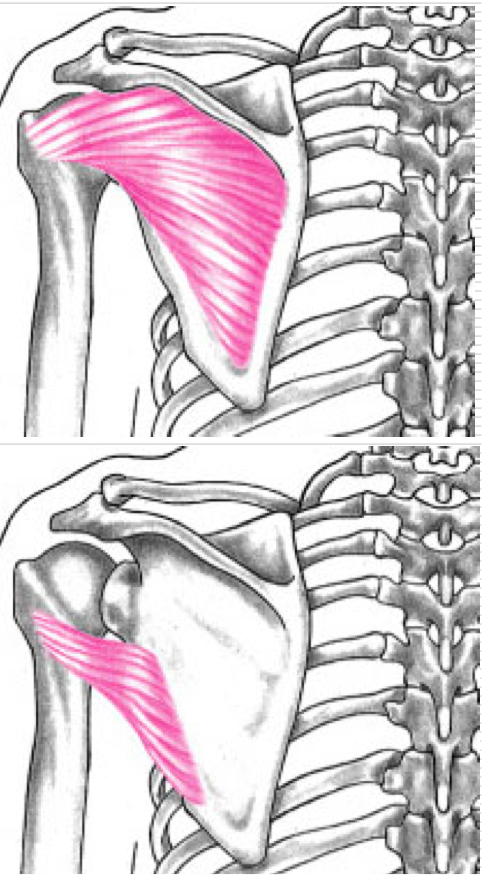
Supraspinatus
Abduction
Stabilization of the humeral head in glenoid fossa
O - Medial 2/3 of supraspinatus fossa
I - Greater tubercle of humerus
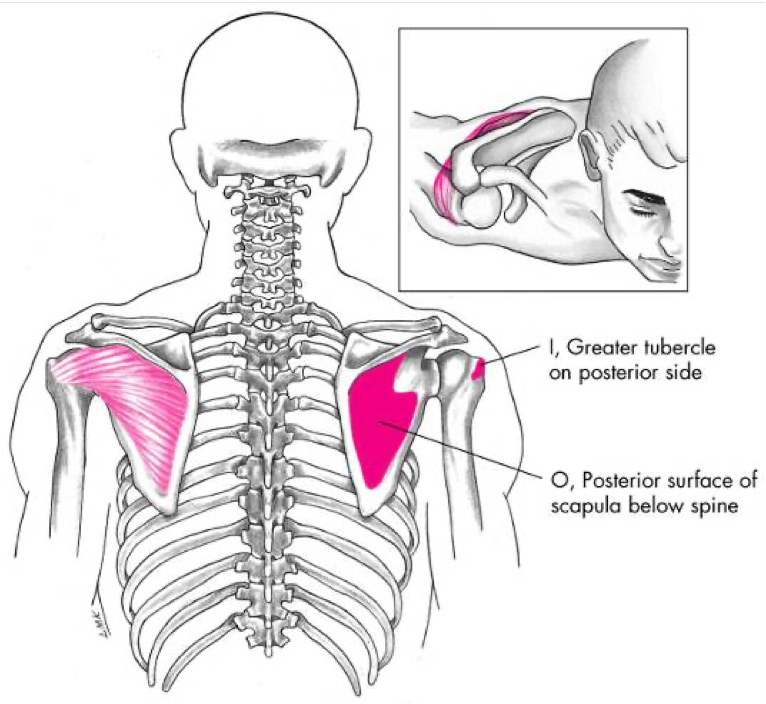
Infraspinatus
External Rotation
Extension
Stabilization of humeral head in the glenoid fossa
O - Medial aspect of infraspinatus fossa below scapular spine
I - Greater tubercle of humerus
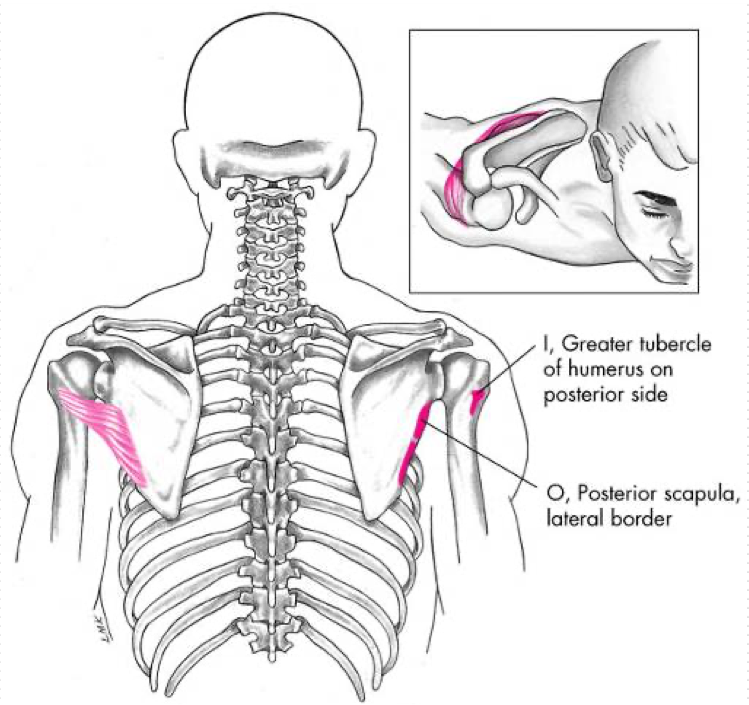
Teres Minor
External Rotation
Adduction
Extension
Stabilization of humeral head in the glenoid fossa
O - Upper 2/3 of lateral border of scapula
I - Greater tubercle of humerus
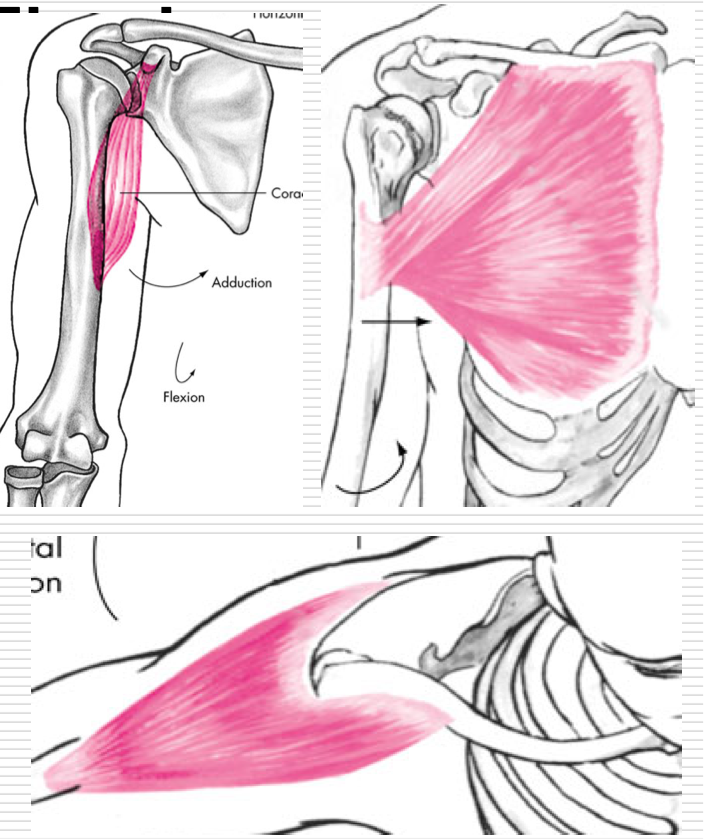
Glenohumeral Flexion
Agonists
Deltoid - anterior
Pectoralis Major - upper
Coracobrachialis
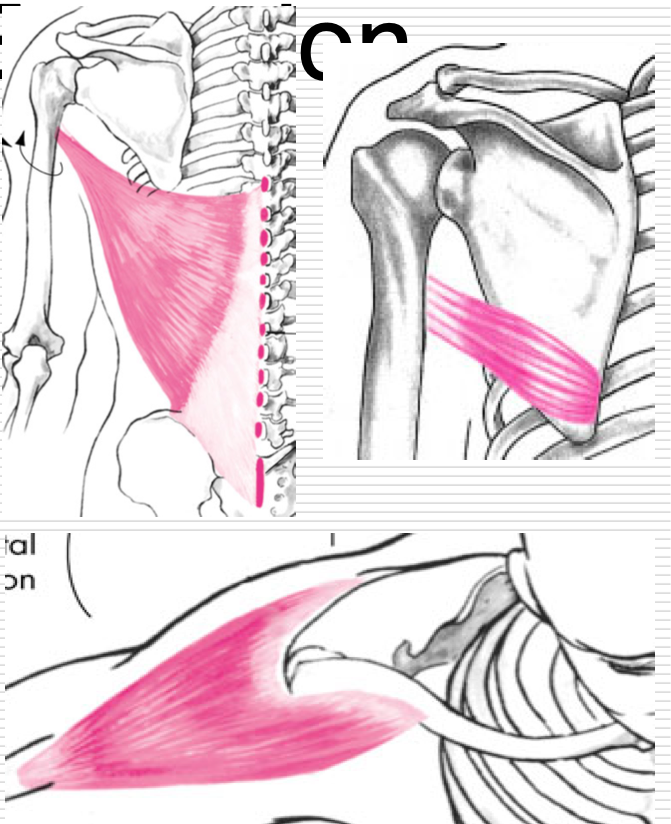
Glenohumeral Extension
Agonists
Teres Major
Latissimus Dorsi
Deltoid - posterior
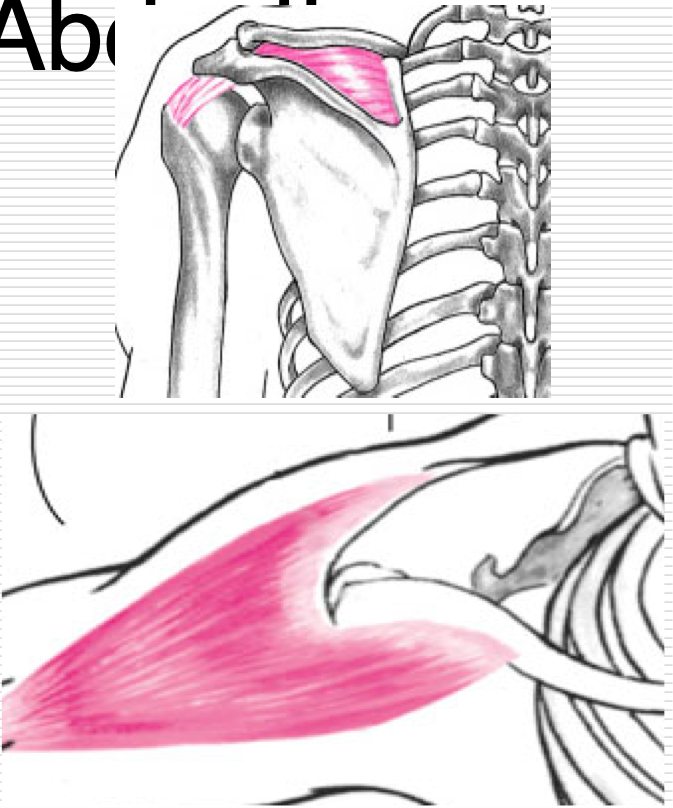
Glenohumeral Abduction
Agonists
Supraspinatus
Deltoid - middle
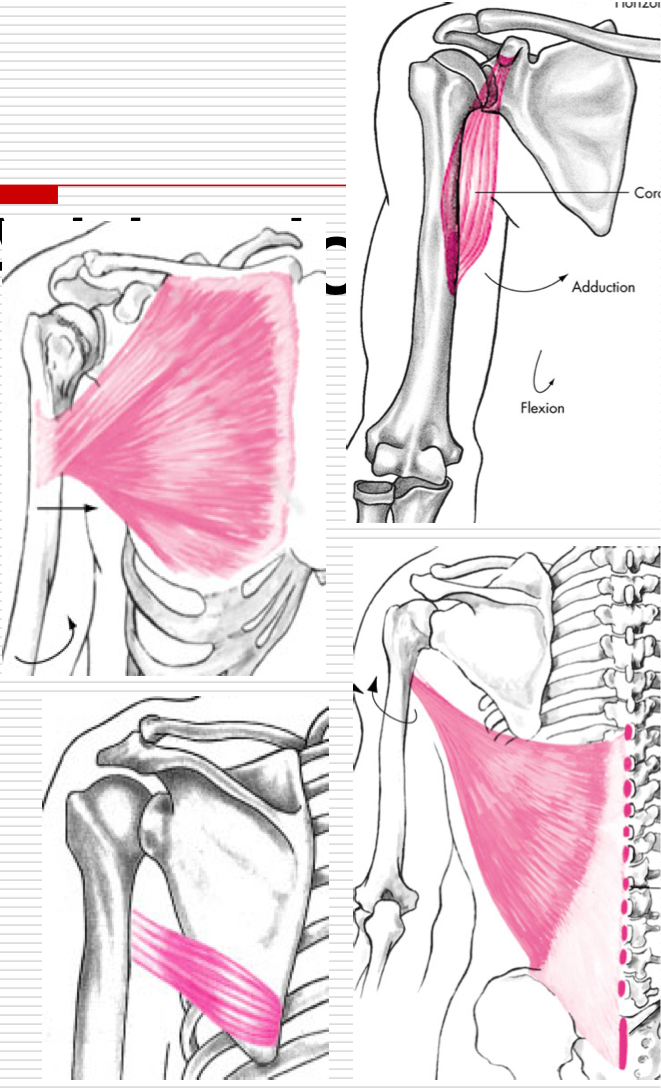
Glenohumeral Adduction
Agonists
Pectoralis Major
Coracobrachialis
Latissimus Dorsi
Teres Major
Glenohumeral Internal Rotation
Agonists
Latissimus Dorsi
Teres Major
Subscapularis
Pectoralis Major
All attach anteromedially on humerus
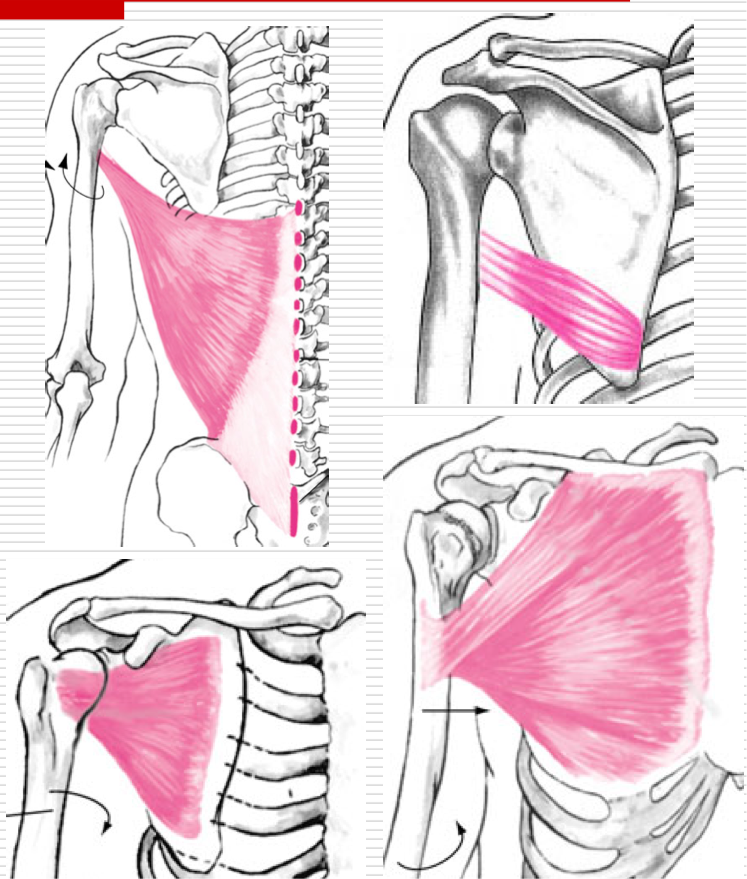
Glenohumeral External Rotation
Agonists
Infraspinatus
Teres Minor
Both attach posteriorly on greater tubercle
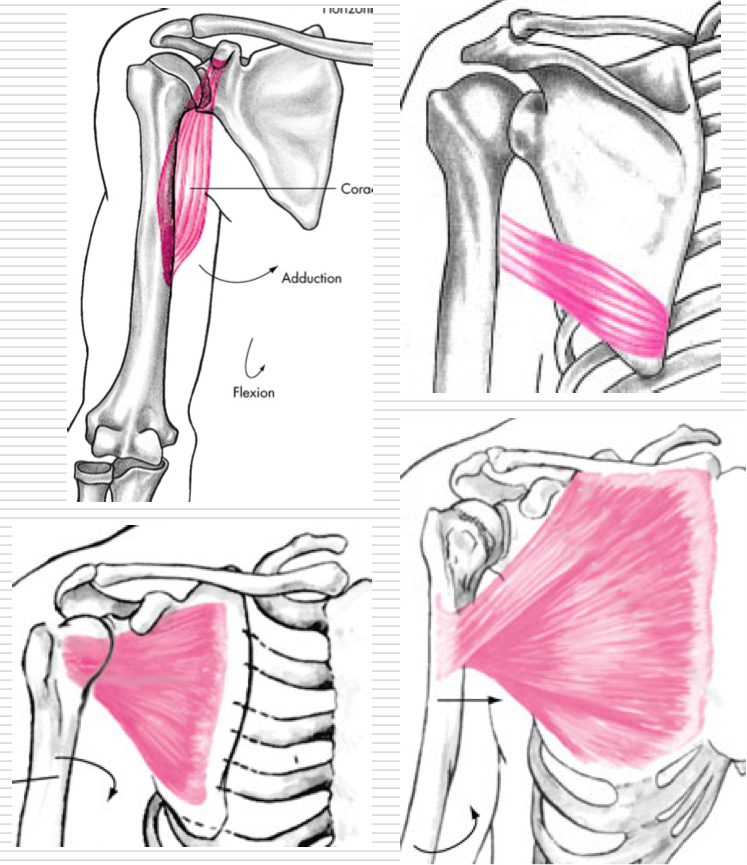
Glenohumeral Horizontal Adduction
Agonists
Abductors
Flexors
Internal Rotators
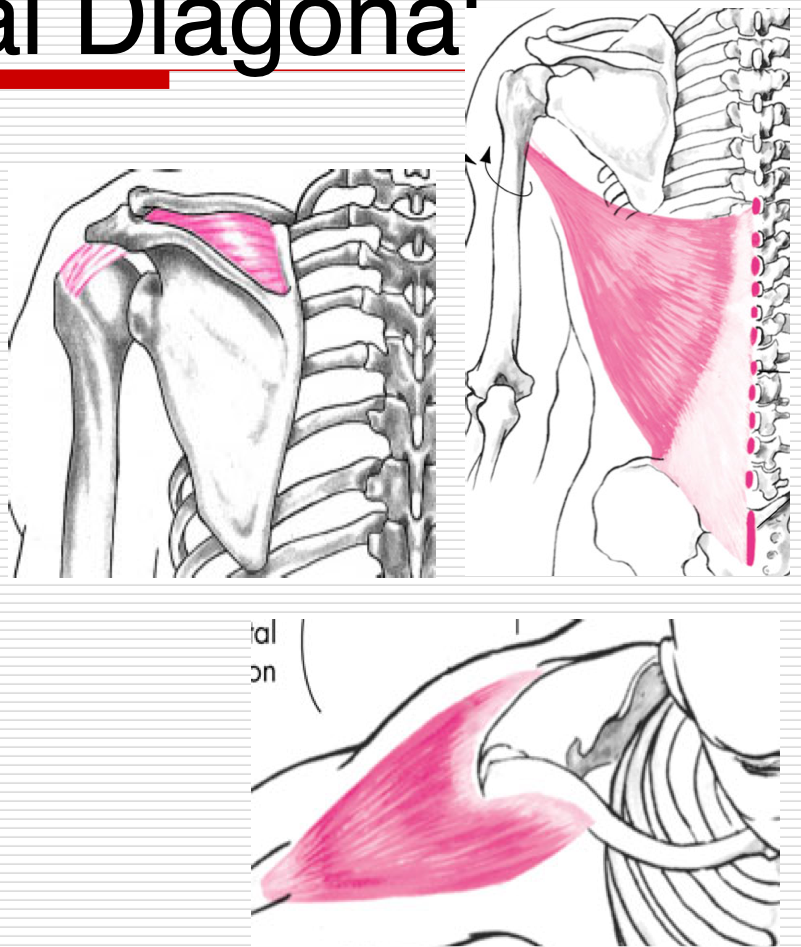
Glenohumeral Diagonal Abduction
Agonists
Abductors
Extensors
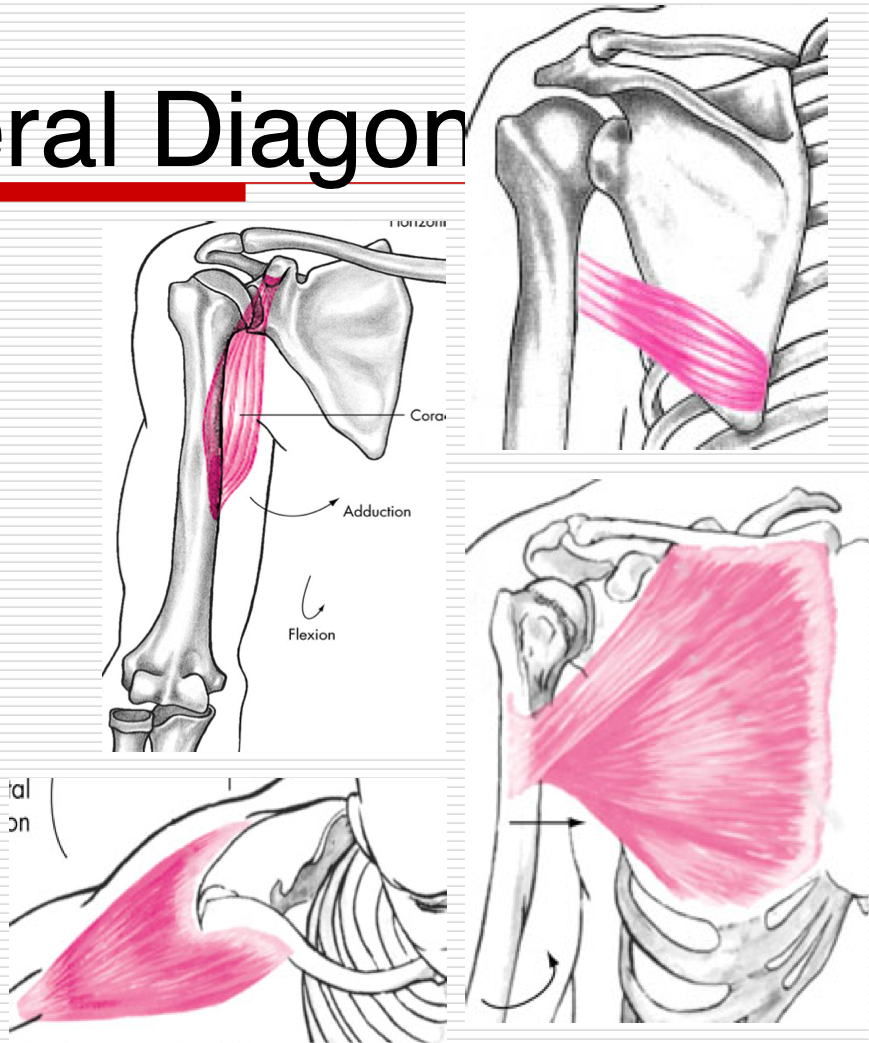
Glenohumeral Diagonal Adduction
Agonists
Adductors
Flexors
Muscles (ST)
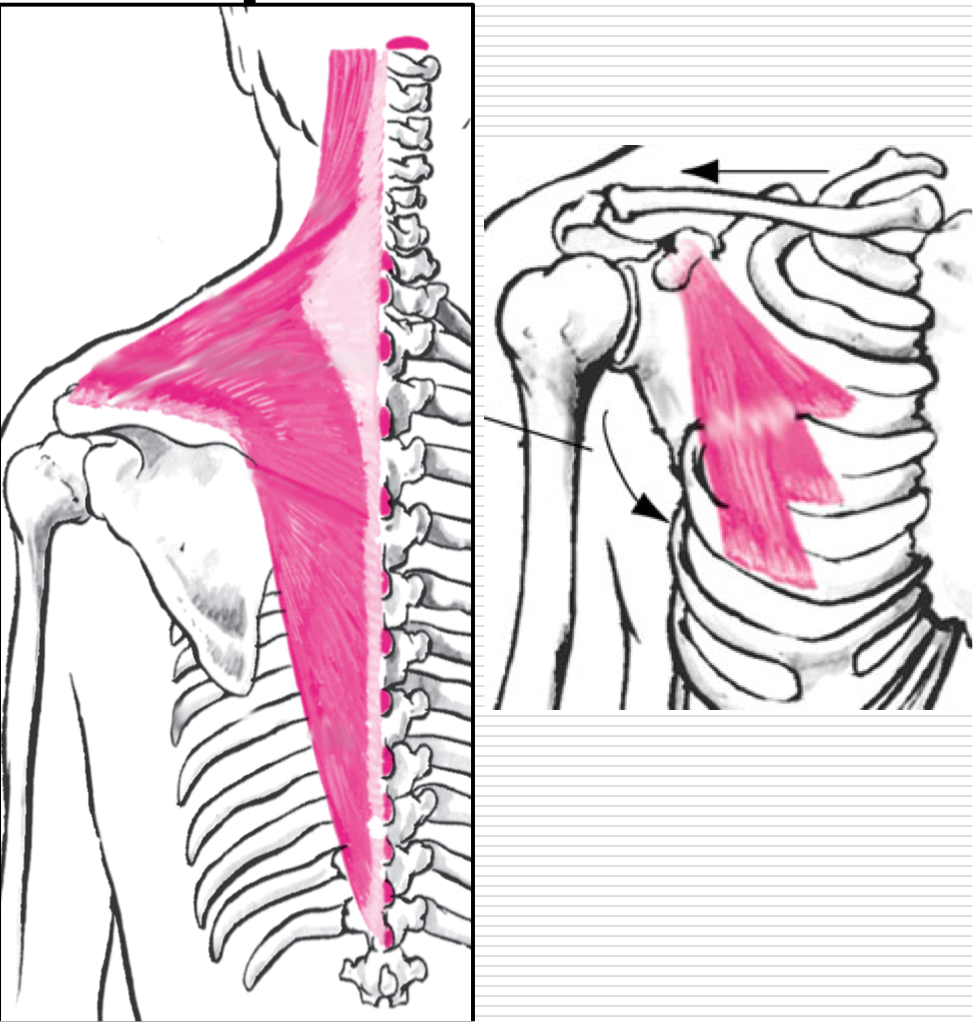
5 muscles primarily involved in shoulder girdle movements
Trapezius
Rhomboid
Levator Scapulae
Serratus Anterior
Pectoralis Minor
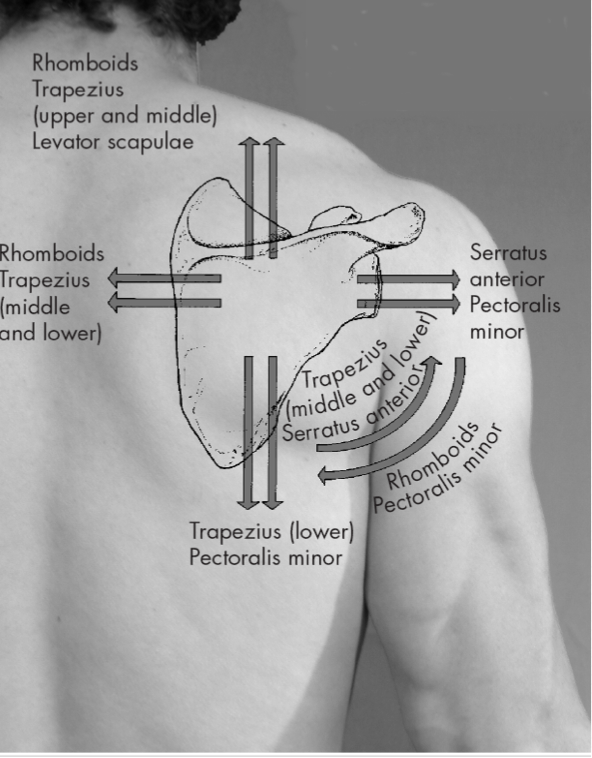
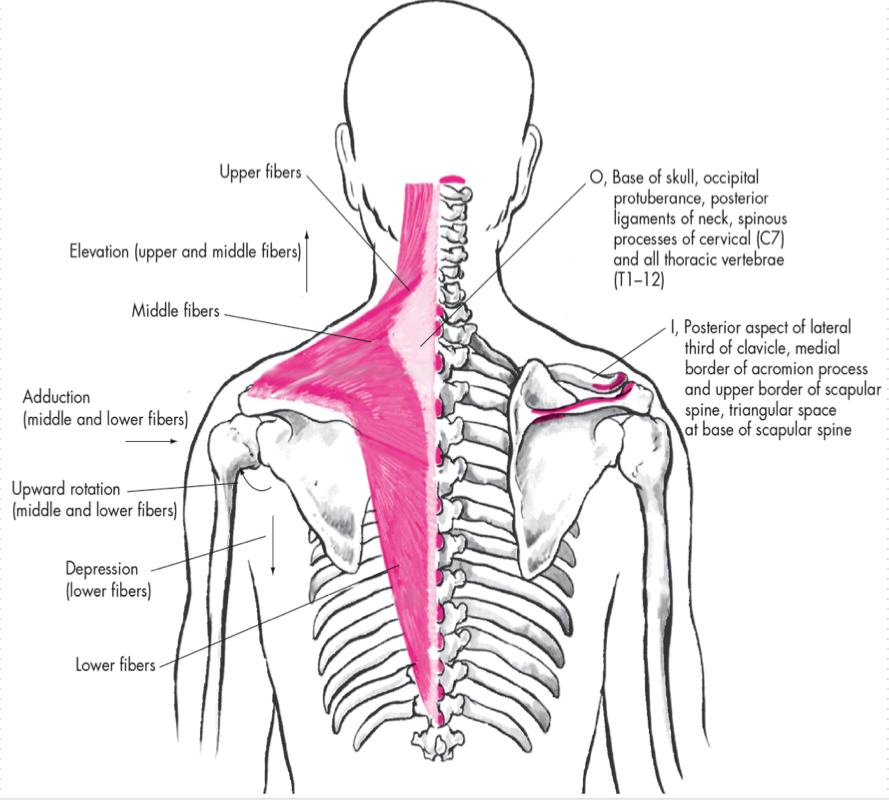
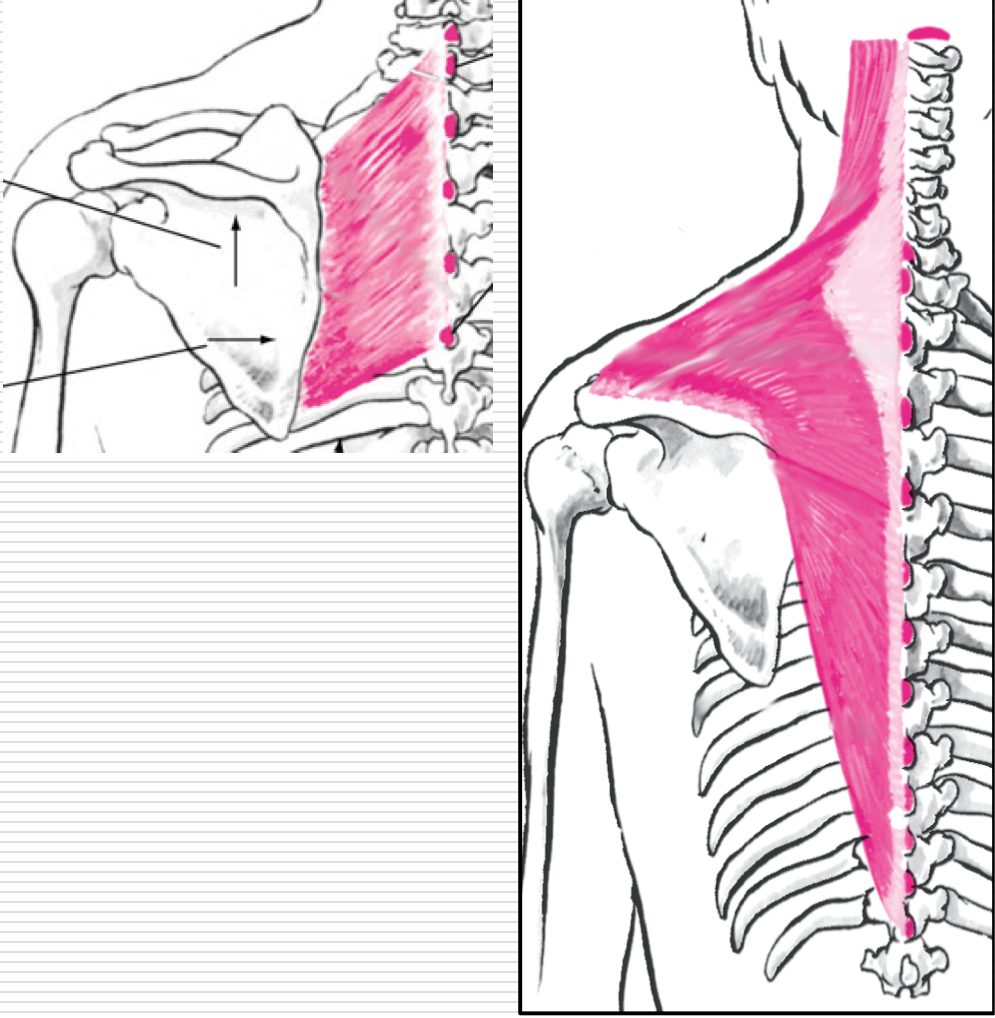
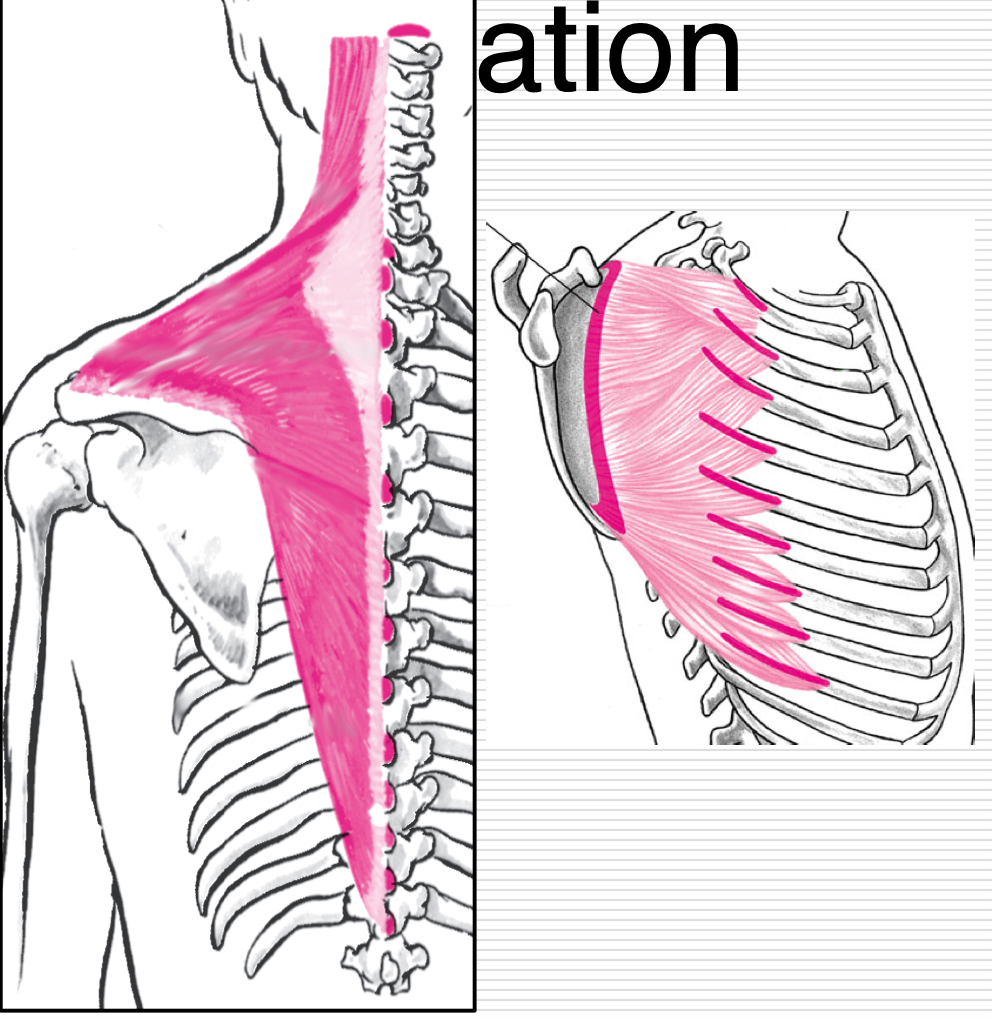
Trapezius
Retraction
Upward Elevation
Depression
O - Occipital Protuberance, Spinous processes of C1-7, T1-12
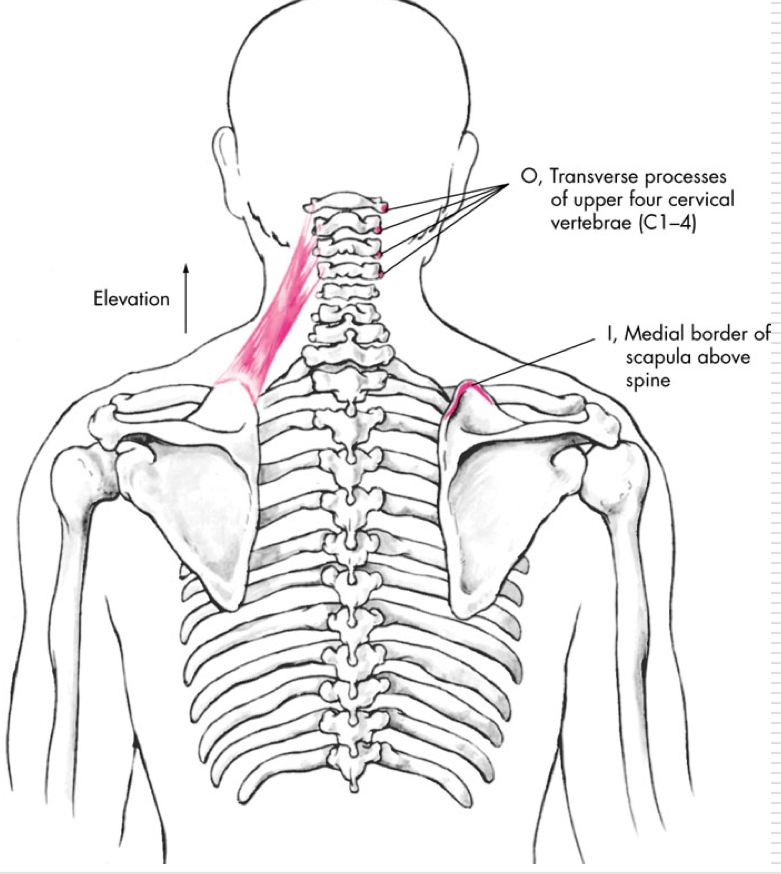
Levator Scapulae
Elevation - medially
Lateral Flexion of cervical spine
O - Transverse processes of C1-4
I - Superior angle to the medial border of scapula
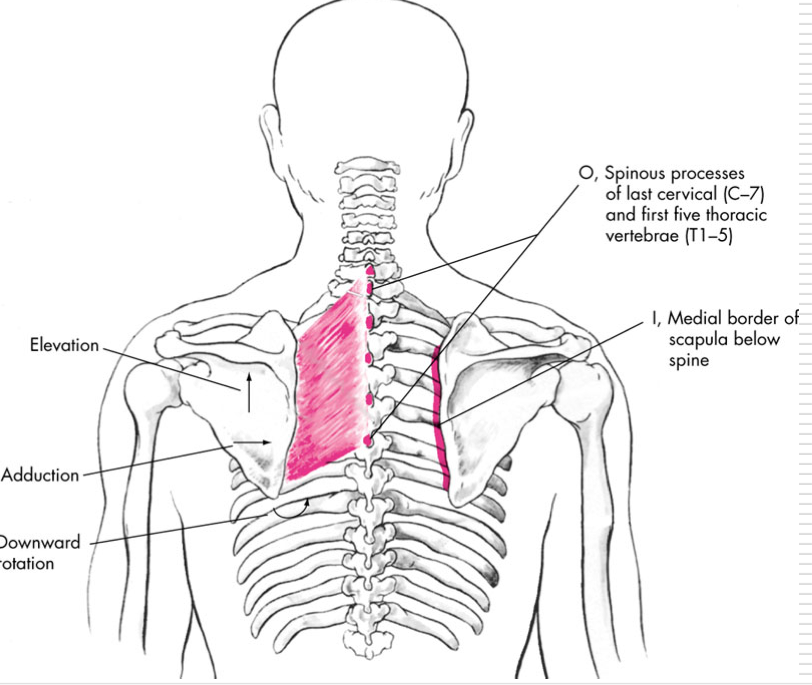
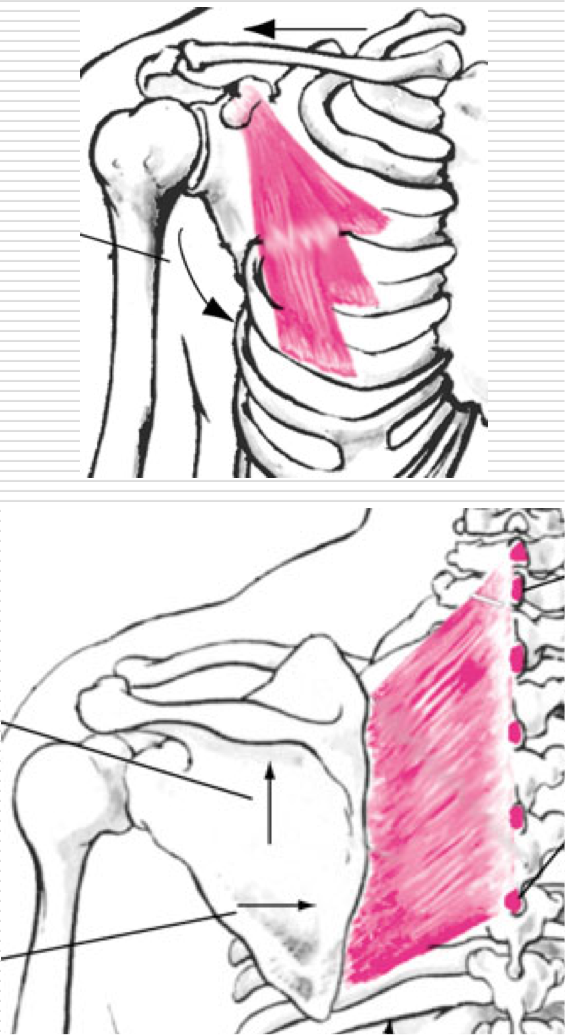
Rhomboid Major & Minor
Retraction
Elevation
Downward Rotation
O - Spinous processes of C7 and T1-5
I - Medial border of scapula below scapular spine
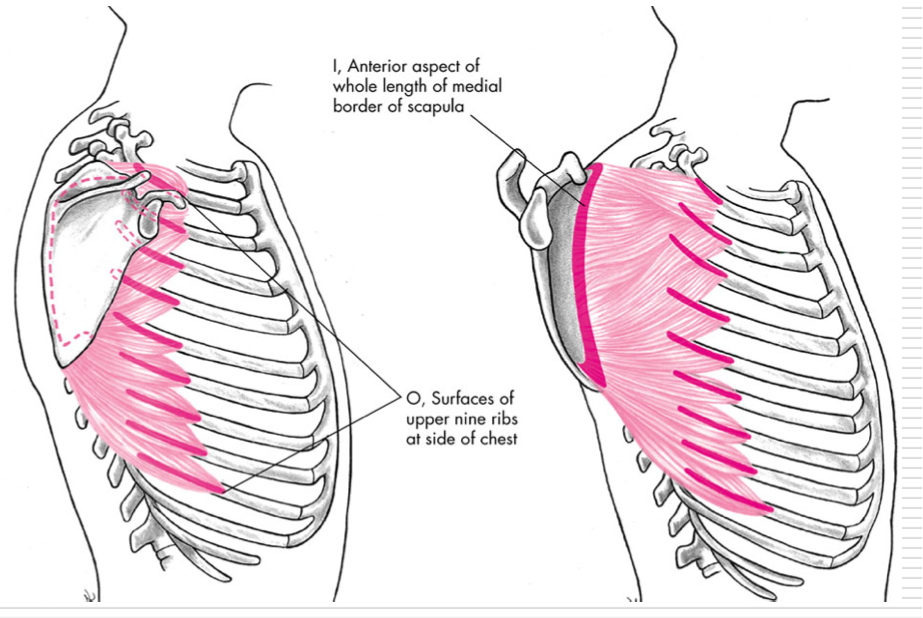
Serratus Anterior
Protraction
Upward Rotation
O - Surface of ribs 1-9 at the slide of the chest
I - Anterior aspect of medial border of scapula
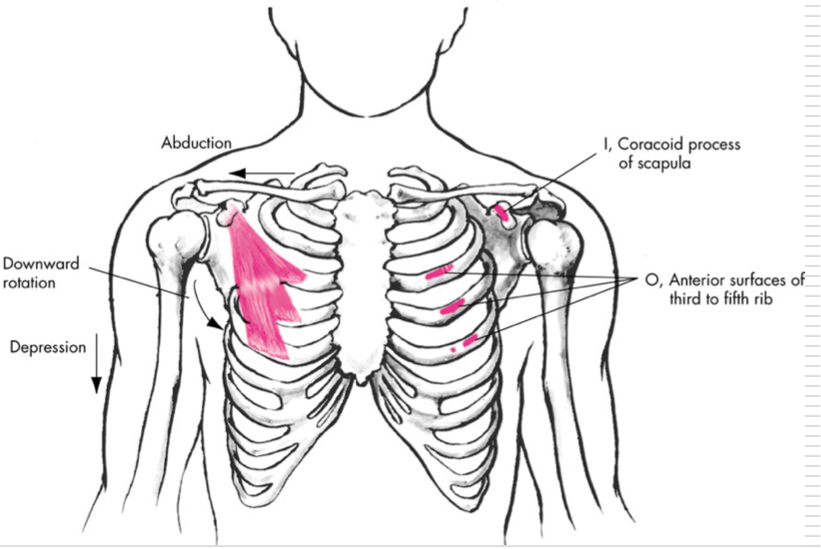
Pectoralis Minor
Protraction
Downward Rotation
Depression
O - Anterior surface of ribs 3-5
I - Coracoid process of scapula
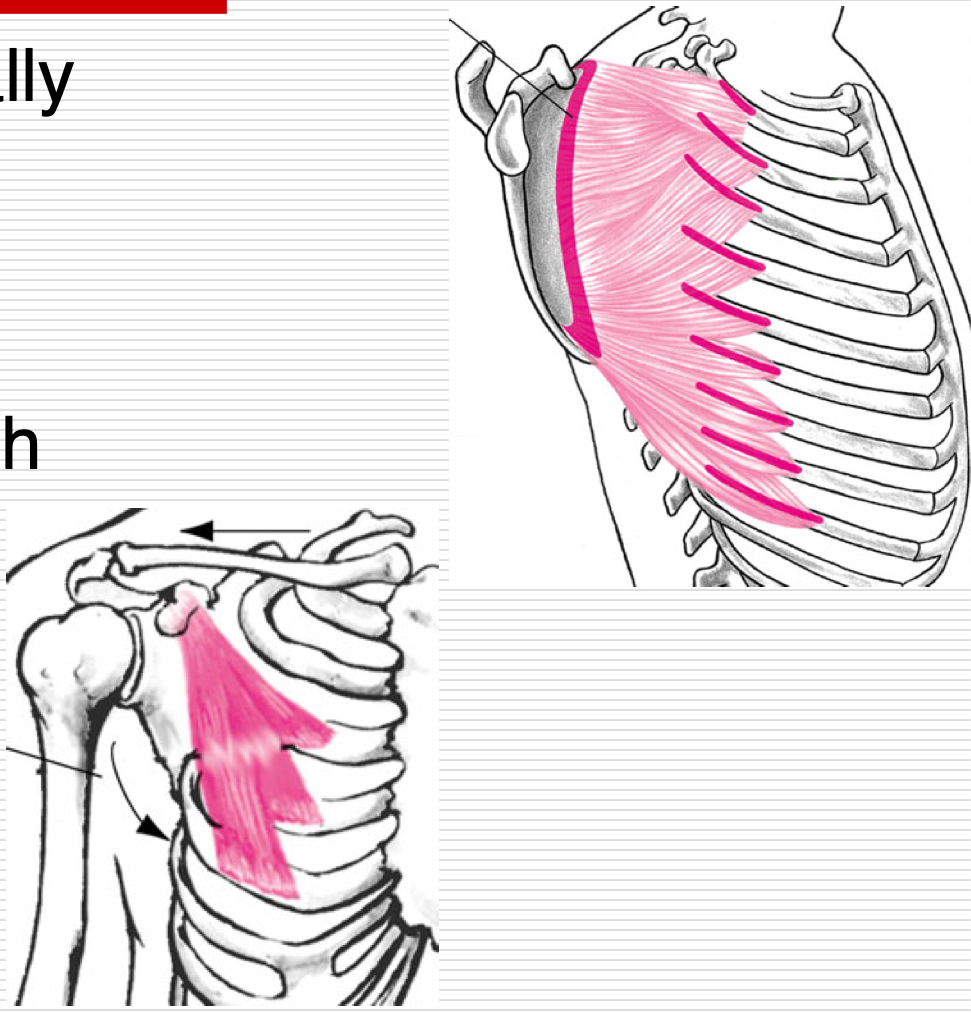
Scapular Protraction - Abduction
Scapula move laterally away from spinous processes without rotation
Ex - push up & bench press
Agonists
Pectoralis Minor
Serratus Anterior
Scapular Retraction - Adduction
Return from abduction
Ex - Seated row
Agonists
Middle Trapezius
Lower Trapezius
Rhomboids
Scapular Upward Rotation
Lateral and Upward Movement
Agonists
Middle Trapezius
Lower Trapezius
Serratus Anterior
Scapular Downward Rotation
Downward and medial movement
Glenoid Fossa is rotated downward when downward movement of shoulder joint occurs
Ex - Lat pull-down
Agonists
Pectoralis Minor
Rhomboid
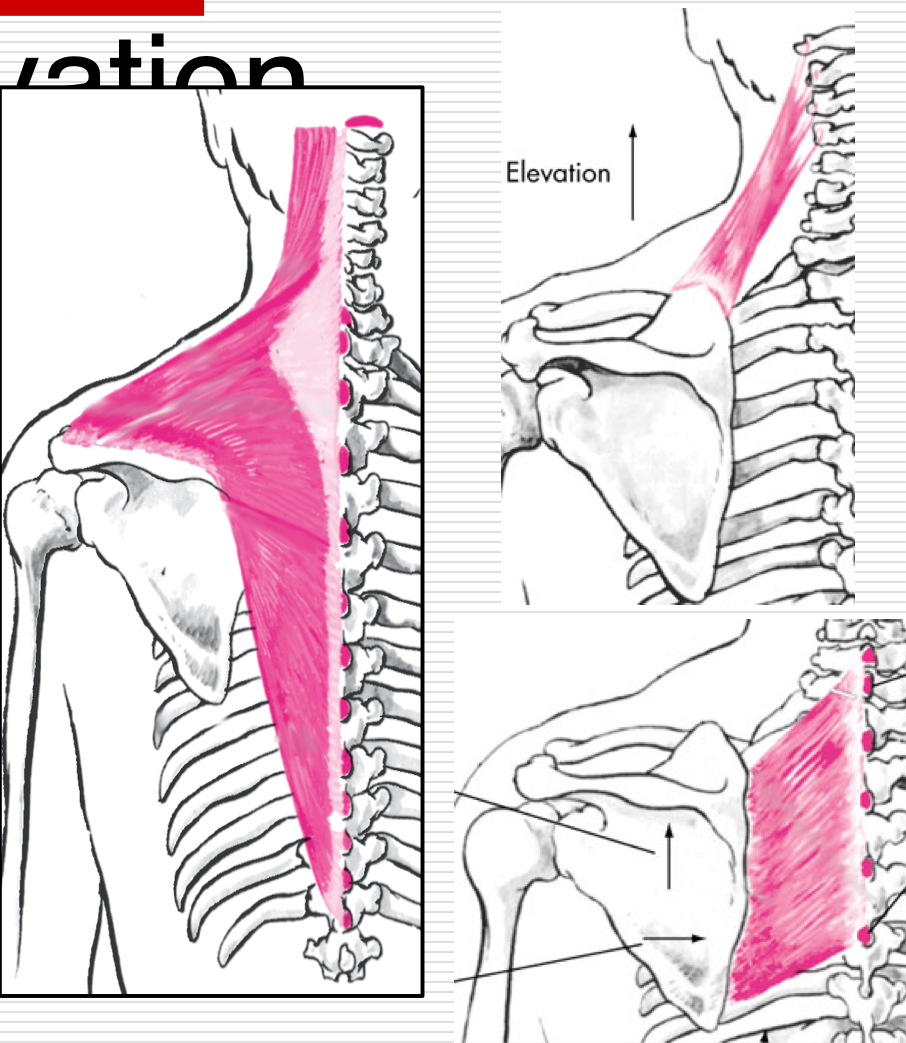
Scapular Elevation
Lifting scapular without rotation in anatomic position
Ex - Shoulder shrug
Agonists
Levator Scapulae
Upper Trapezius
Middle Trapezius
Rhomboids
Scapula Depression
Dropping scapula without rotation in anatomic position
Ex - Upward portion of dip
Agonist
Lower Trapezius
Pectoralis Minor