4741 Exam 3 (his email)
 Studied by 0 people
 Call Kai
 Learn
Learn Practice Test
 Spaced Repetition
 Match
Match Flashcards
 Knowt Play
 Podcast
1/57

There's no tags or description
Looks like no tags are added yet.
Name | Mastery | Learn | Test | Matching | Spaced |
|---|
No study sessions yet.
58 Terms
Who was Victor Horta?
The most famous Belgian Art Nouveau (1890s) architect and designer is Victor Horta, considered a pioneer of the movement, known for his innovative use of iron, glass, and organic, curving forms, exemplified in his Hôtel Tassel in Brussels, often cited as the first Art Nouveau house
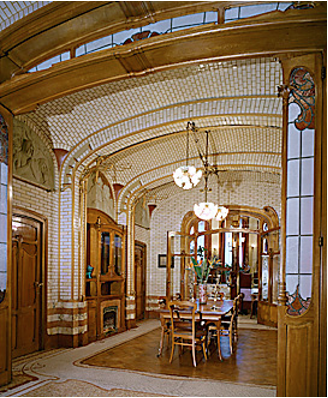
Tassel House, Dining Room and Plan, Victor Horta, Brussels, 1892-93

Tassel House, Staircase, Victor Horta, Brussels, 1892-93
This is Hortas masterwork and was extremely impactful to the Art Nouveau style.
The staircase has pseudo-organic vegetation with undulating swirls. Iron railing, wall paintings, columns, floor tiles, all integrate into an organic whole
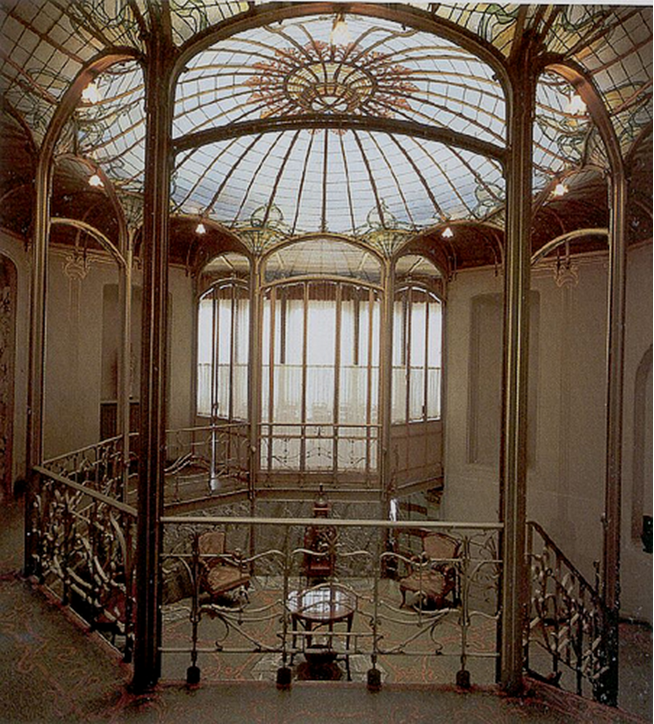
Interior of the Van Eetvelde House, Victor Horta, Brussels, 1895
•There are countless Art Nouveau architectural pearls in Brussels
•Swirling, pseudo-organic cast iron elements, imitating floral pattern, elements found in nature
•Glazed, mushroom-like cupola

Maison du Peuple, Victor Horta, Brussels, 1897-99
•The People’s House provided an opportunity to apply Horta’s idiosyncratic architecture on larger and more public scale
•Exterior façade curves to accommodate an irregular construction site
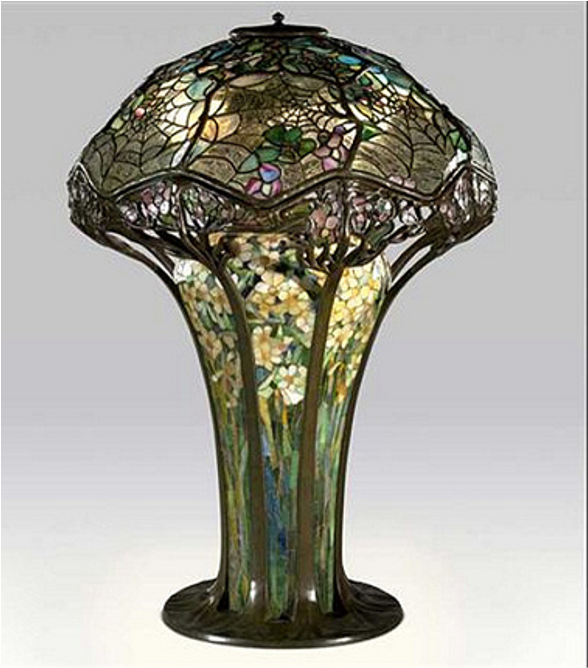
Cobweb Lamp, Louis Comfort Tiffany, glass and metal, 1899-1900
•Tiffany and his New York based company are best known for jewelry products and art nouveau glass, including his famous lamps from the turn of the century (also: vases, windows, even furniture)
•Like for many other Art Nouveau designers, his inspiration came foremost from natural forms
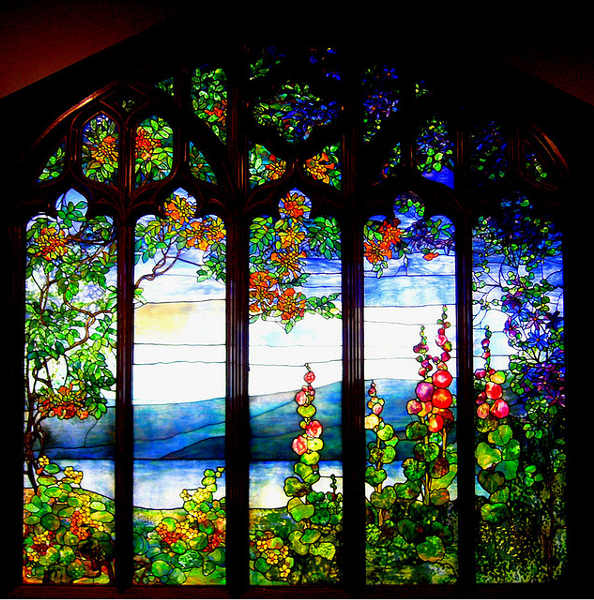
Landscape Window for Music Room, Rochroane mansion, Louis Comfort Tiffany, Irvingtion, NY, 1905, stained glass window
•Gothic revival window frame; Tiffany window decorated with hollyhocks, trumpet vines and wisteria
•Came a mansion overlooking the Hudson River Valley
•Use of lead casing reveals influence of Gothic art and architecture on technique
What is Art Deco?
•Art Déco style lasted from ca. 1918-1940, but is principally associated with the 1920s and 1930s
•Return to traditions and yet a celebration of the mechanized, modern world
•An unconditionally modern style, with a sense of classical sobriety
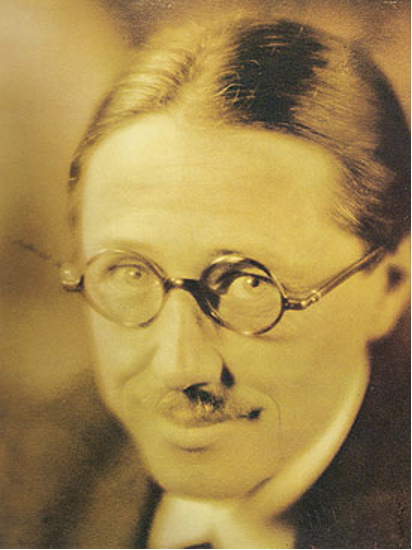
Who was Emile-Jacques Ruhlmann?
He was an interior by a French interior/furniture designer known for his use of precious and exotic materials. His family owned a painting and contracting firm. He made the biggest influence in Art Nouveau and the Arts and Crafts Movement.
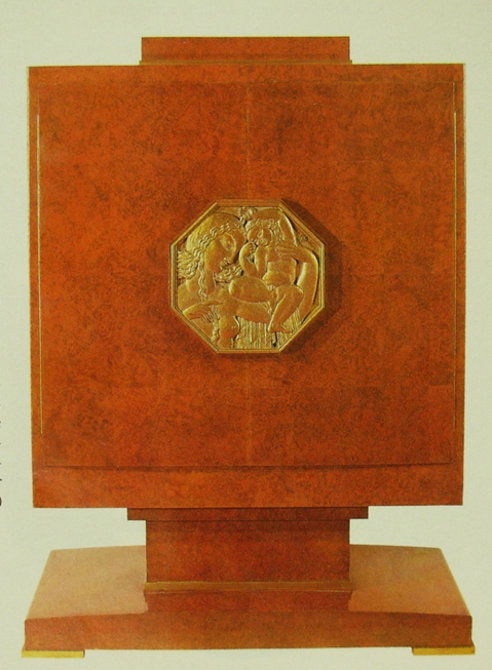
Collector’s Cabinet, Émile-Jacques Ruhlmann, 1927
wood, veneer, bronze repoussé application
•A trained blue-collar worker, in the 1920s, would have had to work about 2000 weeks to be able to afford a Ruhlmann-designed interior
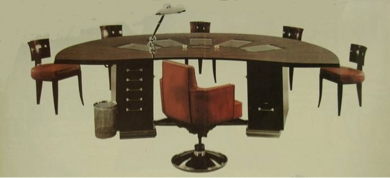
Office Furniture for the Maharajah of Indore, Emile-Jacques Ruhlmann,1930s
wood and chrome-plated metal

Prototype of the Salon of an Art Collector, Emile-Jacques Ruhlmann, shown at the Salon des Artistes Décorateurs, 1926
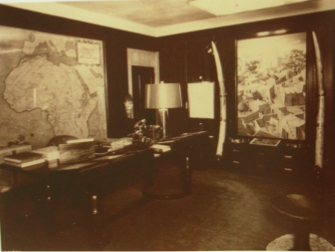
Georges-Marie Haardt’s Office Space on the Rue de Rivoli, Emile-Jacques Ruhlmann, Paris, 1927
•Haardt: wealthy adventurer and explorer, car and African enthusiast, art collector; friend of French car maker André Citroën
•Black Crossing (Croisière noire, 1924/1925, Algeria to Madagascar), and Yellow Crossing (Croisière jaune, 1931/1932, Beirut to Beijing)
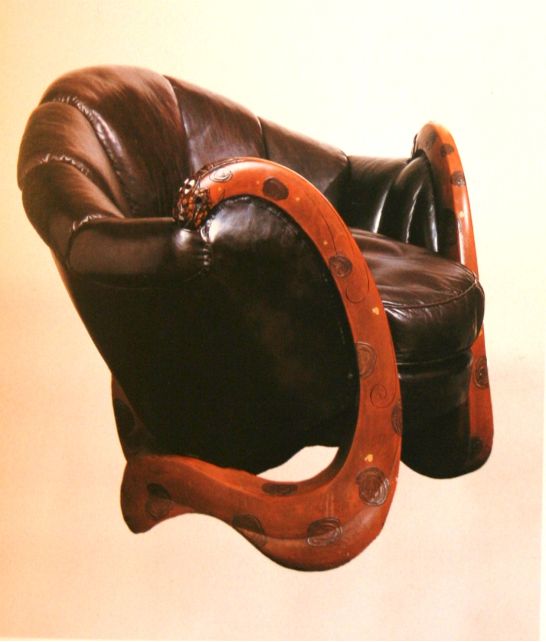
Snake Armchair, Eileen Gray, 1920-22, wood and leather
•The Snake Armchair made headlines in 2009, when at the auction of late fashion designer Yves Saint-Laurent at Christie’s in Paris, it fetched more than $28 million
•The most expensive chair in the world to the present day
•Saint-Laurent had acquired it in the 1970s, when Art Deco started to come back into fashion

Day Bed “Pirogue” for Madame Mathieu Lévy, Eileen Gray, 1920-22
lacquer with tortoise shell effect on the exterior, silvered surface on the interior
A Pirogue is an elongated boat of the type that is used on many rivers in Africa, for example; introduce again the theme of exoticism
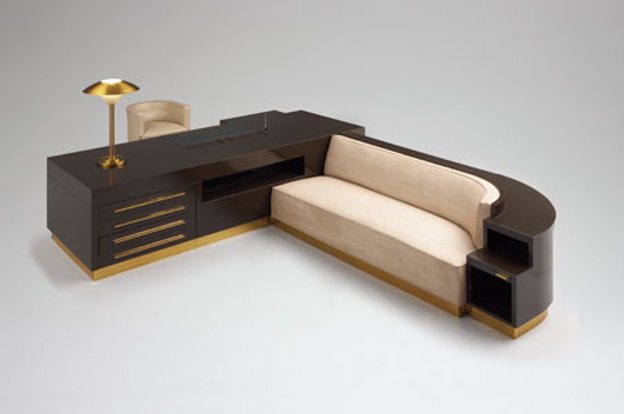
Michel Roux-Spitz, An Administrator’s Office, 1930, lacquered wood (Duco paint), leather, brass, canvas (Paris, Musée des Arts Décoratifs)
•Black lacquer furniture, in general, is typical for Art Déco
• Representative piece of furniture clearly designed to impress potential clients, executed with the clear forms of unadorned Art Deco; deliverately meant to be an “architectural” design
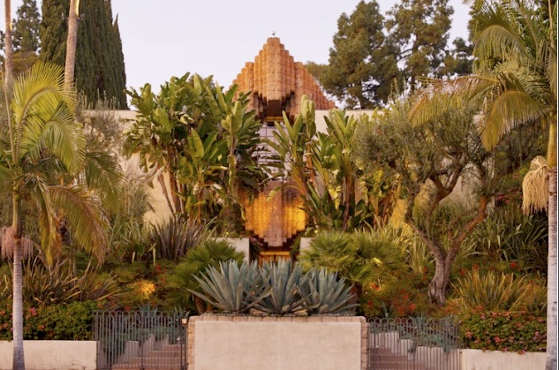
John Sowden House, Los Feliz (Los Angeles), Frank Lloyd Wright, 1926
Façade made out of “rusticated” ornamental concrete blocks
Supposedly mimics a Mayan temple and has large vegetation outside and inside the structure to mimic an overgrown ruin in a jungle
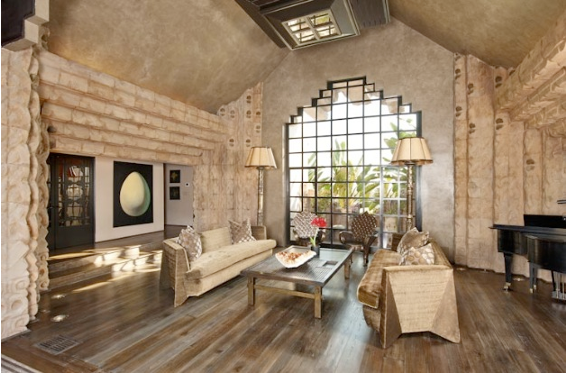
Interiors of John Sowden House, Frank Lloyd Wright, Los Feliz (Los Angeles), 1926
•Key exterior design elements reappear in the interior, e.g. pyramidal pattern, concrete blocks, etc.
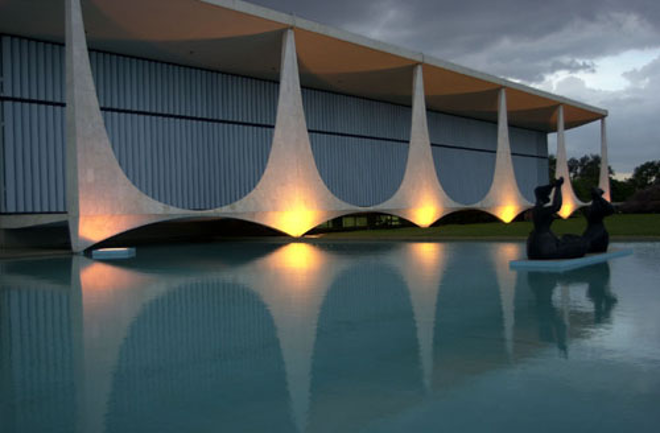
Alvorada Palace, President’s Residence, Oscar Niemeyer, Brasilia, Brazil, 1957
•The one place where the most daringly Utopian of the modernist architectural ideas came to realization was Brazil in the 1950s
•In 1950, the Brazilian government had decided to build a new capital from scratch, which would be free from congestion; capital would be moved to the hinterland, to the newly founded city of Brasilia
•The entire project was handed over to the architect Oscar Niemeyer, an early student of Le Corbusier
Niemeyer became the architect of all major buildings of the governmental complex in Brasilia
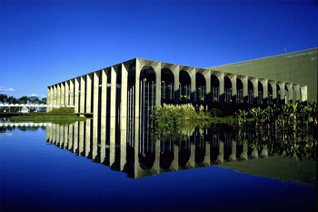
Itamaraty Palace, Oscar Niemeyer, Brasilia, Brazil, 1958
•From Le Corbusier in particular, Niemeyer seems to have inherited a predilection for dynamically flowing, sculptural forms in architecture, as expressed here in the arching pillars before a recessed glass curtain wall
•The whole building seems to be flowing on water, which gives it the appearance of lightness

Army Ministry Reviewing Stand, Oscar Niemeyer, Brasilia, Brazil, 1958
•The ensemble of building that make up the core of Brasilia was built very rapidly within only one year > hence, all buildings date from 1957/1958
•The audacity of the architecture, in this case, is supposed to reflect the daring and the optimism of the Brazilian nation; in other words, it was supposed to express the nation’s modernity
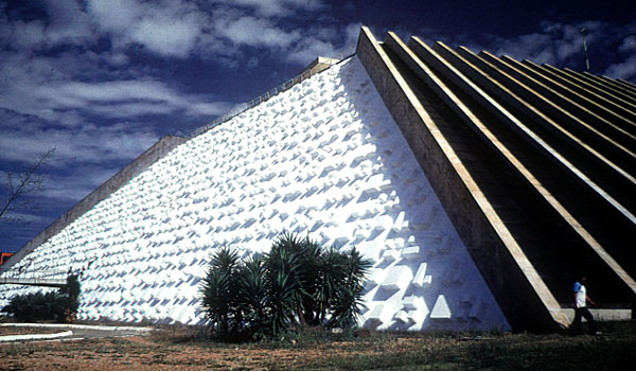
National Theater, Exterior, Oscar Niemeyer, Brasilia, Brazil, 1958
•The exterior of the National Theater in Brasilia is encrusted with a three-dimensional, geometrical relief that adds a sculptural quality and qualifies the basically functionalist design principle of the structure
•Visual richness stands in contrast with the semi-arid natural environment
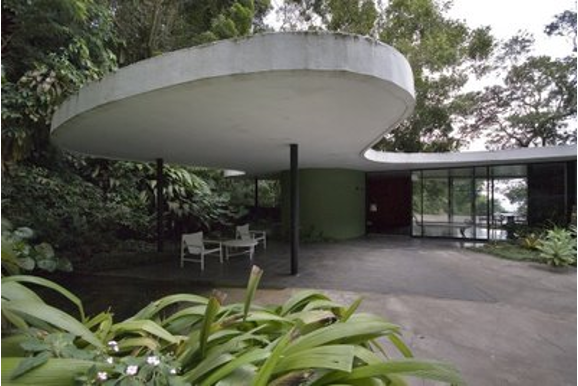
Niemeyer House, Oscar Niemeyer, Canoas, Rio de Janeiro, 1953
•Niemeyer put Brazil on the map for modern design
•Precedent in, for instance, Farnsworth House, BUT everything is curvilinear, specially the white, concrete slab roof in kidney shape (one of the favorite modern forms of the 1950s)

Eames Lounge Chair, Charles and Ray Eames,1955
molded plywood and leather
•Eames furniture: high-quality and affordable, for home and office
•Designed for Herman Miller furniture company, Zeeland, MI, and in continuous production since 1955
•One of the most widely popular and reproduced mid-century designs ever conceived
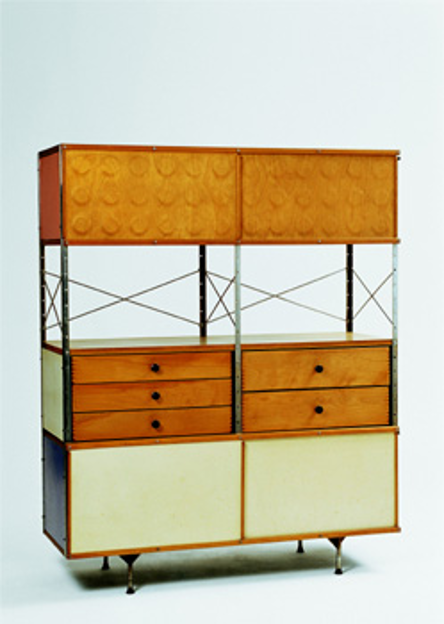
ESU 400 Series Storage Cabinet, Charles and Ray Eames, 1950
wood, plywwod, laminated wood and steal
•ESU 400 Series: line of modular storage units made from metal and plywood (“lego-block” storage unit on top)
•Eames designs have distinct advantage over the high-modernist tradition that inspired them: they are not meant to display themselves, but to be used (more down to earth) and lack the severity, of, for instance, Bauhaus design
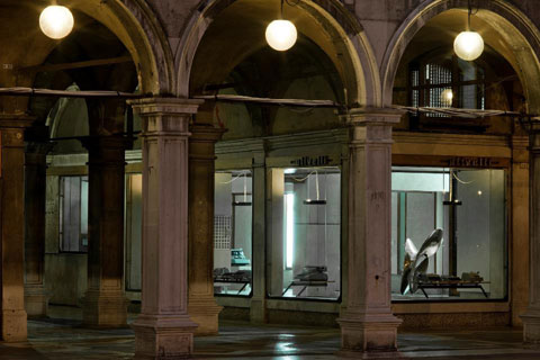
Olivetti Showroom, St. Mark's Square, Venice, Italy, Carlo Scarpa,1957–1958
•Scarpa embodies the high modernist period in Venice; he achieved a synthesis between tradition and modernism
•Many modernist designers and architects wanted to destroy the past to create something new; not so Scarpa, who worked to preserve the past and to integrate it with the new
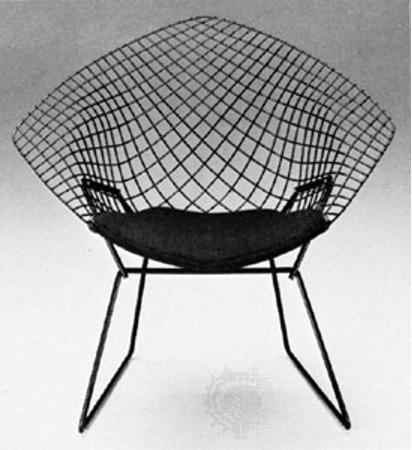
Bretoia or Diamond Chair, Harry Bretoia, wire and cushion, 1952
•Bretoia was an Italian-born (near Udine/Friuli) American sculptor (monumental work for architectural contexts) and designer
•He became a close collaborator of the Eames for a while during the late 1940s
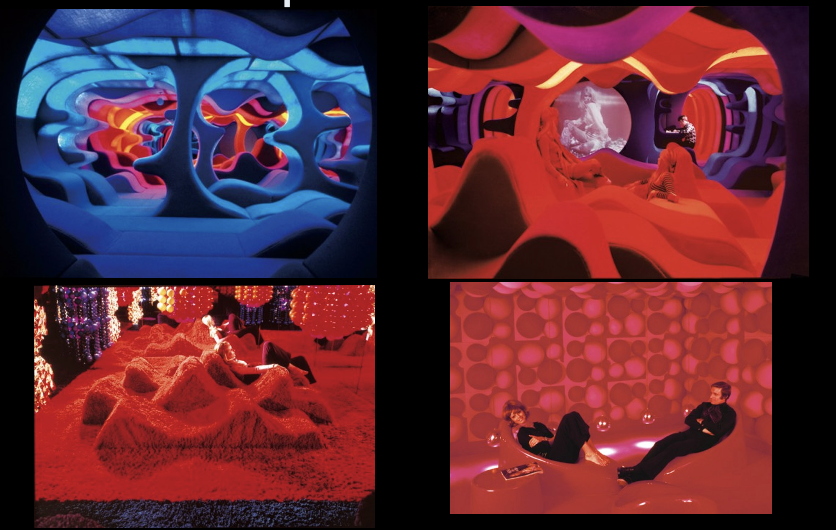
Visiona 2 Interior, Verner Panthon, 1970
stretch cloth and foam rubber Injected polyurethane
•Panthon was commissioned multiple times to design an exhibition for the German chemical company Bayer
•For several years the company rented a boat during the Cologne furniture fair and turned it into a temporary showroom: Visiona and Visiona 2
•Both featured surreal organic interior home furnishings that consisted of vibrant, psychedelic colors
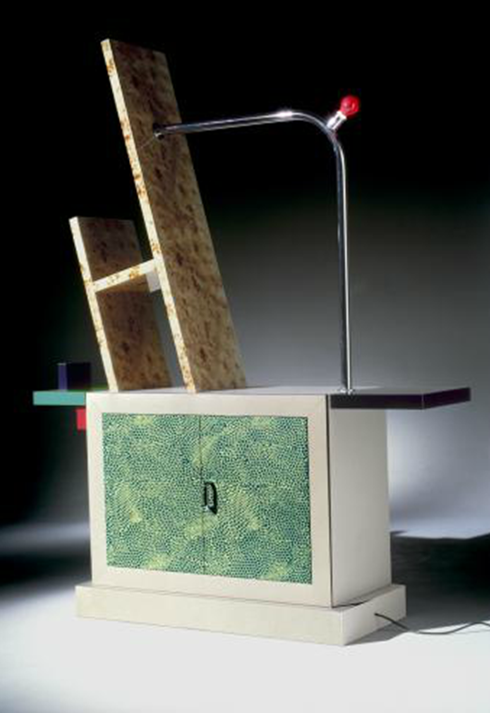
Beverly Sideboard from the Memphis Collection, Ettore Sottsass,1981
wood, briar, and imitation snake skin veneer, plastic laminate, chrome-plated steel, and lightbulb
Characteristics of the Memphis style: juxtaposition of “cheap” (but colorful) plastic laminates, such as one would encounter, for instance, in fast food restaurants, with “expensive” veneers made of exotic woods
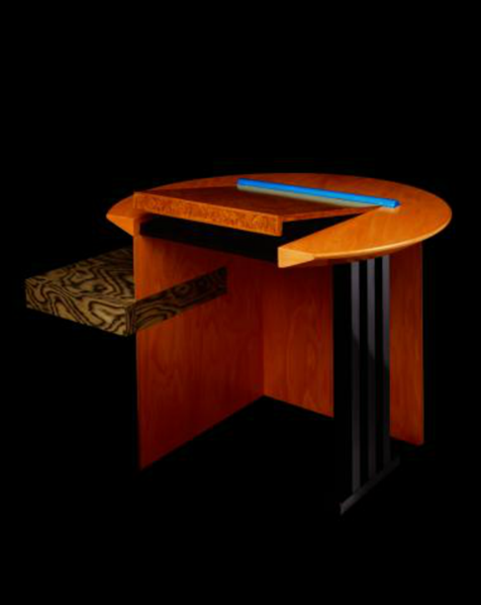
Sophia Writing Desk for the Memphis Collection, Aldo Cibic,1985
wood, briar and imitation wood veneer, and lacquer
•Memphis is frequently reduced to Sottsass, but there were many other Memphis designers
Stylistically, objects such as this are still grounded in the classical modernist

Peter Shire, Bel Air Chair for the Memphis Collection, 1982, wood with wool and cotton upholstery
Sottsass and Shire thought of themselves as standing in the high-mosernist tradition of the International Style and Bauhaus; idea of collaboration between designers/architects/ artists and industry, which had deep roots in Italy

Left: The Victoria & Albert Museum Chandelier, Dale Chihuly, London, 2001
Right: Tassel House, Staircase, Victor Horta, Brussels, 1892-93
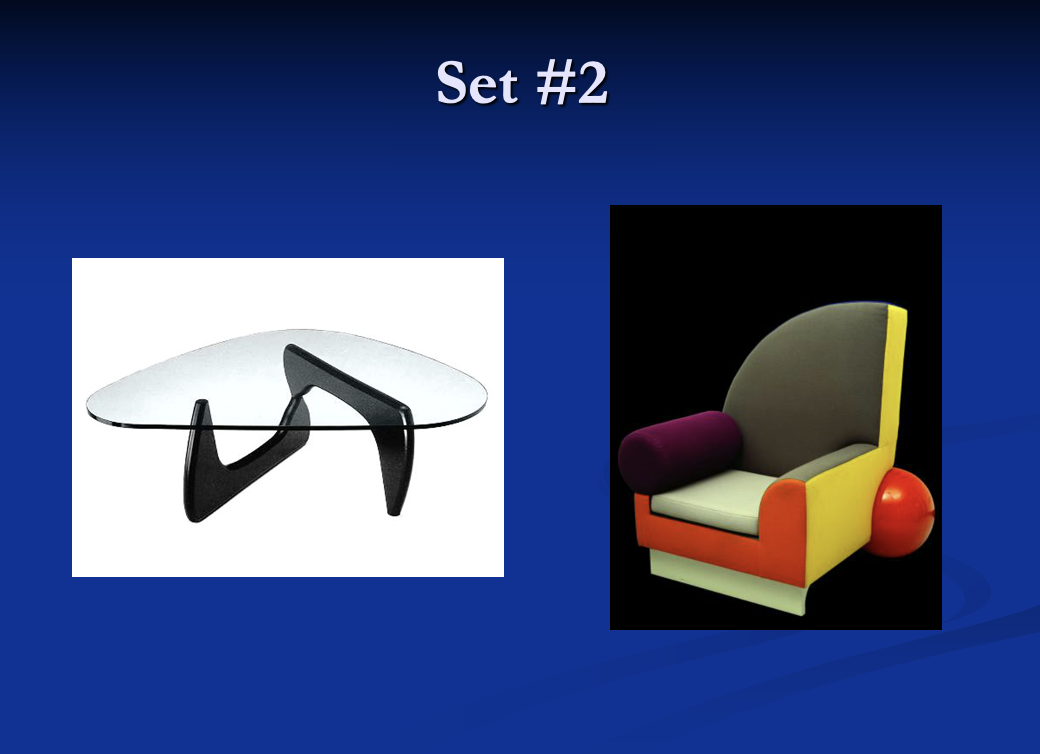
Left: Noguchi Lounge Table, Isamu Noguchi, 1944
glass and stained rosewood
Right: Bel Air Chair for the Memphis Collection, Peter Shire, 1982,
wood with wool and cotton upholstery

Left: Piazza D’Italia, Charles Moore,1976-1980, New Orleans
Right: Visiona 2 Interior, Verner Panthon,1970
stretch cloth and foam rubber injected polyurethane
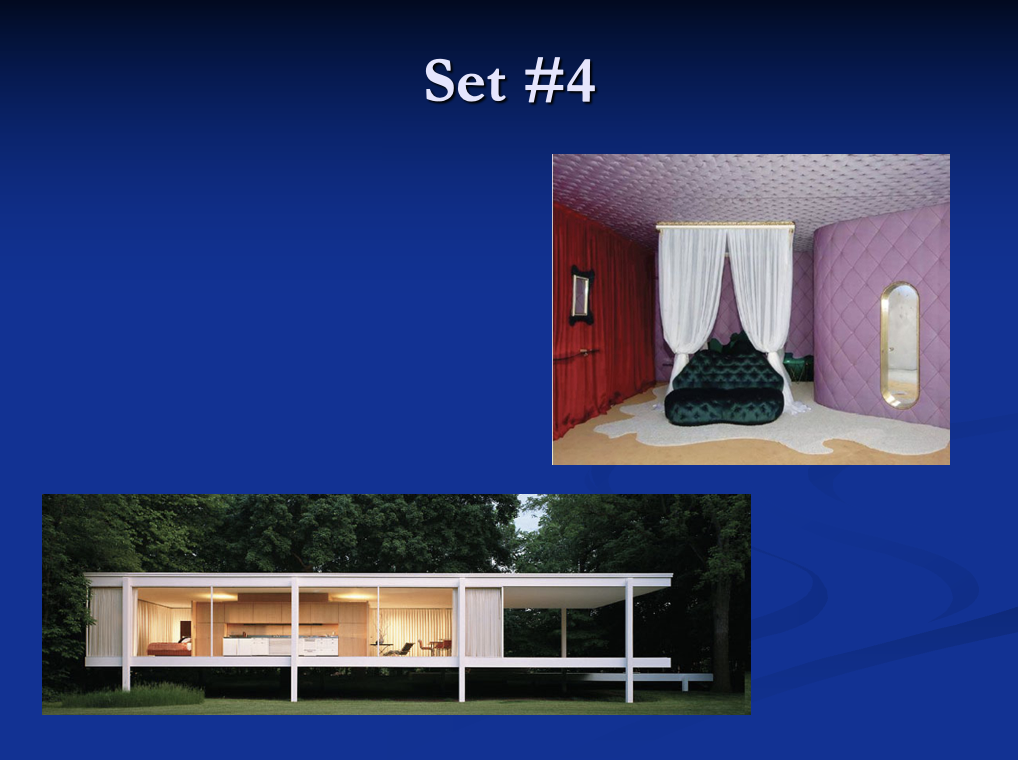
Left: Farnsworth House, Mies van der Rohe, Plano, IL 1950
Right: Interior of the Giorgio Davalle House, Carlo Mollino, Turin, 1939-40
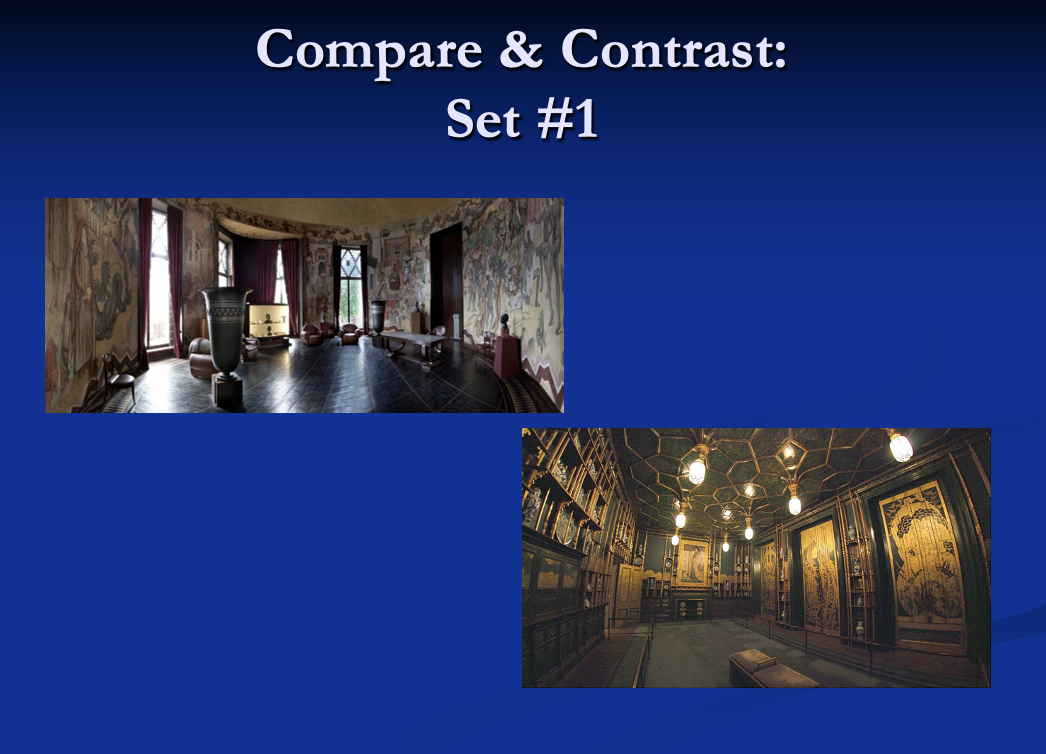
Left: Oval Salon of Paul Reynaud, Palais de la Porte Dorée (Palace of the Golden Gate), Émile-Jacques Ruhlmann (interior architect, furniture), Paris, opened 1931
Right: The Peacock Room, panels with blue-green overglazing and gold leaf, James McNeill Whistler, London, 1876
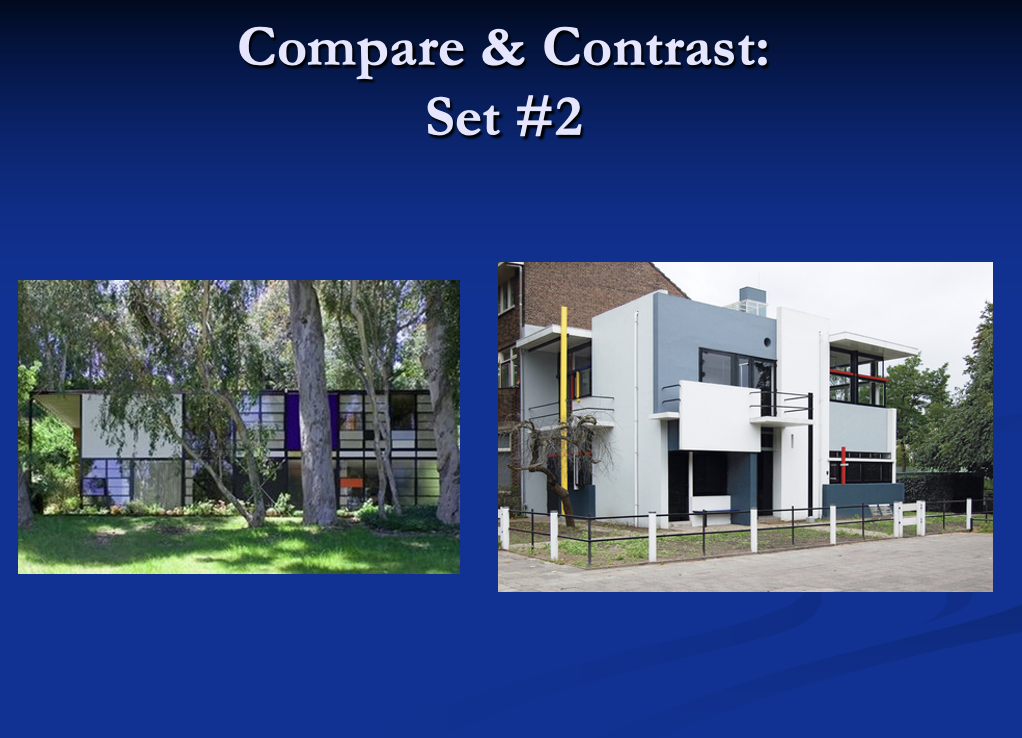
Left: Charles and Ray Eames, Eames House (Case Study House # 8), Pacific Palisades (Los Angeles), 1949
Right: Schröder House (interior design and plan), Gerrit Rietveld, Utrecht, NL, 1924
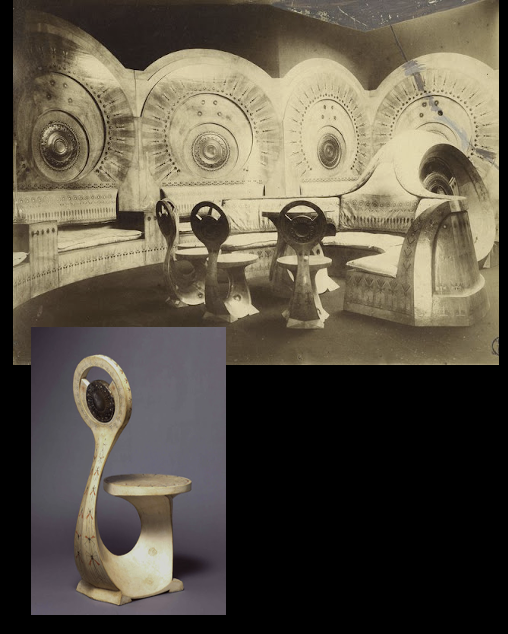
The Snail Room and Snail Chair (below), Carlo Bugatti,1902
oak, velum, bronze
Spiral designs appear in variations throughout; animal- and nature inspired designs are typical for art nouveau (called in Italy “Liberty Style”), but Bugatti remains a great individualist in his own category

The Peacock Room, London, James McNeill Whistler, 1876
Mural of fighting peacocks, “Art and Money,” represents conflict between artist and owner over payment
panels with blue-green overglazing and gold leaf
The Peacock Room was once the dining room in the London home of Frederick R. Leyland, a wealthy ship owner from Liverpool, England
Designed for showcasing the owner’s collection of blue and white porcelain

Bench, Carlo Bugatti,1900
stained wood, pewter, inlaid copper and vellum details
•Most Bugatti emphasize exoticism; references include Islamic (esp. North African), Far Eastern, or even Gothic (influence Viollet-le-Duc) references
•Eclecticism, refinement of material, represents denial of industrial age
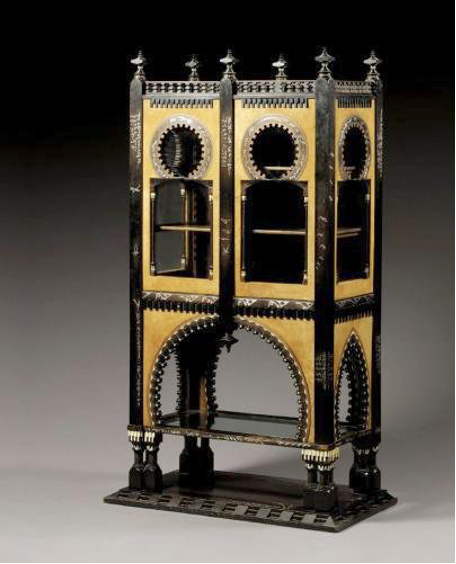
Cabinet, Carlo Bugatti, 1900
walnut, tin, brass, parchment, ivory and ebony inlay
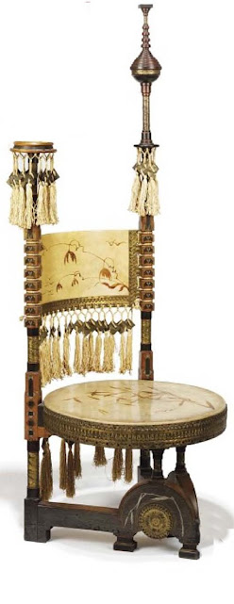
Asymmetrical Chair, Carlo Bugatti,1902
walnut, copper applications, pewter, mahogany and copper inlay, hand painted vellum, and silk tassels

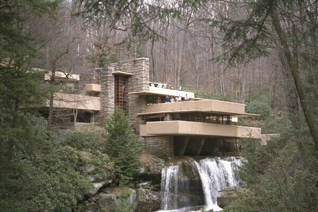
Fallingwater, Edgar J. Kaufmann House, Frank Lloyd Wright, Bear Run, PA, 1936
•Wright was quick to absorb the lessons of the International Style coming from Europe, as is evident in the Kaufmann House
•Structure consists out of monolithic white slabs stacked up above a natural waterfall
•Transition between a clearly defined exterior (nature) and interior (domestic environment, house) was broken down

Guggenheim Museum, Frank Lloyd Wright, New York, 1957-59
•Wright’s uncontested masterwork from his late career
•He hated NYC, but felt he should be represented there with a major structure, so he seized the opportunity when it came up
•Shell-like structure based on natural forms

Salk Institute of Biological Studies, Louis Kahn, La Jolla, CA, 1959-1965
•Louis Kahn counts among the great individualist in 20th-century architecture, along with Wright or Buckminster Fuller
•We can associate his work with late modernism in architecture, because he questioned some of its underlying principles
•Kahn refused in particular some of the aspects of the commercialized International Style, focused
instead on the roots of radical (European) Utopian thought

Two Mile Hemispherical Dome for New York, R. Buckminster Fuller, Photomontage, 1961
Some of Buckminster Fuller’s Utopian schemes have included plans to put the entire mid-section of Manhattan under a giant glass dome, thus creating a distinctive biosphere within the context of a large city
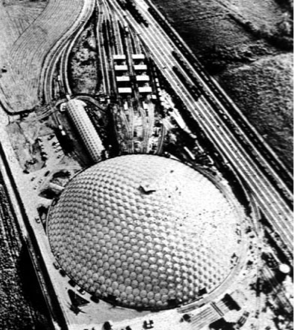
“Union Tank Car Company Dome,” R. Buckminster Fuller, Baton Rouge, LA, 1958-59 (destroyed 2007)
•Important (and early) geodesic dome by Buckminster Fuller existed in BR
•Design of the “Union Tank Car Company Dome” inserts itself in the purely Utopian and theoretical speculations Buckminster Fuller had espouses previously
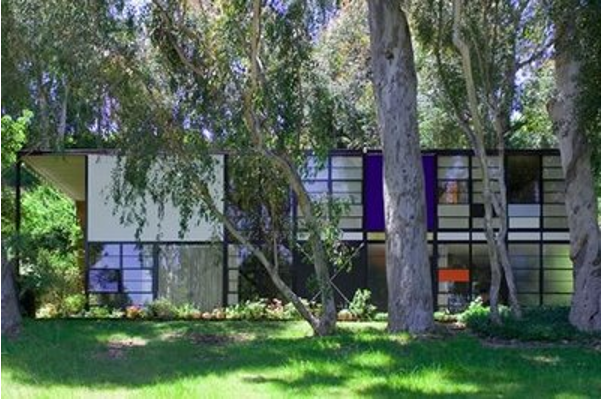
Charles and Ray Eames, Eames House (Case Study House # 8), Pacific Palisades (Los Angeles), 1949
•Eames couple (industrial designers) is well-known for their furniture, films, exhibitions, toys and architecture; this became their home
•High Modernist structure with a touch of the De Stijl group
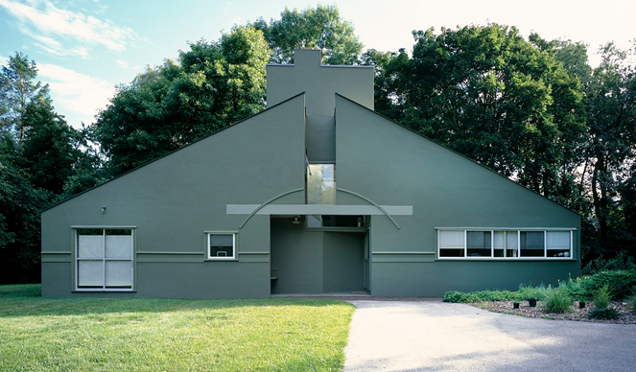
Vanna Venturi House, Robert Venturi, Chestnut Hill, PA, 1961
•Venturi approached the design for a private house similarly
•The monolithic body of the house is interrupted by the surprise introduction of “deconstructivist” elements: incision of the entry area, which divides building into two triangles
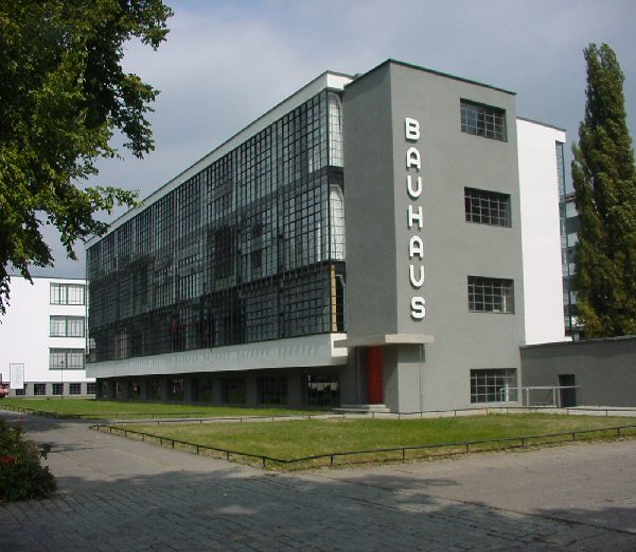
Shop Block, the Bauhaus, Dessau, Walter Gropius, 1925-1926 (late 1920s)
• In 1925, the school moved to a new campus built in the town of Dessau
Bauhaus=Name of a very influential school of art and design founded in Germany after WWI
Exterior of the school’s building reflects these principles
•One of the earliest examples of rationalism in architecture: function of building expressed in the exterior appearance of the design
To change physical appearance of the world at-large: mass housing, industrial design (furniture), typography, layout and photography were all part of school’s curriculum
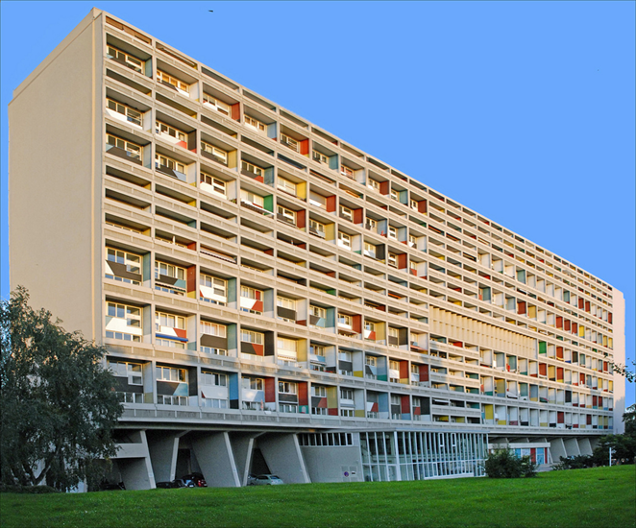
Unité d’Habitation, Le Corbusier, Marseilles, 1946-1952
•NOT one of the finest pieces of International Style architecture, but a monument to its failure
•Le Corbusier thought of architecture as a tool to reshape and improve upon society
(Utopia mission of architecture)
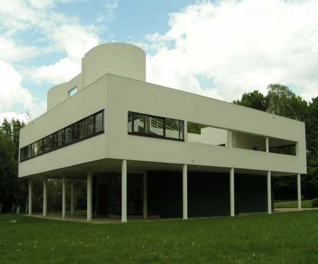
Villa Savoye, Le Corbusier, Poissy-sur-Seine, 1929
•Luxury architecture, one of Le Corbusier’s most successful designs
•Archetype of advanced architectural design
•Steeped in Cubist-inspired machine aesthetic
•Pristine white box raised on 26 delicate columns above a Curving ground-floor wall

Walter Gropius House, Walter Gropius, Dessau (Germany), 1925
•Gropius, professor of architecture at the Bauhaus school of design, built this house in 1925, when the school moved from Weimar to Dessau
•With its white cube, lack of architectural decorations, use of industrial materials, it is the epitome of functionalism, and specifically the International Style
•Gropius eventually immigrated to the US, had a great influence on post-war American architecture
Art Nouveau as an international style in interior design, architecture, and in the applied arts…
Primarily concerned with beauty, “art for art’s sake” – not the celebration of hand- crafted objects, crafts guilds, social issues, anti-industrialization of the Arts and Crafts Movement. Art and Design is anti-rational and aims to discover a spiritual reality hidden behind the physical reality of the outside world
The Snail Room and Snail Chair (below), Carlo Bugatti, 1902, oak, velum, bronze. Spiral designs appear in variations throughout; animal- and nature inspired designs are typical for art nouveau (called in Italy “Liberty Style”), but Bugatti remains a great individualist in his own category
Church of Sagrada Family, Antonio Gaudí, Barcelona, 1883-1926 Gaudí’s architecture looks like a living organism: façades are undulating and church spires look like crystalline rock formations Drew his inspiration frequently from marine life Overdecoration; façade looks artificially “weathered,” which gives it a more natural feeling
Art Deco as the last “luxury style” of the 20th century – its place between conservatism and modernism
Return to traditions and yet a celebration of the mechanized, modern world
Jacques Doucet’s apartment illustrates the affects of colonialism on the art deco style it was a mixture of cultures and beginning of modern technologies of electric lights
Palais de la Porte Dorée – continuation of the art deco beliefs on colonialism
Aesthetic and design philosophical principals of the Bauhaus and the International Style, especially in opposition to the previous Beaux-Arts style
The Bauhaus/international style focuses on these items: an absolute simplification of form, use of glass curtain walls and reinforced concrete; emphasis on high-rise buildings
Seagrams building – Piss van der Rohe – NYC – 1950s – this building is the epitome of modernism in USA very simple design with curtain walls across the whole building with open floor plans
Le Corbusier – notre dame du haut – 1960s – chapel in buttfuck nowhere France with an irregular grid and strong use of concrete sculptural forms
Postmodern design: From the experimental designs of the 1960s through the Memphis Style of the 1980s
Po-mo design is based off the conclusion that modern is essentially MID. Because it is an international style for all its essential design for nobody. Post modern design is meant to be ironic and respond to contextual details.
Charles Moore piazza del Italia – responds to the Italian American community in NOLA in a humorous manner
Pompidou Center – Richard rogers and Renzo piano – responds to the July 68’ response in academia in Paris uses humor with color and googly eyes on some vents
Be familiar with the Bauhaus, its history, evolution, design principles, and historical importance.
History: Bauhaus— the German school art, design, and architecture school (1930’s) was founded by Walter Gropius.
Evolution: Weimar (1920’s), Dessau (1930’s), Berlin (1933)— Closed
Design Princples: He believed in technology creating functional designs for mass production. The emphasis on clean lines, geometric forms, and simplicity. Form Follows Function
Historical Importance: Defined modern architecture— International Style
 Note
Note  Flashcards (55)