Animal Cognition: Comparative models of working memory
 Studied by 0 people
 Call with Kai
 Learn
Learn Practice Test
 Spaced Repetition
 Match
Match Flashcards
 Knowt Play
1/23

There's no tags or description
Looks like no tags are added yet.
Name | Mastery | Learn | Test | Matching | Spaced | Call with Kai |
|---|
No analytics yet
Send a link to your students to track their progress
24 Terms
What is cognition?
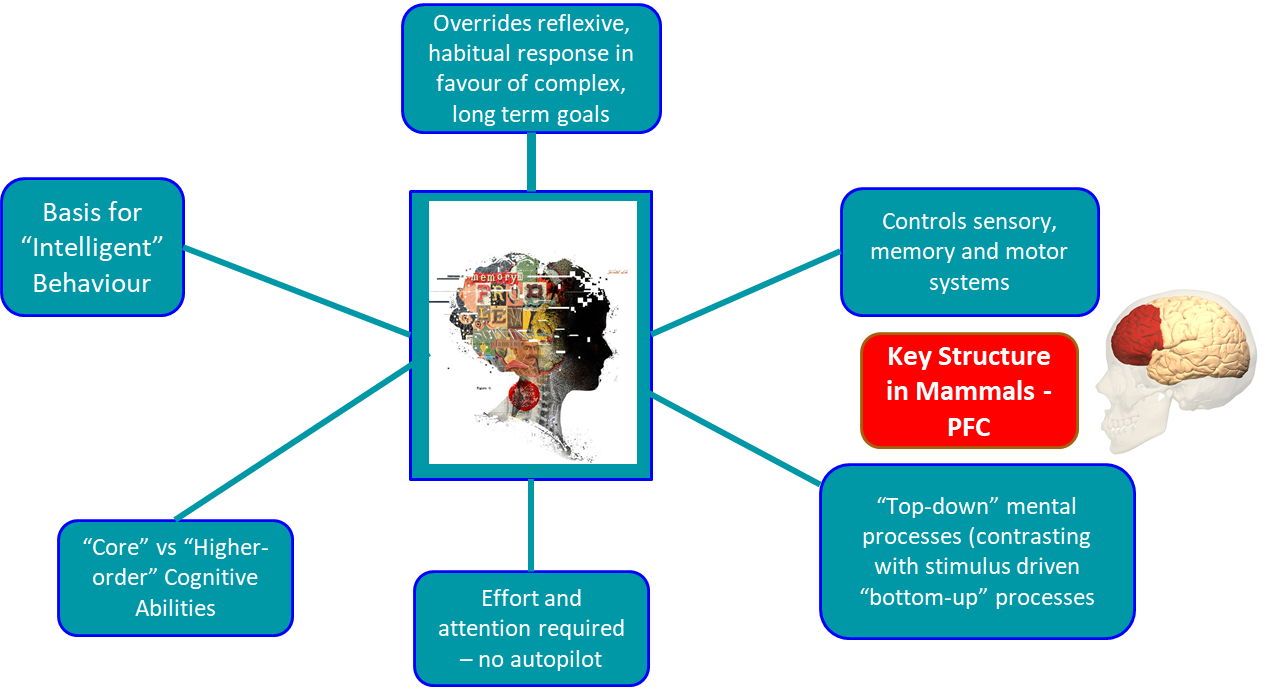
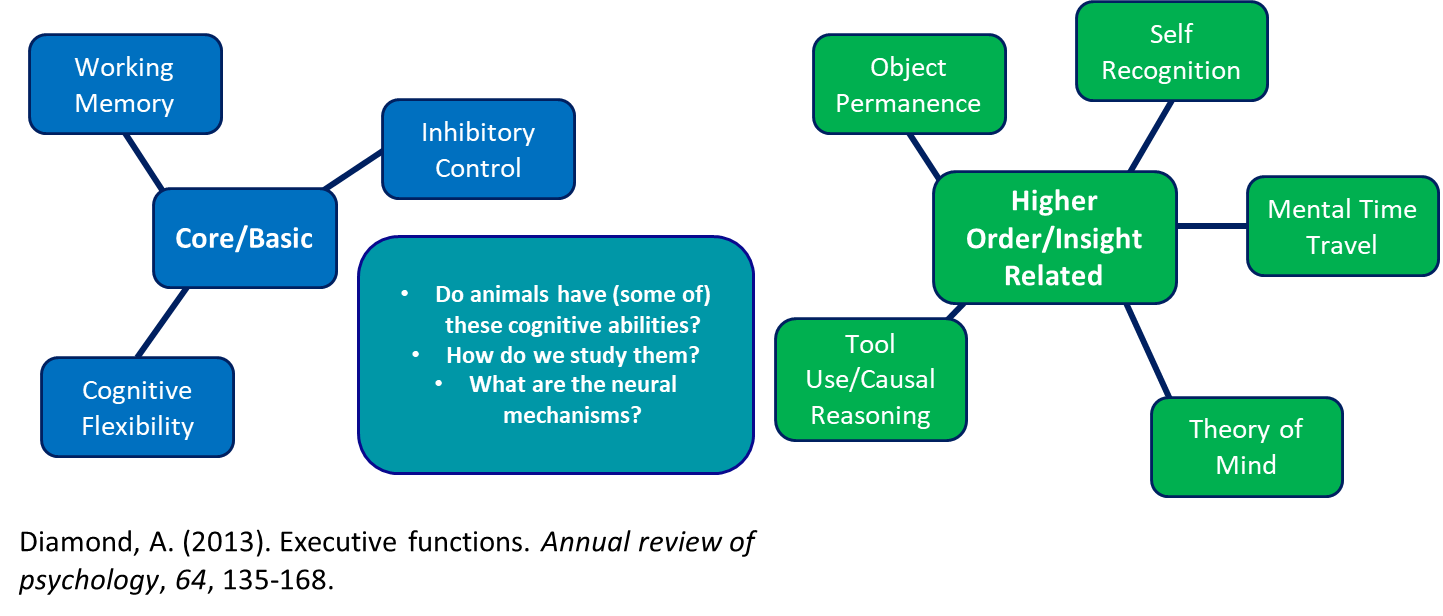
Core abilities / executive functions
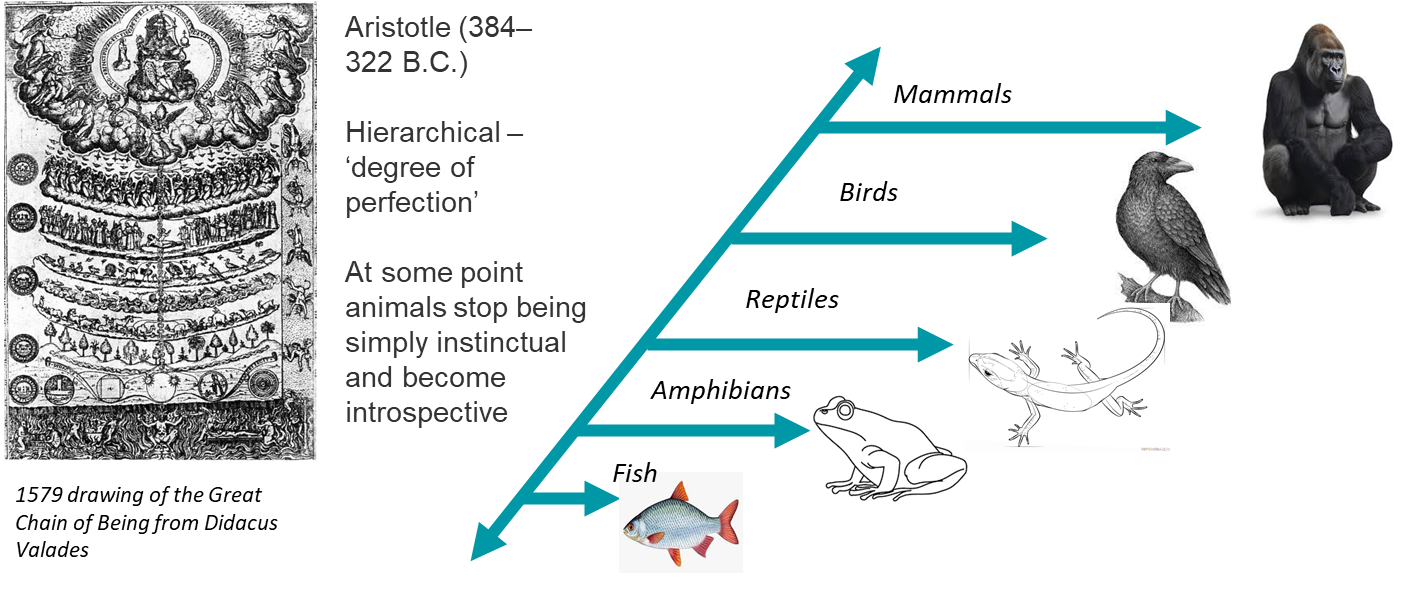
Scala Naturae “Ladder of Being”
Fish can demonstrate working memory even though 'low intelligence'
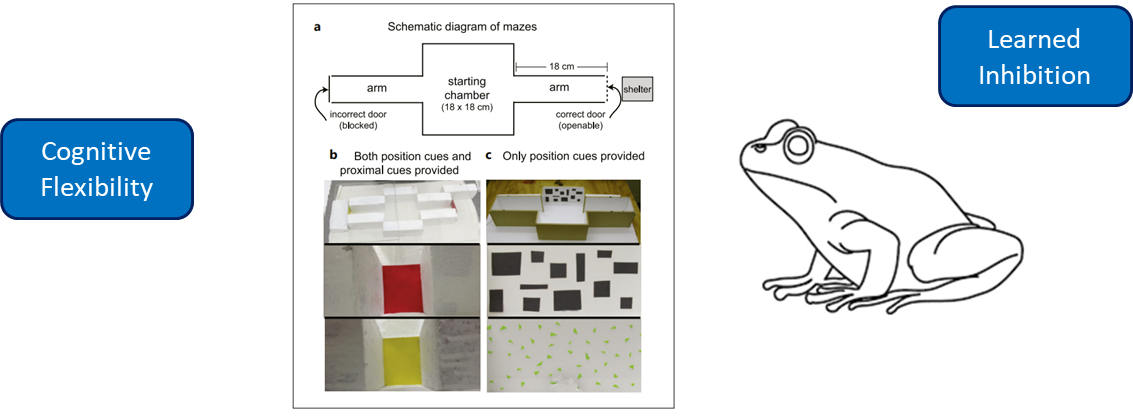
Frogs have demonstrated cognitive flexibility such as learning rules and applying them
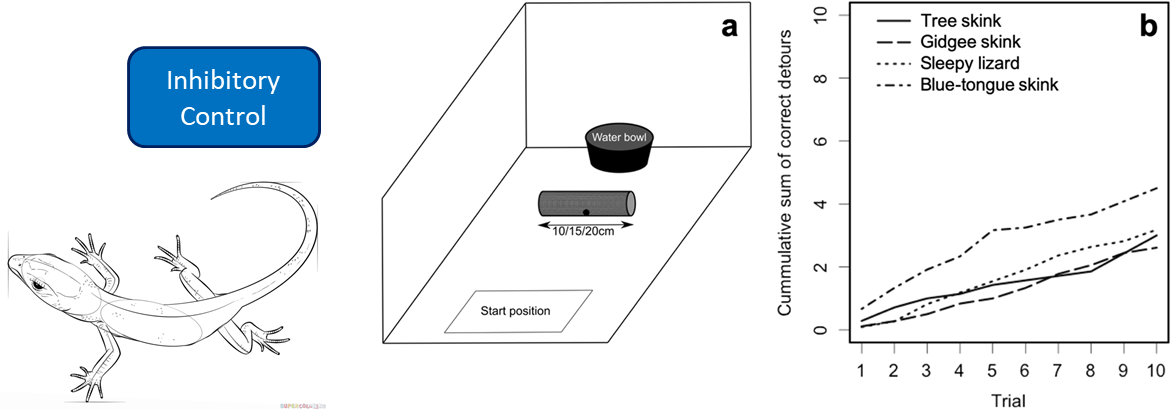
Lizards can display inhibitory control
Is insight-related cognition solely a feature of mammals? (test of the scala naturae argument, next lecture)
Birds and mammals are evolutionary quite distant (300 million years!)
What’s changed? Neural Structures? Cognitive Abilities?
We have seen brief examples of core cognitive functions across a number of species, lets explore this!
Cortex is special or is it?
…lamination defines a new computationally advantageous module (Montagnini & Treves, Brain Res. Bull., 2003)
… differentiation of the neocortex … opened the way to a spectacular development of cognitive … skills (DeFelipe, Front Neuroanat, 2011)
Cortex has 6 layers of difference cells which overlap to allow for quick communication
Something we have which animals do not have
Make us more intelligent right? Not necessarily
Neocortex - lamination
Prefrontal cortex is especially special
Prefrontal lobe associated with core cognition and executive function (Yuan & Raz, 2014)
Damage to Prefrontal Regions associated with deficits in executive function (Løvstad et al., 2012)
phinneas gage
Open questions – dissociating between executive functions, localisation of lesions in patient studies.
Comparative approach - birds vs humans
-Birds and mammals are quite distant from each other in evolutionary terms (“scala naturae” argument)
-Birds do not have a neocortex (“Cortex is special” argument)
Working memory
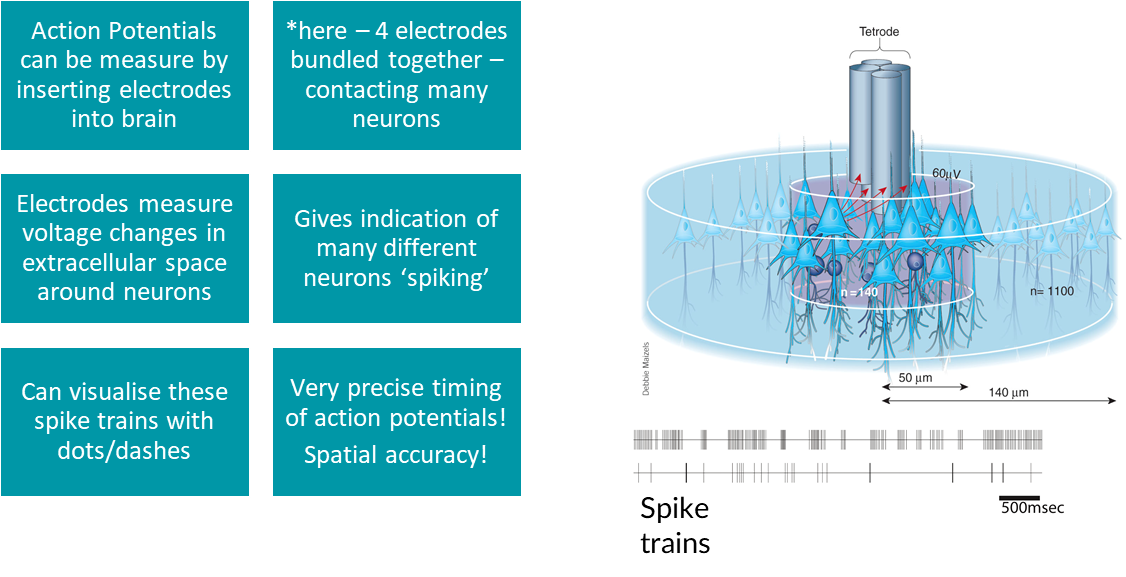
Action potentials - spike trains
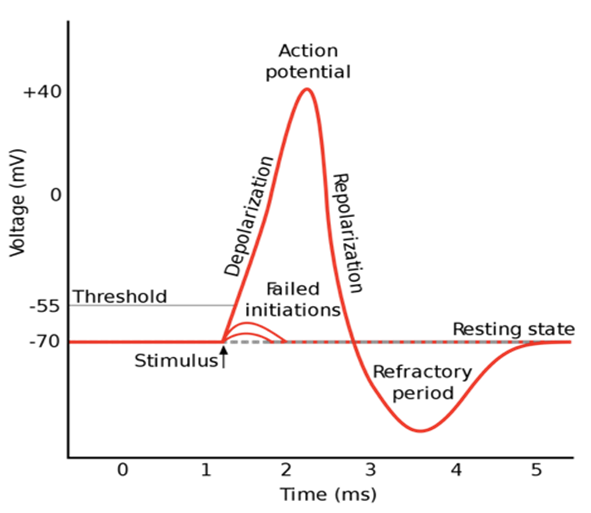
Main Form of communication between neurons
Electrochemical Signal
Brief, Stereotypical changes in the membrane potential of a neuron
Due to opening and closing of ion channels
Primarily due to flux of sodium and potassium
Governed by gated ion channels
Delay activity - a neural basis for working memory?
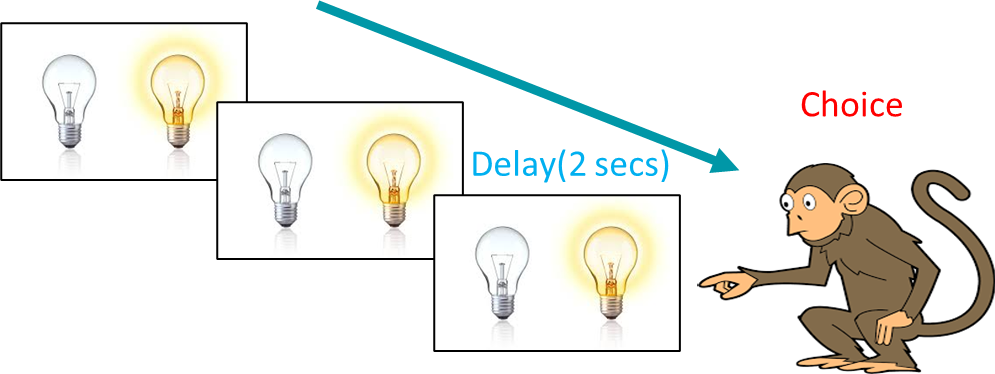
Delayed response task for monkeys (Niki, 1974)
One of two cue lights is illuminated for 1s (left or right)
Then the cue illumination is turned off for 2-3s (delay period)
Then the monkey has to choose between left and right
Delay activity in example units in the prefrontal cortex
Delay period is crucial - shows us if the trained monkey is holding onto the info
Correct more than chance would estimate
Should be a lot of activity in the PFC
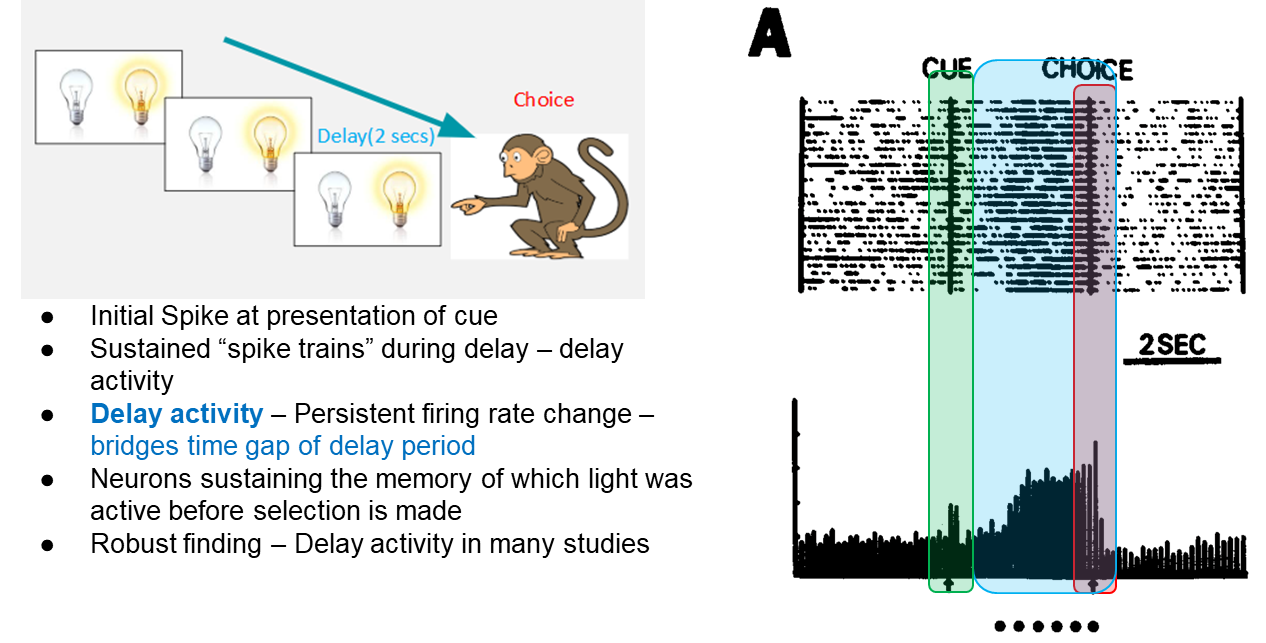
Monkey must remember the light that turned on
When the cue comes in there is a spike
There is then an increase in neuronal activity during the delay of the light being off
This is sustained to the choice
Reflective of the monkeys retaining this info
Choice - rapid drop off of neuronal activity after he choice is made as the info no longer has to be retained
Initial spike train, sustained spike train and then a drop off
Dopamine and classical conditioning
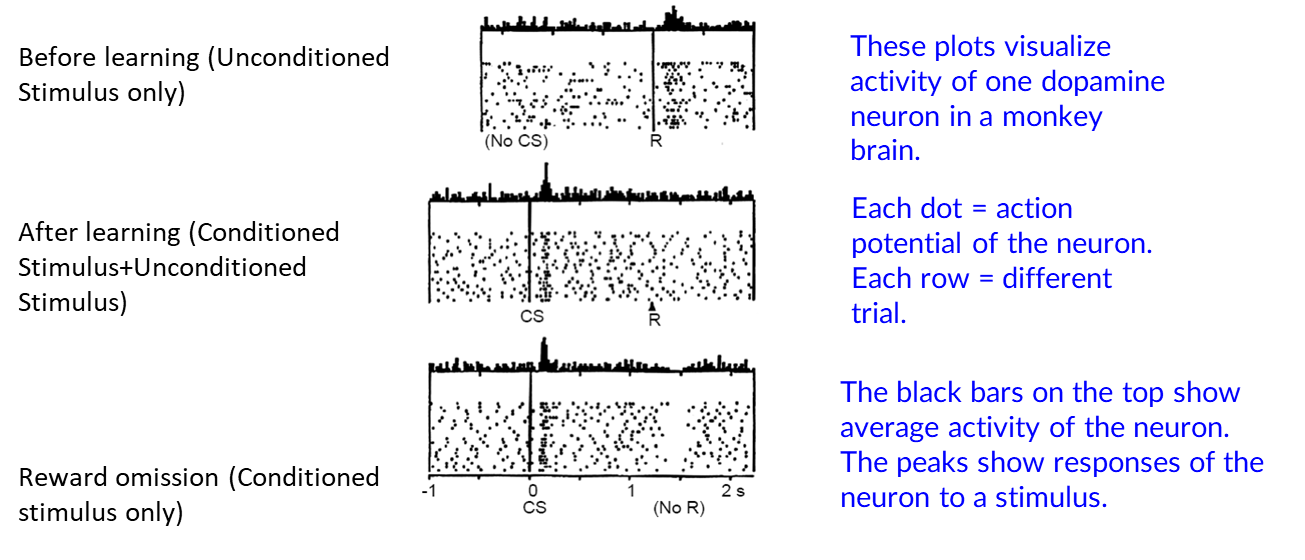
R = reward - orange juice
Increase in dopamine
After consistent pairing of CS and US - response occurs at CS not R
Reacting to anticipation of reward
Dopamine is a neuromodulator
Respond to sensory stimuli which predict future rewards
Any study will need to take into consideration rewards involved in the training of the task
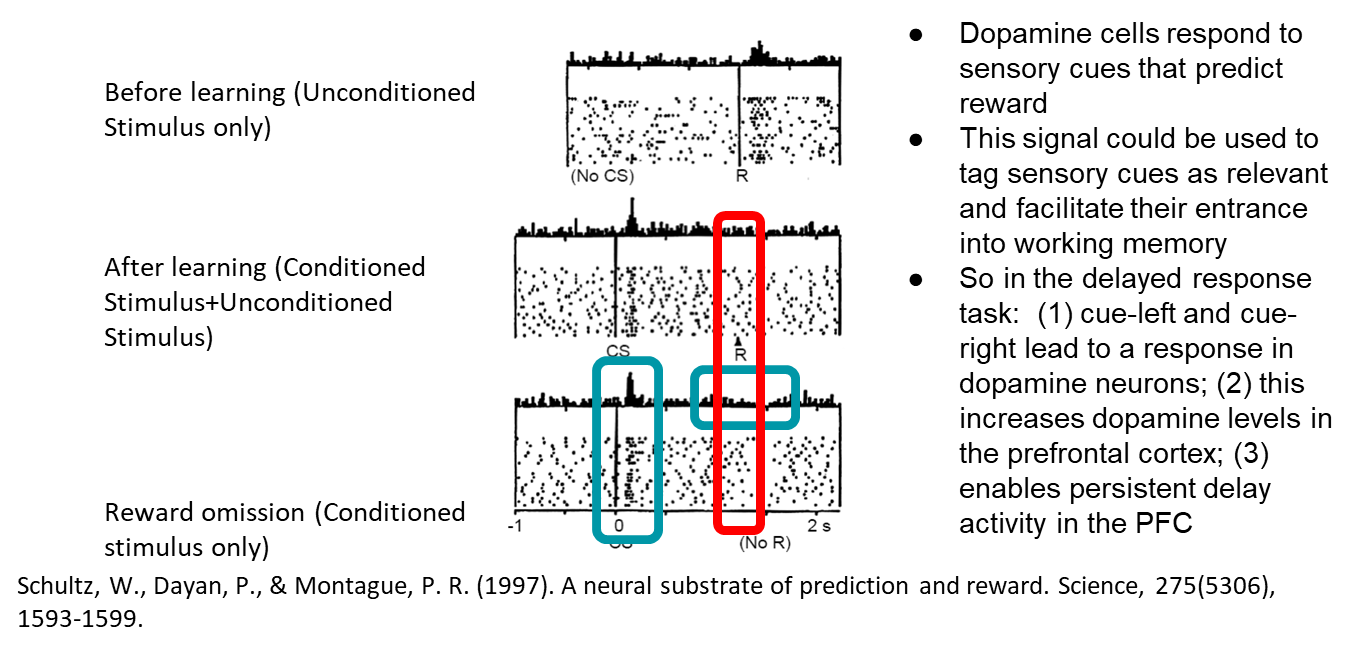
Initial conclusions
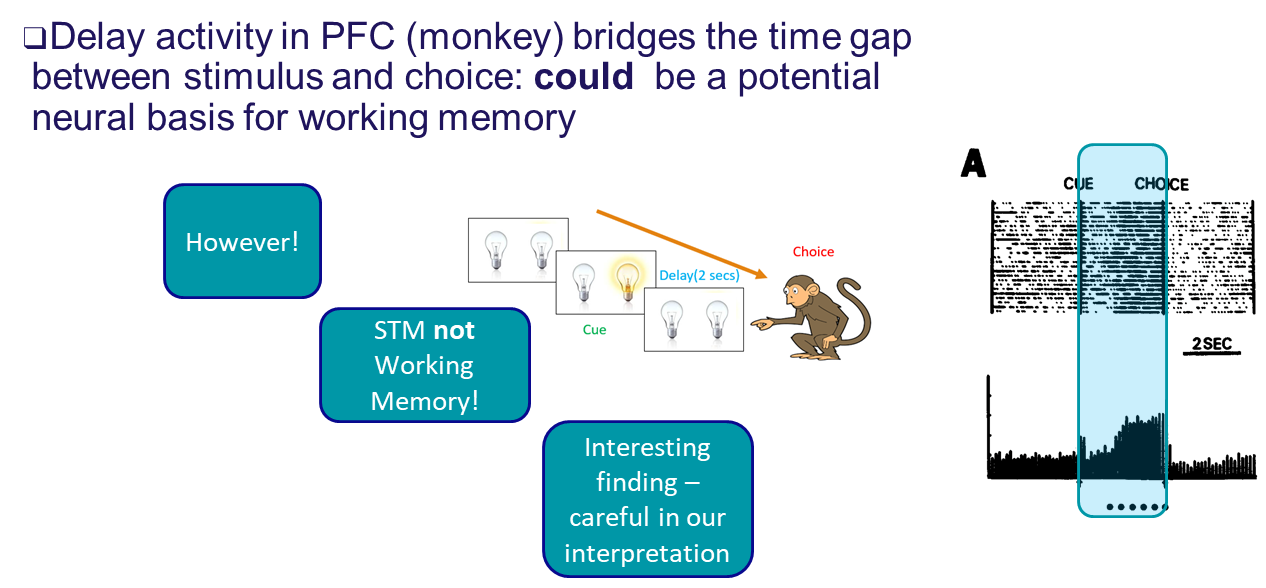
No complicated things happening in the study which could be argued to just be STM not WM
Is cortex special - the avian brain
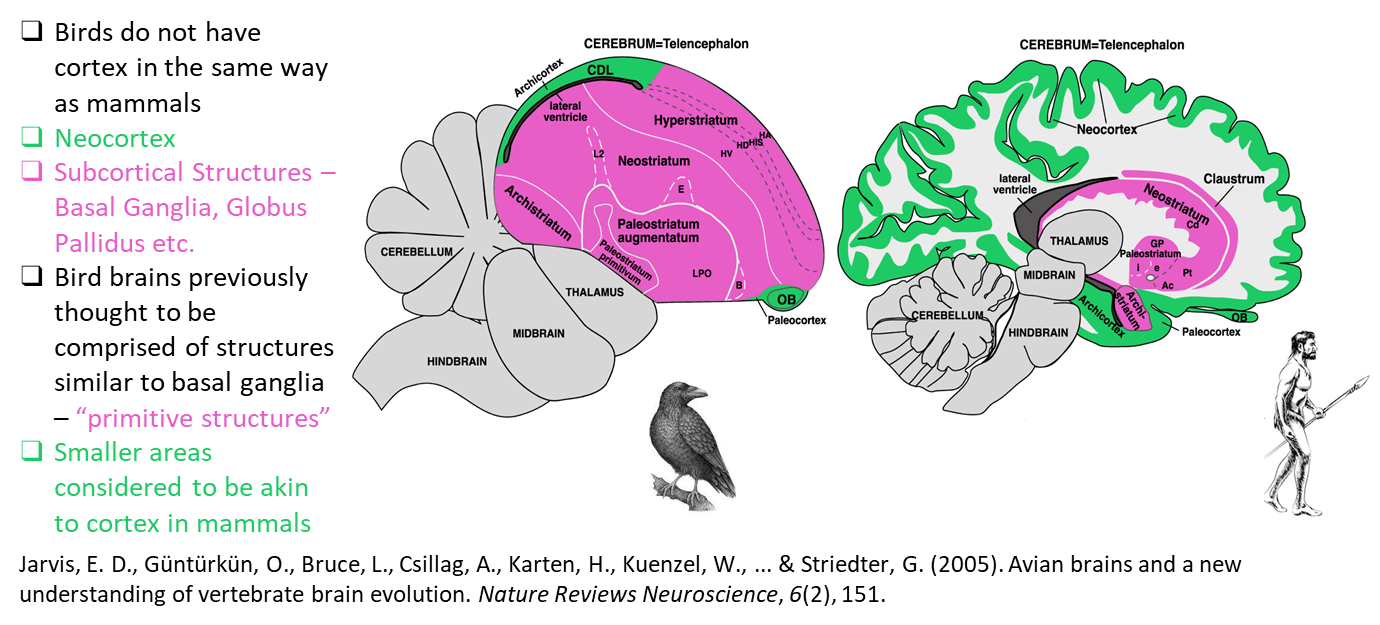
More similar to the makeup of our subcortical areas
The architecture of most of the brain is similar to the basal ganglia
Instinctual responses
This would lead us to believe they think in a more instinctual way
Green - higher cognitive functioning areas
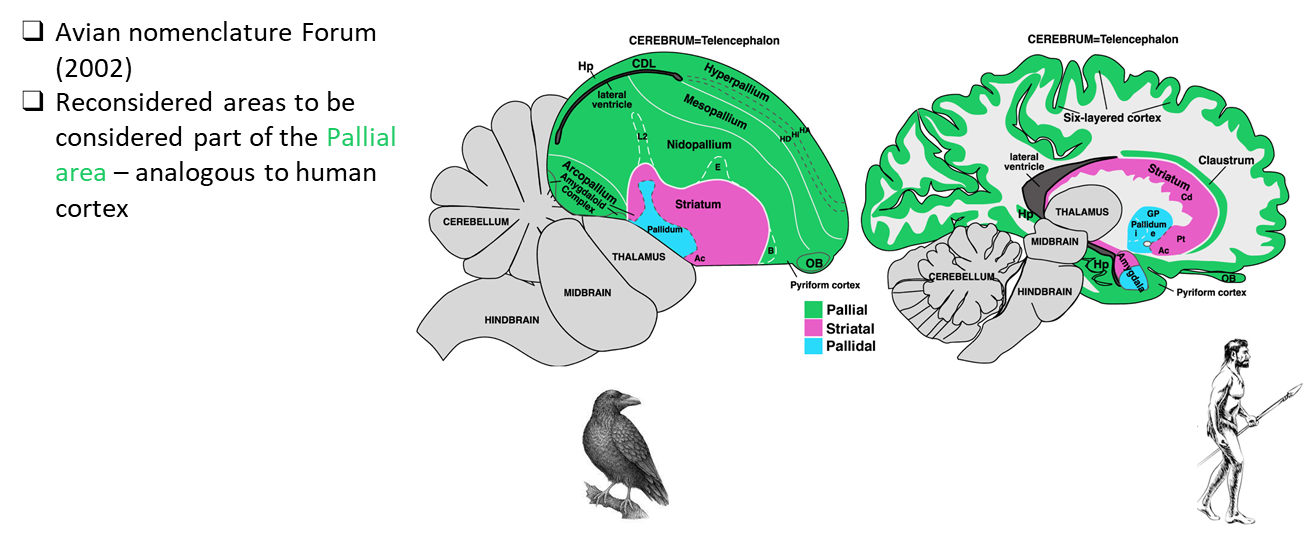
This has been reconsidered and redeveloped over the years
The thought that different architectures of the brain supports different types of the brain
The thought that primitive sort of structures lead to primitive behaviours
This has been reconsidered
The pallial layer may be supporting some of the higher cognitive functioning
It is however different from the cortical structure we have
Working memory in crows
Working memory In crows
Delayed match-to-sample task (MTS)
Disentangle working memory from motor preparation - location of stimulus changes randomly
Chance for reward was equal for all match items, randomised, reward expectation negated
Nidopallium Caudolaterale (NCL)
“Pallium” is a neuroanatomical term for the grey and white matter covering the cerebrum
Nidopallium = nested pallium
Prior to 2002 the nidopallium was referred to as neostriatum, indicating a more primitive function
The nidopallium consists of many subregions, one of them is the caudolateral part, the NCLSee this in most bird species
The Nidopallium may be analogous to the prefrontal cortex of the human brain in terms of its function
In terms of structure, anatomically in a different location but may be performing the same tasks
See this in most bird species
The Nidopallium may be analogous to the prefrontal cortex of the human brain in terms of its function
In terms of structure, anatomically in a different location but may be performing the same tasks
Caudolateral – “of the side and tail”
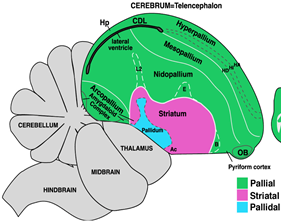
See this in most bird species
The Nidopallium may be analogous to the prefrontal cortex of the human brain in terms of its function
In terms of structure, anatomically in a different location but may be performing the same tasks
Is the avian NCL analgue to the mammal PFC
Analogue – same or similar function even if structure is different
Working memory task in homing pigeons
Directed Forgetting procedure
Single Unit recording in NCL during task performance
Black lines here indicate electrode tracks
Numbers refer to anatomical coordinates of coronal sections
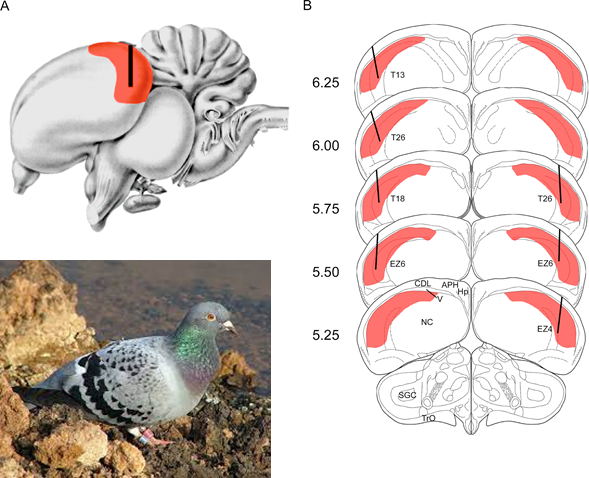
Examined honing pigeons and pigeon behaviours
Examining whether pigeons could engage in WM tasks and if there was a neuronal response in the nidopallium caudolaterale (NCL)
Whether it provides or support that cognitive function
Similar to the research on monkeys but in birds
Absence of lamination - tells us that this might not be necessary
Inserting an electrode into the brain during tasks which require WM
NCL vs PFC study in homing pigeons
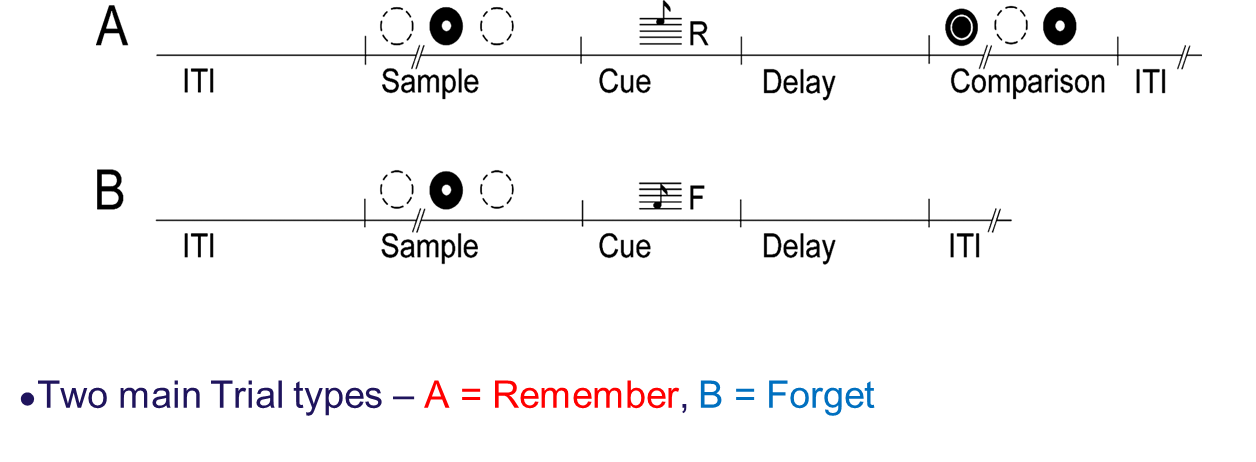
ITI - inter trial interval
Start off with a break
Nothing going on
Pigeon is situated within the box
Sample
Stimuli presented
Animal pecks cue
Image of a circle
The pigeon has to code that pattern
Array of patterns which the pigeon has to encode
It is specific - not one or the other
Cue
Remember cue - audio cue which indicates that they need to remember the info - high note
Forget cue - audio cue which indicate that they need to forget this info - low note
Delay
3s delay
Pigeon must hold onto the info
Comparison
Test period
Must select sample from 2 choices
Discriminate between 2 targets
Figure out which matches most closely to what they had to remember
Provided a food rewards on correct selection
NCL vs PFC study in homing pigeons - careful in interpretation
Abolished delay activity could be linked with reward prediction – food reward
Neurons could change firing rate in response to forget, because no reward!
Discern between confounds of WM and Reward prediction
Neuron could be involved in both!
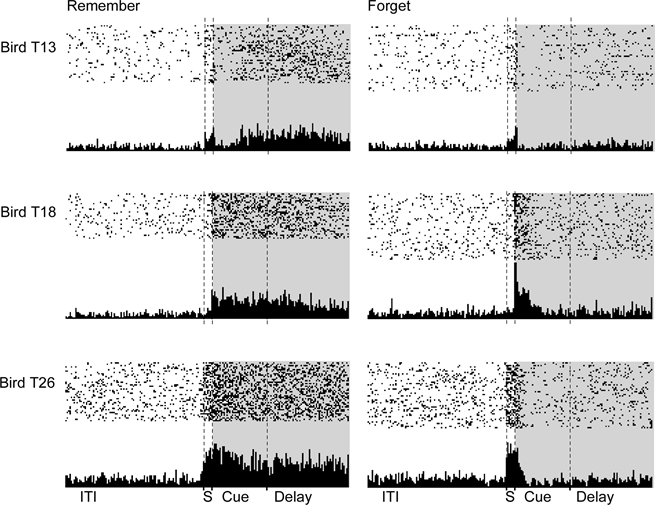
Remember
Stimulus presented and there is a spike in neuronal activity
After cue is a consistent spike train
Sustained delay activity
Infer the pigeon is holding onto that info and maintaining it
Forget
Stimulus presented and there is a spike in neuronal activity
After cue there is a return to baseline
This is reflective of not processing that info (WM)
NCL may be a locus of info
WM behaviour
Pigeons have WM but the architecture which makes up this part of the brain is entirely different to that of a human brain
Working memory in crows
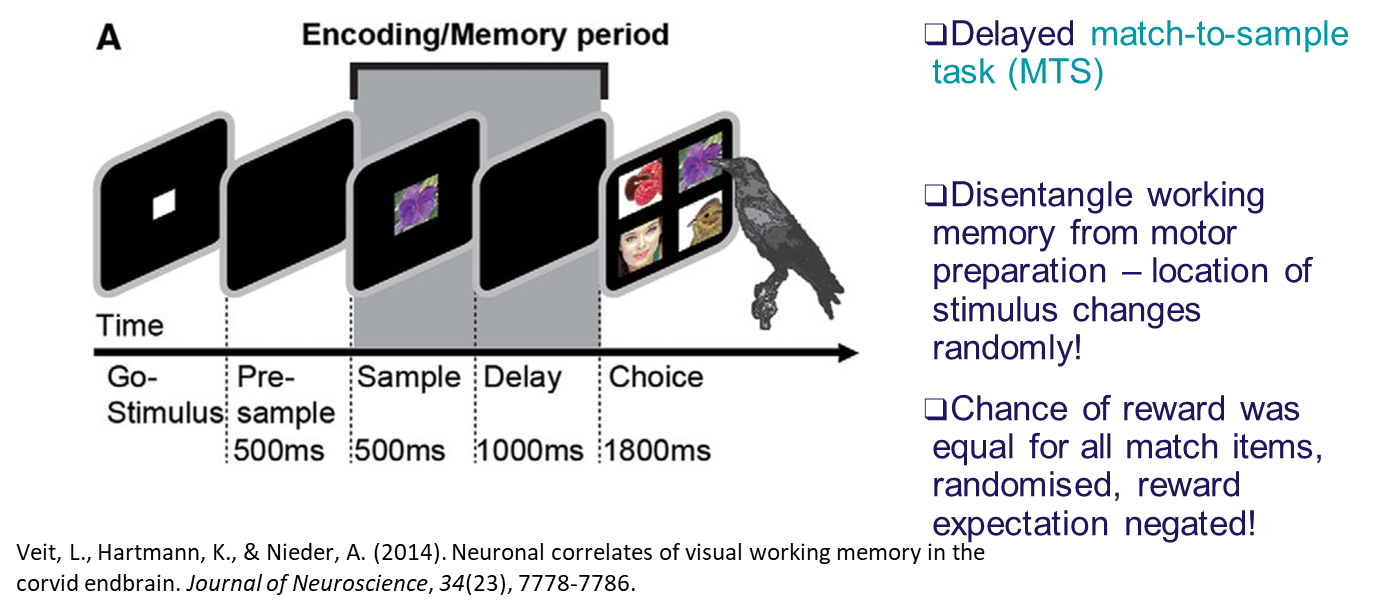
Go stimulus
Tells them they are about to engage in a task
Pre sample black screen
Neutralise what they have seen before
Masking any impression of anything previous
Presented with sample and then delay
Choice
In every trial the crow has to make a choice
Randomised reward
There is a chance for a reward and this is hard to predict because time between rewards varies
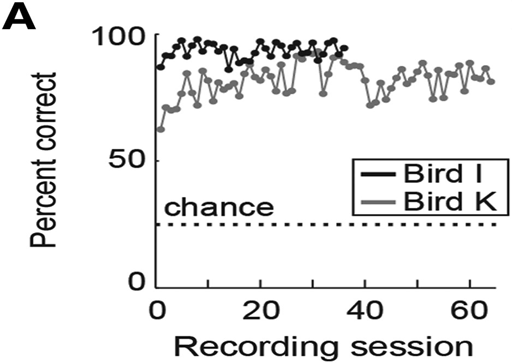
Crows perform task at very high level!
Very good at cognitive tasks
Example for “sample-selective” neurons
Response of neuron – active during selection period
This means that the neuron distinguishes the four different sample stimuli with its firing rate
Here: highest firing rate for stimulus S3 (with gradual differences to the other stimuli)
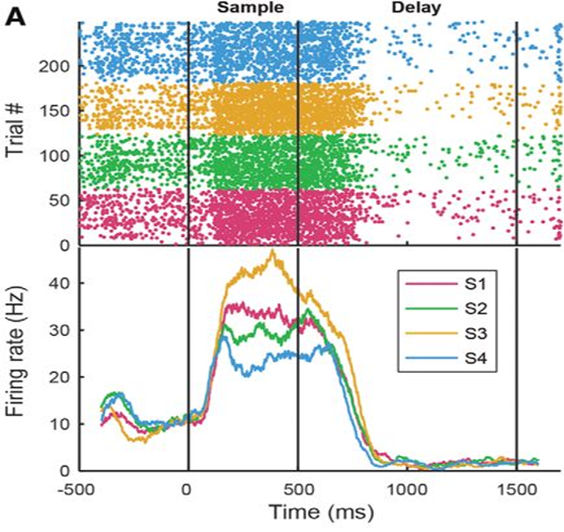
Delay activity is not simply in response to the task itself
The crows for each sample they demonstrate a preference in the firing rate of the neurons
Neurons fire differently in term of their rates depending on what they are observing
4 possible items they are observing
Selective discrimination of stimuli – non-arbitrary
Example for “delay-selective” neurons
Delay-selective means that the response of the neuron is selective during the delay period
Note that during the sample period the neuron did not distinguish the stimuli
Here: lower activity for stimulus S4
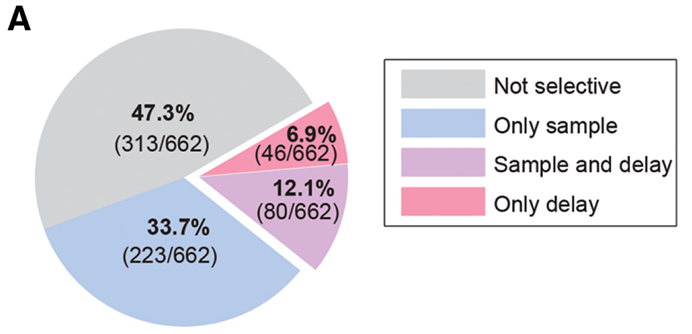
More than half - either sample or delay selective or both
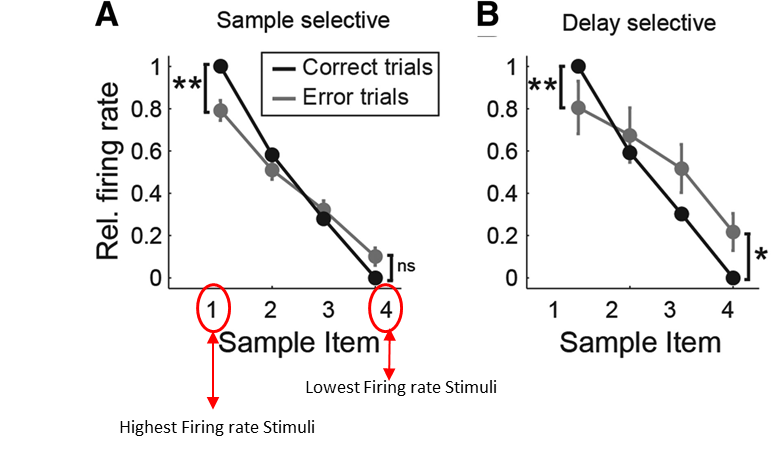
Advanced analysis on the relation between neural activity and task performance
Perform task very well overall – but what about the errors!
Bottom line: in error trials the firing rate of the neurons does not distinguish the different stimuli as well as in correct trials
This is true for both sample and delay selective neurons
Firing rate when stimulus and delay can predict whether they get the trial right
If they have a preference and a very high firing rate they are likely to be able to identify it
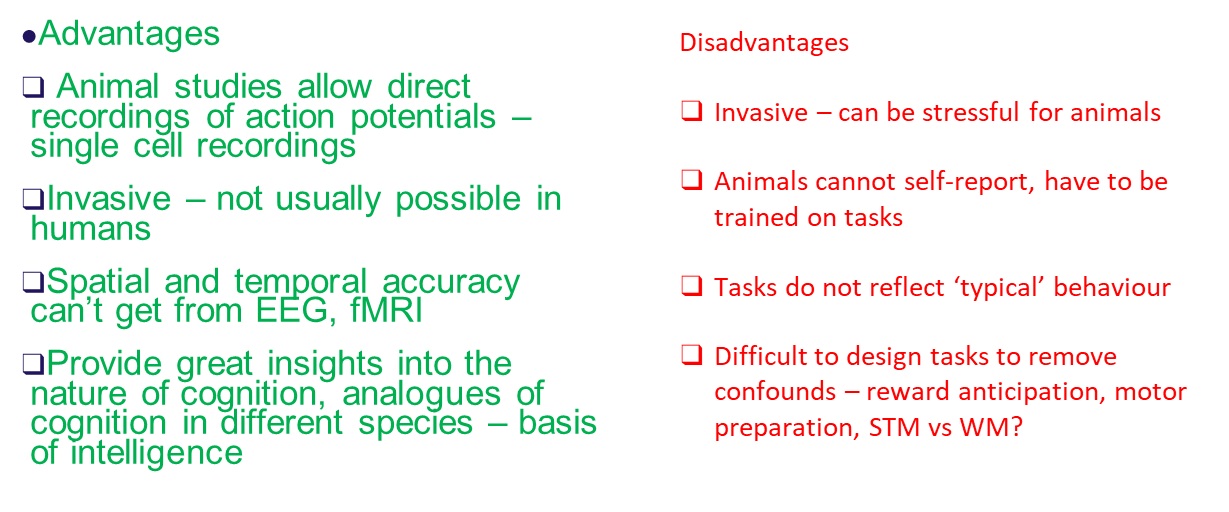
Advatnages and disadvantages of these methods
The bee brain
Small (~0.5mm3)
Only ~1,000,000 neurons (humans 16,000,000,000)
But large compared to fruit flies (100,000 neurons)
Not a simple, hard-wired structure
Long tradition of honey-bee physiology, navigation and communication
More recently studies on learning and cognitive capabilities
Working memory in honey bees
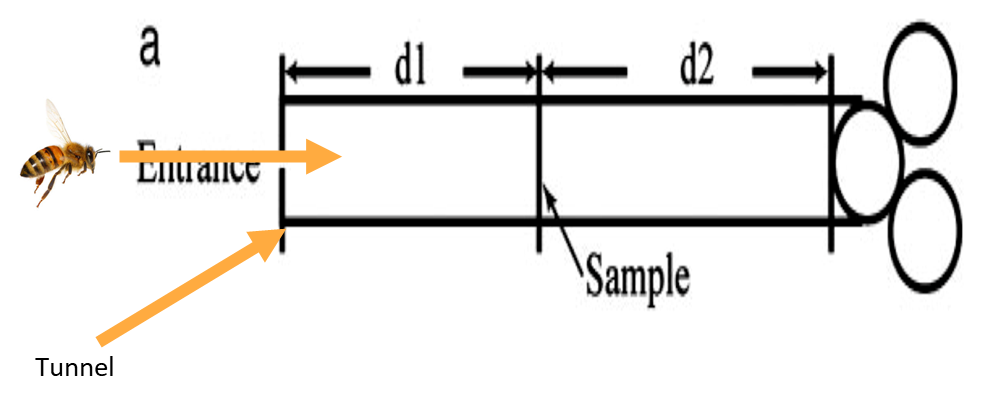
Varied the length of a tunnel which the bee had to fly through to do delay
Sample which they have to encode they can move up and down the tunnel
The further along the tunnel it is (to the entrance) the further the bee has to fly before it makes its choice and vice versa
Assess the WM capacity of the bee
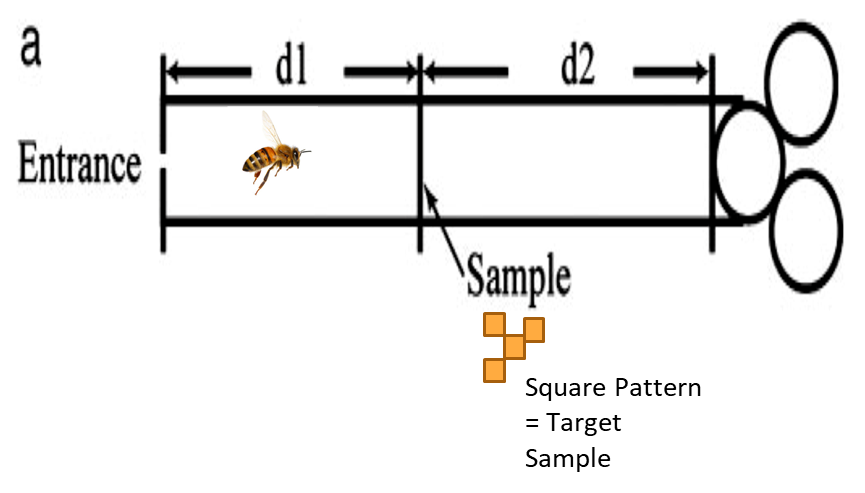
Sample is what the bee has to remember
Geometric shape as it flies through the tunnel
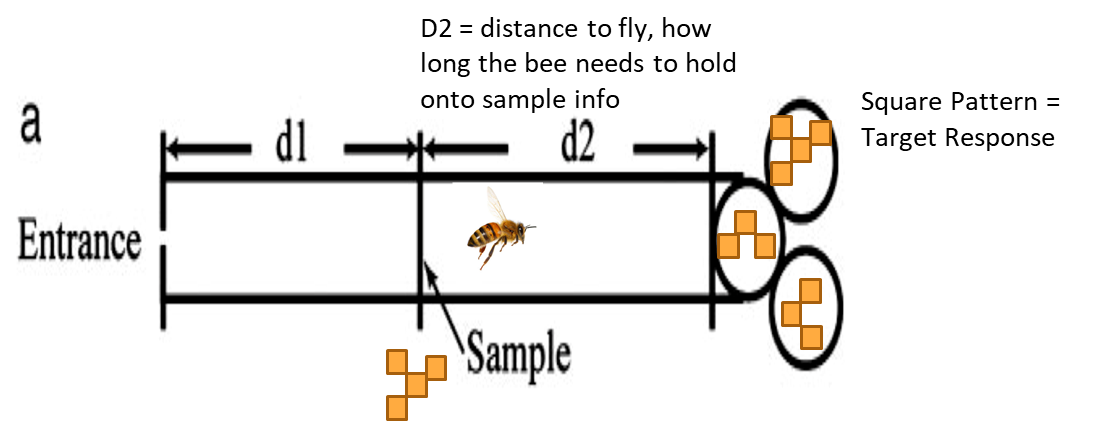
As the bee progresses through the tunnel it then has to make a choice between lots of different stimuli when it gets to the end
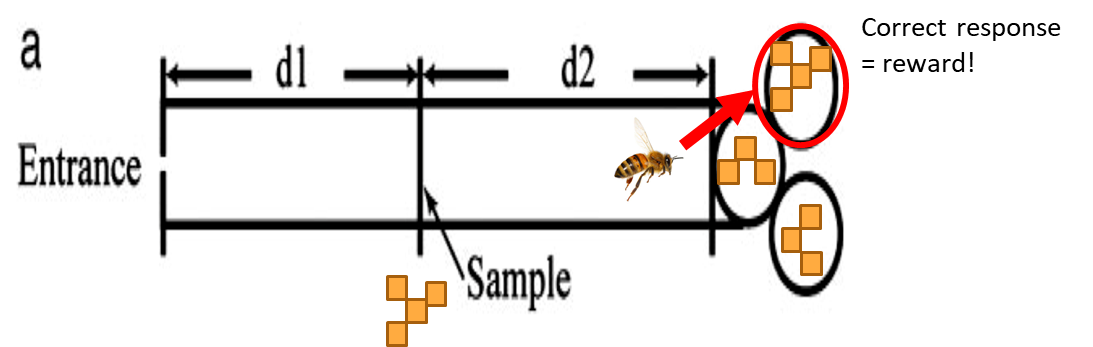
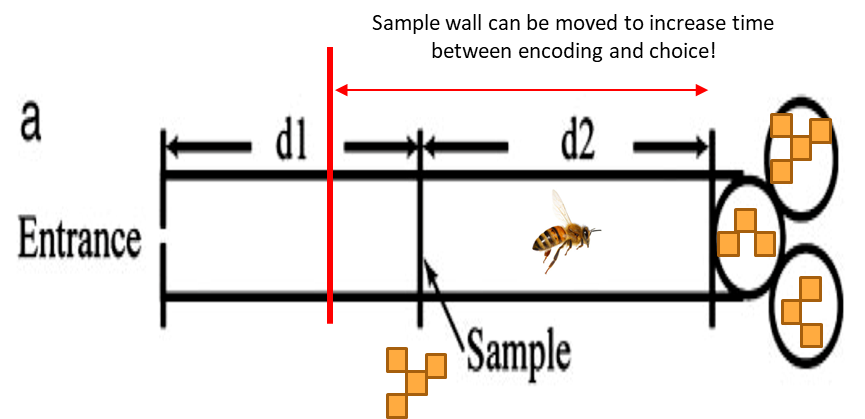
Delayed match-to-sample task
Visual sample stimulus in the tunnel
In decision chamber choice between the sample stimulus and a different (incorrect) pattern
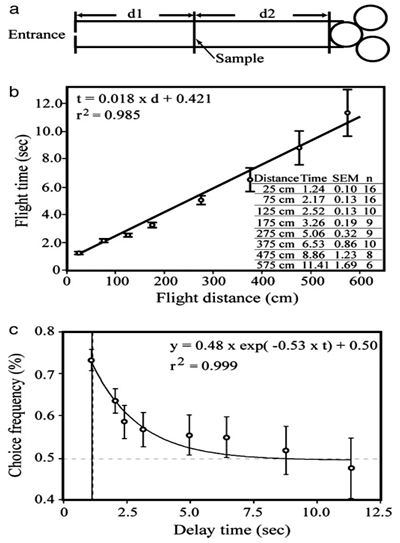
High performance levels for short delays (~75% correct for 1.24s)
Varying the distance d2 between sample and decision (= varying time interval = varying difficulty)
Performance indicates “working memory” of up to ~6.5s
higher rate than chance
More difficult memory in honey bees
Let’s make things more difficult for the bees...
What if there is also the incorrect pattern somewhere in the tunnel?
So now either before (IP1) or after (IP2) the sample stimulus the incorrect pattern is shown in the tunnel as well
The correct sample pattern is always presented at the same distance (120cm) from the entrance
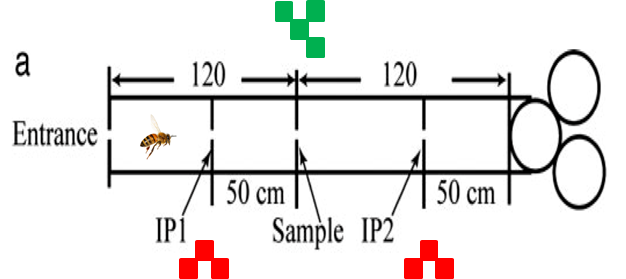
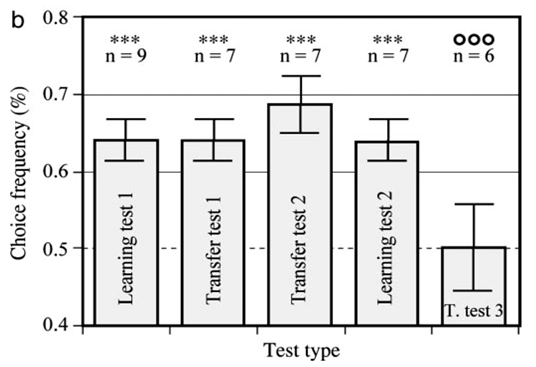
Learning test 1: Baseline condition (without incorrect patterns)
Transfer test 1: Incorrect pattern (IP1) presented in front of the correct one
Transfer test 2: Incorrect pattern (IP2) presented after the correct one
Learning test 2: continuation of training
Transfer test 3: correct pattern suddenly at the IP1 position (ie 50cm) and incorrect pattern at IP2 (170cm)
Performance in all cases above chance level, except for the Transfer test 3 control
Working memory
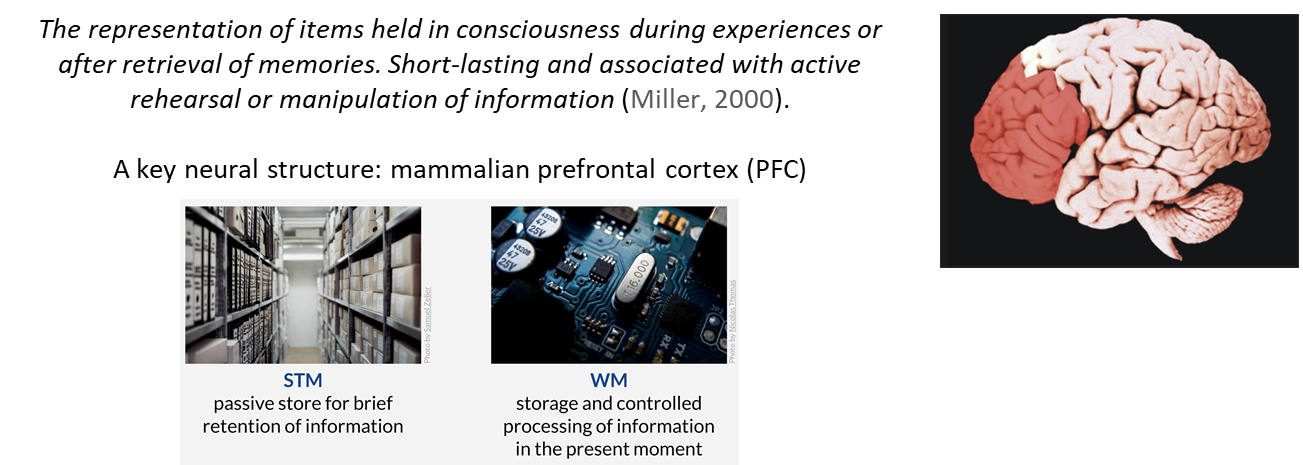
The representation of items held in consciousness during experiences or after retrieval of memories. Short-lasting and associated with active rehearsal or manipulation of information (Miller, 2000).
To what degree does this match the memory task in the bees?
Important contribution of Psychology to other fields by providing clear terminology and requirements for cognitive abilities
Potentially working memory – but more properties of STM – Grey Area
Some more conclusions
Despite the small size of their brain, also insects have a variety of cognitive abilities.
Bees might have a “working memory” of several seconds.
But it remains currently unclear to what degree the active memory content can be manipulated as e.g. in primates
 Note
Note  Flashcards (24)