Light and Geometric Optics Flashcards
 Note
Note Call Kai
 Learn
Learn Practice Test
 Spaced Repetition
 Match
Match Flashcards
 Knowt Play
1/36

Earn XP
Description and Tags
Flashcards of key vocabulary related to light and geometric optics.
Name | Mastery | Learn | Test | Matching | Spaced | Call with Kai | Chat |
|---|
No analytics yet
Send a link to your students to track their progress
37 Terms
Luminous
Produces its own light.
Non-luminous
Does not produce its own light.
Incandescence (type of light emmision)
The production of light as a result of high temperature.
Electric discharge (type of light emmision)
The process of producing light by passing an electric current through a gas.
Phosphorescence (type of light emmision)
The process of producing light by the absorption of ultraviolet light resulting in the emission of visible light over an extended period of time.
Fluorescence (type of light emmision)
The immediate emission of visible light as a result of the absorption of ultraviolet light.
Chemiluminescence (type of light emmision)
The direct production of light as the result of a chemical reaction with little or no heat produced.
Bioluminescence (type of light emmision)
The production of light in living organisms as the result of a chemical reaction with little or no heat produced.
Triboluminescence (type of light emmision)
The production of light from friction as a result of scratching, crushing, or rubbing certain crystals.
Light-emitting diode (LED) (type of light emmision under Electrical Discharge)
Light produced as a result of an electric current flowing in semiconductors.
Semiconductor
A material that allows an electric current to flow in only one direction.
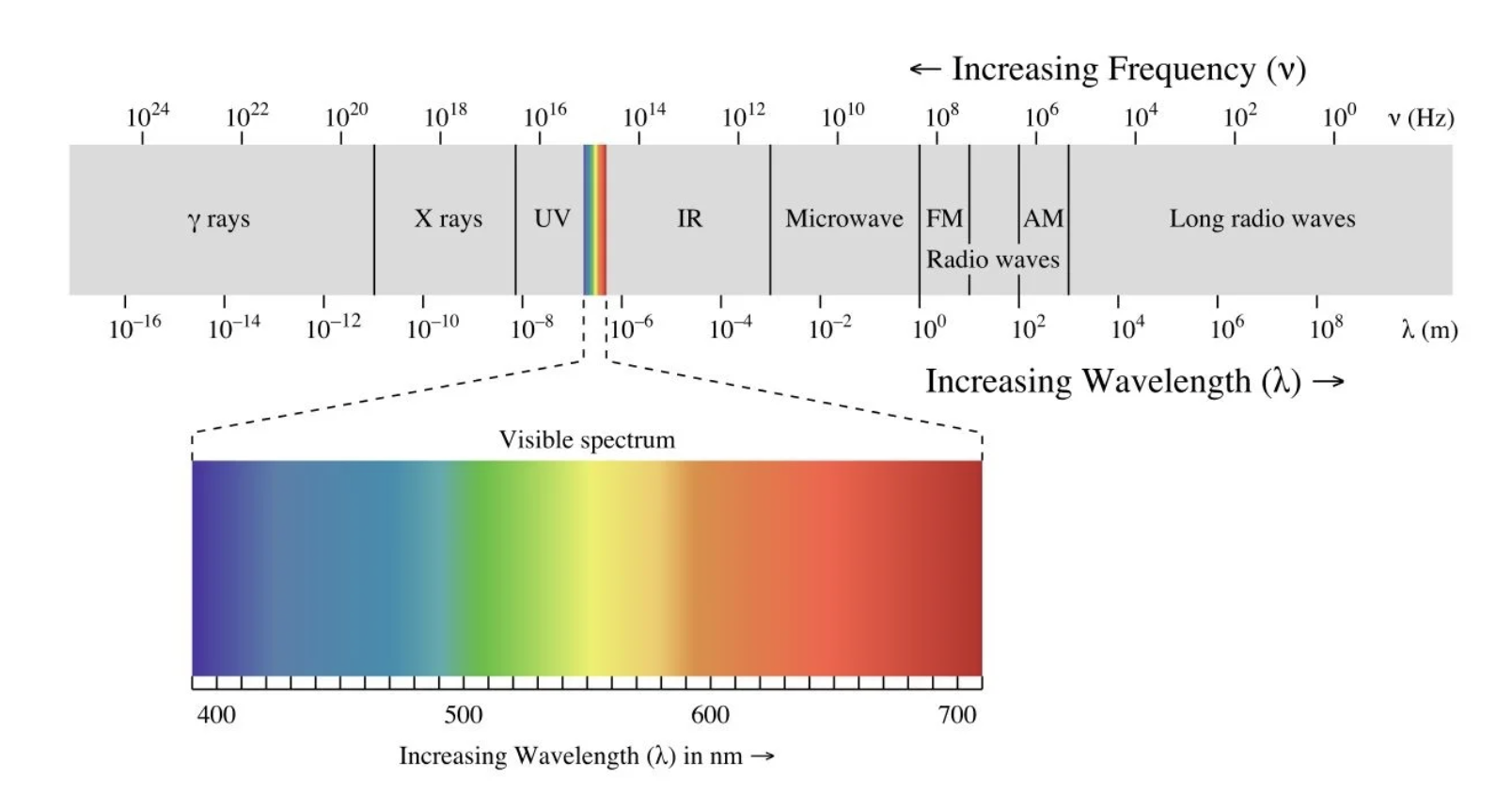
Electromagnetic spectrum
The classification of electromagnetic waves by energy.
Visible spectrum and it’s range
The continuous sequence of colors that make up white light. (λ ≈ 700 - 420 nm)
Electromagnetic waves that the human eye can detect.
Medium
Any physical substance through which energy can be transferred.
Radiation
A method of energy transfer that does not require a medium; the energy travels at the speed of light.
Electromagnetic wave
A wave that has both electric and magnetic parts, does not require a medium, and travels at the speed of light.
Light ray
A line on a diagram representing the direction and path that light is travelling.
Geometric optics
The use of light rays to determine how light behaves when it strikes objects.
Transparent
When a material transmits all or almost all incident light; objects can be clearly seen through the material.
Translucent
When a material transmits some incident light but absorbs or reflects the rest; objects are not clearly seen through the material.
Opaque
When a material does not transmit any incident light; all incident light is either absorbed or reflected; objects behind the material cannot be seen at all.
Image
Reproduction of an object through the use of light.
Mirror
Any polished surface reflecting an image.
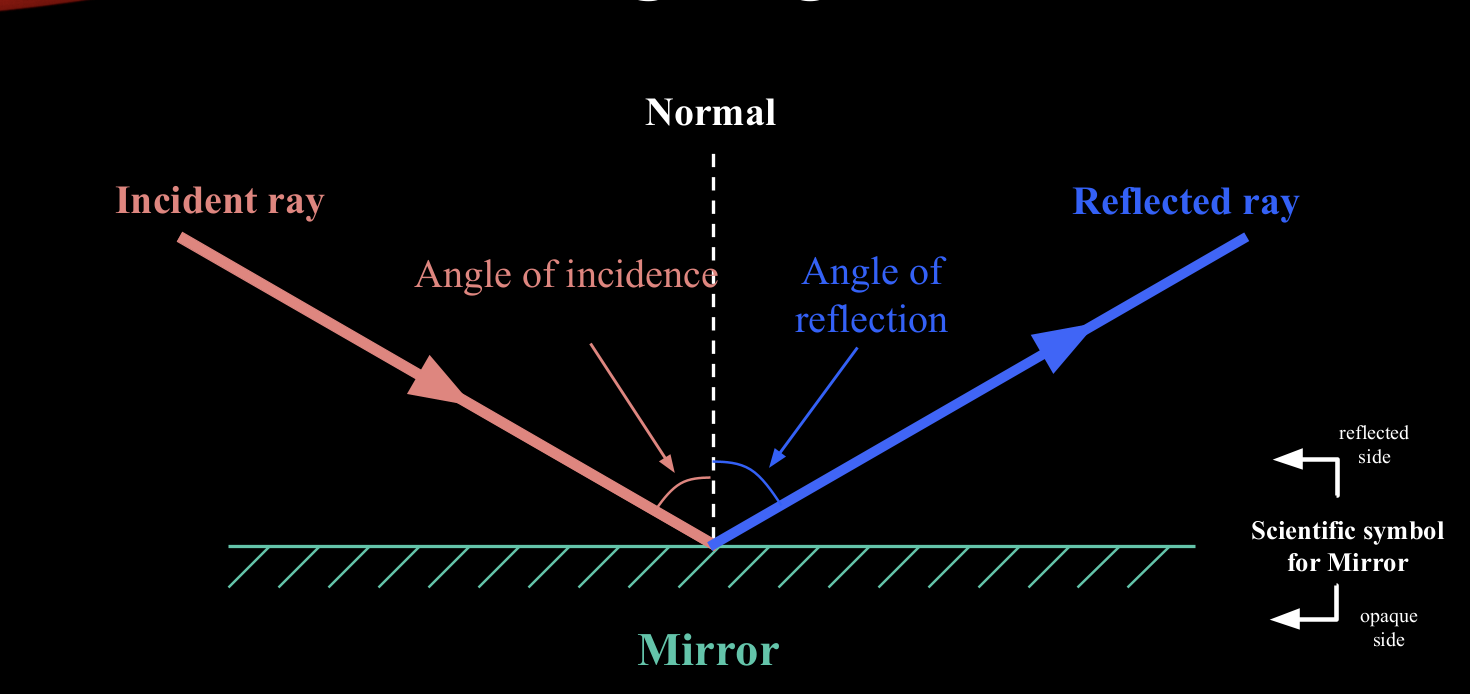
Angle of incidence
The angle between the incident ray and the normal.
Angle of reflection
The angle between the reflected ray and the normal.
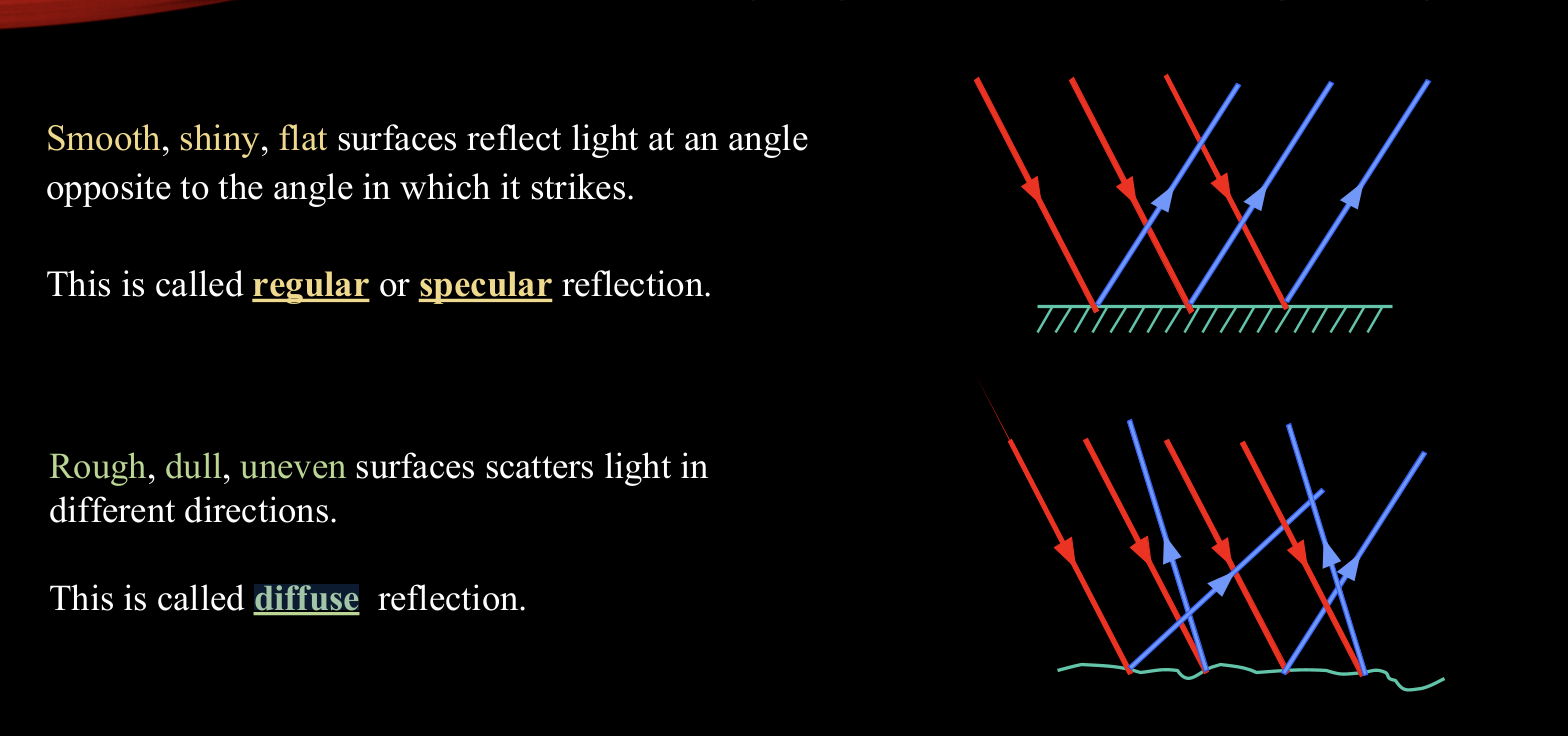
Specular reflection
Reflection of light off a smooth surface.
Diffuse reflection
Reflection of light off an irregular or dull surface.
Virtual image
An image formed by light coming from an apparent light source; light is not arriving at or coming from the actual image location.
Speed of light formula

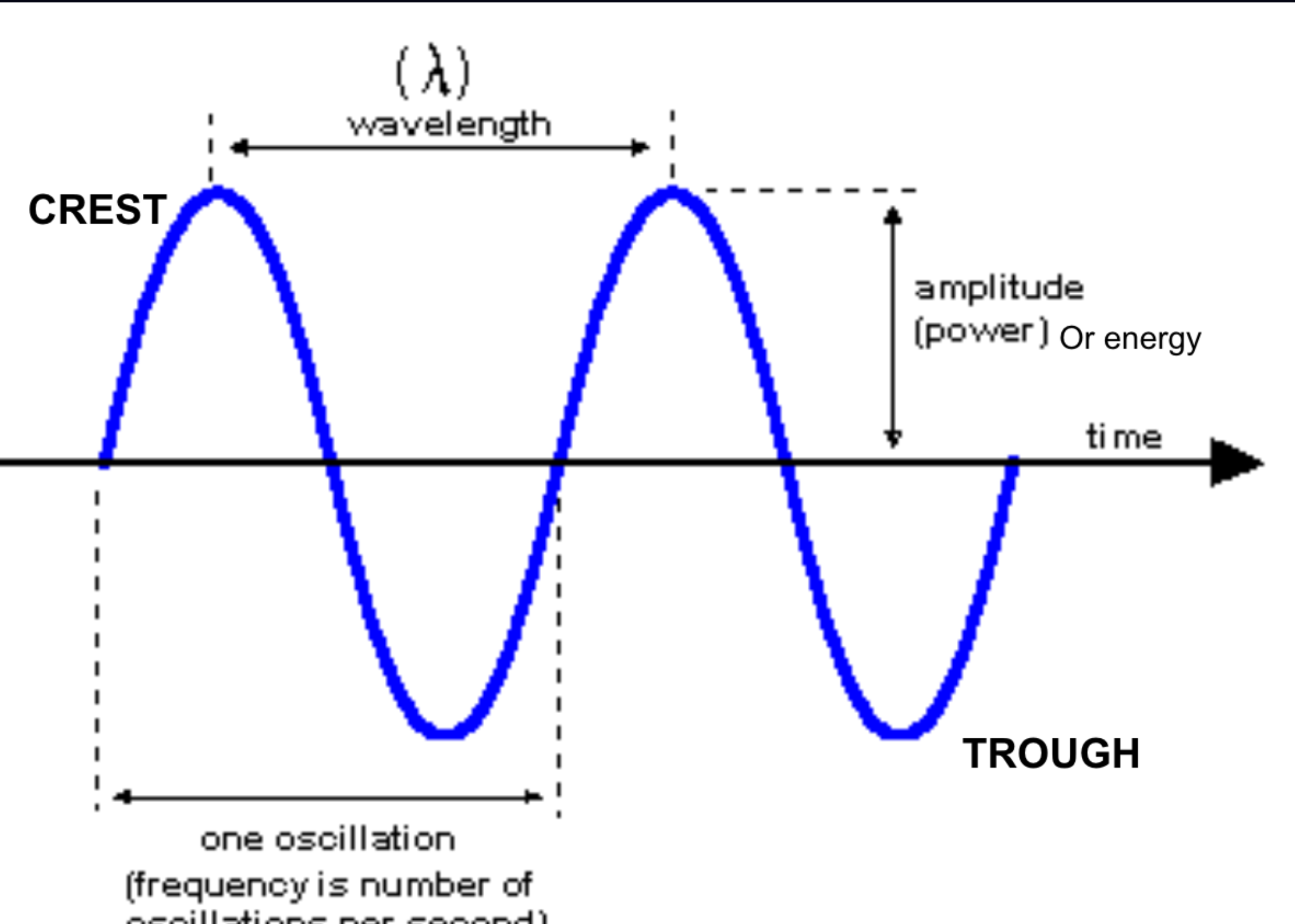
Light wave and what it’s defined by
Wavelength
Frequency
Amplitude

electromagnetic specturm + types of radiation in order (low λ to hight)
Gamma
x-ray
UV
visible light
infared
microwave
FM AM radio waves
long radio waves
the different waves
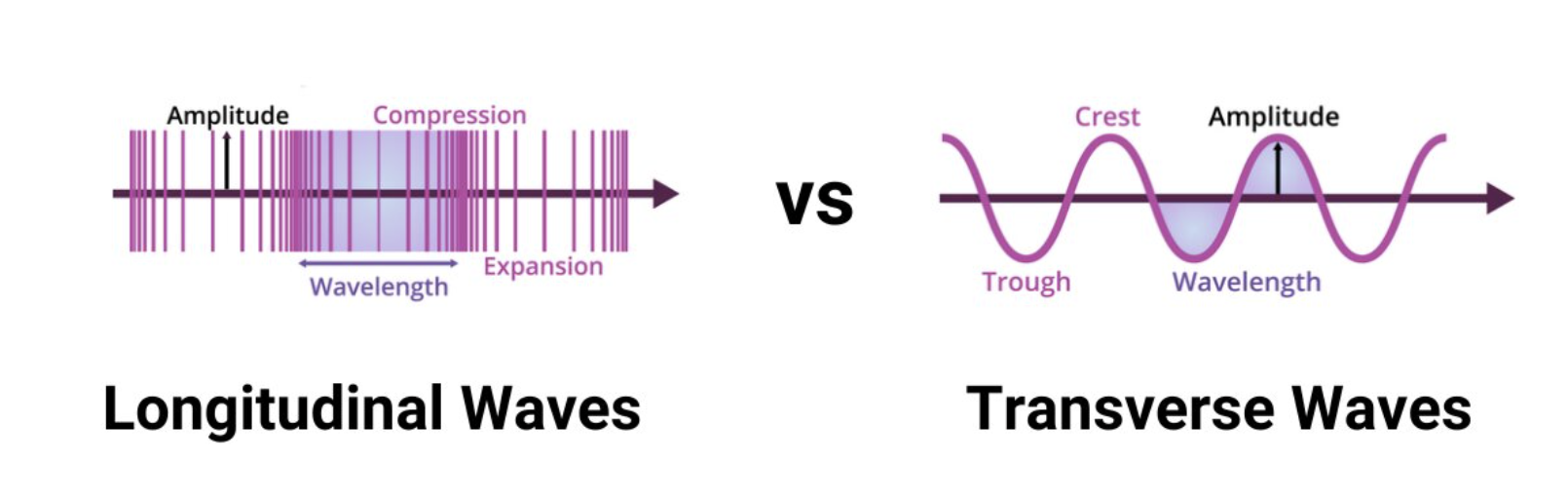
diagram for reflection (JUST LABLES)
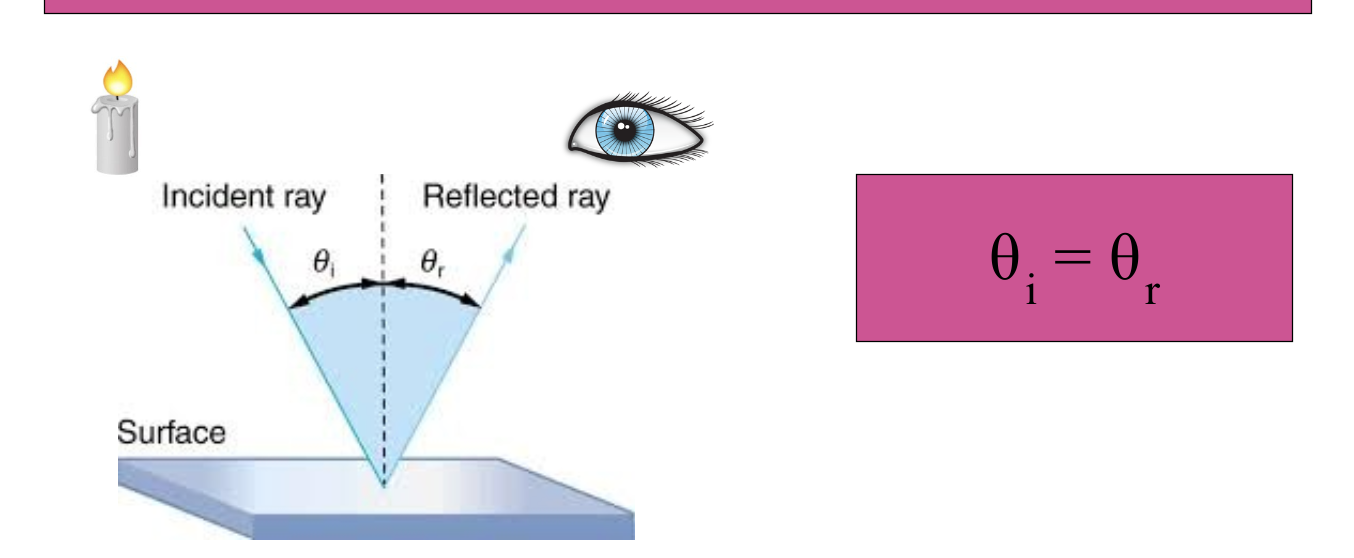
The Law of Reflection
Angle of incidence = Angle of reflection
diffuse va regular reflection
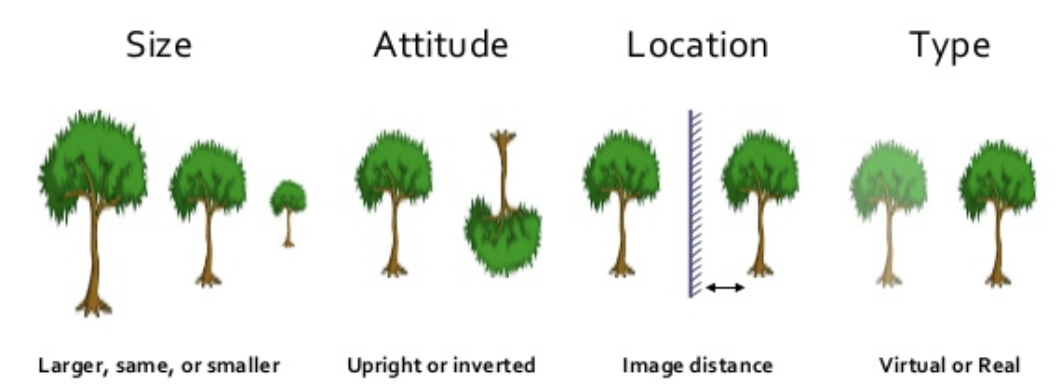
How to describe an image
SALT
Size: compared to the object
Attitude: orientation compared to object (upright, inverted)
Location: image distance (i.e. behind the mirror; same distance as object)
Type: real or virtual
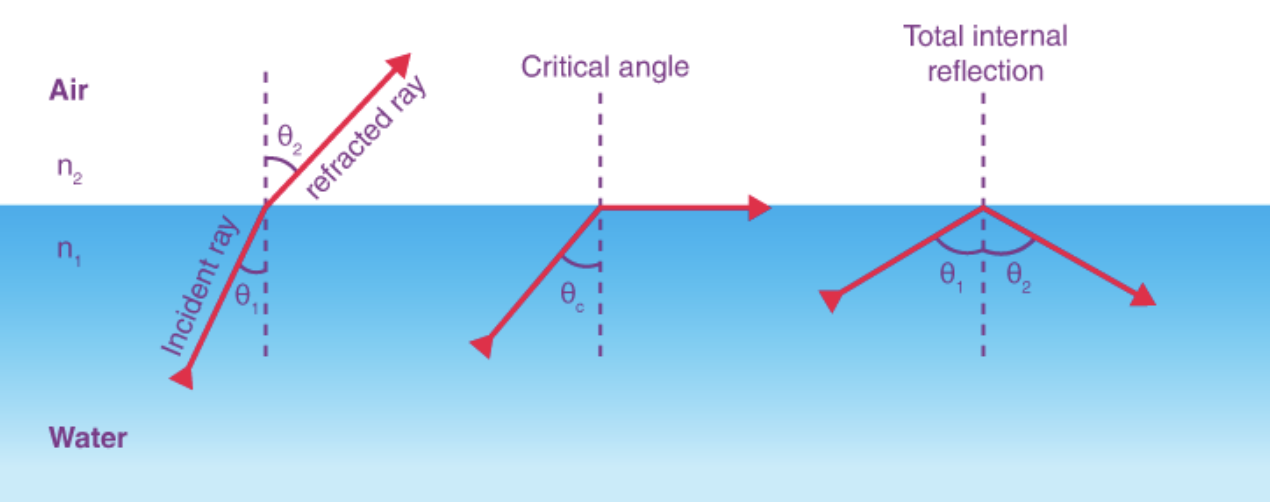
types of total internal reflection