Immunology Chapter 1: Overview of the Immune System
 Studied by 0 people
 Call Kai
 Learn
Learn Practice Test
 Spaced Repetition
 Match
Match Flashcards
 Knowt Play
1/73

Earn XP
Description and Tags
After reading the chapter, be able to: Trace the study of immunology from a desire to vaccinate against infectious disease to far-reaching applications in basic research, medicine, and other fields of study. Examine and question prior assumptions related to immunology and categorize features unique to the immune system. Practice and apply some immunology- specific vocabulary, while distinguishing cells, structures, and concepts important to the field of immunology. Recognize the need for balance and regulation of immune processes and evaluate the consequences of dysregulation. Begin to integrate concepts from immunity into real-world issues and medical applications.
Name | Mastery | Learn | Test | Matching | Spaced | Call with Kai |
|---|
No analytics yet
Send a link to your students to track their progress
74 Terms
Define Immunity.
A state of protection from an infectious disease.
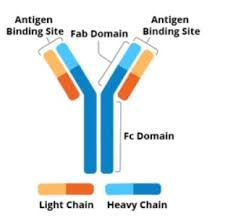
Define Immunoglobulin.
A protein that contains two identical heavy chains and two identical light chains that recognize an epitope on an antigen and facilitate clearance of that antigen.
What is a epitope?
The part of an antigen that is recognized and bound by an antibody or TCR-MHC combination.
What is a TCR-MHC combination?
the fundamental recognition event in cellular immunity where the T-cell Receptor (TCR) binds to a specific peptide fragment (antigen) presented by a Major Histocompatibility Complex (MHC) molecule on another cell, triggering T-cell activation to fight pathogens or cancerous cells, with the TCR's Complementarity-Determining Regions (CDRs) engaging both the peptide and the MHC platform.
Define Antibodies.
They are immunoglobulins, that are Y-shaped proteins produced by your immune system (specifically plasma cells) to identify and neutralize foreign invaders (antigens) like bacteria, viruses, fungi, and toxins, marking them for destruction by other immune cells to protect the body
Define Humoral Immunity.
Host defenses mediated by antibodies in the plasma, lymph, and tissue fluids. It protects against extracellular bacteria and foreign macromolecules.
Define Passive Immunity.
Temporary adaptive immunity conferred by the transfer of immunity products such as antibody (antiserum), from an immune individual to a nonimmune one.
Define Active Immunity.
Adaptive immunity induced by the natural exposure to a pathogen or by vaccination.
Define Cell-Mediated Immunity.
Host defenses mediated by antigen-specific T cells. It protects against intracellular bacteria, viruses, and cancer and is responsive for graft rejection. Transferring primed T cells confers this type of immunity on the recipient.
Define T lymphocytes (T-Cells).
A lymphocyte that matures in the thymus and expresses a T-Cell receptor, CD3, and CD4 or CD8.
Define B lymphocytes (B-Cells).
Lymphocytes that mature in the bone marrow and express membrane bound antibodies. After interacting with antigen, they differentiate into antibody- secreting plasma cells and memory cells.
Define Antigen.
Any substance (usually foreign) that binds an antibody or a T-cell receptor. (often a synonym for immunogen)
Define Clonal Selection.
The antigen-mediated activation and proliferation of a B cell with receptors for a target antigen.
Define Pathogens.
A disease causing infectious agent
Define B-Cell Receptors.
A complex comprising a membrane- bound immunoglobulin molecule and two associated signal-transducing, Ig-alpha, Ig-Beta molecules.
Define T-Cell Receptors.
Antigen- binding molecule expressed on the surface of T cell and associated with the CD3 molecule. TCRs are heterodimeric, consisting of either an alpha and beta chain or an y and o chain.
Define Tolerance.
A state of immunologic unresponsiceness to particular antigens or sets of antigens. Typically, an organism is unresponsive or tolerant to self antigens.
Define Innate Immunity.
Nonantigen-specific host defenses that exist prior to antigen exposure and involve anatomic, physiologic, endocytic, phagocytic, antimicrobial, and inflammatory mechanisms; they do not exhibit adaption or memory characteristics
Define Adaptive immunity.
Host defenses mediated by B and T cells following
Define Inflammatory Response.
A localized tissue response to injury or other trauma characterized by pain, heat, redness, and swelling. The response includes both localized and systemic effects that consist of altered patterns of blood flow, an influx of phagocytic and other immune cells, removal of foreign antigens, and healing of the damaged tissue.
Define Primary Response.
The immune response following initial exposure to antigen; this response is characterized by short duration and low magnitude compared to the response that follows subsequent exposures to the same antigen.
Define Secondary Response.
The immune response to an antigen that has been previously introduced and recognized by adaptive immune cells. It is mediated primarily by memory lymphocytes that have differentiated to respond more quickly and robustly to antigenic stimulation than the primary response.
 Note
Note  Flashcards (24)