Psych Across Lifespan – Module 4: Physical Growth and Development
 Studied by 0 people
 Call Kai
 Learn
Learn Practice Test
 Spaced Repetition
 Match
Match Flashcards
 Knowt Play
1/105

Earn XP
Description and Tags
A collection of 80 flashcards covering essential vocabulary and concepts from the module on physical growth and development.
Name | Mastery | Learn | Test | Matching | Spaced | Call with Kai |
|---|
No analytics yet
Send a link to your students to track their progress
106 Terms
Cephalocaudal principle
Growth occurs from head to tail; the head grows disproportionately before the body.
Proximodistal principle
Growth occurs from the center of the body outward to the limbs.
Orthogenetic principle
Growth starts globally and undifferentiated, then moves to more differentiated and specialized functions.
Germinal period
The stage of development from zygote to blastocyst, roughly the first week after fertilization.

Blastocyst
The stage of the embryo after the morula, characterized by an inner cell mass.
Amnion
The membrane that envelops the embryo, filling with amniotic fluid.
Chorion
The outer layer of the blastocyst that becomes the lining of the placenta.
Embryonic period
Weeks 3- end of week 8. Rapid organ development and many sensitive periods, emergence of nervous system
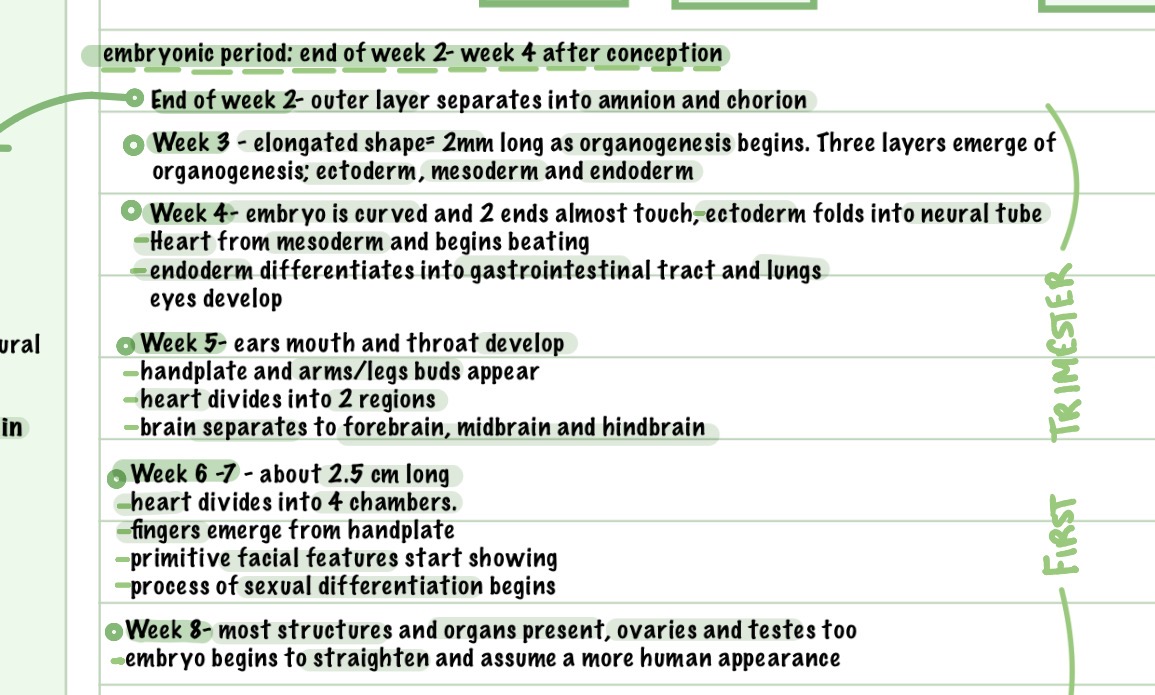
Neural tube
A structure that develops into the spine, and fore, mid and hind brain. formed during weeks 3-5 of prenatal development.
Neural tube defects
Congenital abnormalities resulting from failed closure of the neural tube, most vulnerable between weeks 4-5.
Organogenesis
The process in which the organs form during weeks 3-8 of pregnancy.
Ectoderm
The outermost layer of the developing embryo, which becomes skin and the nervous system.
Mesoderm
The middle layer of the developing embryo, which develops into musculoskeletal and circulatory systems.
Endoderm
The innermost layer of the developing embryo, forming the gastrointestinal tract and lungs.
Fetal period
The stage of development from week 9 until birth, characterized by growth and maturation of organs.
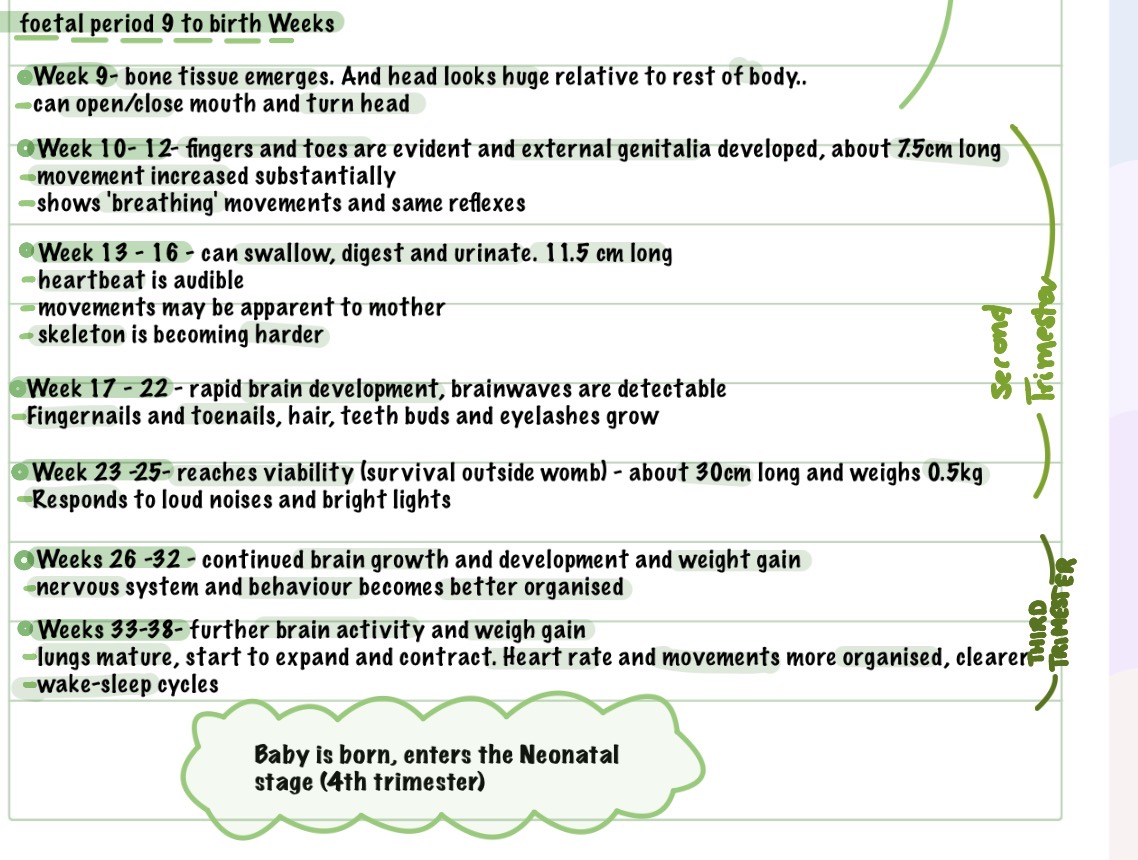
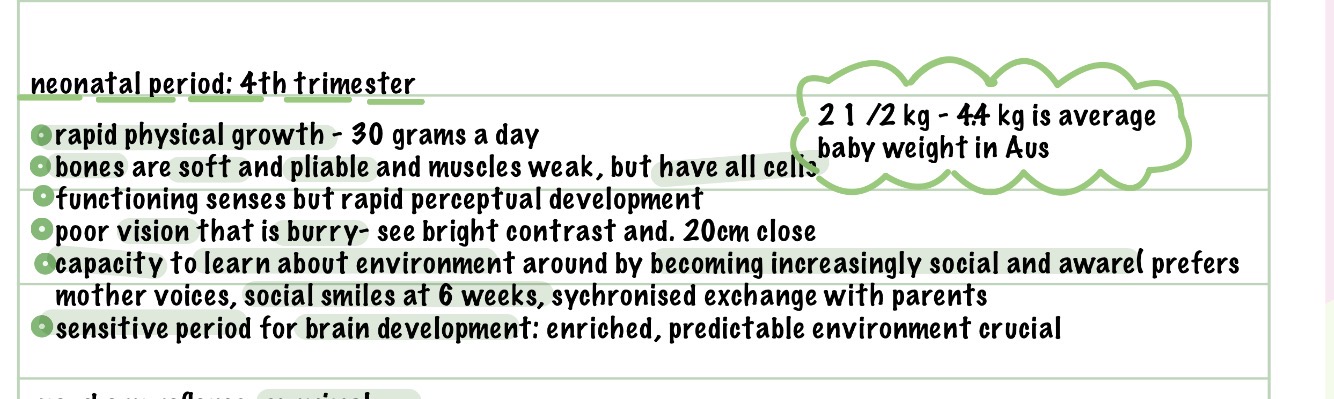
Neonatal period
The first few weeks after birth, where rapid physical growth occurs.
Apgar test
A quick assessment of a newborn's health, scoring factors like heart rate and respiratory effort.
Primitive reflexes
Inborn automatic responses that infants have, indicating normal neurological development.
Grasping reflex
An automatic tendency of infants to grasp objects that touch their palms.
Moro reflex
A startle response in infants; throwing arms outward then back in when startled.
Babinski reflex
The reflex where an infant fans and curls toes when the bottom of the foot is stroked.
Teratogens
Substances that can cause malformations in a developing fetus.
Sensitive period
A timeframe when certain events or exposures have a more significant impact on development.
Endocrine system
Glands that secrete hormones into the bloodstream, regulating various bodily functions.
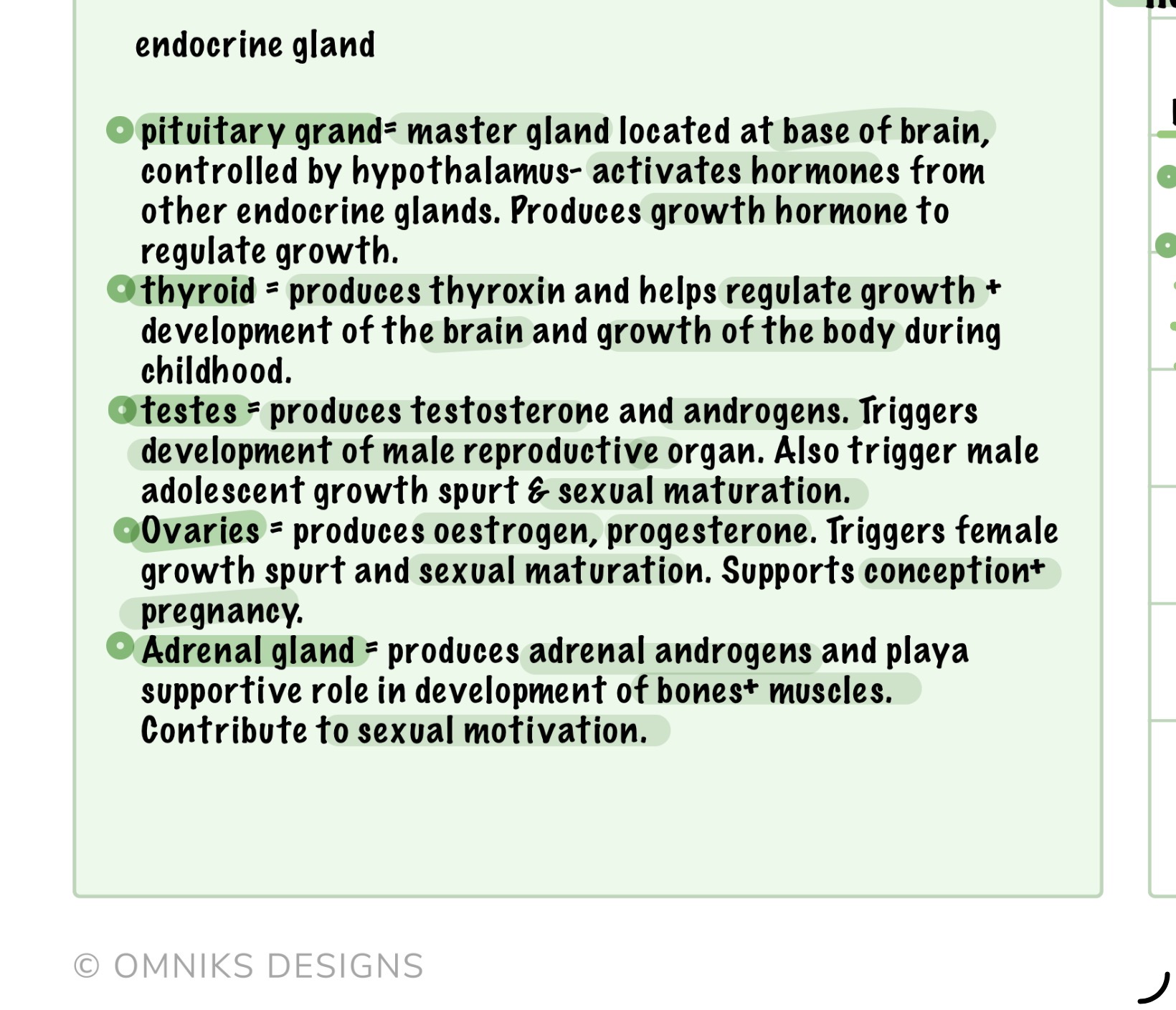
Pituitary gland
The master gland that controls other endocrine glands and regulates growth.
Puberty
The developmental stage where individuals attain sexual maturity and experience growth spurts.
Adrenarche
The period when adrenal hormones increase, preparing the body for sexual maturation.
Menarche
The first occurrence of menstruation in females, marking the start of reproductive capability.
Semenarche
The first ejaculation in males, indicating the onset of reproductive capability.
Menopause
The time in life when menstruation ceases, usually occurring between ages 45-55.
Andropause
A gradual decline in testosterone levels in older males, affecting libido and energy.
Motor development
The progression of physical abilities and skills in infants and children.
Developmental norms
The average age when children typically achieve certain developmental milestones.
Neural plate
A thickened region of ectoderm that develops into the nervous system.
Primitive reflexes significance
Presence and disappearance indicate normal neurological development.
Environmental factors
External influences like nutrition and stress that affect fetal and infant health.
Maternal age effects
Older maternal age can lead to smaller babies and increased risks.
Paternal health impact
Father's age, smoking, and health can also influence fetal development.
Thalidomide case
A historical example highlighting the risks of prenatal exposure to untested drugs.
Neonatal reflexes
Inborn reflexes that facilitate survival in newborns.
Social smiling
A milestone achieved around 6 weeks indicating social engagement.
Vision in newborns
Newborns can see high contrast and close objects but have blurry vision.
Hormonal influences on growth
Hormones regulate growth and maturation throughout an individual's lifespan.
Hormonal balance
The equilibrium maintained among various hormones affecting growth and development.
Cognitive development
Growth in thinking and understanding experienced through various stages of life.
Psychosocial development
The development of personality, emotions, and social relationships.
Predisposition to conditions
Genetic makeup influencing susceptibility to certain health conditions.
Environmental enrichment
Stimulating surroundings that positively affect brain development.
Nutritional factors
Dietary components that are vital for fetal and infant development.
Reflexive actions
Involuntary movements that provide insight into an infant's neurological health.
Birth weight average
About 2.5kg (5.5 pounds) is the average weight for babies in Australia.
Birth defects causes
Can stem from genetic factors, environmental influences, and prenatal exposure to substances.
Child's milestones
Key achievements in physical growth and development during infancy and early childhood.
Cephalocaudal principle (Embryonic and Fetal periods)
Growth occurs from head to tail; the head grows disproportionately before the body.
Proximodistal principle (Embryonic and Fetal periods)
Growth occurs from the center of the body outward to the limbs.
Orthogenetic principle (Embryonic and Fetal periods)
Growth starts globally and undifferentiated, then moves to more differentiated and specialized functions.
Germinal period (Germinal period)
The stage of development from zygote to blastocyst, roughly the first week after fertilization.
Blastocyst (Germinal period)
The stage of the embryo after the morula, characterized by an inner cell mass.
Amnion (Germinal and Embryonic periods)
The membrane that envelops the embryo, filling with amniotic fluid.
Chorion (Germinal and Embryonic periods)
The outer layer of the blastocyst that becomes the lining of the placenta.
Embryonic period (Embryonic period)
Weeks 3 - end of week 8. Rapid organ development and many sensitive periods, emergence of nervous system
Neural tube (Embryonic period)
A structure that develops into the central nervous system, formed during weeks 3-5 of prenatal development.
Neural tube defects (Embryonic period)
Congenital abnormalities resulting from failed closure of the neural tube, most vulnerable between weeks 4-5.
Organogenesis (Embryonic period)
The process in which the organs form during weeks 3-8 of pregnancy.
Ectoderm (Embryonic period)
The outermost layer of the developing embryo, which becomes skin and the nervous system.
Mesoderm (Embryonic period)
The middle layer of the developing embryo, which develops into musculoskeletal and circulatory systems.
Endoderm (Embryonic period)
The innermost layer of the developing embryo, forming the gastrointestinal tract and lungs.
Fetal period (Fetal period)
The stage of development from week 9 until birth, characterized by growth and maturation of organs.
Neonatal period
The first few weeks after birth, where rapid physical growth occurs.
Apgar test
A quick assessment of a newborn's health, scoring factors like heart rate and respiratory effort.
Primitive reflexes
Inborn automatic responses that infants have, indicating normal neurological development.
Grasping reflex
An automatic tendency of infants to grasp objects that touch their palms.
Moro reflex
A startle response in infants; throwing arms outward then back in when startled.
Babinski reflex
The reflex where an infant fans and curls toes when the bottom of the foot is stroked.
Teratogens (Germinal, Embryonic, and Fetal periods)
Substances that can cause malformations in a developing fetus.
Sensitive period (Germinal, Embryonic, and Fetal periods)
A timeframe when certain events or exposures have a more significant impact on development.
Endocrine system
Glands that secrete hormones into the bloodstream, regulating various bodily functions.
Pituitary gland
The master gland that controls other endocrine glands and regulates growth.
Puberty
The developmental stage where individuals attain sexual maturity and experience growth spurs.
Adrenarche
The period when adrenal hormones increase, preparing the body for sexual maturation.
Menarche
The first occurrence of menstruation in females, marking the start of reproductive capability.
Semenarche
The first ejaculation in males, indicating the onset of reproductive capability.
Menopause
The time in life when menstruation ceases, usually occurring between ages 45-55.
Andropause
A gradual decline in testosterone levels in older males, affecting libido and energy.
Motor development
The progression of physical abilities and skills in infants and children.
Developmental norms
The average age when children typically achieve certain developmental milestones.
Neural plate (Embryonic period)
A thickened region of ectoderm that develops into the nervous system.
Primitive reflexes significance
Presence and disappearance indicate normal neurological development.
Environmental factors (Germinal, Embryonic, and Fetal periods)
External influences like nutrition and stress that affect fetal and infant health.
Maternal age effects (Germinal, Embryonic, and Fetal periods)
Older maternal age can lead to smaller babies and increased risks.
Paternal health impact (Germinal, Embryonic, and Fetal periods)
Father's age, smoking, and health can also influence fetal development.
Thalidomide case (Embryonic period)
A historical example highlighting the risks of prenatal exposure to untested drugs.
Neonatal reflexes
Inborn reflexes that facilitate survival in newborns.
Social smiling
A milestone achieved around 6 weeks indicating social engagement.
Vision in newborns
Newborns can see high contrast and close objects but have blurry vision.
Hormonal influences on growth
Hormones regulate growth and maturation throughout an individual's lifespan.
Hormonal balance
The equilibrium maintained among various hormones affecting growth and development.
Cognitive development
Growth in thinking and understanding experienced through various stages of life.
Psychosocial development
The development of personality, emotions, and social relationships.
Predisposition to conditions
Genetic makeup influencing susceptibility to certain health conditions.
 Note
Note  Flashcards (95)