lymphatic system anatomy

0.0(0)
studied byStudied by 0 people
GameKnowt Play
learnLearn
examPractice Test
spaced repetitionSpaced Repetition
heart puzzleMatch
flashcardsFlashcards
Card Sorting

1/81

encourage image

There's no tags or description

Looks like no tags are added yet.

Study Analytics
Name
Mastery
Learn
Test
Matching
Spaced

No study sessions yet.

82 Terms

1
New cards

Lymph

Interstitial fluid contained inside lymphatic cells, does not go out

2
New cards

Lymphatic capillaries

small closed-end vessels that collect and carry away excess fluid, in spaces between tissue cells, intertwined with blood capillaries

3
New cards

lymphatic vessels

similar to veins but with thinner walls, not influenced by pumping of the heart
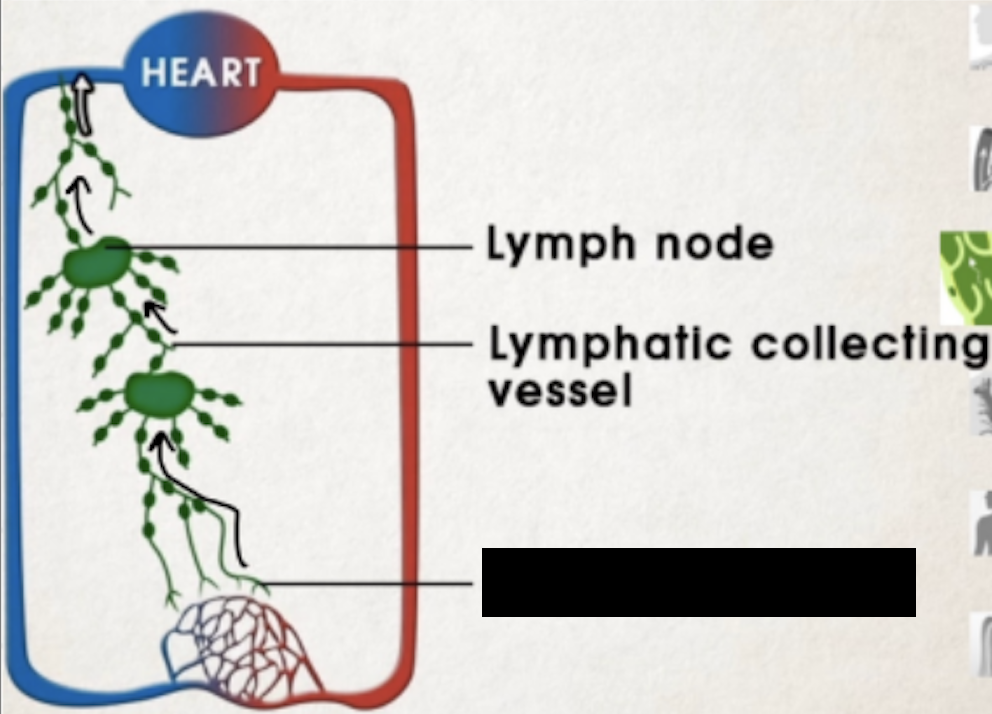
<p>similar to veins but with thinner walls, not influenced by pumping of the heart</p>
4
New cards

lymphatic valves

prevent backflow of lymph, more quantity than veins to ensure undirectional flow

5
New cards

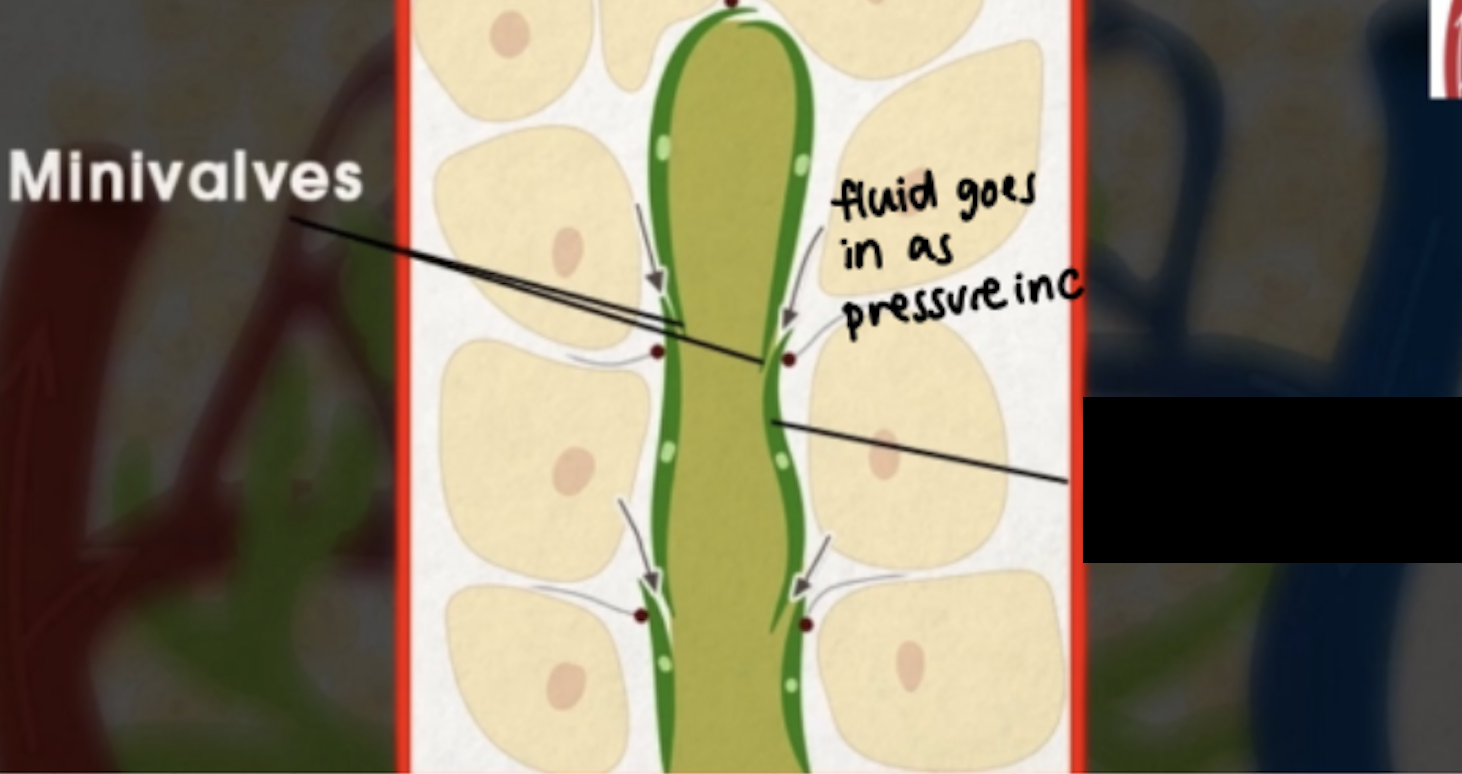
Minivalves

knowt flashcard image
6
New cards

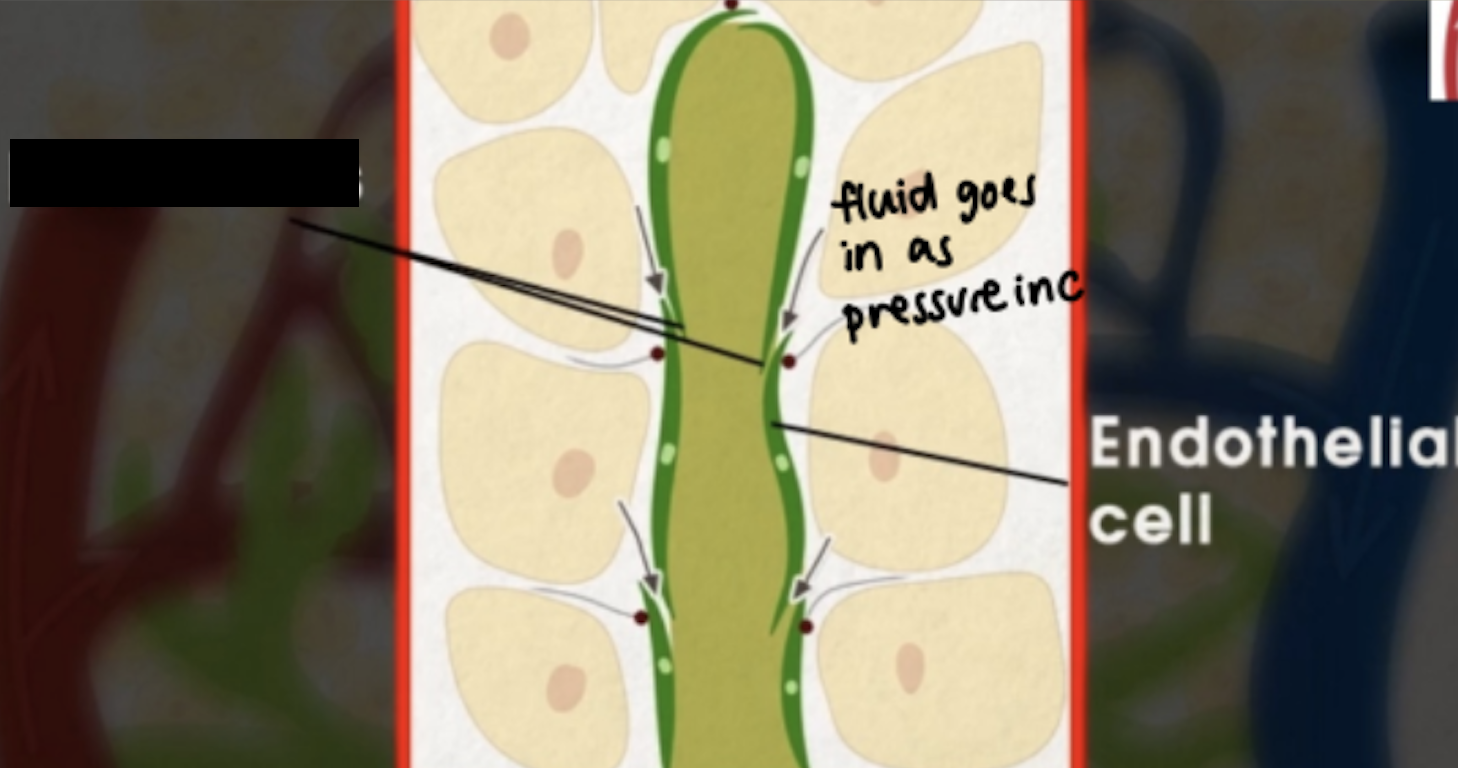
Endothelial cells

knowt flashcard image
7
New cards

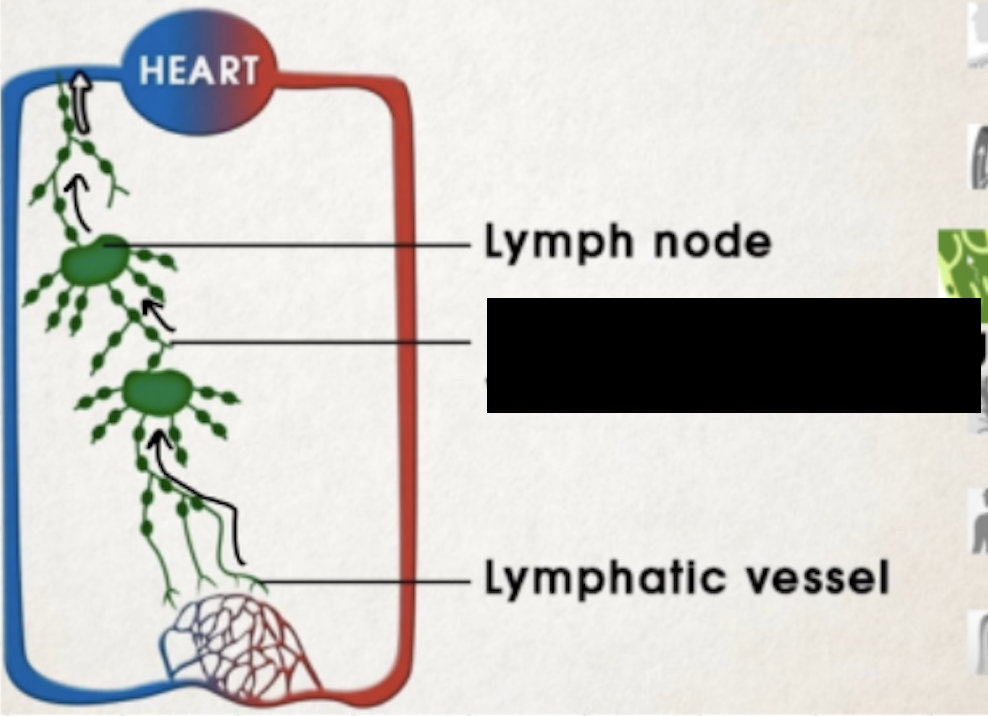
lymphatic collecting vessels

knowt flashcard image
8
New cards

lymph node

  • Widely distributed in the body in clusters and groups

  • There are superficial and deep lymph nodes

  • Small and encapsulated bean-shaped organs about 1mm-2cm in length

  • Along lymphatic vessels, help filter out foreign substances and killing bacteria

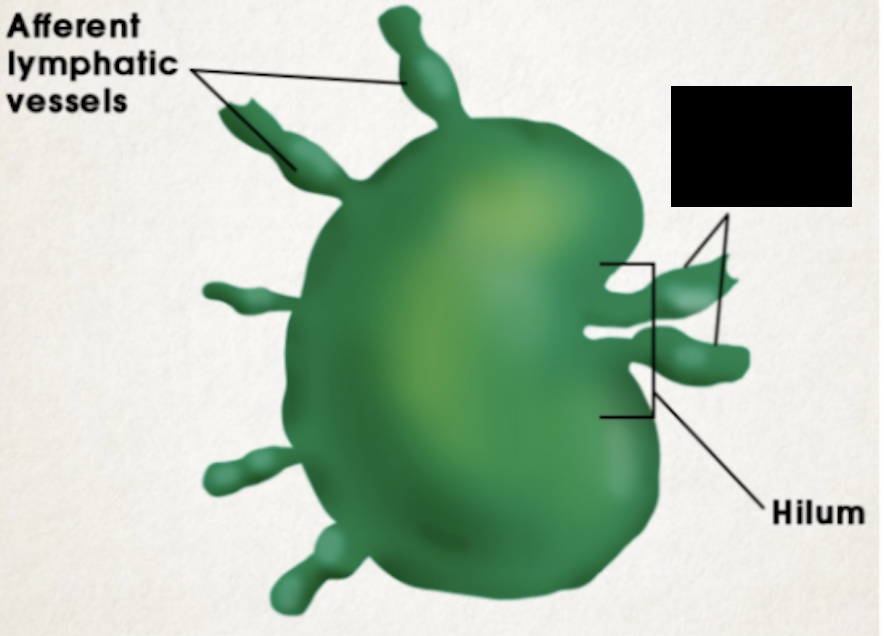
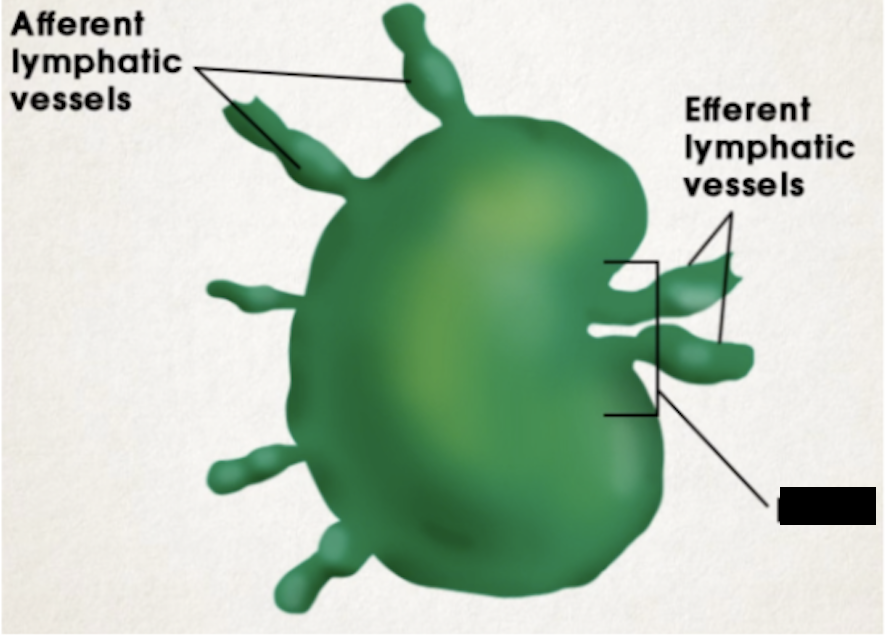
  • Lymph enters via afferent lymphatic vessels and exit through 1-2 efferent lymphatic vessels at the hilum
<ul><li><p><span>Widely distributed in the body in clusters and groups</span></p></li><li><p><span>There are superficial and deep lymph nodes</span></p></li><li><p><span>Small and encapsulated bean-shaped organs about 1mm-2cm in length</span></p></li><li><p><span>Along lymphatic vessels, help filter out foreign substances and killing bacteria</span></p></li><li><p><span>Lymph enters via afferent lymphatic vessels and exit through 1-2 efferent lymphatic vessels at the hilum</span></p></li></ul><p></p>
9
New cards

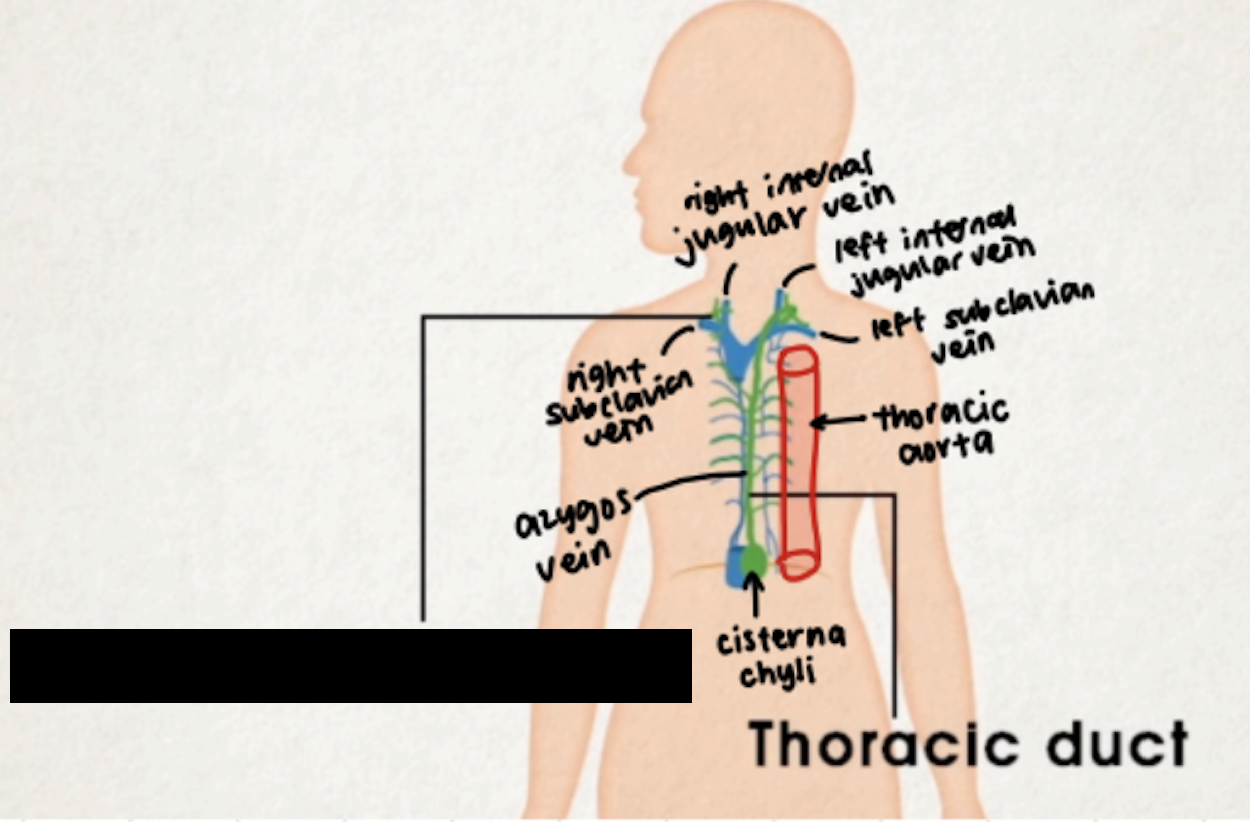
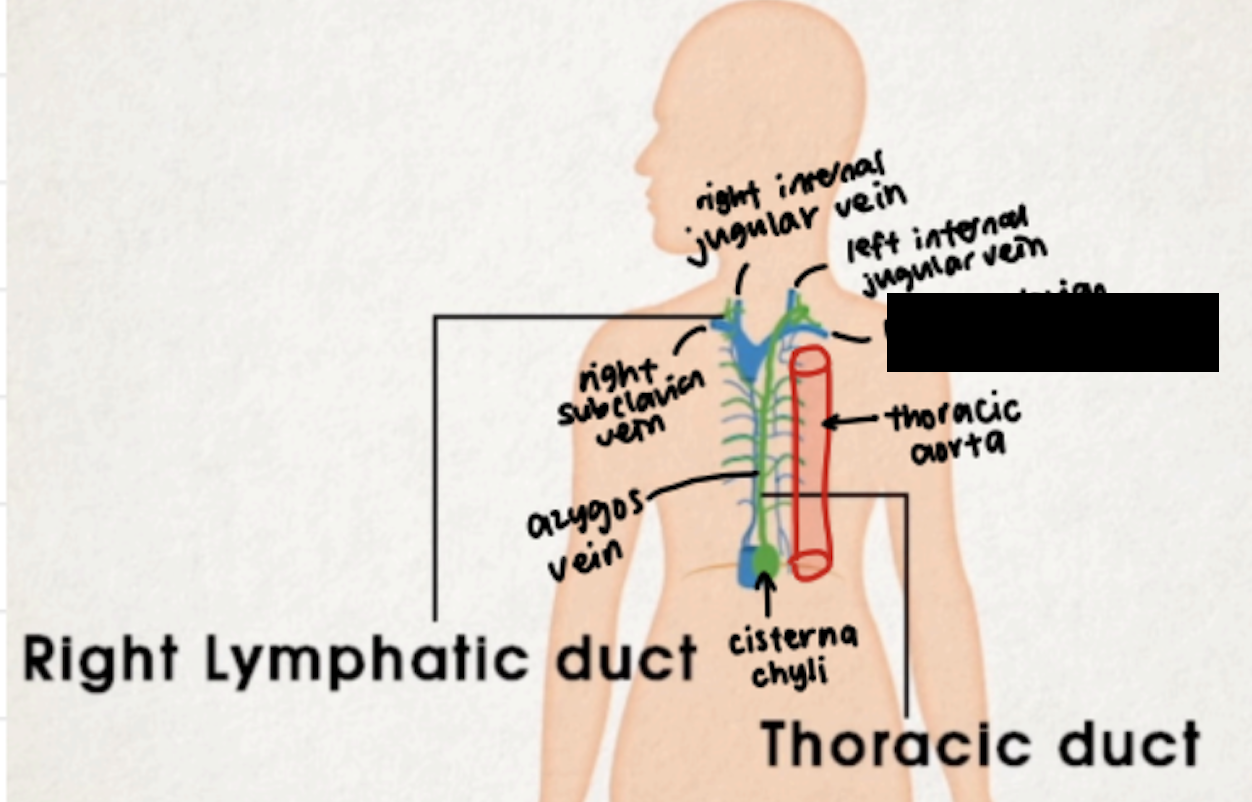
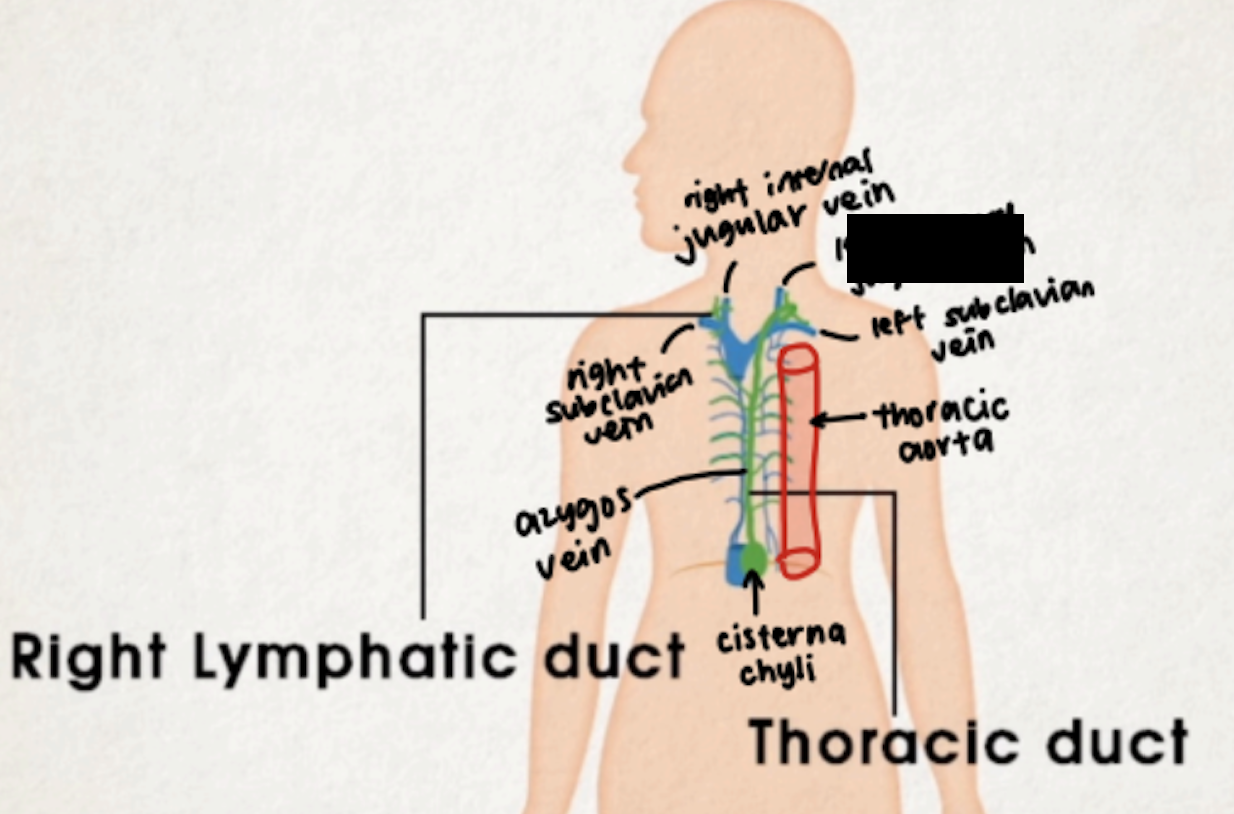
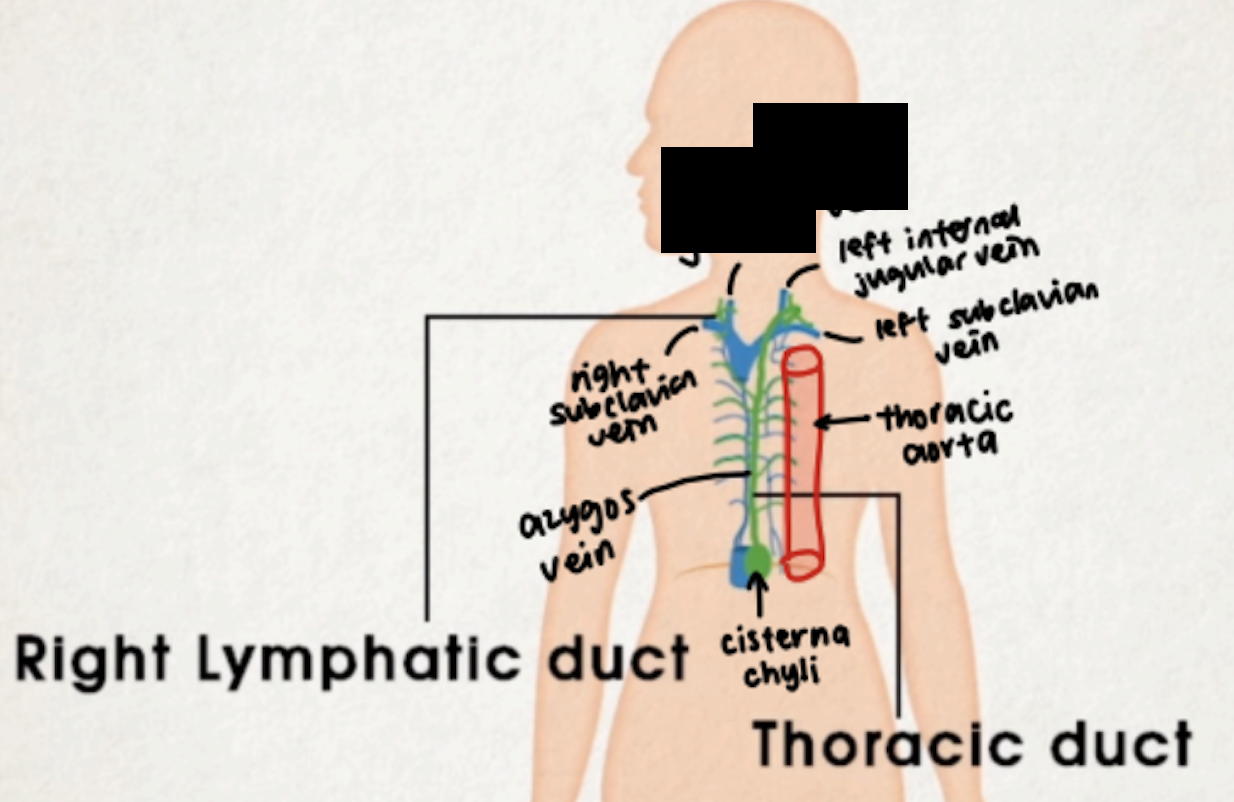
right lymphatic duct

  • short duct (1 cm)

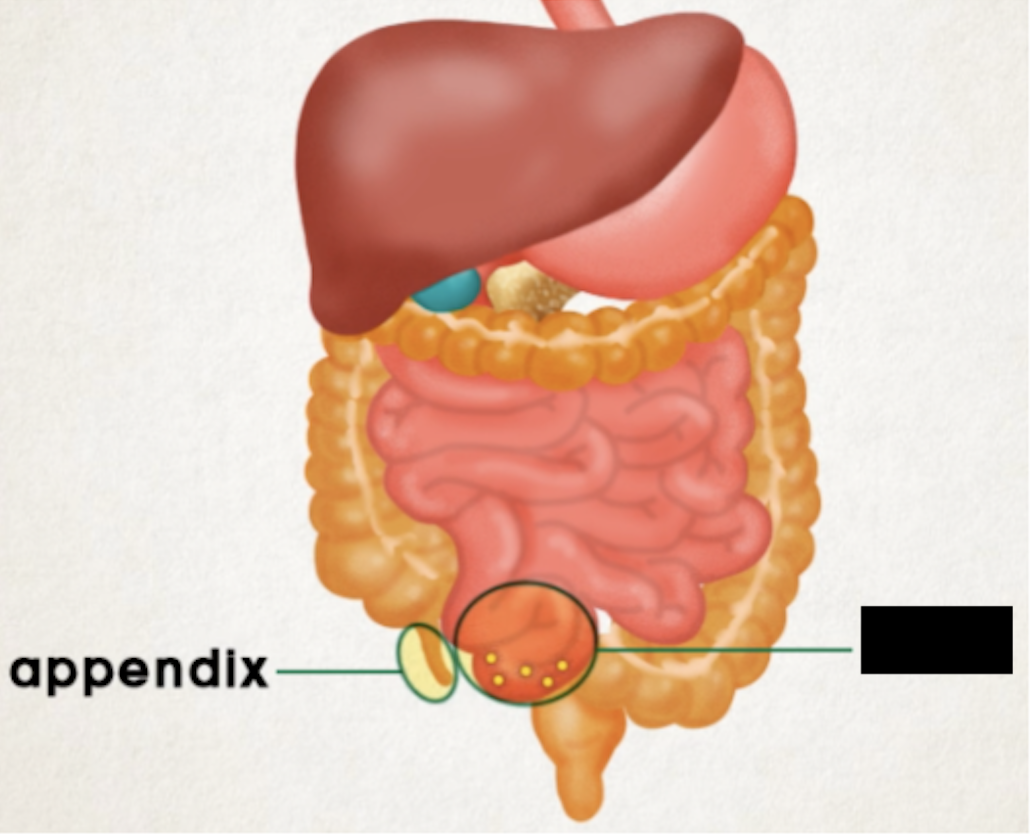
  • drains from right upper part of body

  • accounts for ÂĽ of lymph drainage

<ul><li><p>short duct (1 cm)</p></li><li><p>drains from right upper part of body</p></li><li><p>accounts for ÂĽ of lymph drainage</p></li></ul><p></p>
10
New cards

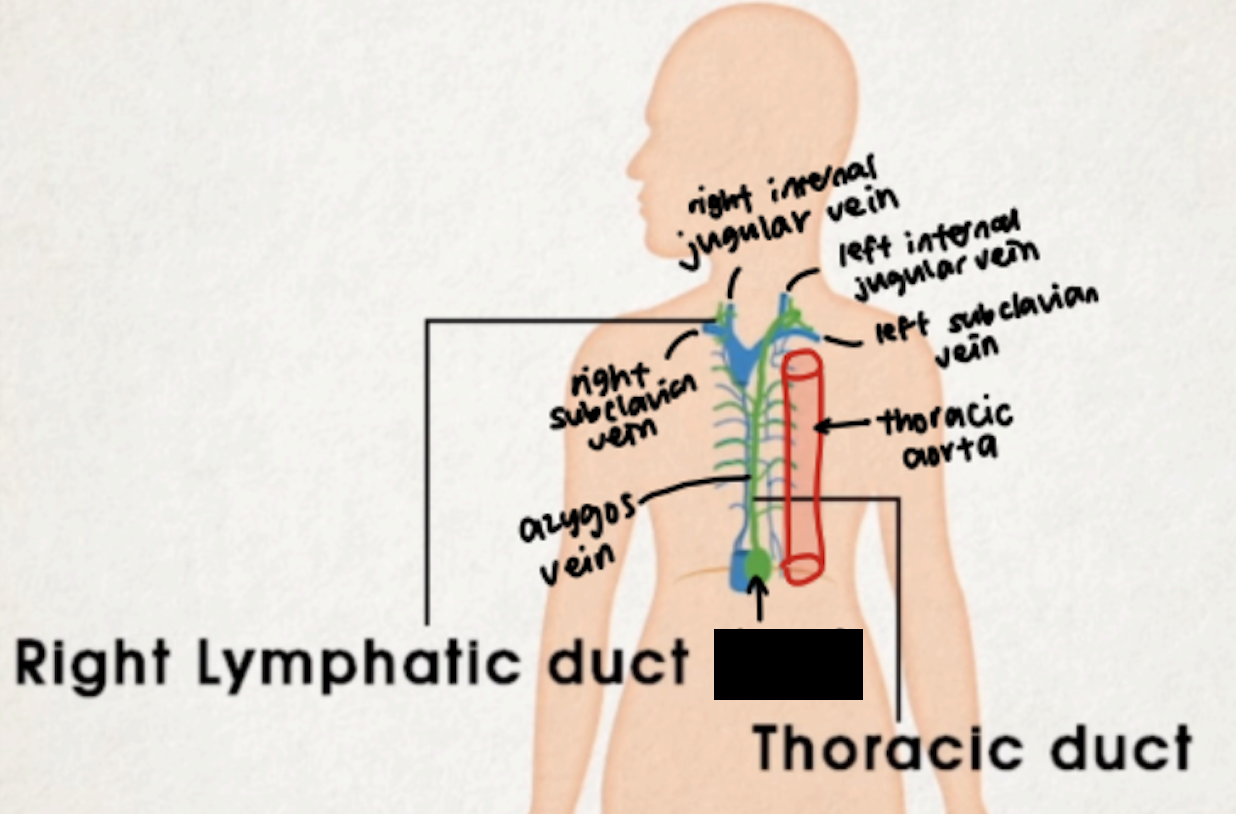
thoracic duct

  • long duct

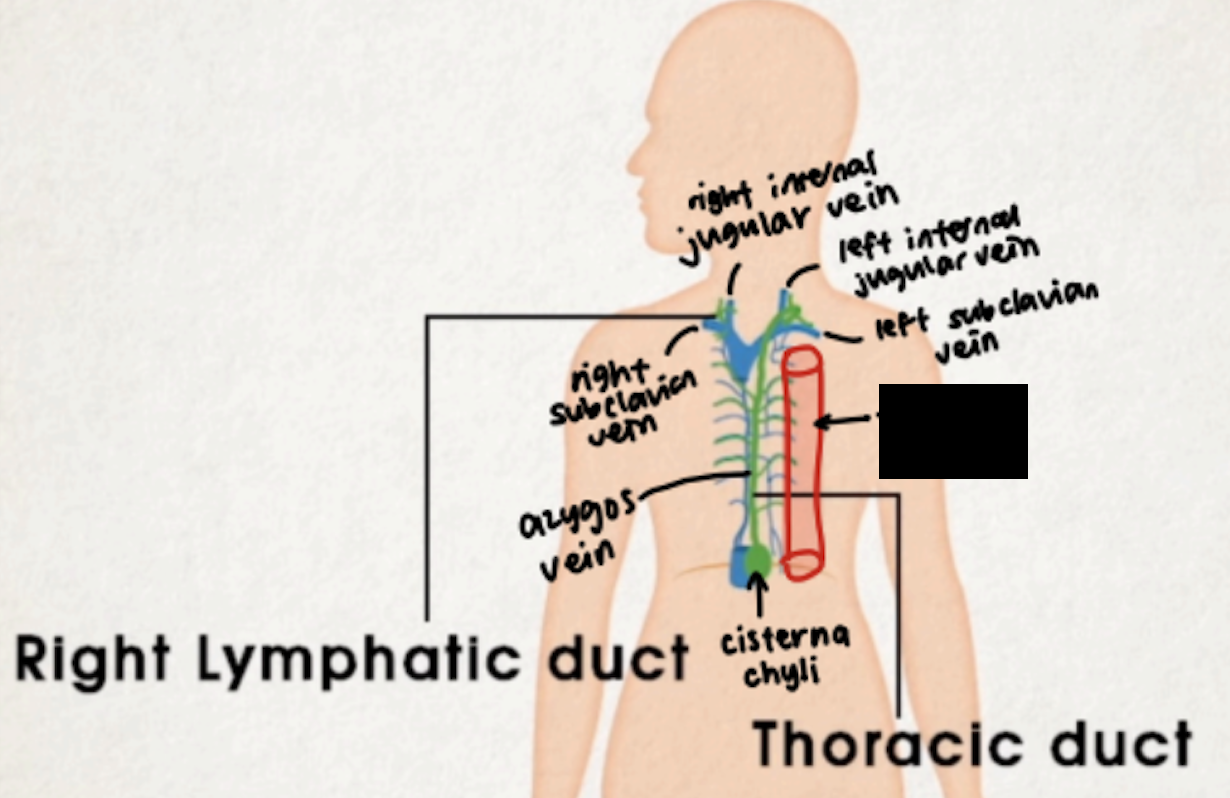
  • between thoracic aorta and argygos vein

  • drains from right lower part and all of left part of body

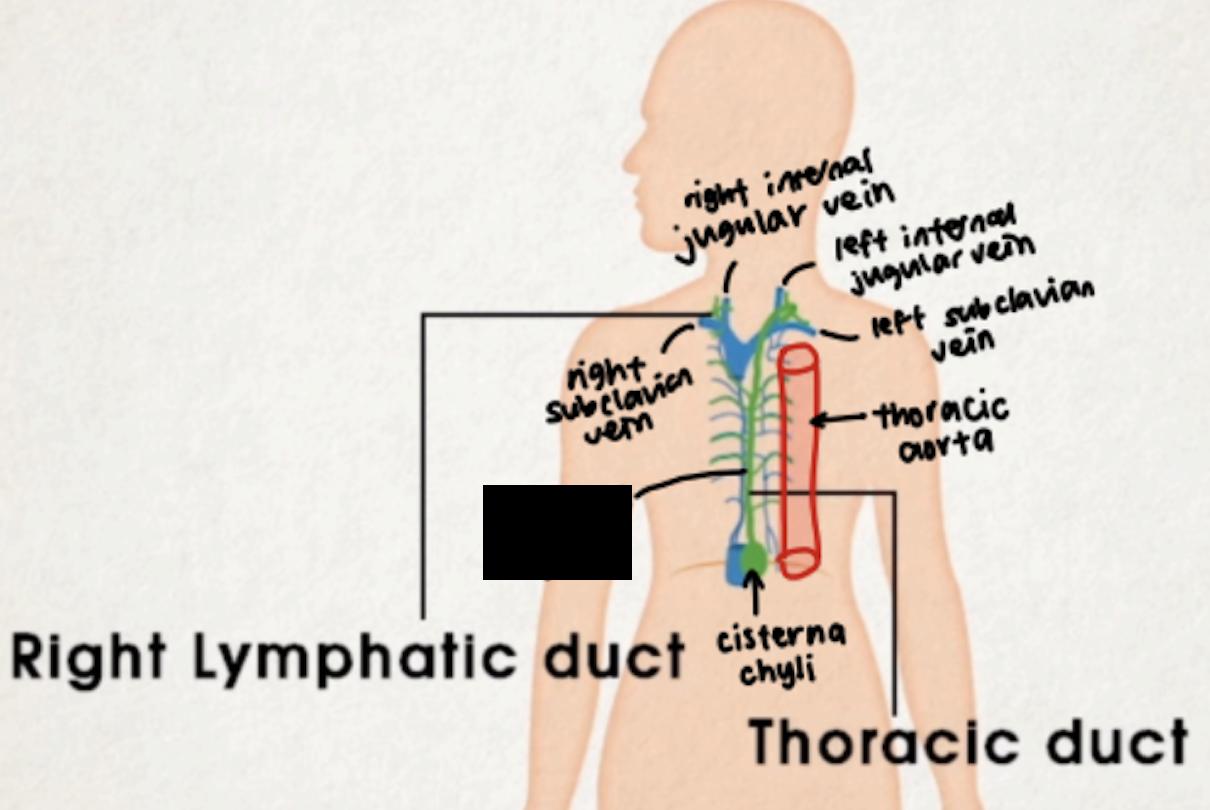
  • cisterna chyli at 1st and 2nd lumbar level
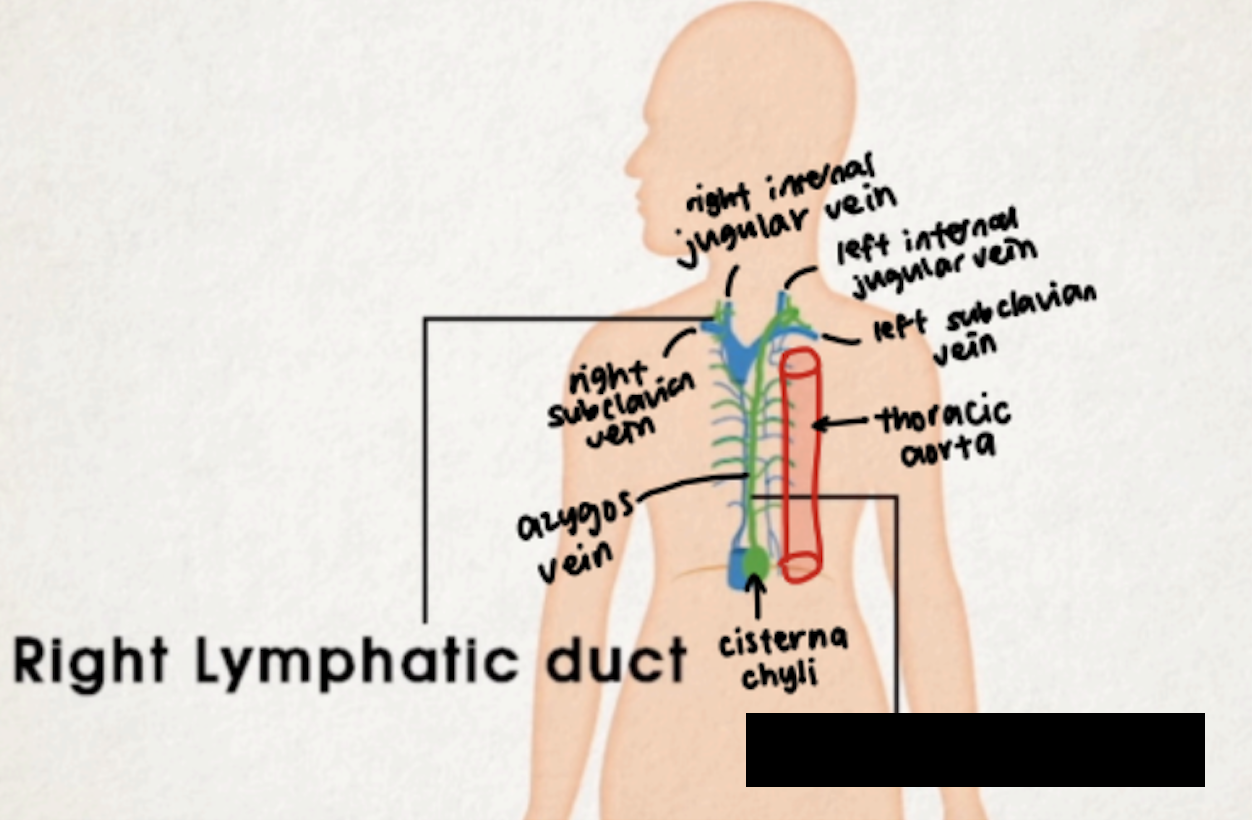
<ul><li><p>long duct</p></li><li><p>between thoracic aorta and argygos vein</p></li><li><p>drains from right lower part and all of left part of body</p></li><li><p>cisterna chyli at 1st and 2nd lumbar level</p></li></ul><p></p>
11
New cards

cisterna chyli

knowt flashcard image
12
New cards

azygos vein

knowt flashcard image
13
New cards

thoracic aorta

knowt flashcard image
14
New cards

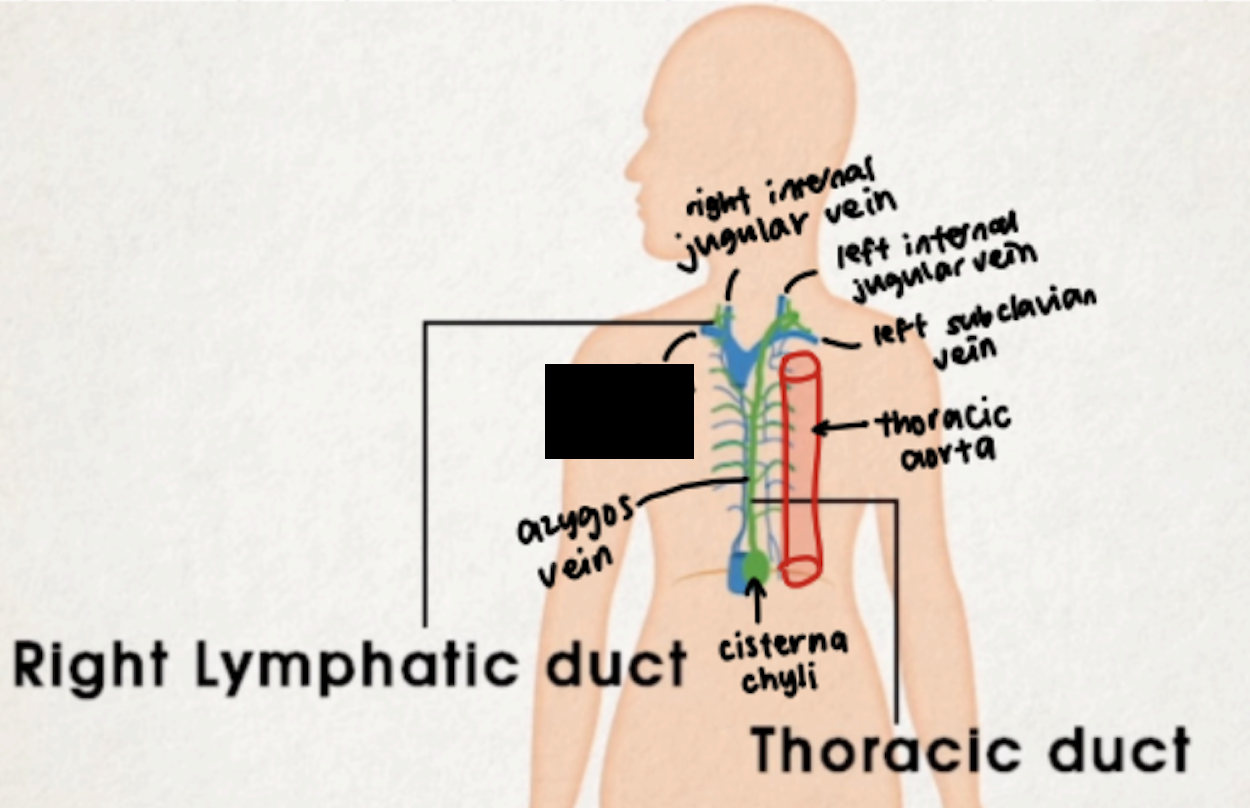
right subclavian vein

knowt flashcard image
15
New cards

left subclavian vein

knowt flashcard image
16
New cards

left internal jugular vein

knowt flashcard image
17
New cards

right internal jugular vein

knowt flashcard image
18
New cards

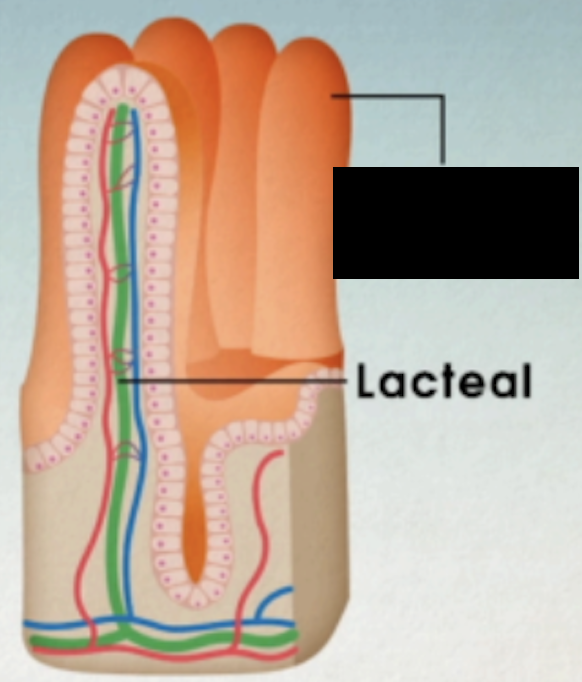
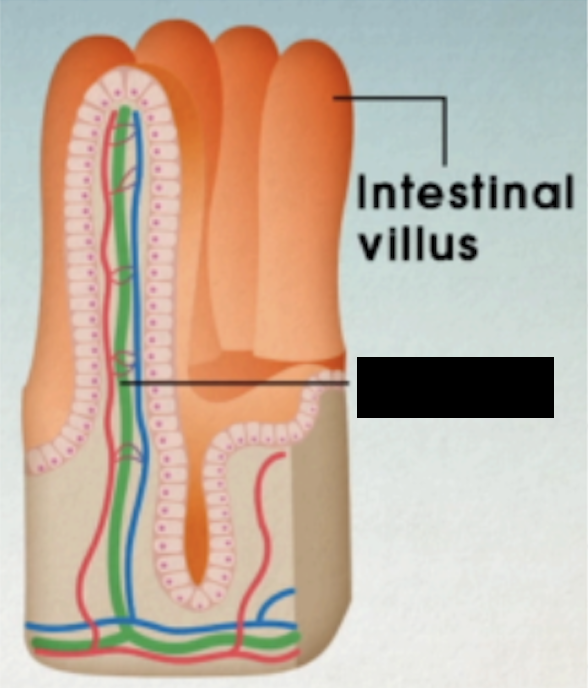
lacteals

  • specialized lymphatic vessels in small intestine

  • important for absorption/transport of lipids/chylomicrons

  • empties into nearby lymph nodes

  • if lymph in lacteals are fatty enough it turns white
<ul><li><p>specialized lymphatic vessels in small intestine</p></li><li><p>important for absorption/transport of lipids/chylomicrons</p></li><li><p>empties into nearby lymph nodes</p></li><li><p>if lymph in lacteals are fatty enough it turns white</p></li></ul><p></p>
19
New cards

intestinal villus

knowt flashcard image
20
New cards

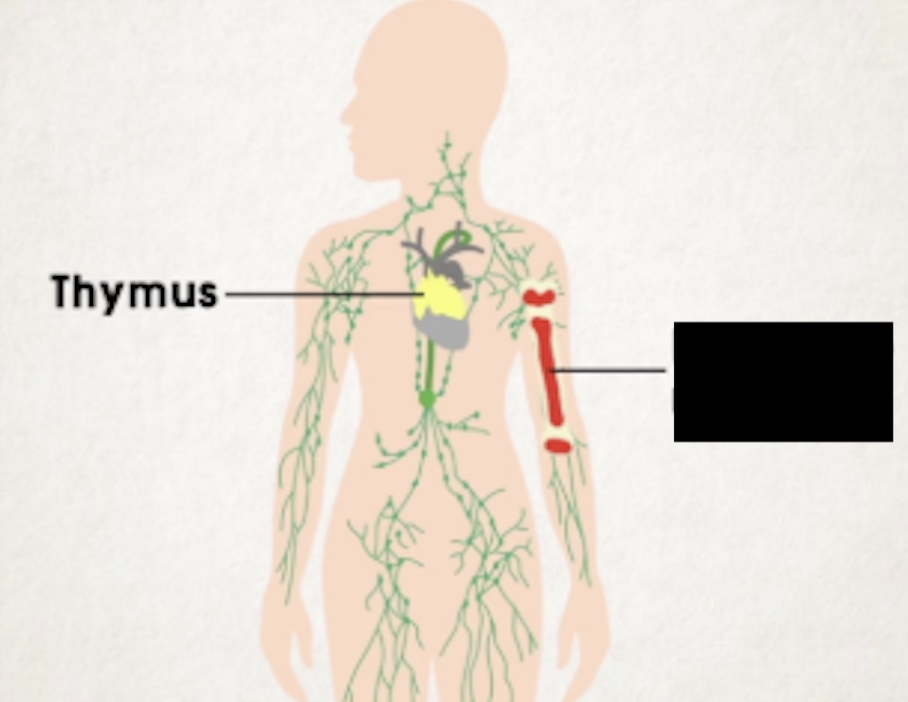
primary section

red bone marrow and thymus

maturation of lymphocytes

B cells mature in bone marrow

T cells mature in thymus

21
New cards

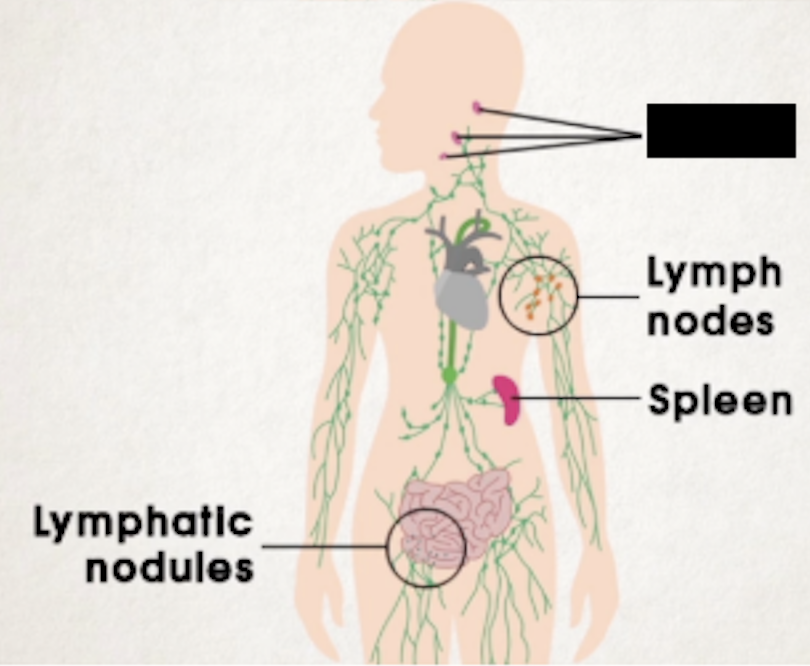
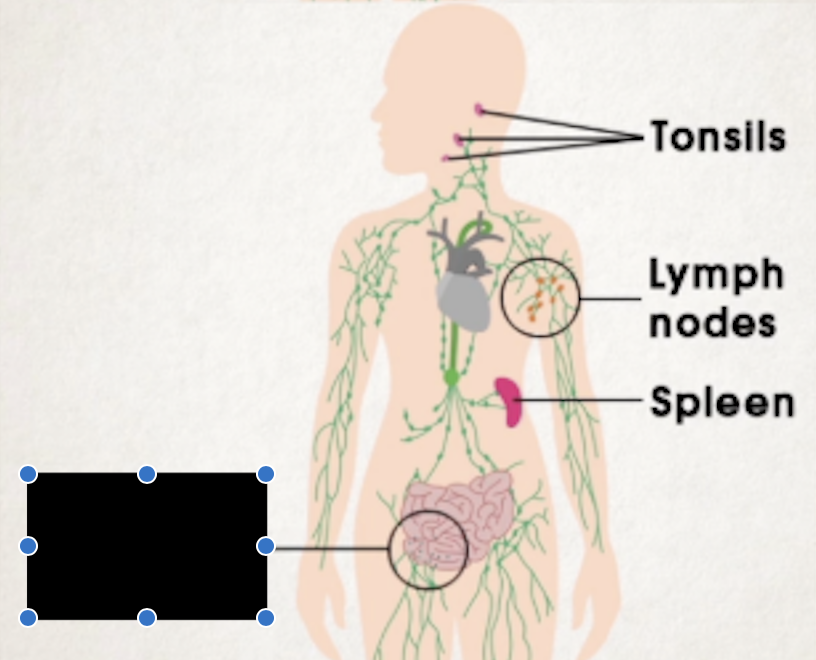
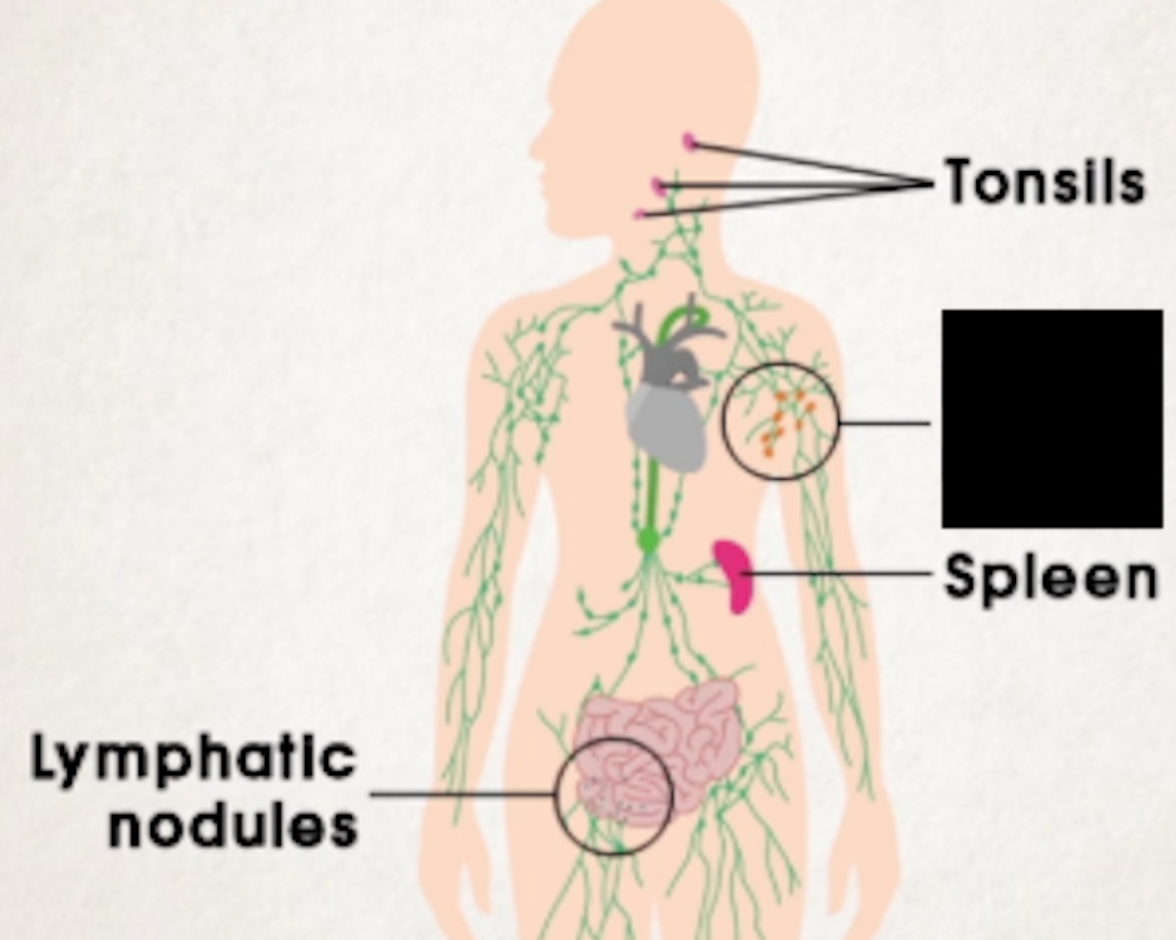
secondary section

tonsils, lymph nodes, spleen, lymphatic nodules

22
New cards

capsules

provide support and form paths for blood vessels and nerves to course through

23
New cards

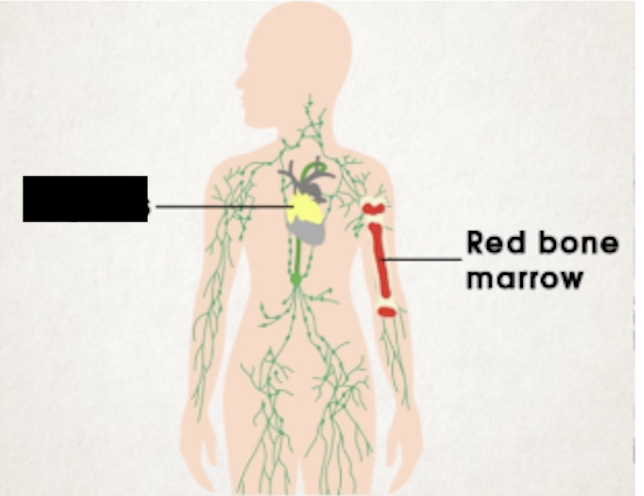
thymus

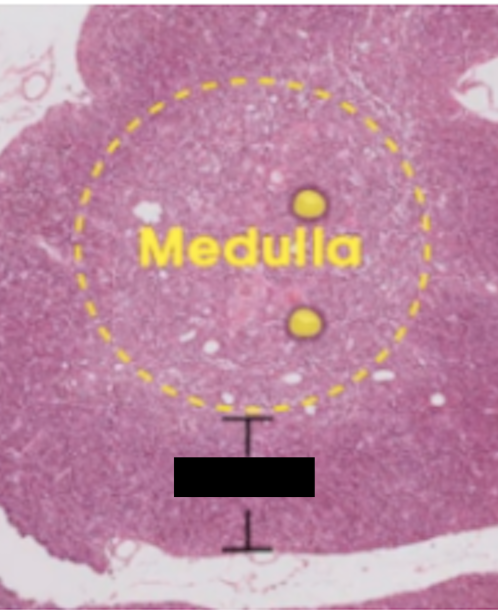
  • Bi-lobed organ with lumpy surface

  • Between sternum and upper part of heart

  • T cells that are produced in bone marrow are developed into mature T cells in thymus

    • Immature T cells populate outer cortex (densely packed) and move to inner medulla to mature

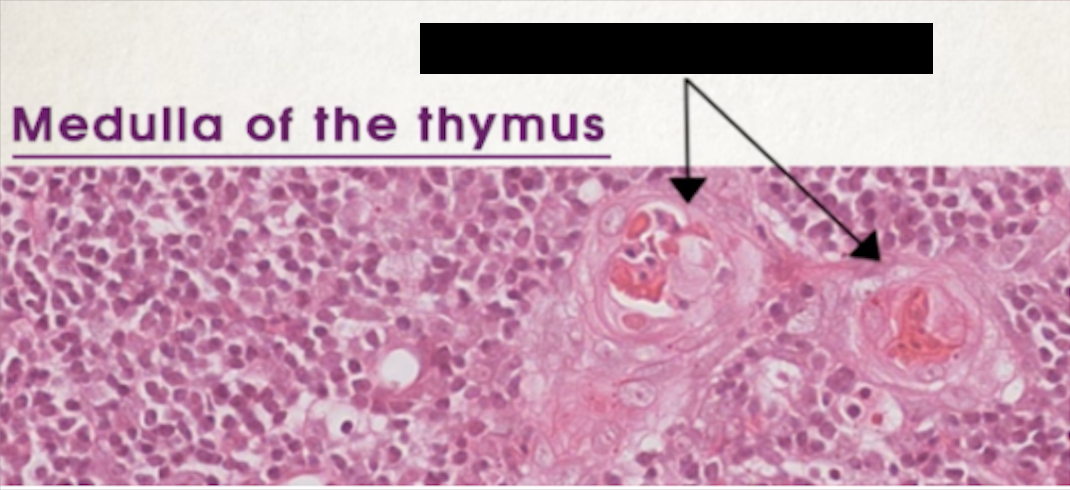
      • In medulla there are Hassall’s corpuscles, formed by flattened epithelial cells

    • Mature T cells continue to travel via blood to other lymphatic organs

  • Active in youth and degenerates slowly after puberty

    • Fat accumulates inside and turns yellow at old age
<ul><li><p><span>Bi-lobed organ with lumpy surface</span></p></li><li><p><span>Between sternum and upper part of heart</span></p></li><li><p><span>T cells that are produced in bone marrow are developed into mature T cells in thymus</span></p><ul><li><p><span>Immature T cells populate outer cortex (densely packed) and move to inner medulla to mature</span></p><ul><li><p><span>In medulla there are Hassall’s corpuscles, formed by flattened epithelial cells</span></p></li></ul></li><li><p><span>Mature T cells continue to travel via blood to other lymphatic organs</span></p></li></ul></li><li><p><span>Active in youth and degenerates slowly after puberty</span></p><ul><li><p><span>Fat accumulates inside and turns yellow at old age</span></p></li></ul></li></ul><p></p>
24
New cards

red bone marrow

knowt flashcard image
25
New cards

tonsils

knowt flashcard image
26
New cards

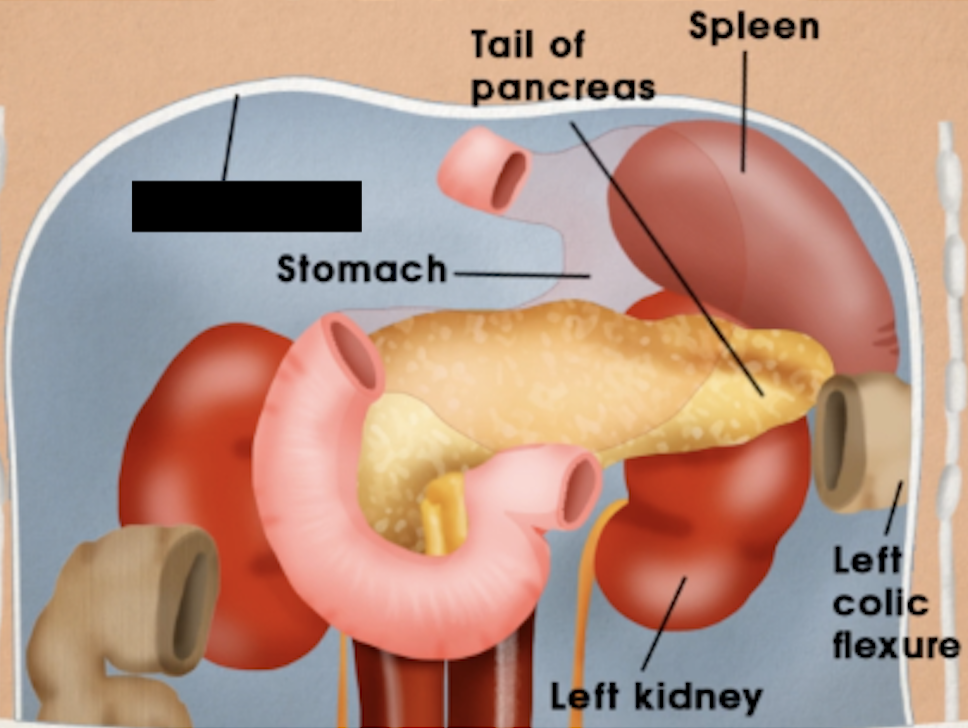
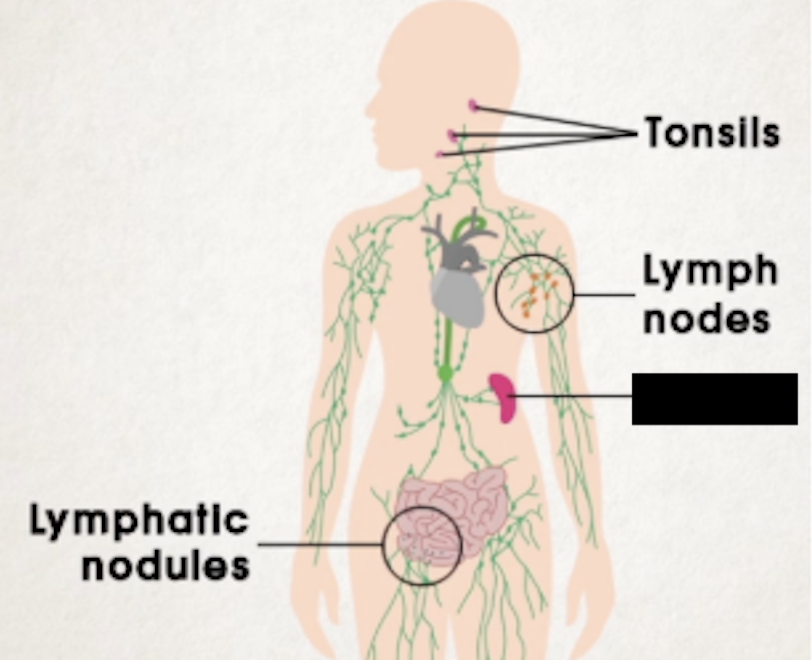
spleen

  • Largest lymphatic organ in the body

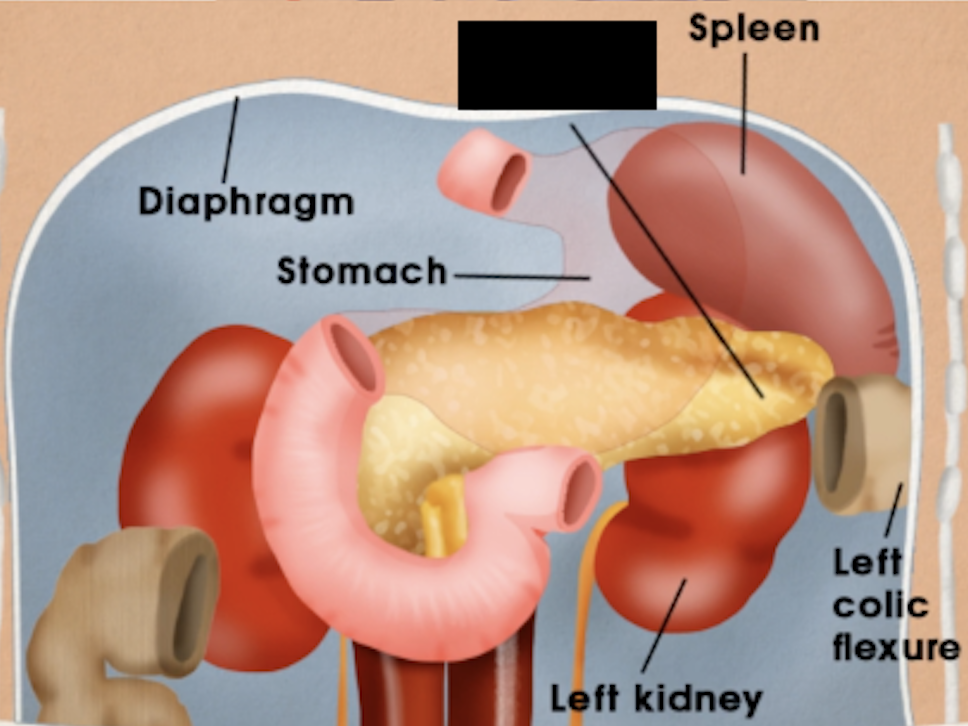
  • In upper left abdomen close to diaphragm

  • Smooth and convex, dark-purplish color

  • Holds a lot of blood that comes from celiac trunk of aorta to splenic artery to spleen

  • Where aged, damaged, and broken RBC are broken down and recycled

  • Blood reserve, can pump up to 100mL into circulation
<ul><li><p><span>Largest lymphatic organ in the body</span></p></li><li><p><span>In upper left abdomen close to diaphragm</span></p></li><li><p><span>Smooth and convex, dark-purplish color</span></p></li><li><p><span>Holds a lot of blood that comes from celiac trunk of aorta to splenic artery to spleen</span></p></li><li><p><span>Where aged, damaged, and broken RBC are broken down and recycled</span></p></li><li><p><span>Blood reserve, can pump up to 100mL into circulation</span></p></li></ul><p></p>
27
New cards

lymphatic nodules

knowt flashcard image
28
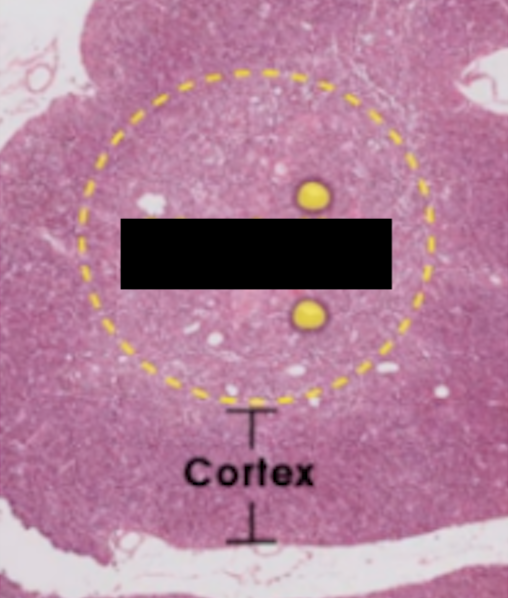
New cards

medulla

knowt flashcard image
29
New cards

Thymus cortex

knowt flashcard image
30
New cards

hassall’s corpuscles

knowt flashcard image
31
New cards

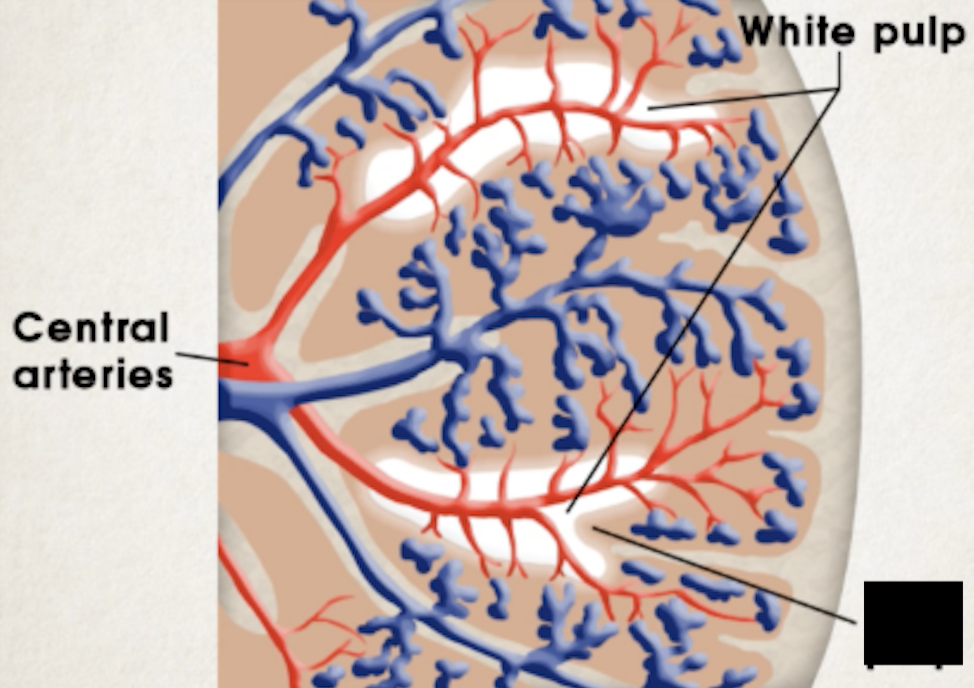
red pulp

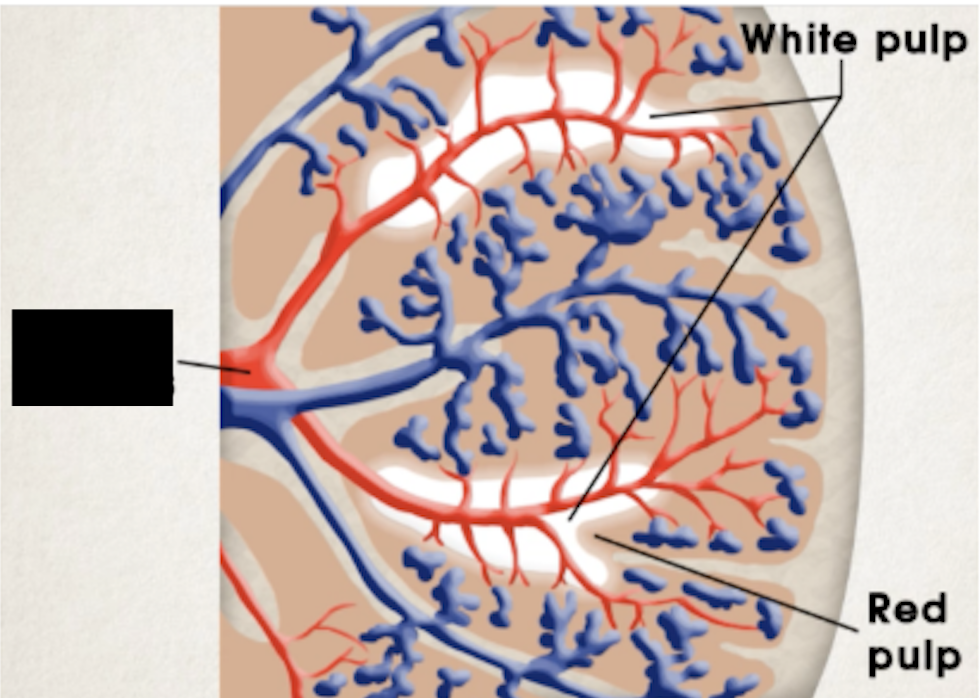
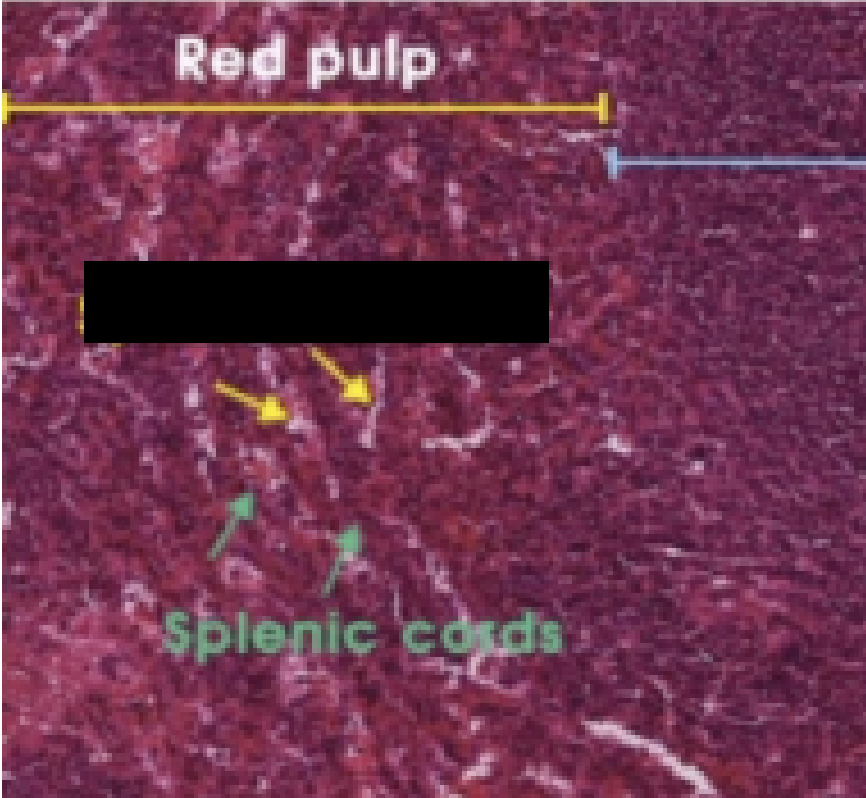
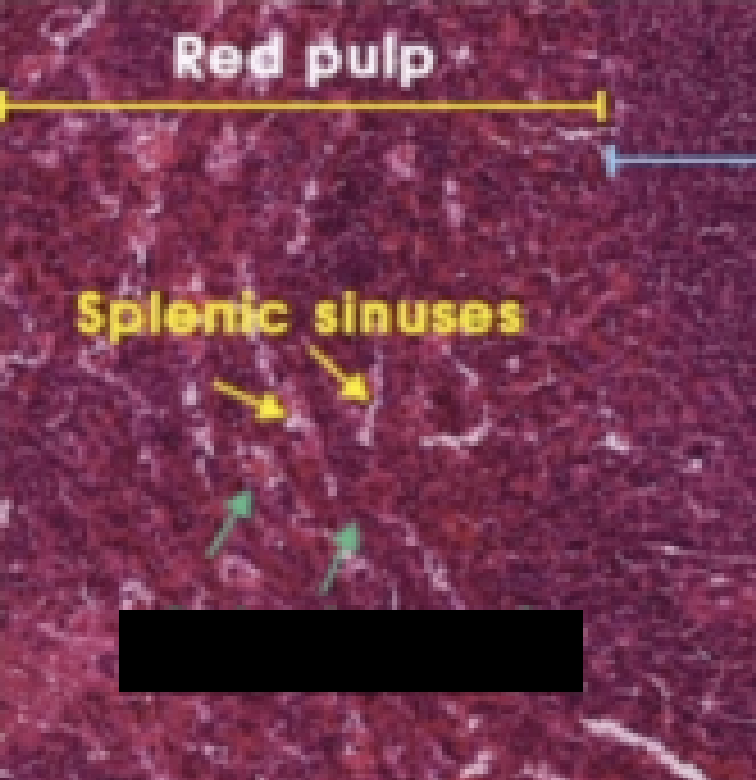
  • Blood-filled splenic sinuses and cords

  • Houses macrophages, lymphocytes, plasma cells, and others
<ul><li><p><span>Blood-filled splenic sinuses and cords</span></p></li><li><p><span>Houses macrophages, lymphocytes, plasma cells, and others</span></p></li></ul><p></p>
32
New cards

white pulp

  • Lymphoid tissue formed by clumps of lymphocytes around central arteries (branches of splenic artery)

  • Allow for rapid immune response against antigens in blood transported to spleen
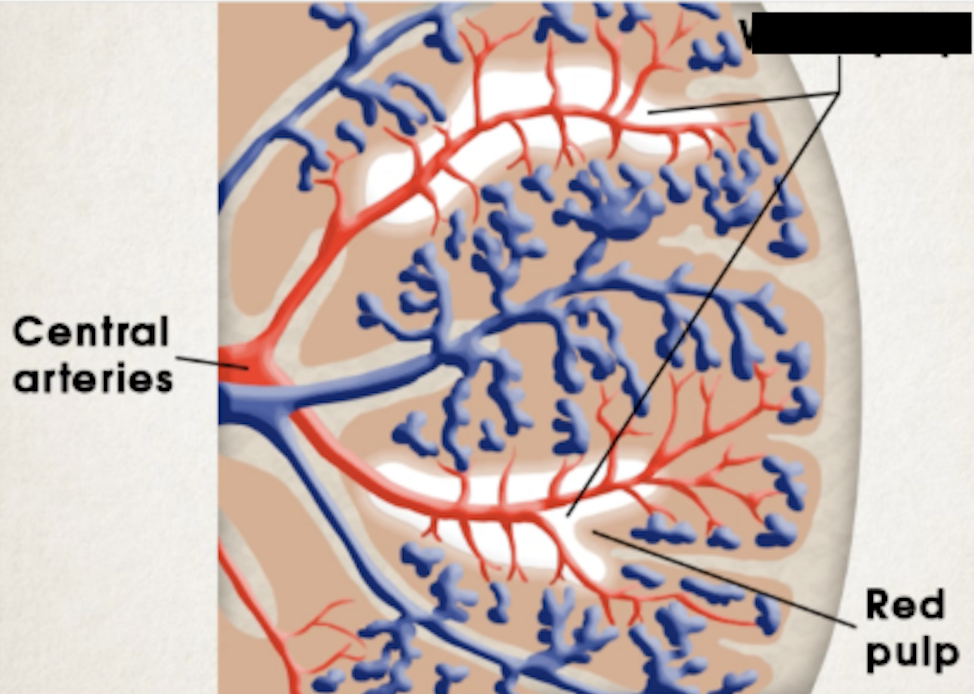
<ul><li><p><span>Lymphoid tissue formed by clumps of lymphocytes around central arteries (branches of splenic artery)</span></p></li><li><p><span>Allow for rapid immune response against antigens in blood transported to spleen</span></p></li></ul><p></p>
33
New cards

central ateries

knowt flashcard image
34
New cards

tail of pancreas

knowt flashcard image
35
New cards

diaphragm

knowt flashcard image
36
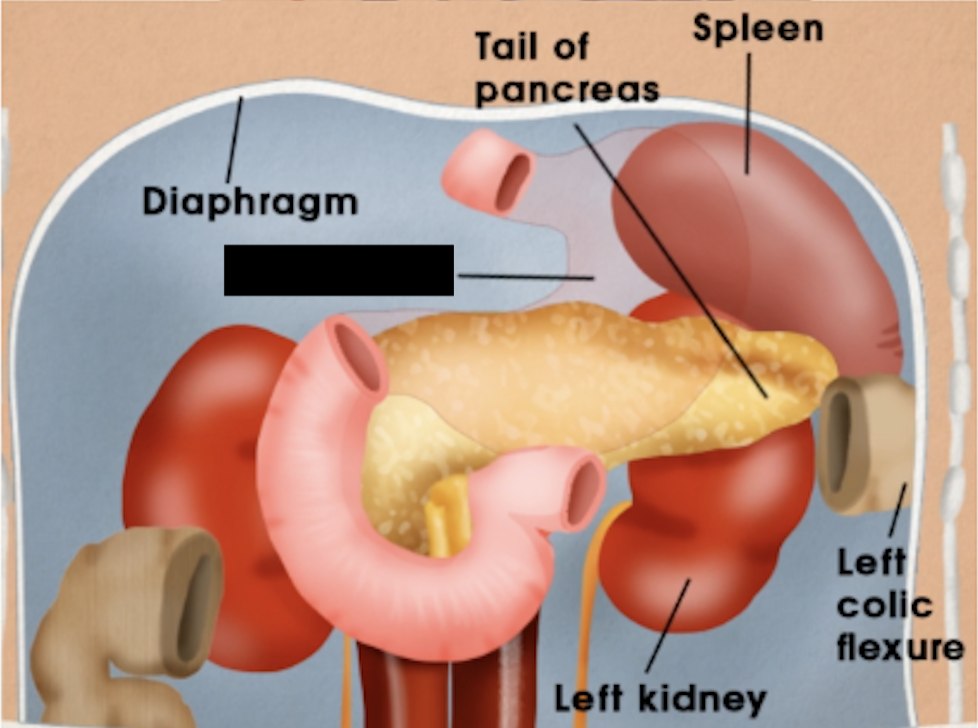
New cards

stomach

knowt flashcard image
37
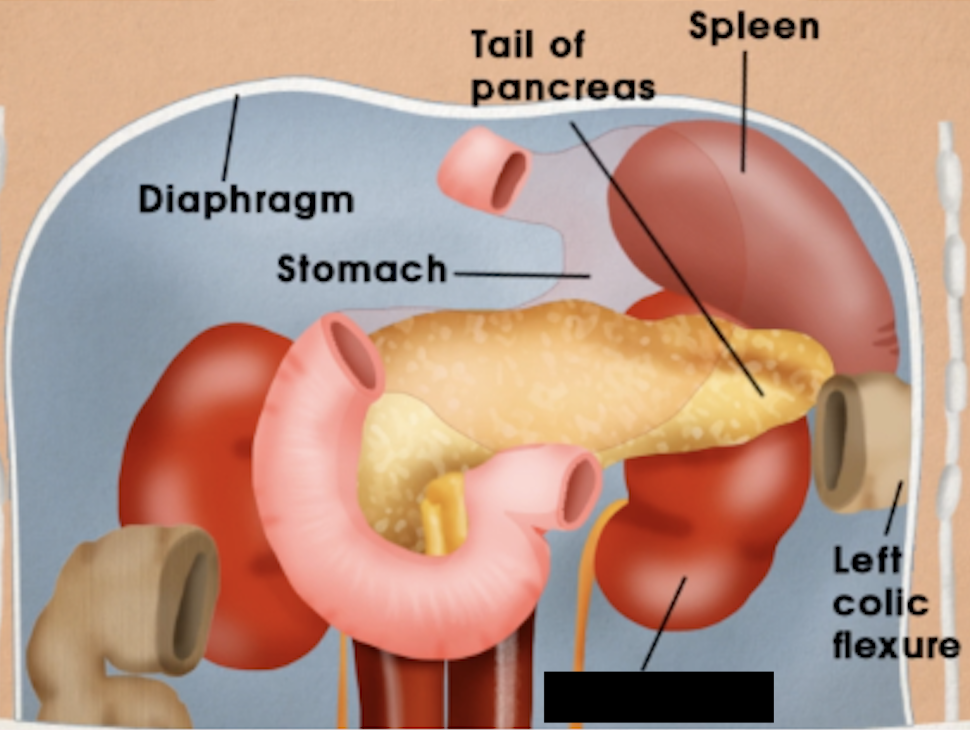
New cards

left kidney

knowt flashcard image
38
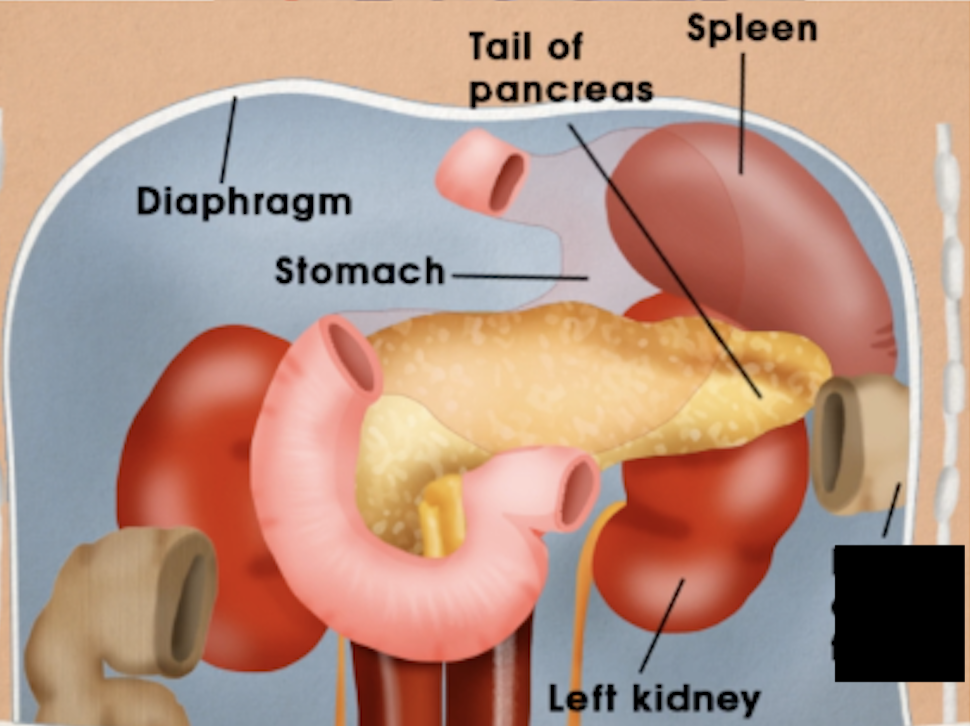
New cards

left colic fixture

knowt flashcard image
39
New cards

splenic sinuses

knowt flashcard image
40
New cards

splenic cords

knowt flashcard image
41
New cards

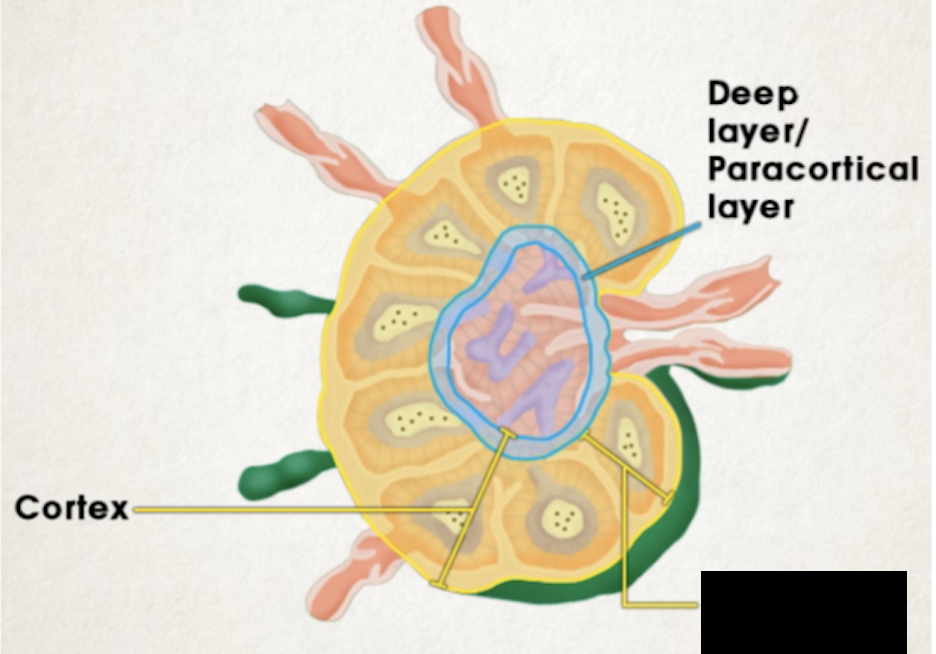
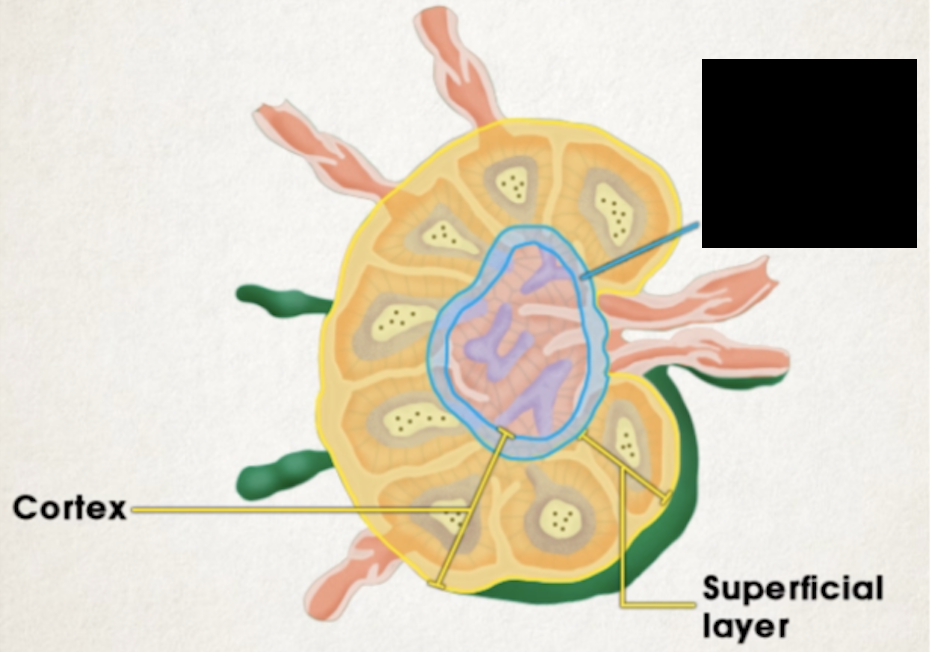
Lymph node cortex

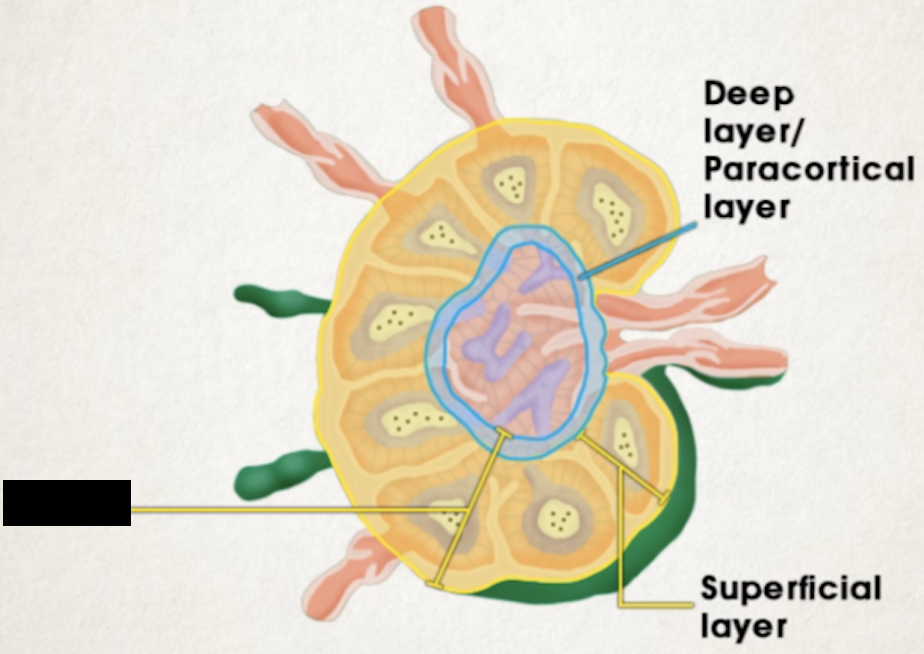
  • has superficial and deep (paracortical) layers

    • Deep layer contains mostly T cells

<ul><li><p><span>has superficial and deep (paracortical) layers</span></p><ul><li><p><span>Deep layer contains mostly T cells</span></p></li></ul></li></ul><p></p>
42
New cards

Lymphatic nodule

contain B-cells and macrophages
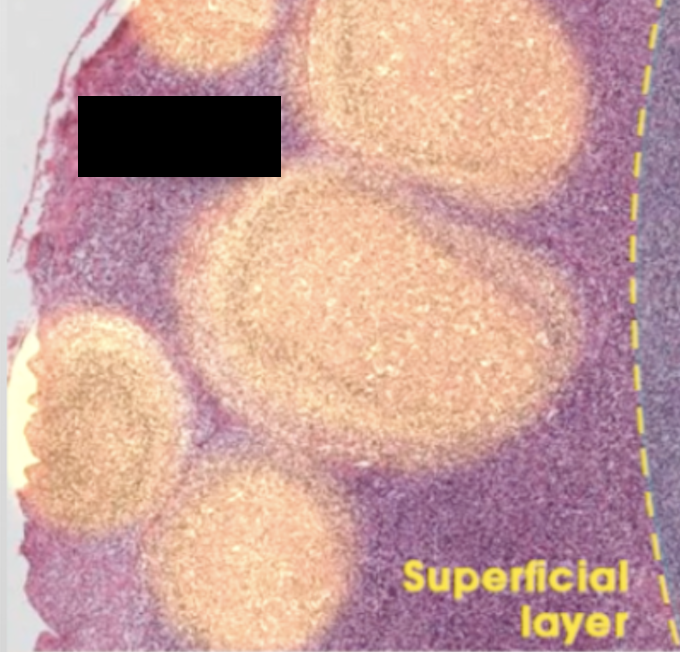
<p>contain B-cells and macrophages</p>
43
New cards

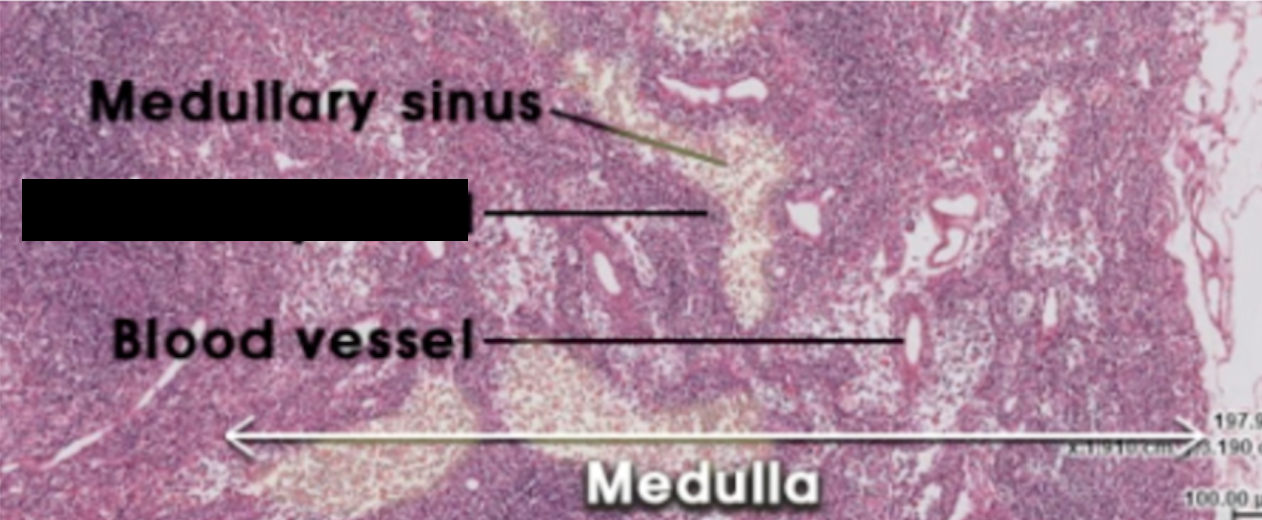
Lymph node medulla

has cords of lymphatic tissue containing B-cells, macrophages, antigen presenting cells, and plasma cells
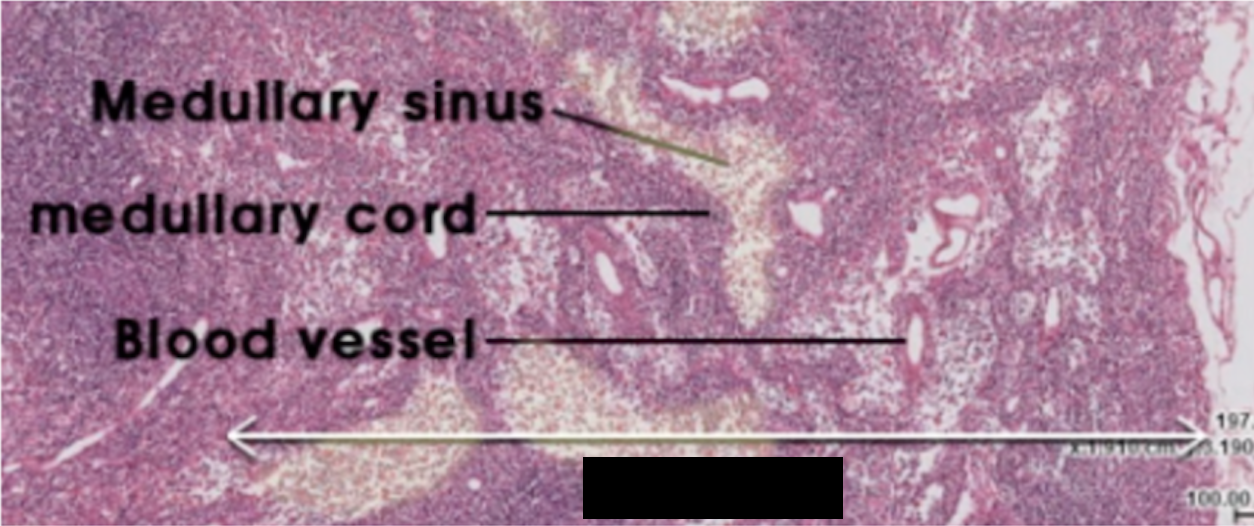
<p><span>has cords of lymphatic tissue containing B-cells, macrophages, antigen presenting cells, and plasma cells</span></p>
44
New cards

Trabeculae:

supportive fibers between nodules
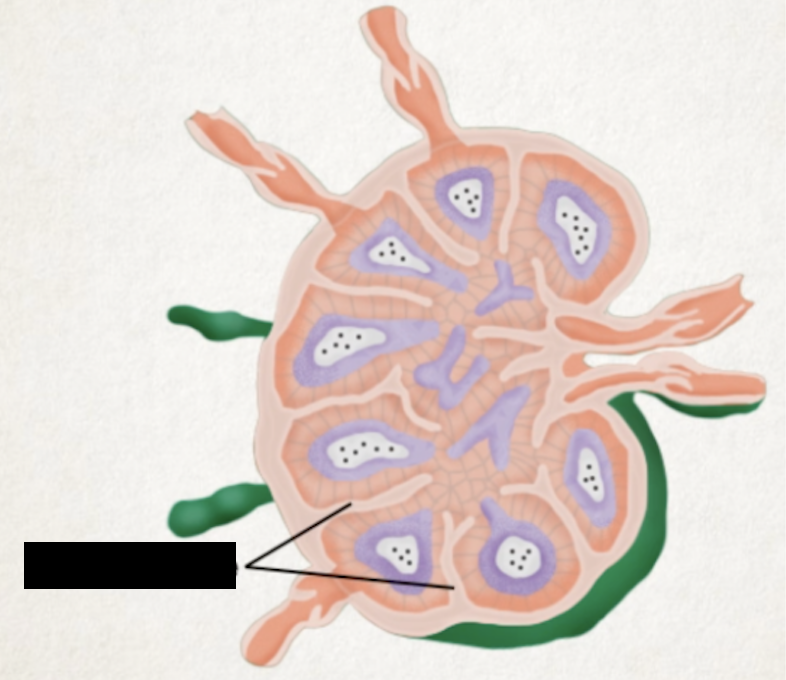
<p>supportive fibers between nodules</p>
45
New cards

Reticular meshwork

composed of reticular cells and fibers

46
New cards

Lymph node medullary cord

knowt flashcard image
47
New cards

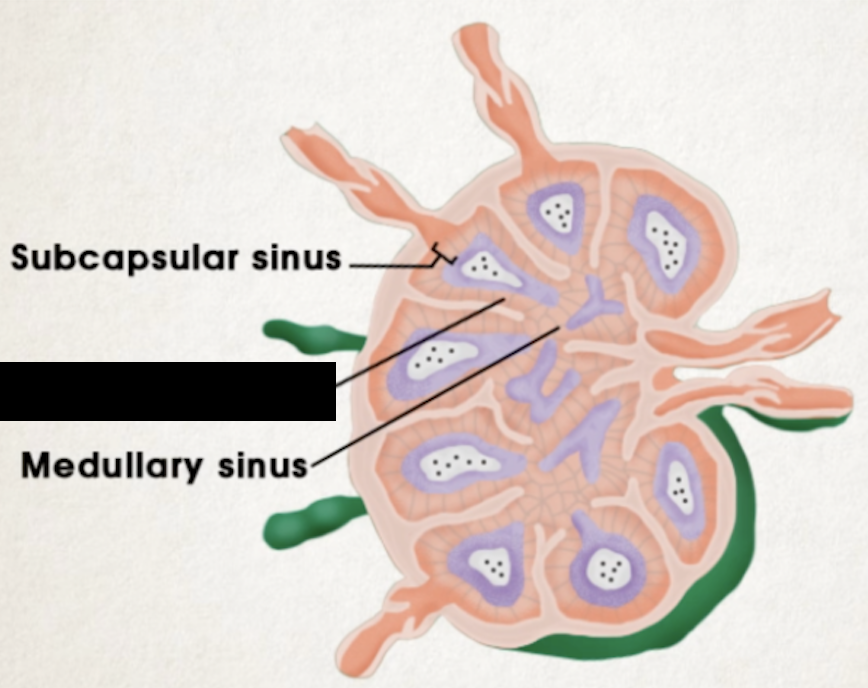
Subcapsular sinus

knowt flashcard image
48
New cards

Trabecular sinus

knowt flashcard image
49
New cards

Lymph node medullary sinus

knowt flashcard image
50
New cards

Superficial layer

knowt flashcard image
51
New cards

Deep layer

knowt flashcard image
52
New cards

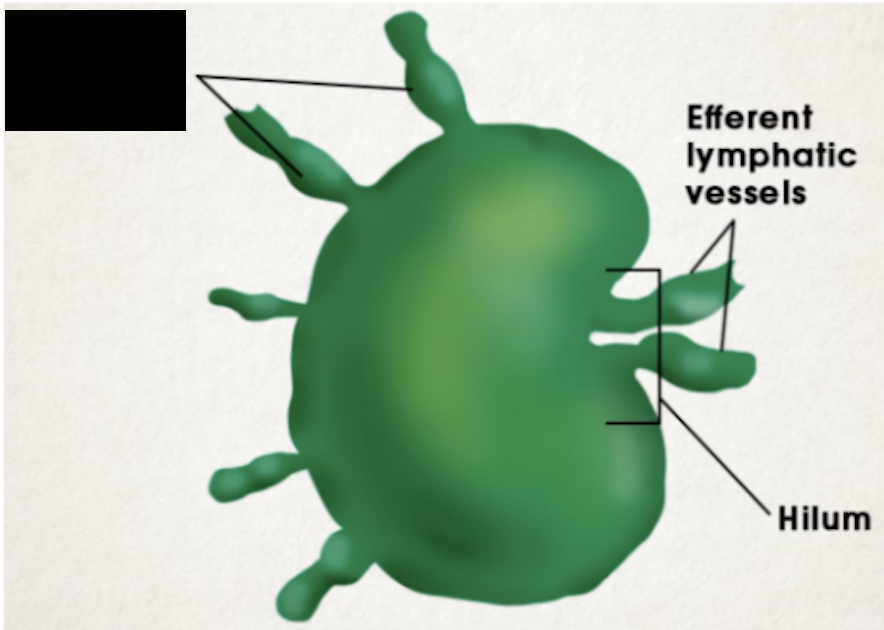
Afferent lymphatic vessels

knowt flashcard image
53
New cards

Efferent lymphatic vessels

knowt flashcard image
54
New cards

hilum

knowt flashcard image
55
New cards

macrophages

can expose fragment of antigen on surface

release helper T-cells which will trigger B-cells (via interleukin-2) to divide into plasma and memory B-cells

56
New cards

plasma cells

produce antibodies that bind to antigens, attracting macrophages to engulf them

57
New cards

Helper T-cells

trigger cytotoxic T-cells to attack antigen cells directly by creating pores, causing apoptosis

58
New cards

Pharyngeal tonsil/adenoid

roof of pharynx posterior to nasal cavity
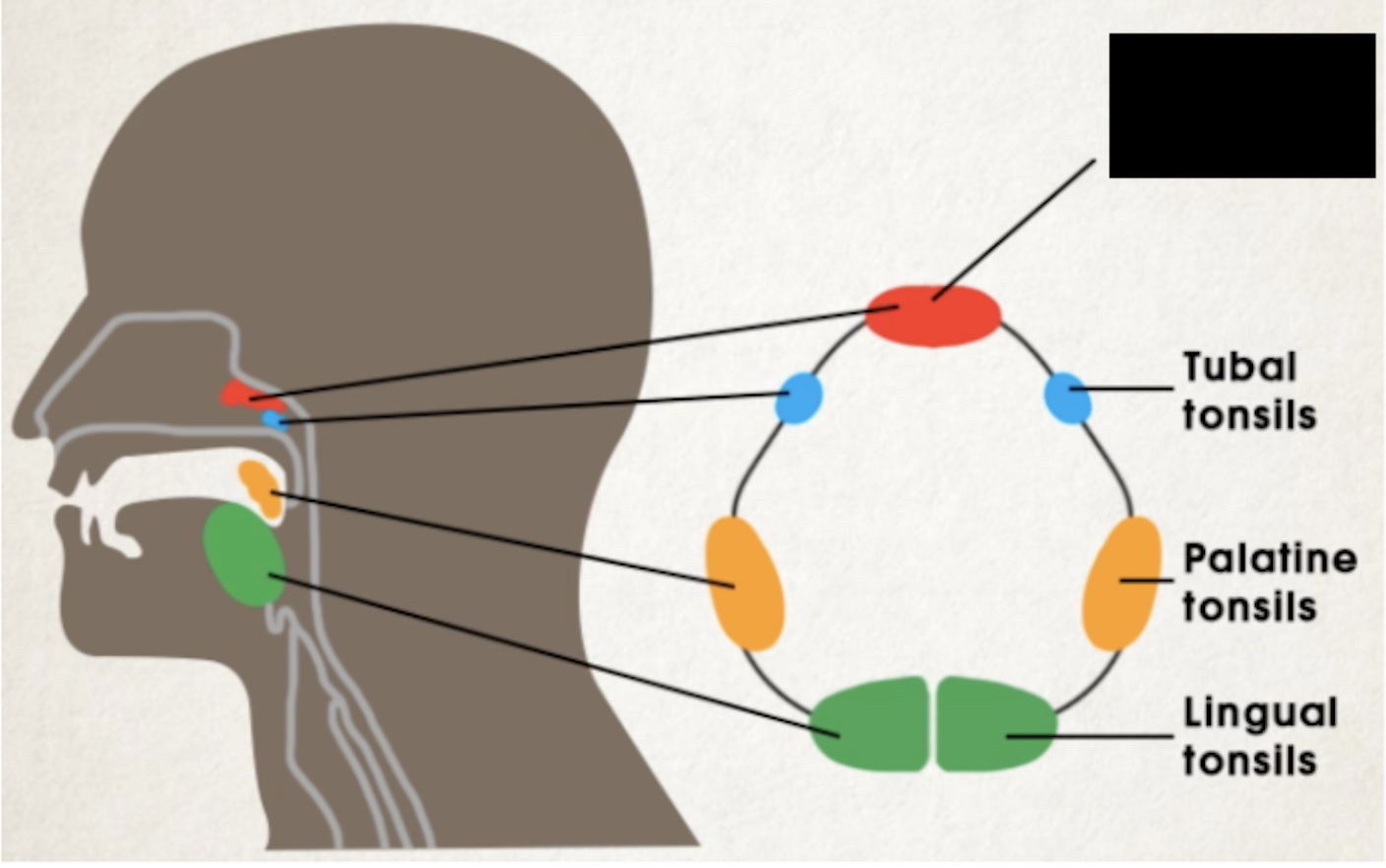
<p><span>roof of pharynx posterior to nasal cavity</span></p>
59
New cards

Tubal tonsils

slightly below adenoid, behind 2 eustachian tube openings
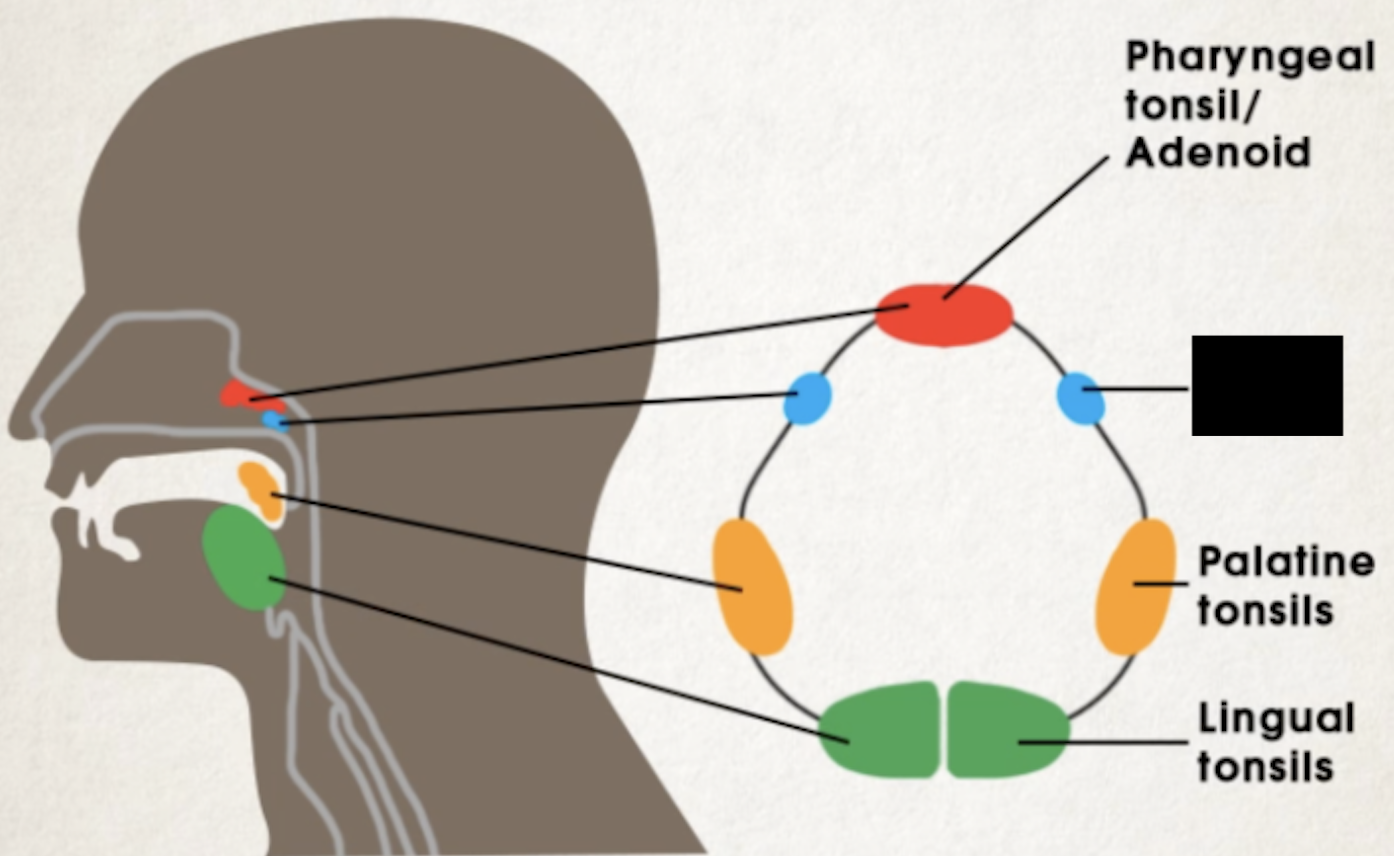
<p>slightly below adenoid, behind 2 eustachian tube openings</p>
60
New cards

Palatine tonsils

  • lie on the lateral pharyngeal wall directly behind mouth and palate

  • Largest and most often infected in childhood
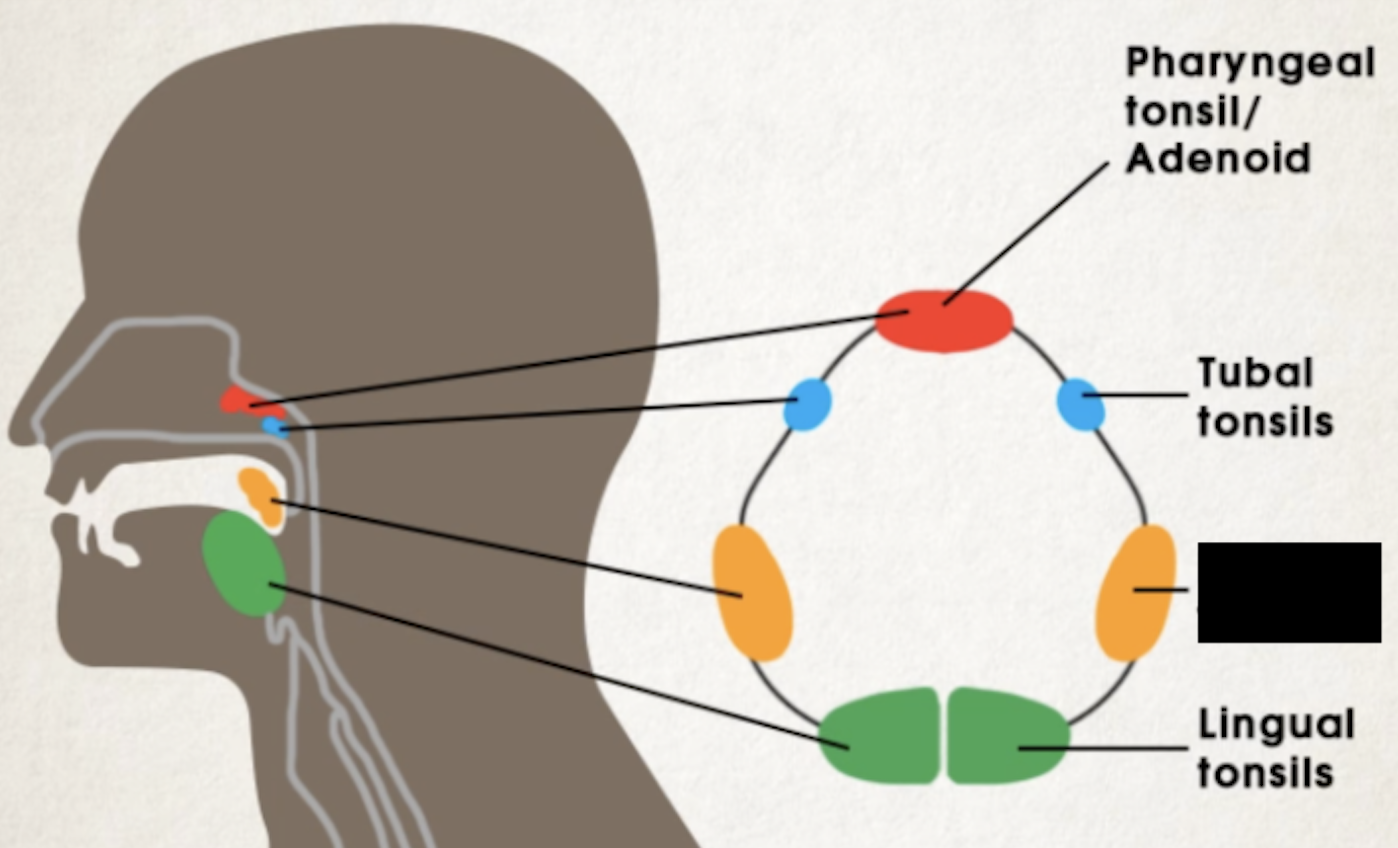
<ul><li><p>lie on the lateral pharyngeal wall directly behind mouth and palate</p></li><li><p>Largest and most often infected in childhood</p></li></ul><p></p>
61
New cards

Tonsillectomy

surgical removal of tonsils

62
New cards

Lingual tonsils

posterior surface of the tongue

<p>posterior surface of the tongue</p>
63
New cards

Tonsils

  • Group of lymphoid organs in pharyngeal region at top of the throat

  • mucosal swellings deep to the epithelium of pharyngeal wall

  • Inside swellings are spherical lymphoid nodules with lymphocytes

64
New cards

Tonsillar crypts

help trap bacteria and foreign matter, which activates the lymphocytes
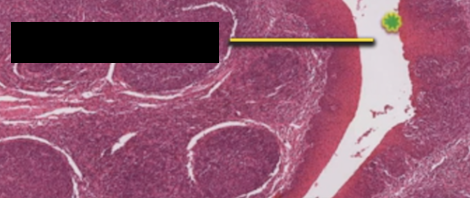
<p>help trap bacteria and foreign matter, which activates the lymphocytes</p>
65
New cards

lymphoid nodule

  • High concentration can be found in ileum of small intestine and appendix because small intestine always attacked by bacteria in swallowed food

  • generate a diverse range of memory lymphocytes from sampling different antigens, important in immune response

<ul><li><p><span>High concentration can be found in ileum of small intestine and appendix because small intestine always attacked by bacteria in swallowed food</span></p></li><li><p><span>generate a diverse range of memory lymphocytes from sampling different antigens, important in immune response</span></p></li></ul><p></p>
66
New cards

Peyer’s patches

lymphatic nodules aggregated in ileum, large densely stained spherical structures

67
New cards

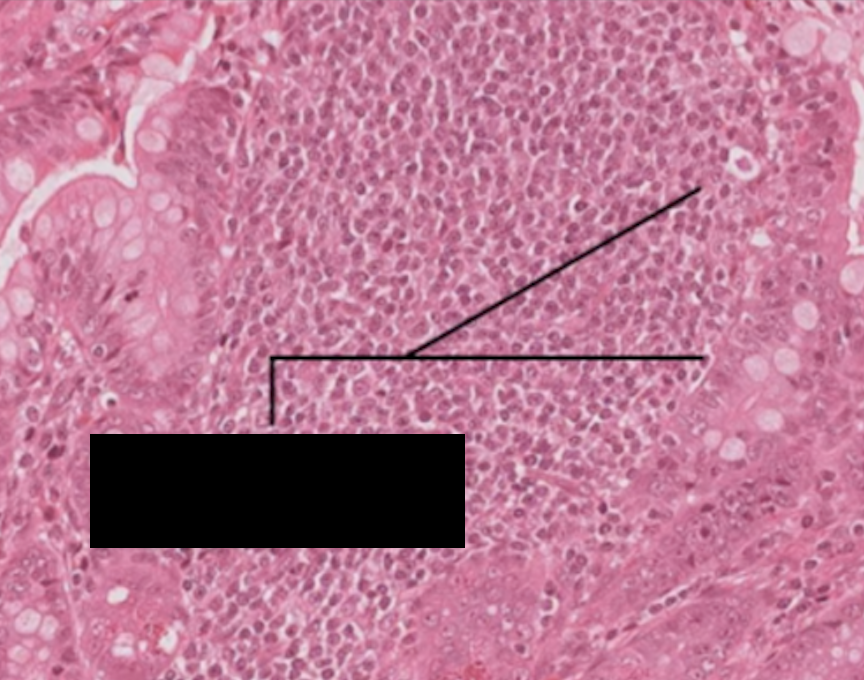
lymphocyte nuclei

knowt flashcard image
68
New cards

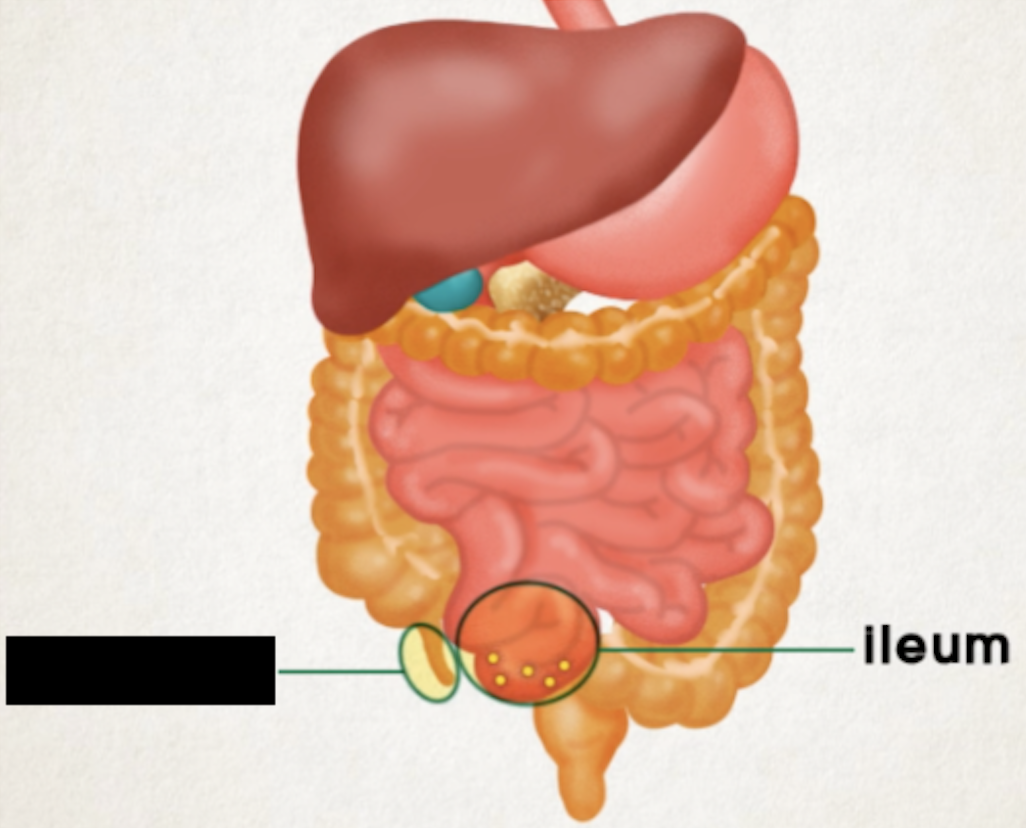
appendix

knowt flashcard image
69
New cards

ileum

knowt flashcard image
70
New cards
71
New cards
72
New cards
73
New cards
74
New cards
75
New cards
76
New cards
77
New cards
78
New cards
79
New cards
80
New cards
81
New cards
82
New cards