Economics
 Call Kai
 Learn
Learn Practice Test
 Spaced Repetition
 Match
Match Flashcards
 Knowt Play
1/128

There's no tags or description
Looks like no tags are added yet.
Name | Mastery | Learn | Test | Matching | Spaced | Call with Kai |
|---|
No analytics yet
Send a link to your students to track their progress
129 Terms
principle agent problem
Arises from conflict between the objectives of the principals (owner(s)) and their agents (managers) who take decisions on their behalf.
Bounded Rationality
a situation in which firms ability to take rational decisions is limited by a lack of information or an inability to interpret the information that is available.
Satisficing
Choosing a level that is acceptable, although not necessarily the maximising.
CSR (Corporate Social Responsibility)
actions taken by a firm to show commitment to public interest
Static efficiency
efficiency at a particular point in time
allocative efficiency
P=MC when resources are distributed to produce the combination of goods and services most desired by society and maximising total economic welfare.
productive efficiency
P=minimum AC=mc
production at lowest possible ac
Dynamic efficiency
Efficiency over time through innovaiton, investment and r and d
x-inefficiency
firms do not operate at minimum costs
profit max
MC=MR
Revenue Max
MR=0
Sales/Output max
AR=AC
Profit satisficing
managers aim for a satisfactory amount of profit under max
Law of diminishing returns
If a firm increases one variable factor of production while others remain fixed, the marginal returns will eventually decrease.
Marginal Physical Product
The additional output produced by an additional unit of labour input
External economies of scale
The cost benefits that all firms in the industry can enjoy when the industry expands
Normal profit
profit needed for firm to stay in the market in the long-run
supernormal profit
above normal profit
Accounting profit
profit based on explicit costs incurred excluding OC
shut-down price
the price below which a firm will choose to exit the market because it is not able to cover its fixed costs
Barriers to entry
Characteristics of an industry or market that make it more difficult for new firms to compete.
advantages and disadvantages of a monopoly
Advantages- Dynamic efficiency and EOS
Disadvantages- Allocative innefiency, x-innefficiency, consumer choice limited
Reasons why monopolies arise
The patent system - originally designed as an incentive for firms to innovate
Competitive monopolies - arise from affective marketing, acquisition and merging of rival firms, potentially sales maximisation etc
Natural monopoly - high sunk costs, high economies of scale
natural monopoly
arise in industry where there are such substantial EOS that only one firm is viable in the market
advantages for the market that it can due to high EOS produce at a lower cost and potentially pass on in form of lower prices to consumer
competition policy
used to prevent firms from abusing market dominance.
CMA competition markets authority
Regulation can include:
setting limits on the rate prices can rise(phased out as encourages dangerous cost cutting - harmful for environment, and also static efficiency not dynamic)
preventing merge/acquisition of firms
Output/ quality controls - especially for water companies etc
regulatory capture
when regulator acts in industries best interests rather than regulating it
Types of Price Discrimination
- First/perfect degree price discrimination - where a monopoly firm is able to charge each consumer a different price
- Second degree price discrimination - Prices vary based on the quantity consumed or the version of the product.
- Third degree price discrimination - where firm is able to charge different groups of consumers different price for the same product
conditions for price discrimination
market power
information about consumers and their willingness to pay
limited ability to resell the product
monopolistic competition
a market structure in which many companies sell products that are similar but not identical.
Often defined as --> A market that shares some characteristics of a monopoly and some of perfect competition
downward sloping demand curve - firm has some control over the price sold at each output
product differentiation
freedom of entry
many firms
no dominant firms
Long run AC shifts up to become a tangent to AR curve due to increased advertising costs due to new firms entering the market
oligopoly
few dominant sellers where each firm takes account of the behaviour/ likely behaviour of other rival firms in the industry.
non-price competition
Strategies other than price to attract customers. - build brand loyalty or quality design, rather than price
Kinked Demand Curve
a perceived demand curve that arises when competing oligopoly firms commit to match price cuts, but not price increases
game theory
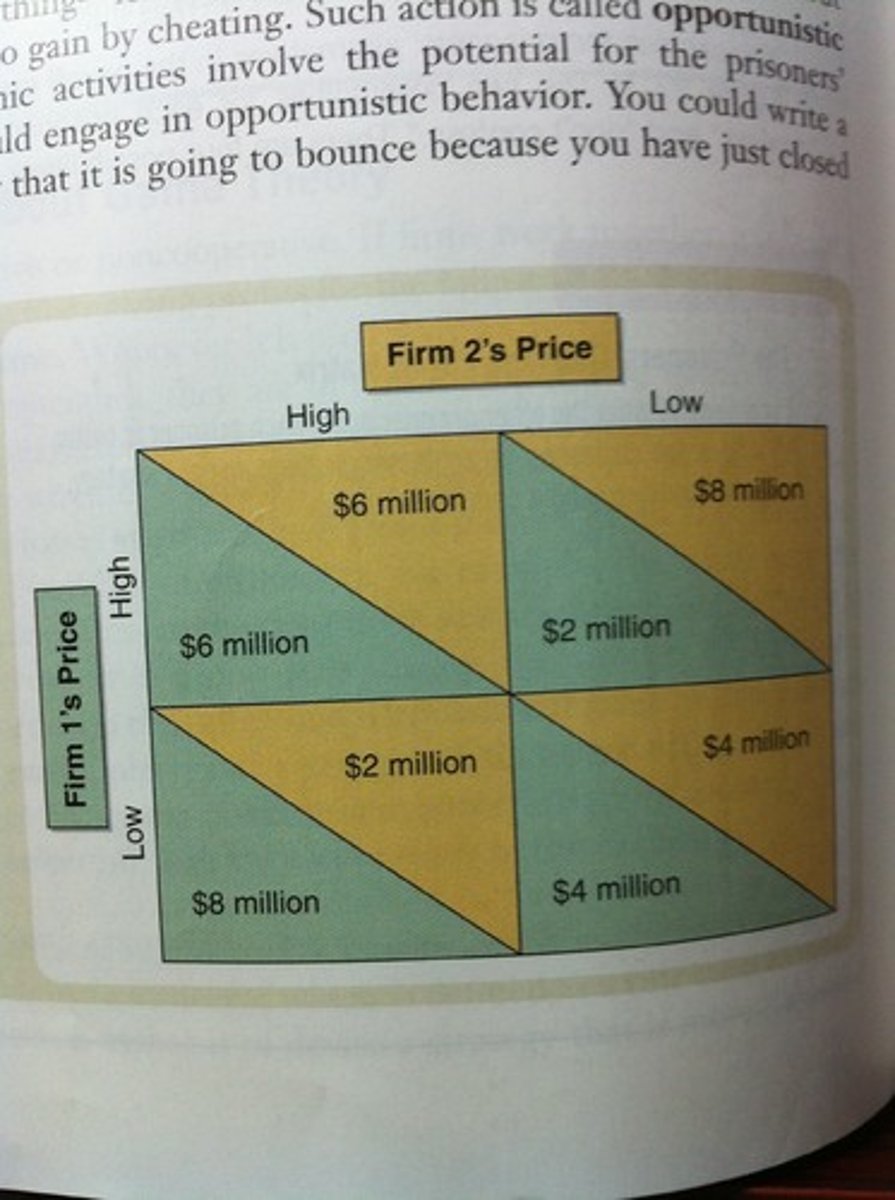
cartel
an agreement between firms on price and or output with the intention of maximising their joint profits
Tacit collusion
situation occurring when firms refrain from competing on price, but without communication or formal agreement between them.
n-firm concentration ratio
a measure of the market share of the largest n firms in an industry
predatory pricing
an anti-competitive strategy in which a firm sets price below average variable cost in an attempt to force a rival or rivals out of the market and achieve market dominance
Contestable market
a market where existing firm only makes normal profit, as it cannot set a price higher than average costs without attracting entry, owing to the absence of barriers to entry and sunk costs.
-face no barriers to entry
-incur no sunk costs in in entry of market
- have no competitive disadvantages compared with the incumbent firms
-have access to the same technology as incumbent
-are able to enter and exit freely
Hit and run entry
Where a firm enters a market to take short-run supernormal profits knowing it can exit without incurring costs
advantages and disadvantages of a contestable market
- lower prices > new firms price takers
-allocative and productive efficiency achieved - p = mc and at minimum ac
- long run equilibrium or safety is uncertain or unclear
-firms cannot set a price above average costs due to risk of new firms
-low dynamic efficiency or economies of scale
derived demand
when demand for a factor of production or good derives not from the factor or good itself but from the goods or services that it provides.
Marginal Revenue Product of Labour (MRPL)
The additional revenue received by a firm as it increases output by using an additional unit of labour input
Marginal revenue product theory
argues that the demand for labour depends upon balancing the revenue a firm gains from employing an additional unit of labour against the marginal cost of that unit of labour
Labour productivity
measure of output per hour worked
unit labour cost
the average cost of labour per unit of output
factors influencing Labour supply curve
-the wage prevailing in other industries or occupations
-the skills needed for the job and the cost and difficulty of acquiring those skills
-the number of people with appropriate qualifications
-the non-pecuniary benefits offered by firms of the industry
-the demographic structure of the population and availability of immigrant workers
non-pecuniary benefits
benefits offered to workers by firms that are not financial in nature.
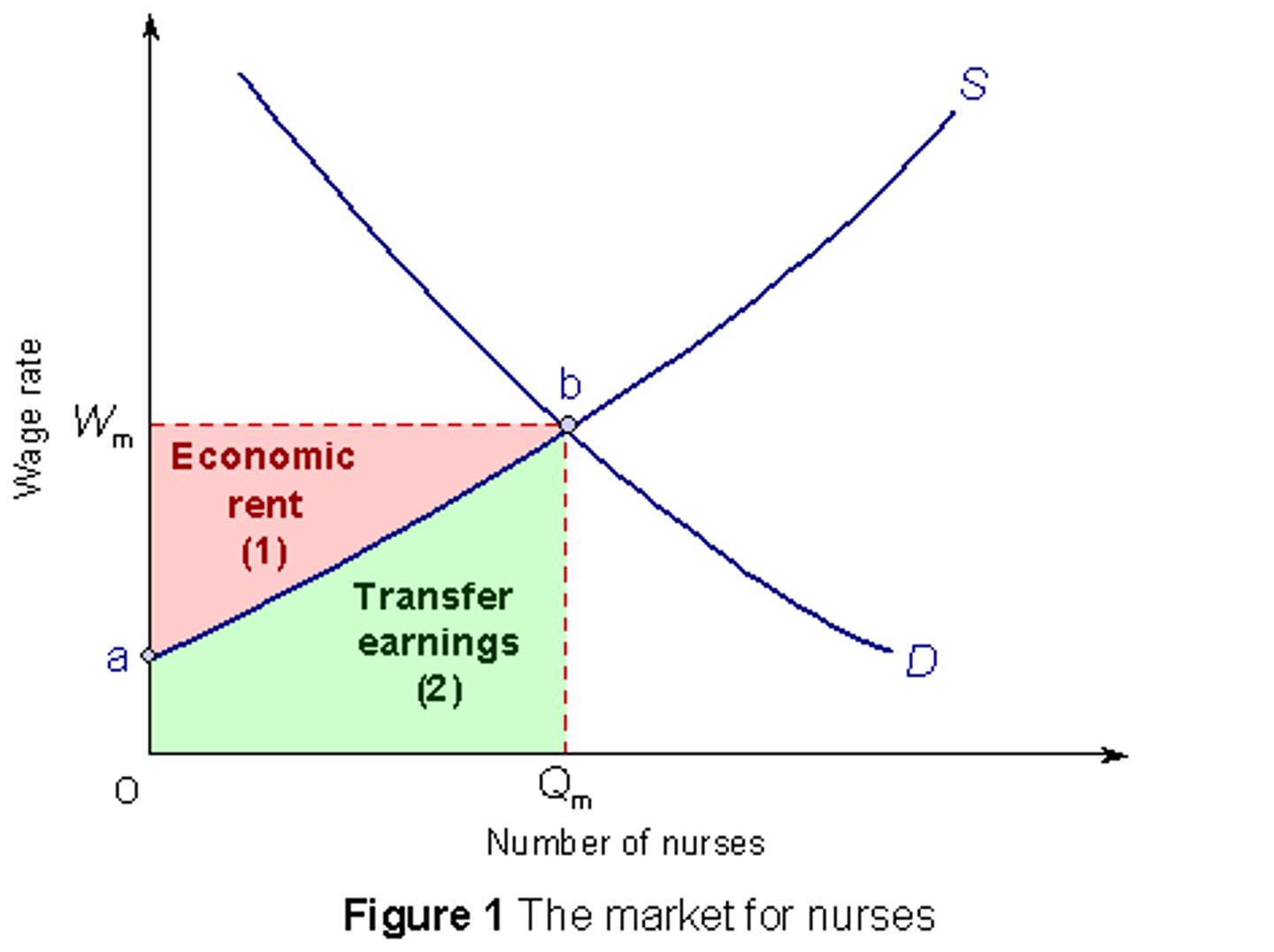
transfer earnings
minimum required payment required to keep a factor of production in it's present use
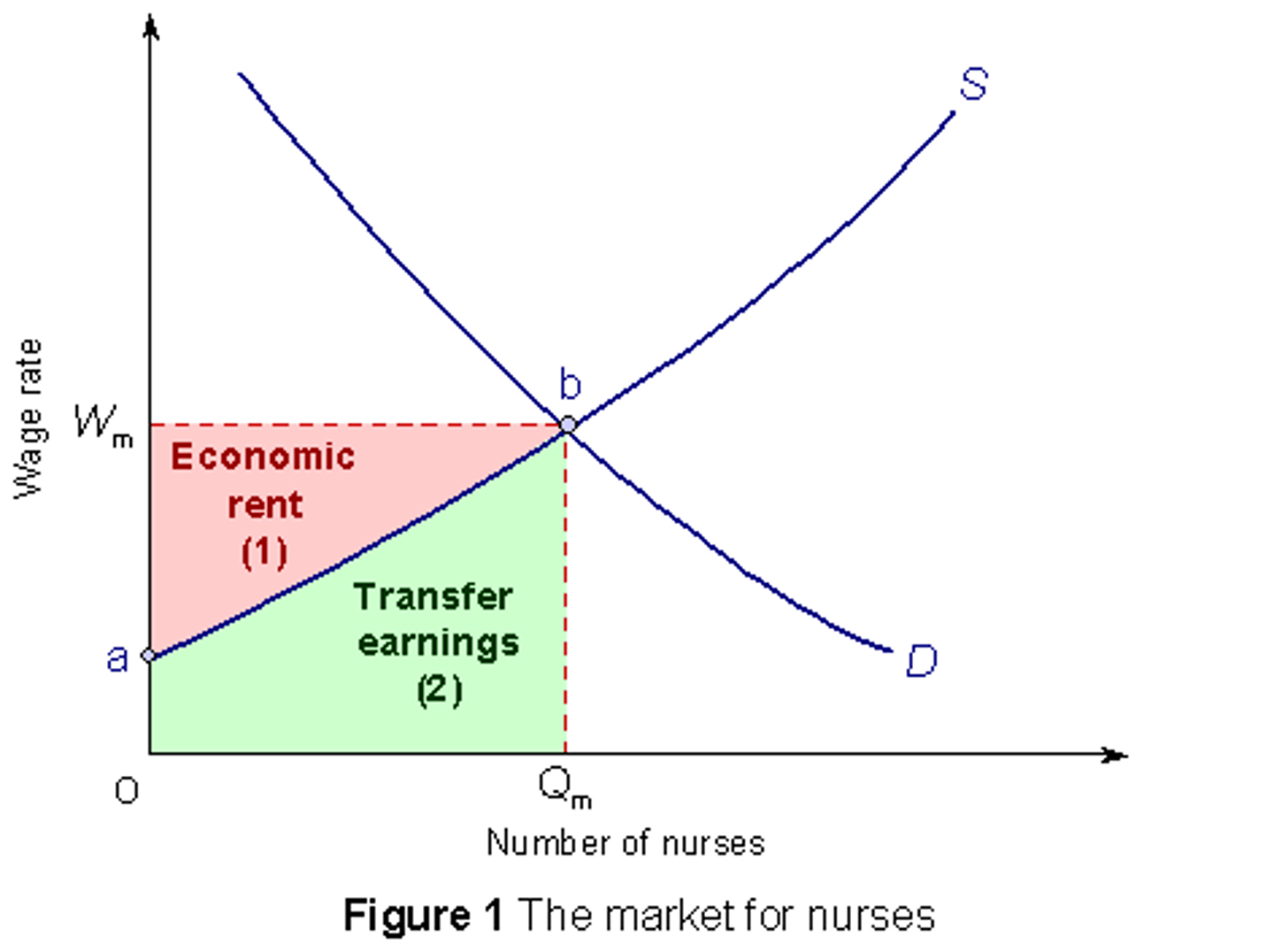
economic rent
a payment received by a factor of production over and above what would be needed to keep it in it's present use
Reasons for Wage Differentials
- Difference in Productivity
- Elasticity of Supply (of Labour)
- Trade Union Power
- Difference in Final Demand
- Government Pay Policy
- Compensating (for Risk)
- Different Regional Costs of Living
- Employer Discrimination - gender pay gap only 9% in 2018
Monopsony
a market structure in which there is only a single buyer of a good, service, or resource
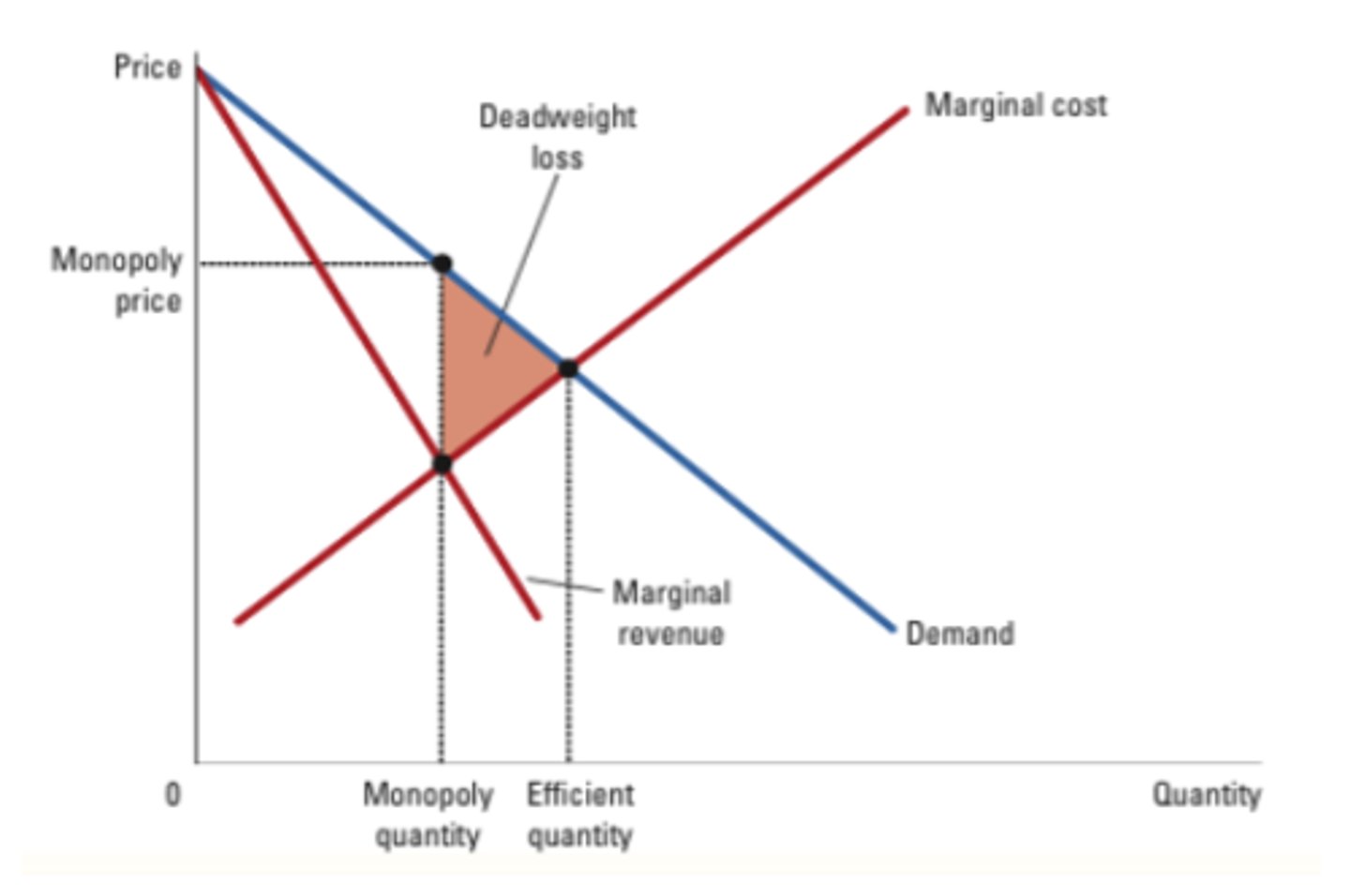
How I understand deadweight loss
Area on a graph below socially optimum level. for example monopoly's produce at MR=MC which is below the socially optimum level at AR=MC=P.
Deadweight loss= area below socially optimum
merit and demerit goods
A merit good is a good that has positive externalities (such as flu shots).
A demrit good is a good that has negative externalities (such as cigarettes).
externality
a cost or a benefit that is external to a market transaction, and is thus not reflected in market prices
adverse selection
where a person more at risk is more likely to take out insurance. eg a smoker buying health insurance
moral hazard
a situation where those insured take out a higher risk
private goods
a good that once consumed by one person cannot be consumed by anyone else.
Non-excludability
a situation in which it is not possible to provide a product to one person without allowing others to consume it as well
Non-rivalry
a situation where one persons consumption of a good does not prevent others from consuming it as well.
Public Goods
a good that is non-exclusive, non-rivalrous, non-rejectable.
Non-rejectability
a situation in which an individual cannot avoid consuming a good
free rider problem
when an individual cannot be excluded from consuming a good, and so has no incentive to pay for it.
quasi-public goods
a good which has some catagories of a public good but not others. eg a football match, non-rivalrous(consumption doesnt affect anothers) , non non-excludable, it is also rejectable. or a public road could be non-excludable but rival as traffic could build up from other peoples consumption
joint demand
when two goods are consumed together
composite demand
demand for a good which has various uses
competitive demand
Demand for goods which are in competition with each other (substitutes)
Competitive supply
Competitive supply occurs when a firm uses the same resources to produce alternative products, meaning an increase in the supply of one product necessitates a decrease in another
joint supply
where a firm produces more than one product together
stagflation
a period of slow economic growth and high unemployment (stagnation) while prices rise (inflation)
full employment
a situation where everyone who is economically active are willing and able to find work at going wage rates and are able to find employment.
ways to measure unemployment
Claimant count - number of people claiming benefits(however it includes people not availible to work and doesnt include people who cant claim benefits)
Labour force survey
frictional unemployment
unemployment when people are in job search, eg between jobs
structural unemployment
unemployment that arises because of a change in pattern of economic activity in an economy
cyclical unemployment
arises during downturn of economic cycle
Demand-deficient unemployment
unemployment that arises dues to a defficiency of aggregate demand in an economy, so equilbrium level of output if below full employment
seasonal unemployment
arises in seasons of the year when employment is relatively low.
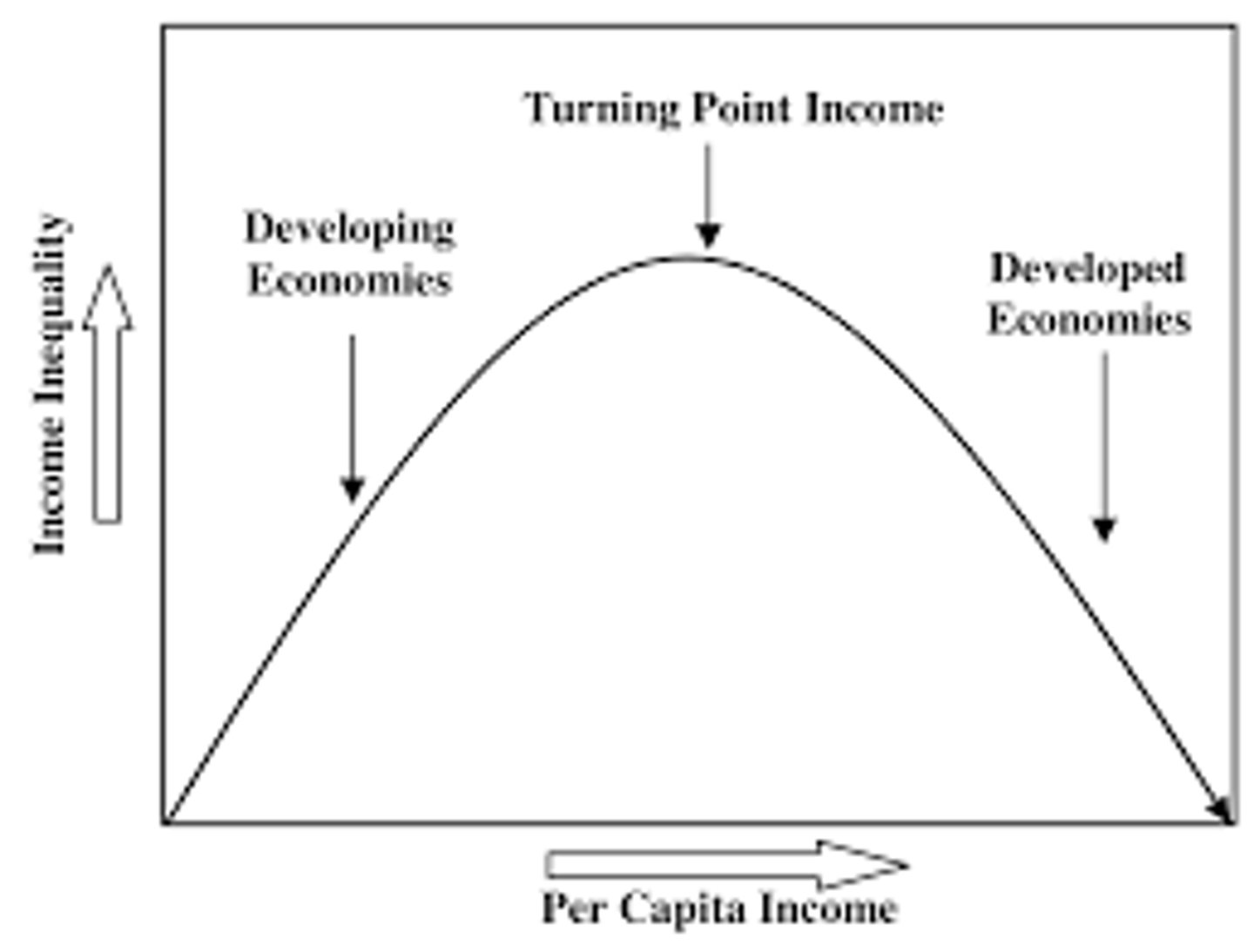
Kuznets Curve
As per capita increases, environmental degradation and income inequality first increases and then decreases.
difference between RPI and CPI
CPI replaced RPI
RPI produces higher inflation rates
Deflation vs. disinflation
Deflation -- declines in price level
Disinflation -- slowing in the rate of increase in price level
circular flow of income
a model showing the movement of goos and services between households and firms. Households provide firms with factors of production, firms give output of goods and services in return. Households provide expenditure on firms who provide incomes to households in return
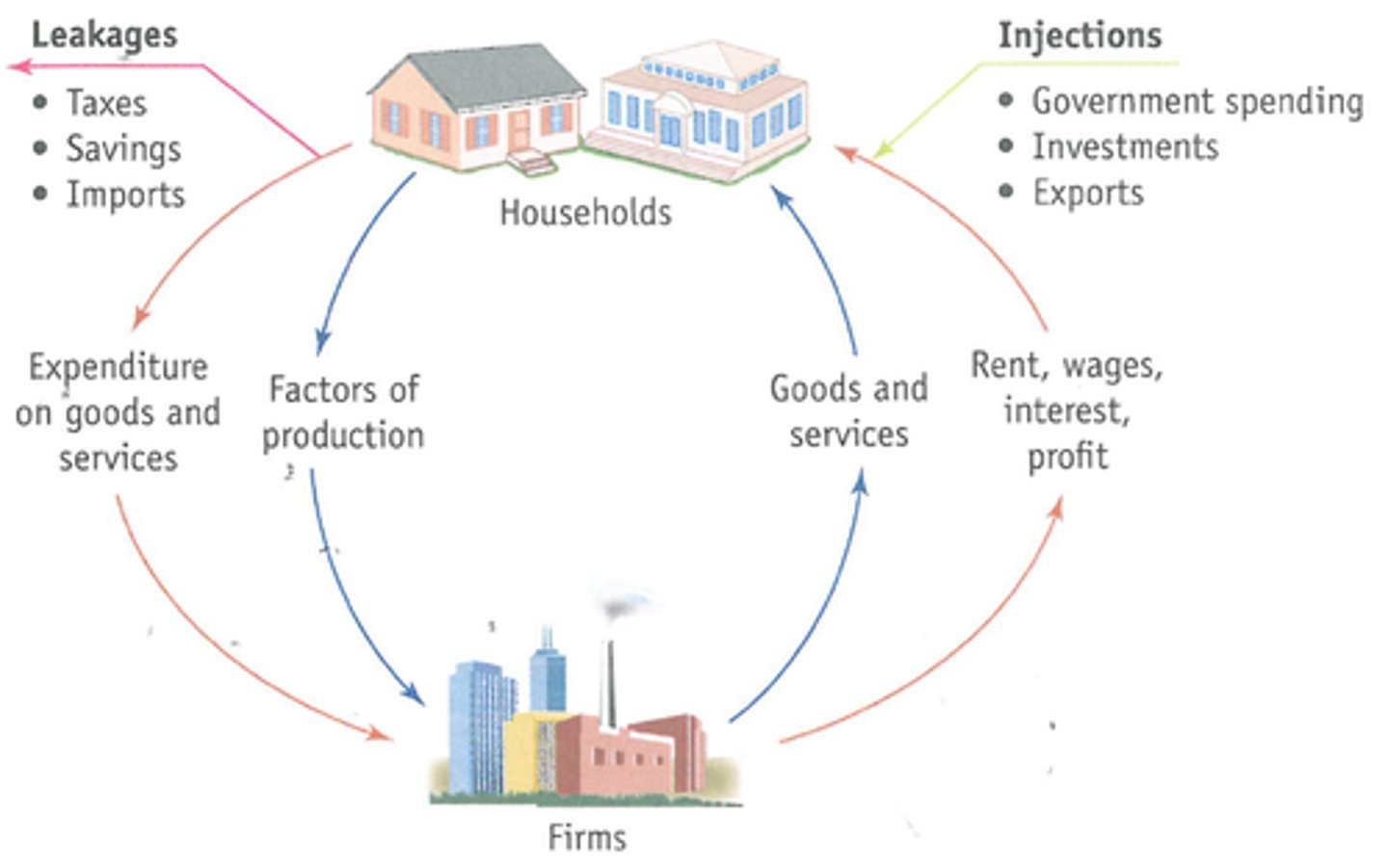
leakages and injections into circular flow of income
injections:
govt spending
exports
investment
leakages
tax
spending on imports
savings
rate of interest
the cost of borrowing and the reward for lending
liquidity
the ease with which an asset can be converted into cash
Narrow money (M0)
notes and coins in circulation and as commercial banks deposits at the bank of england
Broad money (M4)
Encompasses narrow money plus the entire range of liquid assets that can be used to make purchases.
Credit creation
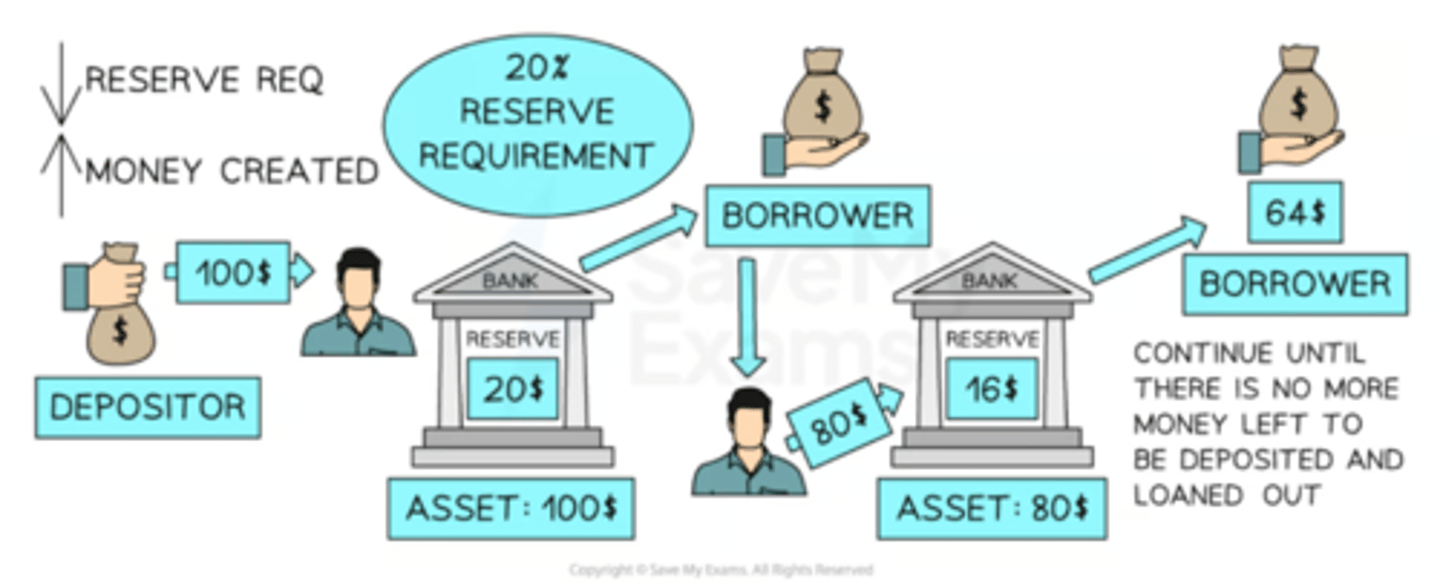
operations of commercial banks can influence the quantity of money. banks accept deposits from their consumers and issue loans. the way in which they undertake lending has an impact on the quantity of money
Credit Creation Multiplier
a process by which an increase in money supply can have a multiplied effect on the amount of credit in an economy...
Usually happens like this:
Banks take deposits of $100
Banks required to keep a ratio of this for withdrawel(liquidity ratio) $10
Banks loan out $90
$90 becomes someone else income which is deposited
banks keep $9
Loan out $81
$81 becomes someones income....
Credit Creation Multiplier equation
multiplier = 1/liquidity ratio
multiply multiplier by original deposit to get total level added
velocity of circulation
the rate at which money changes hands, the volume of transactions divided by money supply
fisher equation
can be usd to calculate price level
specifies the relationship between money supply(M), velocity of circulation(V) , price level(P) and real income(Y)
MV=PY
therefore P=MV/Y
determination of interest rates
demand for money:
-transactional demand - demand for money in order to undertake transactions
-precautionary demand - liquid assets available to guard from sudden shocks
-speculative demand - if share prices are low and rate of interest paid is high, then opportunity cost of holding money is high and people will hold shares, vice versa if money was cheaper more people hold money
Liquidity preference - a theory by which people will desire to hold money as an asset.
Market for loanable funds:
-The idea that households will be influenced by the rate of interest in making savings decisions, which will then determine the quantity of loanable funds available for firms to borrow for investment.
although rate of interest can be interpreted as opportunity cost of holding money, firms may see it as the cost of borrowing. the higher the rate of interest is the less investment activity/projects are likely to go ahead- less likely to be seen as profitable. --therefore high savings can lead to as higher quanitity of loanable funds being availible boosting investment
The central bank
Role of financial sector
-environment where economic activity takes place:
FACILITATE SAVING
individuals(and sometimes firms) need to save, firms & individuals need to be able to borrow. through financial markets savings can be mobilised for investment
FACILITATE BORROWING
FACILITATING THE EXCHANGE OF GOODS AND SERVICES
financial markets need to facilitate the transactions where goods and services are exchanged.
FORWARD MARKETS
-enable transactions to be conducted on the basis of contracts for future delivery. typically used for commodities such as coffee or oil
MARKET FOR EQUITIES
known as the stock market
THE FINANCIAL SECTOR IN EMERGING AND DEVELOPING COUNTRIES
formal financial institutions less equipped to provide. stock markets may no exist. banks are not readily availible and its difficult to measure credit scores
Savings and Investment
saving is necessary to provide finance for investment
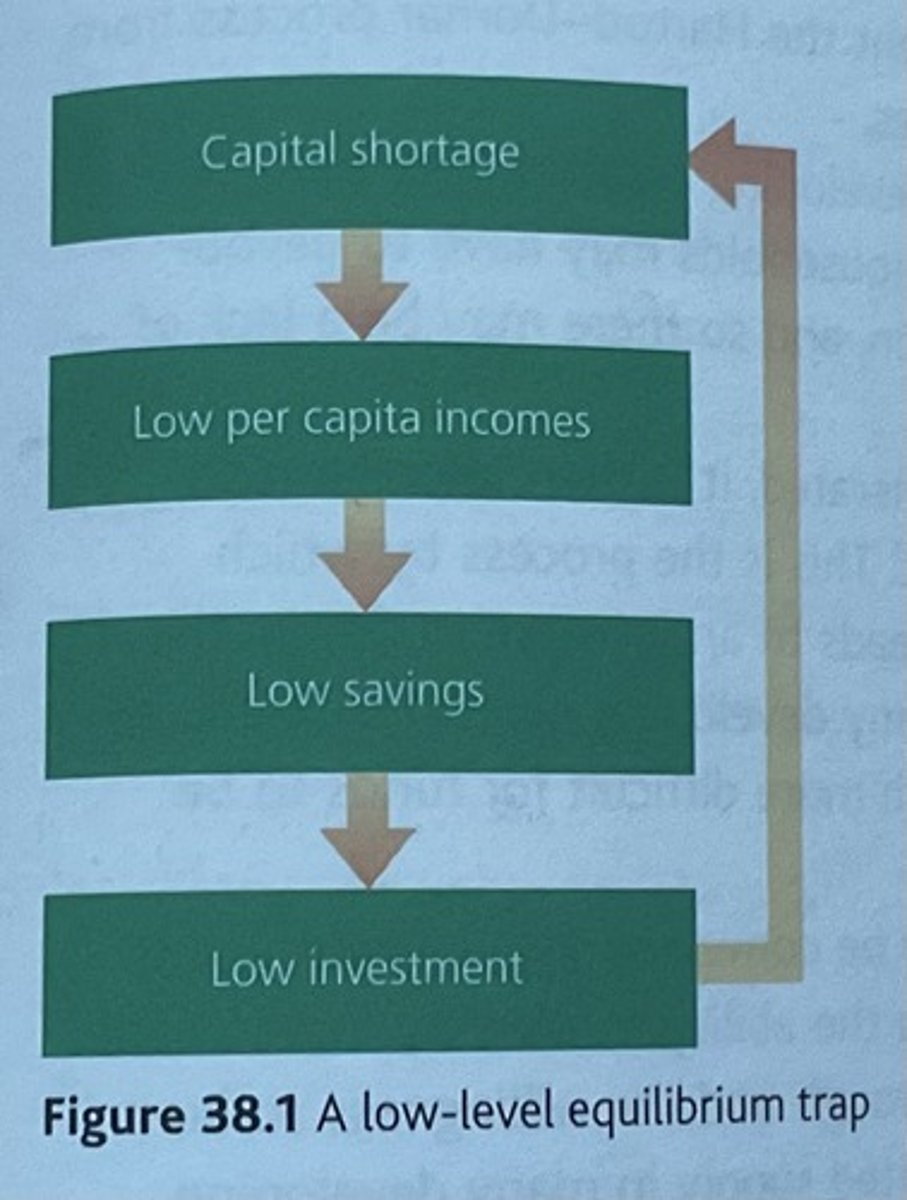
Low - level equilibrium trap
a shortage of capital leads to low income per capita which leads to low savings in tern leading to low investment and then limited capital
Harrod-Domar Model
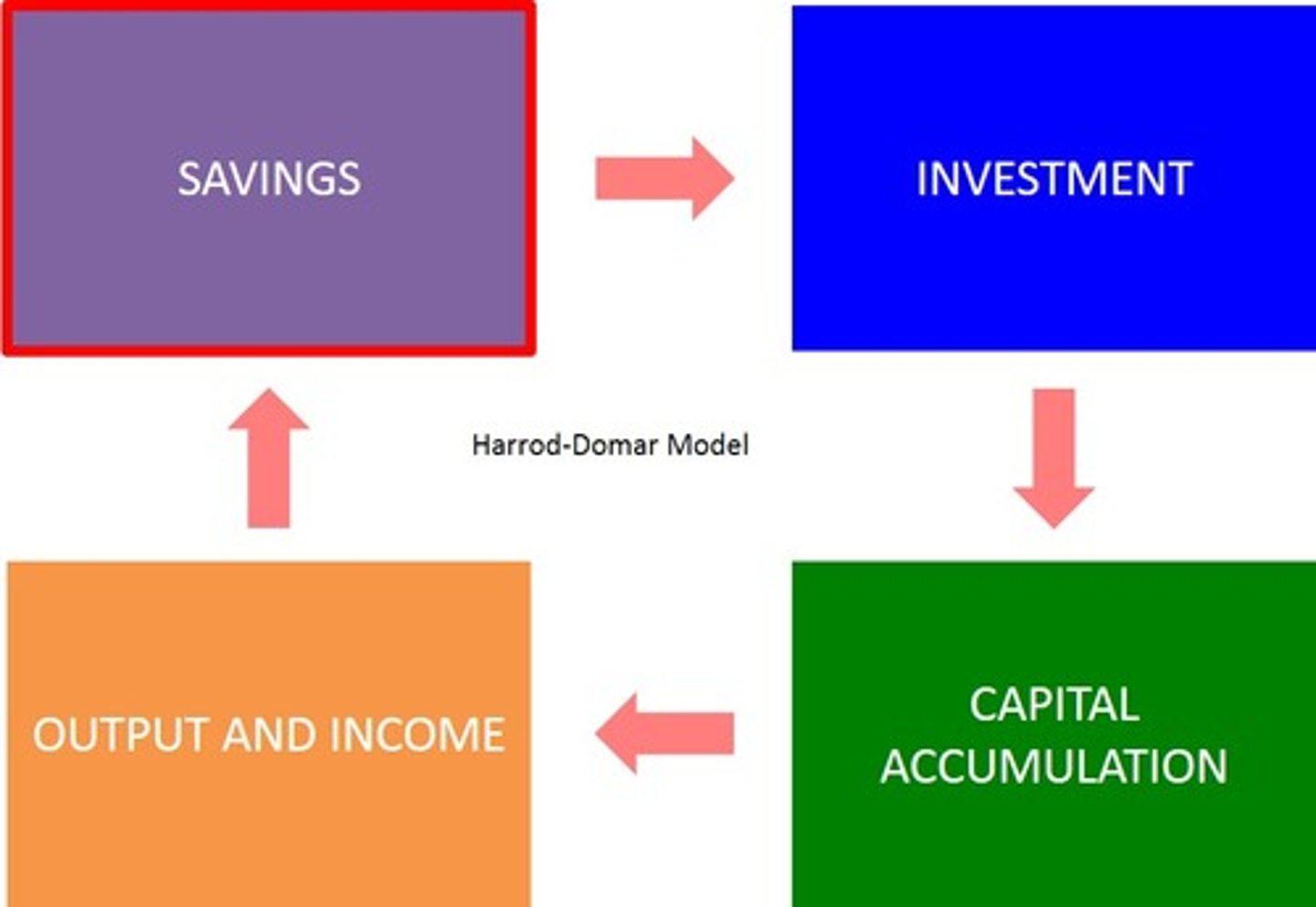
a model of economic growth that emphasises the importance of savings and investment
diagram shows process that leads to growth:
Savings crucial for investment which enables capital to accumulate and technology to be improved causing an increase in output and incomes.
foreign exchange gap
situation where developing countries is unable to import the goods that is needed for development because of shortage of foreign exchange.
capital flight
a situation where savings generated in a developing country are invested abroad.
Protectionism
measures taken by a country to restrict international trade
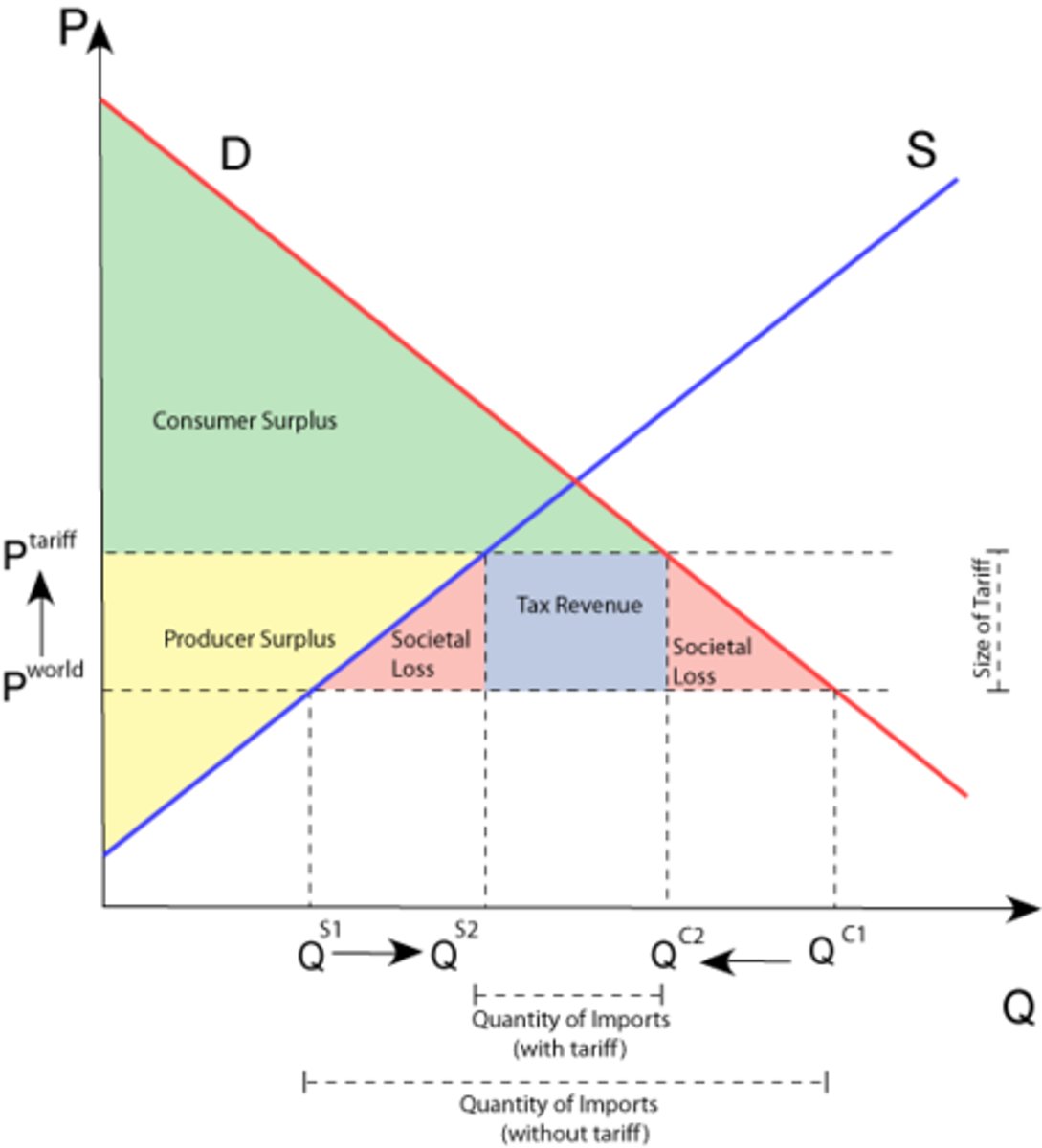
tariff
a tax on imported goods
tariff diagram
remember the deadweight loss is the extra costs/less output for consumers
tax revenue