Unit 3: Social Cognition
 Studied by 1 person
 Call Kai
 Learn
Learn Practice Test
 Spaced Repetition
 Match
Match Flashcards
 Knowt Play
1/21

There's no tags or description
Looks like no tags are added yet.
Name | Mastery | Learn | Test | Matching | Spaced | Call with Kai |
|---|
No analytics yet
Send a link to your students to track their progress
22 Terms
Social Cognition
Social Psychology has always been cognitive, Psychology fully embraced cognitive approaches in the 1970s-1980s
Cognitive Misers
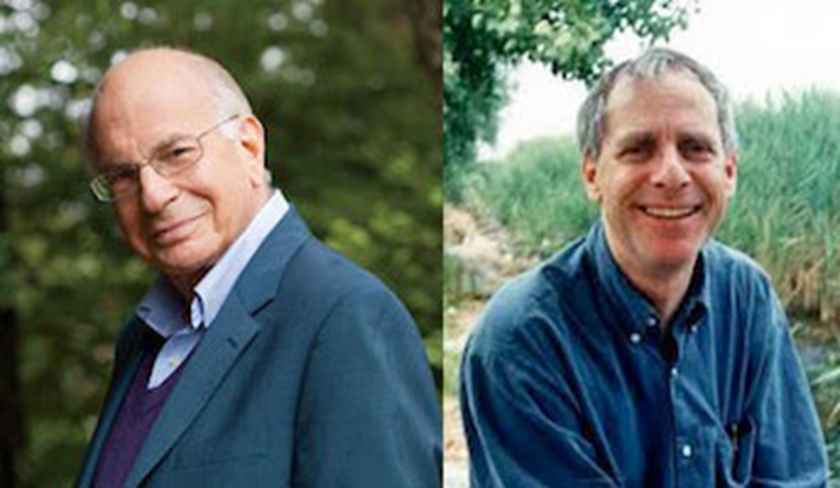
__________: Kahneman & Tversky proposed the idea that humans are irrational, mentally lazy and relying on shortcuts and heuristics. We ignore base rates and statistics.
The traditional view was humans are rational—follow the rules of probability and logic
Kahneman: When people think fast, they make many errors, slow thinking is possible but rarely used. So, people are often irrational.
Regression to the average
__________: Extreme performances are usually followed by more average ones
Kahneman was teaching Israeli air force pilots
Based on behaviorism: reinforcing a behavior should increase its likelihood (generally true)
An instructor disagreed based on their experience
A good pilot performs a difficult maneuver extremely well -> praised
Next attempt is much worse, They concluded praise doesn’t work
Kahneman was stunned because the instructor didn’t understand one of the basic rules of probability
He’s a good pilot, not great, on average, he will do good
Ex. 70% student gets a 90% on one exam; on the next exam, will you do better or worse? You will get less because you’re a 70s student
This led them to question the assumption that humans are completely rational
Irrationality
Hindsight Bias
Expectations Bias Perceptions
The Belief-Perseverance Phenomenon
Under/Overutilize Consensus Information
Illusion of Correlation/Causation
Representative Thinking
Availability Heuristic
Sunk Costs
(1) Hindsight Bias
__________:Once we know the outcome, it feels inevitable, even when told to ignore the answer we cant
Ex. Given the question: Rocky Marciano was the only heavyweight champion ever to retire without losing a professional fight
False -4, -3, -2, -1, 0, 1, 2, 3, 4 True
Your original answer is a 1, but once you know the answer is true, your judgment changes and you change your answer to 3
Ex. Taking an exam with asterisk showing all the correct answers, you can’t ignore it
The Curse of Knowledge
The Curse of Knowledge
__________: Once you know something, it’s hard to imagine not knowing it
Ex. Tapper & Listener: You’re tapping a song that you know the answer to and cannot understand how the other person cant guess it right
Ex. Poker: People attribute wins/losses to skill rather than luck, the resulting fallacy: judging the quality of a decision solely by its outcome. Professional players understand that it’s a lot of luck, and won’t use the same strategy over and over again
(2) Expectations Bias Perceptions
________:Expectations shape what we see
Ex. FOLK, CROAK, SOAK, the white of the egg? -> people say “yolk”
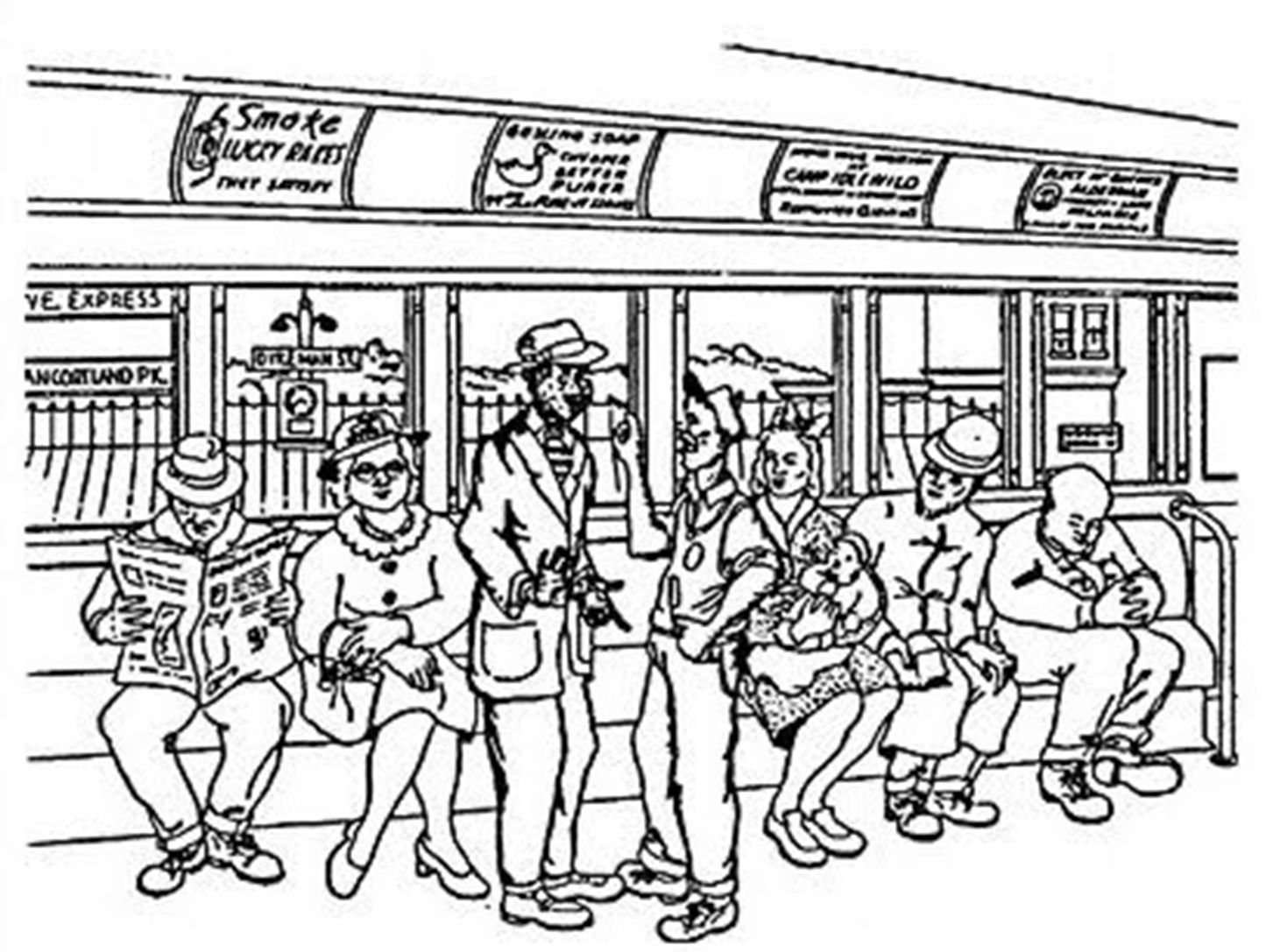
Ex. Allport Study
Slides of a subway argument between a Black man and a White man
White man pulls a knife, after 7-8 retellings, the knife switches hands
The story shifts to match social expectations of the time
Ex. Little Albert—his unknown fate
Classical conditioning created a phobia
Textbooks often claim the phobia was reversed, it was not, Albert was pulled from the study by his mother
Our expectation is that researchers would fix it
(3) Contradictory Evidence is Ignored or Devalued (The Belief-Perseverance Phenomenon)
Ex. Death penalty attitudes
The participants read different papers that offer mixed evidence
Each side found support for their existing belief and picked the papers that supported their belief
Beliefs became more extreme
Confirmation Bias
Confirmation Bias
________: Seeking information that supports our view. People usually cite supportive studies in their work and use opposing studies only to criticize them
Ex. Lilienfeld:
Exposure to opposing evidence leads people to become more polarized
Failure to engage with alternative viewpoints
(4) Under/Overutilize Consensus Information
_____________: what most other people think or do
People overuse and overuse this information
False Uniqueness Effect
False Consensus Effect
False Uniqueness Effect
Under/Overutilize Consensus Information
__________:People believe they are better, smarter, or more moral than average. Leads to underestimating how common one’s abilities or opinions are (underuse)
Ex. 90% of business managers think they’re best than their peers
Ex. Half of our class has to be below average grades

False Consensus Effect
Under/Overutilize Consensus Information
___________:People overestimate how much others agree with them, assuming their beliefs are widely shared (overuse)
Ex. “I think I speak for everyone…” “All my classmates would agree the test was too hard”
(5) Illusion of Correlation/Causation
___________:Believing two events are related when they are not, often based on vivid or memorable experiences
Ex.
Arthritis pain predicting weather
Full moon causing strange or bad behavior
Sugar intake causing short-term increases in child misbehavior
The Hot Hand
The Hot Hand Fallacy
Illusion of Correlation/Causation
________: Belief that a basketball player who is “on a streak” is more likely to keep scoring, evidence is weak or mixed, (complication players take harder hits when “hot”)
(6) Representative Thinking (Representative Heuristic)
___________:Judging likelihood based on how much something fits a stereotype, ignoring statistical realities
Ex. Short, slim person who reads poetry
More likely a truck driver than a classics professor
There are far more truck drivers
Ex. Admissions spelling mistake -> assumed dyslexia
Many people make spelling errors
Dyslexia is relatively rare
Base Rate Neglect
Base Rate Neglect
Representative Thinking
_________: Failure to consider how common something actually is, background probabilities are often ignored or unclear.
(7) Availability Heuristic
_________:Events that are easier to recall are judged as more frequent or likely
Ex. Words starting with “K” vs words with “K” as the third letter
There are ~3x more words with K in the 3rd position
They are harder to recall, so underestimated
Ex. Fear of terrorism vs. car accidents when visiting Israel
Car accidents are far more likely
British National Lottery
Higher odds of dying during the draw than winning
Repetition Induced Truth Effect
Repetition Induced Truth Effect:
Availability Heuristic
_________: Repeated statements feel more true, familiarity increases perceived accuracy (ex. Being lied to over and over again begins to feel true)
(8) Sunk Costs
__________:Continuing a decision because of past investments (time, money, effort). Future outcomes should matter, bust past costs dominate decisions.
Ex. Staying in unhappy relationships
Ex. Vietnam War
Continued involvement due to lives lost and money spent. Costs already incurred influenced future decisions
Motivated Tacticians
Gigernezer challenges the “cognitive miser” view
Argues we are _________; we can think carefully when it matters

Motivated Tacticians Examples
Buying a car:
Consumer reports say Volvo is more reliable
Neighbour’s Volvo broke down
Rational choice: trust base rates (Volvo)
Jungle survival
Tree climbing kills more children than crocodiles
Neighbors child eaten by crocodile is vivid but rate
Rational choice avoid trees, not the river
Key Questions Gigerenzer Raises
Do heuristics replicate?
How irrational are humans really? Maybe irrational mainly in lab settings
Do violations of rationality cause real-world harm?
How much is due to citation bias and one-off studies?
 Note
Note  Flashcards (345)