Animal models and pharmacology
 Call Kai
 Learn
Learn Practice Test
 Spaced Repetition
 Match
Match Flashcards
 Knowt Play
1/19

There's no tags or description
Looks like no tags are added yet.
Name | Mastery | Learn | Test | Matching | Spaced | Call with Kai |
|---|
No analytics yet
Send a link to your students to track their progress
20 Terms
General methodology to study the therapeutic potential of newly synthesized drug
Choose the species
Model of the disease:
Transgenic/genetically modified
Pharmacological: chemical/induced
Spontaneous: selective breeding over many generations
Groups:
Healthy: vehicle and drug
Pathology: vehicle and drug
Validation of the model
Choose the test/parameter
Choose the reference (positive/negative control)
Route of administration, doses, acute vs chronic
Toxicology testing
DSM criteria
2 individuals with the diagnosis of major depression with no symptoms in common
P1: depressed mood, weight loss, insomnia, psychomotor agitation, and suicidal thoughts
P2: diminished pleasure, weight gain, hypersomnia, psychomotor retardation, and fatigue
DSM V criteria
At least 5 of the following are present simultaneously for at least 2 weeks (symptom 1 or 2 is necessary):
Depressed or irritable mood
Markedly diminished interest or pleasure in all, or almost all, daily activities
Significant weight loss or weight gain
Insomnia or hypersomnia nearly every day
Psychomotor agitation or retardation nearly every day
Fatigue or loss of energy nearly every day
Feelings of worthlessness or inappropriate guilt nearly every day
Diminished ability to think or concentrate nearly every day
Behavioural endpoints
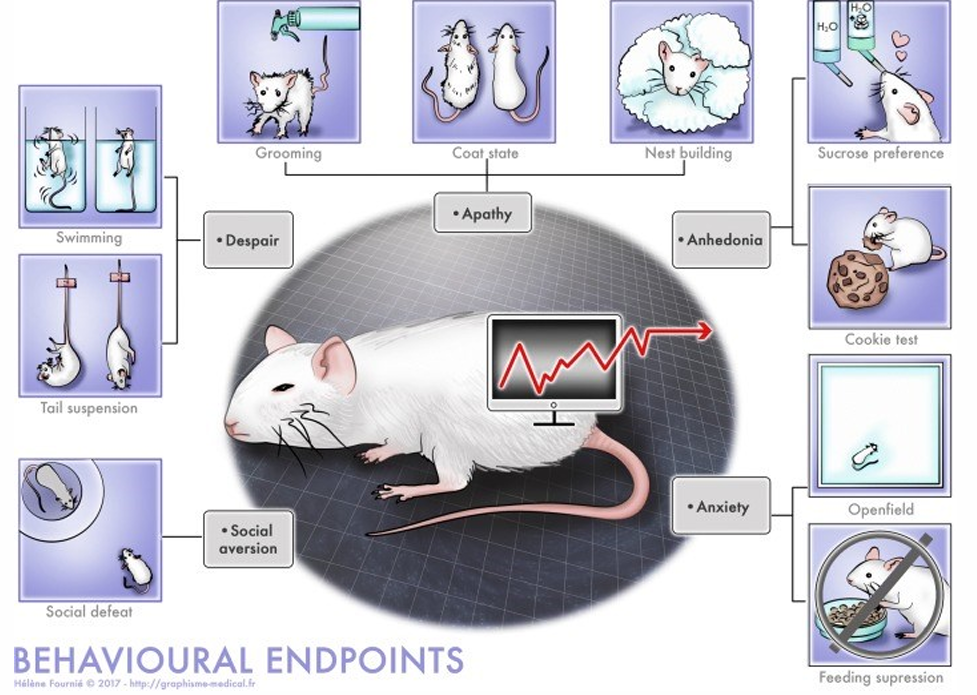
Animal models of depression
In early life or adulthood
Based on application of stressors
Biological causation models: induce the biological and chemical imbalances that are believed to cause depression
Early life adversity
Separation of pups and mothers
Support findings from human research maternal neglect or a history of childhood abuse increased MDD
Limitation: newborn pups development stage corresponds to a pre-natal human stage
Social Defeat Stress Model
Adult stress induced by aggressive peers, leading to social withdrawal
Resilient vs susceptible rodent
Sensitive to chronic SSRIs
Difficult to carry in female due to lower aggressiveness
Dysregulation of the prefrontal cortex and changes in neurotrophins
Unpredictable chronic mild stress (UCMS)
Responsive to chronic antidepressants
Strain differences in susceptibility
Biological causation models
Lipopolysaccharide injection
Understand the role of inflammation in brain diseases
Induce sickness behavior and then a depressive behavior
Reversed by antidepressants
Olfactory bulbectomy: a surgical procedure involving the removal of the olfactory bulbs, which are involved in the sense of smell
GR (Glucocorticoid Receptor) knock-out mice:
Study the cortisol hypothesis and HPA axis feedback loops.
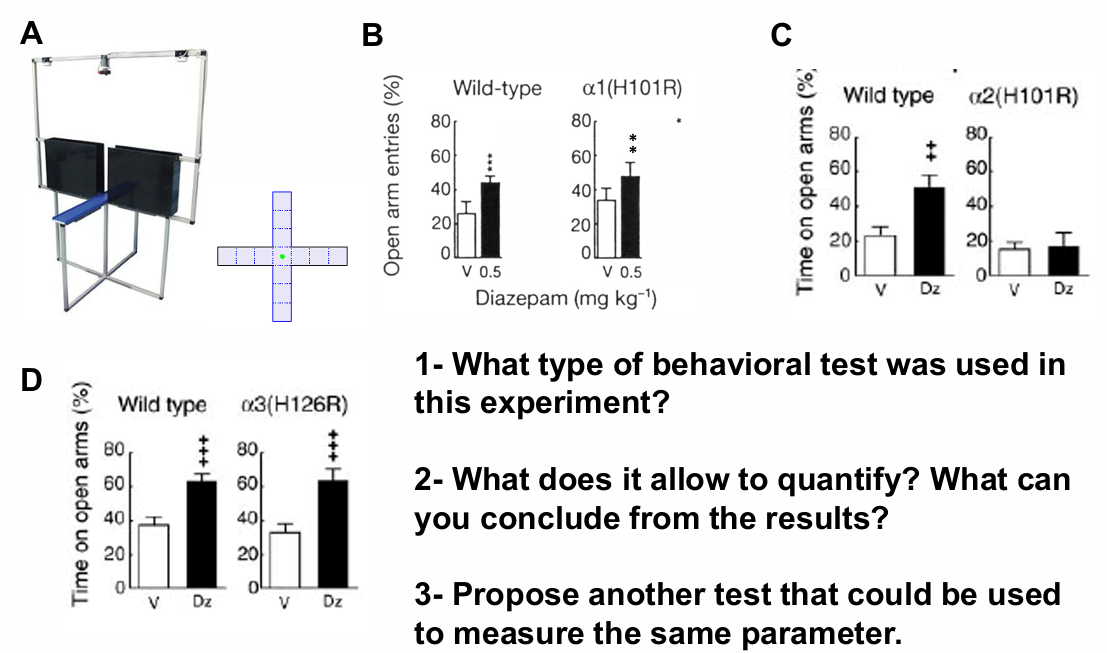
Test of GABA-R subunits function
Elevated plus maze
Behavioural assessment of anyolitic-like actions of diazepam regulated by alpha 2 subunit
Open field test
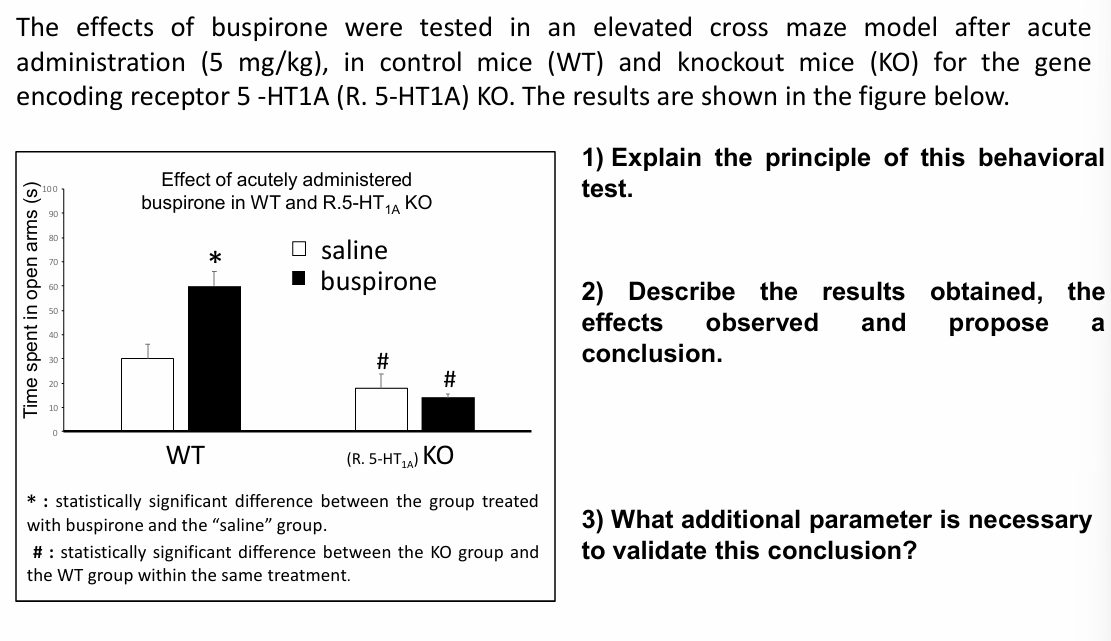
Buspirone test
Measure the time spent in open arms reflect anxiolytic activity of a molecule
Buspirone has an anxiolytic effect in WT, the effect is lost in Ko mice. 5-HT1A is involved in the mechanism of the anxiolytic effect of buspirone in this model. Can hypothesize that buspirone is a ligand for this R. The absence of R.5HT1A is anxiogenic, therefore the activity of R is anxiolytic, buspirone is believed to be the R.5HT1 agonist
Measure the number of entries that assess the locomotor activity of animals, variations in this parameter could also influence the time spent in open arms
Parkinson’s disease
Progressive movement disorder of the nervous system. It causes nerve cells (neurons) in parts of the brain to weaken, become damaged, and die
Animal models in Parkinson disease
Toxin models: 6-OHDA, MPTP
Genetic: PARKIN-KO, PINK1, TG –AAV Alpha synuclein (mutatedor human form)
Variation between models regarding: danergic damage, mitochondrial respiratory deficit, oxidative stress, alpha-synuclein and levy bodies aggregates, locomotor and non-motor deficit
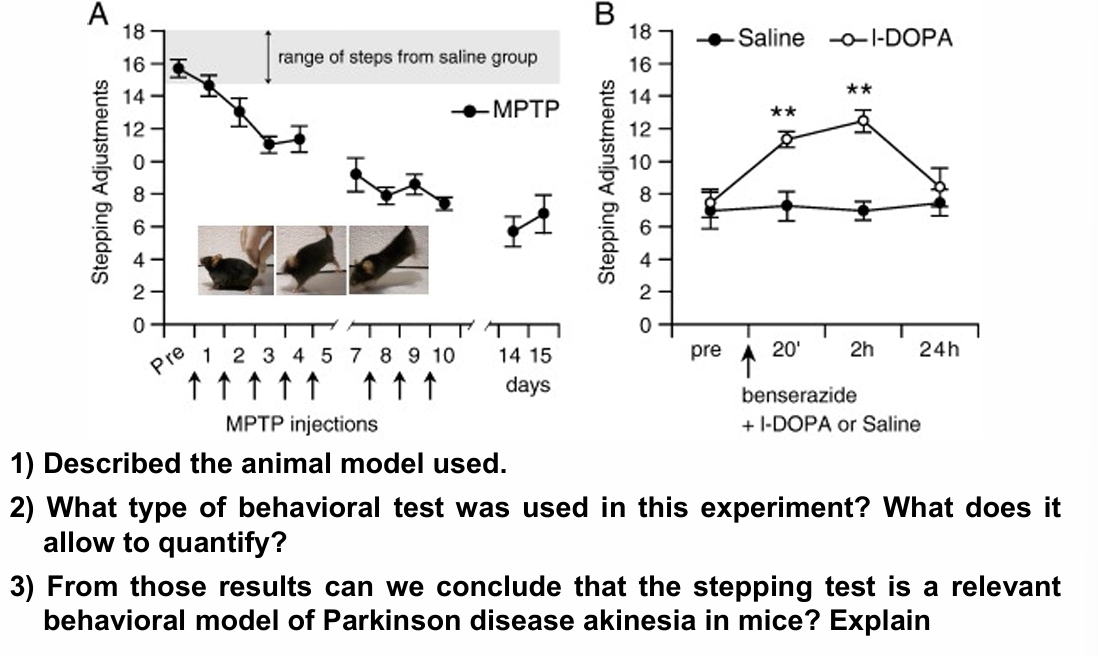
MPTP and stepping deficit
MPTP in neurotoxin-induced model of Parkinson disease inducing akinesia and rigidity
Stepping test used to evaluate motor function, specifically forelimb akinesia (difficulty initiating movement) and rigidity. Investigator holds animals so that both hind limbs and one forepaw are raised just off the surface of a wide table. The animal is moved laterally across the surface of the table (over ~80-90 cm for ~10 sec) in such a way that it must bear weight on its remaining forepaw. Increasing the number of steps is the measurable proof that the drug is working.
MTPT treatment is able to decrease stepping performance over time, so limb akinesia as in Parkinson disease. L-DOPA treatment improved the stepping performance of the MPTP-treated mice. Stepping test in mice seems to be a reliable and sensitive behavioral mesure for assessing forelimb akinesia of translational value for Parkinson disease
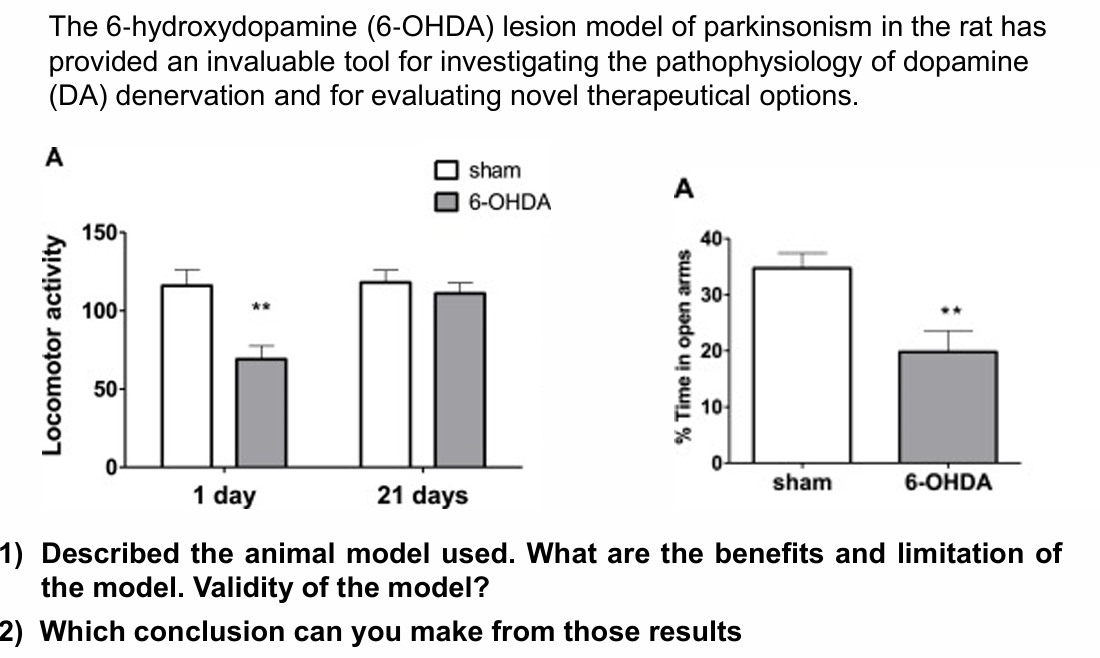
6‐OHDA model
6-OHDA is injected directly into the medial forebrain bundle to unilaterally destroy dopaminergic neurons. Disrupt complex I of the mitochondrial electron transport chain and increase generation of reactive ROS that contributes to an apoptotic form of cell death. Limitations include being an acute, unilateral, and non-progressive model.
Predictive validity: partial, symptoms only appear on one side of the animal’s body.
Theoretical validity: Parkinson’s is chronic, slow and naturally progressive disease, in animals is an acute damage to the dopamine system.
Predictive validity: 6-OHDA rats develop the same side effects (dyskinesias) and improves the movement symptoms
A significant decrease in locomotor activity was found in the 6-OHDA group 1 day after surgery compared with the sham groups. 21 days after, no difference were found between the neurotoxic and the sham groups, the animals’ locomotor activity recovers over time. 6-OHDA animals spent less time in the open arms of the EPM compared with the sham group. 6-OHDA is able to produce anxiety-like behaviour.
Cardiovascular system
The system is regulated by the autonomic nervous system and the renin-angiotensin system
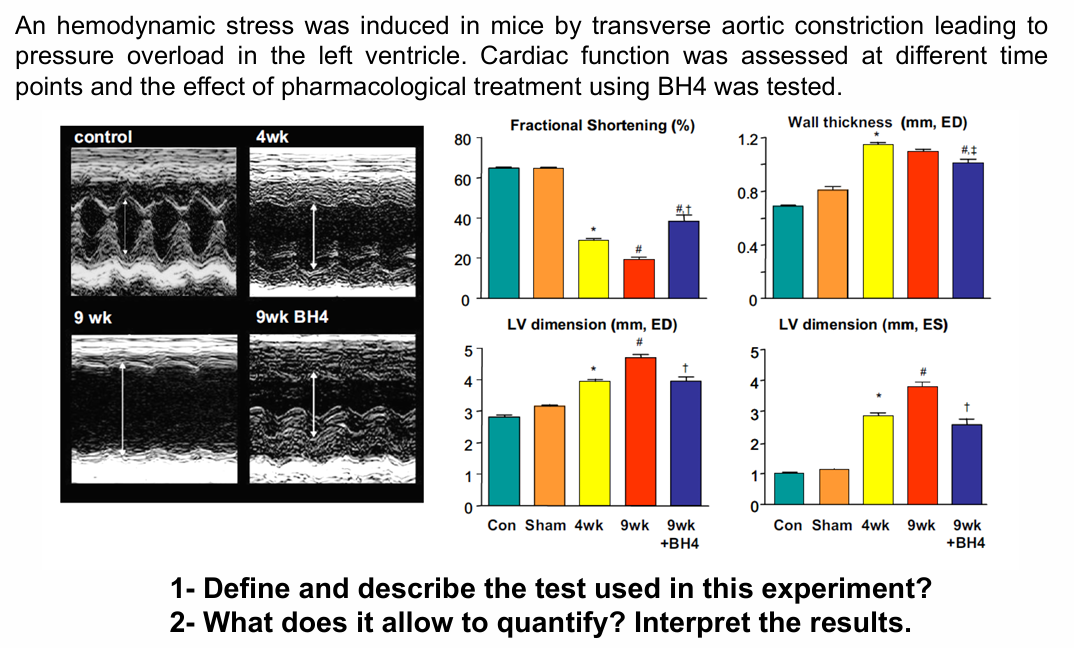
Functional exploration of cardiac function
Echocardiograph is a non-invasive technique ro explore the cardiac morphology and function using ultrasounds. A probe emits ultrasounds at high frequency (15-40 MHz) toward the organs. Th probe receives back the echoes, which are translated in electrical signal and amplifies. Used for morphological exploration of the heart chamber and large vessels. Conducted on anaesthetized, unconscious animals.
Morphology: LV end systolic and diastolic volume, LV mass. Function: strike volume, ejection fraction and cardiac output.
Fractional shortening is significantly reduced at 4 and 9 weeks → systolic (heart contract) dysfunction. Increase left ventricle wall thickness and increased dilatation → hypertrophy (increased size of existing cells) and dilatation. The treatment allows to reduce the cardiac function and remodelling.
Hypertension test
Choose animal model for hypertension:
Genetic model: SHR and Wistar Kyoto rat, to test anti-hypertensive drugs
Genetic + environment: Dahl salt-sensitive and normal-high-salt-diet, if the compound targets salt-retention
Transgenic rats: overexpression of gene regulating BP, if the drug targets a very specific pathway
Test to monitor blood pressure:
Radiotelemetry
Catheterism
Tail cuff method
Experimental conditions: dose-response, non-selective effects, efficacy vs known effective drugs (valsartan, losartan)
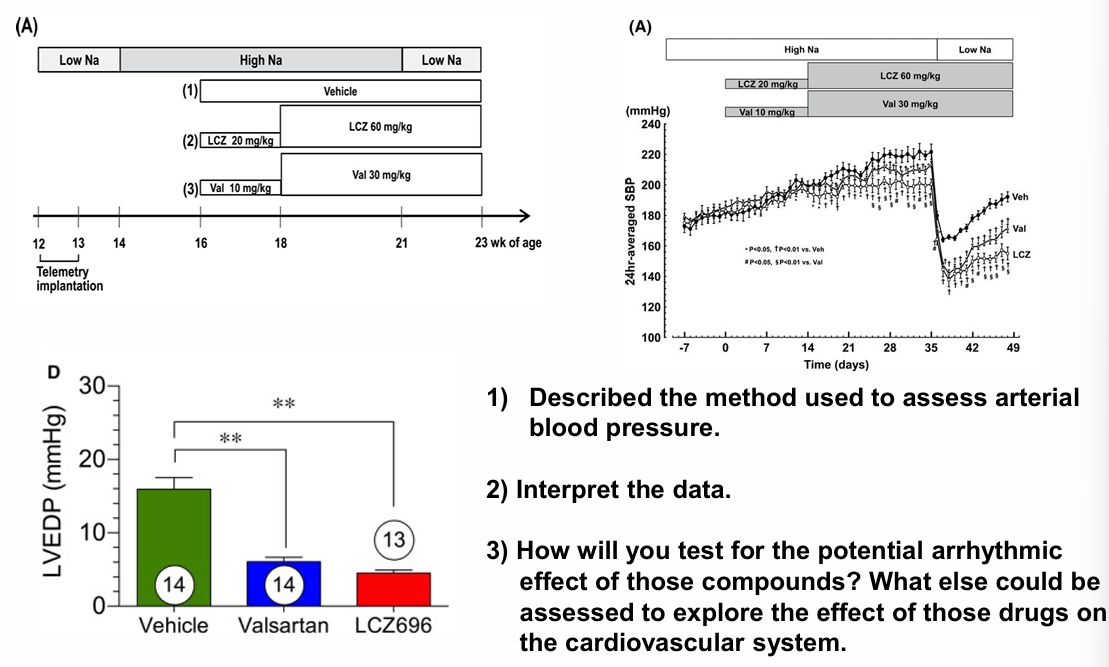
Valsartan regulation of cardiovascular system
Radiotelemetry: implant of a pressure probe in the animal by surgery. Mesurement of electrical activity by ECG recording: heart rated, ECG anormalies, arrytmia (long QT).
The graph shows that a high-sodium (High Na) diet induces a steady increase in systolic blood pressure in the control (Vehicle) group. Both drug treatments (Valsartan and LCZ) significantly attenuate this rise in blood pressure compared to the vehicle. LCZ also appears more effective than Valsartan at keeping the blood pressure lower.Left Ventricular End Diastolic Pressure (LVEDP) is significantly lower in both the Valsartan and LCZ696 groups compared to the vehicle group. Lowering LVEDP indicates that the drugs are effectively protecting the heart against the increased filling pressures and dysfunction associated with hypertension.
Arrhythmic effects: You would use ECG (Electrocardiogram) recordings to measure the heart's electrical activity. This allows researchers to monitor heart rate, detect ECG anomalies, and identify specific arrhythmias.
To further explore the cardiovascular effects, you could use Echocardiography (ultrasound) to non-invasively assess cardiac morphology (like left ventricular hypertrophy or chamber dimensions) and function (like ejection fraction and stroke volume). Other tests could include measuring plasma biomarkers (like BNP), assessing endothelial dysfunction, or examining vessel wall remodeling through histology.

