RADT 102 EXAM #2 - ELECTROMAGNETISM / ELECTRICITY / MAGNETISM
 Call Kai
 Learn
Learn Practice Test
 Spaced Repetition
 Match
Match Flashcards
 Knowt Play
1/96

There's no tags or description
Looks like no tags are added yet.
Name | Mastery | Learn | Test | Matching | Spaced | Call with Kai | Chat |
|---|
No analytics yet
Send a link to your students to track their progress
97 Terms
What is the PURPOSE of the x-ray unit
to convert electric energy into ELECTROMAGNETIC ENERGY of the x-ray beam
Describe ELECTRIC CIRCUITS
electrons flow along OUTER surface of wire
when the path is CLOSED and RESISTANCE can be controlled, it is a circuit
With ADDED resistance, the coming voltages are going to be _______ and ______ on the other side of the resistance
stronger, increased
Higher resistance = higher ______
voltage
When voltage goes up, amperage ________
goes down
When kilovolts go up, amperage _______
goes down
As DIAMETER got smaller, RESISTANCE ______ and gets more power/voltage to come out to go further
increased
Any CHARGED particle in MOTION creates a _____ ______
magnetic field
Describe the HISTORY of battery
luigi Galvani = frog leg
two conducting sources between water creates energy (?)
Alessandro volta = voltaic pile (battery sandwich) … the first battery
stacked copper and zinc together with a layer of wet paper between metals producing a weak current (electricity flowing)
Modern batteries have ….
positive carbon rod
surrounded by electrolytic paste
housed in a negative zinc
a battery is a source of conversion of some form of energy (magnetic) into electric current
battery is a source of EMF
What is EMF
Electromotive force
denotes and measured in VOLTS
is the voltage developed by any source of electrical energy (like battery or dynamo)
What did HANS OERSTED do?
discovered the relationship between magnetism and electric current
a magnetic field is produced by CURRENT running through the wire
any charge in motion induces a magnetic field
What is the HAND rule?
right hand
thumb (conductor) indicates the direction of the current
fingers indicate direction of magnetic field lines
they can be magnetized
If a wire is formed into LOOPS, what happens to RESISTANCE and MAGNETIC FIELD
resistance INCREASE
magnetic field INCREASE / GETS STRONGER
increased turns = more coils
increased turns = more resistance
What is the FARADAY RULE
aka the 1st law of electromagnetism
a magnetic field cannot be still and produce a current. But if the magnet is moving a current is produced
something has to move for the electrons to move (whether it is the wire or magnet)
On a STEP-UP TRANSFORMER, there is more VOLTAGE / COILS on the _______ side
secondary
On a STEP-DOWN TRANSFORMER, there is more VOLTAGE / COILS on the _______ side
primary
On the SECONDARY side of a STEP-DOWN TRANSFORMER, there would be _____ amperage
increased
To PRODUCE an electric current, what do you do?
move a bar near a coil of wire
OR
move coil of wire near stationary magnet
current increases with increase in magnetic field
INDUCED CURRENT by a magnet depends on what? (FARADAY RULE CONT)
strength of magnetic field
velocity of magnetic field
angle of the conductor to the magnetic field
# of turns in a ocnductor
more turns = higher voltage
how fast is the movement
What is MOVING in an x-ray circuit to produce a current in the coils?
prior to rectification, the current going through the transformers in a x-ray unit is AC
AC has pulses, which is the movement making the voltage / amperage able to move
What is the STEP-DOWN TRANSFORMER also called?
filament circuit
On which side of the TRANSFORMER does the AC go through rectification, converting to DC?
secondary side
Where is the rectification system in an x-ray schematic?
between the x-ray tube and the secondary side of step-up transformer
What is the FORMULA for VOLTAGE and turns (transformer law)
Vs / Vp = Ns / Np
v = voltage
s = secondary
p = primary
n = # of turns
For VOLTAGE, the transformer law formula has a _____ relationship
direct
What is the FORMULA for AMPERAGE and turns (transformer law)
Is / Ip = Np / Ns
I = intensity
s = secondary
p = primary
n = # of turns
For AMPERAGE, the transformer law formula has a _______ relationship
indirect
If a transformer has a ratio GREATER than 1, it is what
a step up transformer
If a transformer has a ratio LESS than 1, it is what
a step down transformer
What is LENZ’S LAW
the basis for self-induction
What in an x-ray circuit runs on self-induction?
autotransformer
choke coil (allows for adjustment of filament voltage)
Describe the AUTOTRANSFORMER
one winding, iron core
kVp selector taps off of this
line voltage compensator taps off of this
has primary / secondary side
can act as both step-up and step-down
kVp SELECTED here, not produced
The autotransformer is considered ________, while the step up / step down transformers are considered ________
self-induction, mutual conduction
What does MUTUAL CONDUCTION mean
you need more than one coil to act (like the step up / step down)
Describe the SHELL TYPE transformer
keeps the magnetism contained due to its structure of two closed cores
Describe the CLOSED-CORE transformer
two separate coils to identify step-up and step-down
What does a MOTOR do
converts ELECTRICAL energy to MECHANICAL
What does a GENERATOR do
converts MECHANICAL energy to ELECTRICAL
Matter has …
mass
form
energy
sometimes electric charge
Electric charge is primarily associated with ______, why?
electrons
they can travel from outer shell of one atom to another easily
protons can’t travel easily because they are fixed in the nucleus
What is STATIC ELECTRICITY
electricity that can’t be captured
can’t capture electrons jumping from point A to point B
An object must be in what state to be considered ELECTRIFIED?
an object that has too many or too few electrons
What are the different causes of ELECTRIFICATION
contact
person to object
friction
balloon
induction
lightning
What is an ELECTRIC GROUND
something that can accept excessive charges
e.g. the Earth … it can act as a reservoir for stray electric charges, like lightning
e.g. car’s tires, electrical cords
What is a COULOMB (C)
the fundamental measuring unit for electric charge (1C)
6.3 × 10 to the eighteenth power electron charges
List the ELECTROSTATIC LAWS
like charges repel
unlike charges attract
both form an electric field
positive field radiate outward
negative field radiate inward
What is ELECTROSTATIC FORCE
the repulsion or attraction between charges due to the electric field
both repulsion and attraction create fields, but ideal field is attraction
Describe COULOMB’S LAW
the GREATER the electrostatic charges for either object, the GREATER the electrostatic force
direct relationship
force gets stronger when objects are closer, weaker with the increase of distance
Electric charges are ______ distributed throughout the object or on its surface
uniformly
Describe ELECTRIC CHARGE CONCENTRATION
the electric charge of a conductor is concentrated along the sharpest curvature of its surface
wherever a curve is, the greater charge is there
What do INSULATORS do?
impede the flow of electrons
e.g. rubber on tires of cars, stops electricity
Describe SEMICONDUCTORS
these conductors sometimes let electrons flow through and sometimes impede the flow
e.g. rectification
you can take negative and stop it and allow the positive to go through
diode
What are the FORMULAS for OHM’S LAW (V = IR)
V = I x R
I = V / R
R = V / I
I = amps
V = volts
R = resistance
If RESISTANCE goes up, VOLTAGE should go _____, AMPERAGE should go _____
up, down
Describe ELECTRIC POWER
P = IV
P = wattages
volts and amps
systems only have certain wattage levels it can handle
What does a ROTOR do?
spins
3400 rpm
Describe a ROTOR
made out of ferramagnetic material (iron)
around it are stators (aka electromagnetics)
these have electricity and are highly conductive
when they spin around on the rotor, they produce a magnetic field one at a time
rotor (a magnet) tries to align to a stator and turns it, turning one off and turning the next one on
electricity follows this created magnetic field, making it spin
Does the ROTOR get any electric current / electricity?
No
the electromagnets around the rotor are the ones being energized
Describe ELECTRON SPIN
electrons behave like they rotate on an axis
this spin creates a magnetic field
Define DIPOLAR/BIPOLAR
magnet that has two poles
What is a MAGNETIC DIPOLE
a small magnet created by the electron orbit
current that flows in an infinitesimally small loop
What is a NATURAL MAGNET
magnets that get their magnetism from the Earth
created by external forces
lodestone (leading stone) is a type of magnet naturally occurring
best example is the Earth, because it has a magnetic field due to it spinning on axis
What is an ARTIFICALLY PRODUCED PERMANENT MAGNET
produced by aligning their domains in the field of an electromagnet
e.g. a compass
they don’t always stay permanent, they can be destroyed due to misalignment and loss of magnetism
What are ELECTROMAGNETS
coil or wire wrapped around an iron core that intensifies the magnetic field
on x-ray circuit = primary/secondary coils of step up / step down transformers and autotransformer
What is TESLA
the SI unit of magnetic field strength
What TERM is usually used to describe PRIMARY side on a transformer?
supplied
What TERM is usually used to describe SECONDARY side on a transformer?
induced
What are the CHARACTERISTICS of a SUPERCONDUCTOR
NO resistant to electron flow
NO electric potential required
must be very cold
What is the MATERIAL of SUPERCONDUCTORS
niobium
titanium
What are the CHARACTERISTICS of CONDUCTORS
VARIABLE resistance
obeys ohm’s law
requires a voltage
What are the MATERIALS for CONDUCTORS
copper
aluminum
What are the CHARACTERISTICS of a SEMICONDUCTOR
can be conductive
can be resistive
basis for computers
acts as both conductor and insulator
What are the MATERIALS for a SEMICONDUCTOR
silicon
germanium
What are the CHARACTERISTICS of an INSULATOR
does NOT permit electron flow
extremely HIGH resistance
necessary with high voltage
What are the MATERIALS for INSULATORS
rubber
glass
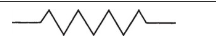
symbol identification
Resistor
inhibits flow of electrons

symbol identification
Battery
provides electric potential

symbol identification
Capacitor
momentarily stores electric charge
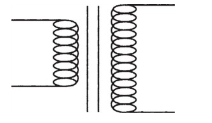
symbol identification
Transformer
increases or decreases voltage by a fixed amount
AC only
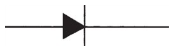
symbol identification
Diode
allows electrons to flow in only one direction
What are the CHARACTERISTICS of NONMAGNETIC state
unaffected by a magnetic field
What are the MATERIALS for NONMAGNETIC state
wood
glass
What are the CHARACTERISTICS of a DIAMAGNETIC state
weakly repelled from both poles of a magnetic field
material that is UNAFFECTED when brought into magnetic field (not impacted)
What are the MATERIALS for a DIAMAGNETIC state
water
plastic
What are the CHARACTERISTICS of a PARAMAGNETIC state
weakly attracted to both poles of a magnetic field
material that is SLIGHTLY attracted to a magnet and loosely influenced by magnetic field
in between ferromagnetic and diamagnetic
e.g. contrast agents utilized in MRI
What are the MATERIALS of a PARAMAGNETIC state
gadolinium
What are the CHARACTERISTICS of a FERROMAGNETIC state
can be strongly magnetized
What are the MATERIALS of a FERROMAGNETIC state
iron
nickel
cobalt

RED
Line compensator

ORANGE
Autotransformer
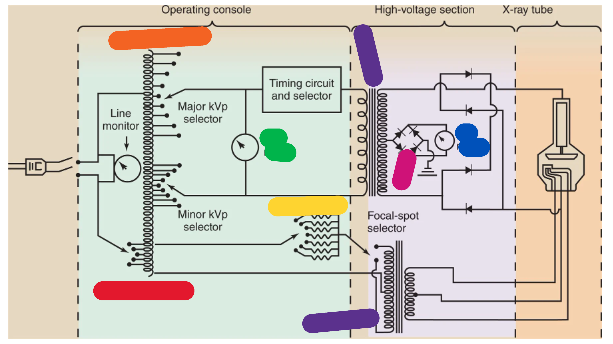
YELLOW
Variable rheostat

GREEN
kVp meter

BLUE
mA meter

PURPLE
Step-up / Step-down transformers

PINK
Rectifier
What is the LINE COMPENSATOR
measures the voltage provided to the x-ray imaging system and adjusts the voltage to precisely 220 V