Fish
 Call Kai
 Learn
Learn Practice Test
 Spaced Repetition
 Match
Match Flashcards
 Knowt Play
1/18

There's no tags or description
Looks like no tags are added yet.
Name | Mastery | Learn | Test | Matching | Spaced | Call with Kai |
|---|
No analytics yet
Send a link to your students to track their progress
19 Terms
Why are stocks of fish shrinking
Too many fish are being harvested from our seas
Too much rubbish is thrown into the sea without wildlife being protected. As a result, many fish get tangled in nets and are injured
Sustainability of fish
Sustainability - fish from managed stocks that are farmed and caught in a way that causes minimal damage to the environment and to other wildlife
The Fish Environmental Stewardship logo: Fish are caught with minimal impact on ecosystems and the environment, which helps ensure that the fish we eat today will still be here tomorrow
Types of fish
Oily Fish:
The flesh of oily fish is more than 5% fat and is dark in colour. They can live in the seas or in fresh water
Examples: mackerel, herring, tuna, trout, salmon, and sardines
White Fish:
Flesh is less than 5% fat, making it white. The oil/fat is stored in the liver. White fish live in the sea. Characteristics: firm flesh, clear and shiny eyes, red gills, and a clean smell
Examples: cod, haddock, sole, coley, hake, whiting, sea bass, plaice, turbot, halibut, plaice, brill, and mullet
Shellfish:
Molluscs are small, soft bodied sea animals which live inside a soft shell. Crustaceans are soft bodied, jointed sea animals covered by a hard protective shell
Examples: cockles, winkles, mussels, whelks, squid and octopus, lobsters, crayfish, crab and shrimp
Buying fresh fish
Moist fish is bought fresh or frozen, first being gutted + filleted
Buy fresh fish as fresh as possible and eat the same or next day, as fish spoil rapidly and are carriers of food poisoning bacteria such as listeria, salmonella, vibrio, scombroid
Fresh fish should have virtually no smell and be moist (but not slimy) and have prominent eyes
Cuts: round fish fillets eg cod. flat fish fillets, fish steaks which come from the width of a round fish only, eg tuna. Fish cutlets which are slightly thinner than steaks and come from between the head and mid body, eg salmon
Small fish such as herring and mackerel are usually sold whole
Storing and preparing fresh fish
Store at 0-5 degrees away from other products
Packed in ice to keep it fresh
It should be well wrapped to prevent the strong smell from contaminating other foods
It should be washed under cold running water before use to make it clean and free from any blood or innards prior to cooking
Remove scales, fins and the head. All fish, large and small, can be cooked whole but large fish are usually cut into portions, steaks, or fillets
Selecting fresh fish
Prawns and shrimps should be pink or grey in colour
Shellfish must have bright, hard, tightly closed shells
Eyes should be clear,full and shiny, glistening but not sunken
fish should look shiny with plenty of bright scales
Fish just caught will be firm for up to 24 hours. As it gets older it grows softer; the bendier the fish, the older it is
Gills should be red; a good amount of oxygen is in the blood
Fish should smell of the sea and not fishy or strong
Fish with distinctive markings should clearly show them, eg orange spots on plaice
Buying crab; tap it gently to make sure it doesn’t contain water. Lobsters + crabs should have all their limbs and feel heavy. They should be purchased live and able to move their claws. Lobsters should flap or curl their tails
Cooking fish
Choice of cooking method can affect nutritional value. Suitable methods include frying, steaming, poaching, grilling, baking and microwaving
Fish can be used in many dishes, and in the UK, it is popular fried in batter or breadcrumbs
It can be cooked and served with a sauce as a starter or main course or used in soups and salads
It can be marinated, stuffed, coated, or wrapped in pastry before cooking
Any liquid left behind after cooking fish can be used in a sauce to serve with the fish. This helps to add flavour to the sauce
Marinading fish
The purpose of a marinade is to add extra flavour to fish before cooking
Structure and texture of fish means the marinade will quickly soak into the flesh, making marinating time very short
Marinades include an acidic ingredient such as lemon juice which has the effect of cooking the fish, so do not leave it in it for too long
Marinades should be evenly distributed over the fish
Dry marinades using herbs and spices can also be used. The fish is dusted with the marinade, so all pieces are coated evenly
Coating fish
Coating can be in either flour or batter; either way it should be done just prior to cooking
When the coated fish is placed into hot fat the coating immediately seals and protects the fish which then cooks as heat is conducted through the coating
Methods of cooking fish
Grilling:
Brush white fish with a little oil. Make sure the grill is hot and turn over carefully once
Examples - white and oily fish
Shallow Frying:
Dry fish with kitchen paper, coat with beaten egg and dust with flour. Oil should be hot enough for the fish to sizzle
Examples - cod, trout, salmon
Deep Frying:
Fish is battered first (flour, milk, and water). Oil should be hot enough to sizzle when the fish is put in, or the batter will become soggy and greasy. This method adds calories
Examples - most white fish
Steaming:
A healthy option. Fish sits in a steamer on top of a pan of boiling water. There is no loss of flavour
Examples - plaice, prawns
Poaching:
A gentle way to cook delicate fish. Poaching liquid can be water, milk, or white wine, then used for a sauce
Examples - white fish
Baking:
A good method as flavour is retained. When cooked in parcels with herbs and wine, flavours develop and enhance the fish. Good for barbeques
Examples - salmon, tuna, cod
Microwaving:
Easy and quick. Usually poached in liquid. Milk, lemon juice and wine work well with salmon. Be careful with timing
Nutritional value of 100 gram fish
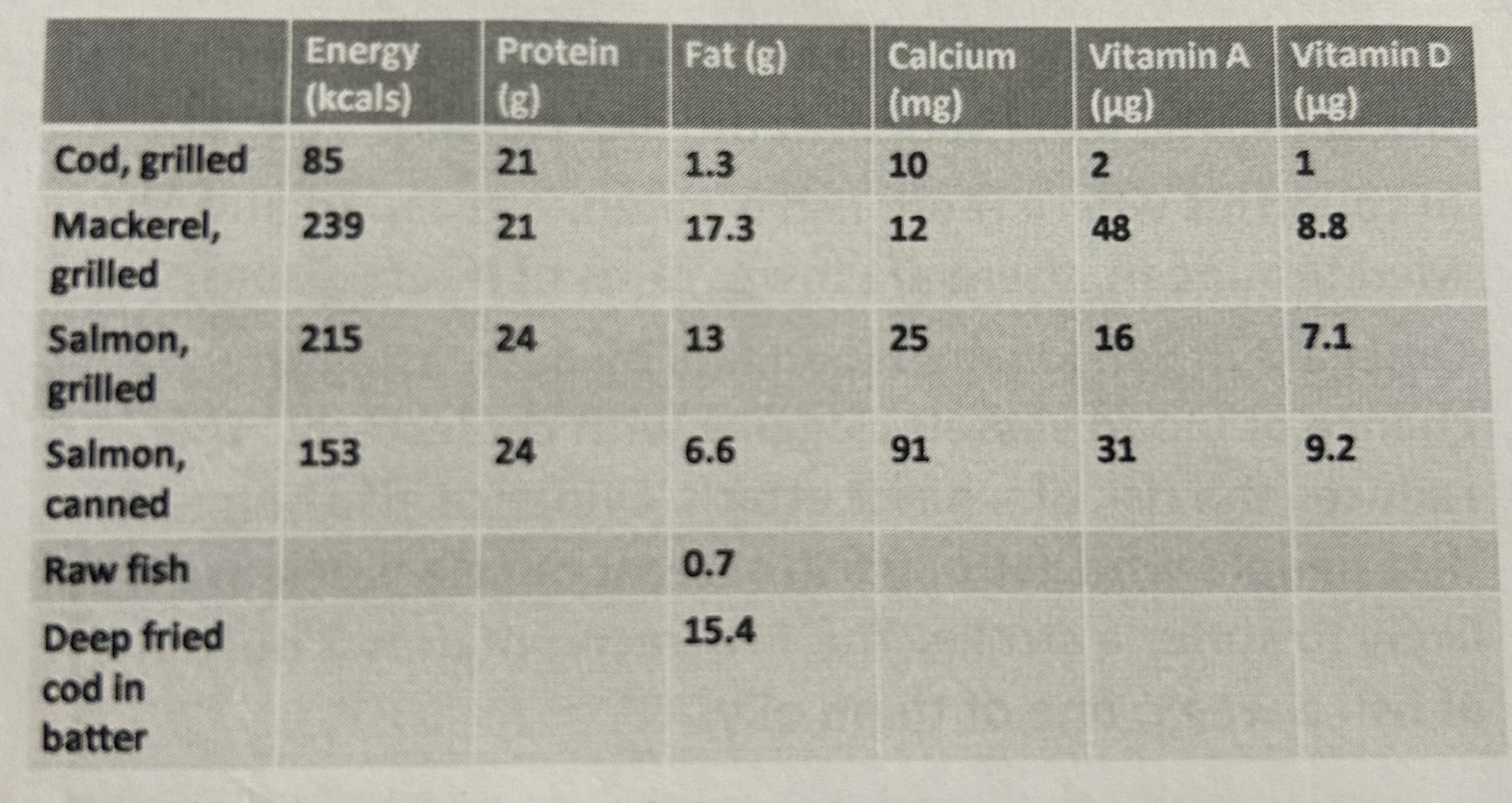
Methods of preservation
Canning - Produces a moist, flaky product. Bones are edible. Canned in brine, tomato sauce or oil, adding flavour. Eg mackerel, salmon, tuna
Drying - Fish are laid out to be dried and shelf life is extended, eg cod, haddock
Freezing - Often coated in breadcrumbs or batter, made into easy to package pieces, eg fish fingers. Also frozen in sauce or plain portions. Most fish is suitable
Pickling - A common technique in Scandinavia and a very old method. Adds flavour and sharpness
Salting - Fish is cured with dry salt or brine, eg salted cod, and kippered herring
Smoking - Hot smoked fish are moist, lightly salted and fully cooked. Can be eaten without further cooking. Cold smoked fish are salty in flavour, have less moisture and are not cooked. Eg kippers and bloaters, and they should have a firm flesh, shiny skin and a good smoky smell
Composition of fish
Composition of fish muscle is like meat but with less connective tissue.Short fibres are separated by very thin connective tissue which makes it much easier to tenderise and quicker to cook
During cooking, fish muscle shrinks and moisture escapes. Collagen (the connective tissue in fish) changes to gelatine
Fish should not be overcooked as the proteins toughen, and the flesh becomes dry. The connective tissue weakens and dissolves, the muscle flakes and separates on cooking. Medium temperatures and fast cooking methods are recommended
When cooking oily fish, the fat content helps to keep the flesh moist and prevents it from drying out
Omega 3 - lack of it and processing effect
Lack of omega 3 - symptoms of deficiency include fatigue, poor memory, dry skin, heart problems, mood swings, or depression and poor circulation
Processing of fish can destroy the omega 3 content. Some brands of tuna can have the omega 3 removed during processing, so check the label
What does fish consist of
Fish consists of water, protein, fat, vitamins + minerals
Nutritional value of fish - Protein and Fat
Protein: Fish is a good source of HBV protein, which is essential for body building and repair of tissues. White fish is easily digested and is recommended for people with digestive disorders
Fat: The fat in fish is mostly oils containing unsaturated fatty acids. Oily fish provide essential fatty acids such as omega-3, known to help reduce cholesterol levels and the risk of heart disease. Oil-rich fish such as mackerel, sardines, salmon, and tuna are rich in unsaturated fats containing omega-3
Nutritional value of fish - Omega-3
It is necessary for health and cannot be made by the body. The main source in the diet is fish
In countries where more fish is eaten, eg, Japan and the Mediterranean, there are lower rates of heart disease
Omega-3 in fish lowers blood fats by decreasing the chance of blood vessels clogging with cholesterol. This reduces the risk of a heart attack. Evidence also suggests that people who eat ily fish at least once a week are less likely to suffer a stroke. The BNF recommends 2 portions of fish a week, one of them oily
Nutritional value of fish - Vitamins and Minerals
Vitamins:
Oily fish are one of the best sources of fat-soluble vitamins A and D in the diet
Canned oily fish are good sources of vitamin D
White fish contains vitamins A and D in the liver, but not in the flesh
Most fish contain a small amount of the B group vitamins, some of which are destroyed by heat and lost during cooking
Minerals:
Fish is a good source of calcium. Sea fish are a good source of iodine and fluorine, magnesium, and zinc. Sodium, potassium, and phosphorus are all found in fish. Canning of fish softens the bones so they can be eaten, making canned fish a good source of calcium
Calorific value of fish
White fish are tasty, low calorie meal option containing 81kcals per 100g. Oily rich fish have around 190kcals per 100g. Both are good healthy eating choices.

