Psychological theories
 Call Kai
 Learn
Learn Practice Test
 Spaced Repetition
 Match
Match Flashcards
 Knowt Play
1/12

There's no tags or description
Looks like no tags are added yet.
Name | Mastery | Learn | Test | Matching | Spaced | Call with Kai |
|---|
No analytics yet
Send a link to your students to track their progress
13 Terms
Cesare Lombroso ‘Atavistic theory’
Suggested that criminals have primitive features were biological characteristics from an earlier stage of human development which have a tendency to commit crime.
He argued the physical shape of the head determined the ‘born criminal’.
Other physical characters are high cheekbones, large chin, hawk like noses
Evaluation of Lombroso theory
Strengths=
He was the first person to analyse crime scientifically led to modern genetic theories.
Weaknesses=
no evidence to support Lombroso’s claims
He can be criticised for scientific racism- his atavistic are commonly seen in people from African descent
Sheldons ‘somatotypes theory’
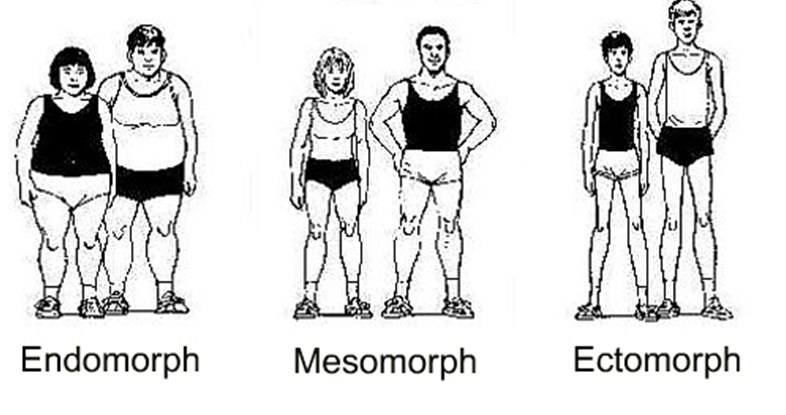
Sheldon believed that people could be classified into 3 body types which relates with 3 different personality types. He saw a correlation between the body and behavioural patterns.
Ectomorphic = are introverted and afraid of people. Thin and fragile
Endomorphic = are sociable and easy to get along with. Fat and soft.
Mesomorphic = adventurous and ruthless in relationships with others. Aggressive. Muscular and hard.
Mesomorphs, therefore, pose the greatest threat of becoming delinquents and later criminals. However, he found some relationship between endomorphy and delinquency. Sheldon studied this by comparing 400 boys in a residential rehabilitation home. He gathered extensive family backgrounds on each and also monitored their growth for 8 years.
Evaluation for Sheldons theory
Strengths=
the most serious delinquents were the ones that were mesomorphic
Weaknesses=
The theory cannot explain why many mesomorphs don’t offend
The theory doesn’t provide a casual explanation - offenders may be mesomorphic because they had to survive in tough prison environment
Genetic: crime and family
4 main ways that links crime and family
Family studies - looking at families and seeing if there are patterns of criminality
Adoption centre - looking at children that share the same parents but have been raised in spate houses
Twin studies - looking at twins raised together and apart
Genes - looking at bloody samples to detect chromosome abnormalities linked to criminality.
Family studies
these studies compare the family trees of criminals and non criminals. Some family studies have found that a child is more likely to become a criminal if there parents or grandparents are criminals.
Osborne = compared the sons of criminal and non criminal fathers. Found 13% of the sons of criminal fathers had a criminal
Twin studies
There are 2 types of twins.
Monozygotic twins = identical twins. All their genes are the same.
Dizygotic twins = non identical twins. Half their genes are the same.
Christianesen (1977) studied 3586 Danish twins. He found that for DZ twins the concordance rate for crime was 13% whereas for MZ twins it was 35%.
Adoption studies
In adoption studies researchers compare the similarity of behaviour between adoptees and biological offspring. If the child is more similar to their adoptive parent then it suggests that environment is more important.
Mednick et al (1975) studied court convictions finding that there were 14,427 adoptees amongst them. The criminal records of biological and adoptive parents were then investigated
Genetics: Chromosome Abnormalities
Female chromosome = XX
Male chromosomes = XY
An abnormality in the male chromosome, creating an extra Y chromosome has been found. XYY.
This is not an inherited condition, so it does not fun in families.
It appears to be related to increased aggression and slower than average learning.
Jacob XYY study:
There is a belief that criminals have an extra Y chromosome, giving them an XYY chromosome makeup rather than an XY makeup. This has been associated with a strong compulsion to commit crime.

Jacobs found the incidence of the XYY disorder (males with an extra Y) was 20 times higher among inmates in a Scottish prison than in the general Scottish population. The extra Y chromosome caused males to be unusually tall, aggressive and violent. ‘Supermales’ were believed to be prone to extremely violent heinous crimes.
Richard Speck who brutally murdered 8 student nurses in Chicago. Speck had a lengthy criminal record and the physical stigmata associated with the chromosomal pattern - XYY theory was used to account for his crime, later found he did not have an extra Y chromosome
Evaluation for Jacobs XYY theory
Strengths=
there is some research support the explanation
There is gentic evidence. Some studies have fund correlations between the XYY chromosomes and aggressive behaviour, suggesting a potential genetic influence on criminality
Weakness=
neglect of environmental factors – the theory has been criticised for overlooking environmental factors such as upbringing, social context which impacts behaviour.
Research cannot demonstrate cause and effect.
The syndrome is very rare, so it dosen’t account for all violent offenders
Neurophysiological: Brain damage
Phineas Gage = most famous, documented cases of severe brain injury.
Gage was a railroad worker who had been impaled by an iron rod during an explosion. Gage survived but the iron rod destroyed his frontal lobe. After the accident Gages behaviour changed. He became aggressive, unreliable.
The prefrontal cortex of the brain is responsible for planning , decision making it can lead to lower levels of self control.
do criminals have a different brain structure?
Raine = used PET scans of violent offenders. He used 41 American prisoners and matched them with 41 ‘normal’ people. 6 of the prisoners were schizophrenic and 23 had suffered head injuries. The schizophrenic were matched with other schizophrenic people from the general population.
results found that violent offenders had less activity in their frontal and parietal lobes. The parietal lobe handles verbal ability and learning.
Raine concluded that brain structure influences behaviour and supports a neurological element to criminal behaviour.
Evaluation of biological theories overall
strengths =
There is some support from extreme cases e.g. Charles Whatman
Limitations =
Crimes caused by brain damage are rare. The original personality is an important factor
Prisoners may have a brain injury because of engaging in violent crimes, rather than it being the cause.

