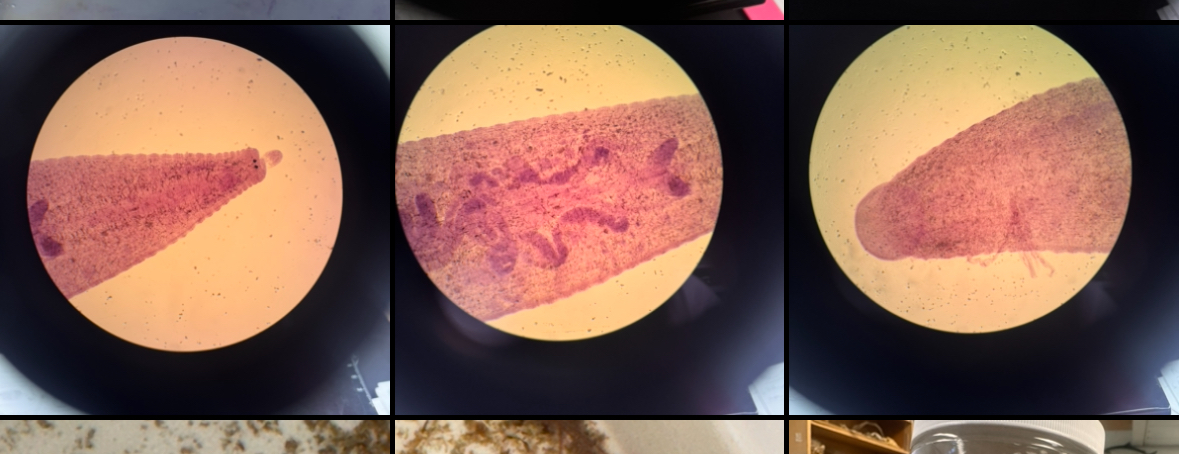
Lab prac zoo 2

0.0(0)
Studied by 0 people
call kaiCall Kai
learnLearn
examPractice Test
spaced repetitionSpaced Repetition
heart puzzleMatch
flashcardsFlashcards
GameKnowt Play
Card Sorting

1/23

encourage image

There's no tags or description

Looks like no tags are added yet.

Last updated 5:16 AM on 4/4/26
Name
Mastery
Learn
Test
Matching
Spaced
Call with Kai

No analytics yet

Send a link to your students to track their progress

24 Terms
1
New cards
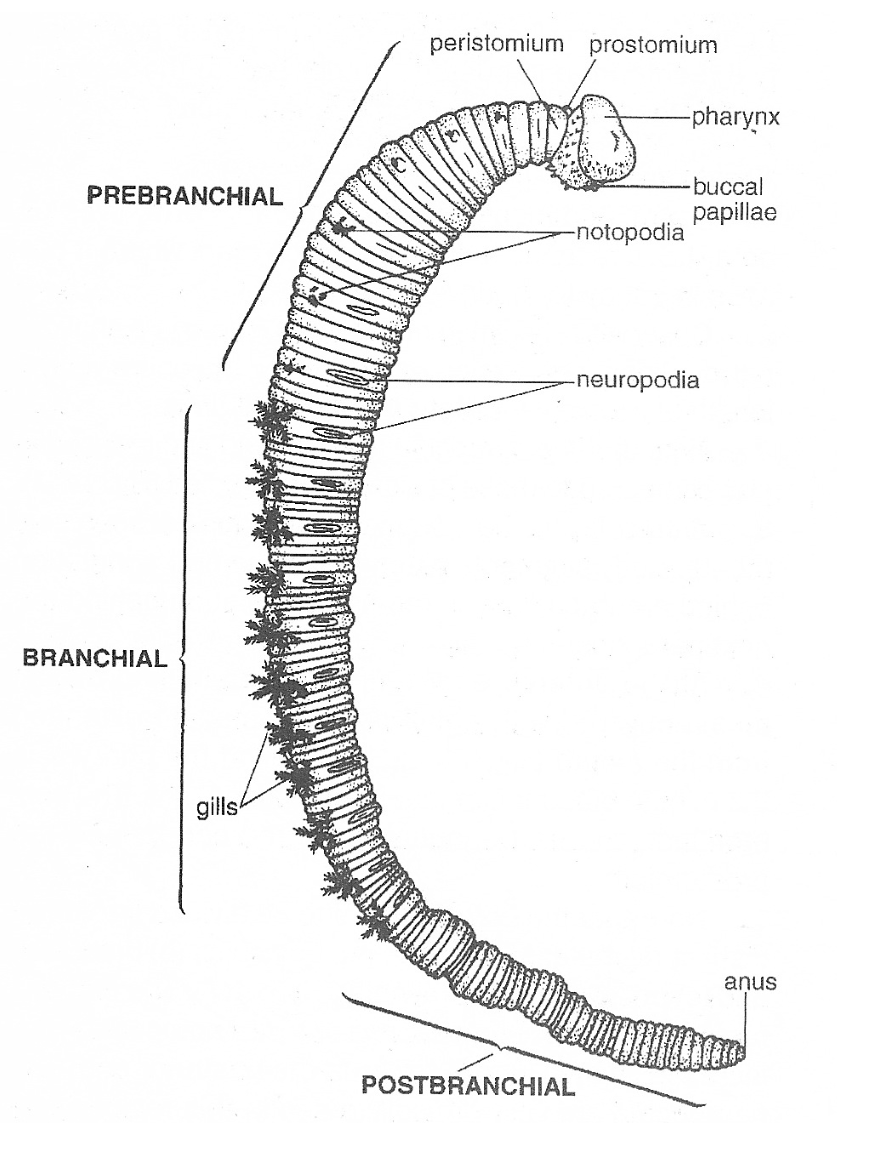
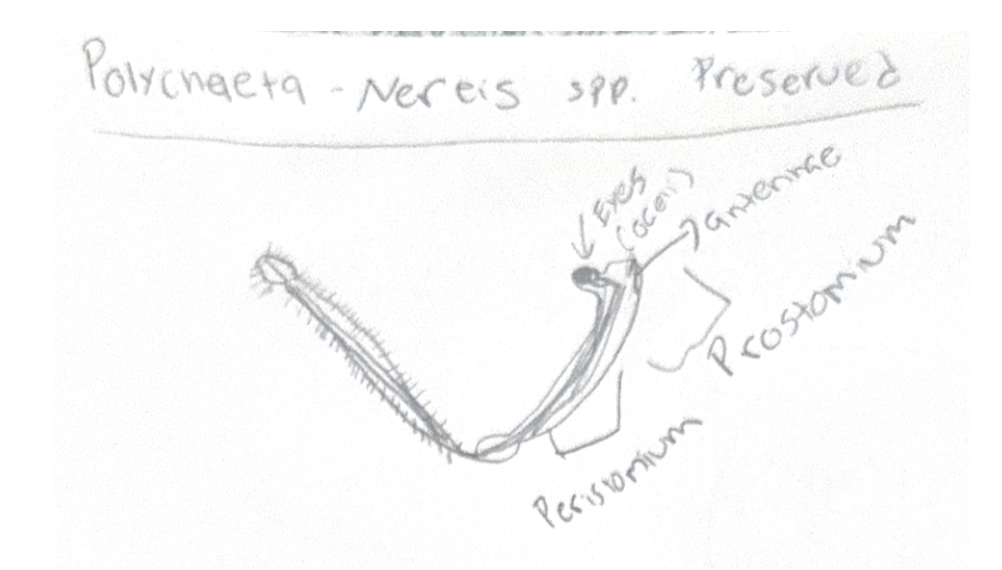
<p>Phylum: Annelida</p><p><strong>Class: Polychaeta</strong></p><p>Family: Nereidea</p><p>Genus: <strong>Nereis </strong></p>

Phylum: Annelida

Class: Polychaeta

Family: Nereidea

Genus: Nereis
knowt flashcard image
2
New cards
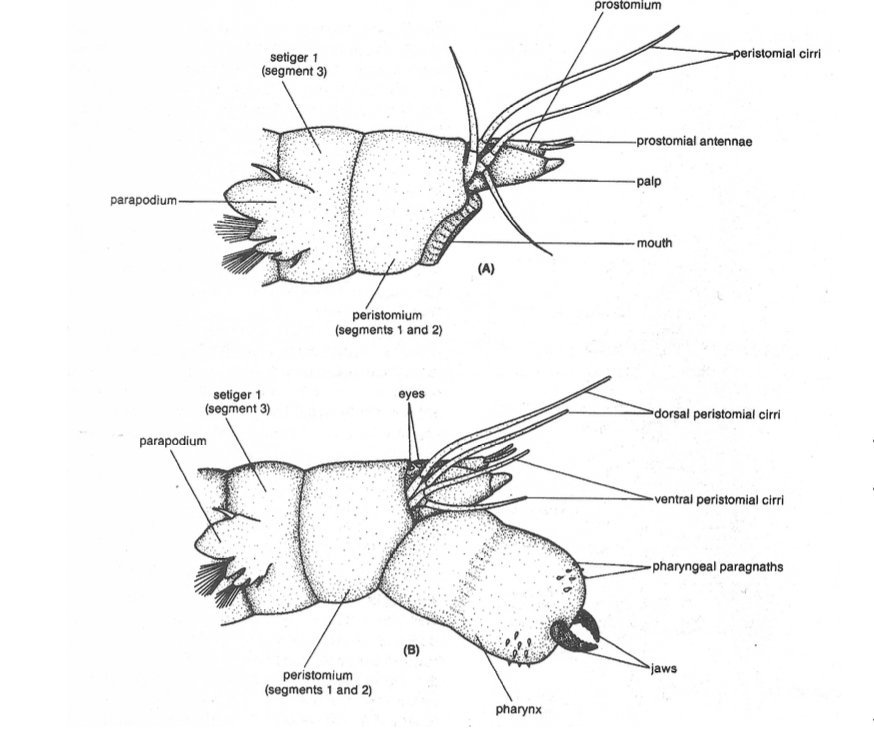
<p><span data-name="brain" data-type="emoji">🧠</span> Head</p><ul><li><p><strong>Prostomium</strong></p><ul><li><p>Has: eyes, antennae, palps</p></li><li><p>Function: <strong>sensory (light + chemicals)</strong></p></li></ul></li><li><p><strong>Peristomium</strong></p><ul><li><p>Has: tentacular cirri</p></li><li><p>Function: <strong>sensory + feeding coordination</strong></p></li></ul></li></ul><p></p>

🧠 Head

  • Prostomium

    • Has: eyes, antennae, palps

    • Function: sensory (light + chemicals)

  • Peristomium

    • Has: tentacular cirri

    • Function: sensory + feeding coordination

🍽 Feeding

  • Proboscis (pharynx)

    • Eversible, has jaws + paragnaths

    • Function: grabs prey

    • Mechanism: hydrostatic pressure (fluid pushes it out)
3
New cards
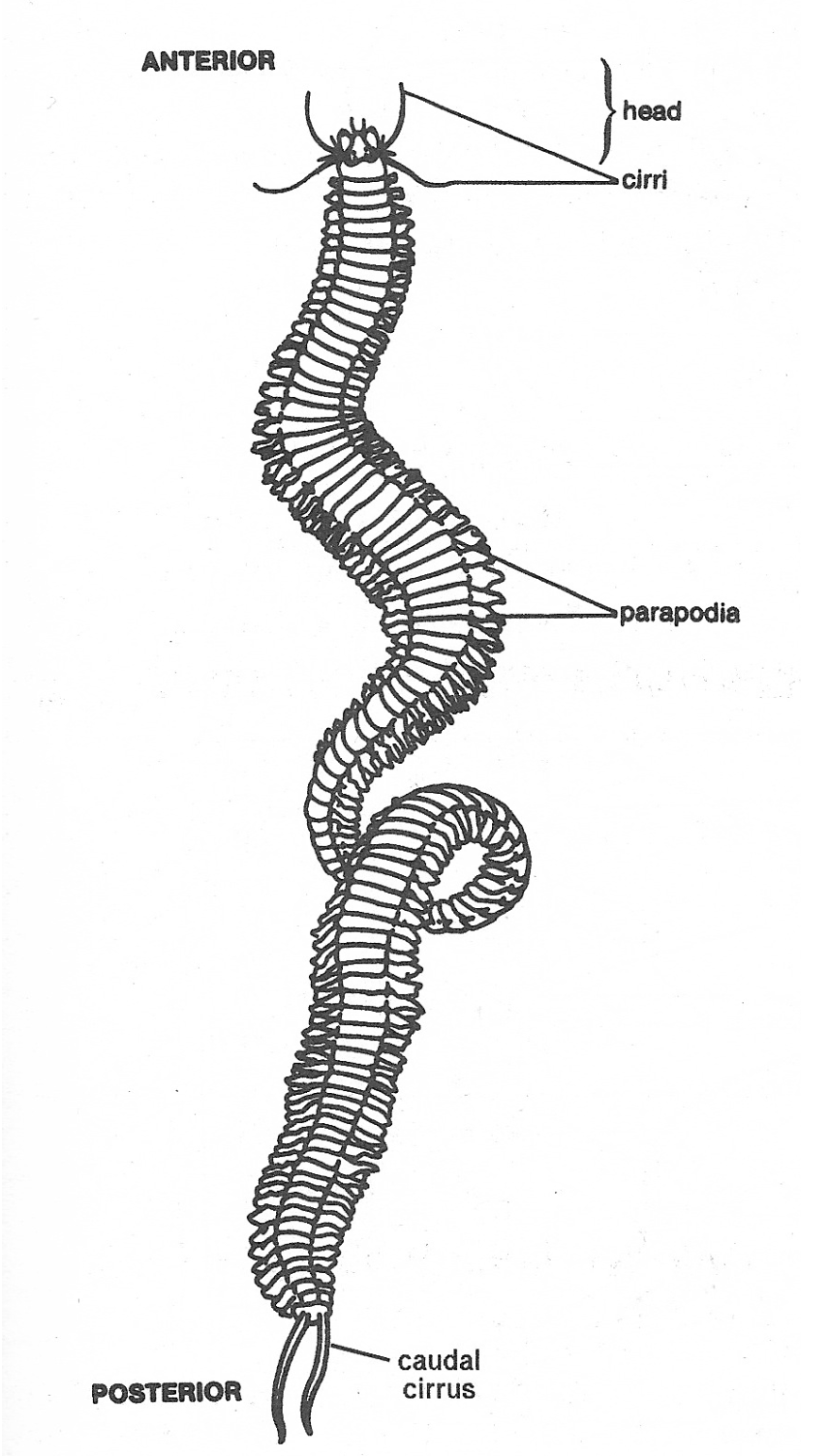
<p><span data-name="feather" data-type="emoji">🪶</span> Body</p><ul><li><p><strong>Segments</strong></p><ul><li><p>Function: repeated units → efficient movement</p></li></ul></li><li><p><strong>Parapodia</strong></p><ul><li><p>Function:</p><ul><li><p>locomotion</p></li><li><p>gas exchange (acts like gills)</p></li></ul></li></ul></li><li><p><strong>Chaetae (setae)</strong></p><ul><li><p>Function:</p><ul><li><p>grip substrate</p></li><li><p>traction for crawling</p></li></ul></li></ul></li></ul><p></p>

🪶 Body

  • Segments

    • Function: repeated units → efficient movement

  • Parapodia

    • Function:

      • locomotion

      • gas exchange (acts like gills)

  • Chaetae (setae)

    • Function:

      • grip substrate

      • traction for crawling

knowt flashcard image
4
New cards

Circulation / nervous

  • Dorsal blood vessel

    • Function:

      • circulation

      • gas exchange across thin walls

    • Note the dorsal blood vessel, and its lateral offshoots that lead to the parapodia

  • Ventral nerve cord

    • Function:

      • coordination

    • If you flip the worm over so ventral is up, you may be able to see the ventral nerve cord through the body wall.

🔚 Posterior

  • Pygidium

    • Has anus + cirri

    • Function:

      • waste removal

      • sensory

5
New cards
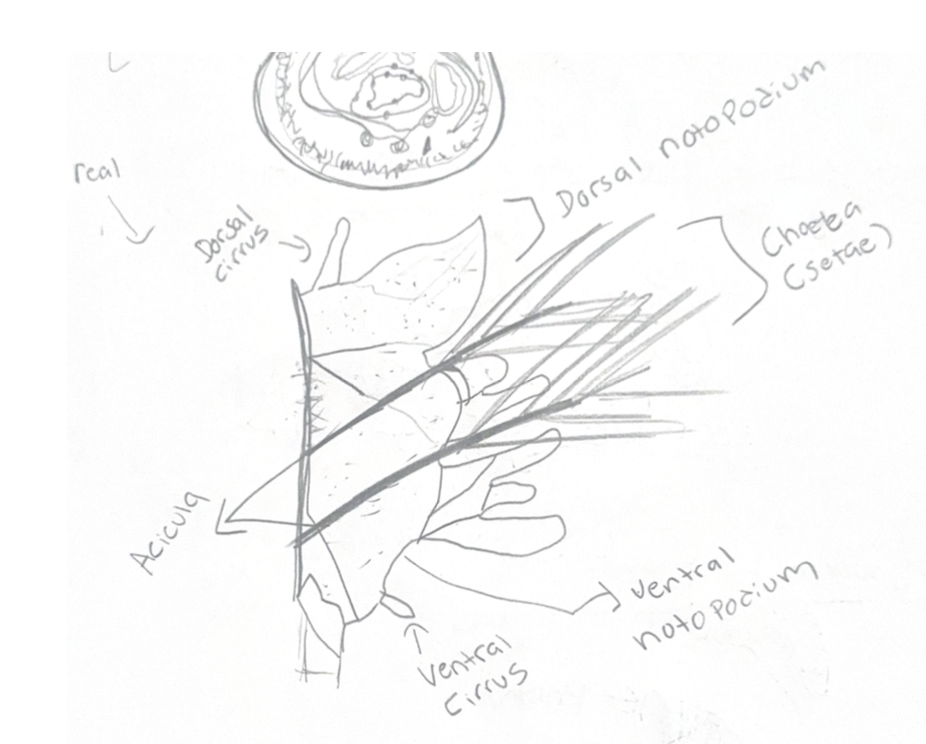
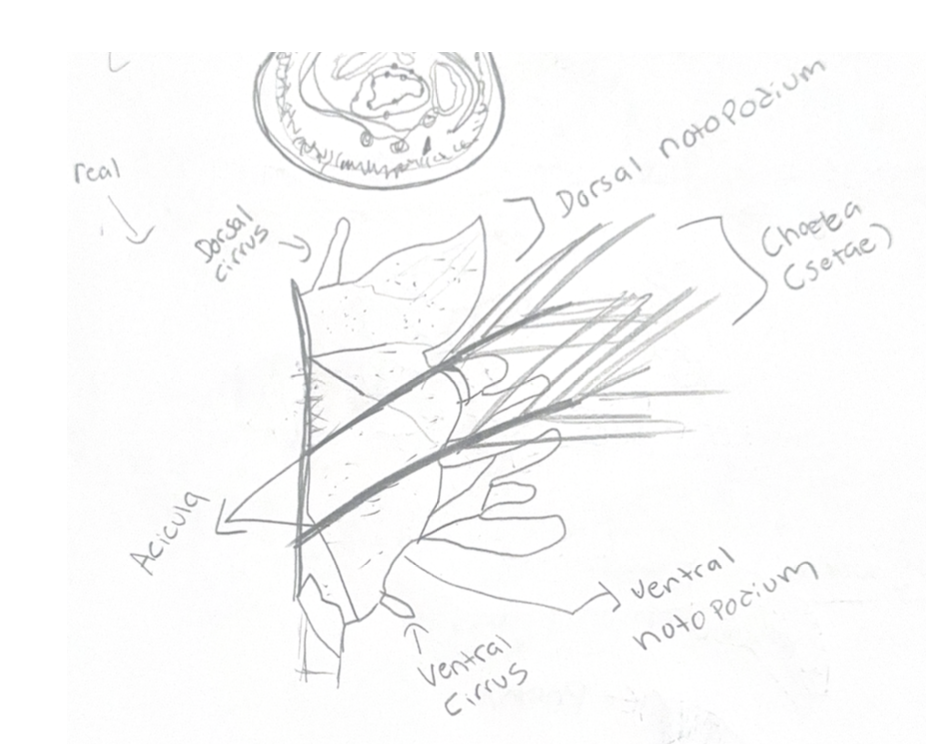
<p><strong>Prepared Slide: Parapodia</strong></p><p><strong>Nereis</strong></p>

Prepared Slide: Parapodia

Nereis

knowt flashcard image
6
New cards
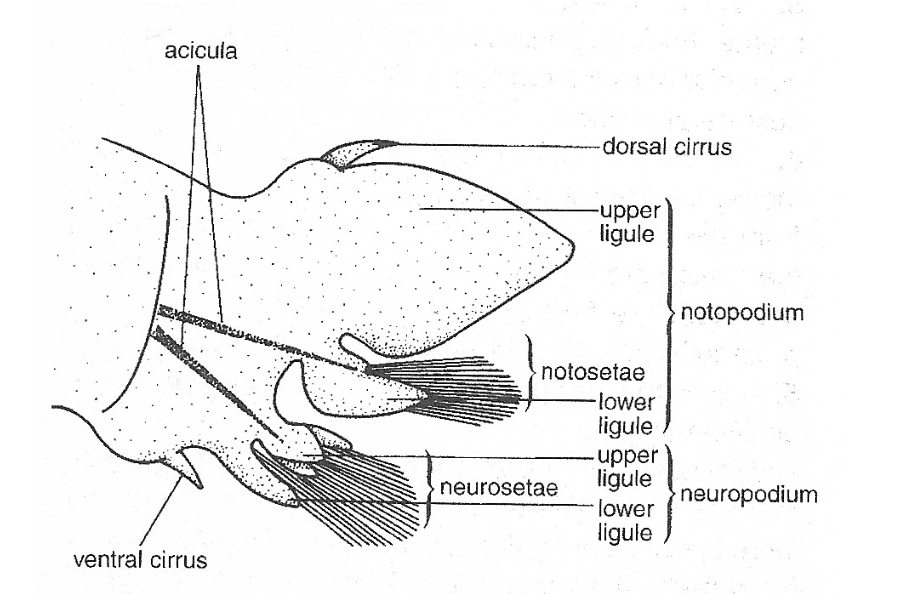
<ul><li><p>Notopodium + neuropodium → <strong>movement + respiration</strong></p></li><li><p>Cirri → <strong>sensory</strong></p></li><li><p>Setae → <strong>locomotion (push against substrate)</strong></p></li><li><p>Acicula → <strong>internal support (like a skeleton)</strong></p></li></ul><p></p>
  • Notopodium + neuropodium → movement + respiration

  • Cirri → sensory

  • Setae → locomotion (push against substrate)

  • Acicula → internal support (like a skeleton)

🔬 WHAT TO IDENTIFY

  • Notopodium (dorsal lobe)

  • Neuropodium (ventral lobe)

  • Dorsal & ventral cirri

  • Setae (chaetae)

  • Acicula

<p><span data-name="microscope" data-type="emoji">🔬</span> WHAT TO IDENTIFY</p><ul><li><p><strong>Notopodium (dorsal lobe)</strong></p></li><li><p><strong>Neuropodium (ventral lobe)</strong></p></li><li><p><strong>Dorsal &amp; ventral cirri</strong></p></li><li><p><strong>Setae (chaetae)</strong></p></li><li><p><strong>Acicula</strong></p></li></ul><p></p>
7
New cards
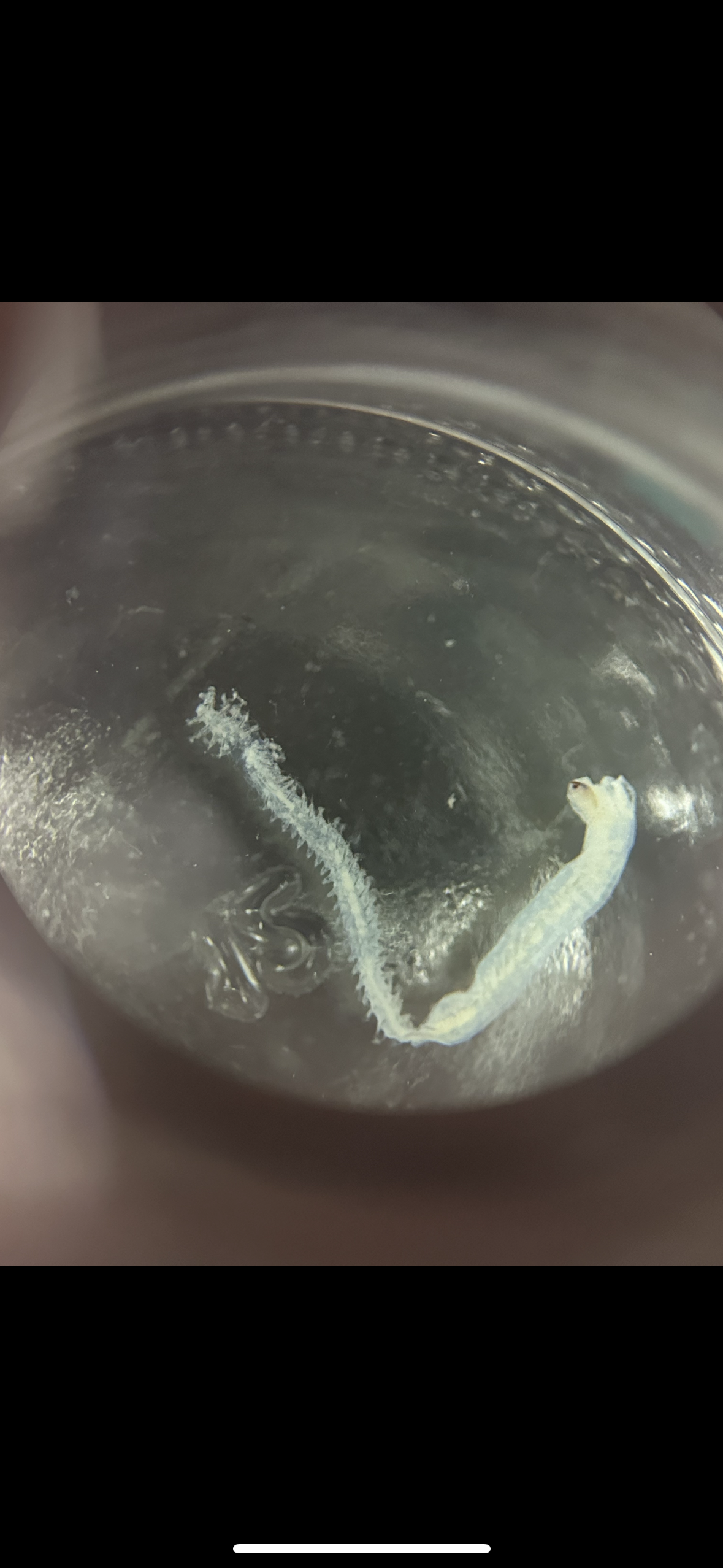
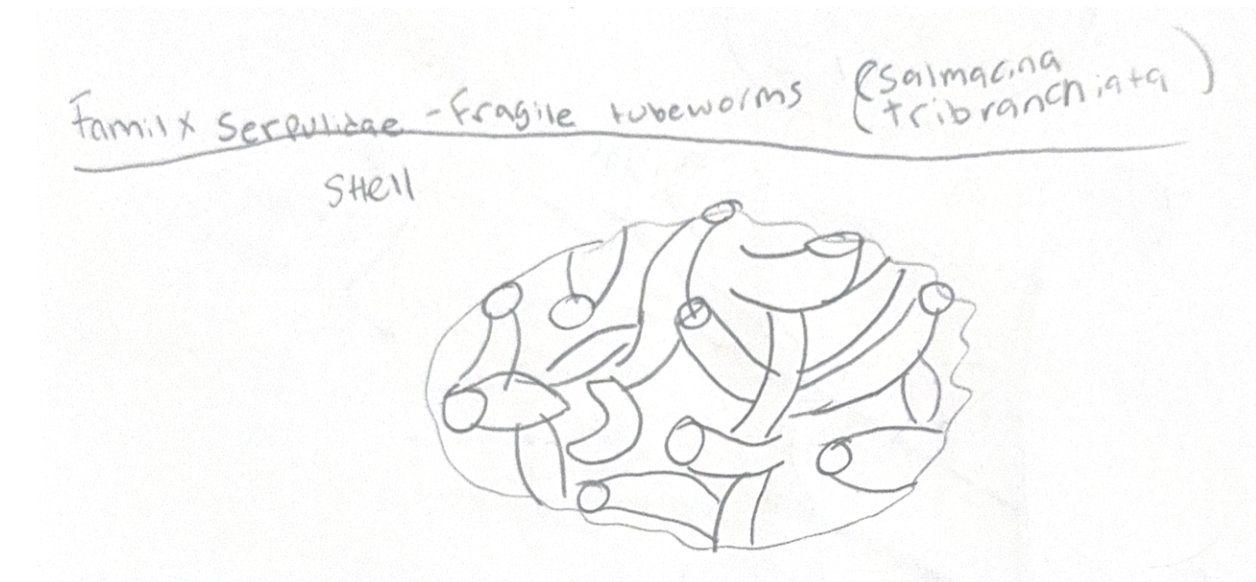
<p><span>Phylum: Annelida</span></p><p><span><strong><em>Salmacina tribranchiata</em></strong></span></p><p><span>Fragile Tubeworms</span></p><p><span>family serpulidae</span></p>

Phylum: Annelida

Salmacina tribranchiata

Fragile Tubeworms

family serpulidae

they build tubes of CaCOs and never move again.
<p><span>they build tubes of CaCOs and never move again.</span></p>
8
New cards
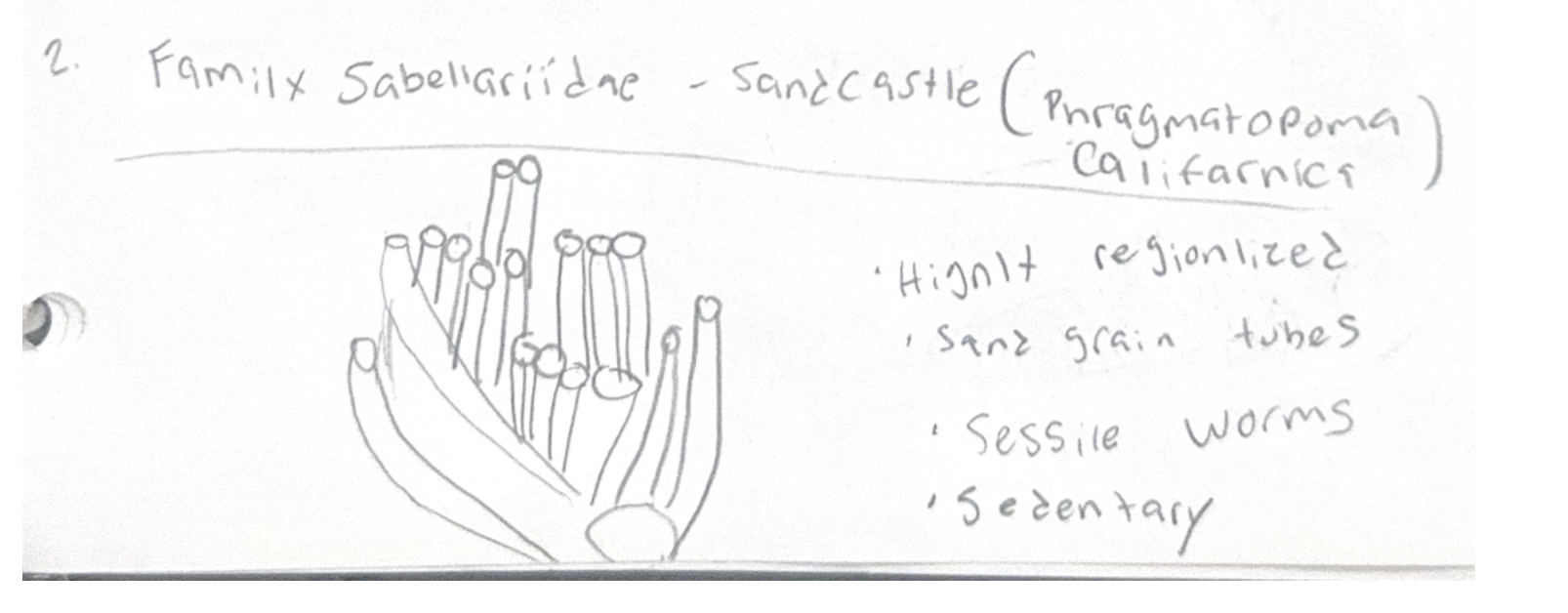
<p>Phylum: Annelda</p><p><span><strong> Family Sabellariidae - sandcastle worms <em>(Phragmatopoma califarnica)</em></strong></span></p>

Phylum: Annelda

Family Sabellariidae - sandcastle worms (Phragmatopoma califarnica)

tubes using their tentacles to catch sand grains in the surf, then gluing them together using secreted proteins

highly regionlized, sand grain tubes, sessile worms, sedentary
<p>tubes using their tentacles to catch sand grains in the surf, then gluing them together using secreted proteins</p><p></p><p>highly regionlized, sand grain tubes, sessile worms, sedentary</p>
9
New cards
<p>1. Tentacular crown (branchiae / radioles)</p><ul><li><p>Function:</p><ul><li><p>feeding (trap particles)</p></li><li><p>respiration</p></li></ul></li></ul><div data-type="horizontalRule"><hr></div><p>2. Tube</p><ul><li><p>Serpulidae → calcium carbonate</p></li><li><p>Sabellariidae → sand</p></li><li><p>Function:</p><ul><li><p>protection</p></li></ul></li></ul><div data-type="horizontalRule"><hr></div><p>3. Cilia on tentacles</p><ul><li><p>Function:</p><ul><li><p>create water currents</p></li><li><p>move food</p></li></ul></li></ul><div data-type="horizontalRule"><hr></div><p>4. Operculum (if present)</p><ul><li><p>Function:</p><ul><li><p>closes tube</p></li></ul></li></ul><div data-type="horizontalRule"><hr></div><p>5. Thorax vs abdomen</p><ul><li><p>Function:</p><ul><li><p>body specialization</p></li></ul></li></ul><div data-type="horizontalRule"><hr></div><p>6. Uncini (tiny hooks)</p><ul><li><p>Function:</p><ul><li><p>anchor worm in tube</p></li></ul></li></ul><p></p>

1. Tentacular crown (branchiae / radioles)

  • Function:

    • feeding (trap particles)

    • respiration


2. Tube

  • Serpulidae → calcium carbonate

  • Sabellariidae → sand

  • Function:

    • protection


3. Cilia on tentacles

  • Function:

    • create water currents

    • move food


4. Operculum (if present)

  • Function:

    • closes tube


5. Thorax vs abdomen

  • Function:

    • body specialization


6. Uncini (tiny hooks)

  • Function:

    • anchor worm in tube

knowt flashcard image
10
New cards

Annelids 2

11
New cards
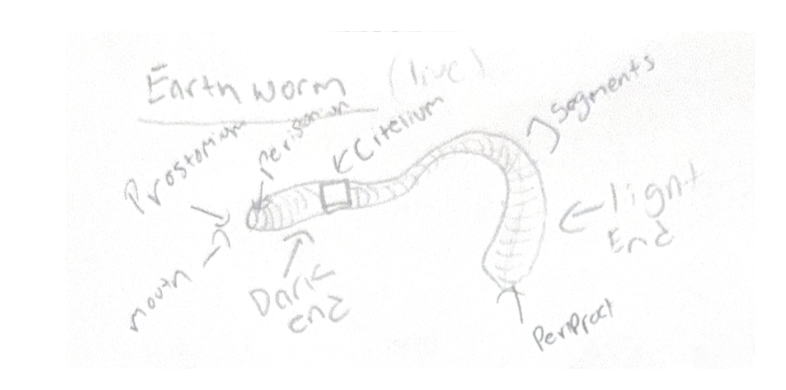
<p><strong>Prostomium</strong></p><ul><li><p>Small, pointed</p></li><li><p>Function: sensory (very reduced)</p></li></ul><div data-type="horizontalRule"><hr></div><p><strong>Peristomium (mouth)</strong></p><ul><li><p>Function: ingestion</p></li></ul><div data-type="horizontalRule"><hr></div><p><strong>Clitellum (VERY IMPORTANT)</strong></p><ul><li><p>Thick band (around segment ~32–37)</p></li><li><p>Function:</p><ul><li><p>secretes mucus during mating</p></li><li><p>forms cocoon for embryos</p></li></ul></li></ul><div data-type="horizontalRule"><hr></div><p><strong>Setae (chaetae)</strong></p><ul><li><p>Tiny bristles</p></li><li><p>Function:</p><ul><li><p>traction during movement</p></li></ul></li></ul><div data-type="horizontalRule"><hr></div><p><strong>Pygidium + anus</strong></p><ul><li><p>Function: waste removal</p></li></ul><div data-type="horizontalRule"><hr></div><p><strong>Dorsal blood vessel</strong></p><ul><li><p>Function: circulation</p></li></ul><p></p>

Prostomium

  • Small, pointed

  • Function: sensory (very reduced)


Peristomium (mouth)

  • Function: ingestion


Clitellum (VERY IMPORTANT)

  • Thick band (around segment ~32–37)

  • Function:

    • secretes mucus during mating

    • forms cocoon for embryos


Setae (chaetae)

  • Tiny bristles

  • Function:

    • traction during movement


Pygidium + anus

  • Function: waste removal


Dorsal blood vessel

  • Function: circulation

12
New cards
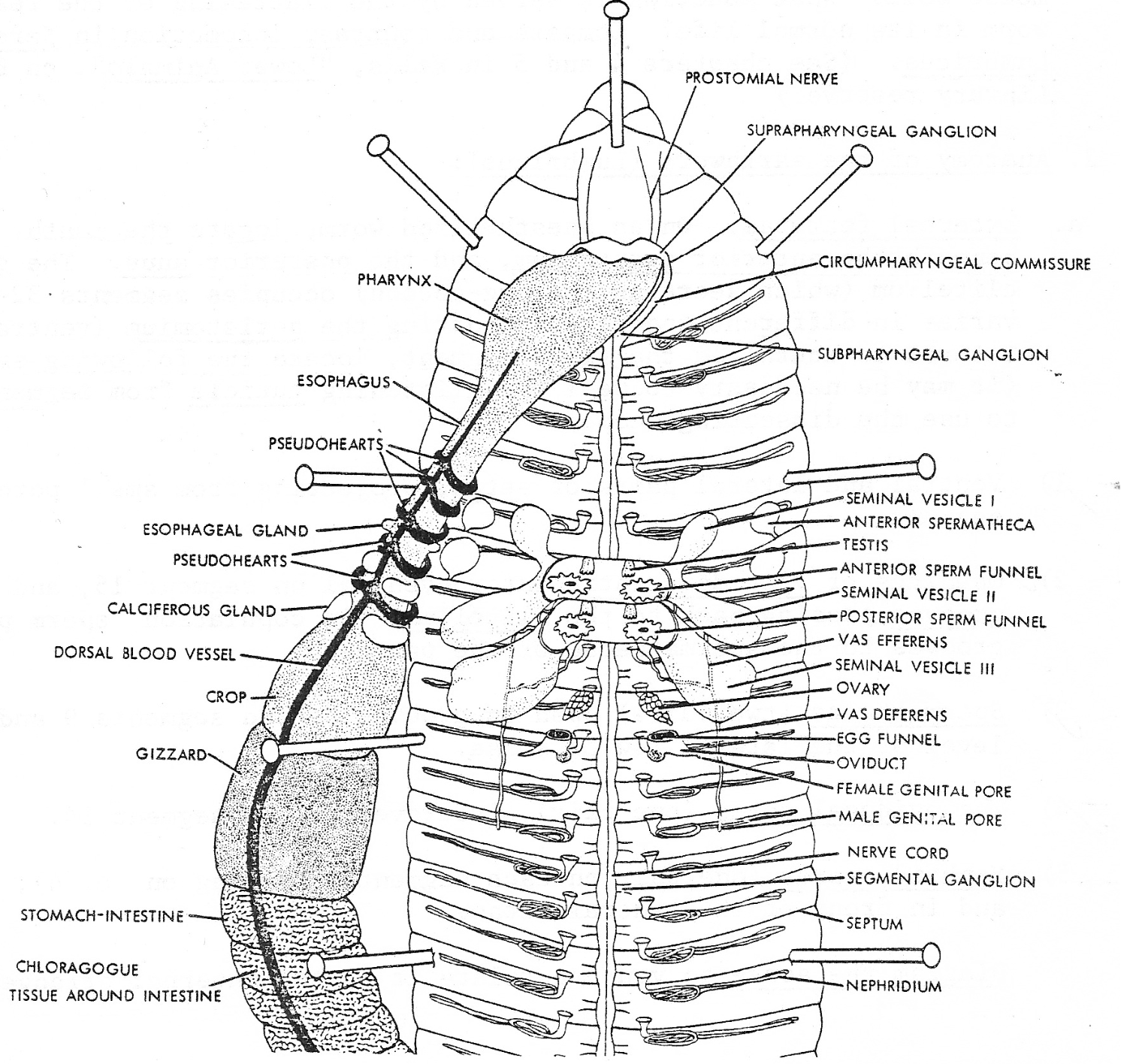
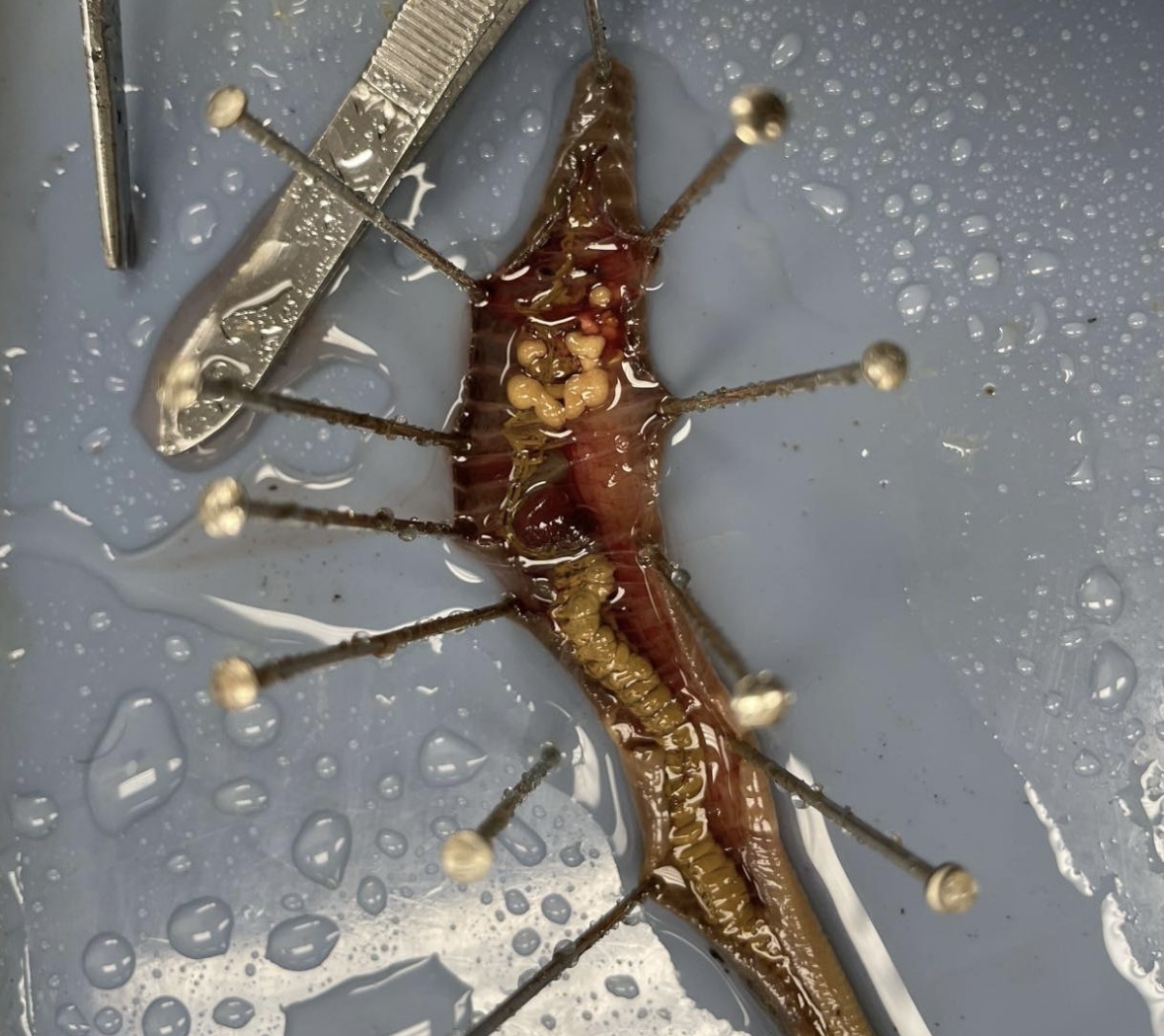
<p>Order:</p><ul><li><p><strong>Pharynx</strong> → ingestion</p></li><li><p><strong>Esophagus</strong> → transport</p></li><li><p><strong>Calciferous glands</strong> → regulate calcium / excretion</p></li><li><p><strong>Crop</strong> → storage</p></li><li><p><strong>Gizzard</strong> → grinding</p></li><li><p><strong>Intestine</strong> → absorption</p></li><li><p><strong>Typhlosole</strong> → ↑ surface area</p></li></ul><div data-type="horizontalRule"><hr></div><p><span data-name="heart" data-type="emoji">❤</span> CIRCULATORY</p><ul><li><p><strong>Dorsal vessel</strong> → anterior flow</p></li><li><p><strong>Ventral vessel</strong> → posterior flow</p></li><li><p><strong>Aortic arches (“hearts”)</strong> → pump blood</p></li></ul><div data-type="horizontalRule"><hr></div><p><span data-name="recycle" data-type="emoji">♻</span> EXCRETORY</p><ul><li><p><strong>Nephridia</strong></p><ul><li><p>Function: waste removal + osmoregulation</p></li></ul></li></ul><div data-type="horizontalRule"><hr></div><p><span data-name="brain" data-type="emoji">🧠</span> NERVOUS</p><ul><li><p>Brain + ventral nerve cord</p></li><li><p>Function: coordination</p></li></ul><div data-type="horizontalRule"><hr></div><p><span data-name="dna" data-type="emoji">🧬</span> REPRODUCTIVE (HIGH YIELD)</p><ul><li><p><strong>Seminal vesicles</strong> → make sperm</p></li><li><p><strong>Spermathecae</strong> → store sperm</p></li><li><p><strong>Ovaries / oviducts</strong> → eggs</p></li></ul><p></p>

Order:

  • Pharynx → ingestion

  • Esophagus → transport

  • Calciferous glands → regulate calcium / excretion

  • Crop → storage

  • Gizzard → grinding

  • Intestine → absorption

  • Typhlosole → ↑ surface area


CIRCULATORY

  • Dorsal vessel → anterior flow

  • Ventral vessel → posterior flow

  • Aortic arches (“hearts”) → pump blood


EXCRETORY

  • Nephridia

    • Function: waste removal + osmoregulation


🧠 NERVOUS

  • Brain + ventral nerve cord

  • Function: coordination


🧬 REPRODUCTIVE (HIGH YIELD)

  • Seminal vesicles → make sperm

  • Spermathecae → store sperm

  • Ovaries / oviducts → eggs

knowt flashcard image
13
New cards
<p><span data-name="microscope" data-type="emoji">🔬</span> IDENTIFY + FUNCTION</p><ul><li><p><strong>Circular muscle</strong></p><ul><li><p>elongates body</p></li></ul></li><li><p><strong>Longitudinal muscle</strong></p><ul><li><p>shortens body</p></li></ul></li><li><p><strong>Coelom</strong></p><ul><li><p>fluid-filled → hydrostatic skeleton</p></li></ul></li><li><p><strong>Dorsal vessel / ventral vessel</strong></p><ul><li><p>circulation</p></li></ul></li><li><p><strong>Ventral nerve cord</strong></p><ul><li><p>coordination</p></li></ul></li><li><p><strong>Typhlosole</strong></p><ul><li><p>increases absorption</p></li></ul></li></ul><p></p>

🔬 IDENTIFY + FUNCTION

  • Circular muscle

    • elongates body

  • Longitudinal muscle

    • shortens body

  • Coelom

    • fluid-filled → hydrostatic skeleton

  • Dorsal vessel / ventral vessel

    • circulation

  • Ventral nerve cord

    • coordination

  • Typhlosole

    • increases absorption

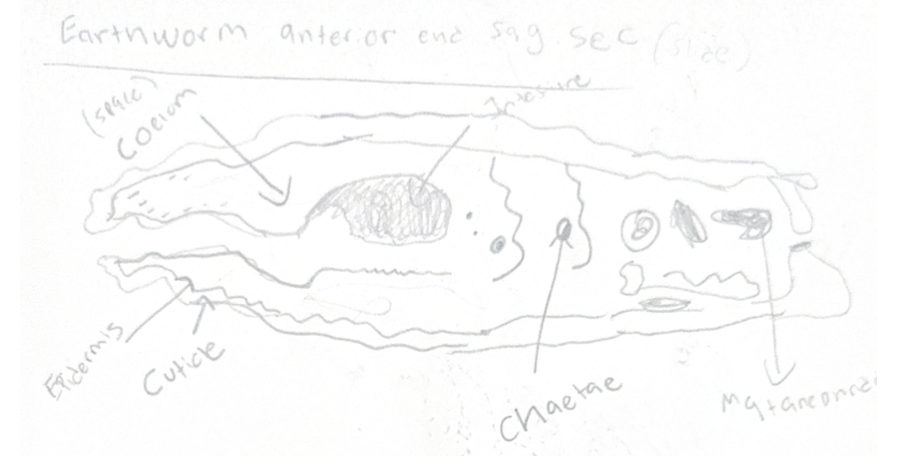
Cross section of earthworm
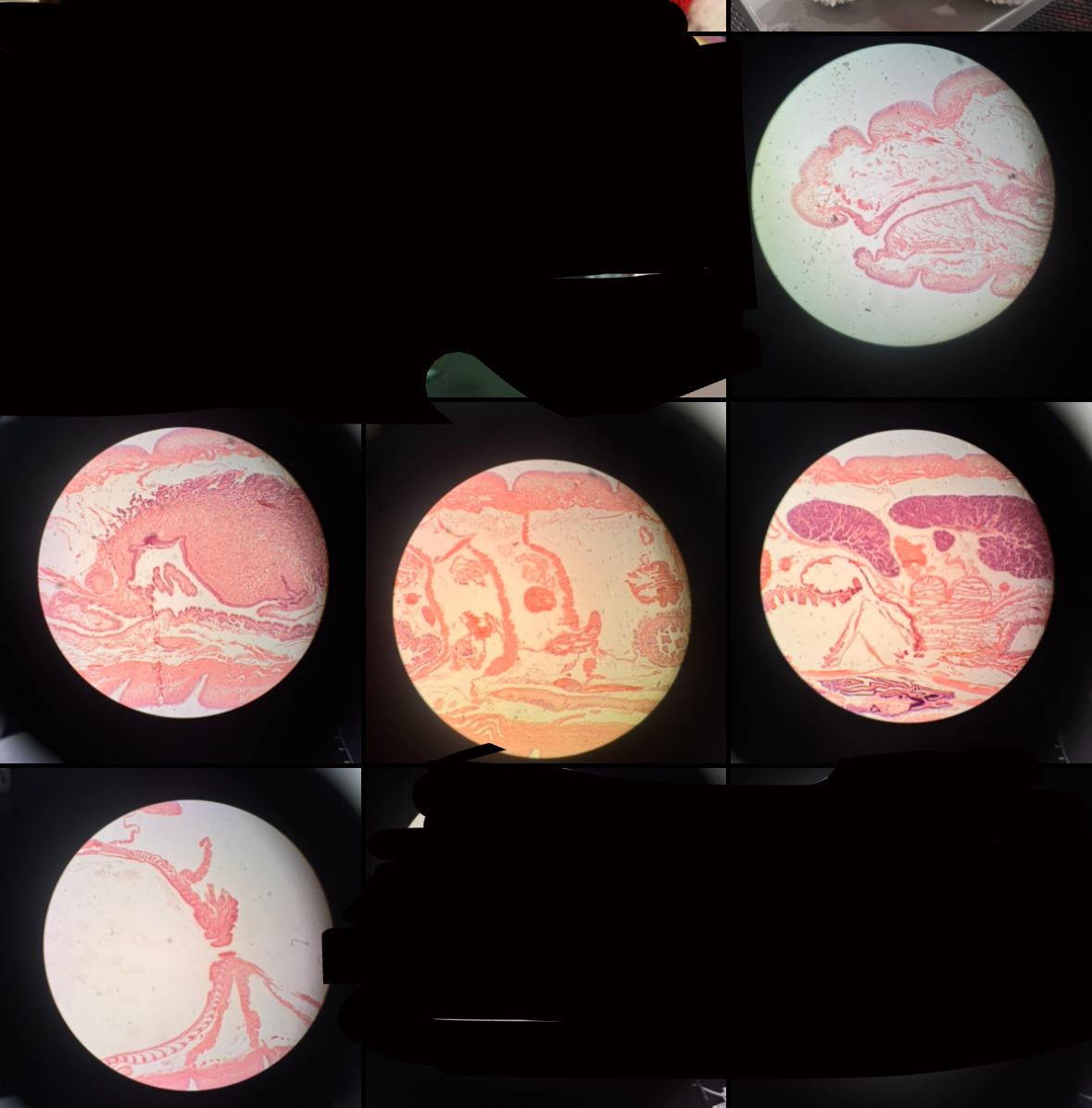
<p>Cross section of earthworm</p>
14
New cards

1. 🟣 INTESTINE (CENTER — BIGGEST STRUCTURE)

  • Looks like: large circular/oval structure in middle

  • Often has a fold inside

👉 Function:

  • digestion + absorption

2. TYPHLOSOLE (VERY IMPORTANT)

  • Looks like: fold projecting into intestine (like a flap or ridge)

👉 Function:

  • increases surface area for absorption

15
New cards

3. 💧 COELOM (EMPTY SPACE AROUND ORGANS)

  • Looks like: clear/white space surrounding intestine

👉 Function:

  • hydrostatic skeleton (helps movement)

4. 💪 MUSCLE LAYERS (AROUND OUTER EDGE)Circular muscle

  • Thin layer closer to outside

Longitudinal muscle

  • Thicker layer just inside circular

👉 In your images:

  • Outer pink ring = body wall muscles

👉 Function:

  • movement (elongation + shortening)

16
New cards

5. 🧠 VENTRAL NERVE CORD

  • Location: bottom (ventral side)

  • Looks like: small oval/round structure

👉 In your pics:

  • Look at lower part of the circle

  • Small dense structure near bottom

👉 Function:

  • coordination

6. BLOOD VESSELSDorsal blood vessel

  • Top side (above intestine)

  • Small circular structure

Ventral blood vessel

  • Bottom side (below intestine)

👉 Function:

  • circulation

17
New cards

7. NEPHRIDIA (if visible)

  • Tubular structures off to sides

  • Not always clear

👉 Function:

  • excretion


8. 🪶 CHLORAGOGEN TISSUE

  • Looks like: fuzzy layer around intestine

👉 Function:

  • metabolism + storage (liver-like)

18
New cards
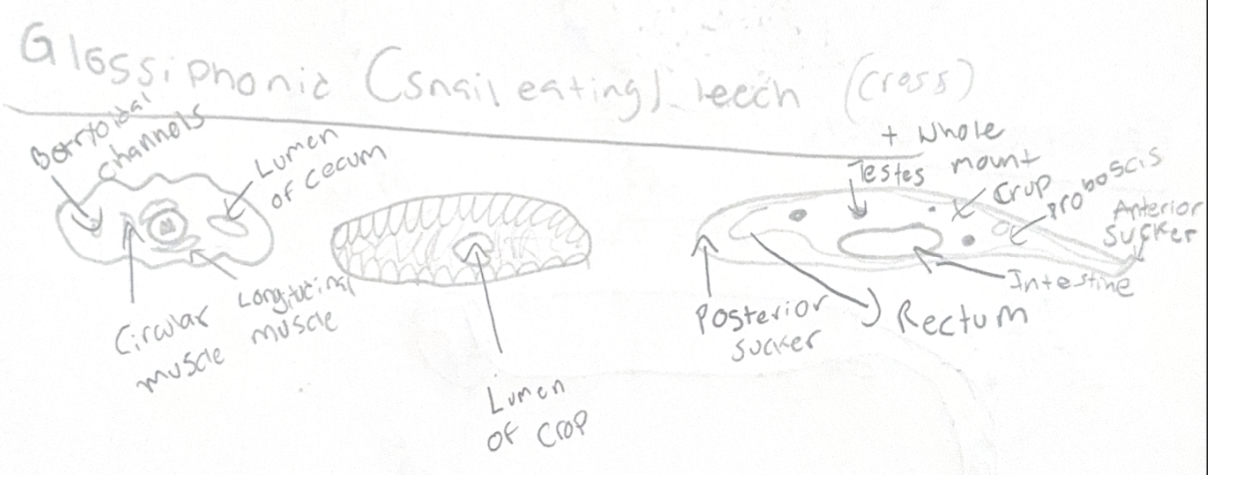
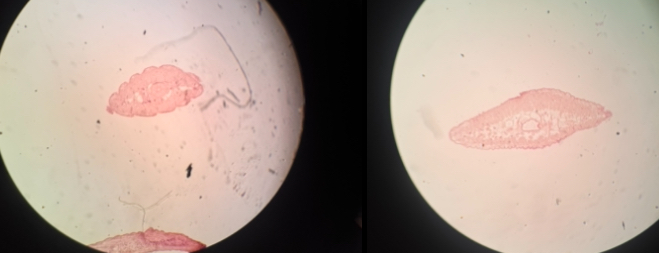
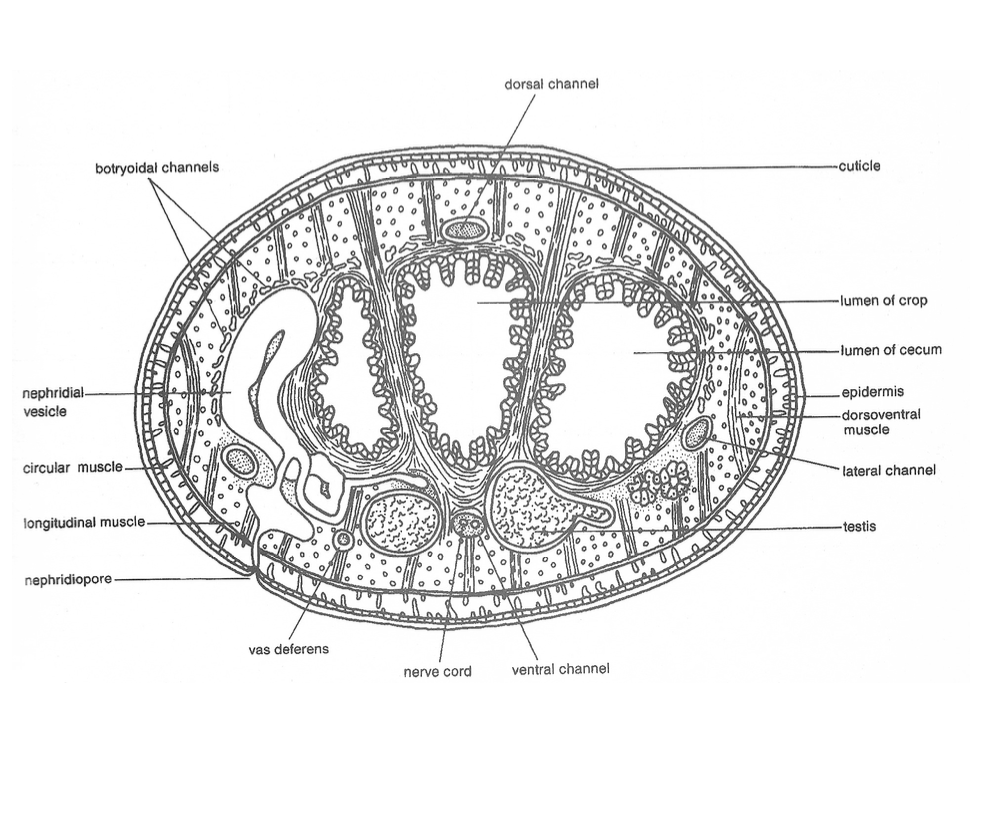
<p><strong>Cross-section of a glossiphonid (snail-eating) leech</strong></p>

Cross-section of a glossiphonid (snail-eating) leech
19
New cards
<ul><li><p><strong>Reduced coelom</strong></p><ul><li><p>replaced by sinuses</p></li></ul></li><li><p><strong>Botryoidal tissue</strong></p><ul><li><p>involved in storage/excretion</p></li></ul></li><li><p><strong>Gut with caeca</strong></p><ul><li><p>storage of blood</p></li></ul></li><li><p><strong>Muscle layers</strong></p><ul><li><p>strong → movement</p></li></ul></li><li><p><strong>No true circulatory system</strong></p><ul><li><p>fluid channels instead</p></li></ul></li></ul><p></p>
  • Reduced coelom

    • replaced by sinuses

  • Botryoidal tissue

    • involved in storage/excretion

  • Gut with caeca

    • storage of blood

  • Muscle layers

    • strong → movement

  • No true circulatory system

    • fluid channels instead

knowt flashcard image
20
New cards
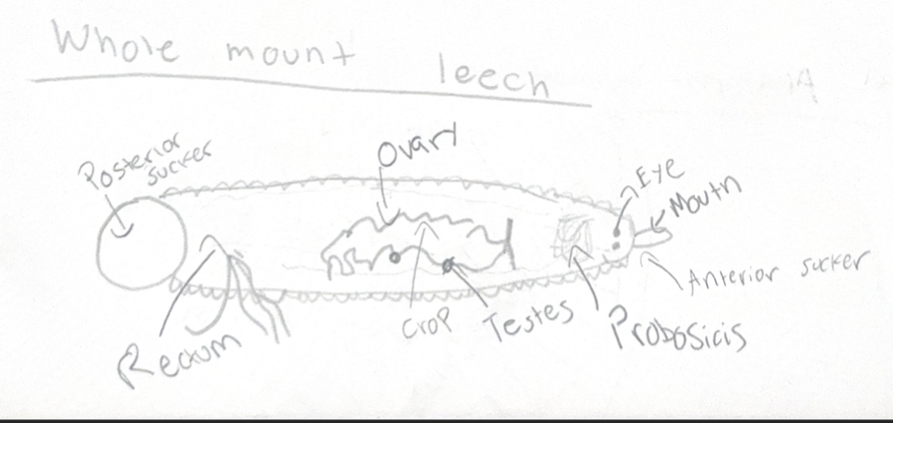
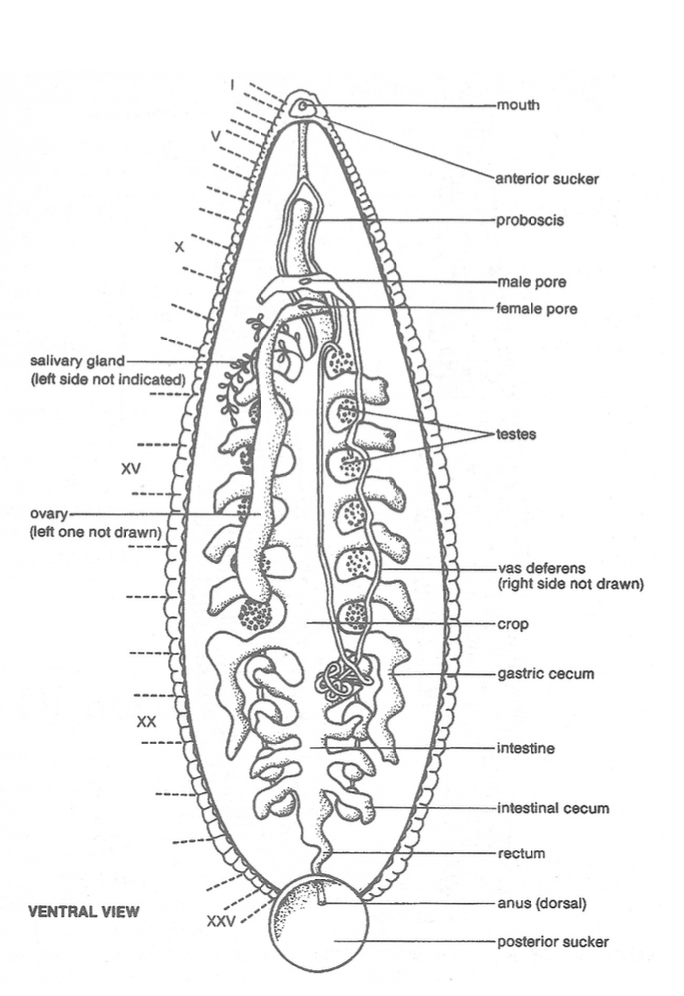
<p><span><strong>Whole-mount of a glossiphonid leech</strong></span></p>

Whole-mount of a glossiphonid leech

  • Anterior sucker

    • feeding + attachment

  • Posterior sucker

    • anchoring

  • Proboscis

    • feeding

  • Crop

    • stores blood

  • Intestine

    • digestion

  • Rectum

    • waste

  • Testes / ovaries

    • reproduction

<ul><li><p><strong>Anterior sucker</strong></p><ul><li><p>feeding + attachment</p></li></ul></li><li><p><strong>Posterior sucker</strong></p><ul><li><p>anchoring</p></li></ul></li><li><p><strong>Proboscis</strong></p><ul><li><p>feeding</p></li></ul></li><li><p><strong>Crop</strong></p><ul><li><p>stores blood</p></li></ul></li><li><p><strong>Intestine</strong></p><ul><li><p>digestion</p></li></ul></li><li><p><strong>Rectum</strong></p><ul><li><p>waste</p></li></ul></li><li><p><strong>Testes / ovaries</strong></p><ul><li><p>reproduction</p></li></ul></li></ul><p></p>
21
New cards
term image
22
New cards
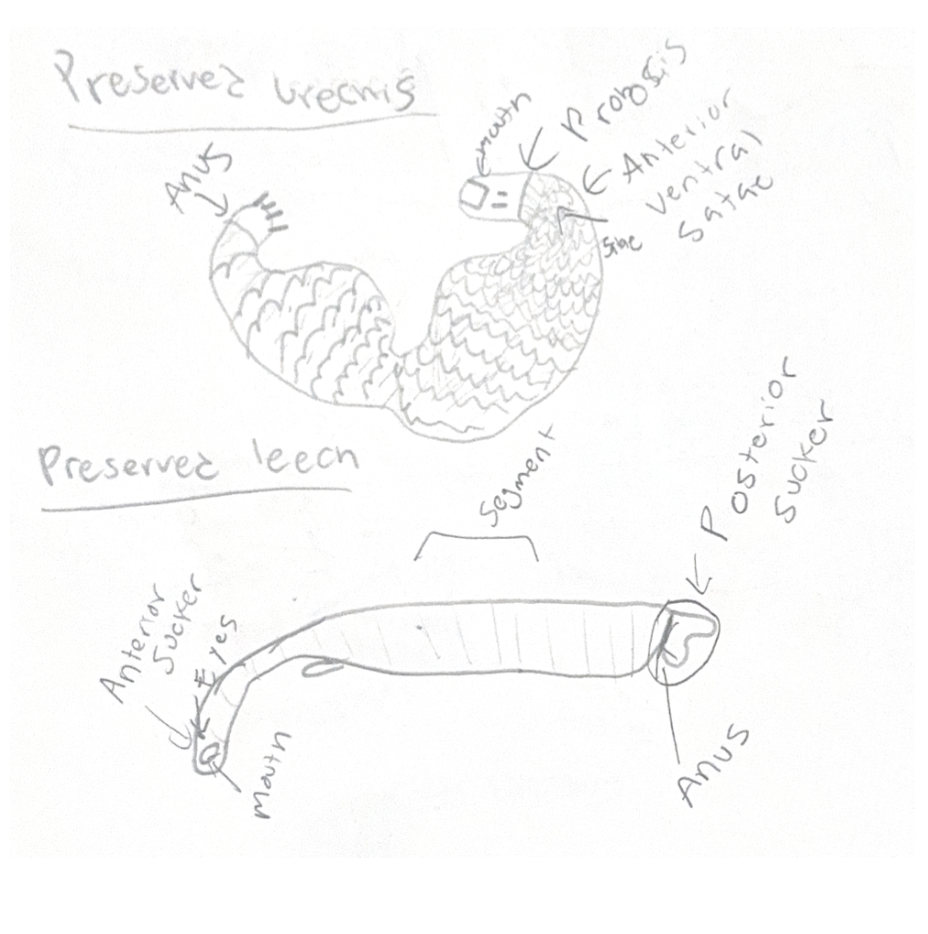
<p>Preserved urechis</p>

Preserved urechis

🔬 IDENTIFY + FUNCTION

  • Anterior sucker (ventral)

  • Posterior sucker

  • Clitellum

  • Annuli (many rings per segment)

  • Eyes (dorsal)

  • Mouth + anus

<p><span data-name="microscope" data-type="emoji">🔬</span> IDENTIFY + FUNCTION</p><ul><li><p><strong>Anterior sucker (ventral)</strong></p></li><li><p><strong>Posterior sucker</strong></p></li><li><p><strong>Clitellum</strong></p></li><li><p><strong>Annuli (many rings per segment)</strong></p></li><li><p><strong>Eyes (dorsal)</strong></p></li><li><p><strong>Mouth + anus</strong></p></li></ul><p></p>
23
New cards
<p>Preserved leech</p>

Preserved leech

24
New cards

Explore top flashcards

flashcards
Astronomy Science
63
Updated 934d ago
0.0(0)
flashcards
Fr. 4: Les Vêtements
35
Updated 1056d ago
0.0(0)
flashcards
PID Part 1
69
Updated 472d ago
0.0(0)
flashcards
AP Biology Unit 6
79
Updated 202d ago
0.0(0)
flashcards
ASD4 Cap 3
35
Updated 1154d ago
0.0(0)
flashcards
World History - Imperialism Test
53
Updated 1101d ago
0.0(0)
flashcards
Cerebellum
46
Updated 1032d ago
0.0(0)
flashcards
Astronomy Science
63
Updated 934d ago
0.0(0)
flashcards
Fr. 4: Les Vêtements
35
Updated 1056d ago
0.0(0)
flashcards
PID Part 1
69
Updated 472d ago
0.0(0)
flashcards
AP Biology Unit 6
79
Updated 202d ago
0.0(0)
flashcards
ASD4 Cap 3
35
Updated 1154d ago
0.0(0)
flashcards
World History - Imperialism Test
53
Updated 1101d ago
0.0(0)
flashcards
Cerebellum
46
Updated 1032d ago
0.0(0)