Animal reproductionI exam 3 diversity
 Studied by 0 people
 Call Kai
 Learn
Learn Practice Test
 Spaced Repetition
 Match
Match Flashcards
 Knowt Play
1/53

There's no tags or description
Looks like no tags are added yet.
Name | Mastery | Learn | Test | Matching | Spaced | Call with Kai |
|---|
No analytics yet
Send a link to your students to track their progress
54 Terms
sex
Gametes
reproductive cells, products of meiosis, haploid
primary sex/reproductibe organ
egg - sperm
budding
asexual
mitotic outgrowth of parent
Fission
asexual
splitting into 2+ peeps
coral can reproduce
with…. budding fission and sex
can to asexual reprduction
not a lot of genetic diversity of adaptions
pros of asexual reproduction
rapid
can retain favorable combinations of genes
parthenogensis
asexual reproduction
development of offspring from unfertilized egg
usually haploid - adult diploid
most likely gene duplication early on in development
most species that reproduce this way also sometimes use sexual reproduction or sexual behavior
hormonal control of sex role
a flux in progesterone - male behavior or esstergen - female behavior
Regeneration
asexual
complete organism can be made drom small fragments of animal’s body
sponges echinoderms worms
some Asxeual reproduction needs …… behavior
sexual
most animals are capable of ——- reproduction
sexual.
disadvantages of sexual reproduction
finding mates
competition
seccessful mating
breaks up favorable gene combinations
advantages to sexual reproduction
greater genetic diversity
capability to adapt to changing environment
remoal of deleterious mutatios
gametogenesis
process that produces gametes
spermatogensis
oogensis
Germ cells
diploid cells that can use meiosis to make gametes
Polar bodies
small cells produced by unequal division of cytoplasm in cell division- female meiosis.
more than 1 type of cell in gonads
somatic cells
germ cells
somatic cells
contribute to reproduction as well, secrete hormones, metabolic support
sertoli cells
interstital cells (leydig cells)
Sertoli cells
assist sperm production
interstitial cells (leydig cells)
secrete testerone
germ cells
produce sperm.
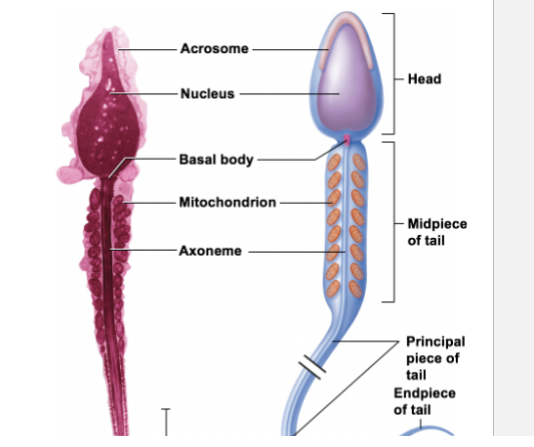
spermatozoon
head
nucleus
acrosome
lysosome
enzymes to penetrate egg
basal body of flagellum
tail
midpiece
thick, many mitochondira to make ATP
Principal piece
end piece
somatic cells in ovaries
ovarian follicle
ovulation
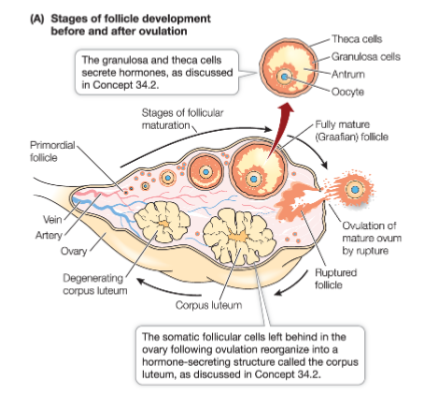
ovarian follicle
developing ovum & support cells
Ovulation
release of ovum from ovary
spontaneous or induced
External feritlization
when fertilization happens outside the body of female in water
spawning - most squatic animals release gametes into water
Internal fertilization
male inserts sperm into reproductive tract of femals
moisture, protective egg shell, protection nutrients.
Fertilization
is the fusion of ovum and sperm
recognition molecules must match
1 - acrosomal process formed
2 - release of digesting enzymes
3-nucleus of sperm enters ovum
4- sperm organelles degraded.
fertilization challeneges
sperm and egg of same species need to be brought together
behavior processes
estrus/heat - time when ova released from ovaries
chemical attractants
polyspermy
2+ sperm fertilize egg → abnormal polyploidy
blocks to polyspermy
fast block
- rapid depolarization across membrane
slow block
Ca2+ release
cortical granules release contents
fertilization envelope formed.
sex determination
fertilization - placental mammals, drosophilia
environmental sex determination
e.g. turtlles & temp
e.g. alligators (colder-male, warmer -female )
Hermaphrodiyes
sex xhange as adults
produce sperm and ove
some seq
reef fishes - breeding male and female
male sex organs
produce and deliver semen
sperm pathway
1- testes
2- spidiymis
3- vas deferens
4-ejaculatory duct (higher in prostate glad)
5- urethra (lower in prostate gland)
semen
sperm+fluid produced by accessory glands
seminal vesicles
prostate gland
bulbourethral gland
seminal vesicles
fluid & E sources
Prostate gland
alkaline buffer, sperm activation
bulbourethral gland
mucus/ lubricant
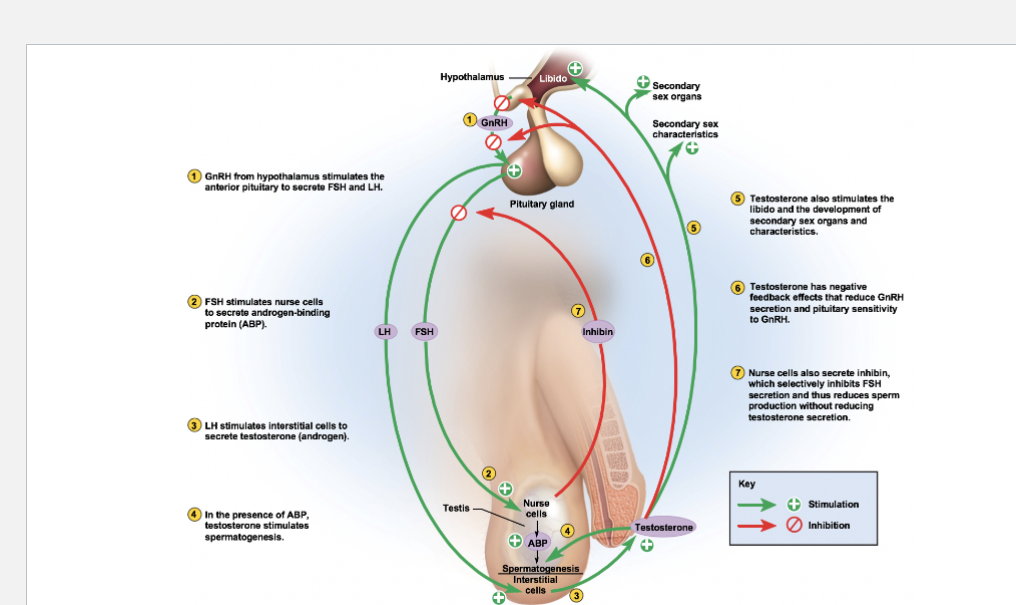
spontaneous ovulation
ovulation controlled by hormones
timed cycles - ovarian cycle
large element of chance
Induced ovulation
triggered by copulation
e.g. rabbit, camelids
neurons send signal to hypothalamus
GnRH release → FSH & LH
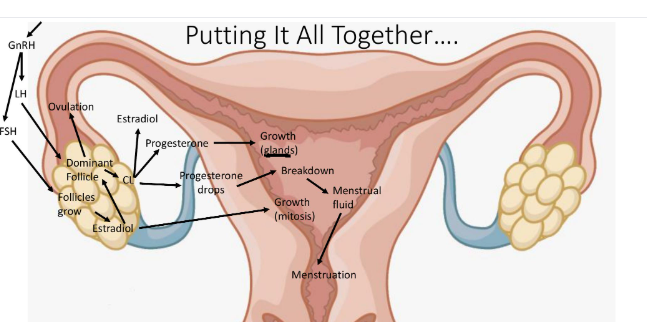
Female cycles
ovarian cycle
uterie/mentstrul cycle
distinct, but occur simultaneously
Ovarian cycle
directed by hormones, cyclical
repeat unless pregnancy occuts
 Note
Note  Flashcards (161)