BIO202 Unit 5 Lab 9 - Digestive System
 Call Kai
 Learn
Learn Practice Test
 Spaced Repetition
 Match
Match Flashcards
 Knowt Play
1/84

There's no tags or description
Looks like no tags are added yet.
Name | Mastery | Learn | Test | Matching | Spaced | Call with Kai |
|---|
No analytics yet
Send a link to your students to track their progress
85 Terms
Alimentary canal
digestive tube that extends from the mouth to the anus
Tunics (layers) of alimentary canal wall
-mucosa (innermost layer)
-submucosa
-muscularis externa
-serosa (outermost layer)
Order that food passes through the alimentary canal
mouth -> pharynx -> esophagus -> stomach -> small intestine -> large intestine -> anus
Ingestion
Intake of food
Mastication
the process of chewing
Peristalsis
Involuntary waves of muscle contraction that keep food moving along in one direction through the digestive system.
Segmentation (of digestion)
smooth muscle back and forth contractions to mix and break food further down
digestion
Breakdown of food substances into simpler forms that can be absorbed and used (polymers -> monomers)
mechanical digestion
Physical breakdown of large pieces of food into smaller pieces
chemical digestion
Process by which enzymes break down food into small molecules that the body can use
salivary amylase
Enzyme in saliva that breaks down carbohydrates
Oral cavity
The part of the mouth behind the gums and teeth
-roof formed by hard and soft palates and
- below by the tongue and by the mucous membrane connecting it with the inner part of the mandible.
Oral cavity - vestibule
Space between the lips or cheeks and the teeth.
Deciduous Teeth
baby teeth (first to appear), 20 total
Permanent Teeth
adult teeth, 32 total
Teeth - Incisors
-chisel shaped for cutting & clipping
Teeth - Canines
-Fanglike teeth that tear or pierce
Teeth - Bicuspids (premolars) & Molars
-Broad crowns, rounded cusps for grinding/crushing
Tooth - root
-portion embedded in jawbone
-Anchored in bony socket by cementum and periodontal ligaments
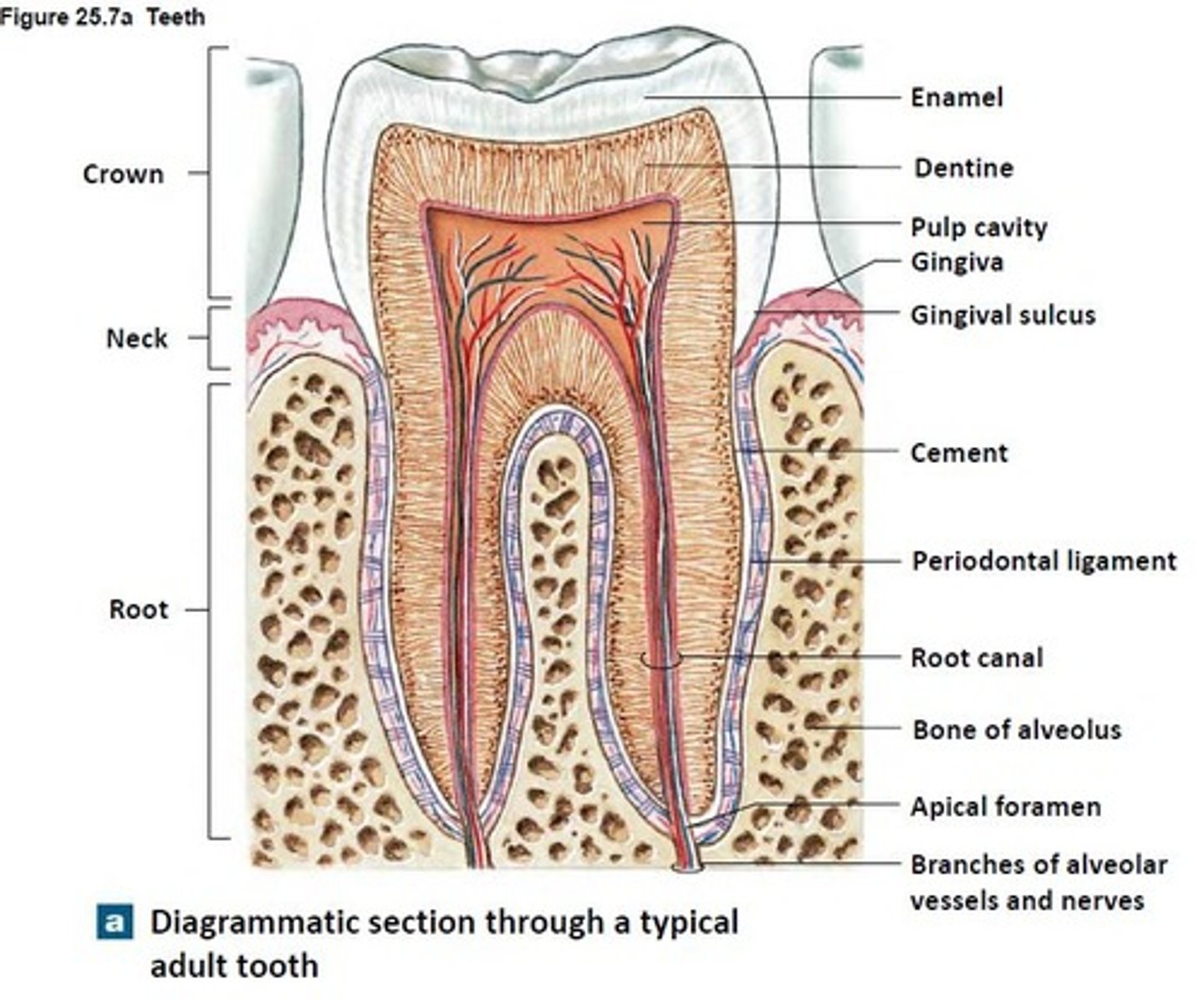
Tooth - pulp
consists of nerves, blood vessels, and loose connective tissue
Tooth - crown
Exposed part of the tooth above the gingivae or gums; covered with enamel.
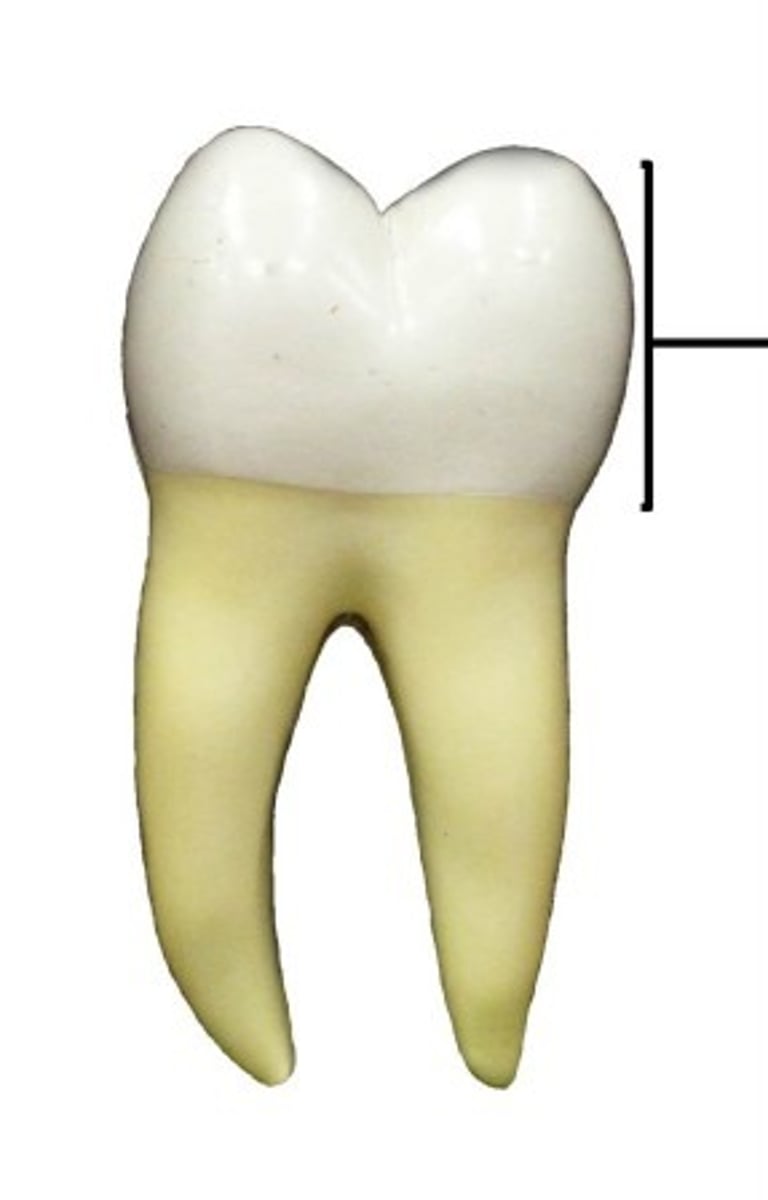
Tooth - enamel
hardest substance in the body
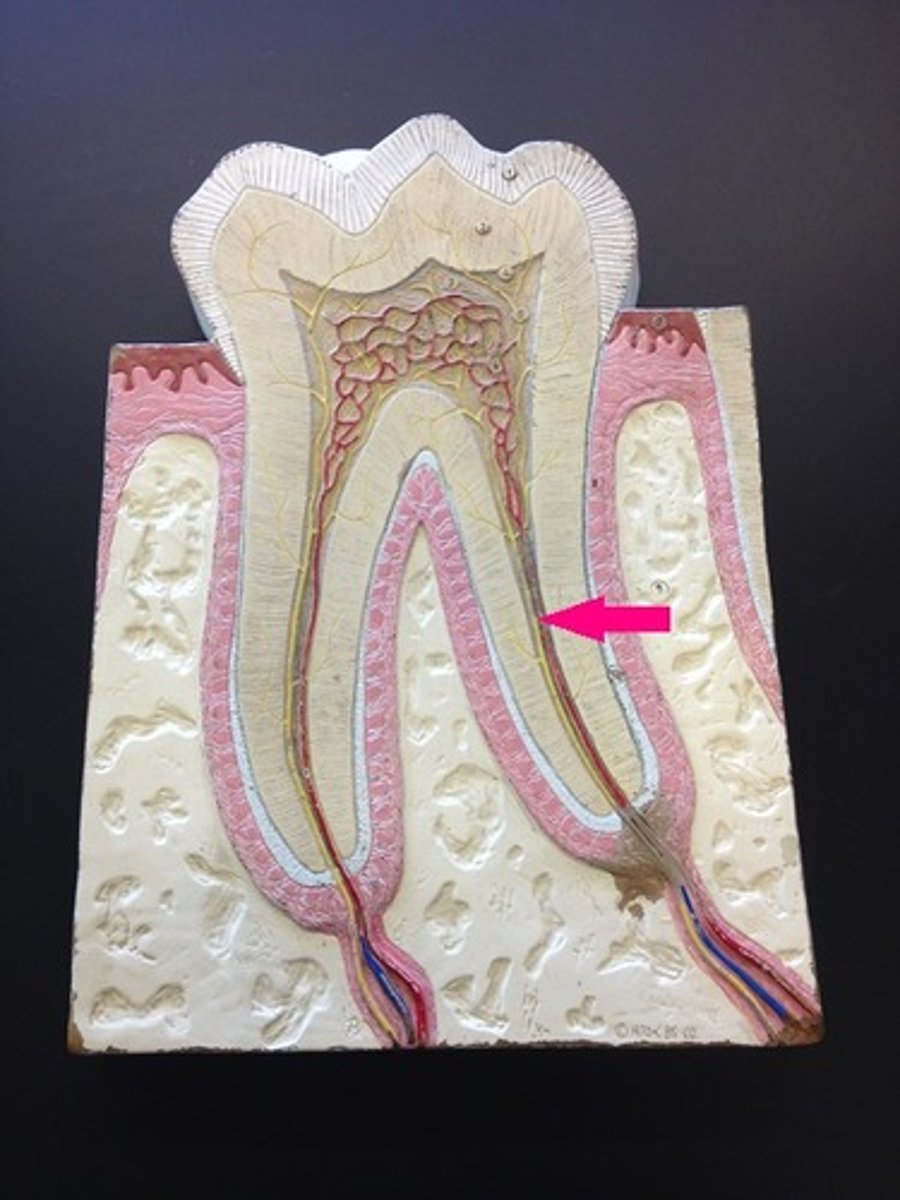
Tooth - dentin
Bone like material making up most of tooth, under the enamel
Tooth - root canal
extension of the pulp cavity into the root
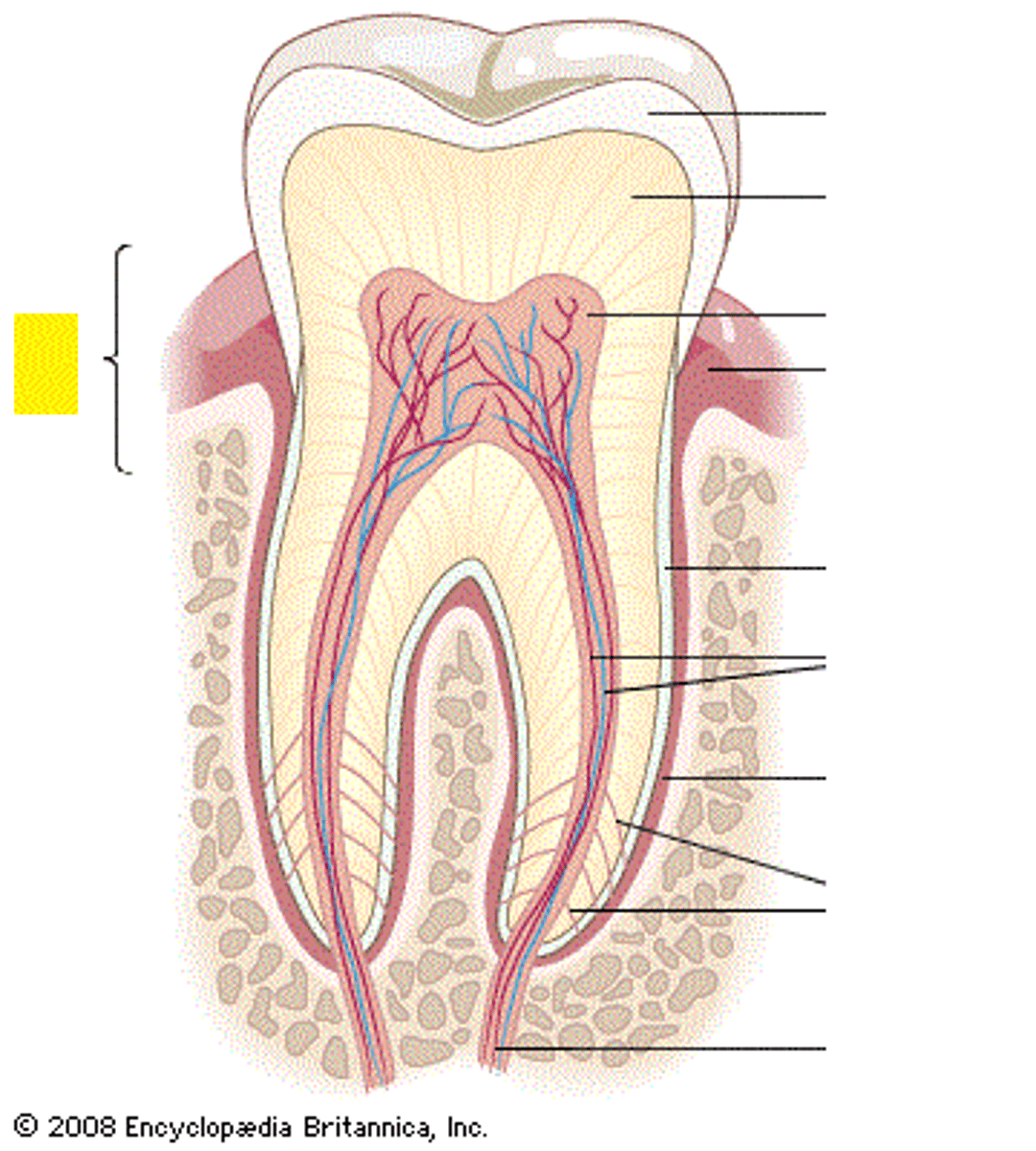
Tooth - neck
connects crown to root
Saliva - composition
- 97-99.5% water;
- pH 6.75-7 (slightly acidic);
- includes amylase (breaks down carbohydrates/sugars)
Bolus
food after it has been chewed & mixed with saliva when it is swallowed (after it leaves the oral cavity)
deglutition
process of swallowing
Esophagus
tube that connects the pharynx to the stomach through the diaphragm muscle
Where does mechanical digestion take place?
In the mouth (chewing), stomach (churning), and intestines (segmentation)
Where does chemical digestion take place?
In the mouth (saliva), stomach (acid), and intestines (pancreatic enzymes and bile)
Stomach - pH
- 1.5-3.5
- due to hydrochloric acid
stomach - sphincters
1. cardiac/cardioesophageal (top - at entrance of stomach)
2. pyloric (bottom - at entrance to small intestine)
intrinsic factor
A substance produced by the mucosa of the stomach and intestines that is essential for the absorption of vitamin B12.
pepsinogen/pepsin
Hydrochloric acid activates the inactive enzyme __________ to the active form ________, which digests protein.
gastric glands
exocrine glands in the stomach wall that secrete gastric juice (hydrochloric acid & pepsinogen) into the stomach
Gastric Glands - Parietal Cells
secrete HCl (hydrochloric acid) and intrinsic factor
Gastric Glands - Chief Cells
secrete pepsinogen (inactive enzyme)
Hydrochloric Acid (HCl) function (in stomach)
low pH which activates inactive enzyme pepsinogen into pepsin for protein digestion
Chyme
Partially digested, semiliquid food mixed with digestive enzymes and acids leaving the stomach.
heartburn
-a painful burning sensation in the chest caused when stomach acid regurgitates into esophagus
•Likely with excess food/drink, extreme obesity, pregnancy, running
gastroesophageal reflux disease (GERD)
chronic heartburn in which acidic stomach contents leak into the esophagus repeatedly, causing pain and damaging the esophagus
gastritis
inflammation of the lining of the stomach
gastric ulcer
ulcer located in the stomach
-most caused by H. pylori bacteria, some by NSAIDS (aspirin)
symptoms: burning/gnawing/dull pain in upper abdomen, nausea, vomiting, heartburn, bloating, belching, loss of appetite, black or tarry stools (from blood), weakness, fatigue
rugae
the folds in the mucosa lining the stomach
goblet cells
secrete mucus which helps to protect the stomach lining from the low pH due to presence of HCl
length of time food stays in stomach
4-6 hours
small intestine
Digestive organ where most chemical digestion and absorption of food takes place
small intestine - divisions
1. Duodenum
2. Jejunum
3. Ileum
Structural modification of small intestine for nutrient absorption
circular folds, villi, microvilli (brush border)
small intestine - circular folds
Permanent folds (~1 cm deep) that force chyme to slowly spiral through lumen, allowing more time for nutrient absorption
small intestine - villi
Fingerlike extensions of the intestinal mucosa that increase the surface area for absorption
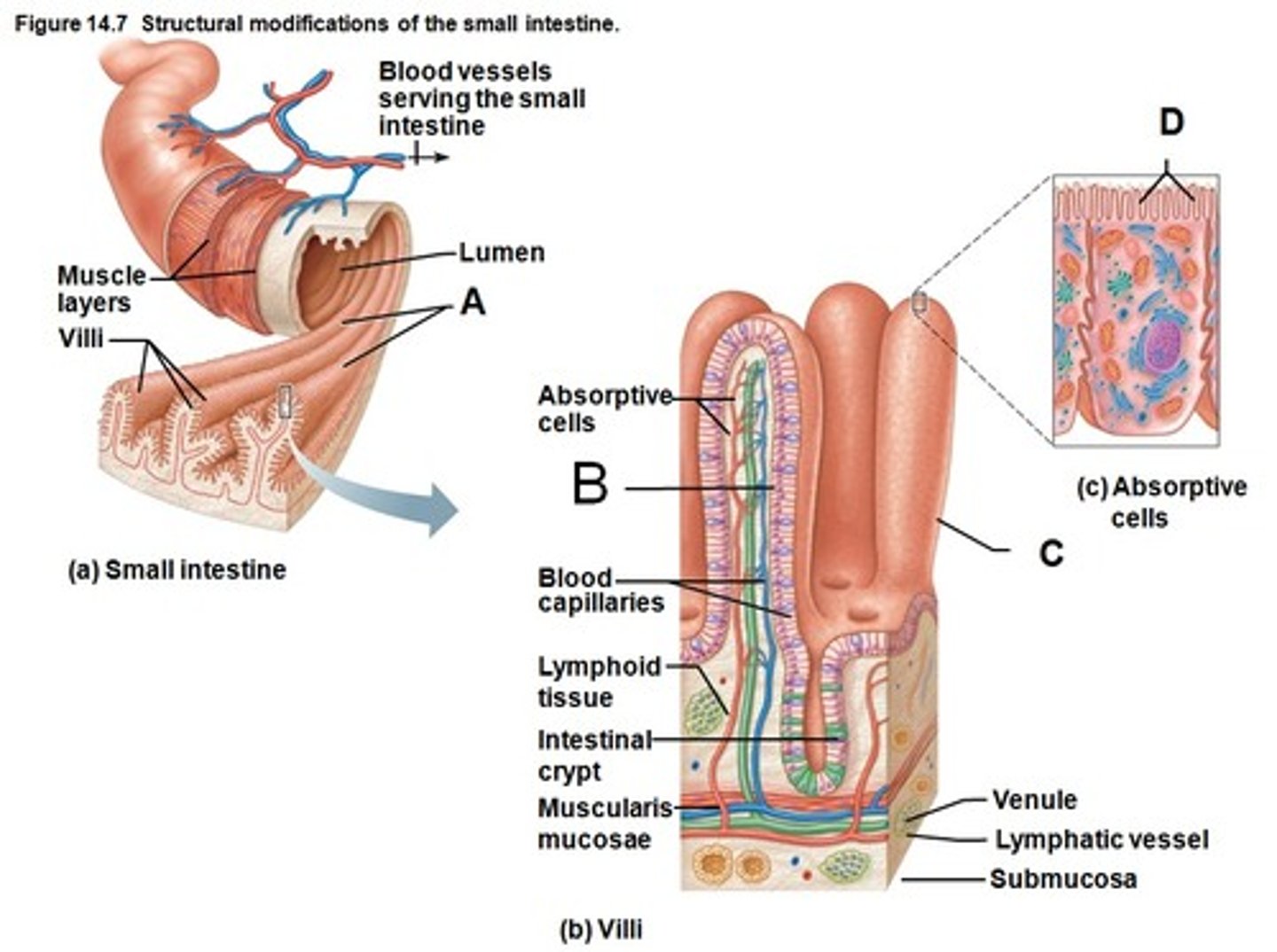
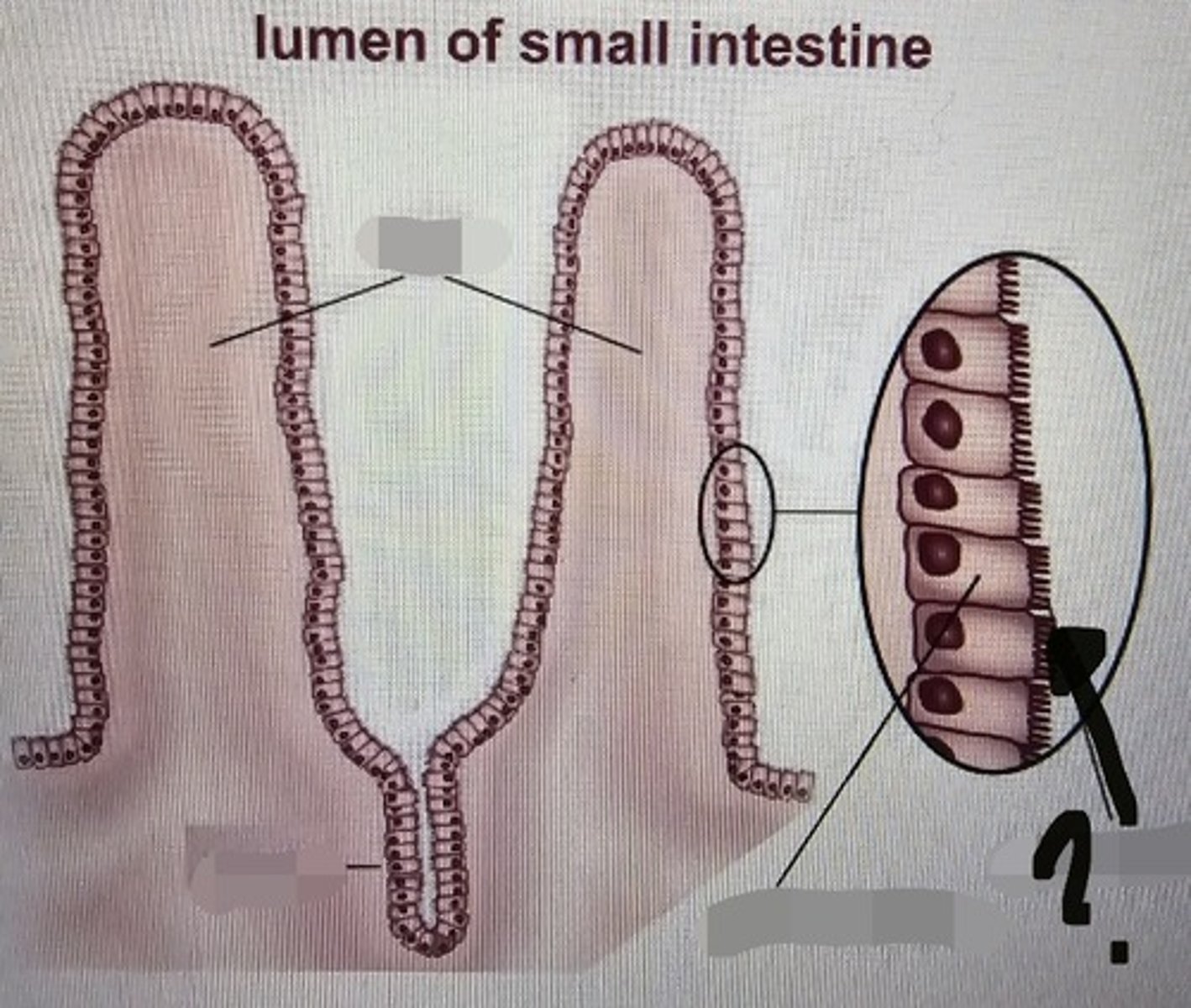
Small intestine - microvilli (brush border)
- folding of the apical surface of each epithelial cell (upon the villi)
- contain enzymes for carbohydrate and protein digestion
Diverticula
Herniations, or outpouchings, of the walls of the large intestine
Diverticulosis
presence of diverticula
Diverticulitis
inflammation of the diverticula in the colon that may rupture & leak into the peritoneal cavity
Length of time chyme travels in small intestine
3-6 hours
Large Intestine - function
Absorbs water, salts & some vitamins; forms feces
Large Intestine - divisions
1. cecum, 2. colon, 3. rectum, 4. anal canal
Appendix - location
A small, fingerlike extension of the cecum
Appendicitis
•acute inflammation of appendix; usually results from a blockage by feces that traps infectious bacteria
-treatment: appendectomy (surgical removal of appendix)
Gall bladder - function
stores bile from liver
Bile
yellow-green, alkaline solution made by the liver, stored in the gall bladder and functions to break down/emulsify fats
Diarrhea
frequent passage of loose, watery stools
Constipation
Hard, slow stools that are difficult to eliminate; often a result of too little fiber in the diet
Cirrhosis of the liver
a chronic liver disease characterized by the replacement of healthy liver tissue with scar tissue, leading to impaired liver function and potentially liver failure
-symptoms can include fatigue, loss of appetite, jaundice (yellowing of the skin and eyes), abdominal swelling (ascites), and easy bruising or bleeding
Location of digestion - CARBOHYDRATES
mouth and small intestine
Location of digestion - LIPIDS
mouth, stomach, small intestine
Location of digestion - PROTEINS
stomach and small intestine
Defecation
elimination of feces from the digestive tract through the anus
Macromolecules
Macromolecules - CARBOHYDRATES
sugars & starches
monomer = monosaccharide (example: glucose)
Macromolecules - LIPIDS
fats, triglycerides, phospholipids, steroids
Smallest unit (not a true monomer) = triglycerides
Macromolecules - PROTEINS
monomer: amino acids
Aerobic Cellular Respiration stages/metabolic pathways
1. glycolysis (breakdown of glucose)
2. Krebs cycle
3. electron transport chain/ETC
High-density lipoprotein (HDL)
blood fat that helps transport cholesterol out of the arteries, thereby protecting against heart disease
"good cholesterol" - remember H = halo
low-density lipoprotein (LDL)
blood fat that transports cholesterol to organs and tissues; excess amounts result in the accumulation of fatty deposits on artery walls
"bad cholesterol"
esophageal cancer
cancer of the esophagus often caused by GERD, smoking, heavy alcohol consumption
BMI (body mass index)
a measure of body weight relative to height
BMI - obese
over 30
Disorders associated with obesity
- Diabetes
- Hypertension
- Coronary heart disease
- Cancer
- Premature death
- Sleep apnea
- Stroke
- Asthma
- Osteoarthritis, etc.
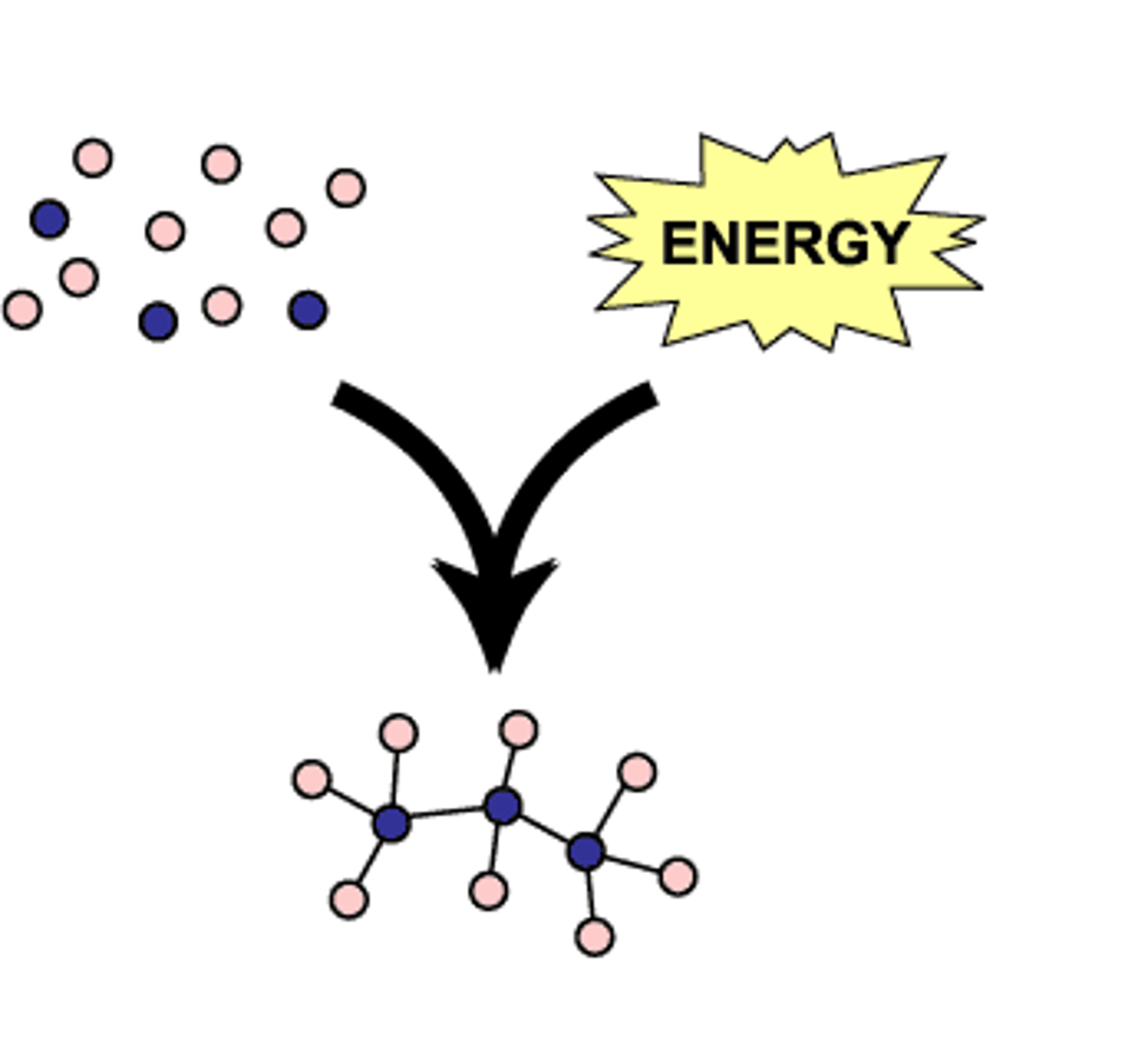
anabolic reactions/ anabolism
Use energy to convert smaller molecules into larger molecules (monomer -> polymer)
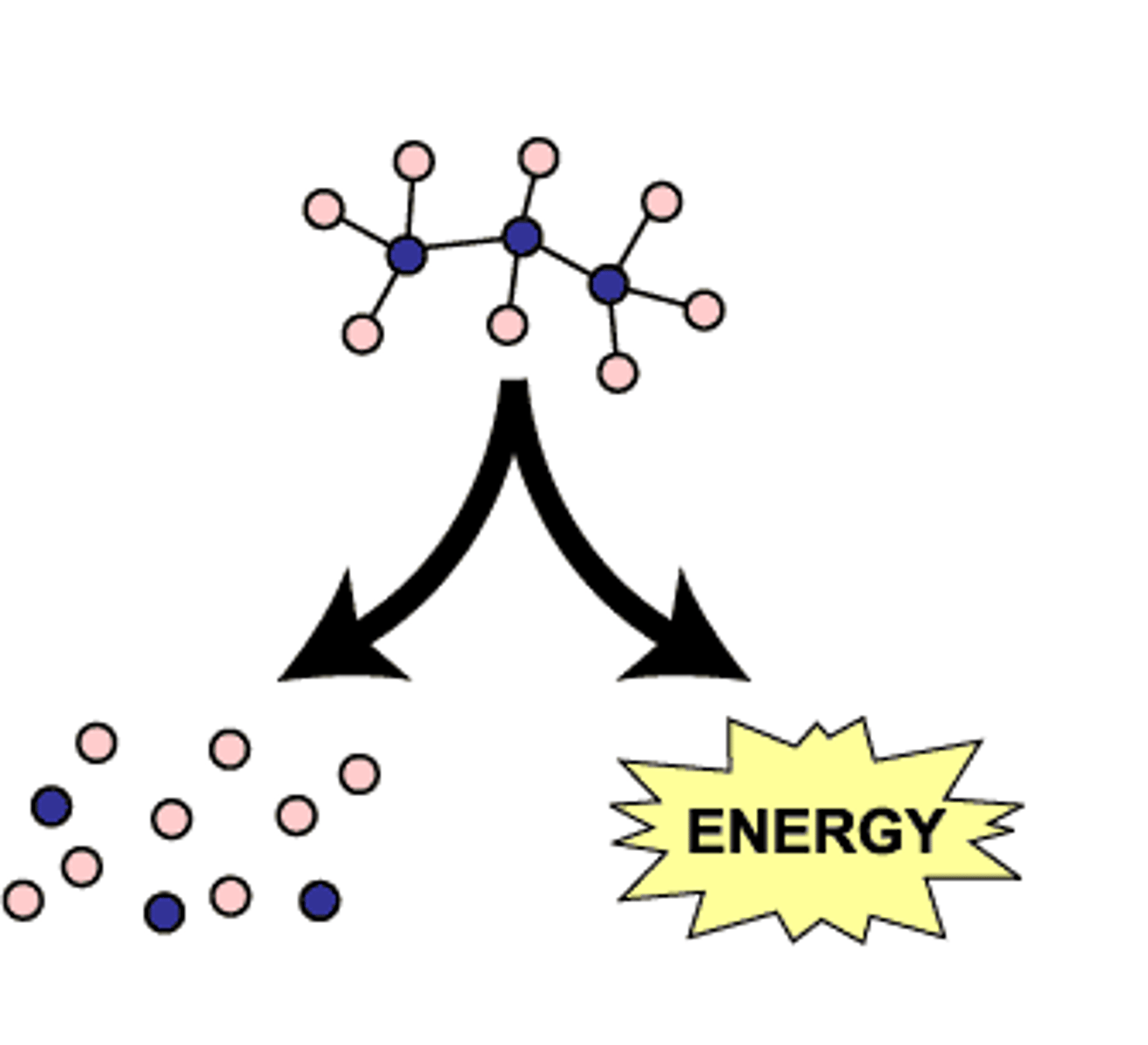
catabolic reactions / catabolism
release energy by breaking down large molecules into smaller ones (polymer -> monomer)
Metabolism
All of the chemical reactions that occur within an organism
Cystic Fibrosis - digestive system effects
-Thick mucus in pancreatic ducts block enzymes to small intestine responsible for digestion of nutrients which results in loss of ability to break down fats, fat-soluble vitamins, etc.

