Chapter 3 - Heredity, Cell Biology, and Evolution
 Call Kai
 Learn
Learn Practice Test
 Spaced Repetition
 Match
Match Flashcards
 Knowt Play
1/58

There's no tags or description
Looks like no tags are added yet.
Name | Mastery | Learn | Test | Matching | Spaced | Call with Kai | Chat |
|---|
No analytics yet
Send a link to your students to track their progress
59 Terms
cells, how they arose, and how similar their composition is from one another
make up all living things
arose from pre-existing cells through cell division
contain DNA, which is passed on to new cells during cell division
chemical composition of all cells is very similar
metabolic processes associated with life occur within cells
components of eukaryotic cells
cell membrane - holds the goop inside
organelles - little “organs” which carry out the cell’s vital function
cytosol - the goop inside the cell that the organelles float in
nucleus - ball in the cell that holds all the DNA
types of cells
nerve cells
muscle cells
bone cells
gland cells
blood cells
reproductive cells
deoxyribonucleic acid (DNA)
double helix molecule composed of two chains that form a ladder
links in the chain are nucleotides
4 bases (A,T,C,G) - used to write the genetic code
3 components of nucleotides
deoxyribose (sugar molecule)
phosphate (salt molecule)
nitrogenous base
codons
3 letter words made up of ATCG
each codon represents an amino acid
how are amino acids formed together
connected together in chains to form proteins, which are the building blocks of body tissues
DNA replication
cells need to divide and DNA needs to replicate itself in order to grow and reproduce
Nucleotides bond in a specific way
A-T, C-G, two strands complimentary - makes sure there are no copying mistakes
to replicate, the two strands split and the complimentary nucleotides are attached onto both strands
results in two exact copies of the chromosome
why does DNA replication happen
growth and repair - mitosis
every cell needs a complete genetic code, so DNA has to replicate every time a cell divides
reproduction - meiosis
organisms pass their DNA to their offspring
2 types of cell division
mitosis - creates two identical copies of cells with same chromosome set as parent
meiosis - creates two different cells with half chromosome set as parents
chromosome
DNA molecule that coils up tightly into a sausage-shaped structure
come in pairs (one from mom, one from dad)
humans have 46 chromosomes (23 pairs)
mitosis steps
IPMAT
Interphase
Prophase
Metaphase
Anaphase
Telophase & Cytokinesis
Meiosis steps
Interphase
Prophase 1
Metaphase 1
Anaphase 1
Telophase 1
PMAT x 2
Cytokinesis
Crossing over
during prophase 1 homologous chromosomes (in their doubled state) swap info with each other
reduces genetic linkage
ensures every daughter cell is unique
differences in mitosis and meioisis
Mitosis
one division
2 identical daughter cells
46 chromosomes (diploid number)
produces somatic cells
Meiosis
two divisions
4 unique daughter cells
23 chromosomes (haploid number)
produces sex cells
Gregor Mendel and Mendelian Genetics
crossed different strains of purebred plants and studied their progeny
his work highlights the basic rules of inheritance
Gregor Mendel and his work with peas
noticed that the plants could express many discrete traits, with no blending
conducted hybrid experiments and studied the inheritance of these traits
when Mendel bred:
P gen - tall x short plant = all tall
F1 gen - self fertilized those tall offspring = ¾ tall and ¼ short
Mendels work on peas and how it relates to genetics
the traits Mendel was studying was controlled by genes (sentences of codons)
genes occur in pairs (one from mom, one from dad, and found on homologous chromosomes
genotype
genetic makeup of an individual
exact genes in your chromosomes
phenotype
physical makeup of an individual
result of interaction between allele’s to produce the organism’s physical appearance
alleles
variants of genes
gene locus
location for a specific gene on a chromosome
how do alleles interact?
traits are controlled by genes with two different alleles
one dominant, one recessive
dominant allele
overshadows the recessive allele, so its dominant trait is expressed
recessive allele
overshadowed in the presence of a dominant allele
homozygous
when an organism has two copies of the same allele
the allele is always expressed because it’s the only one there
heterozygous
two different alleles are present
dominant trait is expressed, the recessive one is not
heterozygous phenotype is identical to the homozygous dominant phenotype
Punnet Square
used to predict the possible genotype and phenotype of offspring if both parents’ genotypes are known
principle of segregation
when an individual reproduces, only half of allele pairs are passed to each offspring
the alleles were segregated
one allele was passed on at random
Principle of Independent Assortment
how one allele pair is distributed does not influence how another allele pair will be distributed
genes controlling different traits are inherited independently of one another
exceptions:
genes on the same chromosome
sex linked traits
but recombination solves this
codominance
both alleles are dominant and both expressed at the same time
ex. spotted cows
incomplete dominance
neither allele is dominant and the phenotype is a blend of the two
ex. red flower x white flower = pink flower
Mendelian Traits
traits are controlled by one gene (with two alleles) at a single locus
Polygenic traits
more than one gene contributes to a trait
makes up most traits of humans and animals
is the opposite of pleiotropy
pleiotropy
one gene contributes to several different traits
opposite of polygenic traits
ABO blood types
blood type is controlled by 3 alleles (ABO)
not a polygenic trait
even though there’s 3 possible alleles (ABO), you can only inherit 2 out of those 3, one from each parents
A and B are codominant
O is recessive
O is only expressed in homozygotes
AB heterozygotes - both A ad B antigens are expressed
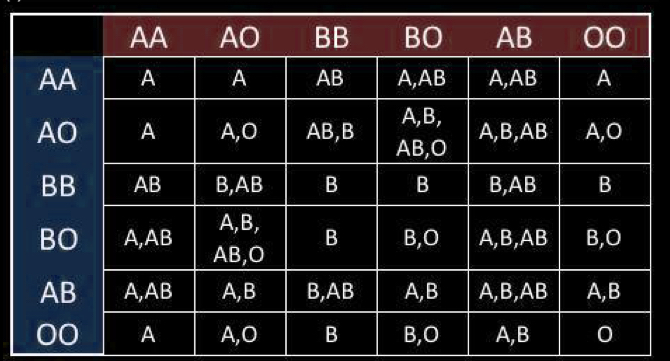
what antigen/antibodies is each bloodtype made up of/produce
Type A - A antigens, Anti-B antibodies
Type B - B Antigens, Anti-A antibodies
Type AB - AB antigens, neither Anti-A and Anti-B antibodies
Type O - neither A or B antigens, both Anti-A and Anti-B antibodies
polygenic traits and humans
very few Mendelian traits are actually physically observable in humans
most of them are polygenic
ex. height, skin colour, eye colour
expression of these traits is continuous (spectrum), not discrete as opposed to Mendel’s peas
more complicated to study
polygenic traits and skin colour
pigment (melanin) - determines skin colour and is produced by specialized cells called melanocytes
two types of melanin (brown and red)
amount of each type produced determines how dark or light skin will be
also many different genes that are controlling melanin production, adding an effect
more genes that code for melanin production = darker skin
what is the most popular blood type
type O
epigenetics
study of non-genetic traits that are inherited like in Lamarck’s principles
how environmental factors and experiences change gene expression without changing the DNA sequence
epigenetic changes caused by different chemical environments that parents went through can pass onto offspring
do genes control all of an individual’s phenotypic expression
no, genes do not control 100% of an individual’s phenotypic expression
culture and where you grew up can influence phenotypes slightly
ex. height is a polygenic trait
mitochondria
membrane bound organelle that converts energy into a form usable by the cell
each contains copies of a ring-shaped chromosome that is unique from the cell’s DNA (mtDNA)
mtDNA
mitochondrial DNA
animals (male or female) inherit their mtDNA and all mitochondrial traits from their mothers
mutations cause all variation in mtDNA
makes it useful for studying genetic change over time
Darwin and Mendel
lived and worked at the same time, but never met or read each other’s work
Darwin knew natural selection acted on variation in populations, but didn’t know how that variation was inherited
Mendel knew how variation was inherited, but didn’t apply it to evolutionary theory
not until the 1930s that their work was combined into the Modern Synthesis of evolutionary theory
The Modern Synthesis (of evolutionary theory)
Evolution is a two-stage process
production and redistribution of variation (Mendel)
selective forces acting on this variation affect their ability to successfully reproduce (Darwin)
Current definition of evolution
“a change in allele frequency from one generation to the next”
allelic frequencies - indicators of the genetic makeup of a population, members which share a common gene pool
allele frequencies
percentage of all the alleles at a locus accounted for by one specific allele
4 forces of evolution
mutation
gene flow
genetic drift
^ random ways allelic frequencies can change
Natural selection (and other selective factors)
Mutation
copying mistake in the genetic code
can hurt individual if during mitosis (ex. cancer)
can lead to evolution if during meiosis
can be good, bad, or neutral depending on environment
bad - gene is broken and affects health of individual
neutral - noncoding DNA is affected, or the new codon codes for the same amino acid (no change)
good - new gene works better within the environment than the old one
apoptosis
programmed cell death
gene tells cell when to die
recombination
occurs during meiosis
doesn’t change allele frequencies or cause evolution
changes composition of parts of chromosomes
decreases genetic linkage and increases variability
affects how some genes act and slight changes of gene function can become material for natural selection to act upon
Gene flow
exchange of genes between populations
can be caused with or without migration
with - individuals move from one population to another, introducing their genes to the gene pool through interbreeding
without - two separated populations may interact at their boundary, passing genes between gene pools
genetic drift
random change between generations as a result of statistical sampling error
sexual reproduction and recombination result in random inheritance of genes
in very small populations (and through random chance), alleles passed on may not reflect the frequencies of those in the previous generation
2 types of Genetic Drift
Founder effect
population bottleneck
founder’s effect
small group leaves and becomes “founder” of new population
gene frequencies do not reflect average of the whole population since the group is small
genes are passed onto next generation
new population has different gene frequencies from the old one
bottleneck effect
type of genetic drift that occurs when a population’s size is severely reduced due to a sudden, random environmental event or human activity
affects smaller populations as it drastically reduces genetic diversity compared to the original
remaining gene pool may not reflect the original population
Natural selection and how it affects allele frequencies and populations
natural selection can be defined as nonrandom reproduction
produces directional change in allele frequency relative to specific environmental factors
variation in a population means some individuals are better at reproduction and survival than others
Artificial selection
humans selectively breeding livestock and crops for generations to obtain favoured traits
sexual selection
non-random mating resulting from the preferences of the opposite sex
selected traits may not be adaptive in an environmental context even if potential partners seem more attractive
mechanism is identical to natural selection