Appendicular Skeleton (LAB 5)
 Call Kai
 Learn
Learn Practice Test
 Spaced Repetition
 Match
Match Flashcards
 Knowt Play
1/44

There's no tags or description
Looks like no tags are added yet.
Name | Mastery | Learn | Test | Matching | Spaced | Call with Kai |
|---|
No analytics yet
Send a link to your students to track their progress
45 Terms
Pectoral Girdle
-Clavicle + scapula
-attach upper limbs to axial skeleton
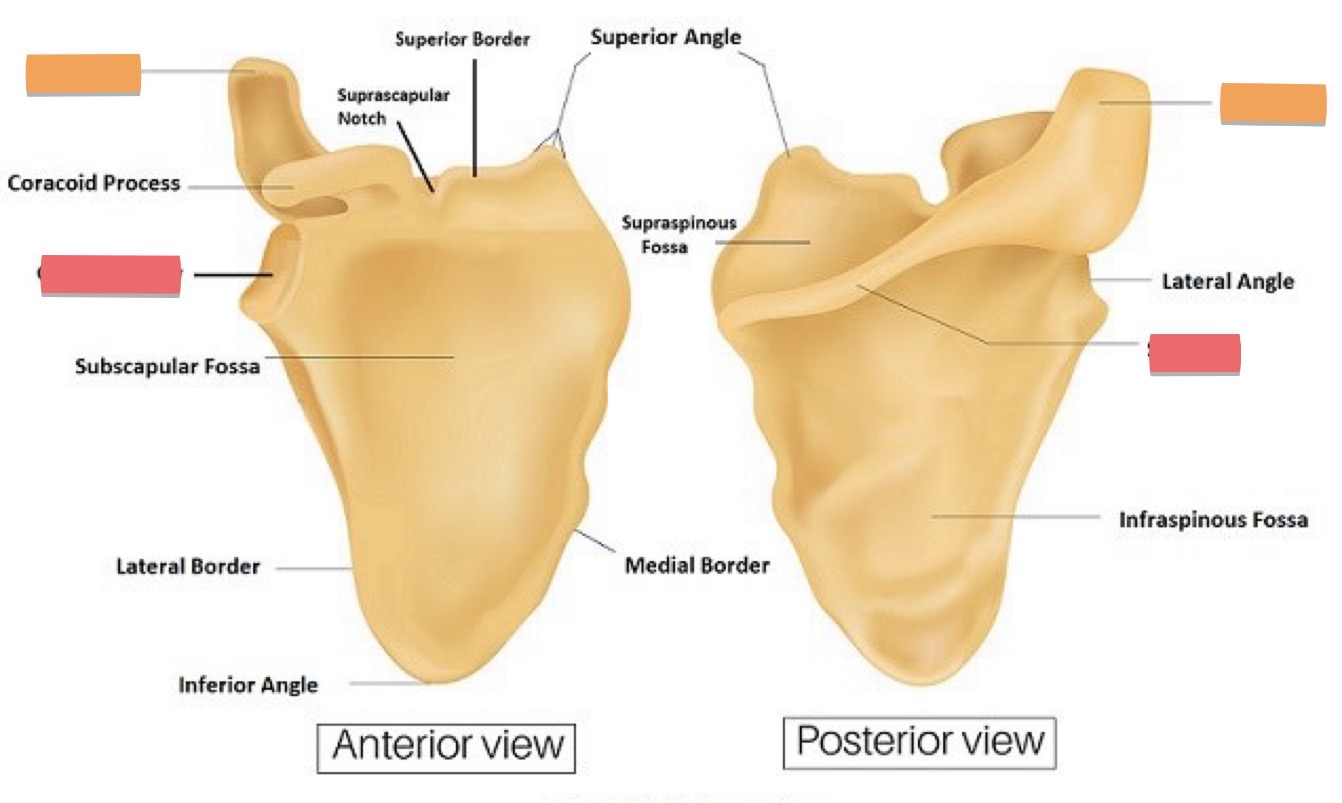
Acromion (Scapula)
-attachment for deltoid + trapezius
-articulate with clavicle
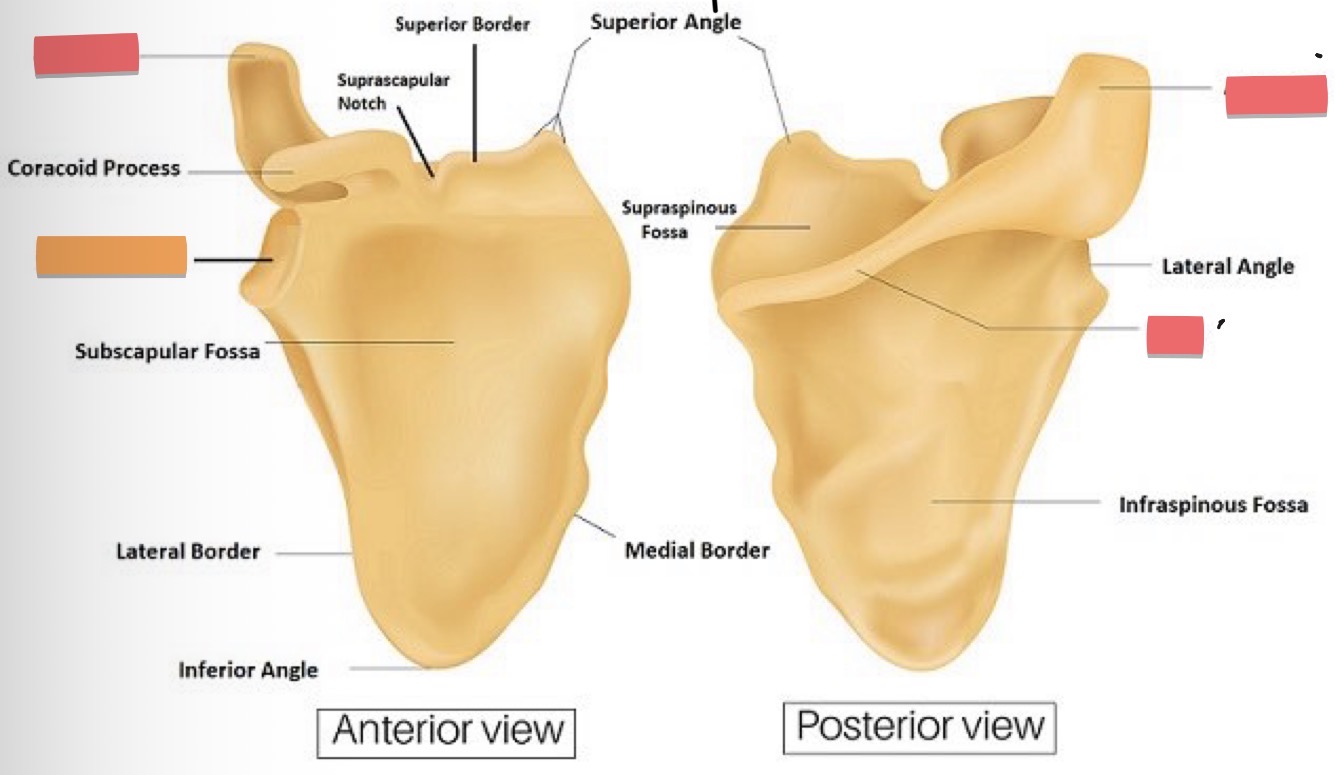
Glenoid Cavity (Scapula)
-articulates with head of humerus (forms ball n socket joint)
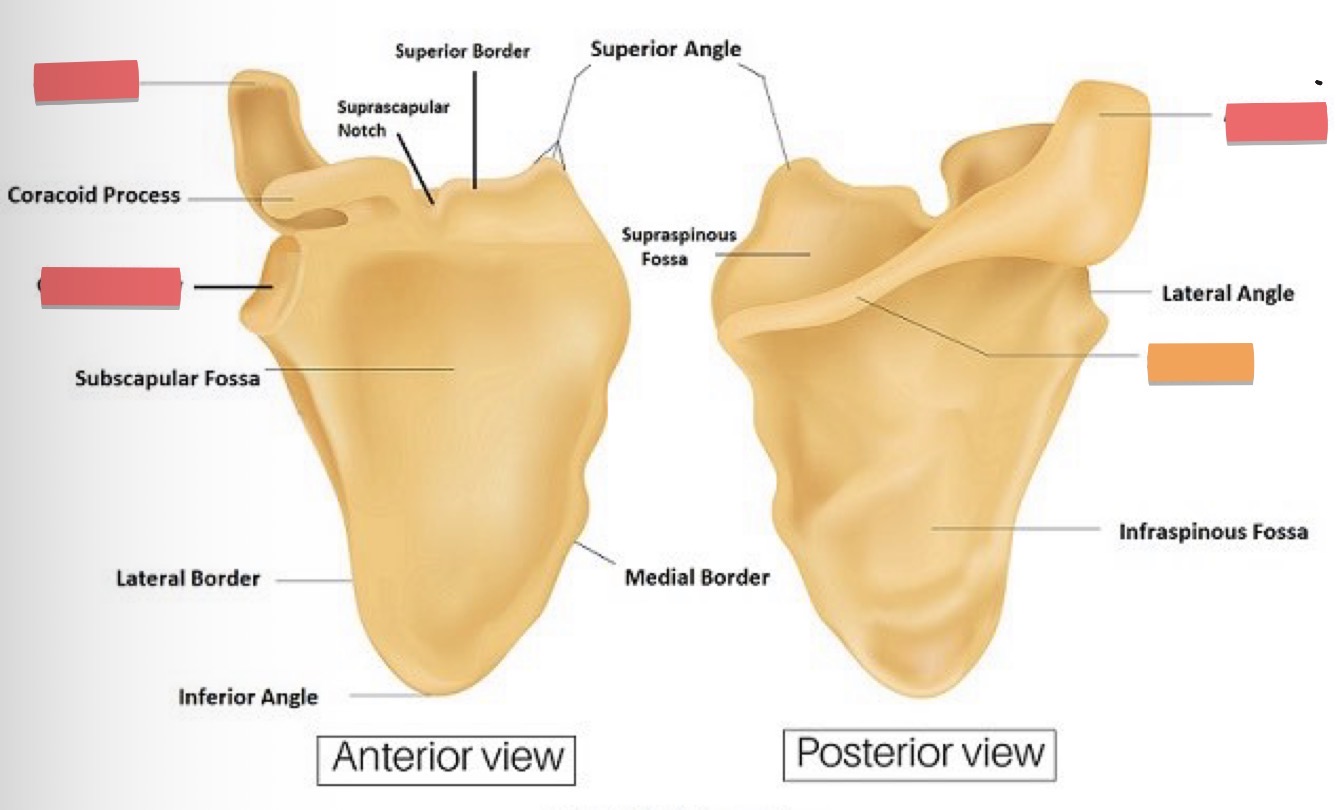
Spine (Scapula)
Humerus
-has head feature
-articulates with glenoid cavity (forms ball n socket joint)
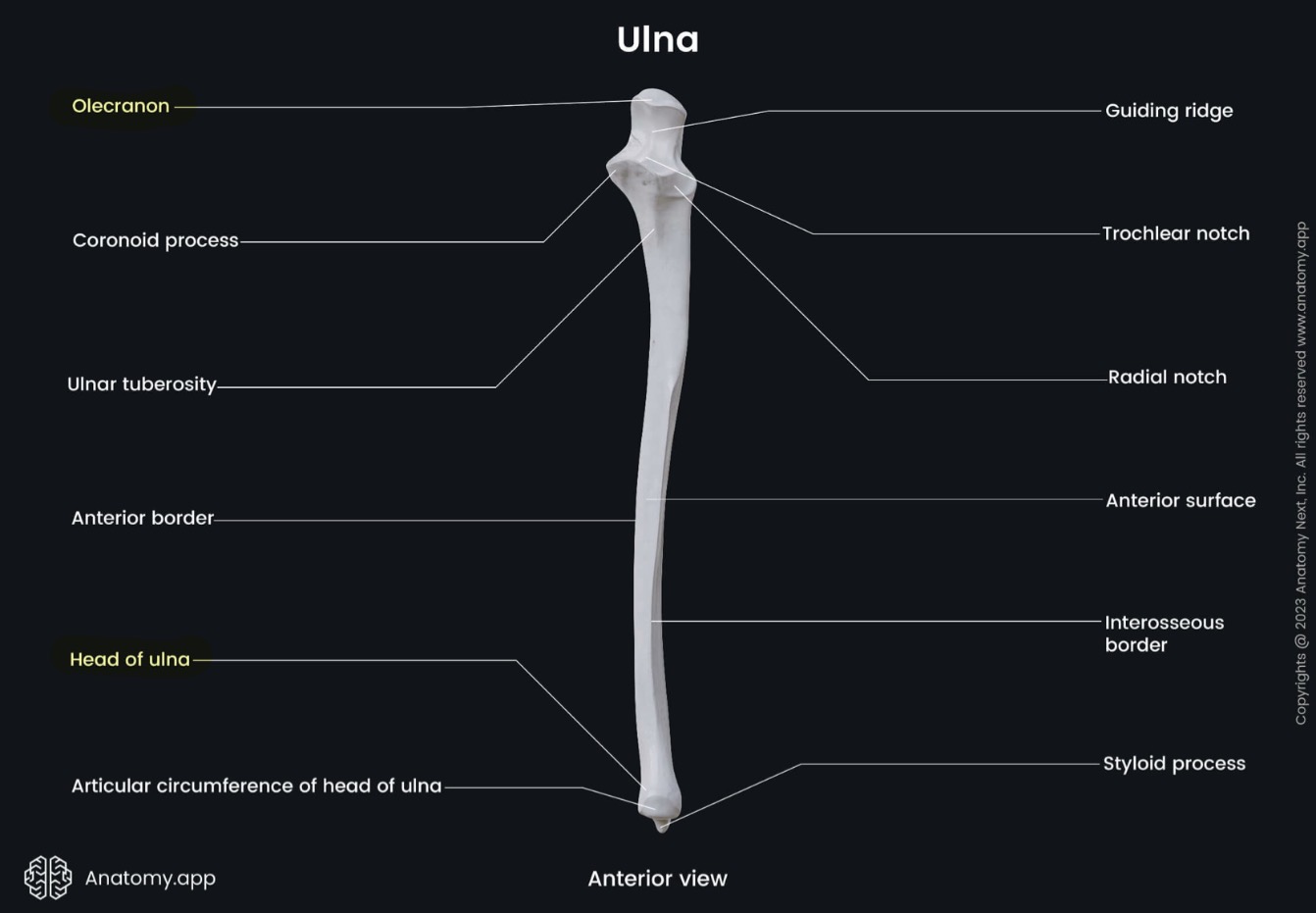
Ulna
-head: distal end of forearm, helps move your arm + wrist
-olecranon: curved process at proximal end of elbow, lever to extend elbow
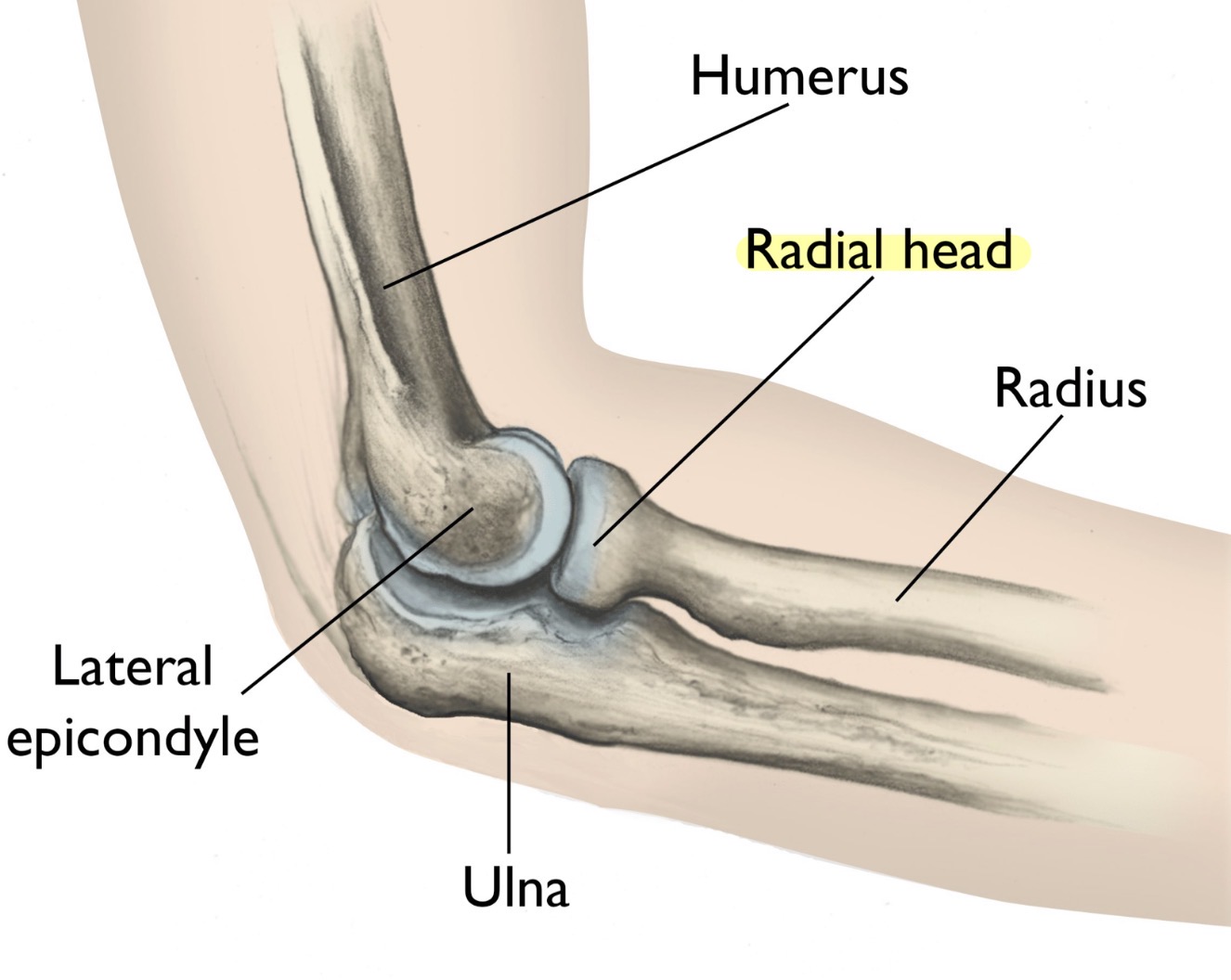
Radius
-head: has circular dent, helps forearm rotation + elbow stability
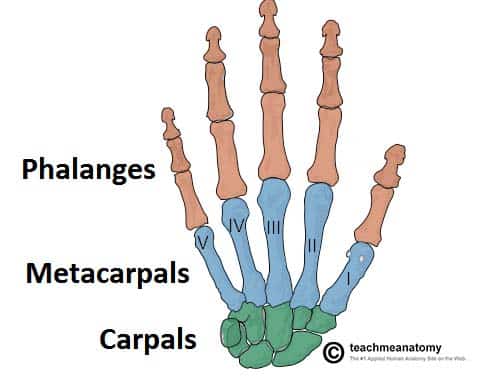
Carpals
-8 short bones
-forms wrist, connects hand to wrist
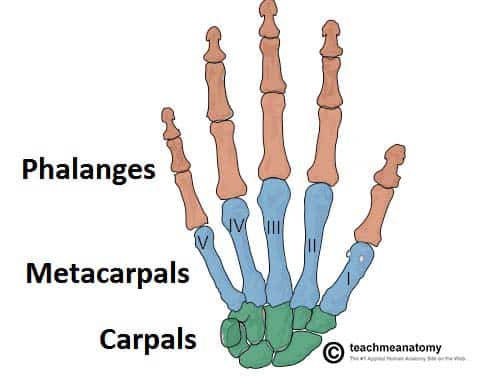
Metacarpals
-5 long bones
-between carpals and phalanges
-helps for structure, gripping
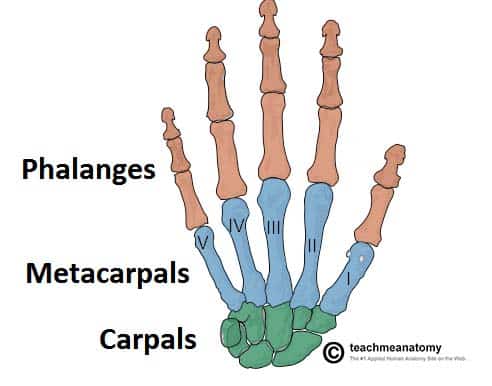
Phalanges (Upper Limb)
-14 bones
-fingers
-forms hinge movement and joint
Pelvic Girdle
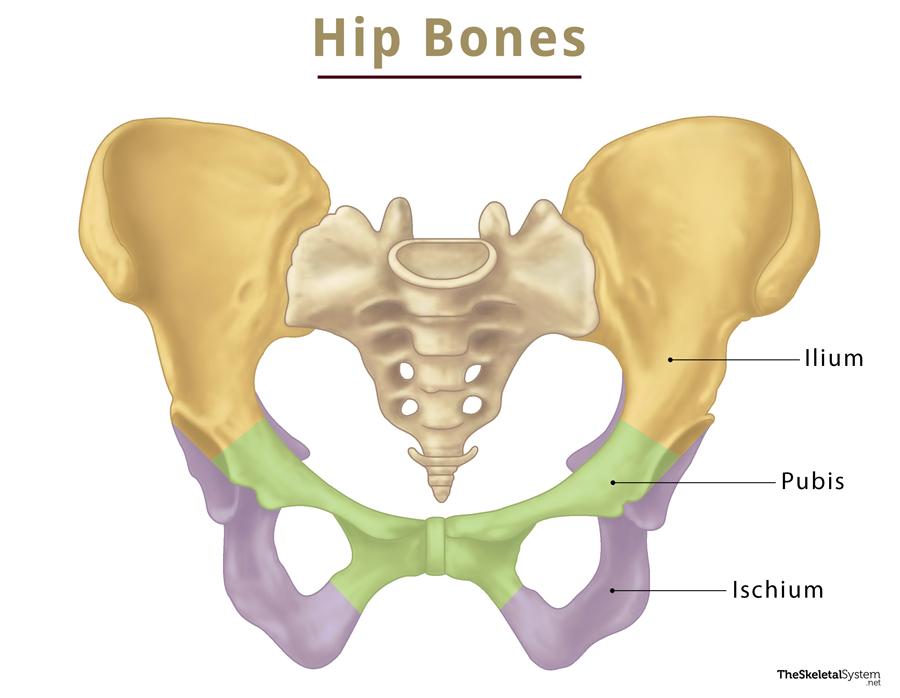
-formed by 2 coxal (hip) bones, each coxal bone in a newborn has 3 bones (ilium, ischium, pubis),separated by cartilage
-connects lower limbs to axial skeleton
-coxal bones, sacrum, and coccyx form the pelvis
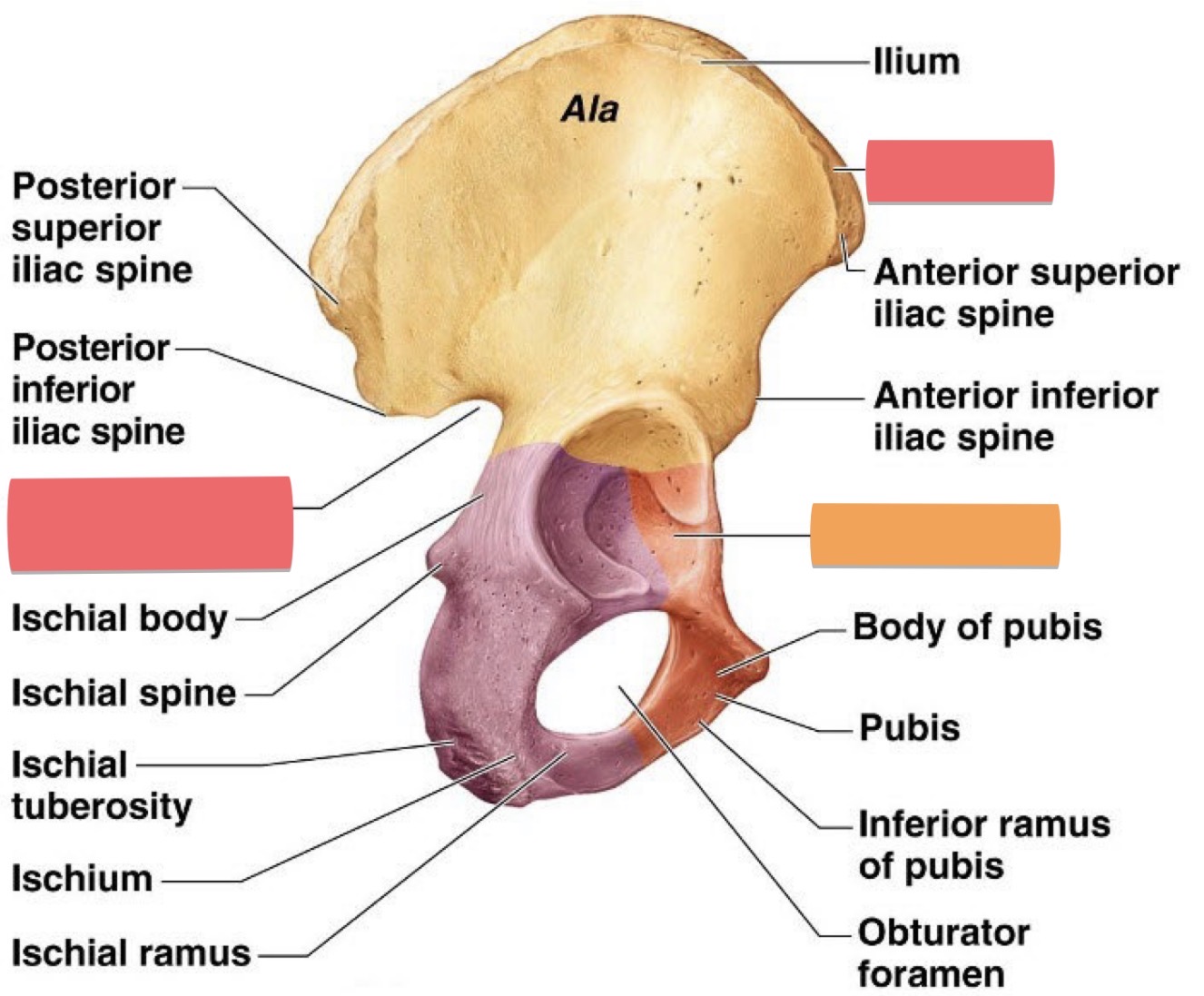
Acetabulum (Ilium)
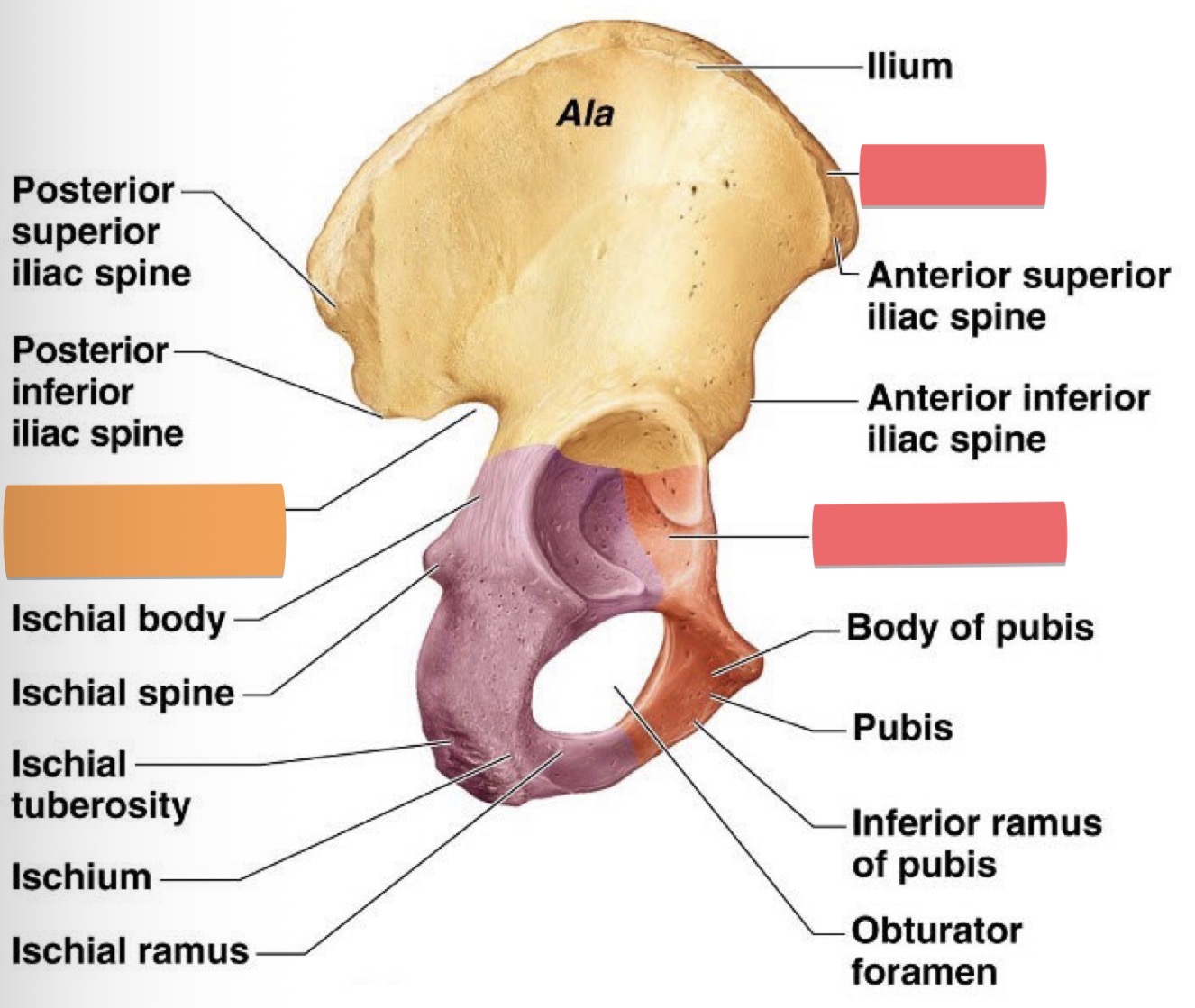
Greater Sciatic Notch (Ilium)
-
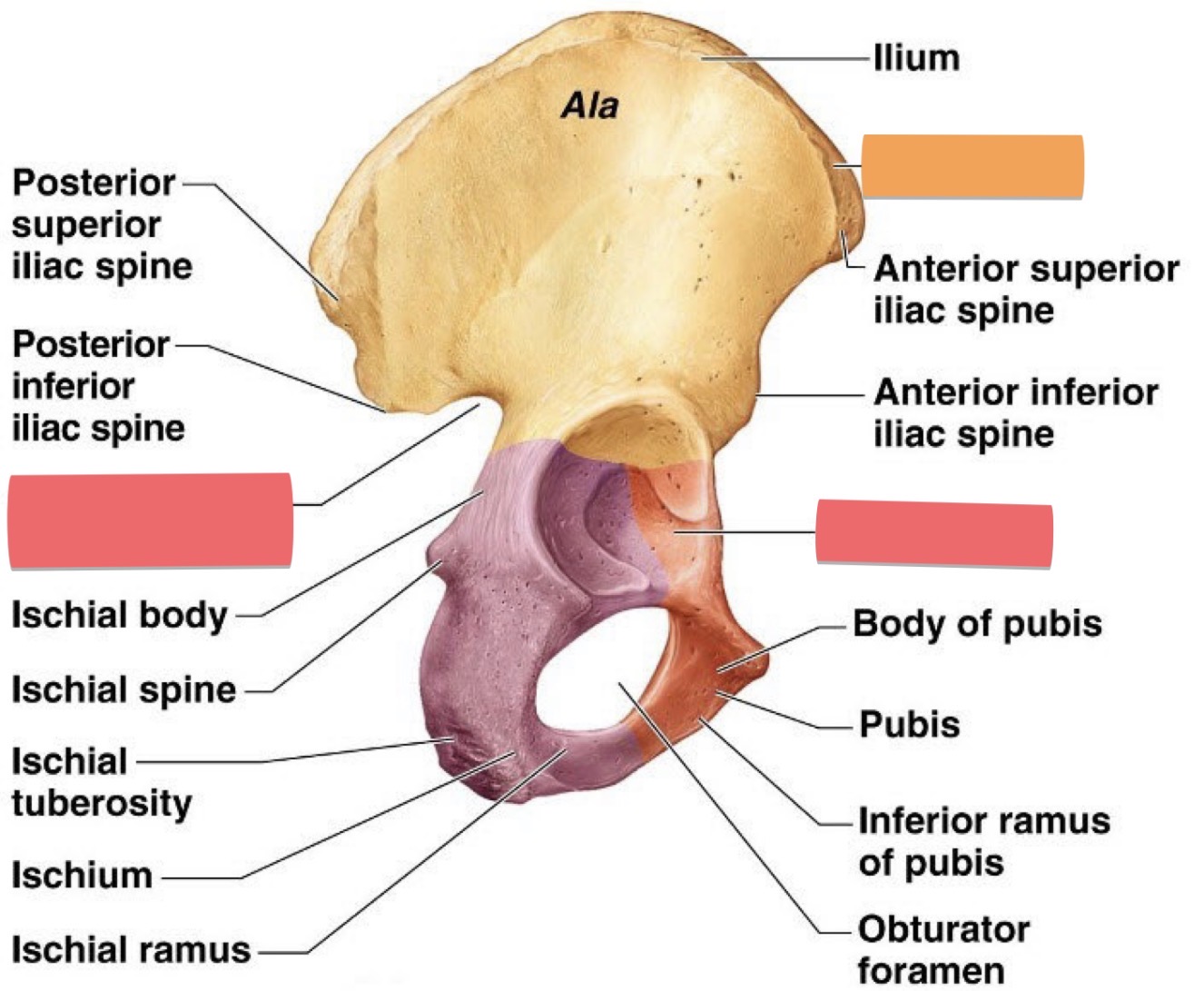
Iliac Crest (Ilium)
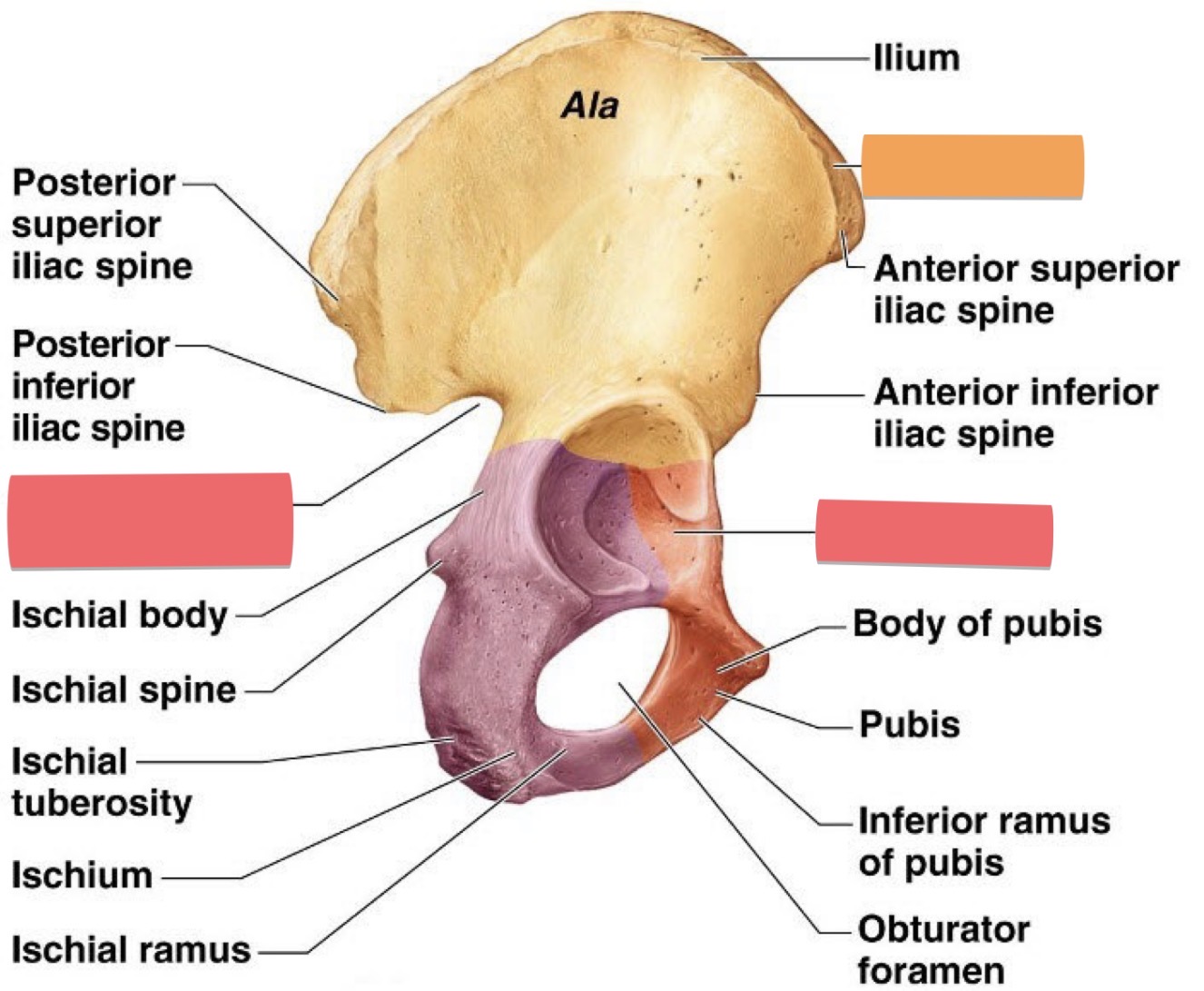
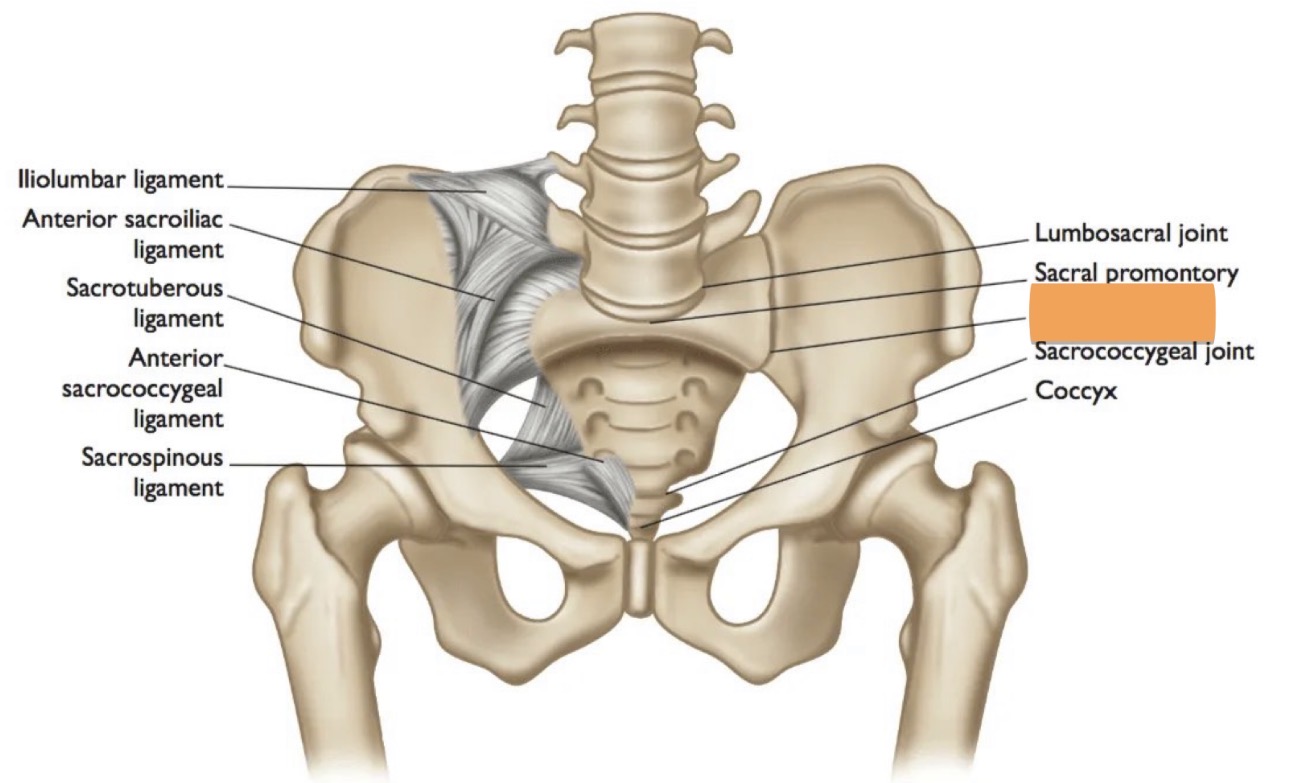
Sacroiliac Joint (Ilium)
Ischium
-support body weight when sititng
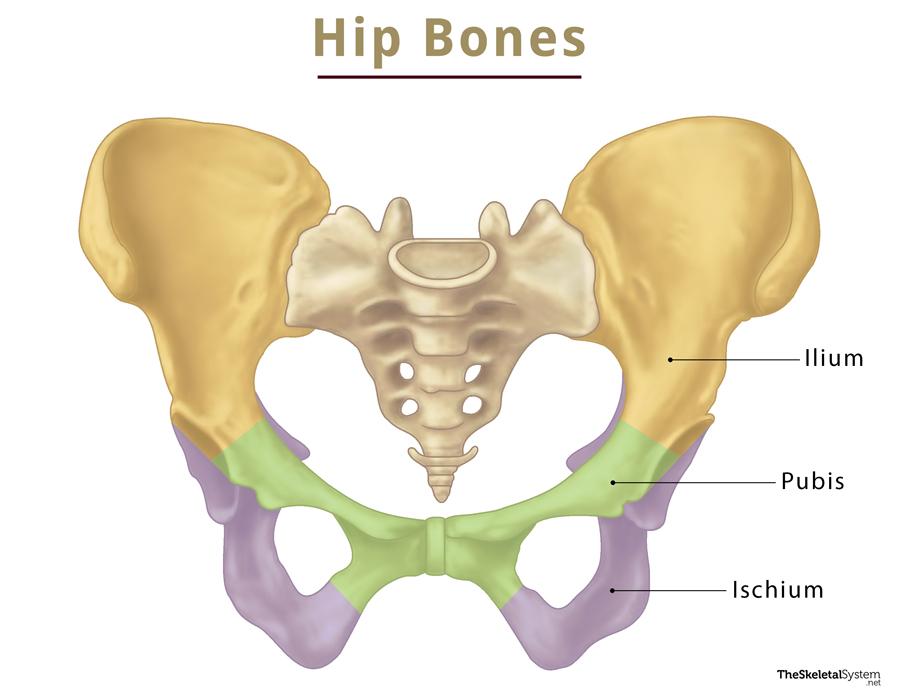
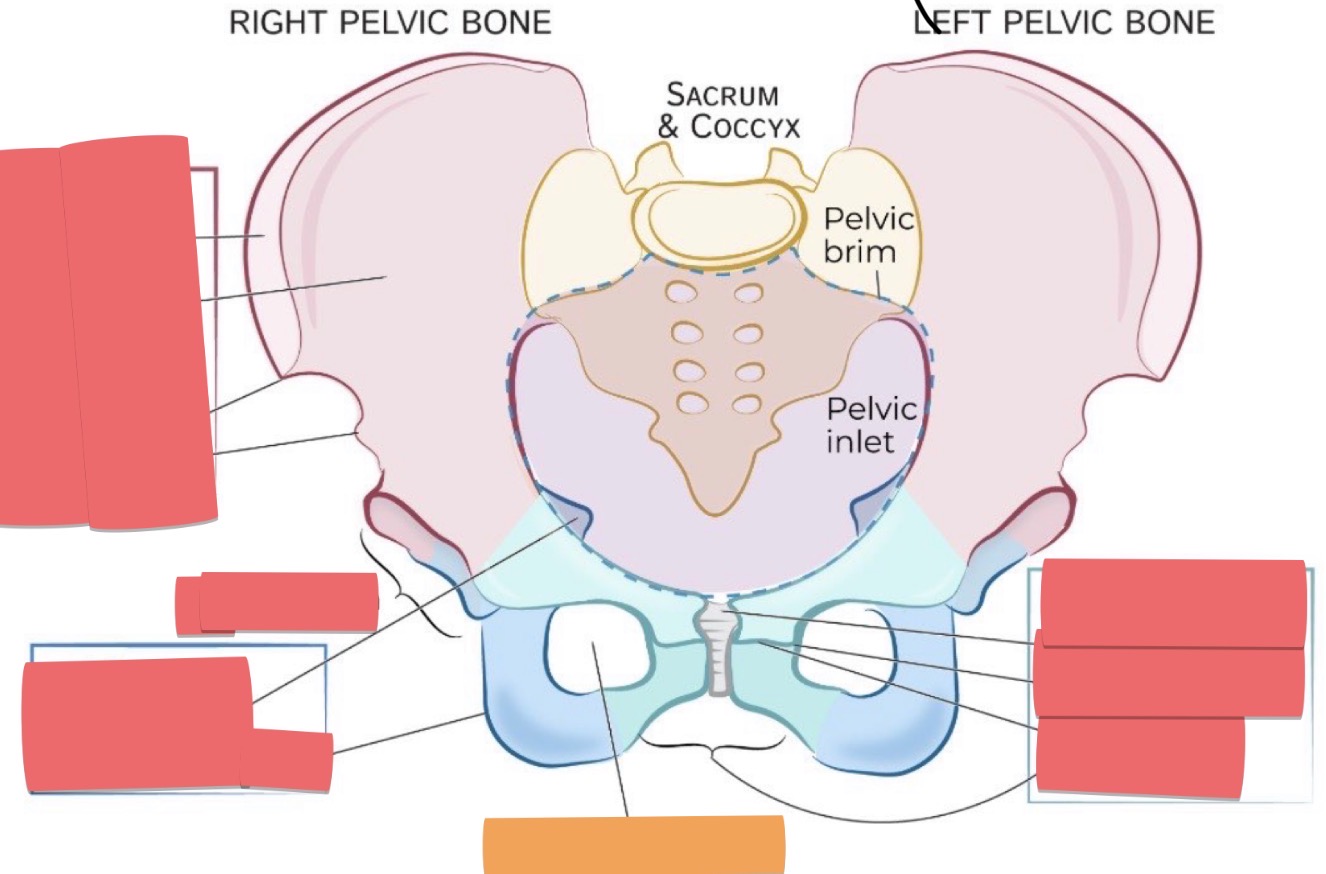
Obturator Foramen (Pubis)
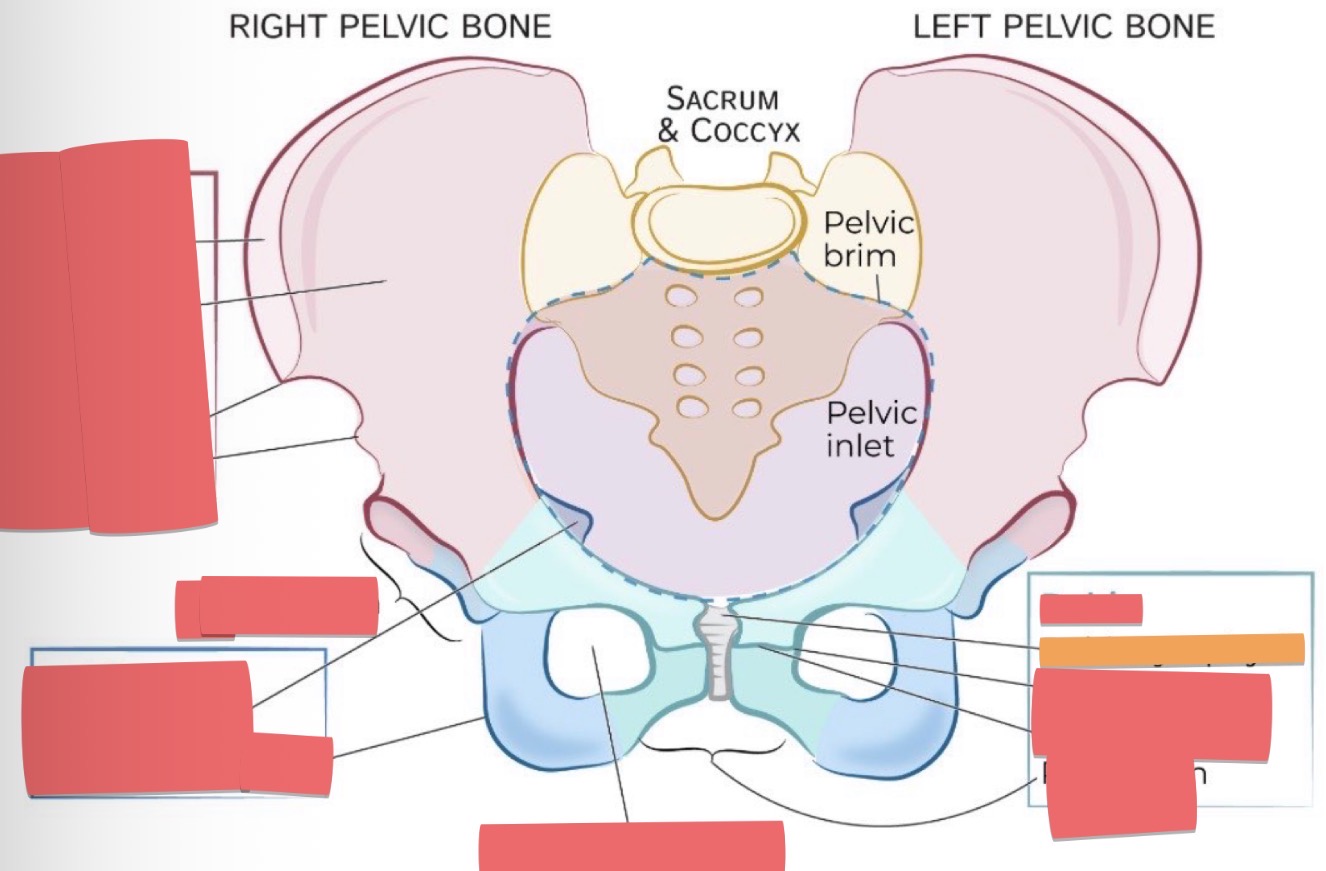
Pubic Symphsis (Pubis)
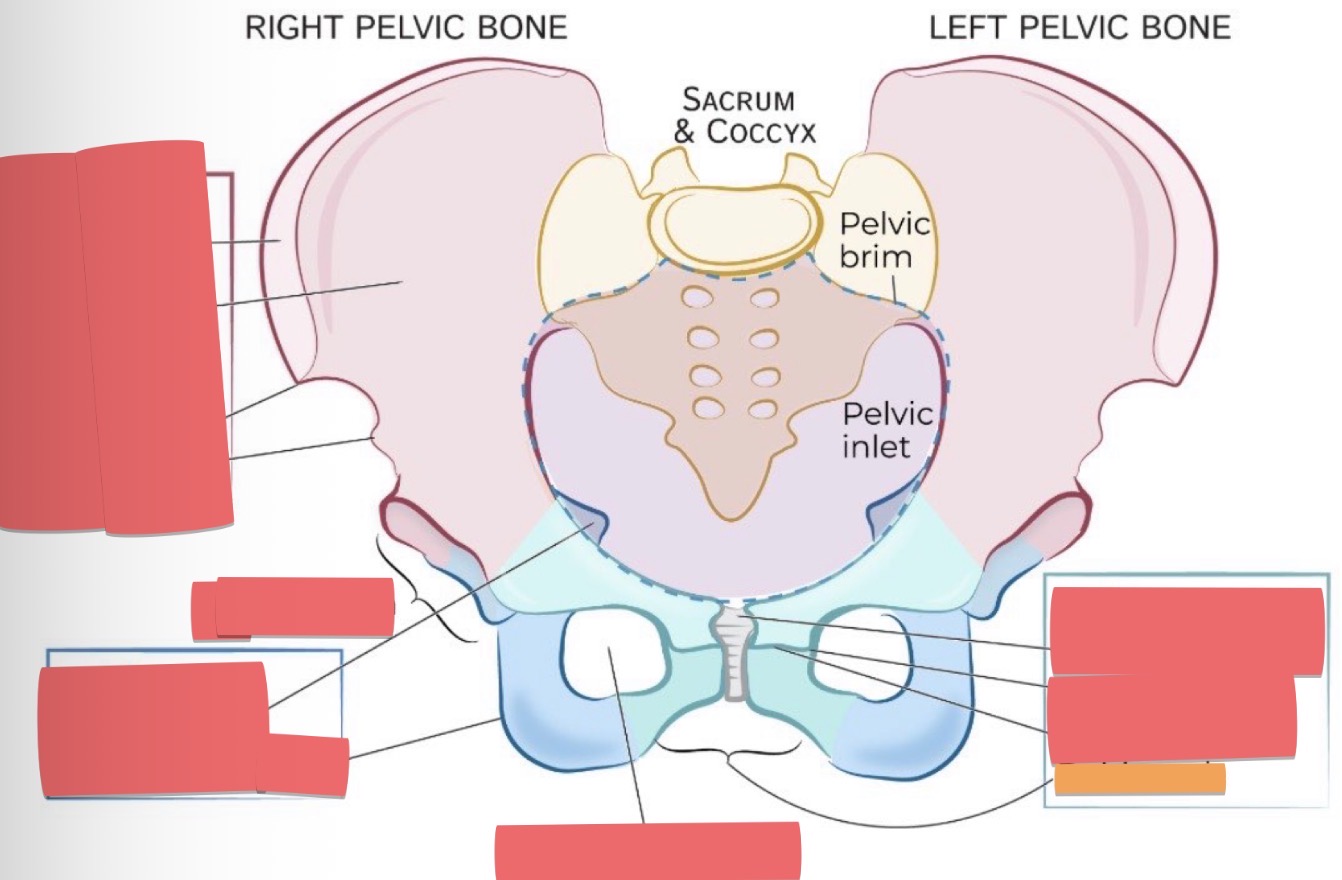
Pubic Arch (Pubis)
Femur
Patella
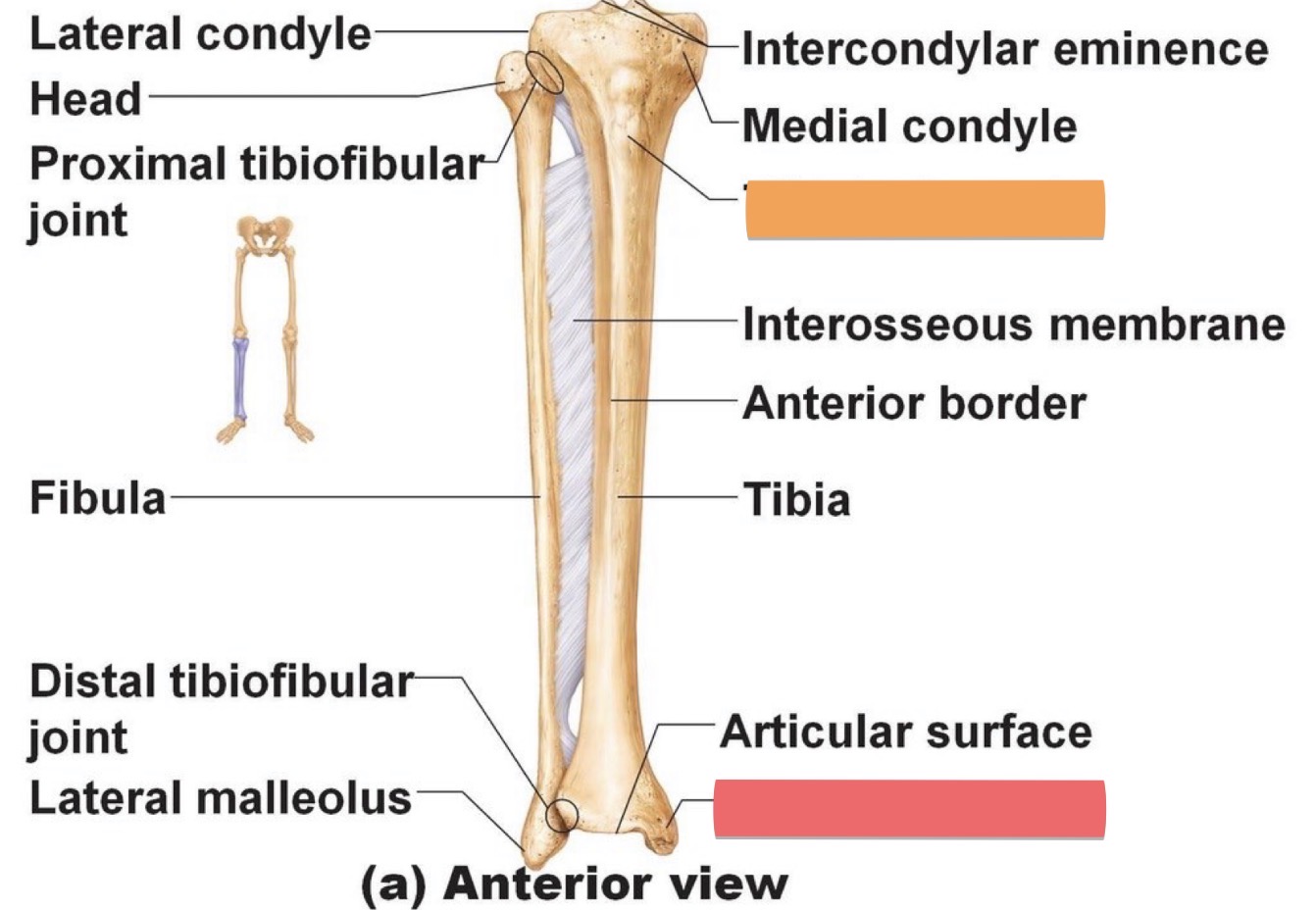
Tuberosity (Tibia)
-
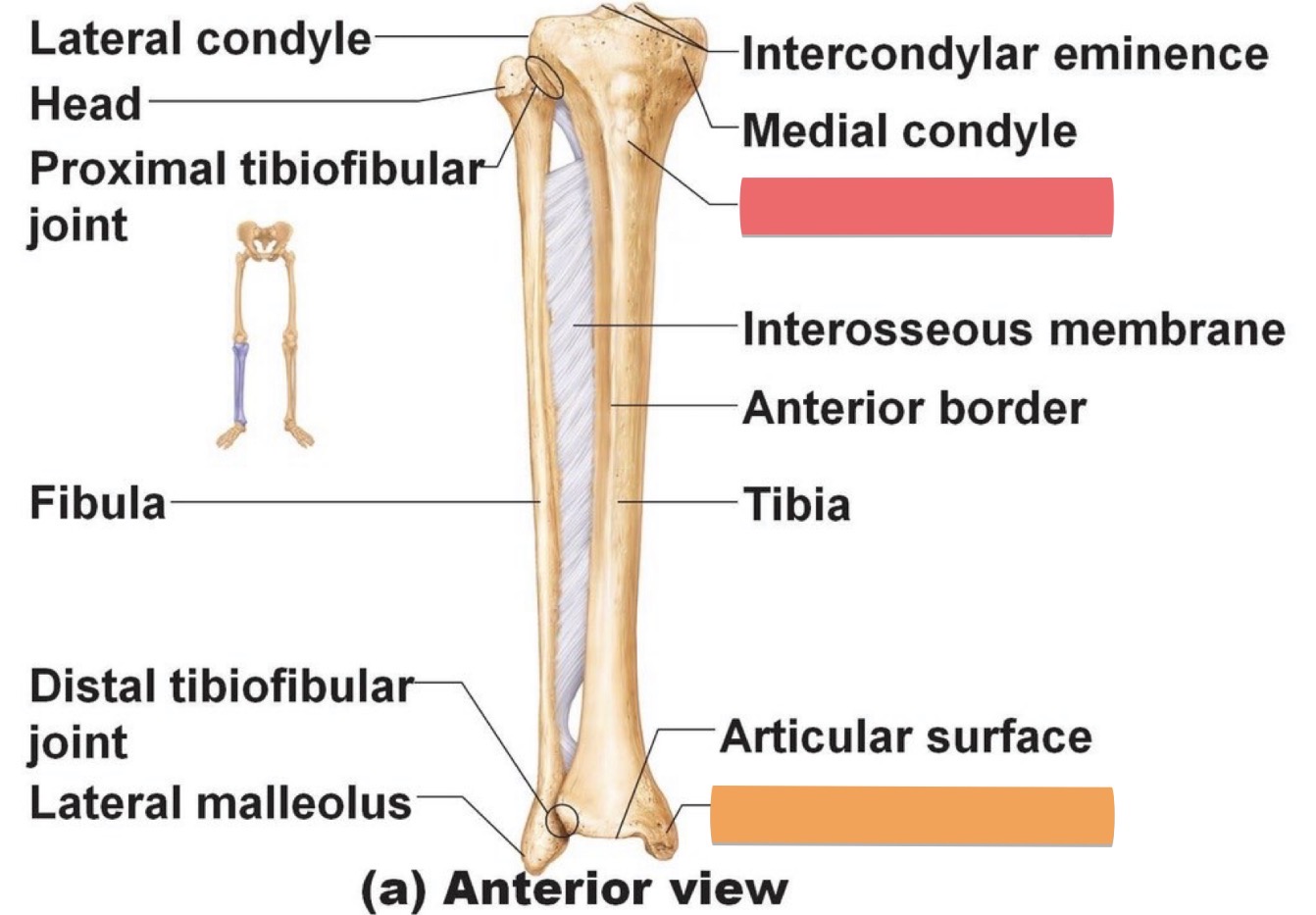
Medial Malleolus (Tibia)
-
Fibula
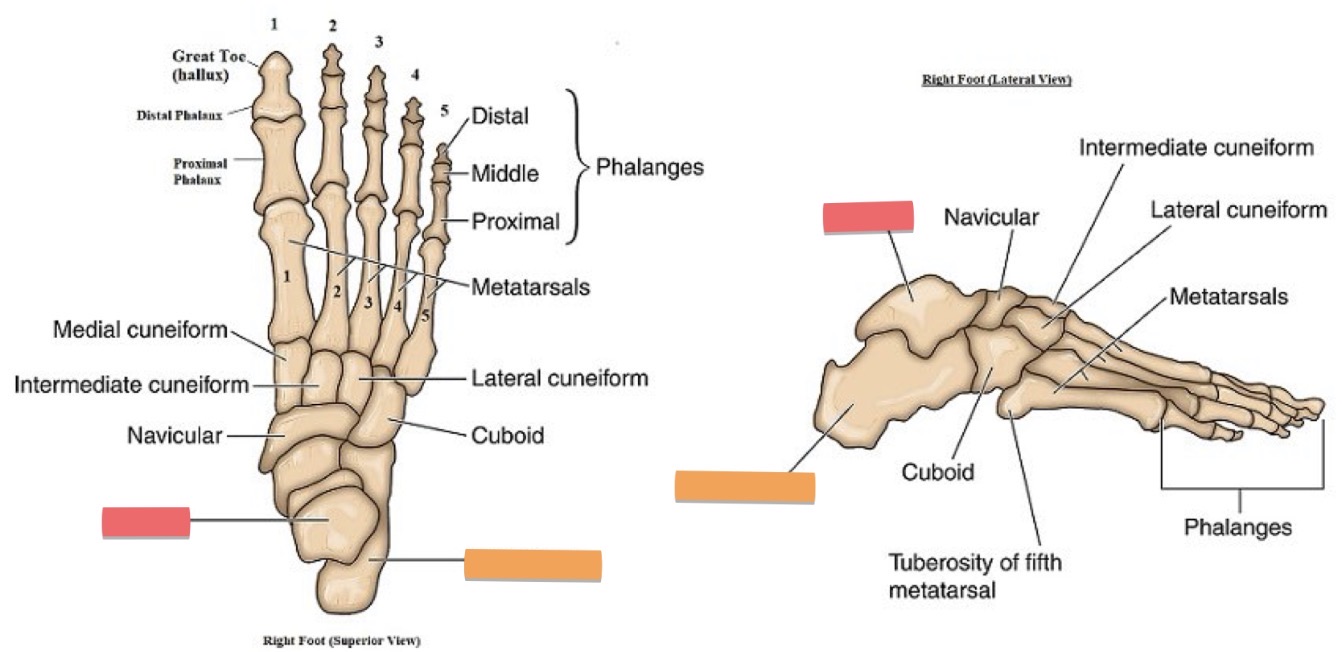
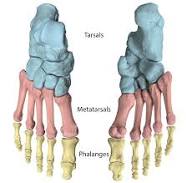
Calcaneus (Tarsals)
-
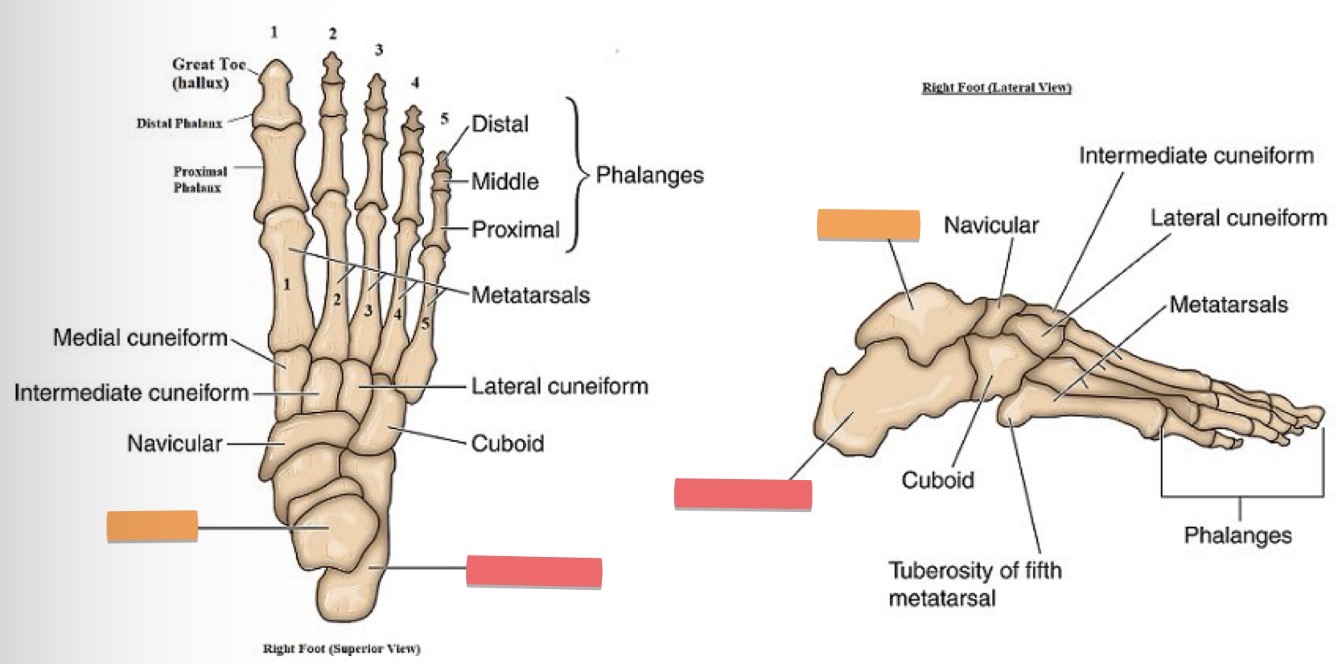
Talus (Tarsals)
-
Metatarsals
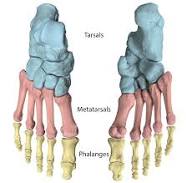
Phalanges
Differences Between Male and Female Pelvis
Male: pubic arch < than 90 deg., heart shape pelvic inlet
Female: pubic arch > than 90 deg., oval shaped pelvic inlet
Fibrous Joint
Dense irreg. CT, no synovial cavity
-Sutures: btw skull bones, can fuse into a synostosis
-Syndesmosis: bones are farther apart than sutures (3 kinds)
Interosseous Ligament: joins distal ends of tibia n fibula
Interosseous Membrane: dense irreg. CT that joins 2 long bones (eg; radius n ulna)
Gomphosis: teeth n their sockets
Cartilaginous Joints
Hyaline or fibrocartilage, no synovial cavity
-Synchondrosis: hyaline or fibrocartilage (eg; part connecting 1st rib to manubrium). Also epiphyseal cartilages (grows hyaline cartilage), like epiphyseal plate of a kid, which then become a synostosis
-Symphysis: hyaline cartilage on ends of bone, fibrocartilage disc in btw (eg; pubic symphysis)
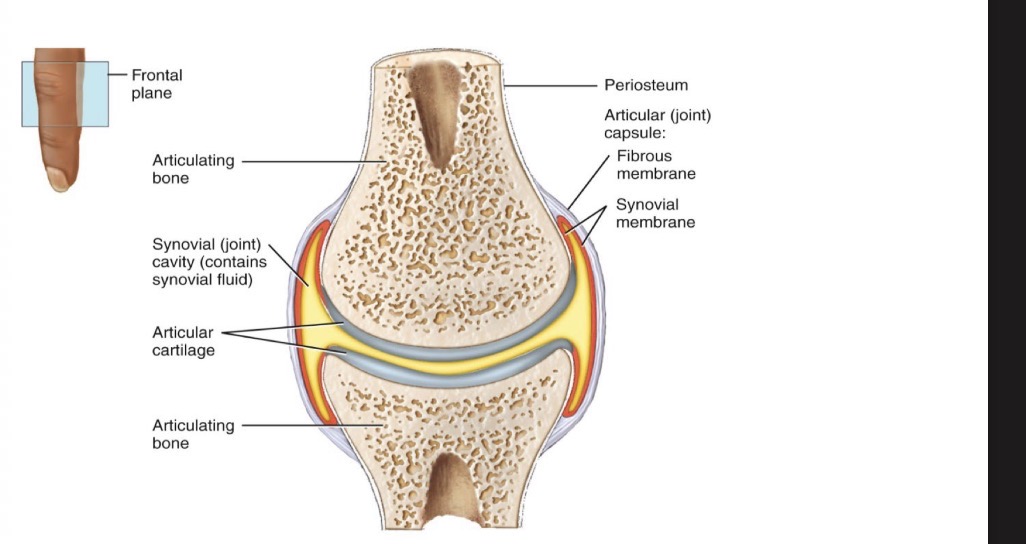
Synovial Joints
Have synovial cavity, ends of bones covered by hyaline, 2 layers of CT enclose cavity (fibrous + synovial membranes)
-mobility, lubrication
-6 types
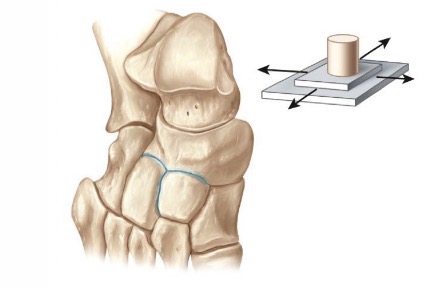
Gliding
Flat bone surfaces move with respect to one another (little angle alteration btw bones)
Plane
-flat/slightly curved bones
-biaxial
-eg; btw tarsals
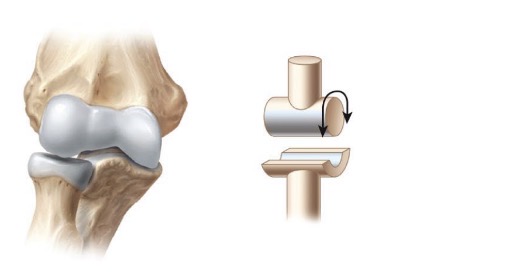
Hinge Joint
-Convex bone fits INTO concave bone
-monoaxial
-joint btw humerus and ulna
Pivot Joints
-one bone rotates around its own long axis
-monoaxial
-joint btw radius and ulna
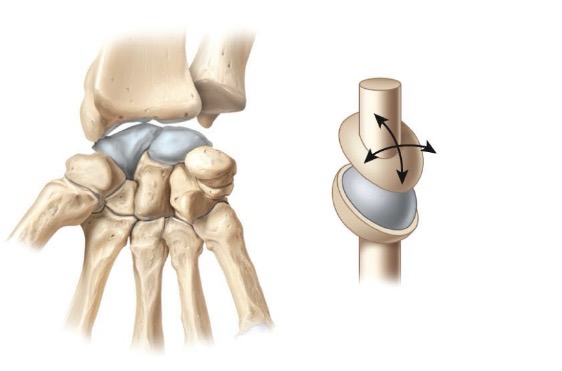
Ellipsoid Joints
-oval shaped depression bone and oval shaped projection bone
-biaxial
-btw radius and adjacent carpals
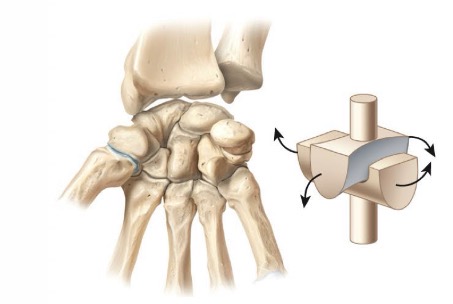
Saddle Joints
-Concave bone fits OVER convex bone
-biaxial
-metacarpal of thumb and its carpal
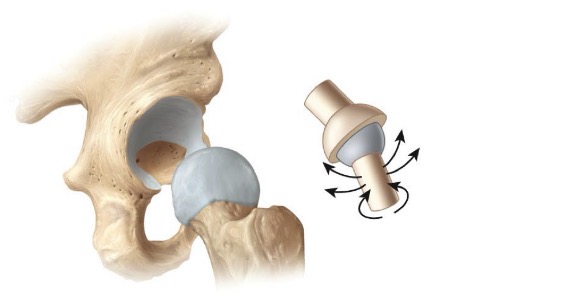
Ball n Socket Joint
-ball shaped bone fits into cup shaped bone
-triaxial
-glenohumeral joint
Functions of Skeletal Muscle
-maintain posture
-generate body heat
-stabilize joints
Origin and Insertion
-when a muscle contracts, movement occurs, resulting in the INSERTION moving toward the ORIGIN
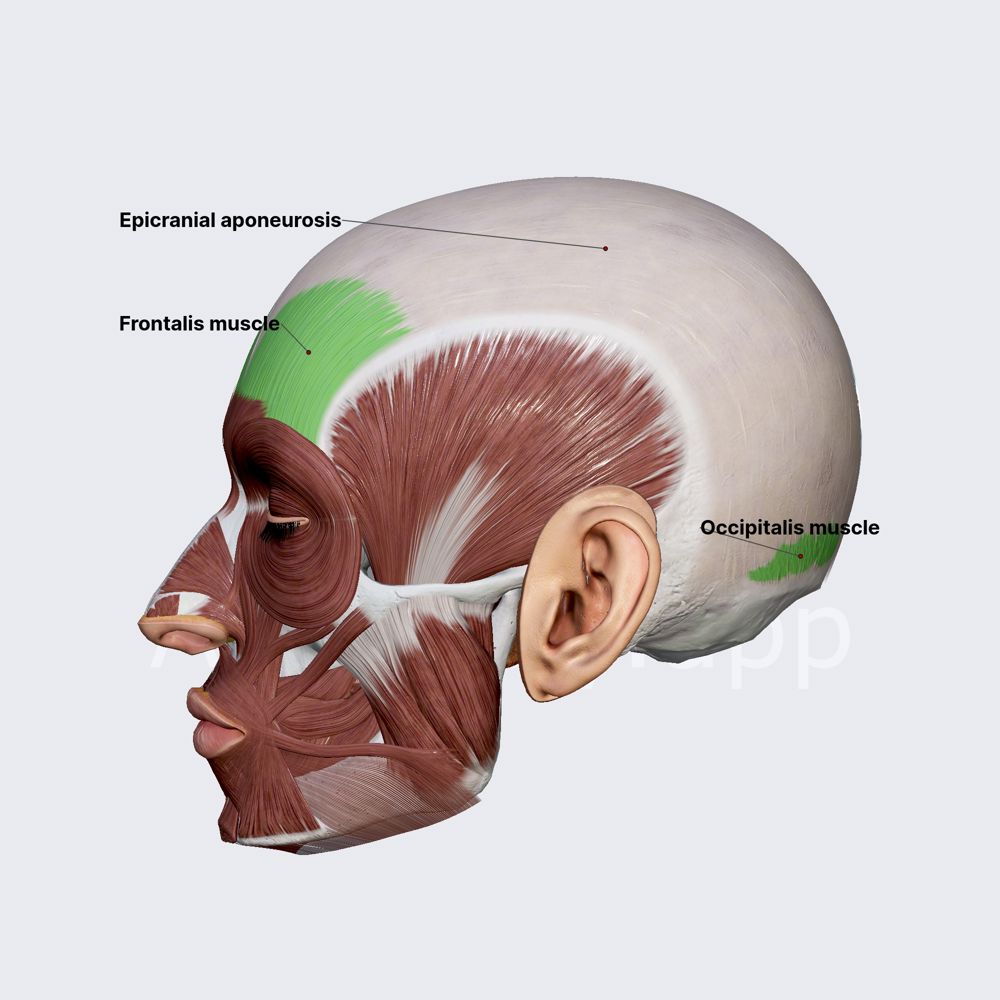
Occipitofrontalis
-Frontal Belly:elevates eyebrows, wrinkles forehead
-Occipital Belly: pull back scalp
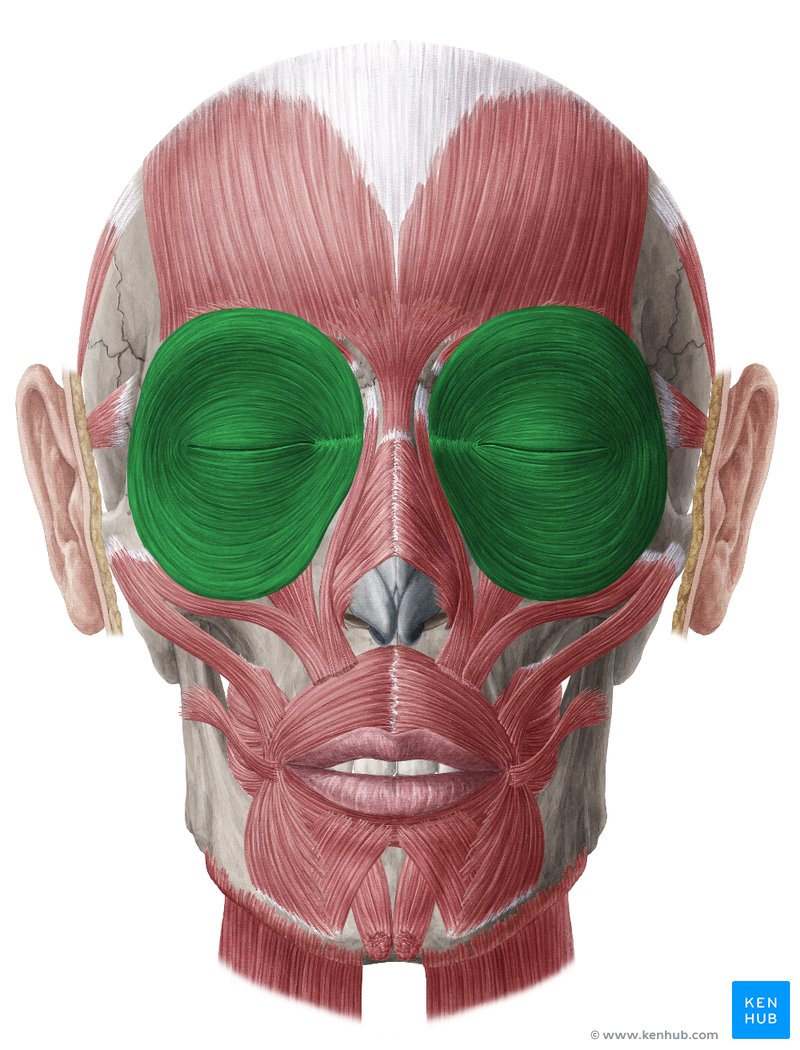
Obicularis Oculi
-close eyelids, blinking
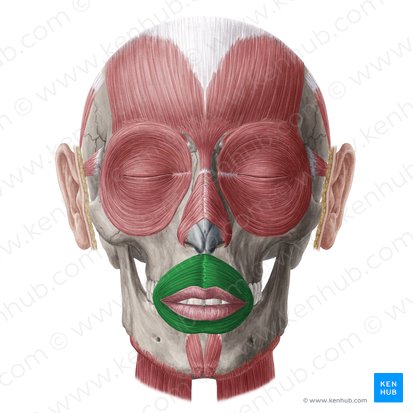
Orbicularis Oris
-speech, lip movements (eg; kissing)
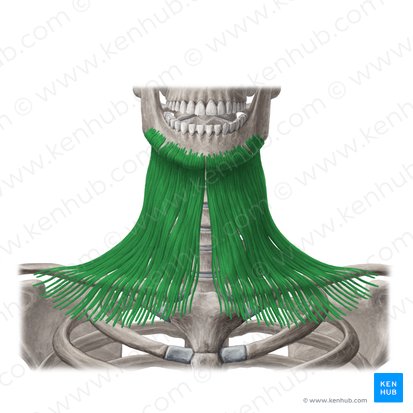
Platysma
-depress mandible, lower face