Fishes part 1 - Pisces
 Call Kai
 Learn
Learn Practice Test
 Spaced Repetition
 Match
Match Flashcards
 Knowt Play
1/24

There's no tags or description
Looks like no tags are added yet.
Name | Mastery | Learn | Test | Matching | Spaced | Call with Kai |
|---|
No analytics yet
Send a link to your students to track their progress
25 Terms
Class Pisces
Evolution of fishes happened mainly through the development of WHAT. Therefore, the fishes are considered the earliest WHAT.
Gnathostomes translates as “WHAT”.
Earliest fishes are known from the WHAT, and they evolved from WHAT ancestors.
Class Pisces
Evolution of fishes happened mainly through the development of JAWS. Therefore, the fishes are considered the earliest GNATHOSTOMES.
Gnathostomes translates as “JAWED MOUTH”.
Earliest fishes are known from the MIDDLE SILURIAN, and they evolved from AGNATHAN ancestors.
Class Pisces
Aquatic vertebrates adapted to WHAT, WHAT and WHAT environments.
Class Pisces
Aquatic vertebrates adapted to MARINE, BRACKISH and FRESHWATER environments.
Class Pisces
Respiration is mostly through WHAT, but some taxa evolved WHAT-like structures and were/are capable to breath WHAT oxygen.
Class Pisces
Respiration is mostly through GILLS, but some taxa evolved LUNG-like structures and were/are capable to breath ATMOSPHERIC oxygen.
Class Pisces
Reproduction is mainly through numerous WHAT
Class Pisces
Reproduction is mainly through numerous UNPROTECTED EGGS
Class Pisces
High magnitude WHAT variability
Some species are capable to live WHAT and other evolved WHAT capabilities over relatively short distances
The diversity is extremely high, and more than 35 orders are recognized in the modern faunas
Class Pisces
High magnitude MORPHOLOGICAL variability
Some species are capable to live INLAND and other evolved FLIGHT capabilities over relatively short distances
The diversity is extremely high, and more than 35 orders are recognized in the modern faunas
Find fishes through WHAT, WHAT or WHAT
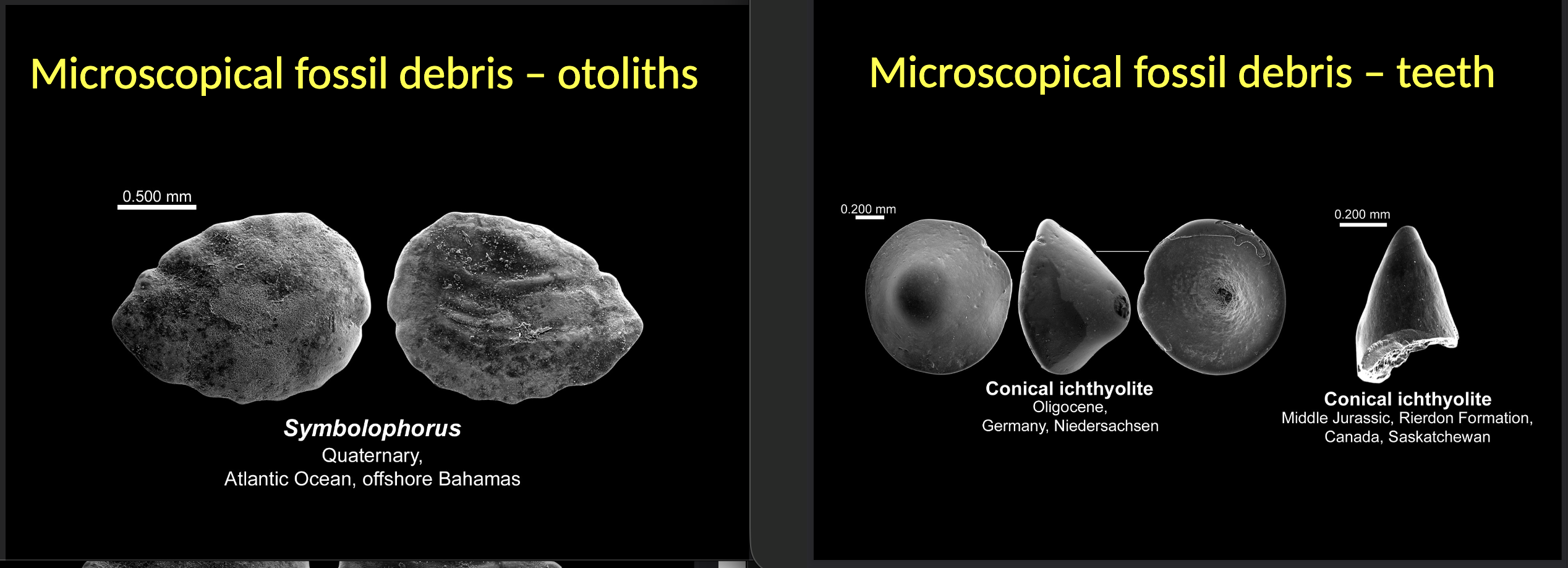
Find fishes through TEETH, SCALES or BONY PLATES
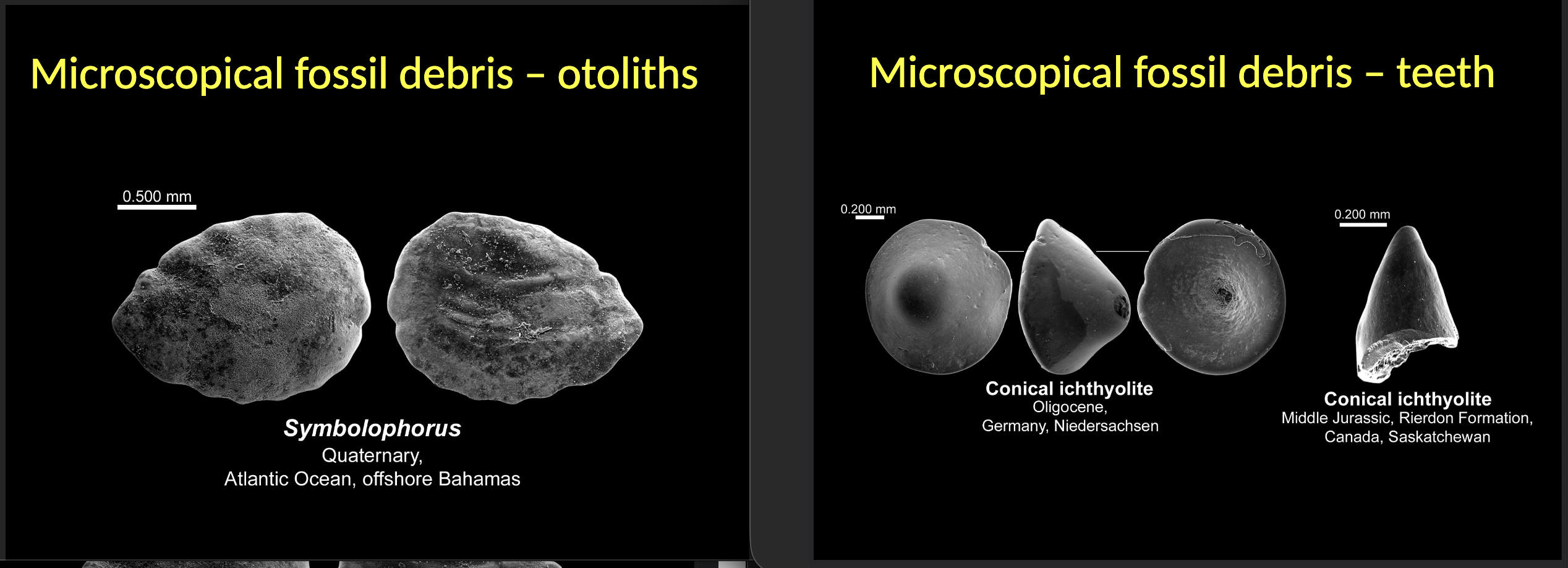
Otoliths = WHAT
Otoliths = Mineralized parts of the internal ear used for body balance
Subclass Acanthodii
The body has a general aspect resembling the WHAT; informally, they were called ‘WHAT’.
WHAT – WHAT
The skeleton is mostly WHAT, seemingly indicating a primitive nature.
Subclass Acanthodii
The body has a general aspect resembling the SHARKS; informally, they were called ‘SPINY SHARKS’.
MIDDLE SILURIAN – LOWER PERMIAN.
The skeleton is mostly CARTILAGINOUS, seemingly indicating a primitive nature.
Subclass Acanthodii
The paired fins (WHAT and WHAT) present a WHAT base.
One anterior bony spine occurs both in the WHAT and WHAT fins.
The body is covered by WHAT but never evolved a WHAT.
They have no WHAT
Subclass Acanthodii
The paired fins (ABDOMINAL and PECTORALS) present a BONY base.
One anterior bony spine occurs both in the PAIRED and UNPAIRED fins.
The body is covered by SMALL SCALES but never evolved a CEPHALIC SHIELD.
They have no SCALES
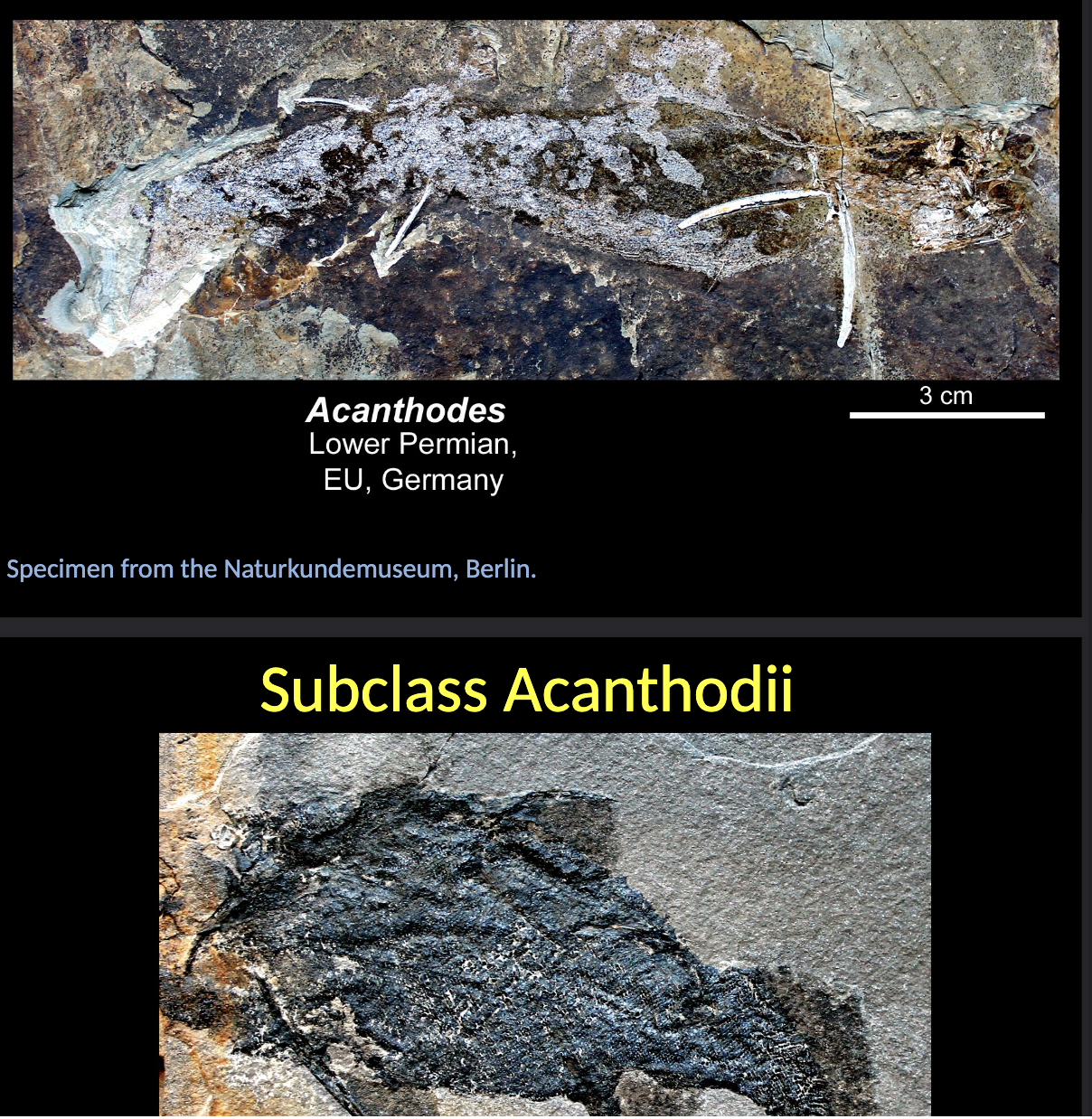
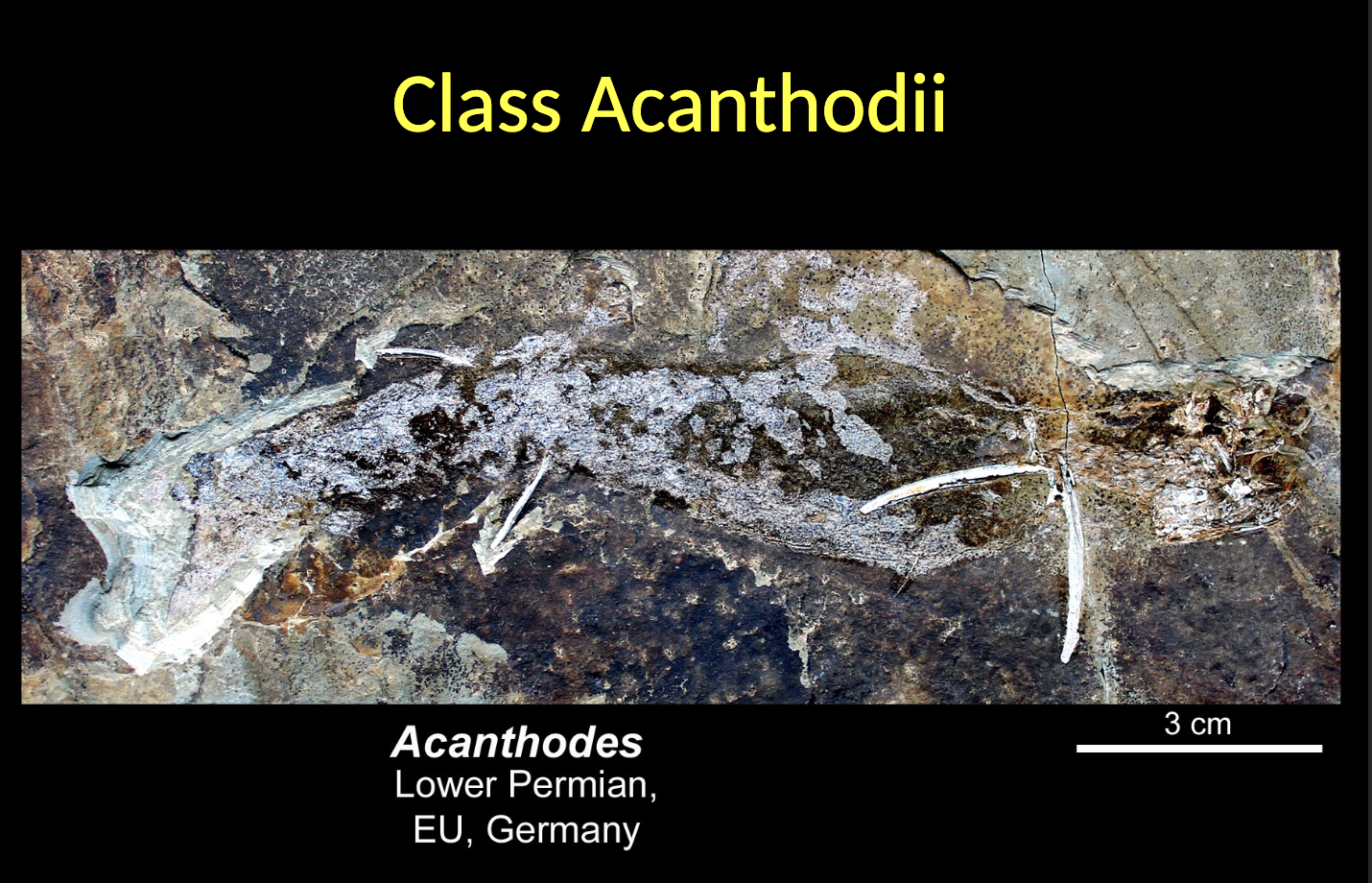
Acanthodii - Acanthodes
Lower HWAT
WHERE
Acanthodii - Acanthodes
Lower PERMIAN
Germany
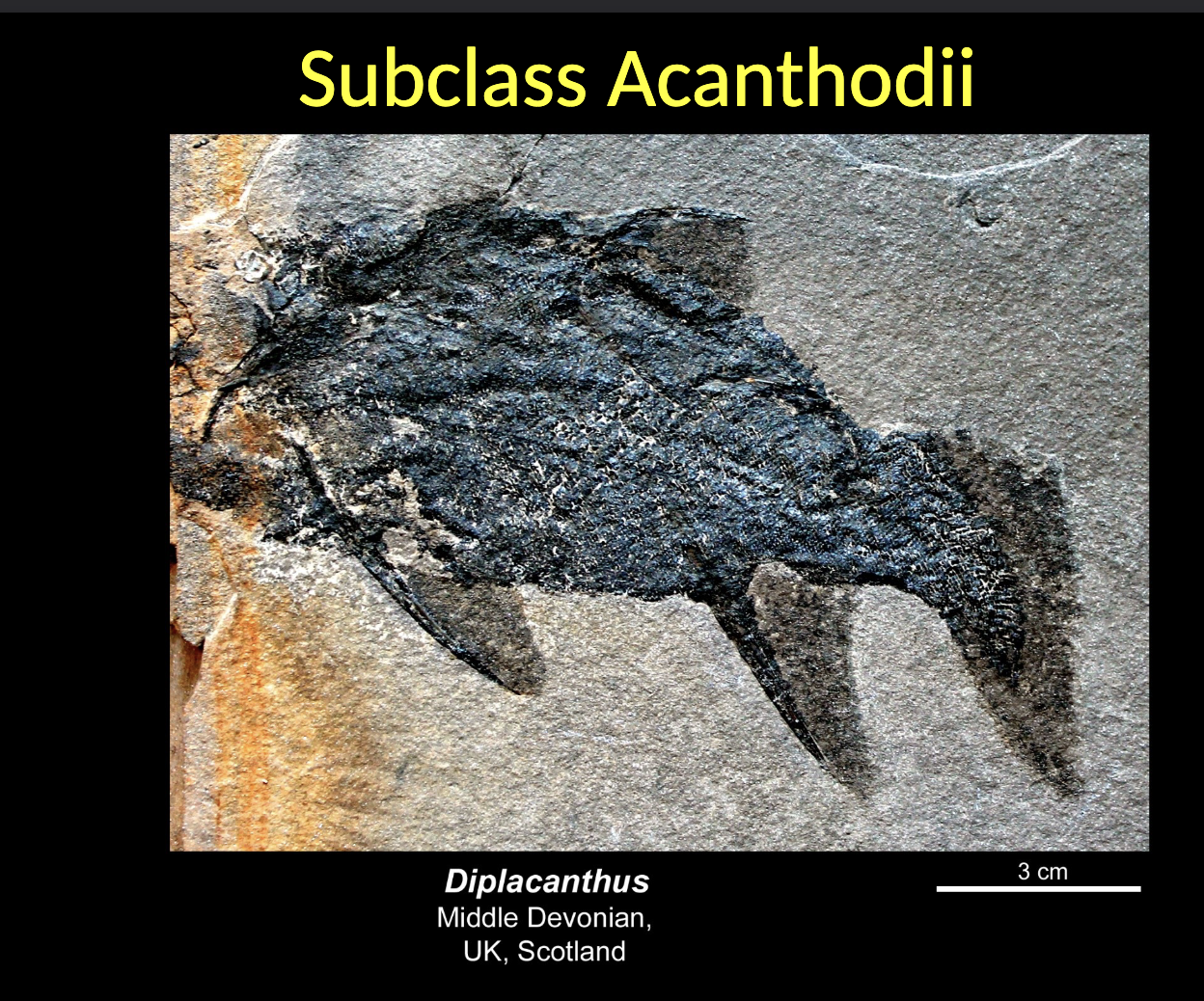
Acanthodii - Diplacanthus
middle WHAT
WHERE
Acanthodii - Diplacanthus
middle DEVONIAN
Scotland
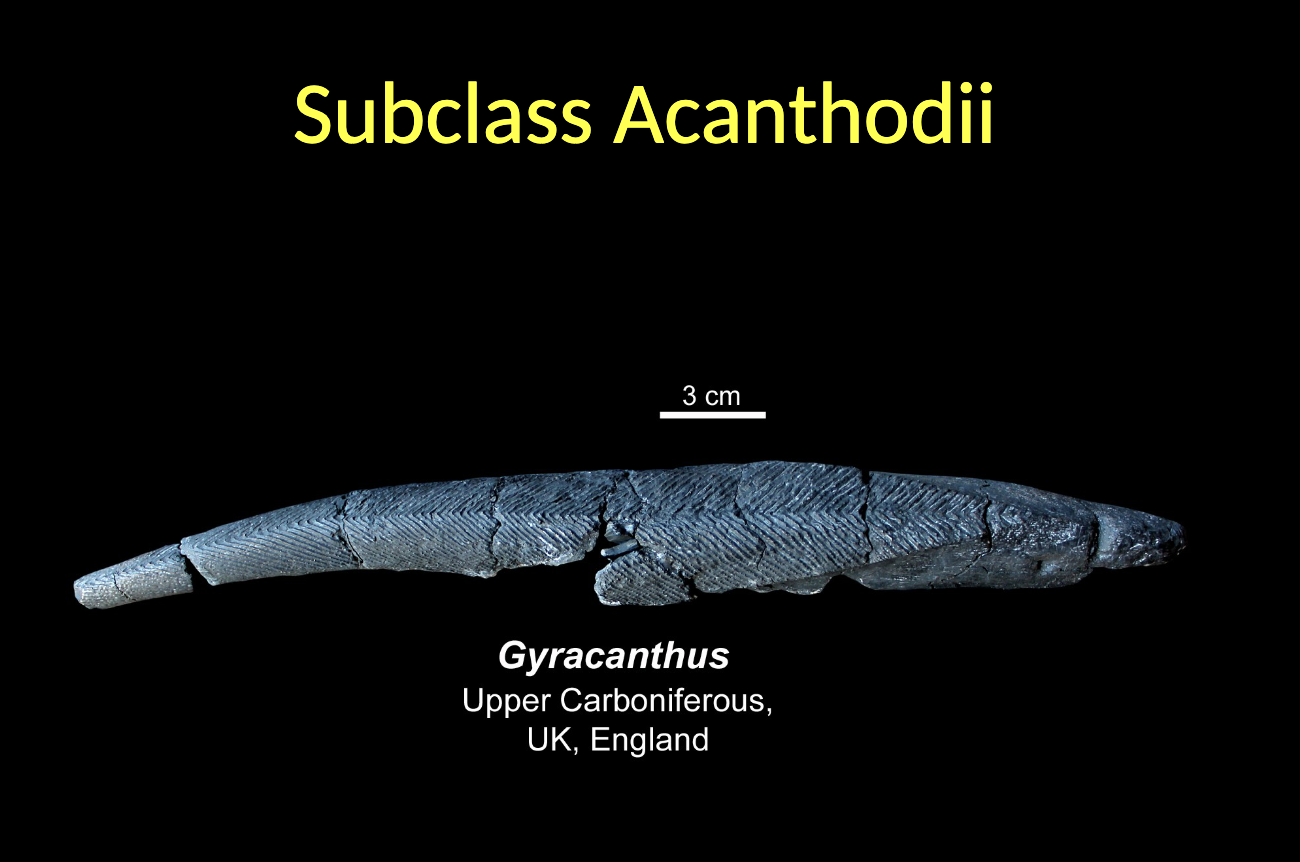
Acanthodii - Gyracanthus
Upper WHAT
WHERE
Acanthodii - Gyracanthus
Upper CARBONIFEROUS
England
Subclass Placodermi
Placoderms are the most diverse and numerous fishes (dominant) of the WHAT.
Stratigraphical range: WHAT – WHAT.
Evolved a strong WHAT, which in some representatives extends over the WHAT fins.
Subclass Placodermi
Placoderms are the most diverse and numerous fishes (dominant) of the DEVONIAN.
Stratigraphical range: UPPERMOST SILURIAN – DEVONIAN.
Evolved a strong CEPHALIC SHIELD, which in some representatives extends over the PECTORAL fins.
Subclass Placodermi
In general, the placoderms present morphological resemblances with the WHAT and WHAT agnathans.
Placoderms evolved probably from AGNATHAN ancestors.
They were apex WHAT
Placoderms are subdivided into two groups: WHAT and WHAT.
Subclass Placodermi
In general, the placoderms present morphological resemblances with the OSTRACODERM and HETEROSTRACAN agnathans.
Placoderms evolved probably from AGNATHAN ancestors.
They were apex PREDATORS
Placoderms are subdivided into two groups: ARTHRODIRES and ANTIARCHS.
Arthrodires
Almost exclusively WHAT, rarely adapted to WHAT environments.
Stratigraphical range: WHAT.
Evolved a WHAT with plates connected in WHAT, which confer it a high levels of WHAT.
Up to WHAT meters in length.
Arthrodires
Almost exclusively MARINE, rarely adapted to FRESHWATER environments.
Stratigraphical range: DEVONIAN.
Evolved a CEPHALIC SHIELD with plates connected in POINTS, which confer it a high levels of FLEXIBILITY.
Up to TEN meters in length.
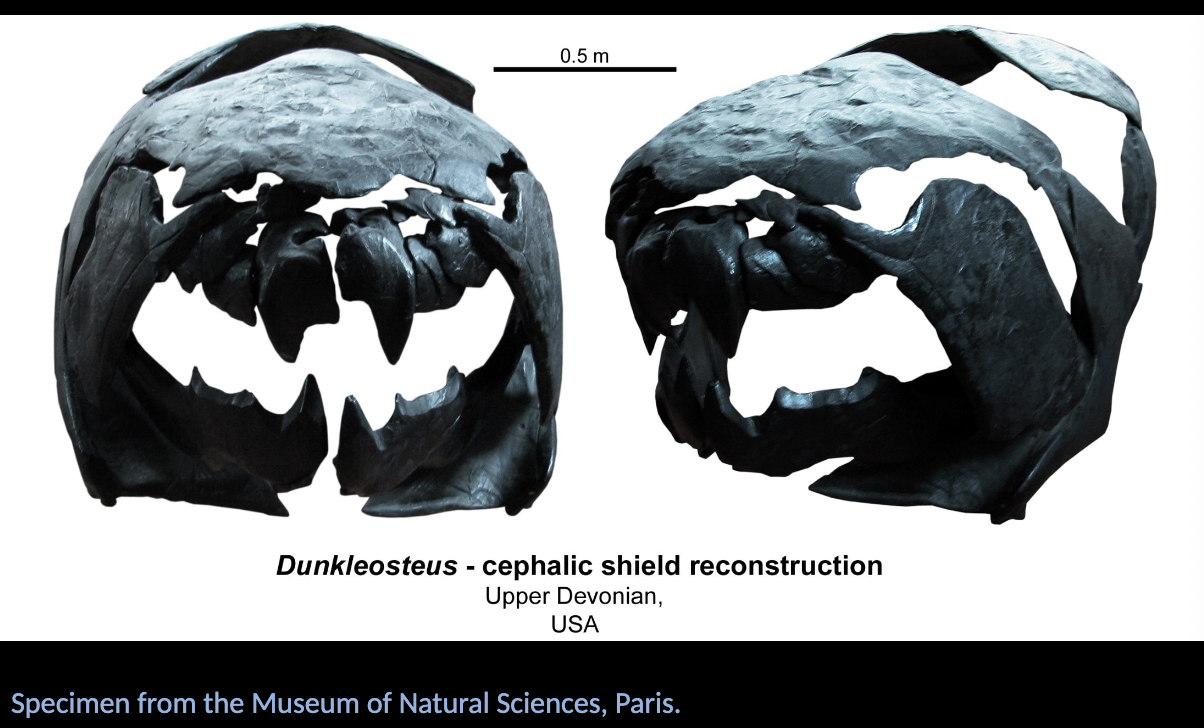
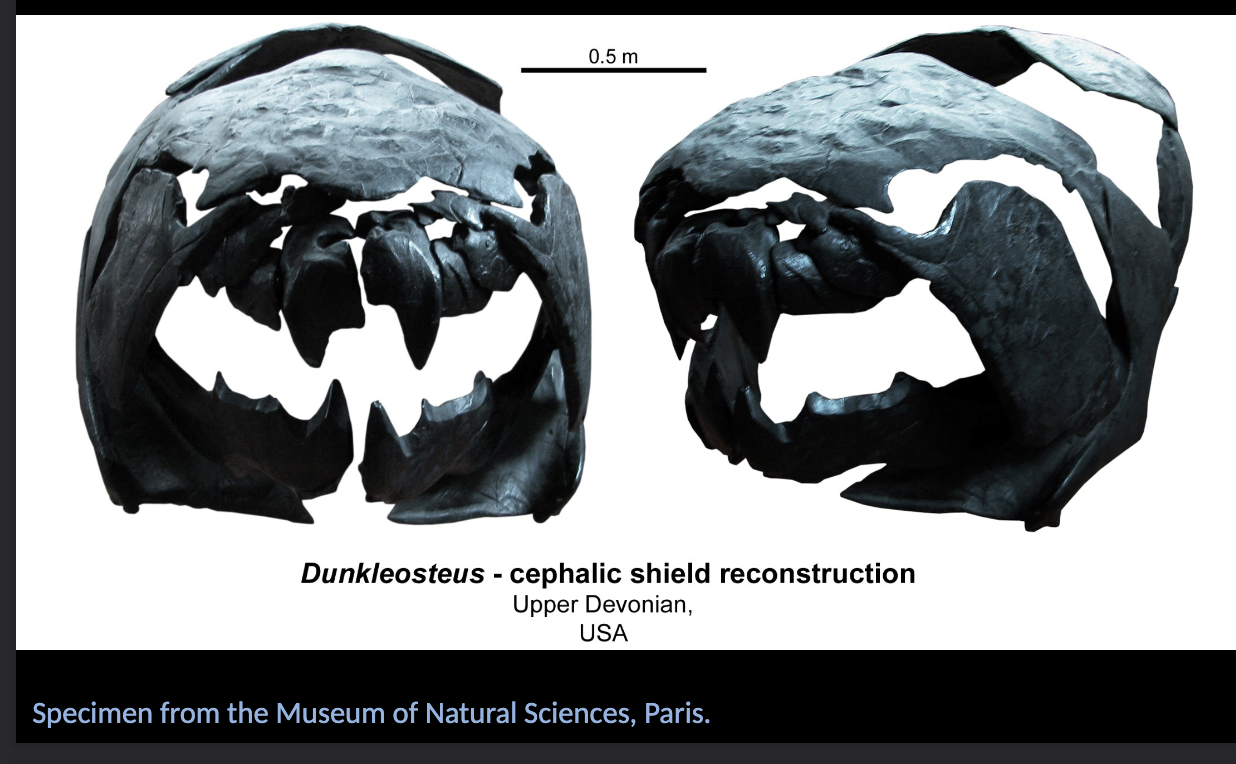
WHAT - apex predator of the Athrodires
DUNKLEOSTEUS - apex predator of the Athrodires
Antiarchs
Occur mostly in WHAT environments.
The anterior part of the body is protected by a WHAT consisting of WHAT plates, which extend over the WHAT fins.
WHAT swimmers in WHAT waters.
Up to WHAT meters in length
Antiarchs
Occur mostly in FRESHWATER environments.
The anterior part of the body is protected by a CEPHALIC SHIELD consisting of ORNAMENTED plates, which extend over the PECTORAL fins.
SLOW swimmers in SHALLOW waters.
Up to TWO meters in length
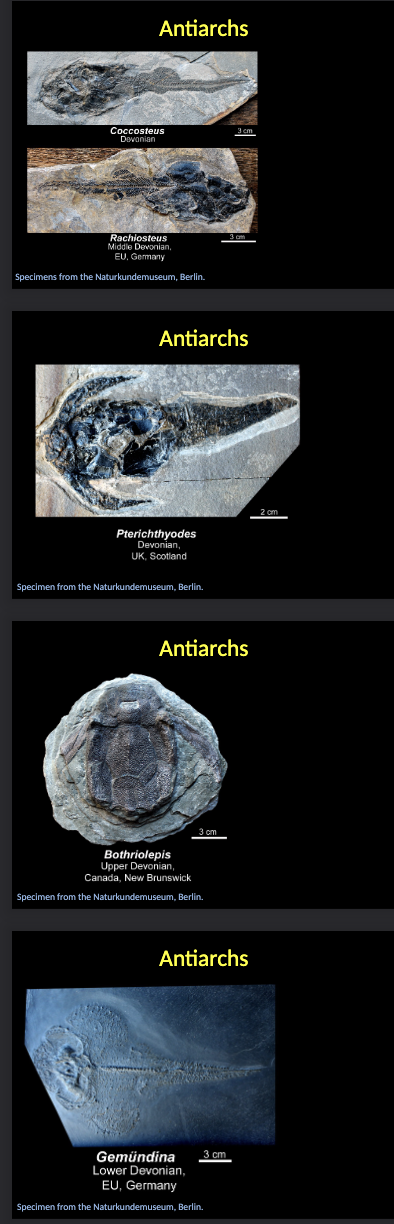
Antiarch
WHAT - Devonian
Antiarch
COCCOSTEUS - Devonian
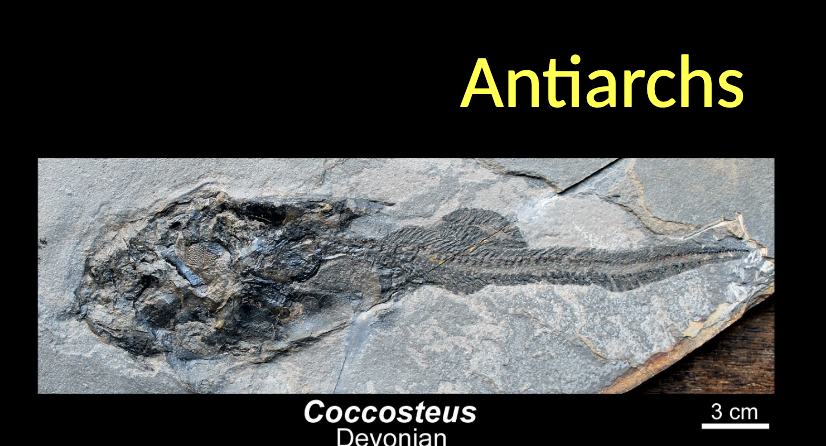
WHAT - Most frequent Antiarch in the fossil record
Bothriolepis - Most frequent Antiarch in the fossil record (Upper Devonian + Cananda)
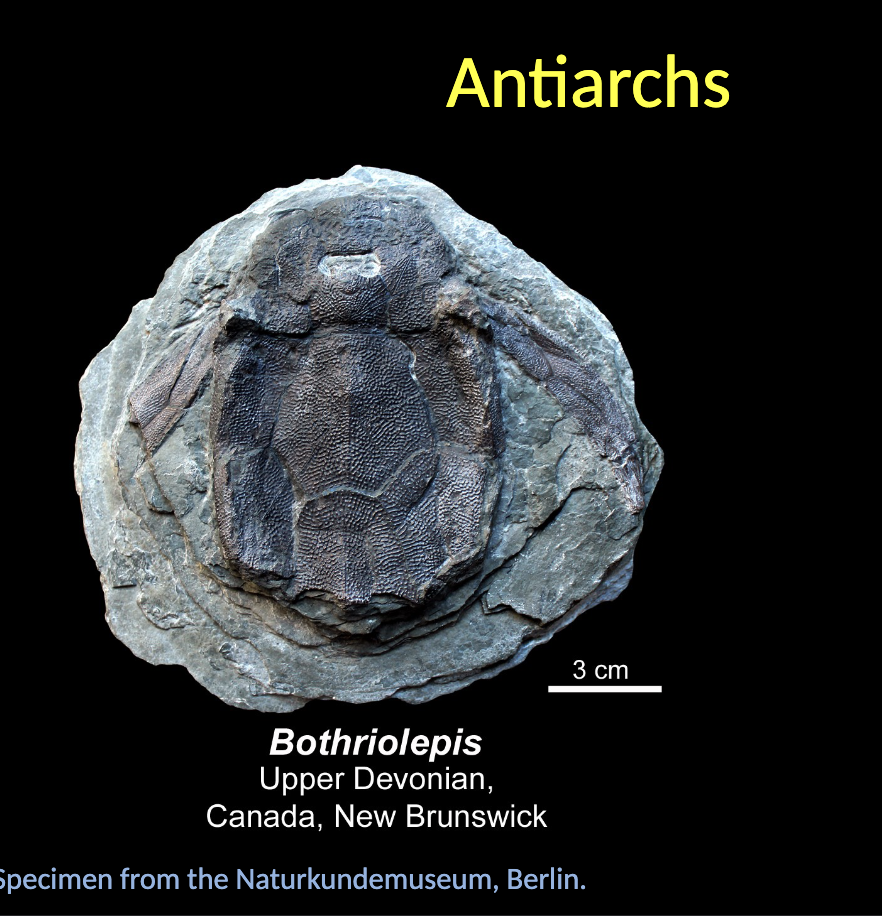
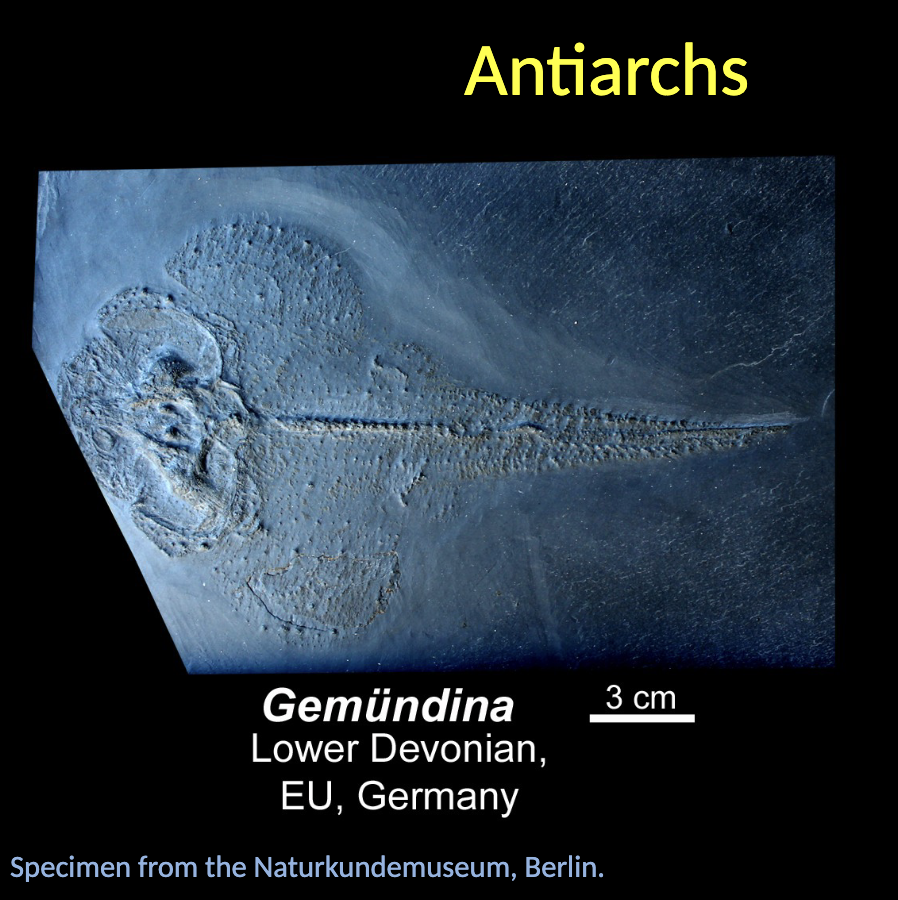
WHAT - rare antiarch
Gemündina - rare antiarch
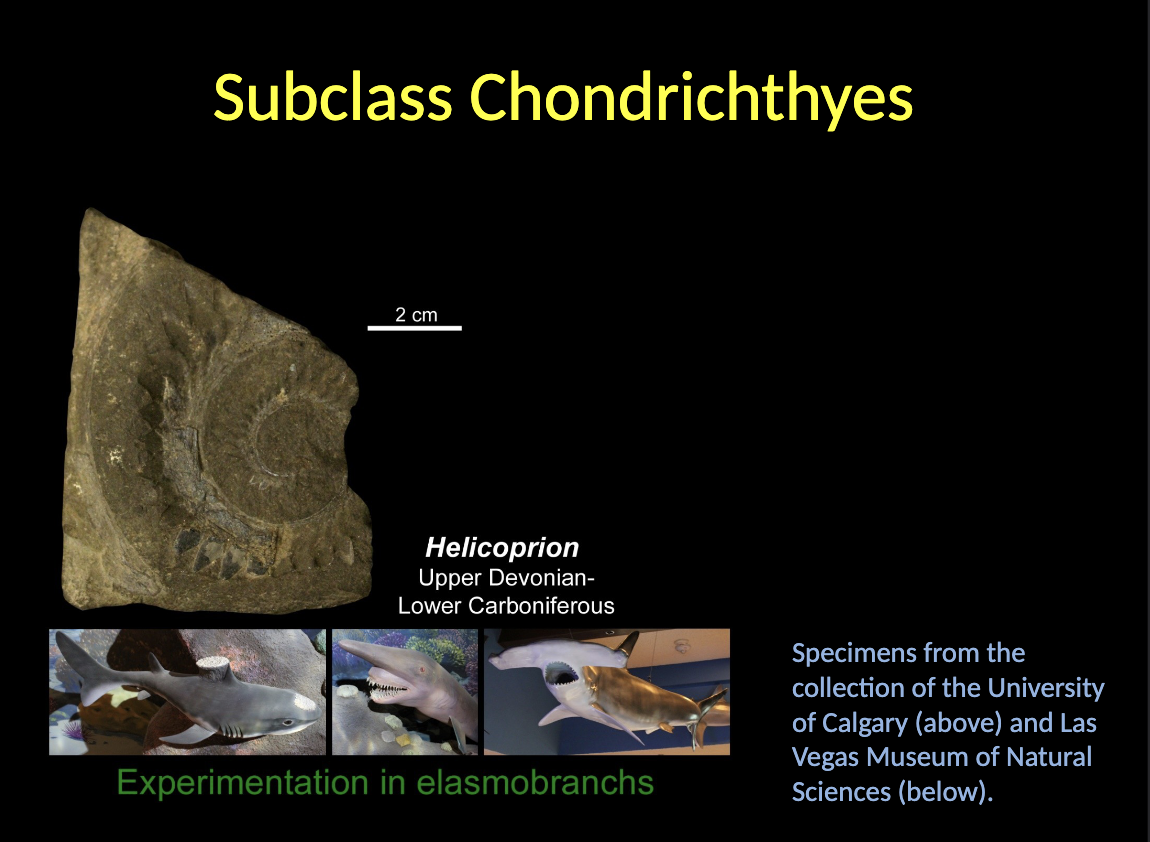
Subclass Chondrichthyes
The group of fishes with the longest stratigraphical range: WHAT - WHAT.
The skeleton is mostly WHAT, but the teeth are WHAT, and vertebrae can present an WHAT.
Includes WHAT, WHAT and WHAT.
Subclass Chondrichthyes
The group of fishes with the longest stratigraphical range: UPPER SILURIAN - HOLOCENE.
The skeleton is mostly CARTILAGINOUS, but the teeth are BONY, and vertebrae can present an INCIPIENT OSSIFICATION.
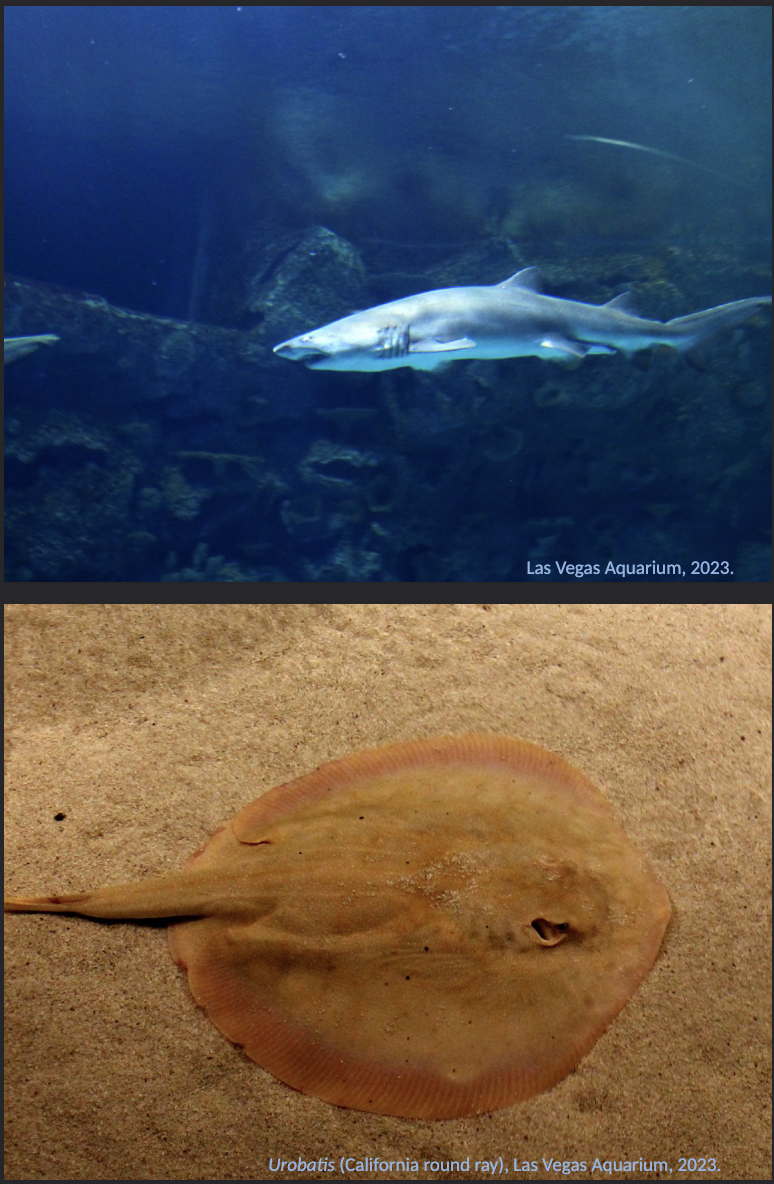
Includes SHARKS, CHIMAERAS and RAYS.
Subclass Chondrichthyes
WHAT organisms, adapted to living within the WHAT or in the proximity of the WHAT (WHAT sharks).
The modern representatives are exclusively WHAT, but in the geological past they adapted occasionally to WHAT environments.
Subclass Chondrichthyes
NEKTIC organisms, adapted to living within the WATER COLUMN or in the proximity of the SUBSTRATE (BATHOID sharks).
The modern representatives are exclusively MARINE, but in the geological past they adapted occasionally to FREASHWATER environments.
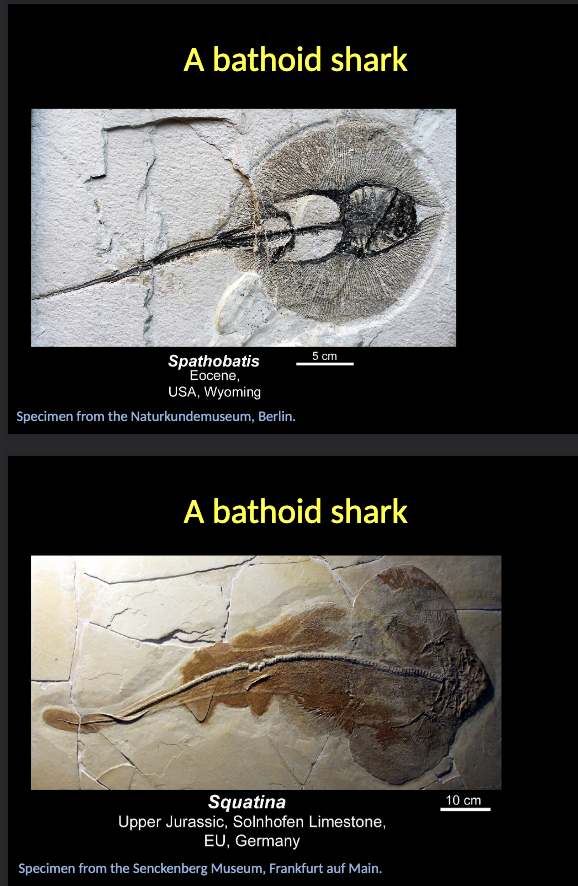
WHAT - freshwater shark
LEBACANTHUS - freshwater shark
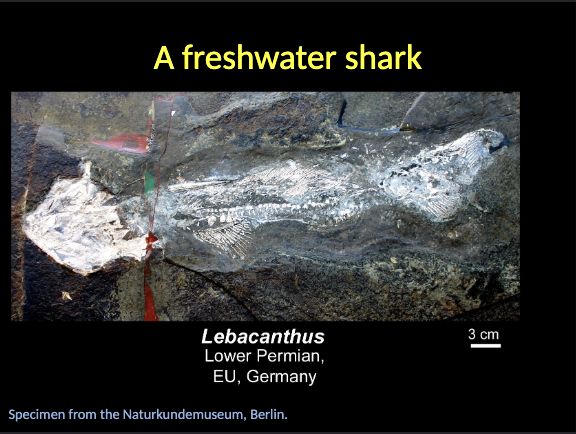
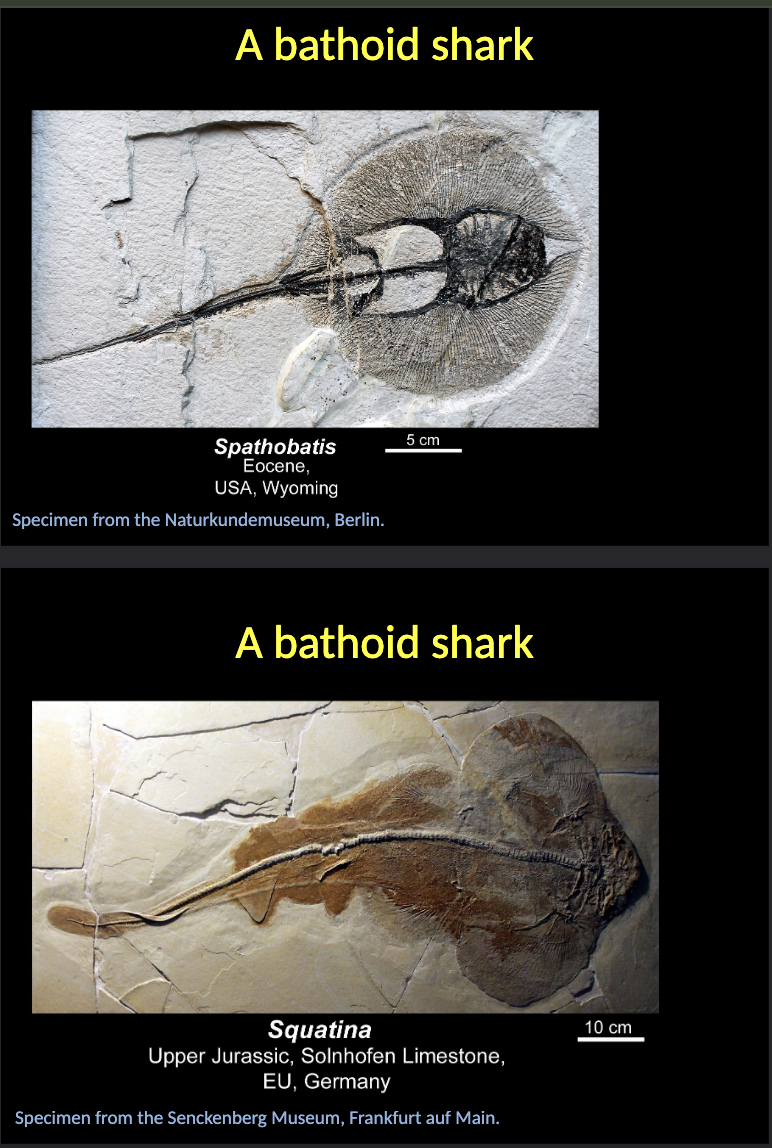
WHAT and WHAT are bathoid sharks
Spathibatis and Squatina are bathoid sharks
Subclass Chondrichthyes
The representatives of this group evolved probably from WHAT ancestors.
Throughout their evolutionary history, the group remained quite conservative relative to the WHAT skeleton.
The earliest diversification dates back in the WHAT times.
Most WHAT fish today
Subclass Chondrichthyes
The representatives of this group evolved probably from AGNATHAN ancestors.
Throughout their evolutionary history, the group remained quite conservative relative to the CARTILAGINOUS skeleton.
The earliest diversification dates back in the DEVONIAN times.
Most DIVERSE fish today