Geo Lecture 9
 Call Kai
 Learn
Learn Practice Test
 Spaced Repetition
 Match
Match Flashcards
 Knowt Play
1/28

There's no tags or description
Looks like no tags are added yet.
Name | Mastery | Learn | Test | Matching | Spaced | Call with Kai |
|---|
No analytics yet
Send a link to your students to track their progress
29 Terms
What is fluvial Geography
the study of rivers and streams
What is a river vs a stream?
A river is the trunk or the major stream of a network
A stream refers to water flowing in a channel; not related to size.
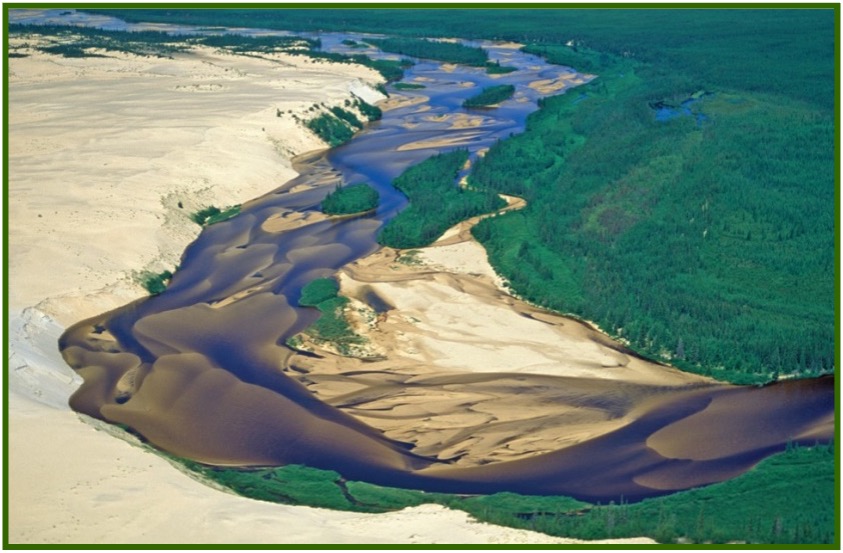
What are the 3 reasons why rivers are important?
They drain continents and sculpt landscapes by adding and removing sediment.
Supply water and forms intra-continental transportation networks (moves sediment within a continent).
Determine the location of human settlements and political boundaries
What are drainage basins and what are they alternatively called?
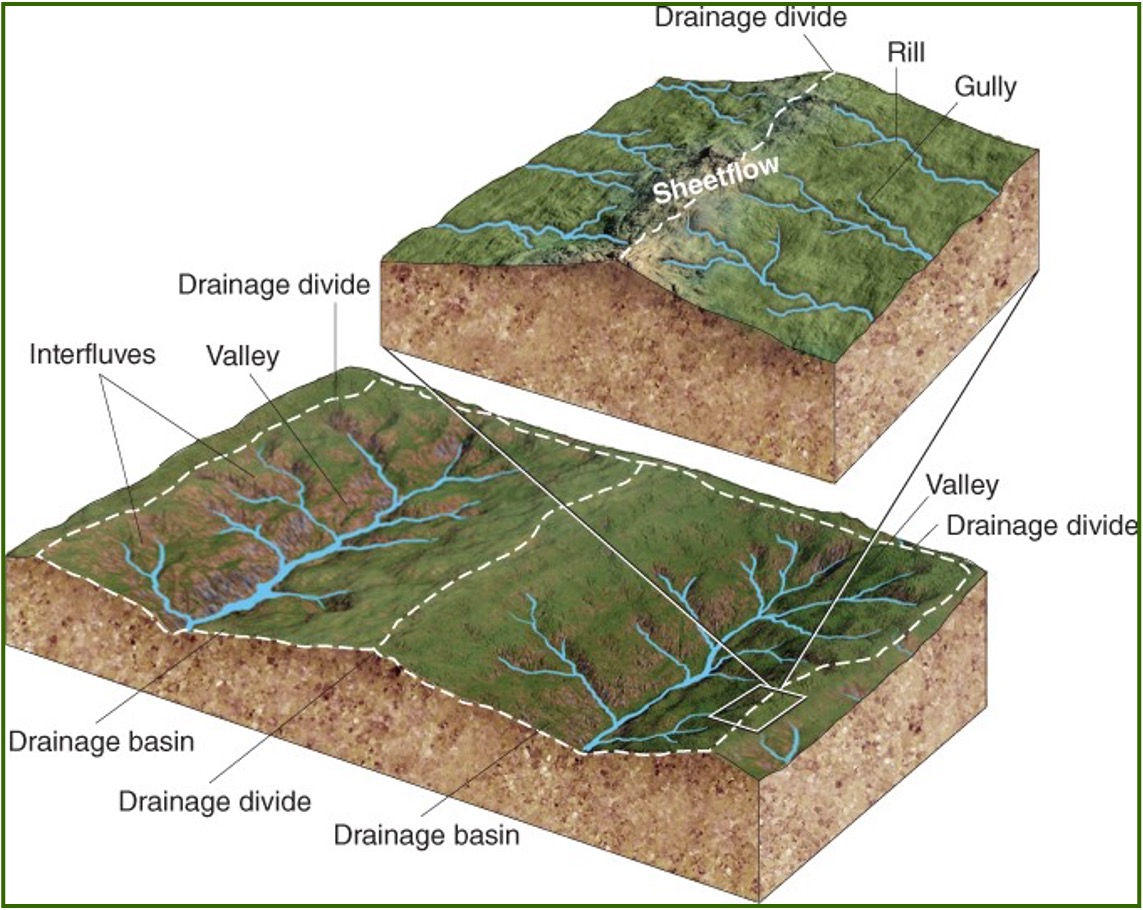
The area of surrounding land that is drained by a river (every river has one). They can also be called watersheds.
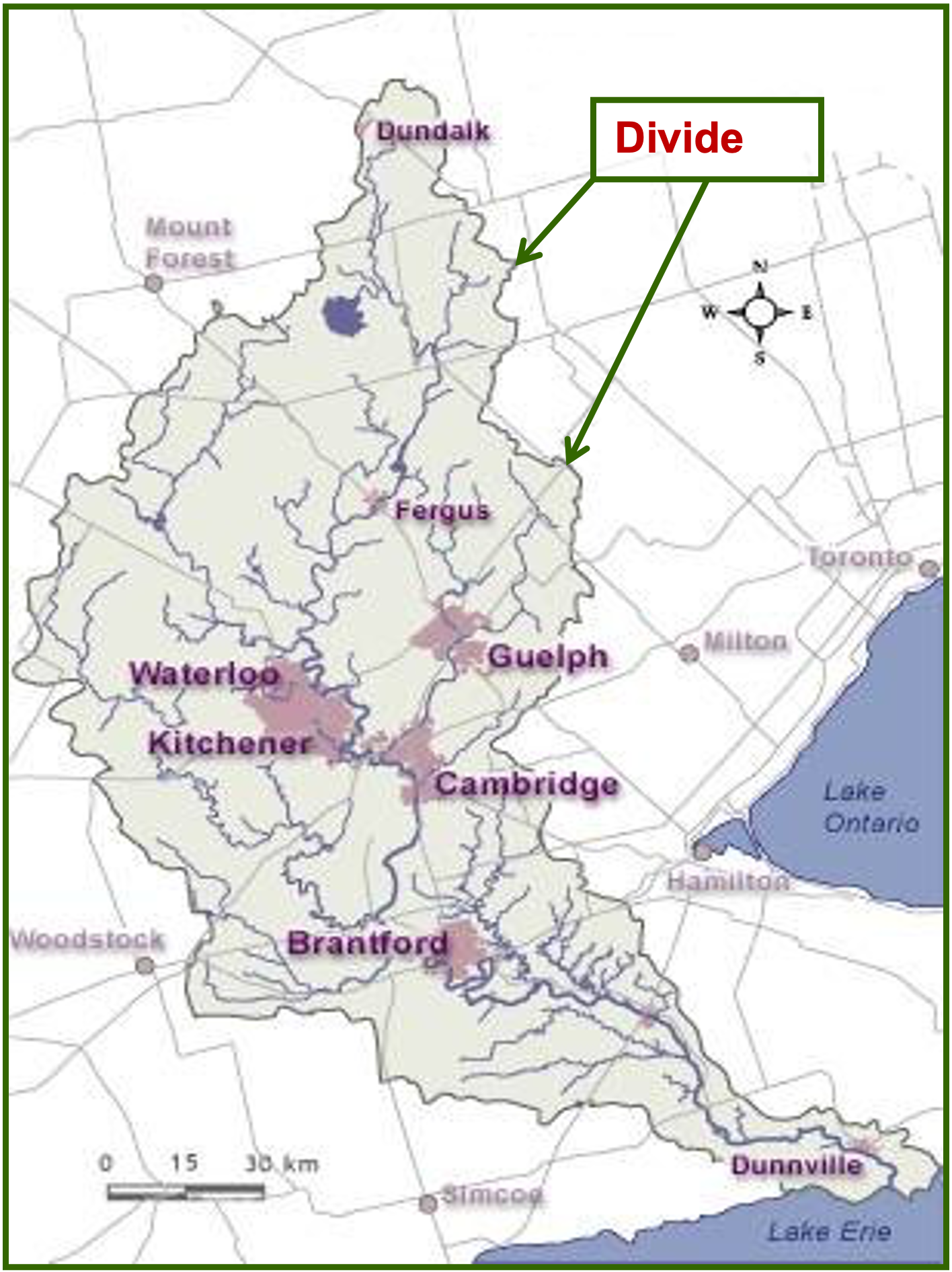
What are divides (related to drainage basins)?
Ridges of land that serve as boundaries of drainage basins; control which basin the runoff drains into. They separate which way rivers/streams flow; higher land.
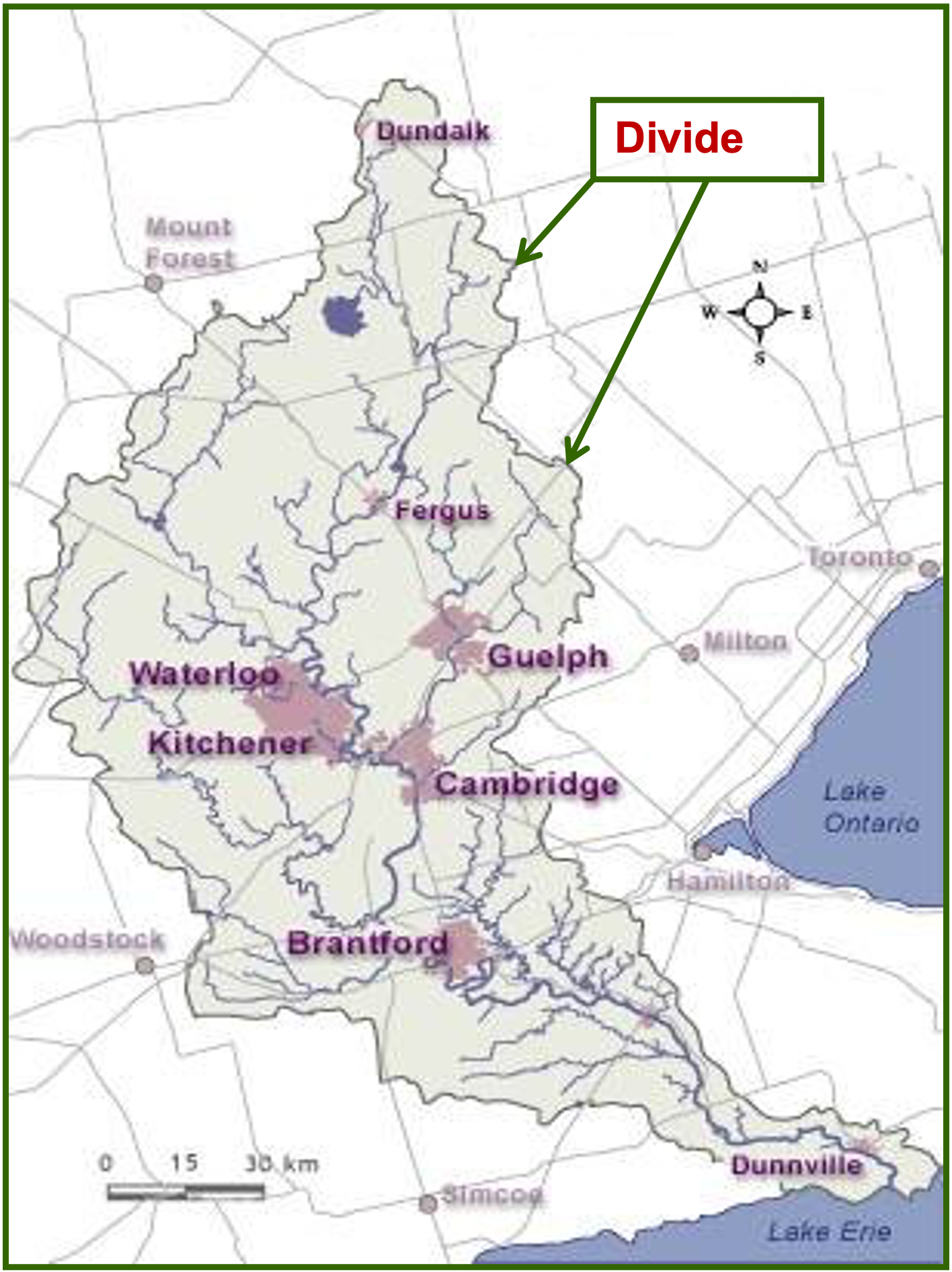
What is the continental divide in Canada?
Line of mountains/ridges that separate river systems which drain into different Oceans.
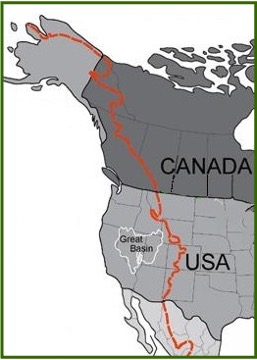
What is a Rill vs a Gully?
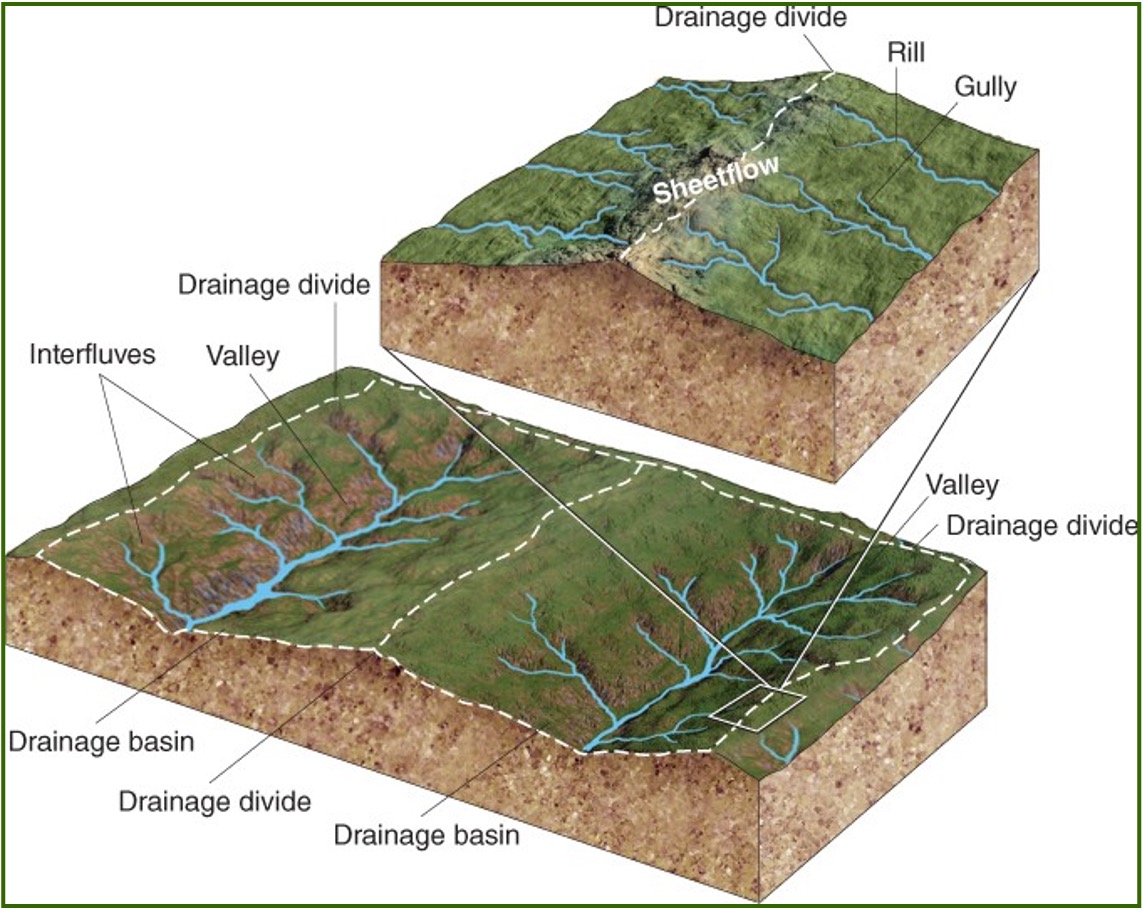
Rills are small grooves that develop near a divide where surface water concentrates and begins moving downslope.
Gullys are deeper grooves farther downslope that direct surface water into a stream.
What is a valley?
A low area of land between hills or mountains, often formed by river or glacier erosion.
What is Sheetflow and what is an interfluve?
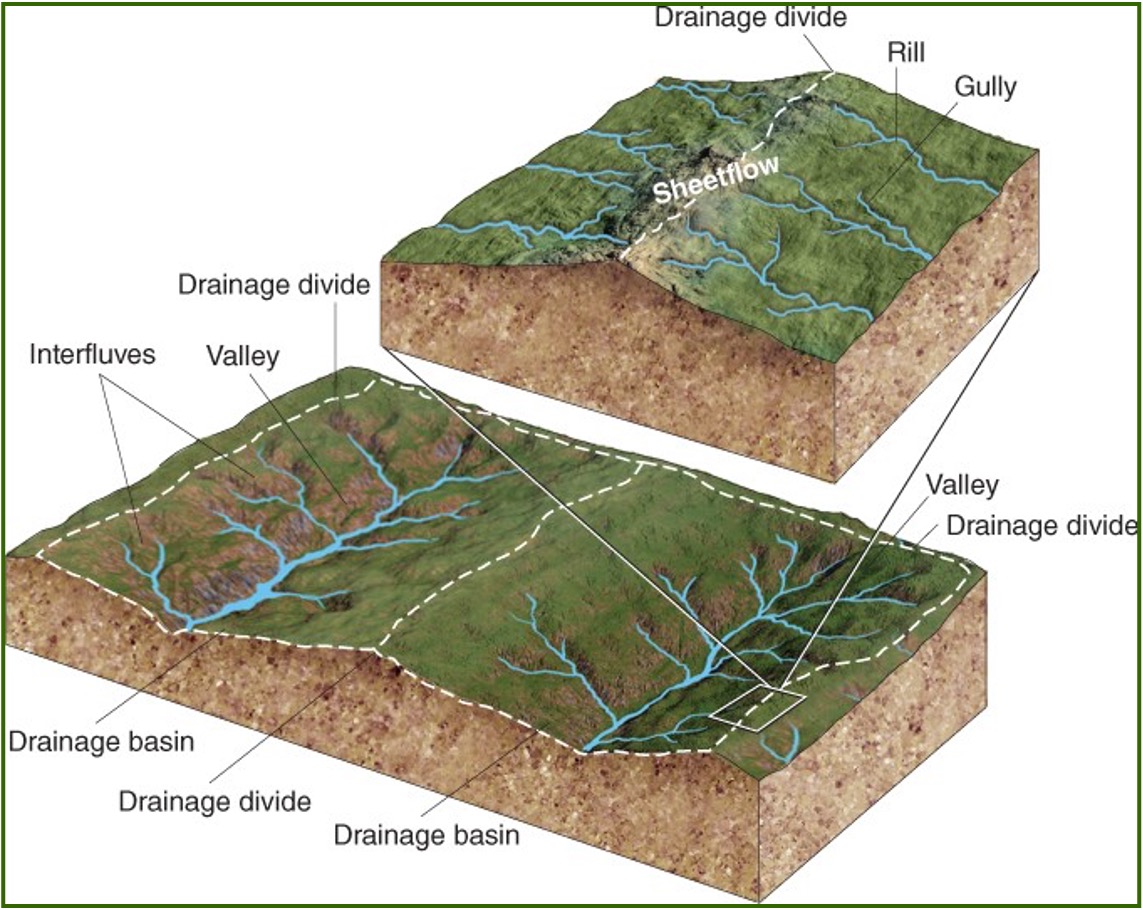
Sheetflow is surface water that moves downslope in a thin film due to gravity; not concentrated in any type of channel.
Interfluve is the higher land or ridge that separates two adjacent river valleys or drainage channels.
What type of systems are drainage basins and what are their main inputs and outputs?
Drainage basins are open systems because rivers exist in dynamic equilibrium, constantly adjusting to changes in water entering and leaving the system.
Inputs: precipitation and snowmelt.
Outputs: river discharge and evaporation.
What is internal drainage and where is it commonly found?
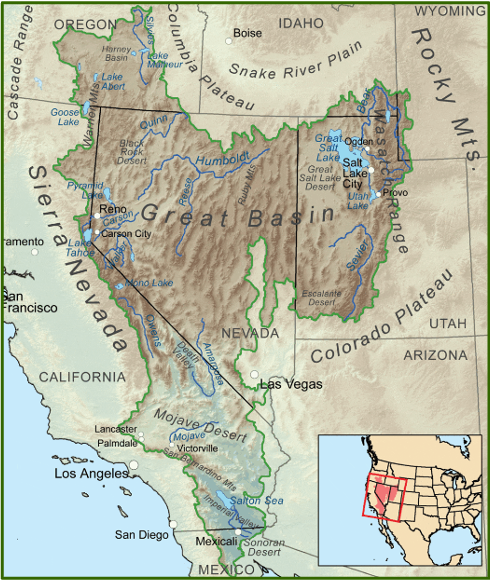
It occurs when water in a drainage basin. does not reach the ocean and instead disappears through evaporation or infiltration before reaching the sea.
It is common in very dry areas like Nevada
What is drainage density and what are drainage patterns?
Drainage density refers to the total length of all stream channels in the basin over the area of the basin.
Drainage patterns are the geometric arrangement of streams in an area. Mostly determined by slopes and rock resistance.
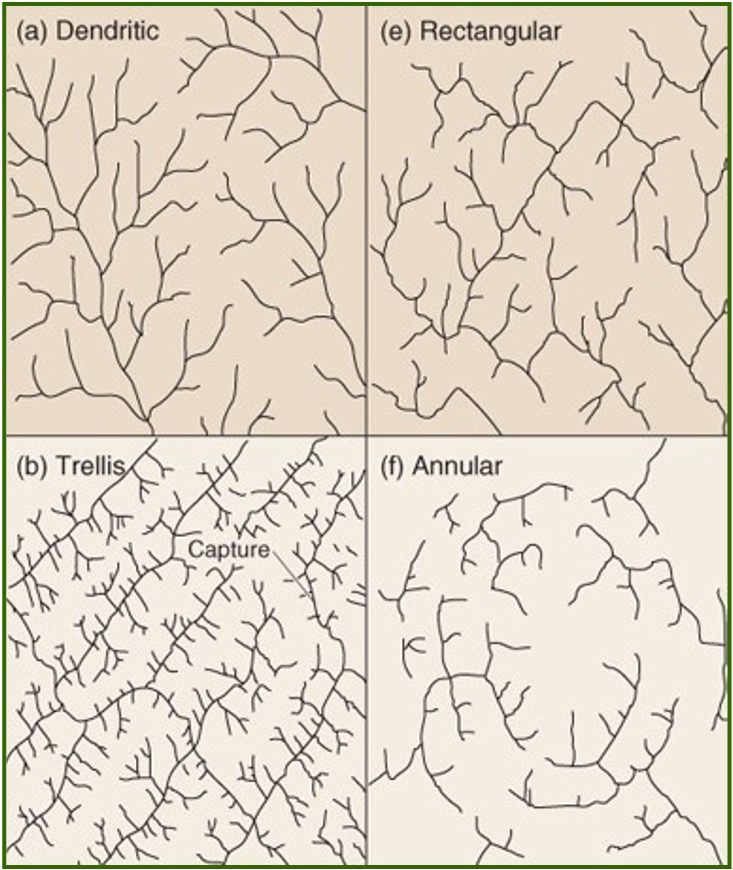
Define the following drainage patterns: dendritic, rectangular, trellis, and annular
Dendritic: drainage patterns where streams branch like the limbs of a tree; forms on uniform rock or gentle slopes.
Rectangular: drainage pattern where streams follow right-angle bends, usually controlled by joint or fractures in the rock.
Trellis: drainage pattern where paralell main rivers are joined by smaller streams at near right angles.
Annular: drainage pattern where streams form concentric circular paths around a central high area. Occur on domes.
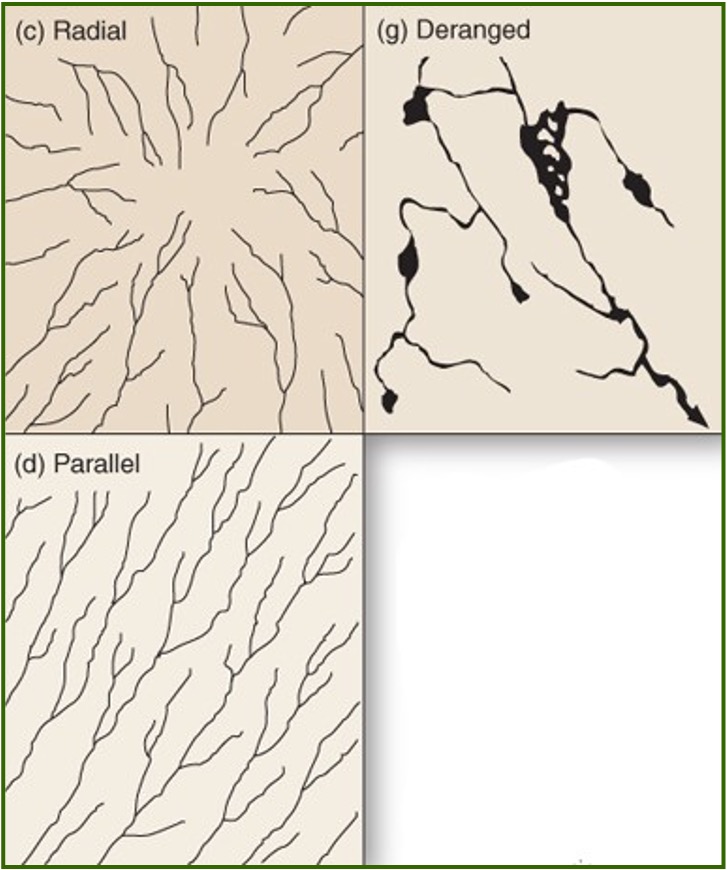
Define the following drainage patterns: radial, deranged, parallel.
Radial: a drainage pattern where streams flow outward in all directions from a central high point.
Deranged: pattern with irregular streams and many lakes or swamps, usually found in areas recently affected by glaciers.
Parallel: pattern where streams flow in the same direction and reamin roughly parallel.
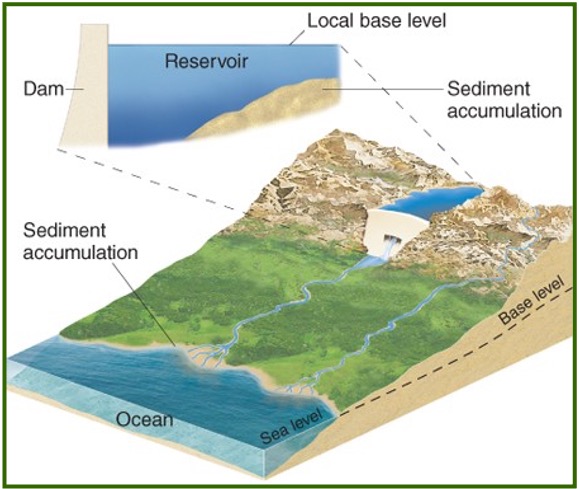
What is the base level of a stream? Differentiate it for small vs large rivers.
The lowest point to which a stream/river can flow. it is usually found at the mouth of the river.
For large rivers, the sea level is usually the base level, whereas for smaller rivers lakes are often the base level.
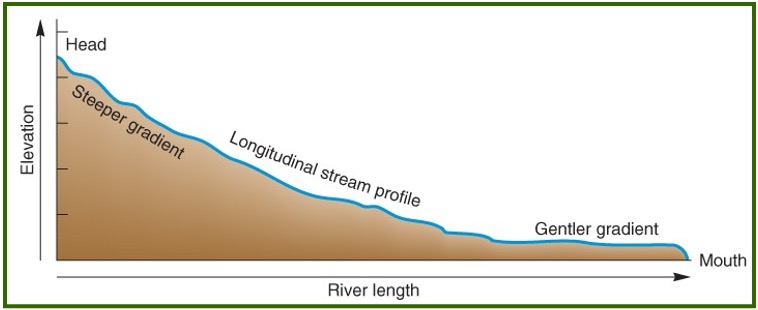
What is a river gradient and how is it measured?
The drop in river elevation over distance.
Measured in metres per kilometre
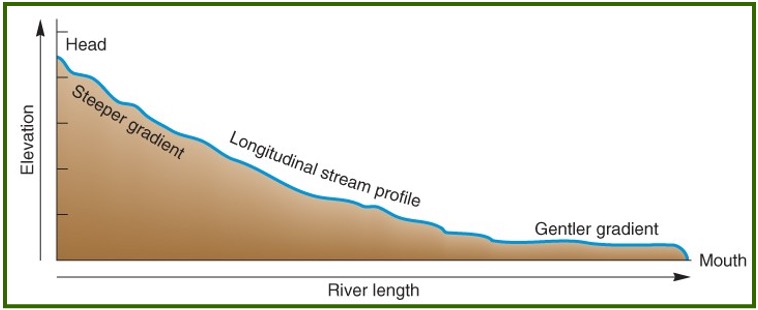
How does the river gradient change depending on the distance?
A river has a steeper gradient near its head and a more gradual gradient downstream.
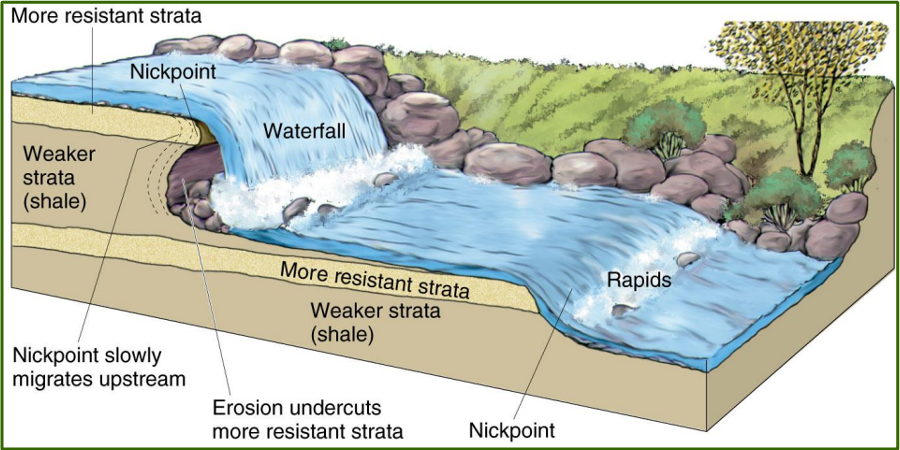
What is a Nickpoint?
A place in a river where the slope suddenly becomes steeper, often forming a waterfall or rapids.
What are rapids?
Sections of a river where water flows very quickly and turbulently over rocks or a steep slope.
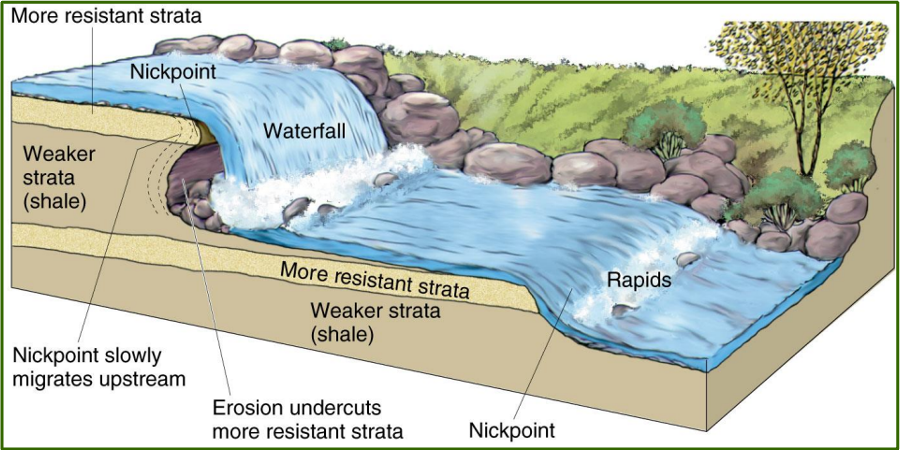
What is a retreat and what is the current rate of retreat of Niagara falls?
Retreat refers to the movement of a landscape feature backward due to erosion or melting.
The current retreat of Niagara Falls is 30 cm per year.
What is river discharge?
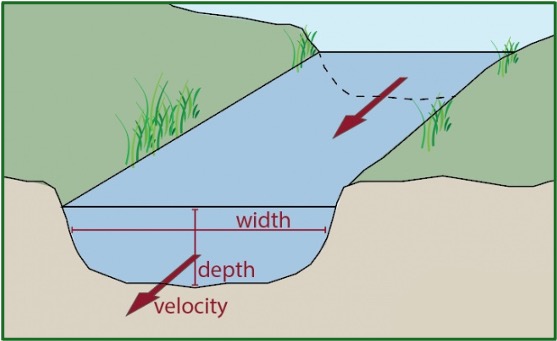
the rate of flow of a river at a particular point in time. Is is expressed in m³/s where:
Q = WDV where:
Q = discharge
W = width
D = depth
V = velocity
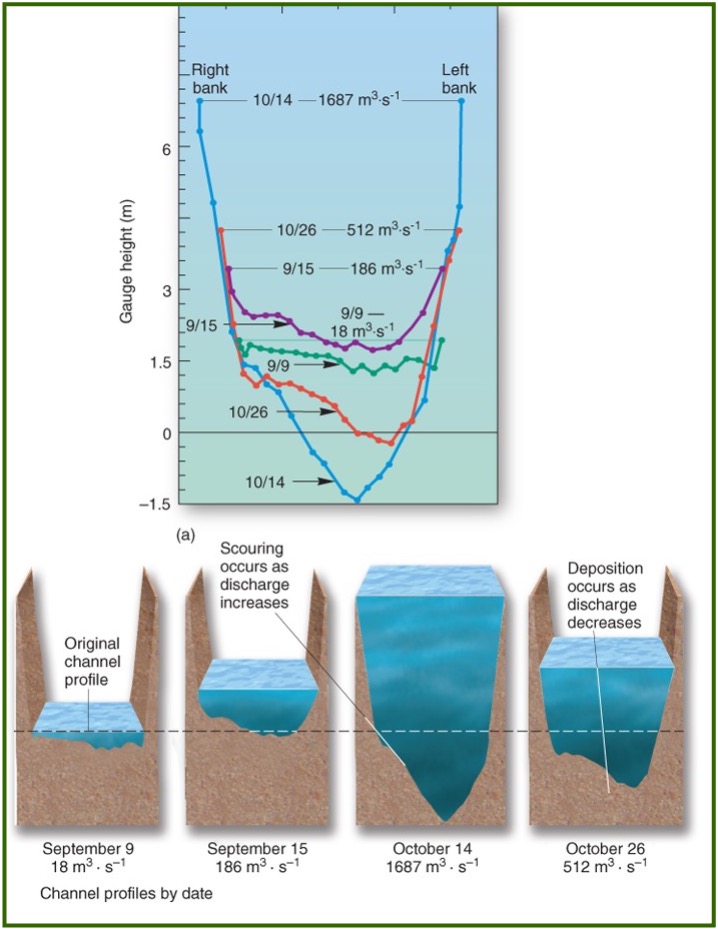
How does river discharge change during a flood?
Discharge rates increase during a flood because much more water enters the river system in a short period of time.
This then increases the ability of the river to scour rock and sediment from its bed and its sides.
What are exotic streams and what is the nature of their discharge?
An exotic stream is a stream or river that begins in a moist region but then flows through an arid region (ex. Nile river)
Its discharge decreases downstream because of increased evaporation in the arid region.
What is stream erosion and what are two ways it can happen?
Stream erosion is when flowing water wears away and removes rock and soil from a river’s bed and banks. Two methods:
Hydraulic Action: erosion caused by the force of moving water breaking rock apart
Abrasion: erosion that happens when rocks and sediment carried by a river scrape and grind against the river bed and banks.
What is stream transport?
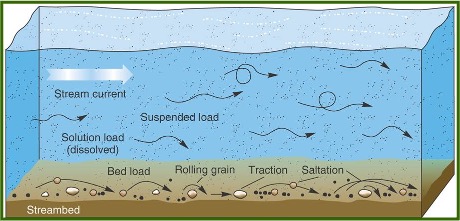
It is the transport of sediment, closely related to sediment load.
What is sediment load and what are its three categories?
The amount of sediment a stream transports. Three categories:
Bed load - materials that roll, slide, or bounce along the bottom
Suspended load - silt and clay particles carried in the water; accounts for 90% of the total load of most rivers.
Dissolved load - material derived from the chemical weathering of rock and sediment within the drainage basin.
What are competence and capacity when it comes to stream transport?
Competence: The ability of a stream to move particles of a specific size. It increases with velocity.
Capacity: the total possible sediment load that a stream can transport. It is a function of discharge.
What are the factors that can determine a stream’s sediment load? (NTCV)
Topographic relief
nature of rock
type of soil
climate
vegetation
What are the two types of flow a stream may exhibit?
Laminar flow: when particles are transported in a relatively straight, parallel path. it is common in deep, slow streams.
Turbulent flow: when water moves chaotically, with swirling currents and eddies instead of smooth movement.

