conjunctiva III - lumps and bumps
 Studied by 0 people
 Call with Kai
 Learn
Learn Practice Test
 Spaced Repetition
 Match
Match Flashcards
 Knowt Play
1/34

There's no tags or description
Looks like no tags are added yet.
Name | Mastery | Learn | Test | Matching | Spaced | Call with Kai |
|---|
No study sessions yet.
35 Terms
what are the 3 categories of conjunctival abnormalities
degenerations
pigmented lesions
non-pigmented lesions
state the different degenerations (4)
sub-conjunctival haemorrhage
pinguecula
concretions
pterygium
what is a Sub-conjunctival haemorrhage (3)
•Blood under conjunctiva- between sclera and conjunctiva
•Asymptomatic - VA normal, no pain, no discharge - occasionally a dull ache or mild discomfort - usually an incidental finding
•Usually unilateral
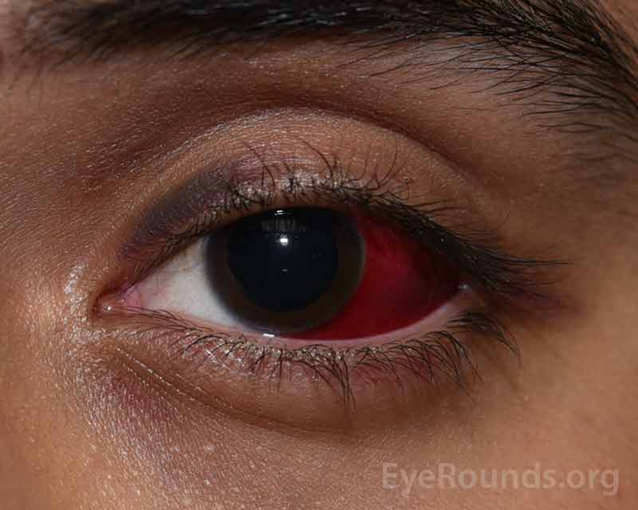
aeitology of sub-conjunctival haemorrhage (3)
•Idiopathic
•Valsalva manoeuvre - coughing, straining, vomiting
•Trauma (surgery)
pre-disposing factors of a sub-conjunctival haemorrhage (3)
•Older age (60-80 years)
•Systemic hypertension, diabetes, vascular disorders
•px who are on anticoagulants (warfarin, aspirin)
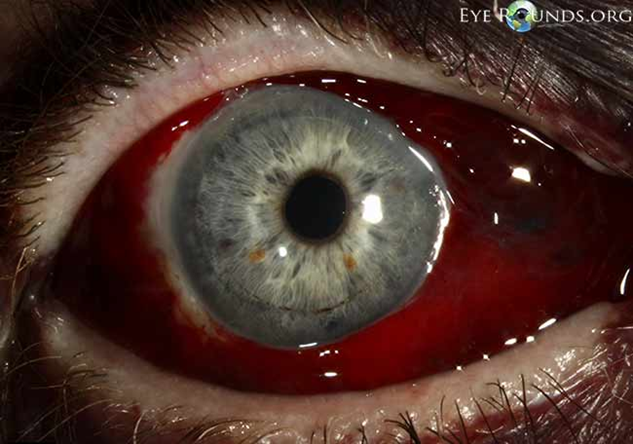
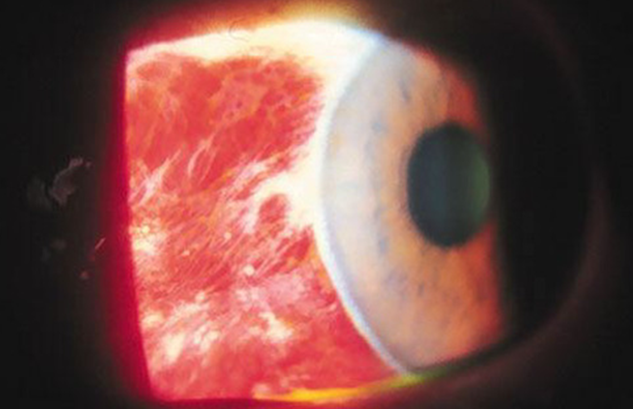
signs of sub-conjunctival haemorrhage (3)
•Blood in sub-conjunctival space
•Visible clear space between the cornea and conjunctiva - around the limbus
-Trauma ? intracranial hemorrhage if posterior border cannot be seen (rare) - bleeds into sub-conjunctival space
management of a sub-conjunctival haemorrhage (2)
•Reassure patient - Usually resolves 1-3 weeks
•Refer to GP if recurrent (BP check) or history of bleeding/blood clotting abnormalities
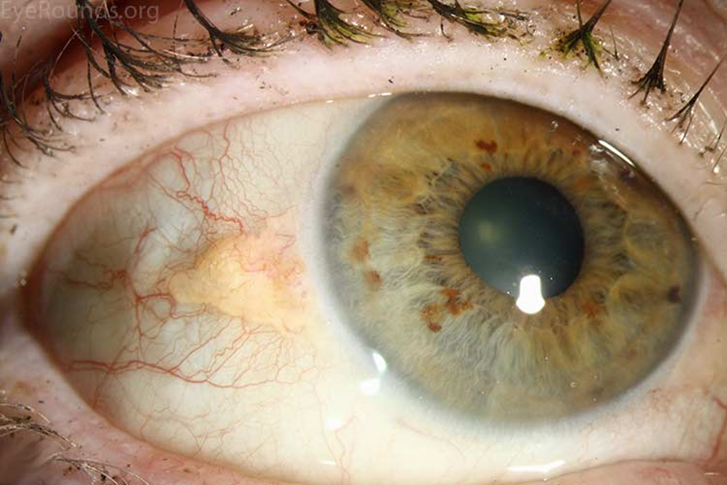
explain what pinguecula is (5)
•Yellow-white deposits - slightly raised on conjunctiva at 3/9 oclock
•Exposed peri-limbal bulbar conjunctiva, nasal and/or temporal - usually bilateral
Degeneration of collagen fibres of the conjunctival stroma - Degenerative condition (benign)
•Common, especially in elderly - Seen in most eyes > 70 years
•May be associated with chronic UV exposure
treatment/management of pinguecula
•No treatment needed although if unsightly/very protuding may be removed through surgery
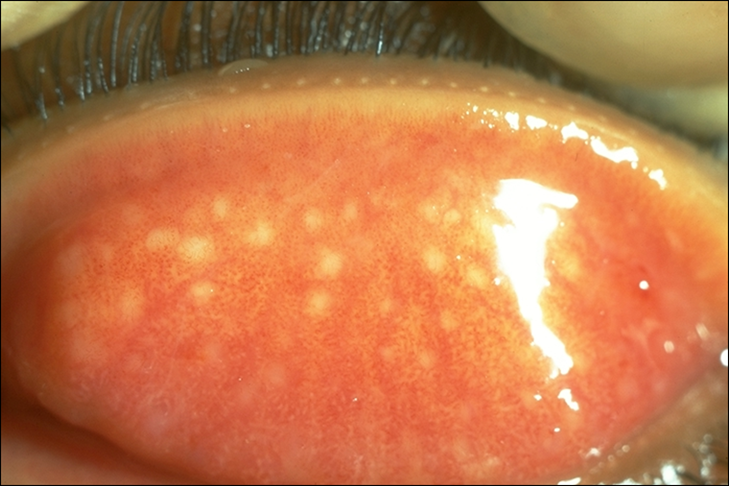
explain what concretions are (4) (conjunctival lithiasis)
•Small soft or hard yellowish-white deposits in tarsal conjunctiva - Usually < 1mm diam, up to 3mm - Usually low profile
•Epithelial inclusion cysts (keratin/calcification)
•Common in older people (>50 yrs)
•Usually asymptomatic - can cause foreign body sensation
treatment/management of concretions
•Treatment rarely required
•Can be teased out with hypodermic needle after anaesthetising the surface
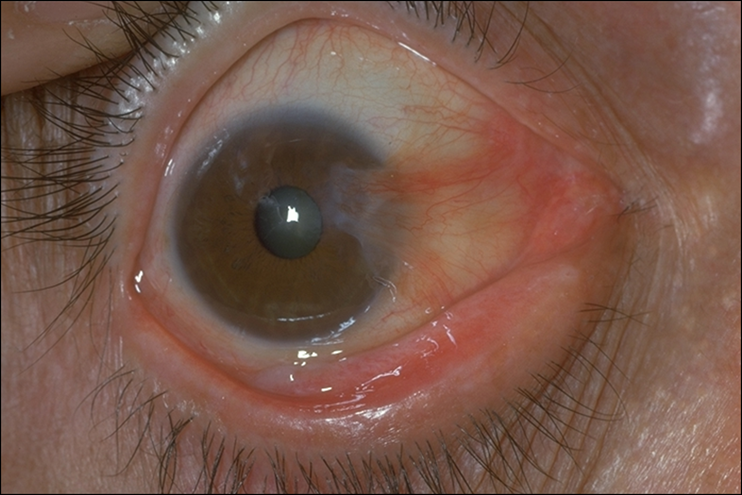
describe what a pterygium is (3)
•Fibrovascular growth from bulbar conjunctiva across to involve the cornea - often a triangular shape
•?Tissue response to irritants
•Attributed to chronic UV exposure, dust and wind
risk factors of pterygium (3)
•Sunlight - living near equator, working out of doors, occupational exposure to UV
•Arid climate - dry climate - little rainfall - dust and wind
•Older age
symptoms of pterygium
mild irritation, may be periodic acute exacerbations
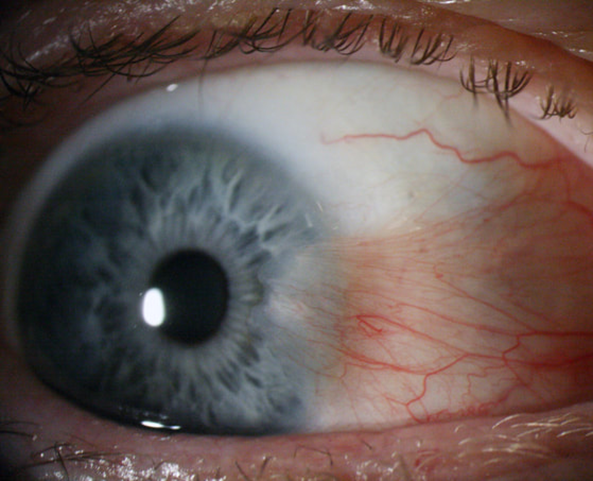
signs of pterygium (3)
•Usually bilateral (asymmetrical)
•Starts with thickening/distortion of bulbar conjunctiva, small grey opacities near the limbus, conjunctiva overgrows the opacities
•Stocker’s line - epithelial iron deposit ahead of advancing pterygium
optometric management of pterygium (4)
•Monitor development
•Photographic evidence
•Lifestyle advice - the conditions that might deterioate (UV/wind)
Refraction (astigmatism)
secondary care options for pterygium (2)
•May need surgical excision if: cosmesis important or visual axis threatened
•Tends to recur following surgery
summarize the 3 categories of pigmented lesions (2:3:1)

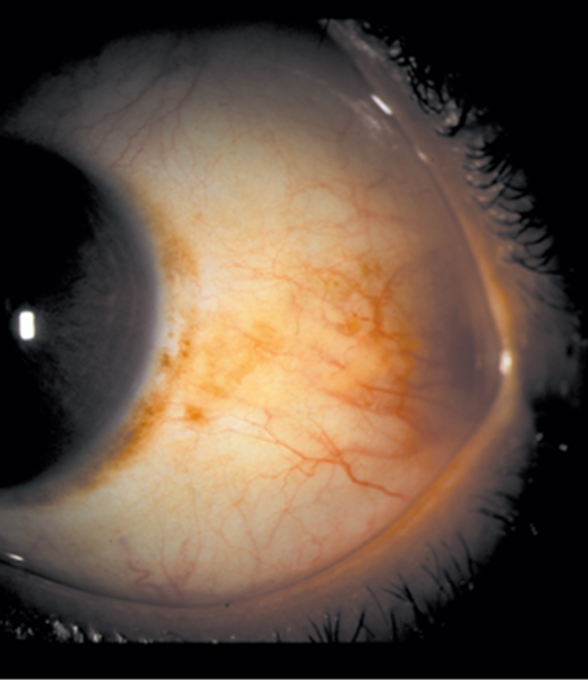
describe conjunctival epithelial melanosis and its features (6)
•also called Racial/ethnic melanosis - associated with dark skin
•Flat, Patchy and Brown pigmentation
•Bilateral - Asymmetrical
•Intra-epithelial - moves freely over sclera - between conjunctiva and sclera
•Develops in early years
•Unlikely to progress to melanoma
explain what Secondary acquired melanosis is (3)
•Adrenochrome deposits - pigment spots on the conjunctiva - can be due to:
•Oxidation of epinephrine drops
•Addison's disease
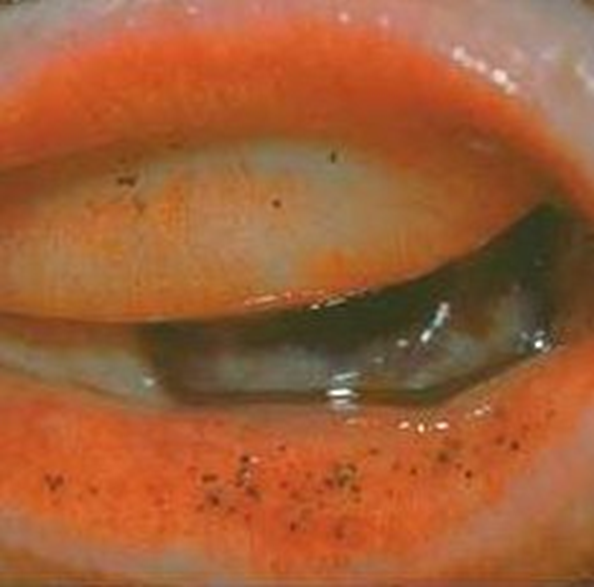
describe the features of (pre-malignant) naevus (5)
•Common (52% of ocular pigmented lesions)
•Congenital or acquired
•May change at puberty or during pregnancy
•Asymptomatic
-Malignant transformation rare - does occasionally happen so monitor
describe the signs of naevus (4)
•Solitary, well demarcated, flat or slightly elevated
•Brown/black (30% amelanotic no colour/pigment)
•Often cystic spaces - reassuring sign that it is a naevus
•Intraepithelial - moves freely over sclera
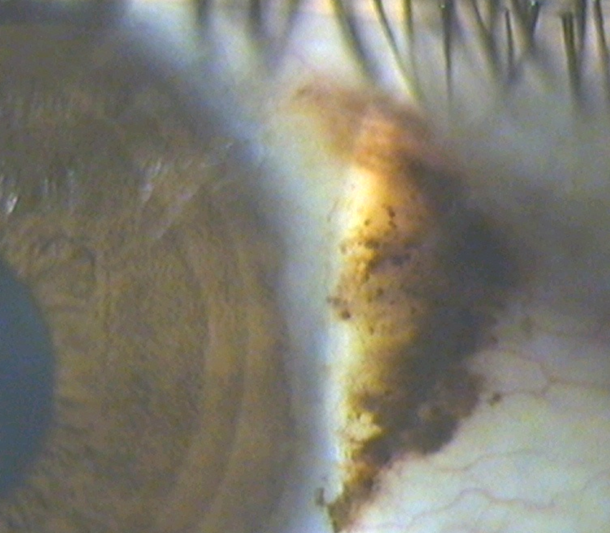
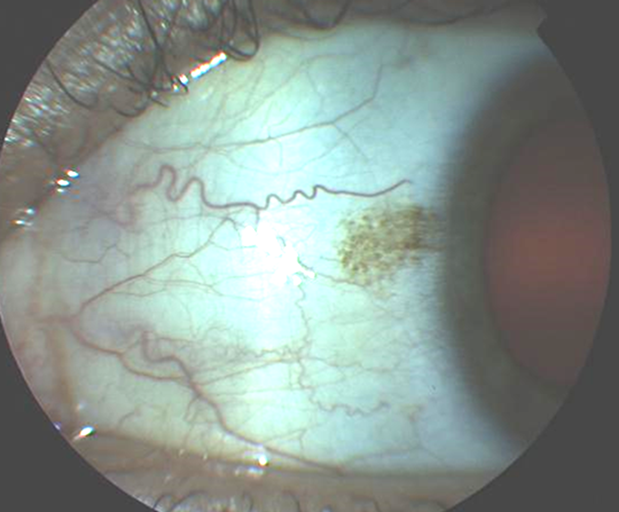
what is the management for naevus (3)
•Advise px to report any changes (increase in size, elevation, colour)
•Review after 6/12, then annually
•Photograph if possible
(unlikely to be malignant)
what is primary acquired melanosis (PAM) (4)
or also known as conjunctival melanocytic intraepithelial neoplasia (C-MIN)
•New conjunctival pigmentation
•Potential for malignancy (20%) - refer (biopsy)
•Elevation is suspicious for malignancy
describe the clinical features of PAM (6)
•Middle-aged to elderly white patients
•Unilateral
•Flat, intraepithelial, single or multiple
•Light to dark brown, indistinct areas
•No cystic spaces (naevus), no nodules (melanoma)
•Can change - enlarge, shrink, darken or lighten - refer promptly for investigation
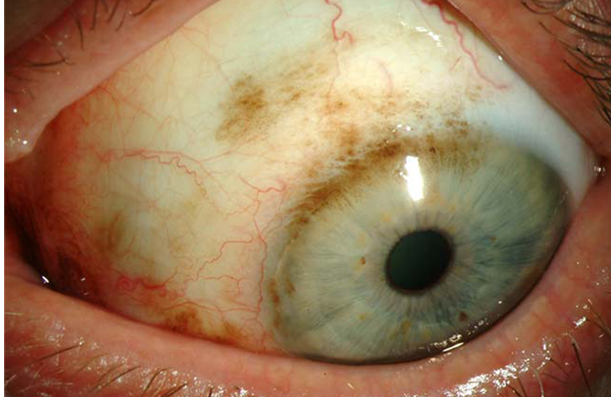
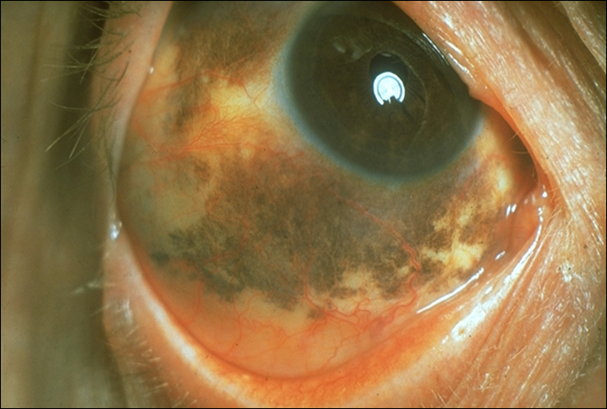
describe what melanoma is (4)
•Rare (3-5% of ocular malignancies)
•May arise from nowhere OR , from a naevus or PAM
•Mainly affects white adults
•Metastasise (lymph)
what are the signs of a melanoma (5)
•Diffuse, nodular or mixed
•Unifocal or multifocal
•Melanotic or amelanotic - pigmented/non-pigmented
•+/- Dilated feeder vessel
•Fixed to underlying sclera
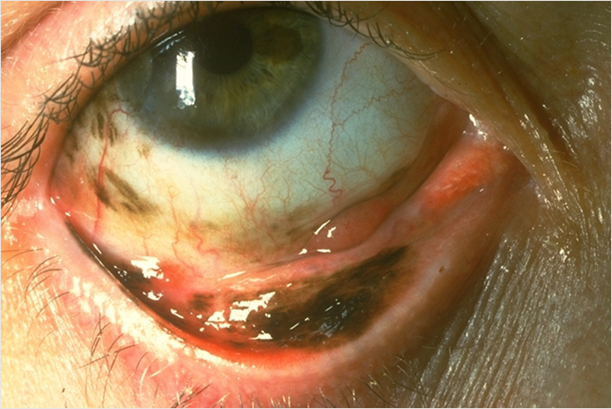
optometric management of melanoma
urgent referral !!!
summarize the 3 categories of non-pigmented lesions (2:1:2)

explain what papilloma is (its 2 types) (4:4)
viral (HPV):
often pedunculated (attached by a stalk)
multiple and bilateral
in children & young adults
May spontaneously resolve
Non viral:
single, sessile (flatter/no stalk) lesion
in older patients
Appears similar to squamous cell carcinoma
treatment: Excision and cryotherapy (freezing)
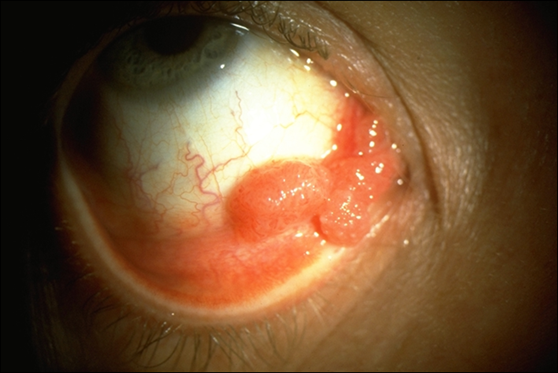
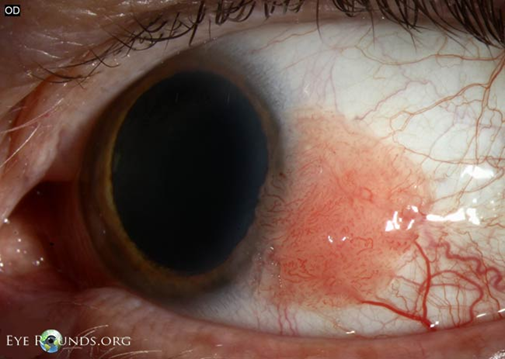
explain what Epibulbar choristoma is and its management (4)
•Dermoid - soft yellow limbal mass and Lipodermoid - soft white mass
normal tissue growing on the surface of the eye where it doesn’t belong.
monitor if vision isn’t affected
surgical excision: cosmesis, significant astigmatism, affects eyelid closure/ocular movement
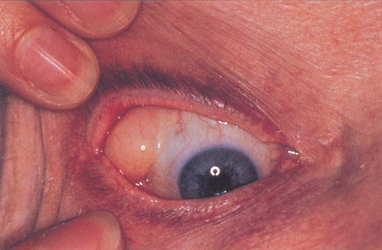
explain what intraepithelial dysplasia is (4)
•Raised, reddish lesion - crosses the limbus
•Seen more in older age group (>50)
•Slow growing
•May transform to squamous cell carcinoma - refer for second opinion
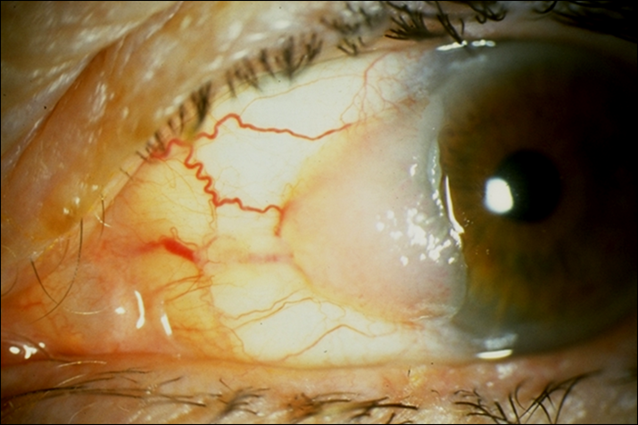
describe squamous cell carcinoma (3)
•Similar in appearance to intra-epithelial dysplasia
•Requires excision Good prognosis (may re-occur)
•Local invasion
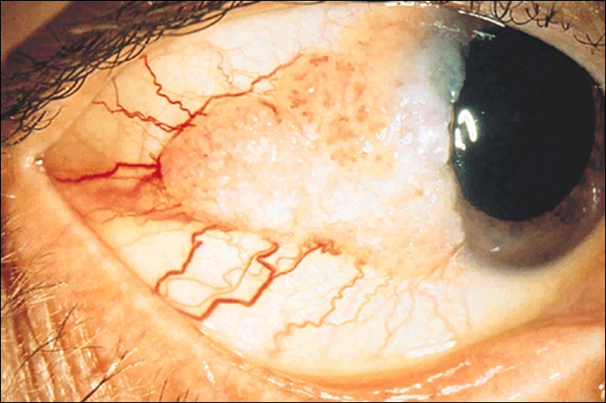
describe lymphoma (4)
•Salmon pink subconjunctival mass
•Most often located in the fornices
•Usually older pts 60-70 years
•Very rare - life threatening - refer urgently
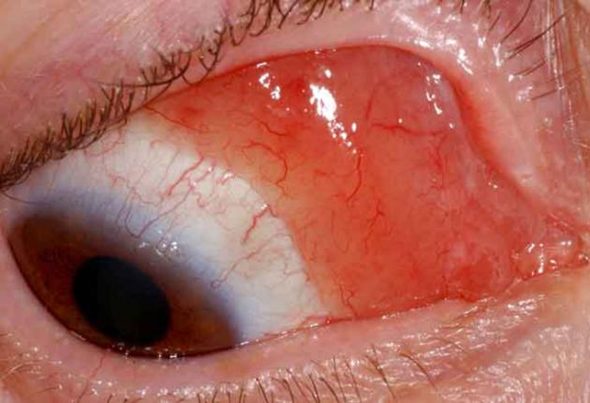
what i need to know
Must knows
•Subconjunctival Haem
•Pinguecula
•Concretions
•Key features of malignant lesions
Should know
•Pterygium
•Pigmented lesions
Good to know
•Papilloma
•Squamous cell carcinoma
•Lymphoma
 Note
Note  Flashcards (62)