Greek art and Archaeology Final (weeks 7+)
 Studied by 0 people
 Call with Kai
 Learn
Learn Practice Test
 Spaced Repetition
 Match
Match Flashcards
 Knowt Play
1/7

There's no tags or description
Looks like no tags are added yet.
Name | Mastery | Learn | Test | Matching | Spaced | Call with Kai |
|---|
No study sessions yet.
8 Terms
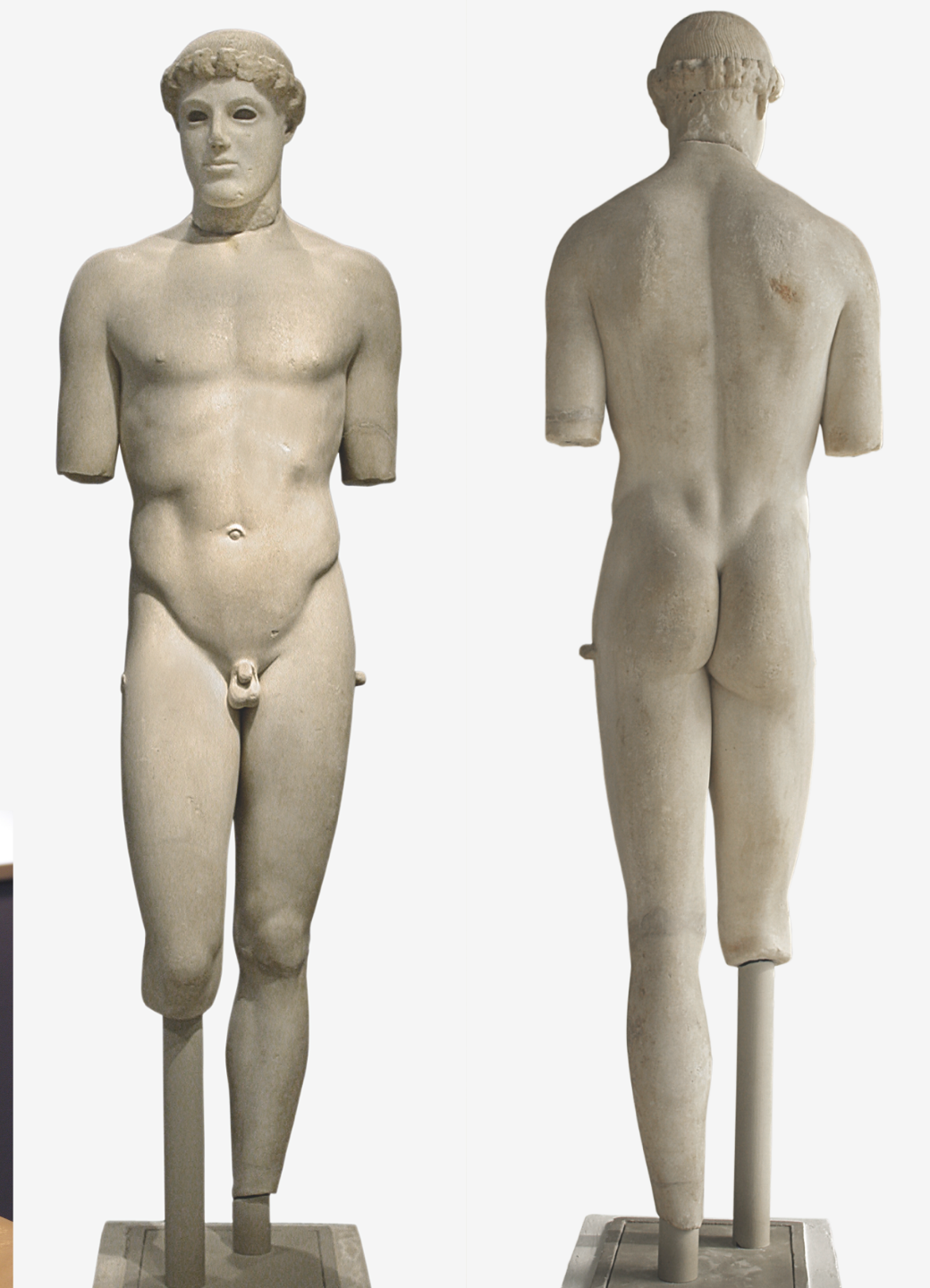
Kritios boy
480 BCE
Acropolis
youth - beardless, young hair rolled up
right leg relaxed, weight on back leg
contrapposto - weight uneven on feet, affects rest of body pose
head turned breaking symmetry of previous archaic styles
anatomy, moves away from pouch style abs, see muscles ribs and pelvis
pouty lips and strong jaw, severe stoic expression
found in perserschutt but not all pre-persian, stylistically looks later than 480, no distinct division of style
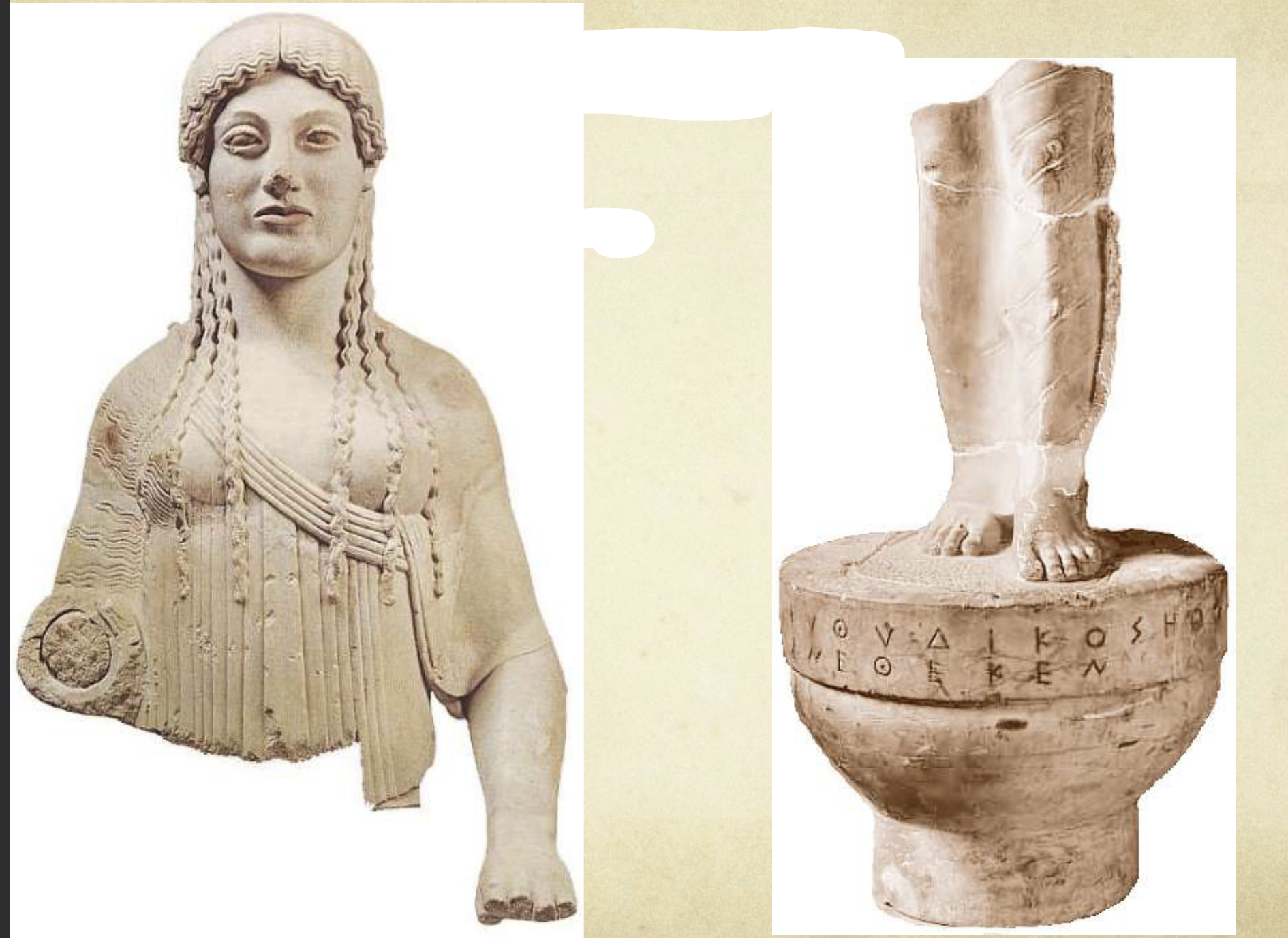
Euthydikos Kore
490-480 BCE
Athenian acropolis
severe expression
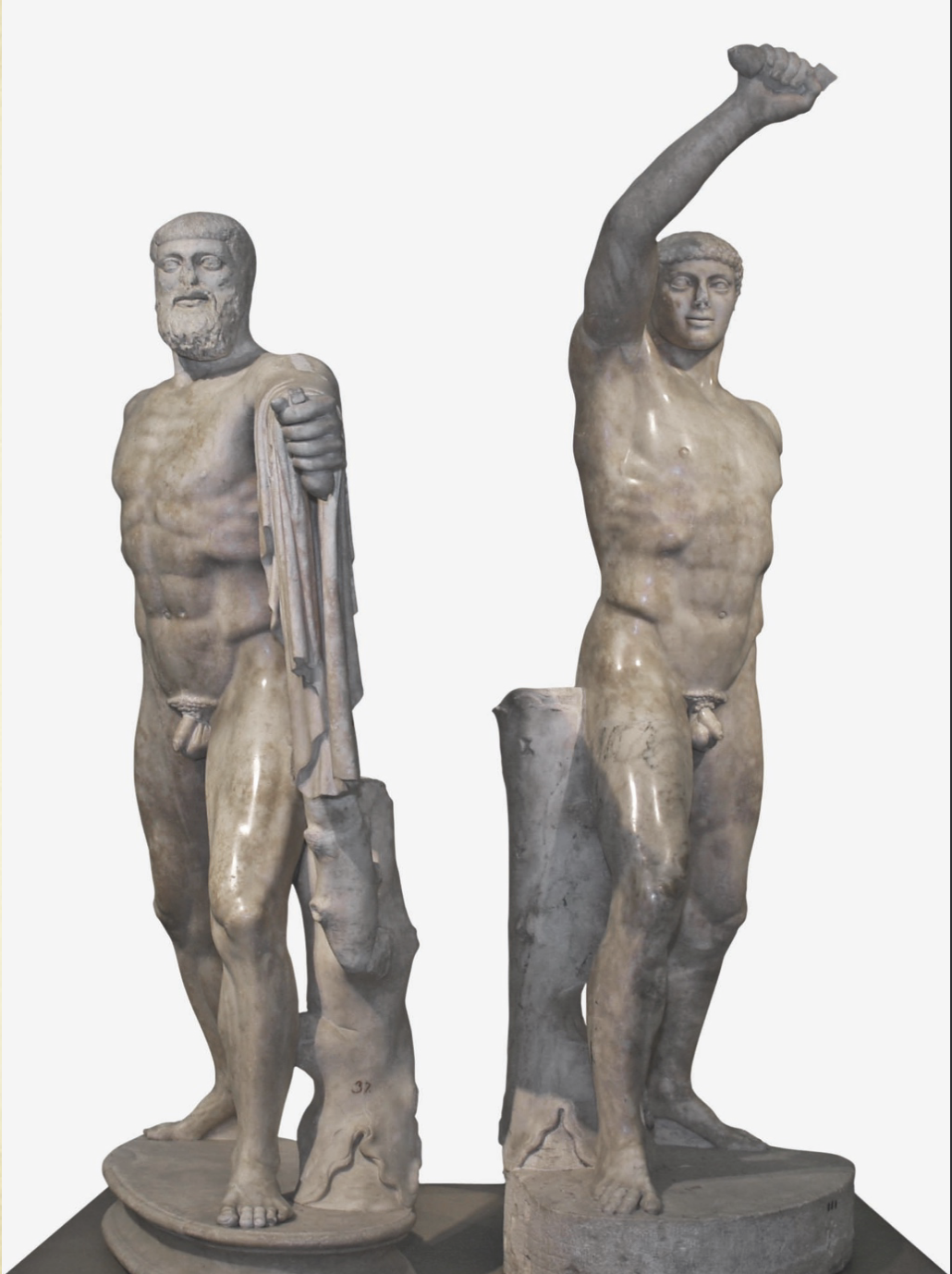
the Tyrannicides
roman copy of bronze original
Athenian agora
Original: antenor, c. 509 BCE
Rep: Kritios and Nesiotis c. 477 BCE
original stolen in 480 BCE in persian invasion
First time that contemporary figures are immortalised.
development of posing and expression, experimenting with the lunging movement: arm raised and outstretched
poses used as heroic identifier in art going forwards
Original brought back to athens by Alexander in 330 BCE after his invasion of persia. Stood alongside replacement, seen by pausanias in 2nd cen AD, stood for a long time after construction
important in development of movement
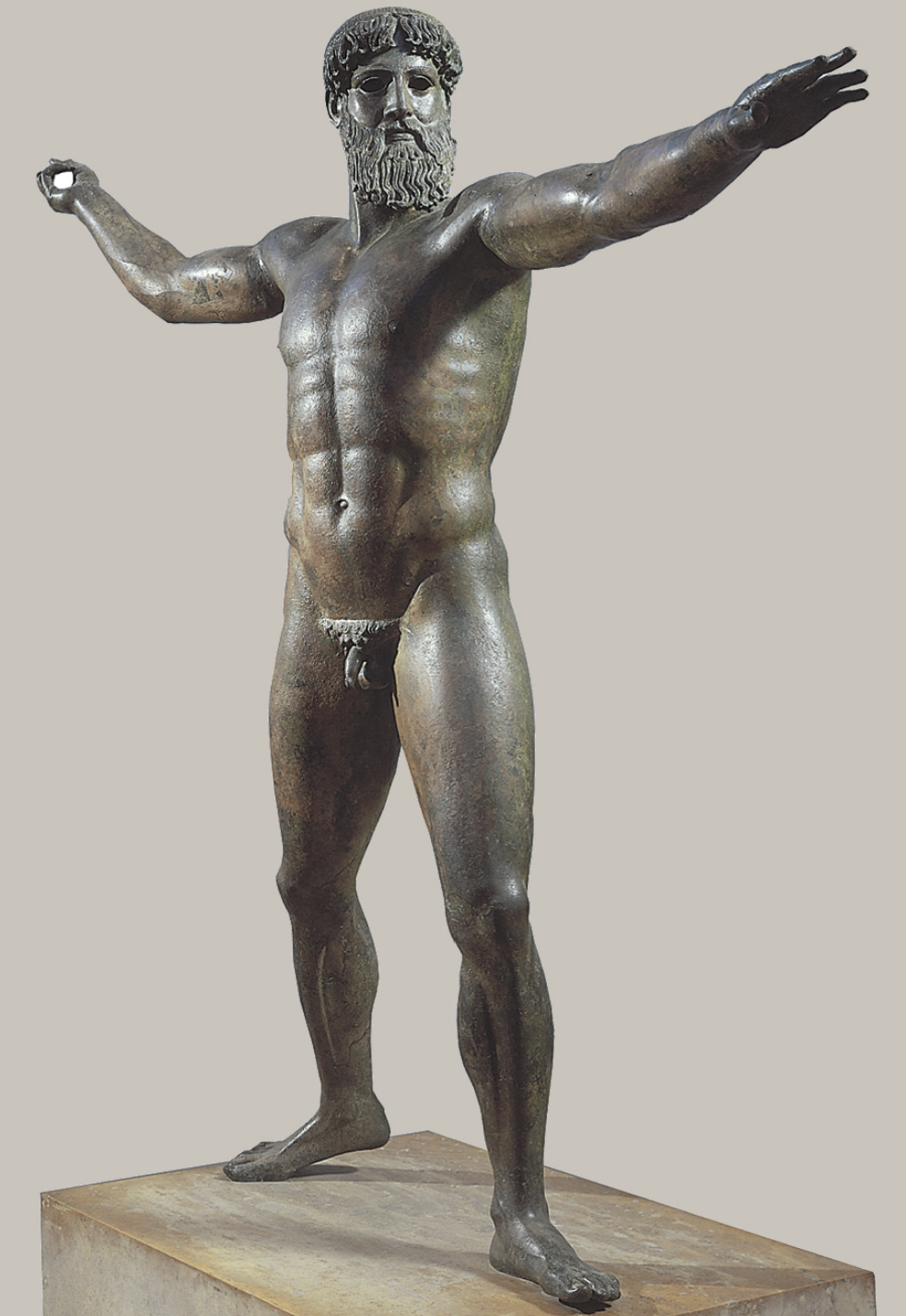
Artemision god
460-450 BCE
cape artemisium
god figure, likely either zeus or poseidon (either throwing lightning bolt or trident)
over lifesize, 2m+
found underwater, as bronze usually melted down
eyes and details inlaid: lips nipples in copper, silver eyebrows
hollowcast bronze - clay model (easier and more flexible sculpting)
cast in parts and assembled after
fine details chiseled in
polished at end
posing:
hollow cast bronze light, easy overhangs (arms outstretched)
weight distribution and balance
early classical style: arms outstretched, body twisted in motion, head towards action and not viewer
heavy chin and jaw
long hair, unusual for adult mature figure
temple of zeus at olympia
470-456 BCE
Architect: Libon of Elis
Doric peripteral 6×13 (2x +1, 5th cent rule)
limestone with parian marble roof and sculpture
East pediment: Peplos and Oinomaos, moment of calm before disaster, like suicide of ajax
Zeus in middle, flanked by Peplos and Oinomaos (both armed)
sterope and hippodameia beside them, followed by charriot teams
seer, can forsee disaster with his worried expression
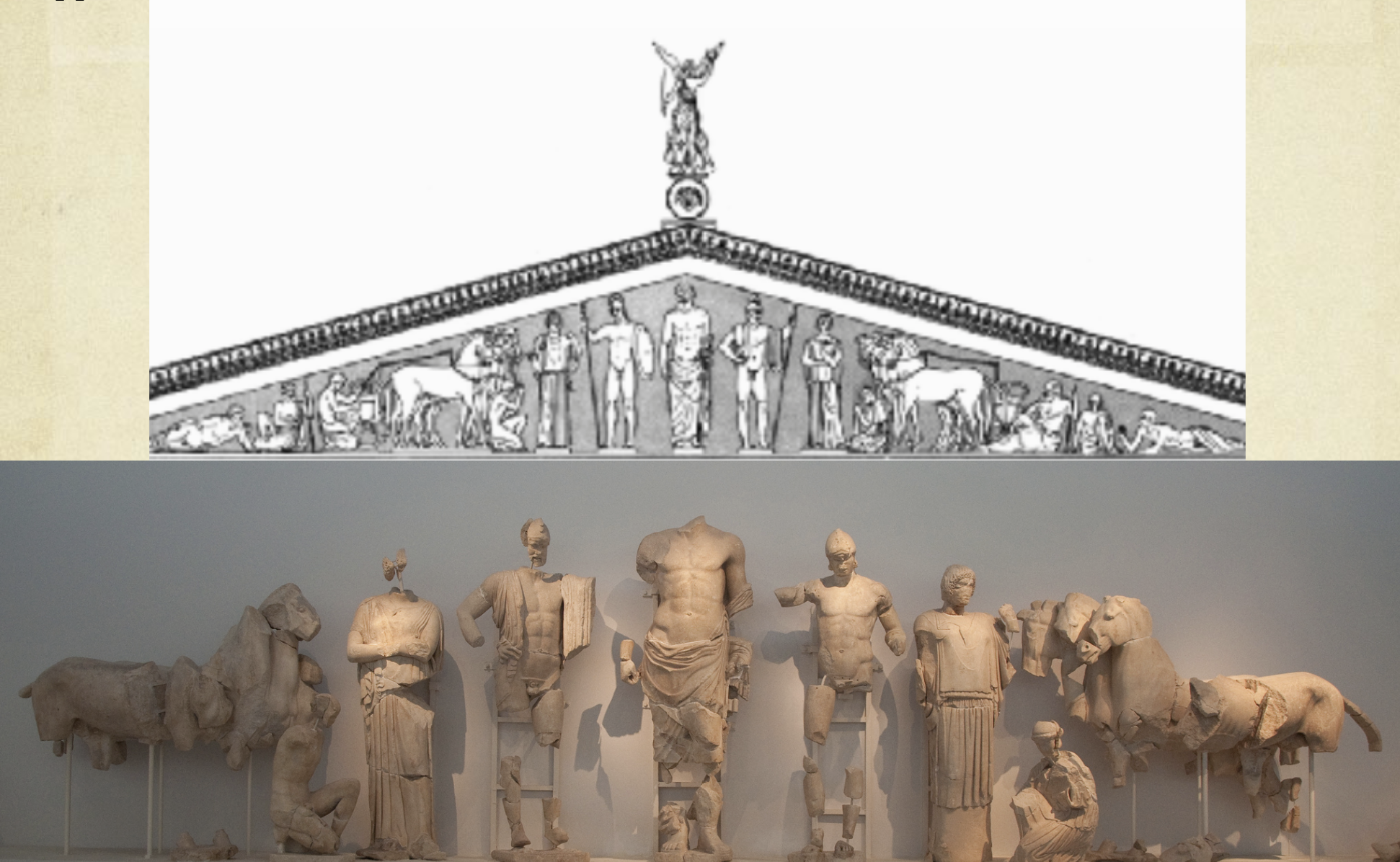
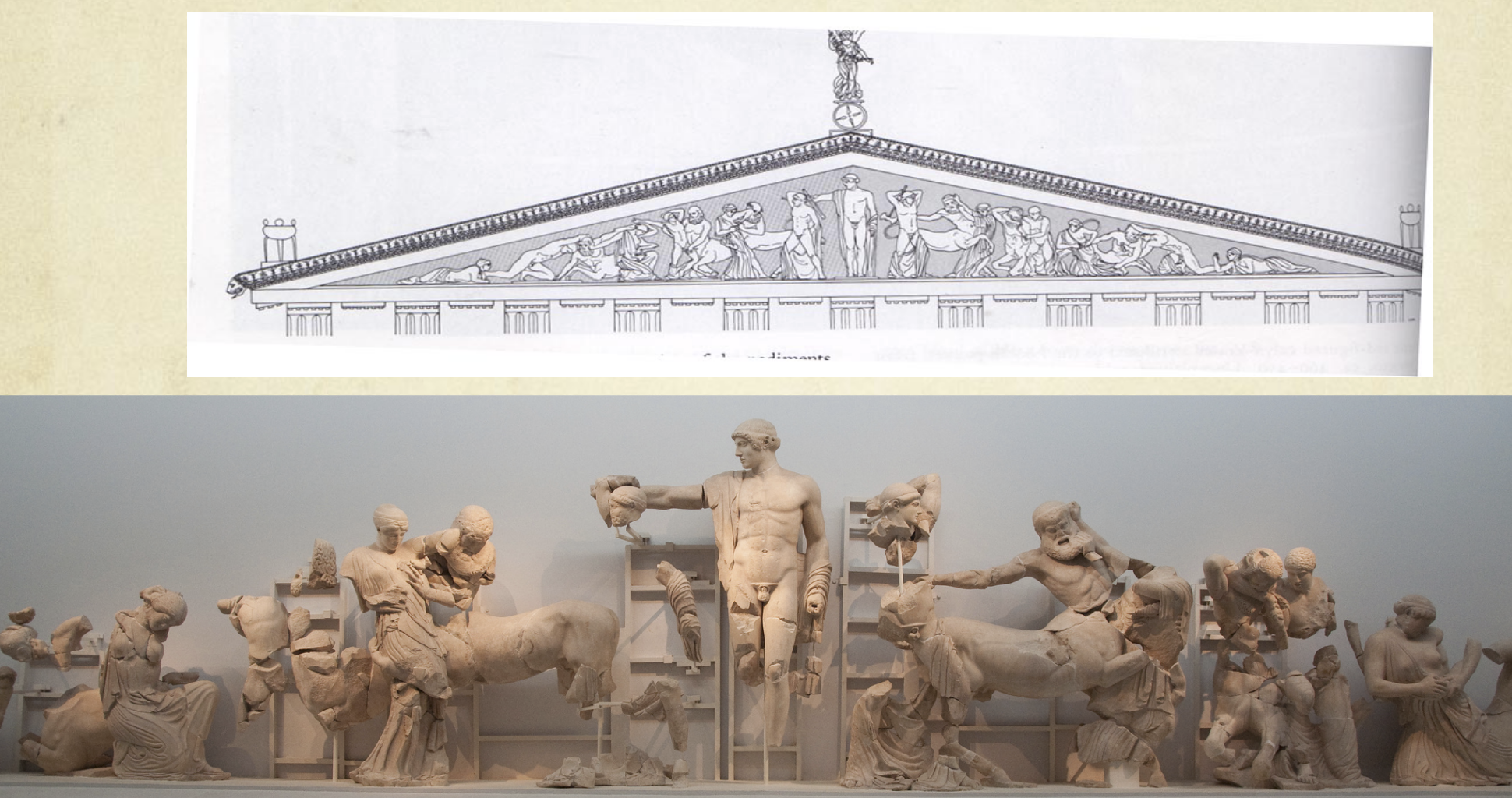
West pediment
470-456
battle between lapiths and centaurs
apollo in centre
king of lapith peirithoos and theseus each side
first myth in stone
coliflour ear and athletic poses
note faces - barbarity of the centaur faces vs severity and temperate heroes
dynamic and interlocked posing
¾ profile
anatomy and musculature
detailed barbaric facial expressions
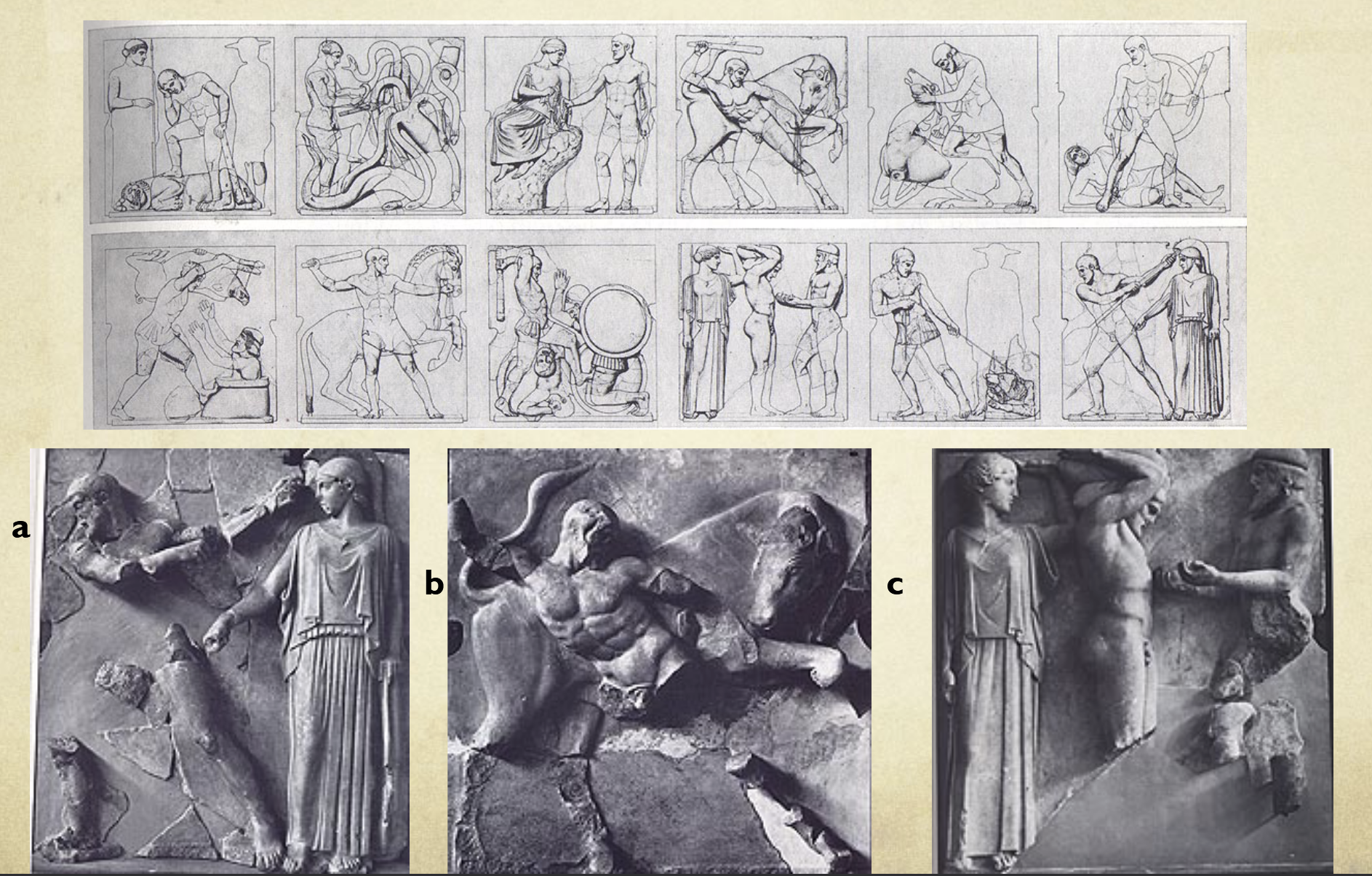
labours of heracles
470-456
note 3
1 heracles cleaning out the augean stables
2 heracles and cretan bull
3 holding up heavens for atlas to fetch the golden apple
 Note
Note  Flashcards (49)