Neuronal Electrical Signaling: Action Potentials, Synapses, and Glial Support
 Studied by 0 people
 Call with Kai
 Learn
Learn Practice Test
 Spaced Repetition
 Match
Match Flashcards
 Knowt Play
1/44

There's no tags or description
Looks like no tags are added yet.
Name | Mastery | Learn | Test | Matching | Spaced | Call with Kai |
|---|
No study sessions yet.
45 Terms
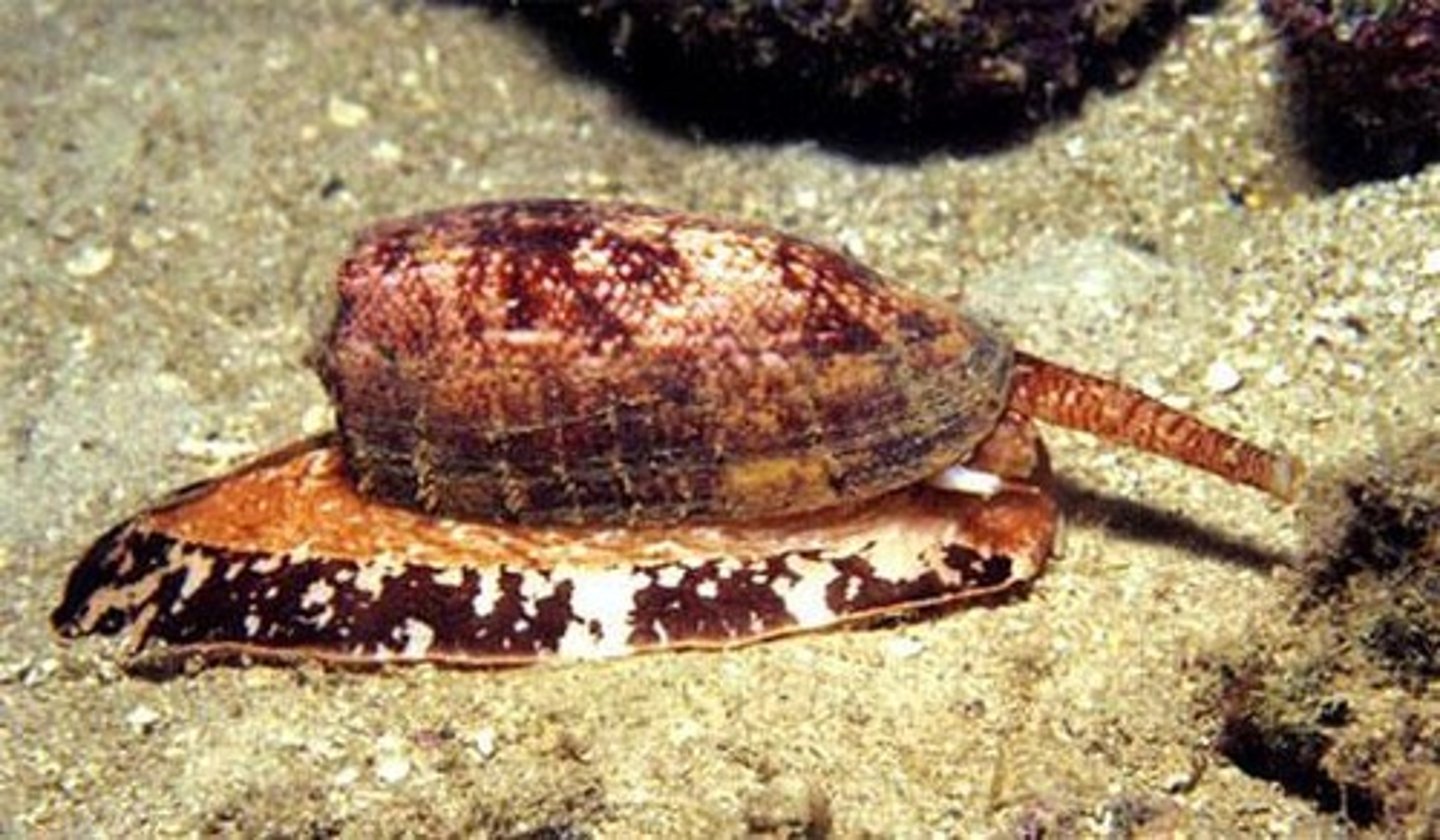
What is the lethal capability of the cone snail (Conus geographus)?
Its venom can block information transfer by neurons, potentially leading to death.
What are the two types of potentials that can occur in neurons?
Action potentials and graded potentials.
What role do glial cells play in relation to neurons?
They protect and support neurons.
What is the refractory period in a neuron?
A state of recovery after firing an action potential, during which another action potential cannot be easily produced.
Why is the refractory period important?
It encourages unidirectional flow of action potentials, preventing them from traveling backwards.
What happens when an action potential reaches an axon terminal?
It triggers the release of neurotransmitters to transmit information to a postsynaptic neuron.
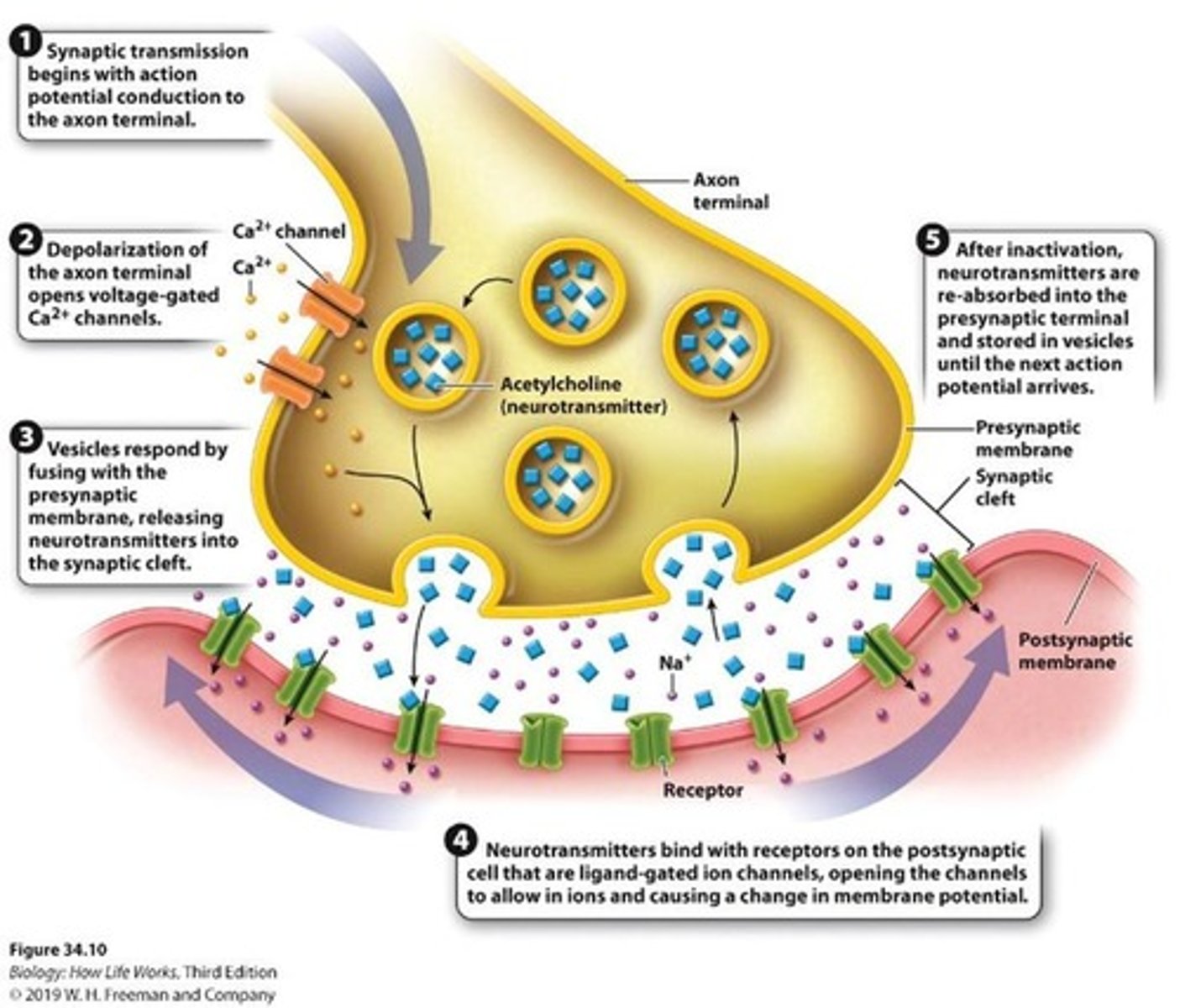
What are EPSPs and how do they affect postsynaptic neurons?
Excitatory postsynaptic potentials (EPSPs) result in depolarization of the postsynaptic neuron.
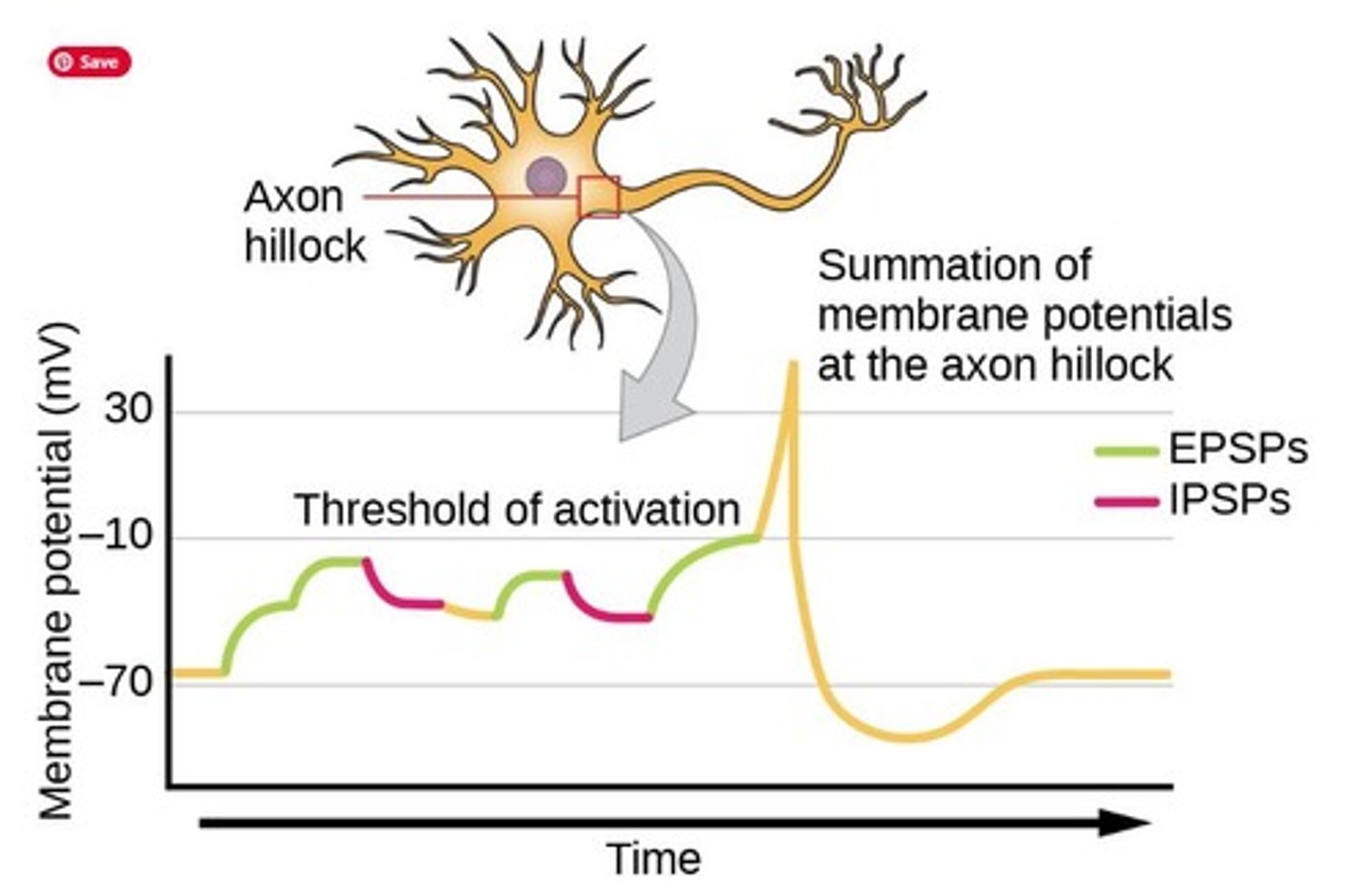
What are IPSPs and how do they affect postsynaptic neurons?
Inhibitory postsynaptic potentials (IPSPs) result in hyperpolarization of the postsynaptic neuron.
What is the difference between depolarization and hyperpolarization?
Depolarization makes the membrane potential less negative (more positive), while hyperpolarization makes it more negative.
What causes depolarization in a neuron?
The influx of positive ions like sodium.
What causes hyperpolarization in a neuron?
The outflow of positive ions like potassium.
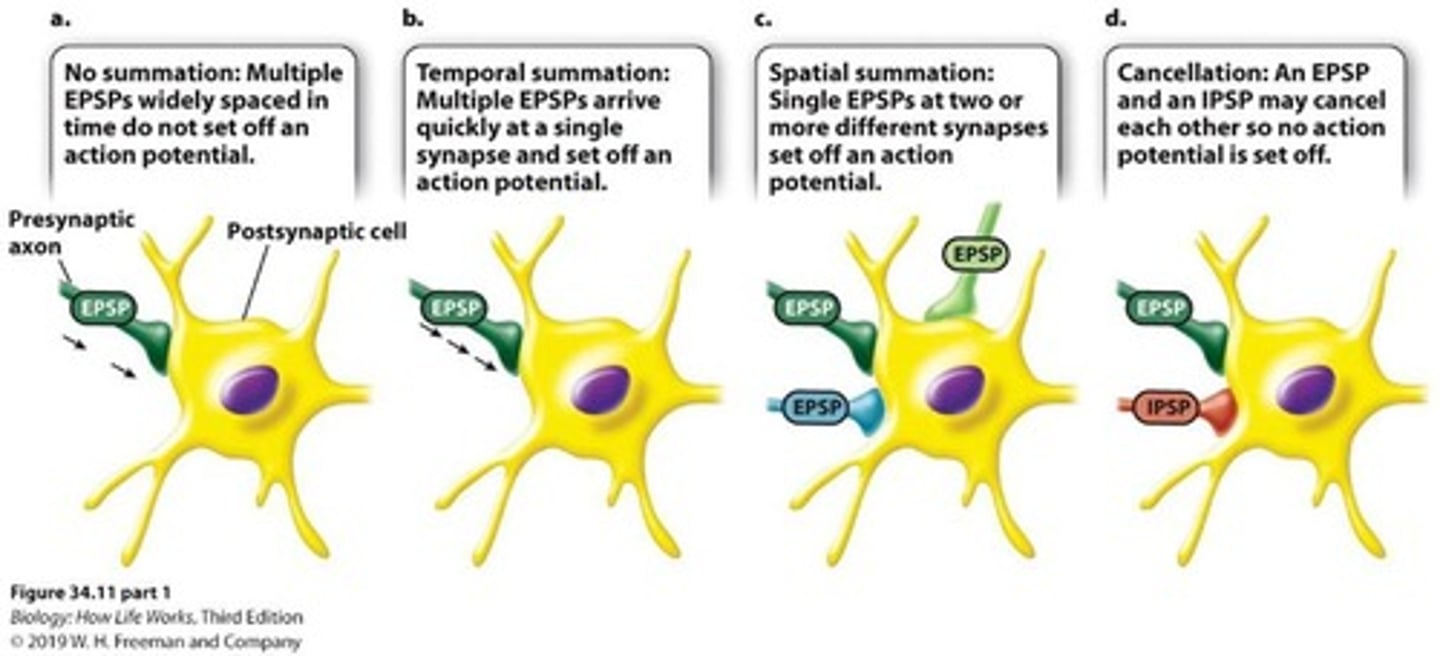
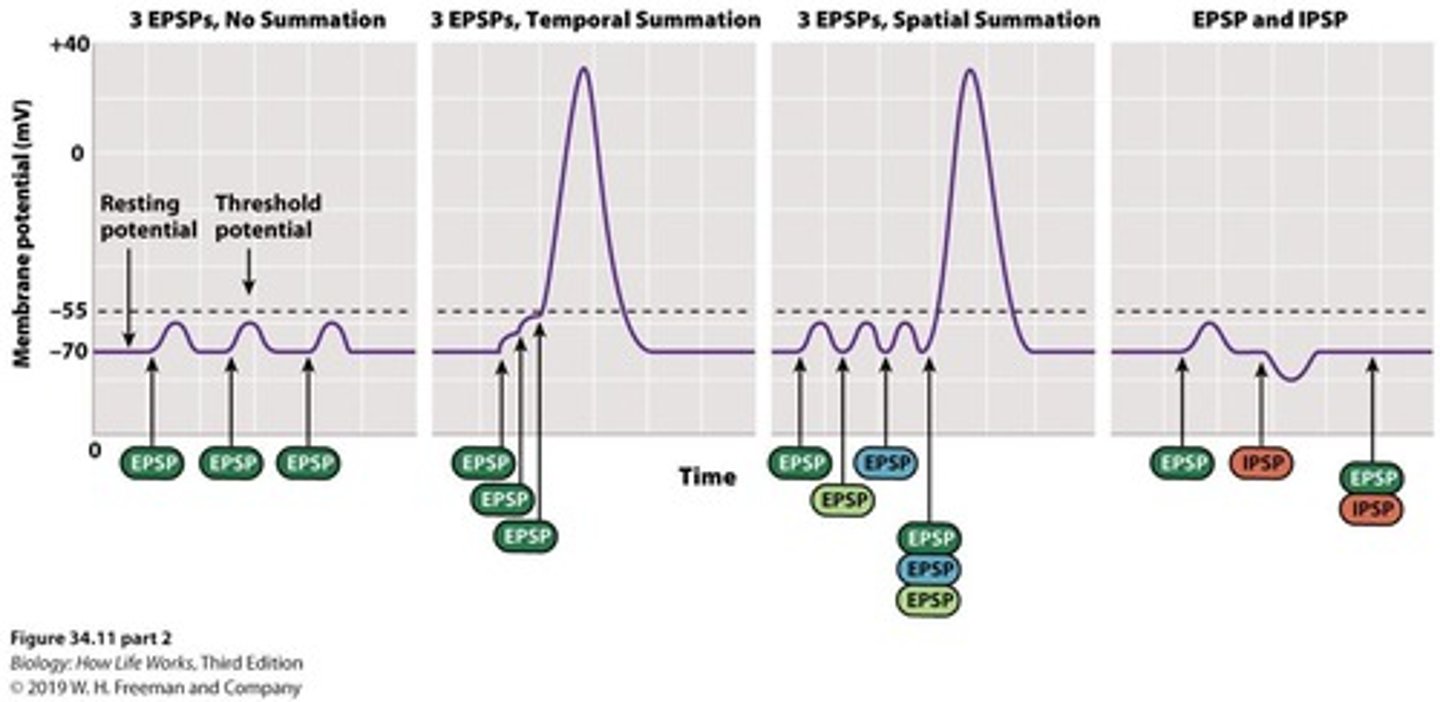
What are the two types of summation that affect action potential production?
Spatial summation and temporal summation.
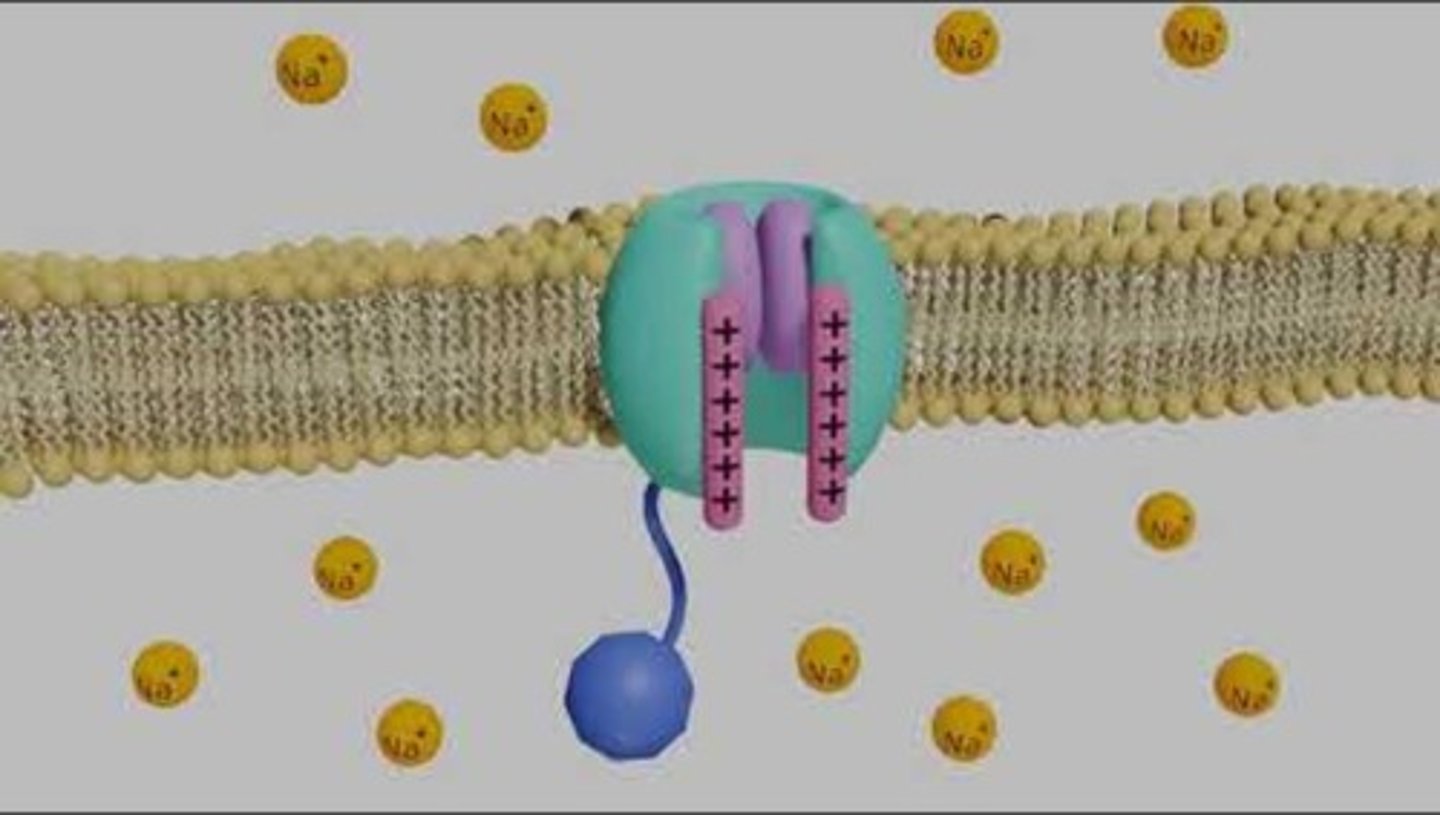
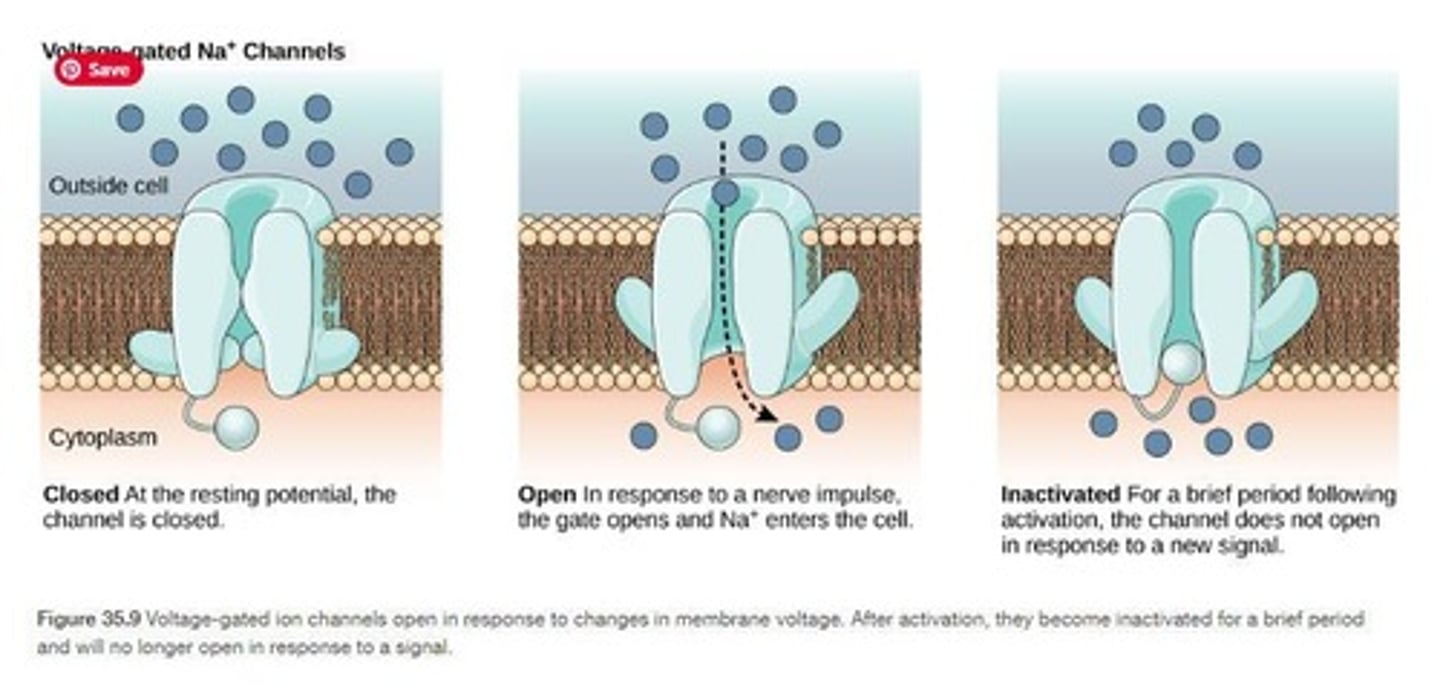
What is the function of voltage-gated sodium channels during an action potential?
They open to allow Na+ ions to enter the cell, causing depolarization.
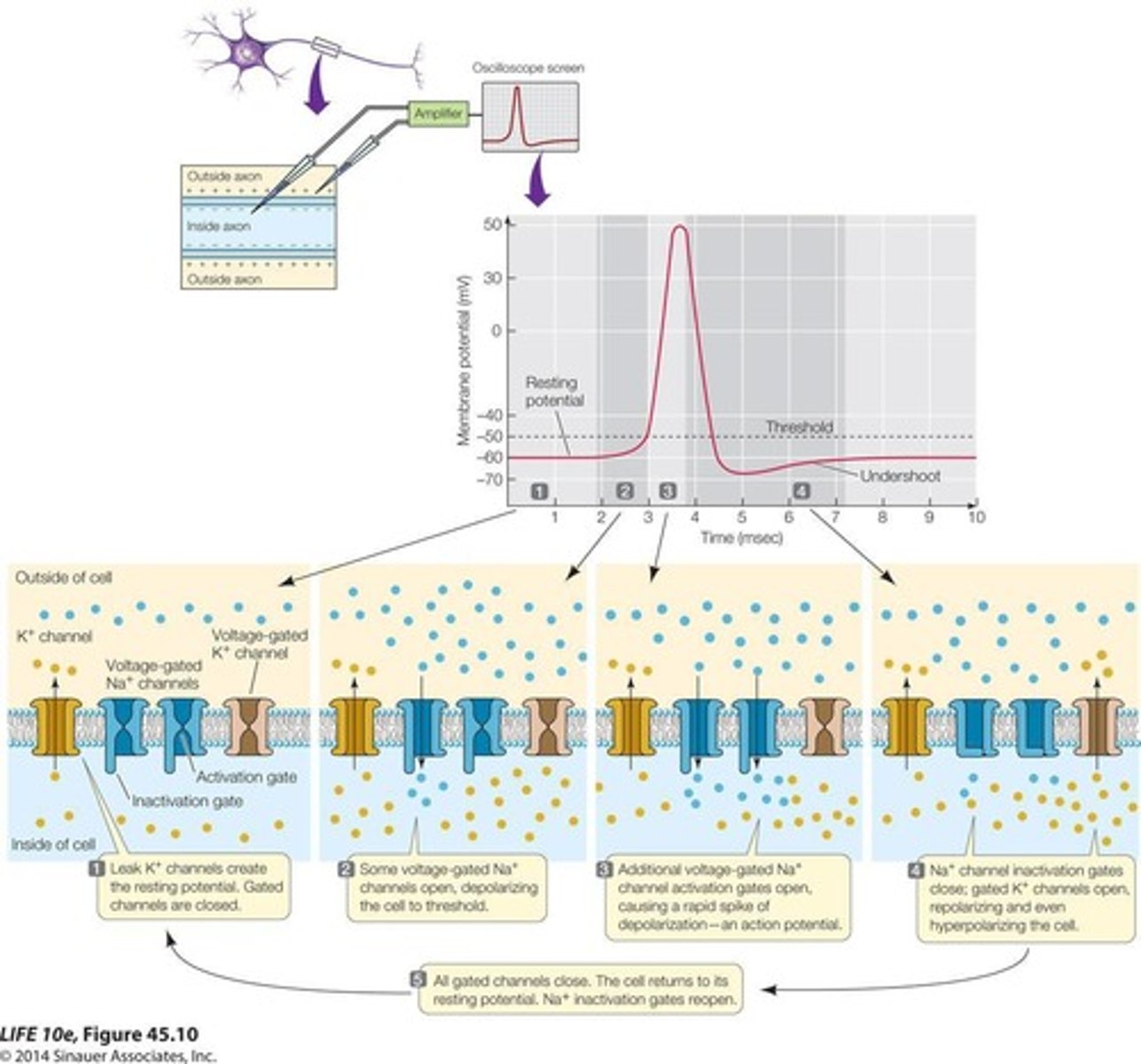
What happens during the refractory period regarding sodium channels?
The inactivation gate of Na+ voltage-gated channels prevents Na+ from entering the cell.
What type of channels are involved in graded potentials?
Ligand-gated ion channels.
What is the effect of excitatory neurotransmitters at the synapse?
They open ligand-gated Na+ channels, allowing Na+ to diffuse into the postsynaptic cell.
What is the effect of inhibitory neurotransmitters at the synapse?
They either open ligand-gated K+ channels (allowing K+ to exit) or Cl- channels (allowing Cl- to enter), leading to hyperpolarization.
What is the significance of graded potentials in neuronal signaling?
They vary in strength depending on the strength of stimuli and can influence the likelihood of an action potential.
What does the term 'temporal summation' refer to?
The additive effect of multiple signals received in quick succession at the same synapse.
What does the term 'spatial summation' refer to?
The additive effect of signals received simultaneously from multiple synapses.
What is the role of the cone snail's venom?
It blocks information transfer by neurons, leading to rapid lethality.
What is the resting potential of a neuron?
The steady state when a neuron is not sending a signal, typically between -65 to -80 mV.
What is a graded potential?
Temporary changes in membrane voltage proportional to the strength of the stimulus.
What defines an action potential?
A sudden, large transient reversal in membrane potential used to send signals to other neurons or cells.
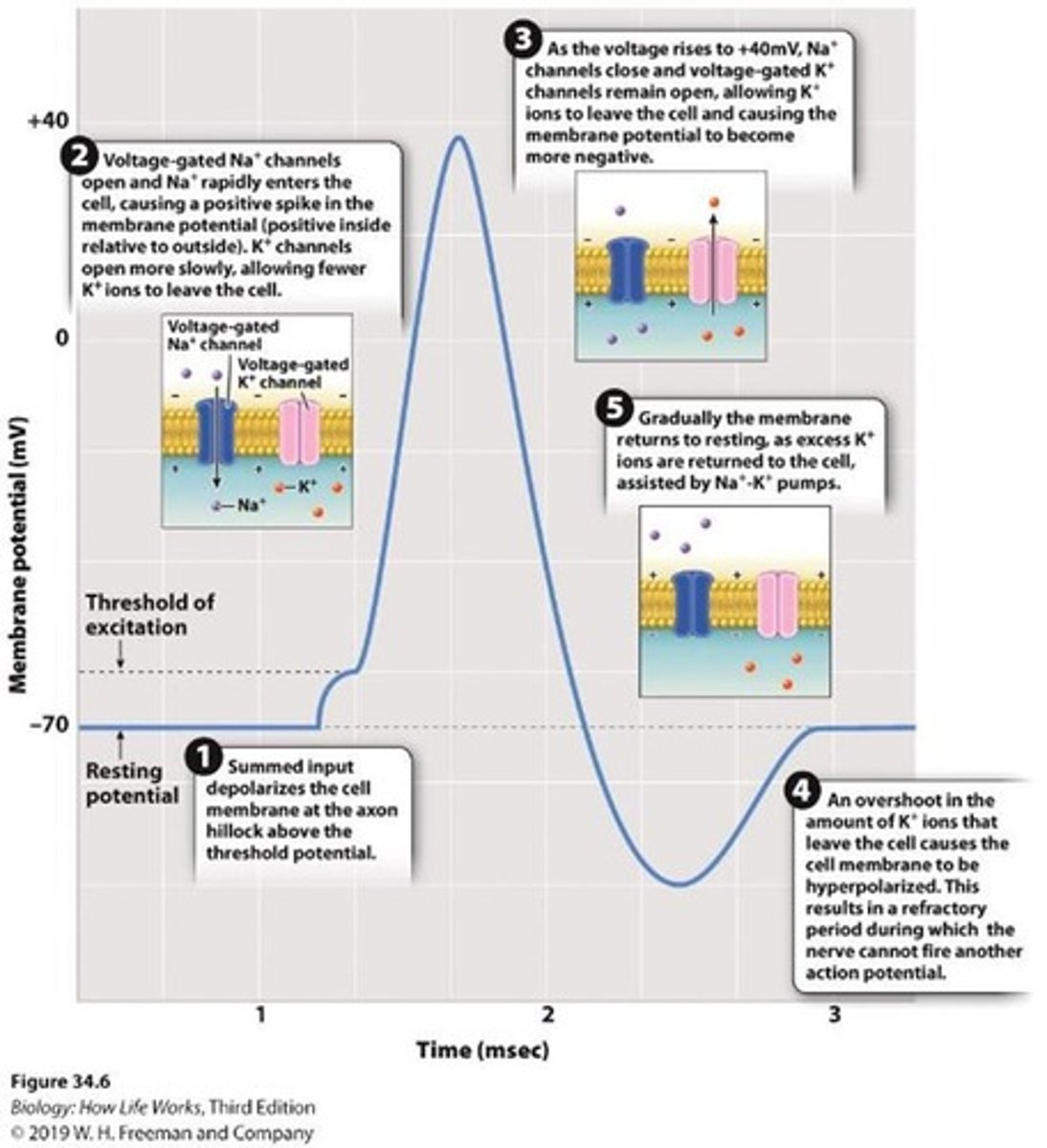
What is membrane potential?
The charge difference across the cell membrane, which creates potential energy.
How is the resting membrane potential established?
By the Na+ and K+ pump maintaining concentration gradients of Na+ and K+.
What is the primary function of the sodium-potassium pump?
To move Na+ ions outside the cell and K+ ions inside, maintaining the resting membrane potential.
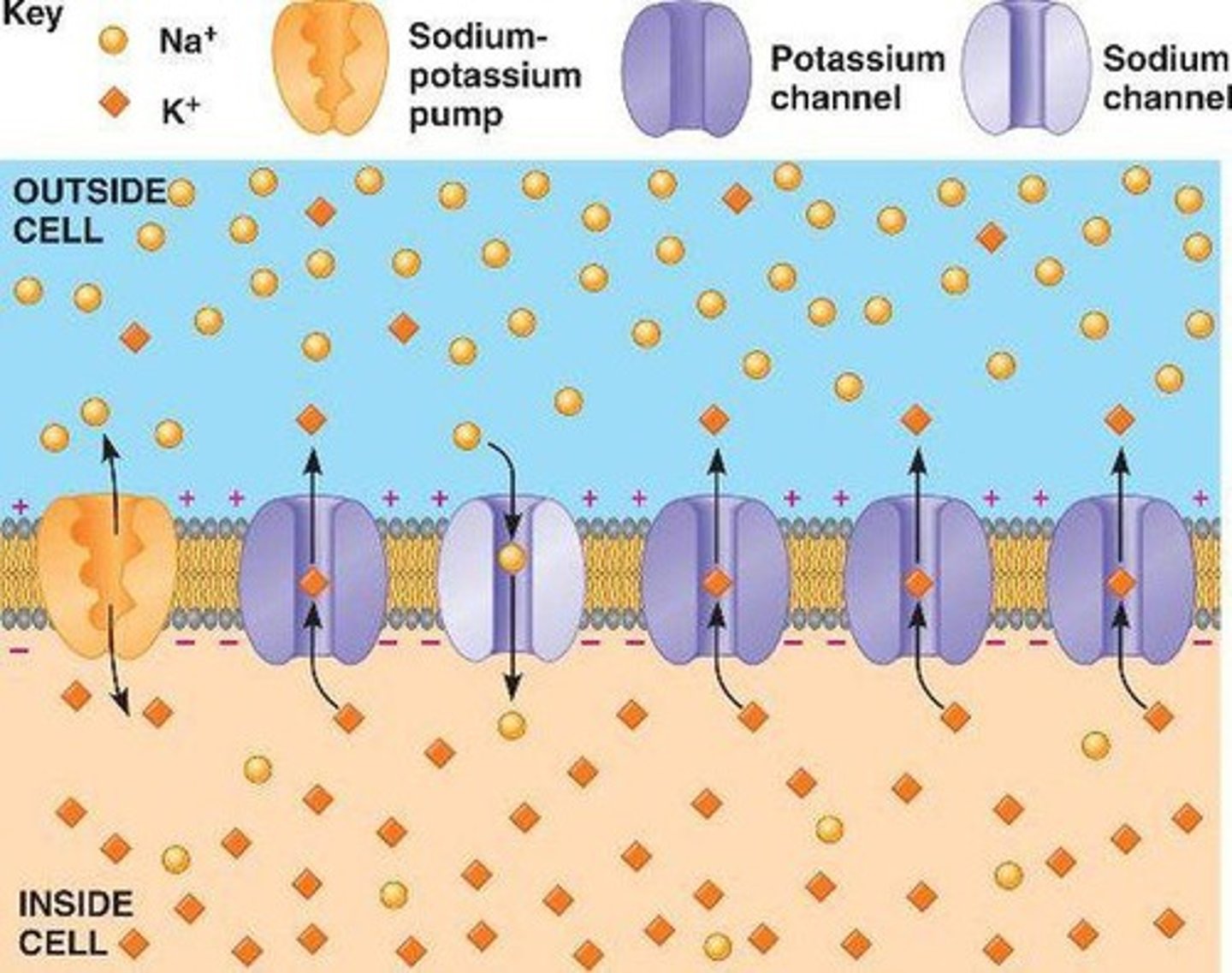
What happens to K+ ions during resting potential?
K+ ions flow out of the cell through K+ channels, contributing to a net negative charge inside.
What is the energetic cost of maintaining the resting membrane potential?
It costs ATP, consuming 20-40% of total energy needs at rest.
What are the three types of gated ion channels in neurons?
Stretch-gated, chemically-gated, and voltage-gated ion channels.
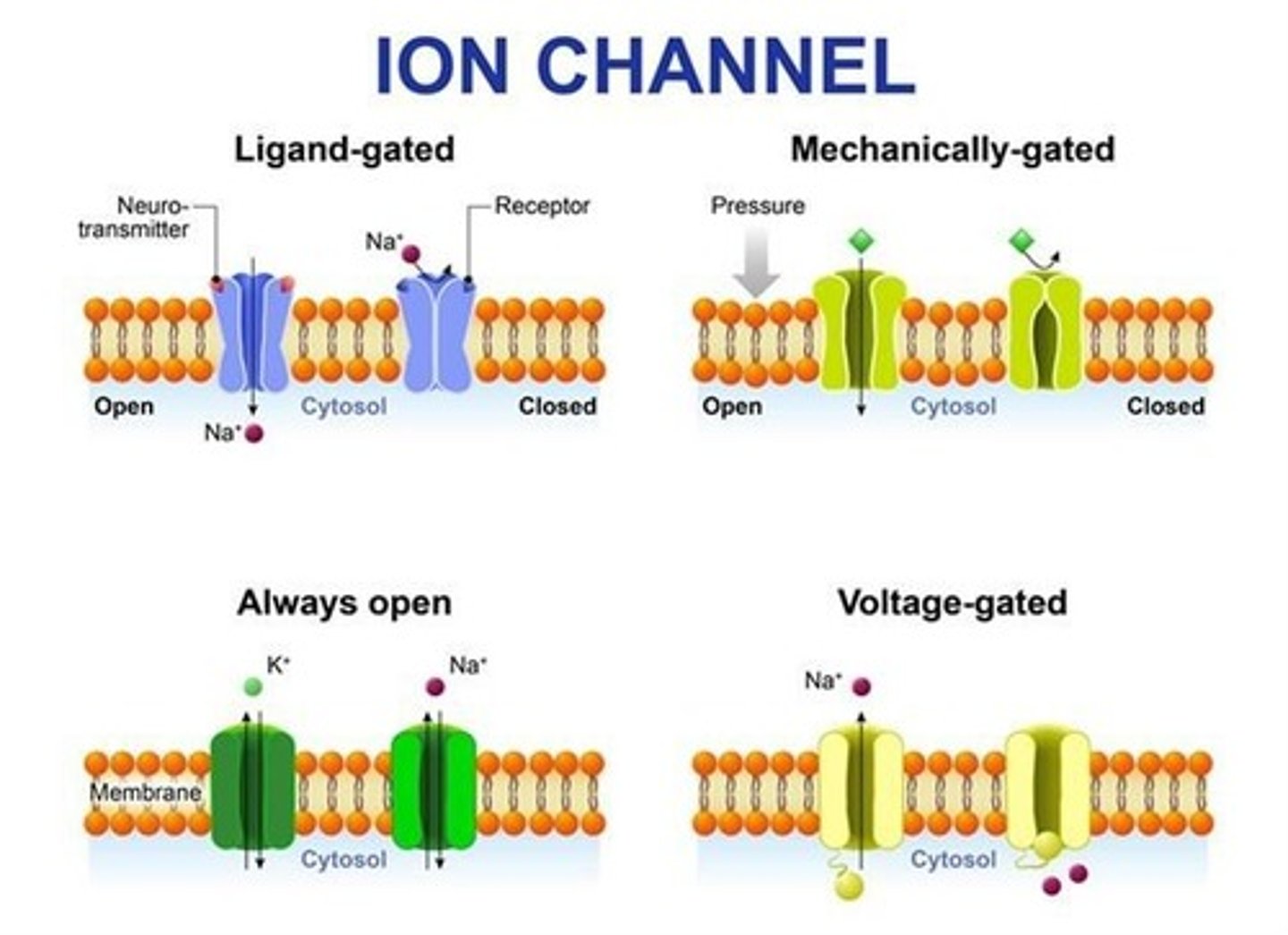
What is hyperpolarization?
An increase in the magnitude of the membrane potential, often due to K+ channel opening.
What is depolarization?
A reduction in the magnitude of the membrane potential, often due to Na+ channel opening.
What occurs when depolarization exceeds the threshold potential?
An action potential is triggered, which is an all-or-none response.
How do action potentials encode information?
By frequency of occurrence, not amplitude.
What are glial cells?
Support cells in the nervous system that protect and support neurons.
What are the functions of oligodendrocytes and Schwann cells?
They wrap around axons to produce myelin, an insulating sheath.
What role do astrocytes play in the nervous system?
They contribute to the blood-brain barrier, supply nutrients, and aid in neuron repair.
What is the function of microglia?
To provide immune defenses for the nervous system.
What is the significance of myelination in neurons?
It speeds up signal transmission along axons through saltatory conduction.
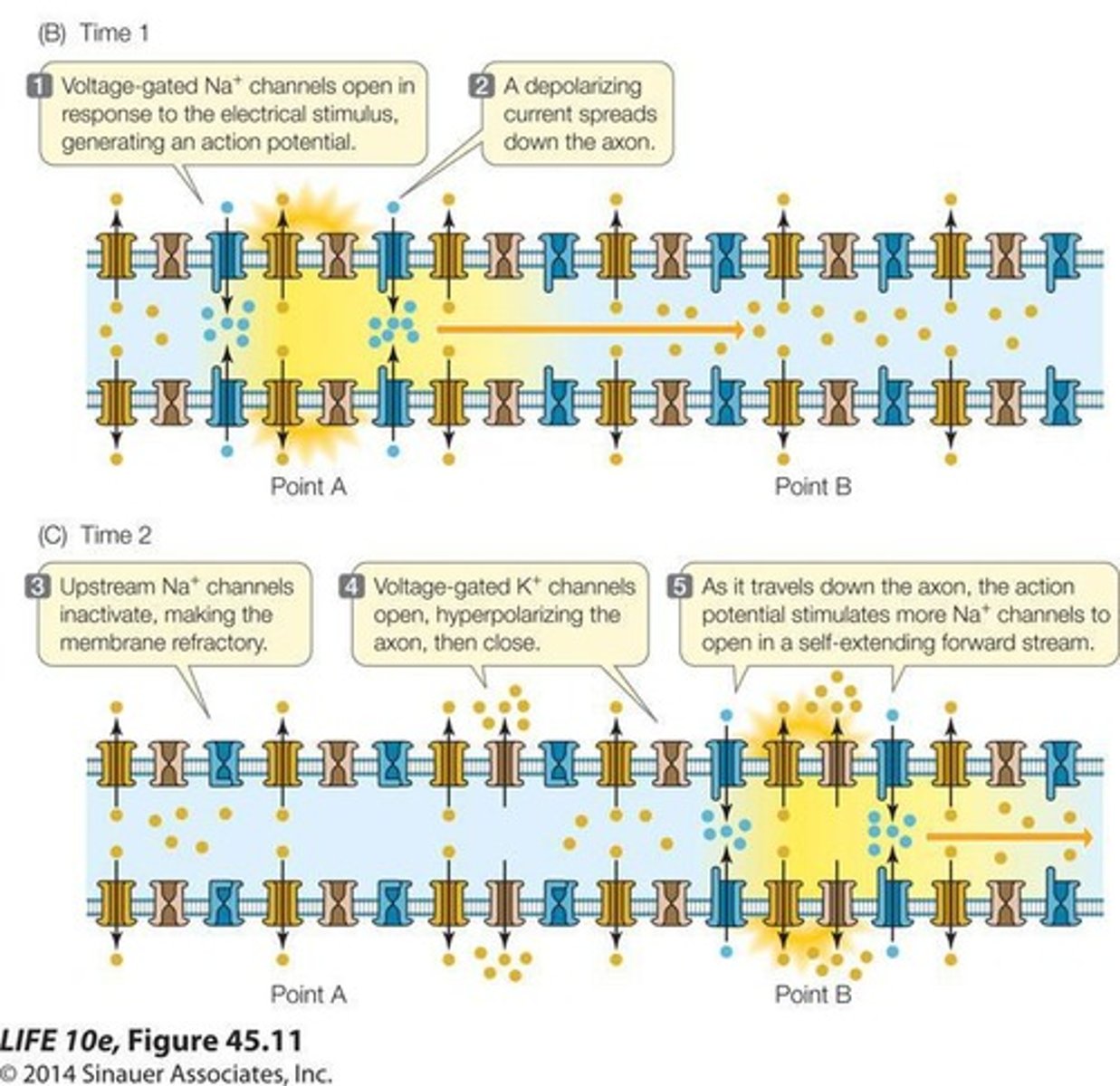
What happens to ion concentrations during an action potential?
There is a rapid influx of Na+ followed by an efflux of K+.
What is the typical duration of an action potential?
1-2 milliseconds.
What is the effect of opening Na+ voltage-gated ion channels?
It increases the permeability to Na+, causing depolarization.
What is the resting membrane potential's typical measurement?
-70 mV.
What is the primary ion responsible for changes in resting membrane potential in the laboratory experiment?
K+ (potassium).
What is the difference between graded potentials and action potentials?
Graded potentials vary in magnitude, while action potentials are all-or-none events.
 Note
Note  Flashcards (34)